
In this answer
Short answer
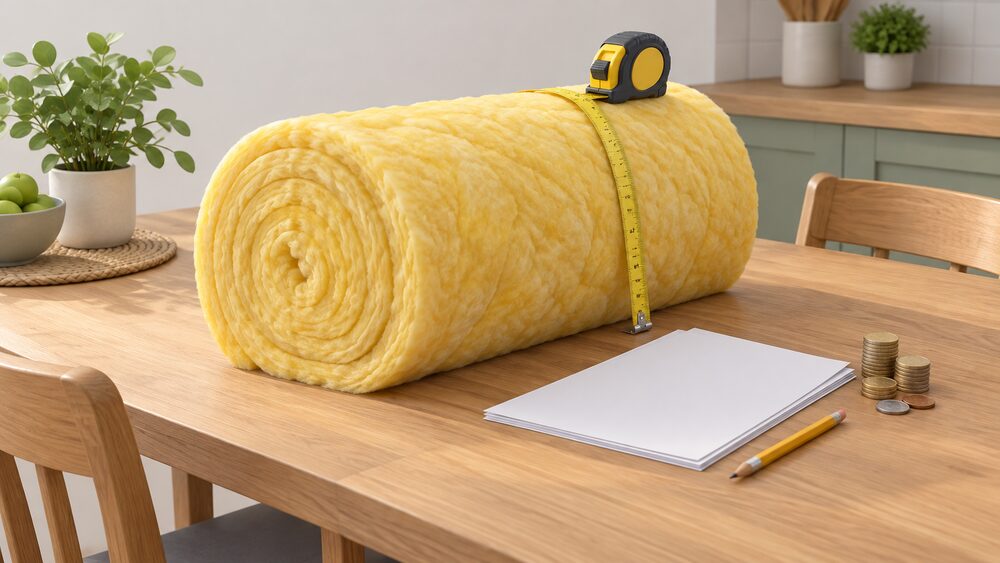
Insulation savings are quoted as annual bill reductions, and the published ranges are wide because they depend on the home, the fuel and the starting condition. The largest single figures sit with the roof: loft insulation is put at up to £380 a year, and room in roof insulation at up to £395 a year1. Floor insulation is the smallest of the main measures, at between £45 and £120 a year based on 2025 energy prices3.
Wall insulation is usually expressed as a share of heating energy rather than a cash sum. Heat loss through the walls can make up to 35% of all heat loss in the home, and external wall insulation can cut heating bills by as much as 35% or even more when installed correctly4. Internal wall insulation has been modelled at 36% of heat demand6.
What follows sets out the figures measure by measure, the payback periods reported alongside them, the grant support available in Northern Ireland, and what insulation does for a household's energy independence, which is a reduction in the heat a home loses rather than a removal of its dependence on the grid or a fuel supplier.
What insulation can save: the headline figures
The headline figure used by government is around £200 per year per household from insulating more homes across the country9. That is a national average across a mixed programme, not a promise for any one property, and it sits well below the best-case figures for individual measures because it averages lofts, walls and easy wins together.
The gap between the average and the best case is the single most important thing to understand about insulation savings. A detached house going from no loft insulation to the recommended depth is at the top of the range. A mid-terrace house topping up an already insulated loft is at the bottom, at £17 a year1. Both are correct figures for their situation, and neither predicts what a particular home will save.
Independent analysis of the failure to insulate UK homes put the household benefit differently: homes benefitting from insulation would have saved over £400 by now, and a further £600 by the end of 202410. That figure is cumulative across a period rather than annual, which is why it is larger than the yearly sums quoted elsewhere.
The measures that come out best on cost-effectiveness are consistent across sources. Loft insulation, cavity wall insulation, solid wall insulation and draught-proofing are often among the most cost-effective improvements available because they immediately reduce heat demand11. Draught-proofing is described as one of the cheapest and most effective ways to save energy and money12. Insulation was also the most frequently mentioned energy efficiency improvement adopted by participants in research on private rented sector upgrades, which suggests it is where households tend to start when they act13.
For a household planning a route to independence, the practical reading is that insulation lowers the baseline every other decision is built on. A home that loses less heat needs less bought energy, whatever the fuel, and the saving recurs every year without any equipment to maintain.
Loft insulation: up to £390 a year
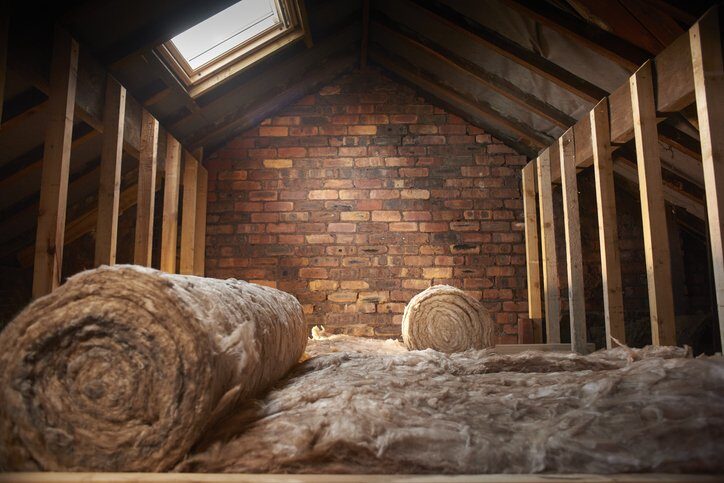
Loft insulation carries the widest spread of published figures of any measure, and the spread is explained by the starting depth. Insulating a loft that has none could reduce energy bills by up to £340 per year, depending on the home1. Installing 270 mm of loft insulation can save £180 to £340 a year depending on the size of the home14. Households could save as much as £380 a year on their energy bills, according to the Energy Saving Trust1. A typical house with good loft insulation can cut energy bills by about £130 a year15. The Consumer Council puts insulating a loft at around £155 per year16.
The differences are not contradictions so much as different baselines. The £130 and £155 figures describe a typical house, likely already partly insulated. The £340 and £380 figures describe the top of the range for a home with little or none. A professional roll installation is put at up to £230 per year17.
Where a loft already has insulation, the question becomes top-up. Adding another layer to bring it up to the recommended 270 mm will save energy and money18. Topping up roof insulation from 120 mm to at least 270 mm will help save around £17 a year in GB and £20 in Northern Ireland7. That is a small annual sum, but the work is minor and the saving continues for the life of the insulation.
Loft insulation also has a summer function that is often overlooked: it does not just keep the house warm in winter, it also stops heat entering from above in summer19. For a household weighing overheating risk alongside winter bills, that matters.
| Loft scenario | Annual saving | Source basis |
|---|---|---|
| No insulation to recommended depth, detached | £340 | Which?1 |
| 270 mm installed, varies by home size | £180 to £340 | Which?14 |
| Best case, Energy Saving Trust figure | up to £380 | Which?1 |
| Typical house, good loft insulation | about £130 | Which?15 |
| Consumer Council figure | around £155 | Consumer Council16 |
| Professional rolls | up to £230 | Uswitch17 |
| Top-up 120 mm to 270 mm, GB | around £17 | Energy Saving Trust7 |
| Top-up 120 mm to 270 mm, NI | around £20 | Energy Saving Trust7 |
Wall insulation: up to 25% of heating energy
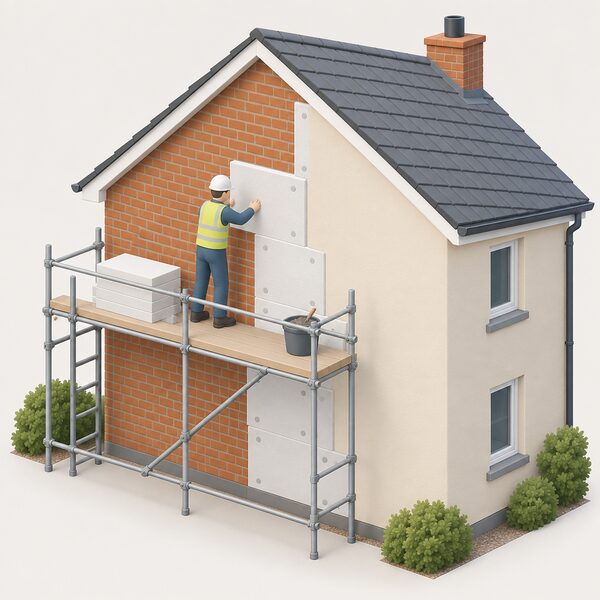
Wall insulation is the measure where the saving is most often given as a proportion rather than a sum, because the cash figure depends heavily on the fuel and the size of the wall area. Heat loss through the walls can make up to 35% of all heat loss in the home4. External wall insulation can produce as much as 35% or even more reduction in heating bills when installed correctly, varying by property and by insulation type and thickness5. Internal wall insulation has been modelled at 36% of heat demand6.
The Energy Saving Trust estimate that an un-insulated dwelling loses a third of all its heat through the walls and a further quarter through the roof is the clearest statement of why walls matter so much20. Together those two routes account for the majority of heat loss in a home that has neither.
Cavity wall insulation is the cheaper route where a cavity exists, and it pays back quickly. It will likely take only five years or less to make back the cost through the money saved yearly on energy bills8. Cavity wall insulation accounted for most of the estimated lifetime energy savings in the Energy Company Obligation and Green Deal schemes at 43 per cent21.
Solid wall insulation is the route for homes without a cavity, and it is a larger and more disruptive job. It also brings benefits beyond the bill: it will help create a more even temperature in the home, help prevent condensation on the walls and ceilings, and can reduce the amount of heat building up inside during summer hot spells22. Internal wall insulation has a practical advantage for flats and terraces, since insulation can be installed in one property, or even one room only where needed23.
Floor insulation: £45 to £120 a year depending on the home
Floor insulation produces the smallest savings of the main fabric measures, and the figures vary by house type and by nation. Floor insulation is put at between £45 and £120 a year based on 2025 energy prices3. For detached homes, the savings could be £85 in Great Britain and £120 in Northern Ireland24. For a semi-detached property, floor insulation could save around £55 a year in GB and £70 in NI24. For a mid- or end-terraced or semi-detached house, improving insulation could save £33 to £65 a year25. In a detached house or bungalow, the figure is up to £94 to £111 a year25. A suspended timber ground floor is put at £85 a year in GB and £120 in NI26. A professional roll installation is put at £70 to £140 per year17.
The pattern is consistent: detached homes save more because they have more exposed floor area, and Northern Ireland figures run higher than Great Britain figures across the same house types. The Northern Ireland figures appear in Energy Saving Trust guidance and in the Consumer Council's advice, and the difference reflects the housing stock and the energy prices used in the modelling.
Floor insulation is rarely the first measure a household should consider on savings alone, but it addresses a route that is easy to overlook. Cold floors are a comfort problem as much as a bill problem, and in suspended timber floors the draughts and heat loss are often worse than the U-value alone suggests.
| House type | GB saving | NI saving |
|---|---|---|
| Detached | £85 | £120 |
| Semi-detached | £55 | £70 |
| Suspended timber ground floor | £85 | £120 |
Room in Roof insulation: up to £395 a year
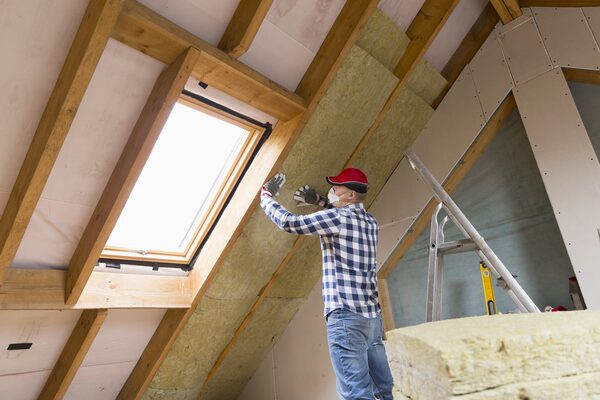
Room in roof insulation applies to homes where a habitable room sits within the roof space, a common arrangement in bungalows and in converted lofts. This insulation can reduce energy bills by up to £395 per year2. That is the highest single annual figure in the published ranges for any measure covered here, which reflects the fact that a room in roof has a large exposed surface area and is often poorly insulated at the rafters and the party walls.
The measure is distinct from loft insulation. A loft insulation job treats the horizontal ceiling joists and leaves the roof space cold. Room in roof insulation treats the sloping surfaces and the gable walls that bound the living space, which is a different and more involved piece of work. The two are not interchangeable, and a home with a converted loft does not get the room in roof benefit from laying more mineral wool on the floor of the loft.
The nearest comparable figure for roof work is the top-up calculation: topping up roof insulation from 120 mm to at least 270 mm will help save around £17 a year in GB and £20 in NI7. The distance between £17 and £395 is the distance between topping up an already insulated roof and insulating a room that has effectively none.
For a household in a bungalow or a loft conversion, room in roof insulation is worth pricing alongside loft insulation, because the two are often confused and the savings are not comparable.
How much of your energy use insulation can cut overall
The overall effect of insulation on a household's energy use is best read from the gas figures rather than the bill figures, because they strip out price changes. Homes insulating their lofts or cavity walls would have reduced their gas usage from typical levels by 6% or 12% respectively27. That is the demand reduction itself, and it is the number that matters for a household thinking about how much bought energy it needs.
The Energy Saving Trust estimate that an un-insulated dwelling loses a third of all its heat through the walls and a further quarter through the roof gives the size of the prize20. Those two routes together are the majority of heat loss in an uninsulated home, and they are the two that insulation addresses most directly.
Energy efficiency measures such as wall or loft insulation, if installed properly, can reduce overheating risk whilst also reducing households' energy use28. That dual effect matters in a warming climate and in well-glazed homes, and it is one of the reasons insulation is treated as a fabric measure rather than a winter-only one.
The limits are worth stating plainly. Insulation and energy efficiency are modelled to provide around 9.9% of domestic abatement by 2050, which means the majority of the reduction is expected to come from changing how homes are heated rather than from fabric alone29. In the Northern Ireland Sustainable Energy Programme, innovative schemes accounted for approximately 5% of total energy savings in 2024/25, an increase of 3% from 2023/2430.
For a household's energy independence, insulation does one thing well and one thing only: it reduces the heat that escapes, so less bought energy is needed to hold a comfortable temperature. It does not generate anything, does not store anything, and does not remove the connection to the grid or to a fuel supplier. What it does is lower the baseline that every later decision, including heating system choice and any generation, is sized against. That is why it sits early in a fabric first sequence and why it is usually assessed before generation is added.
Grants and support for insulation
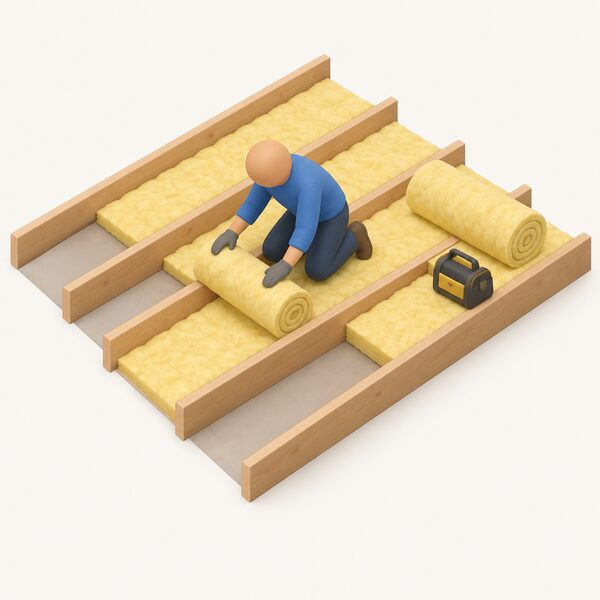
Grant support for insulation is not uniform across the UK, and the schemes that publish the clearest figures are in Northern Ireland. The Keep Warm Discount Scheme and Help to Insulate both offer a grant of 40% towards the cost of cavity wall insulation and / or loft insulation, up to £650 maximum grant per insulation measure and up to £1,000 maximum grant for cavity wall insulation involving extraction and refill, with a hot water tank jacket as a fully funded additional measure31. The Affordable Warmth Scheme may pay grant aid up to £10,000 where a home is of solid wall construction and needs insulation32.
Support in England, Scotland and Wales is delivered through different routes, and the schemes change. The practical step is to check what is open before work is ordered, since grant funding is usually tied to a specific measure and a specific eligibility route. Free and impartial advice services exist in each nation, and a home energy assessment or an advice service can establish which measures a home qualifies for.
Payback and how insulation compares with other upgrades
Payback is the figure that decides priority for most households, and the published periods are short for the cheaper measures. Professionally installed loft insulation will typically take a couple of years to pay for itself through the savings it produces1. Cavity wall insulation will likely take only five years or less to make back the cost through the money saved yearly on energy bills8. Loft insulation and cavity wall insulation can pay for themselves in just a few years33.
Those periods are short compared with most home energy equipment, and they are the reason insulation tends to come before generation in a planned sequence. A payback comparison across measures puts the fabric work ahead of most alternatives on this measure alone.
The comparison with solar panels is not a like-for-like one. Solar panels generate electricity, which offsets imported power; insulation reduces the heat a home loses, which offsets whatever fuel heats it. The two act on different parts of the household energy picture, and insulation changes the size of the demand that any generation or heating system has to meet. Solid wall insulation also brings summer benefits, helping create a more even temperature in the home, helping prevent condensation on the walls and ceilings, and reducing the amount of heat building up inside during summer hot spells22.
For a household working through a plan, the sequence that the evidence supports is fabric first: reduce the heat lost, then size whatever comes next against the smaller demand. The order of energy improvements follows from that logic, and insulation savings are the figures that make the case for starting there.
Sources33 cited
- Loft insulation costs and savings, Which?, 2026-05-05
- Room in Roof insulation, Insulation Assurance Authority, 2026-09-20
- Insulation grants, Which?, 2025
- Retrofit, Act on Energy, 2026
- INCA 18 benefits of EWI, SWIGA, 2026-09-20
- Energy retrofit possibilities, Scottish Government, 2023-11-28
- Top energy saving ideas for your home improvement project, Energy Saving Trust, 2026-08-03
- Cavity wall insulation, Energy Saving Trust, 2026-05-08
- Help to save households money and deliver cleaner heat to homes, GOV.UK, 2024-11-21
- Taxpayers facing £18 billion bill for failure to insulate UK homes, ECIU, 2022-09-20
- Energy efficient home improvements, CPA, 2026-05-07
- Easy ways to save energy, Home Energy Scotland, 2026-09-20
- Landlords' experiences of energy efficiency measures, Nesta, 2025-11-11
- How to use a thermal camera to cut energy bills, Which?, 2026-01-21
- Draught-proofing, Which?, 2026-05-05
- Save energy and money, Consumer Council, 2026-09-20
- DIY vs professional home insulation, Uswitch, 2025-11-07
- Heating technologies to suit your home, nidirect, 2026-09-02
- How to keep your home cool in hot weather, Centre for Sustainable Energy, 2026-07
- Scottish House Condition Survey 2024 key findings, Scottish Government, 2026-02
- HEE Stats Detailed Release March 23, GOV.UK, 2023-03-30
- Solid wall insulation, Planning Portal, 2026
- Guide to conversion of traditional buildings, Scottish Government, 2026-08-10
- Tips to improve the EPC rating of your home, Energy Saving Trust, 2026-08-03
- Floor insulation, Centre for Sustainable Energy, 2025-08
- Energy saving upgrades for home renovation, Energy Saving Trust, 2026-05-05
- Cutting the green crap has added £22bn to UK energy bills since 2015, Carbon Brief, 2024-06-18
- Deepening our understanding of summertime overheating in homes, Climate Change Committee, 2022-10-04
- Delivering clean heat: a policy plan, Nesta, 2050
- NISEP Annual Report 2024-25, Utility Regulator, 2024
- NISEP List of Schemes 2026-27, Utility Regulator, 2026-04
- Affordable Warmth Scheme, Northern Ireland Housing Executive, 2026-09-17
- Upgrading and replacing your boiler, Centre for Sustainable Energy, 2026-06
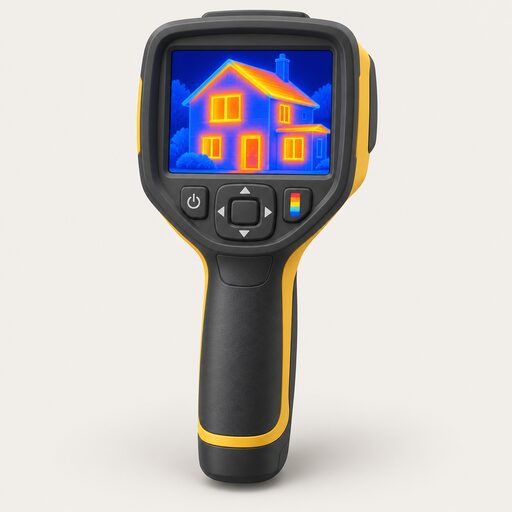 Insulation Savings and PaybackHow much can you really save by adding insulation, and does it depend on your home, your heating and how you use it?
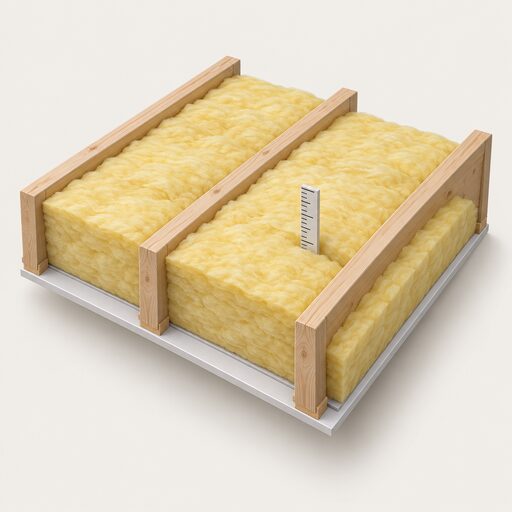 Loft InsulationHow much loft insulation do you need, and is your current depth enough?
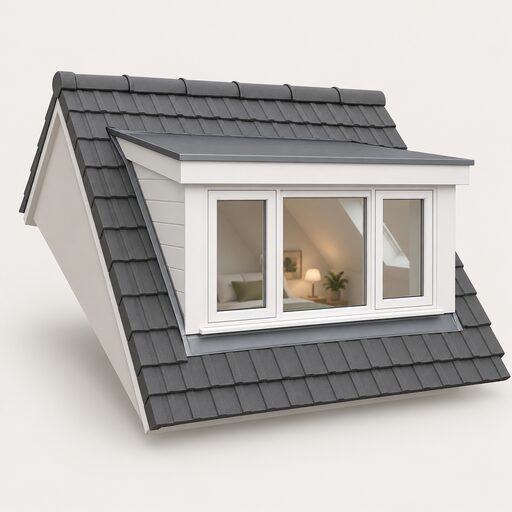 Room-in-Roof InsulationTurning a loft into a room changes how the roof keeps heat in, so the insulation has to work with the ventilation rather than being squeezed in afterwards.
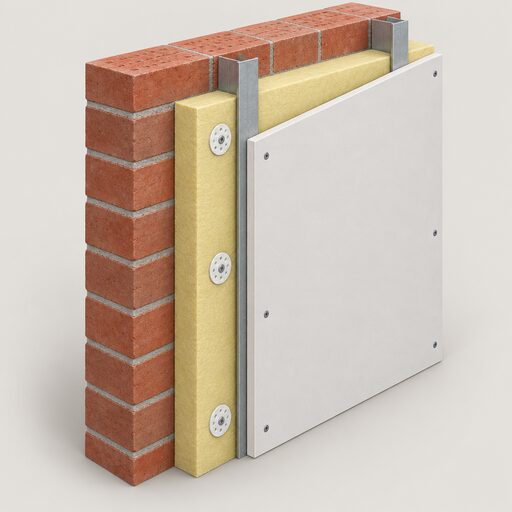 Solid Wall InsulationSolid walls lose far more heat than cavity walls, so what can actually be done about it?
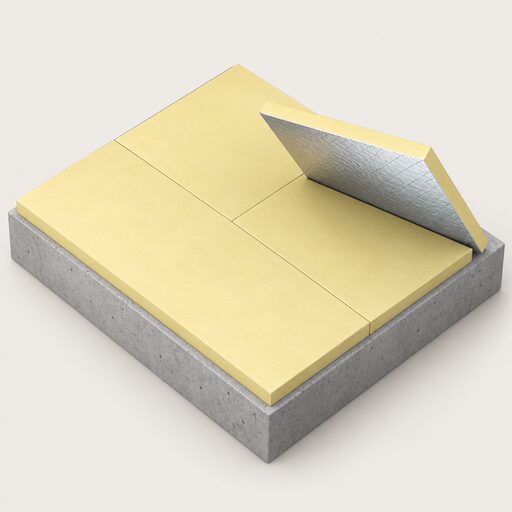 Floor InsulationHow much warmth escapes through the floor, and is it worth insulating?
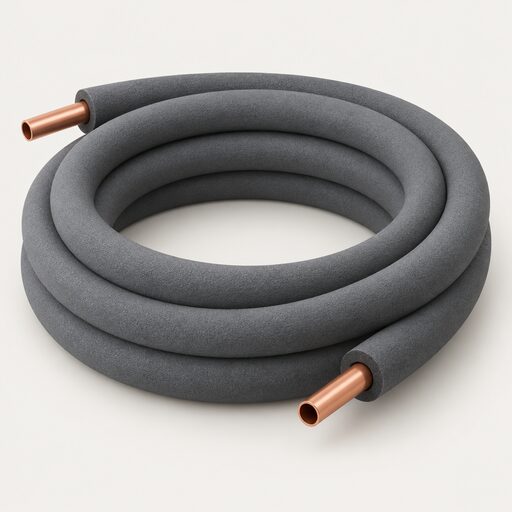 Insulation a Heat Pump NeedsWill a heat pump still work if your home is not well insulated, and would you need to add loft, wall or floor insulation first?