In this guide
- The Market at a Glance
- How Many Suppliers and Big Six
- What a Supplier Does
- The Price Cap and Latest Levels
- Why Suppliers Fail
- Credit Balances After a Bust
- Large Suppliers and Challengers
- Green Tariffs and Time of Use
- Northern Ireland Market
- How Suppliers Make Money
- Switching and Debt Rules
- Hardship Funds and Support
- Regulators and Consumer Bodies
- What This Means for Households
UK Energy Suppliers: The Full Guide to Who Supplies Your Gas and Electricity
An energy supplier is the company responsible for providing energy to homes and businesses. It holds the contract with the household, sends the bill and buys the energy on the household's behalf1. In Great Britain, Ofgem's retail market report of April 2025 counted 23 domestic energy suppliers and 72 business suppliers active in the market. Six large companies held 91% of the domestic market, and Octopus was the largest electricity supplier and second largest gas supplier2.
The count moves. A figure attributed to Ofgem put the number of suppliers operating in the UK at 17 in April 2026. At March 2026, British Gas was the largest gas supplier and second largest electricity supplier, E.ON Next was the third largest supplier, and EDF was the fifth largest3. Ofgem regulates this market in England, Scotland and Wales only4. Northern Ireland is a separate market with 5 electricity suppliers and 2 gas suppliers5.
Two other facts shape what a household can expect from a supplier. First, a price cap limits what suppliers can charge on default tariffs in Great Britain. It was set at £1,641 for a typical household for 1 April to 30 June 20266. Second, suppliers can and do fail. 29 of them failed between July 2021 and May 2022, affecting nearly four million households7. When that happens the gas and electricity stay on and Ofgem moves customers to a new supplier8.
Who supplies gas and electricity in the UK: the market at a glance
The UK has two retail energy markets. Great Britain (England, Scotland and Wales) is one market under one regulator. Northern Ireland is another, with its own suppliers and its own way of setting prices. Most of this page concerns Great Britain, and Northern Ireland has its own section below.
In Great Britain the ranking of suppliers has changed in recent years. Ofgem's April 2025 report names Octopus as the largest electricity supplier and second largest gas supplier2. Which? reports the same position and places British Gas first for gas9. At March 2026 British Gas was the largest gas supplier and second largest electricity supplier, E.ON Next was third largest overall, and French-owned EDF was fifth3. Customer numbers by company are set out on the energy supplier market share page, and parent companies on who owns which energy supplier.
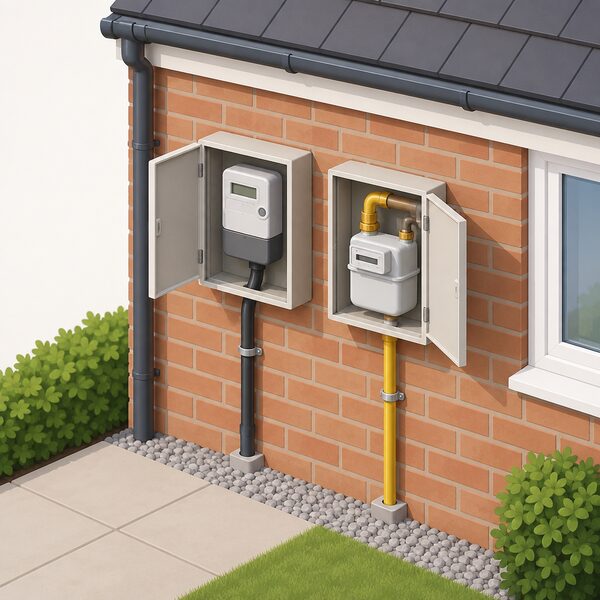
A supplier does not own the wires or pipes that reach the home. Those belong to network companies. There are 22 local distribution operators across the UK, of which 14 deliver electricity and 8 transport gas10. The network operator does not change when a household switches supplier. The Energy Networks Association website shows which operator serves a given address11. This matters to anyone trying to find out who supplies their energy, because the network company is often the first point of contact when there is no bill to look at.
What suppliers sell is still closely tied to gas. Between September and November 2025, gas accounted for 33.3% of electricity generation by Major Power Producers12. The Welsh Government stated in March 2026 that the UK continues to have robust energy supplies13. Physical supply is not the same as price, however. The House of Commons Library records that a sharp rise in gas prices forced several suppliers out of the market14. A household's exposure to its supplier is therefore also, indirectly, an exposure to the wholesale gas market.
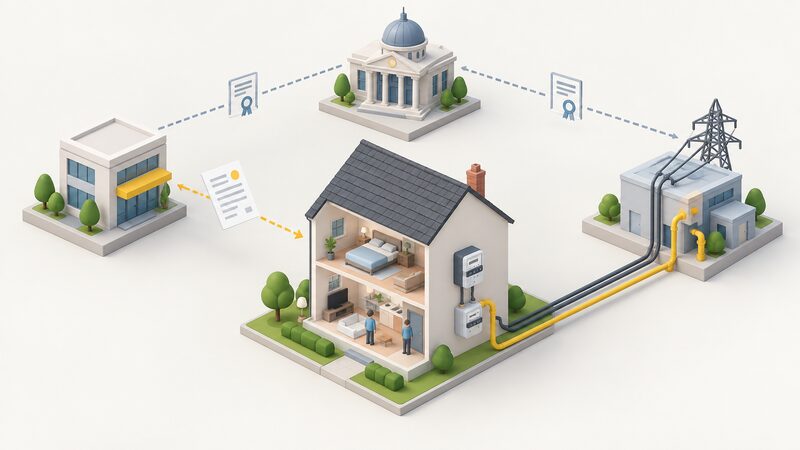
How many energy suppliers are there, and who are the Big Six?
Ofgem's glossary defines the Big Six as Centrica plc (parent company of British Gas), E.ON UK, Scottish and Southern Energy (SSE), RWE npower, EDF Energy and ScottishPower15. These companies dominated household supply for years. In September 2016 only 14% of domestic consumers bought their electricity from anyone else16. When the Competition and Markets Authority examined the market, it found that 70% of the customers of the six largest firms were on default tariffs. That finding led the government to decide in 2018 that bills should be capped7.
The original six have not all survived as household brands. Which? reports that four of them still supply more than half of energy customers, naming British Gas, EDF Energy and E.ON Next among them9. The market remains concentrated, but under different names. Ofgem's April 2025 figure of 91% refers to "six large companies", which now include Octopus, a firm that was not one of the original Big Six2. The Big Six energy suppliers page explains what became of each company.
Different documents give different supplier counts because they count different things on different dates:
| What was counted | Number | Date | Source |
|---|---|---|---|
| Domestic suppliers active in Great Britain | 23 | April 2025 | Ofgem2 |
| Business suppliers active in Great Britain | 72 | April 2025 | Ofgem2 |
| Suppliers operating in the UK | 17 | April 2026 | Uswitch, citing Ofgem3 |
| Suppliers rated for renewable sourcing | 14 | March 2026 | Which?17 |
| Domestic suppliers whose terms Ofgem reviewed | 63 | May 2020 | Ofgem18 |
| Suppliers on the Energy Price Guarantee scheme | 30 | November 2024 | National Audit Office19 |
| Northern Ireland electricity and gas suppliers | 5 and 2 | 2026 | Consumer Council5 |
The direction of travel is clear. Ofgem engaged with 63 domestic suppliers in 2020, counted 23 in 2025, and the most recent figure is 17. The reason is the wave of failures described further down this page. Households now have fewer companies to choose from than at the peak. Companies outside the six large groups are covered on the challenger and small energy suppliers page.
What a supplier actually does: the supplier hub model
Britain's retail energy market is built on what is called the supplier hub model. Nesta describes it as having been in place for 30 years, with suppliers acting as the single link between customers and the wholesale energy market20. Ofgem made the same point in 2017 when it opened a review of these arrangements:
"the market was designed with suppliers as the primary interface between energy consumers and the energy system"
In practice almost everything a household pays for energy passes through one company. That includes wholesale energy, network charges and the cost of government schemes. The supplier collects the money and passes each share on to whoever is owed it.
The model also makes suppliers responsible for delivering government policy. Under the Great British Insulation Scheme, energy suppliers are responsible for meeting their obligations. They must also make sure that any members of the supply chain acting on their behalf comply with the scheme requirements22. The Energy Company Obligation requires energy companies to help install energy efficiency measures for low income and vulnerable households, and for hard-to-treat properties, in Great Britain23. Installers must be TrustMark approved to access ECO funding24. The main duties are:
- Energy efficiency. Suppliers carry obligations under ECO and the Great British Insulation Scheme22.
- Feed-in Tariffs. The cost is shared between licensed electricity suppliers according to market share. Market share is the electricity a supplier delivers in Great Britain, less exempt supply to qualifying energy intensive industries, as a percentage of the total25.
- Warm Home Discount. The government is changing the reconciliation process so that supplier obligations are settled against the actual volumes of energy supplied26.
- Emergency price support. The Energy Prices Act 2022 required licensed electricity suppliers to take all reasonable steps to join the domestic electricity price reduction scheme as soon as reasonably practicable27.
Suppliers are also subject to a Universal Service Obligation. They have to offer terms to all customers, and they cannot disconnect a customer at the end of a contract20. A household does not lose its supply because a fixed deal has ended. It moves onto the supplier's default tariff, and that tariff is covered by the price cap. The rate paid before any tariff is chosen is explained under deemed contract rates.
The price cap: how bills are limited, and the latest confirmed levels
The price cap limits the unit rates and standing charges that suppliers may charge on default tariffs in Great Britain. The Welsh Government's guidance says Ofgem sets it to protect people from a "loyalty penalty"28. The cap does not limit a household's total bill. The headline figure describes a household with typical consumption, and a home that uses more energy pays more.
The most recent confirmed headline levels are in the table below. Between the two 2026 levels the cap fell by £117, from £1,758 to £1,6416.
| Period | Typical annual level | Source |
|---|---|---|
| Q4 2023 | £1,834, with a planned rise to £1,928 to follow | House of Commons Library29 |
| 2025 | Bills stayed between £1,700 and £1,900 | Welsh Government28 |
| Before 1 April 2026 | £1,758 | Welsh Government6 |
| 1 April to 30 June 2026 | £1,641 | Welsh Government6 |
Two pairs of published figures are not reconciled. The House of Commons Library briefing that gives £1,834 for Q4 2023 also contains a cap figure of £3,116, with no explanation of the difference29. For April to June 2026, the Welsh Government's price cap guidance gives £1,772 for a household that pays when the bill arrives. A figure of around £1,711 also appears in that guidance, and it is not stated which one applies28. What is clear is that the payment method changes the capped amount, and that paying on receipt of the bill costs more than Direct Debit. The ways to pay an energy supplier page compares the payment methods.
The cap is not driven by wholesale prices alone. When Ofgem announced the level for October to December 2025, it attributed the rise to higher costs of transporting energy in Great Britain and to costs for government schemes and essential support30.
Regional electricity levels
The cap is set separately for each region, and standing charges differ noticeably between them. Ofgem's benchmark electricity figures for 1 July to 30 September 2026 include the following31:
| Region | Standing charge, single-rate | Annual bill at 2,500 kWh, single-rate | Standing charge, multi-rate | Annual bill at 3,400 kWh, multi-rate |
|---|---|---|---|---|
| Northern | £223.48 | £824.03 | £220.70 | £986.44 |
| Southern | £172.77 | £801.74 | £172.65 | £973.28 |
| South East | £189.27 | £824.22 | £190.23 | £996.63 |
The October to December 2025 tables used different consumption benchmarks (3,100 kWh single-rate and 4,200 kWh multi-register), so the two periods cannot be compared directly. For Standard Credit in that period the Midlands levels were £212.30 at nil consumption and £1,011.26 at 3,100 kWh. The Eastern levels were £196.61 and £1,023.11. A second set of Eastern figures is also published for the same period (£167.73 and £926.96 single-rate, £169.16 and £1,152.98 multi-register), and the two sets are not reconciled, so both are given here32.
Why suppliers fail: the collapse of around 30 firms
The Public Accounts Committee recorded that 29 energy suppliers failed between July 2021 and May 2022, affecting nearly four million households. It attributed the failures to a lack of financial resilience in many suppliers combined with the rise in wholesale prices7. Nesta takes a longer period and counts 31 energy companies that ceased trading between early 2021 and 202320. The two figures differ because the periods differ, and both sources describe the same episode.
The mechanism was straightforward. The House of Commons Library states that the high gas price rise forced several energy suppliers out of the market14. A supplier that had sold energy at a fixed or capped price, and had not already bought that energy in advance, had to buy it at wholesale prices well above what customers were paying. Small, thinly capitalised firms ran out of money first, but larger firms were squeezed as well. In May 2022 ScottishPower wrote that "our retail business is losing money during what is an incredibly difficult time for many of our customers"34.
Two things followed. Nesta notes that the level of regulation in the market has increased since the failures20. The rules now applied to suppliers' finances are described on the energy supplier financial resilience rules page. The market also shrank, which explains the fall in supplier numbers described earlier. A company-by-company record is kept on the energy supplier failures page, with separate pages on Avro Energy, the cost of the Bulb collapse and Shell Energy's exit from household supply.
The lesson for a household is that a supply contract is only as durable as the company behind it. A low fixed price from a supplier that later fails does not survive the failure. What does survive is set out in the next section.
Supply and credit balances when a supplier goes bust
Ofgem's guidance is clear that the supply continues:
"You do not need to do anything if your current supplier goes out of business. We'll automatically move you to a new supplier, and make sure your energy supply is not interrupted."
Ofgem's page on supplier failure says the same. If a supplier goes out of business because of financial problems, the electricity and gas are still supplied to the home or business and the supply will not be cut off8. Which? gives the same answer for the case where a supplier is bought by another firm9.
The process runs broadly in this order:
- The supplier stops trading. The gas and electricity continue to flow because the network companies, not the supplier, deliver them8.
- Ofgem automatically moves the customers to a new supplier, and the household does not have to arrange this35.
- The household's credit balance is protected. Ofgem's guidance says "your credit balance will be protected unless you are a business"8.
- The new supplier gets in touch and the household is placed on one of its tariffs. The old tariff ends with the old supplier.
The detail of how the replacement supplier is chosen is on the supplier of last resort page. Related questions are answered under what happens if an energy supplier goes bust, getting credit back after a supplier has failed and when a switch is possible after a failure. For independence, the point is that the physical supply is resilient to a supplier's collapse but the price is not. Customers who are moved lose the deal they had.
Large suppliers, challengers and white labels
Household suppliers fall into three broad types. The large groups hold most customers, and Ofgem tracks them individually. Its Energy Consumer Satisfaction Survey, run with Citizens Advice, covers domestic consumers in England, Scotland and Wales. It publishes two indicators for seven supply groups: overall satisfaction with the supplier, and satisfaction with the customer service received36. The July 2024 sample sizes give a rough indication of each group's scale:
| Supply group | Respondents, July 2024 |
|---|---|
| British Gas | 1015 |
| Octopus Energy | 796 |
| E.ON / E.ON Next (including Sainsbury's Energy) | 556 |
| OVO Energy | 373 |
| EDF Energy | 371 |
| Scottish Power | 257 |
| Utilita | 130 |
Those figures are survey bases, not customer numbers36. The scores are reported on the energy supplier customer service ratings page. Individual company profiles include British Gas, EDF, E.ON Next, ScottishPower and Utilita. Side-by-side pages such as Octopus Energy vs British Gas and OVO Energy vs Octopus Energy set the facts for two companies against each other.
Challengers are the smaller licensed suppliers outside those groups. They include So Energy, Outfox the Market, Utility Warehouse, Good Energy and Ecotricity. New licences are still being issued. On 12 March 2026 Ofgem announced that Tesla Energy Ventures Limited had been granted a licence to supply electricity to domestic and non-domestic consumers. The licence applies in Great Britain only38.
White labels: a brand without its own licence
A white label sells energy under its own brand while another company's licence covers the supply. The arrangement shows up in official records. Ofgem's Feed-in Tariff licensee list shows the brand 100Green with Green Energy (UK) Ltd as its encompassing licence39. The satisfaction survey folds Sainsbury's Energy into the E.ON Next group36. This affects complaints in a practical way. The Energy Ombudsman requires a dispute to be raised against the correct supplier, meaning the one whose company name is written on the account holder's bill40. More detail is on the white label energy brands page.
Whatever type of supplier it chooses, a household relies on a licensed company remaining solvent. With a white label it also relies on the commercial agreement between the brand and its licence holder.
Green tariffs and time-of-use rates
Interest in green tariffs is high, but understanding of them is patchy. Ofgem's consumer survey, carried out between 19 August and 17 September 2021, produced the following findings41:
- 51% of consumers said they were on a green tariff or likely to switch to one. 24% of consumers said they were likely to switch in the next five years.
- Take-up was higher among 16 to 34 year olds, at 31%.
- 34% of engaged consumers were on a green tariff, compared with 16% of disengaged consumers.
- 23% answered "don't know" when asked what a green tariff means.
- 9% said they were very likely to get an electric vehicle in the next five years.
The figure of 23% matters because the label "green" on a tariff does not say how the electricity behind it is sourced. In March 2026 Which? asked suppliers in Great Britain exactly how they sourced their renewable energy. It rated 14 suppliers in its analysis17. The green energy tariffs and fuel mix disclosure pages explain what a supplier must publish, and Good Energy vs Ecotricity compares two suppliers that specialise in green tariffs.
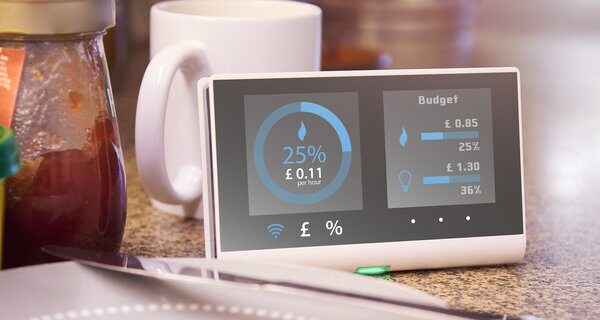
Time-of-use tariffs charge different rates at different times of day. There is no fixed official list of which supplier offers which time-of-use tariff, because the products change frequently. Regulation does recognise multi-rate supply, since the price cap publishes separate benchmark levels for multi-rate meters in every region31. These tariffs matter most to households with an electric vehicle, a battery or a heat pump, which are the households working hardest to reduce their dependence on a supplier. They usually need a smart meter, a subject covered under suppliers and smart meter installation.
Northern Ireland: a separate market with its own suppliers

Ofgem's remit ends at the Irish Sea. Northern Ireland has 5 electricity suppliers and 2 gas suppliers. The Consumer Council notes that energy costs are currently high, with some variation between suppliers5. No price cap of the Great Britain kind applies. The UK government's Energy Price Guarantee guidance states that energy prices were not capped in Northern Ireland and that suppliers have the flexibility to set their tariffs independently to reflect their costs of operating33. As a result, prices change supplier by supplier and tariff by tariff instead of every three months under a single formula. A household cannot look to one regulated figure as a benchmark.
Support for consumers is organised differently as well:
- The Consumer Council offers an energy price comparison tool covering electricity and gas tariffs for all suppliers in Northern Ireland42.
- The Consumer Council NI and Northern Ireland Energy Advice give free, independent and impartial energy advice to all domestic householders, including referrals to grants43.
- Suppliers refer customers who are struggling to pay to organisations such as Advice NI, which offer free, independent debt advice42.
The energy suppliers in Northern Ireland page covers the market in full, with profiles of Power NI, SSE Airtricity, firmus energy, Click Energy and Budget Energy. Gas is supplied by network area, as explained under Northern Ireland gas tariffs. The Consumer Council for Northern Ireland page describes that body's role. The Warm Home Discount does not apply in Northern Ireland, for reasons set out on the page about Warm Home Discount in Northern Ireland.
How suppliers make money: margins of 1.9% to 2.4% on a capped bill
On default tariffs, a supplier's profit is an allowance built into the price cap, not a figure the supplier sets for itself. The End Fuel Poverty Coalition reported in September 2023 that suppliers were likely to earn 2.4% profit on every average customer's bill from 1 October 2023, up from 1.9% before that date. It calculated that customers would pay less profit to energy firms than before only if their bill was above £4,000 a year44. These figures come from a campaign group's analysis, but they describe how the allowance was designed at the time. A percentage margin on a bill of roughly £1,800 is a small sum per customer, and a supplier's total profit depends on how many customers it has.
Actual results depend far more on how well a supplier buys its energy. Ofgem's wholesale costs review, published in December 2023, looked at a set of cap periods. It found that six suppliers, with a 65% market share between them, had recovered more than their costs by between £10 and £77 per standard variable tariff electricity customer45. The cap assumes a particular pattern of purchasing. Suppliers that bought differently came out ahead or behind it.
The same sector was making losses only a little earlier. ScottishPower said in May 2022 that its retail business was losing money34, and that was also the period in which 29 suppliers failed7. Thin margins and volatile wholesale costs explain both the failures and the more recent over-recoveries. The energy supplier profits and margins page follows the published results company by company.
Switching supplier and the rules on debt
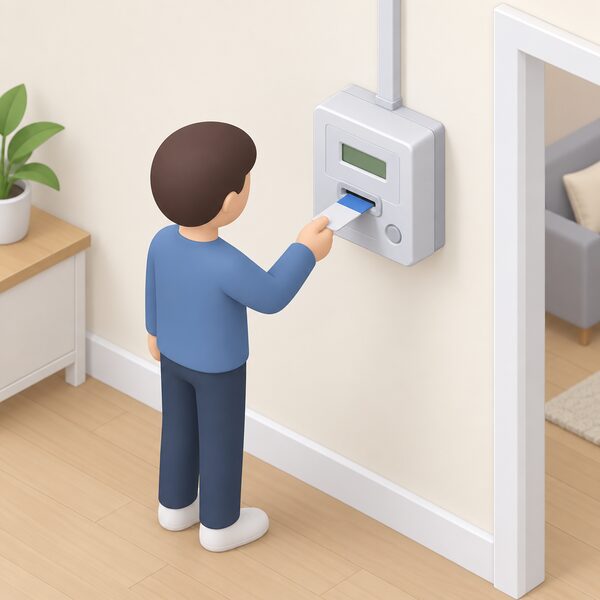
A household can change supplier at any time, and the process is automated. The Energy Switch Guarantee sets out what suppliers promise during a switch, and switching compensation and guaranteed standards covers what is owed when a switch goes wrong. Debt is the main thing that can stop a switch:
- Debt under 28 days old. Ofgem states that any money owed should be added to the final bill35.
- Prepayment debt. Prepayment customers with less than £500 of debt per fuel can switch under the Debt Assignment Protocol46.
- Moving from prepayment to credit. Citizens Advice states that a customer who owes money cannot change back to paying by credit until the debt has been paid. A customer who owes nothing can move to credit47.
- Tenants. A tenant who pays the supplier directly can switch supplier or tariff, including with a prepayment meter. A tenant whose landlord pays the supplier cannot do so47.
- Green Deal loans. The household can change electricity supplier as long as the new supplier is taking part in the Green Deal scheme48.
Further detail is on the pages about switching supplier while owing money, whether a supplier can block a switch and energy supply in rented homes.
Hardship funds and vulnerability support: what suppliers owe their customers
Ofgem's guidance lists what a customer who is struggling to pay, or who expects to get into difficulty, can ask a supplier to do. The supplier can agree a payment plan or a payment break or reduction, review current payments and debt repayments, and give access to financial support known as hardship funds49. Supplier schemes and grants can include help with paying off energy debt50. The schemes that individual companies run are listed on the supplier hardship funds and trusts page.
These are duties that carry on for as long as the customer is in difficulty. One Energy Ombudsman case study concerns a consumer who had agreed to pay off a debt over 12 months and was struggling to keep up with ongoing payments. The supplier had not reviewed the arrangement when the consumer's financial circumstances changed51. Suppliers' performance is uneven. Ofgem's November 2022 review of how suppliers support customers in vulnerable situations placed suppliers in groups. Its second group, those identified with moderate weaknesses, included E (Gas & Electricity), Ecotricity and Green Energy UK52. The relevant standards are described under what suppliers must do for vulnerable customers and supplier conduct on prepayment and debt.
Help with energy efficiency measures is not limited to a household's own supplier. Ofgem states that a household can contact any of the obligated suppliers about ECO, even one that is not its energy provider. Ofgem also publishes a page of contact details for obligated suppliers53. Under the Great British Insulation Scheme, suppliers can use their own energy debt data to identify eligible households and refer them through the flexible eligibility routes55. In Northern Ireland, suppliers refer struggling customers to free, independent debt advice from organisations such as Advice NI42. The Warm Home Discount and suppliers page covers the rebate scheme.
Ofgem, the Ombudsman and the consumer bodies: who regulates what
Ofgem describes itself as the independent energy regulator for England, Scotland and Wales, and the UK government describes it in the same terms4. In law the regulator is the Gas and Electricity Markets Authority (GEMA). Ofgem carries out GEMA's day-to-day functions, which include administering schemes such as the Domestic Renewable Heat Incentive57. Ofgem's remit is growing. The Energy Act 2023 named it as the regulator for heat networks in Great Britain, and it consulted on fair pricing protections for those customers in 202558. Homes supplied in that way are covered on the heat network suppliers page.
| Body | Role | Where |
|---|---|---|
| Ofgem, acting for GEMA | Licenses and regulates suppliers and networks, sets the price cap and administers schemes4 | Great Britain |
| Energy Ombudsman | Approved by Ofgem to handle service disputes in the energy sector59 | Great Britain |
| Consumer Council | Provides a price comparison tool and free energy advice42 | Northern Ireland |
A complaint goes to the supplier first and only afterwards to the Ombudsman. The Ombudsman also handles disputes involving network operators11. The process is set out on the pages about complaining about an energy supplier, the Energy Ombudsman and when a complaint can be taken to the Ombudsman. The advice and advocacy bodies in each nation are described on the energy consumer bodies page, and arrangements particular to Scotland under energy suppliers in Scotland. Fuels that are not regulated in this way, including heating oil and LPG, are covered on the LPG and heating oil suppliers page.
What a supplier means for household energy independence
Under the supplier hub model, a household that draws any energy from the grid depends on a licensed supplier. It cannot buy from the wholesale market directly, because suppliers act as the single link to it20. In return the household has real protections. There is a universal obligation on suppliers to offer terms, a cap on default prices in Great Britain, continued supply if the supplier fails, and a protected credit balance20.
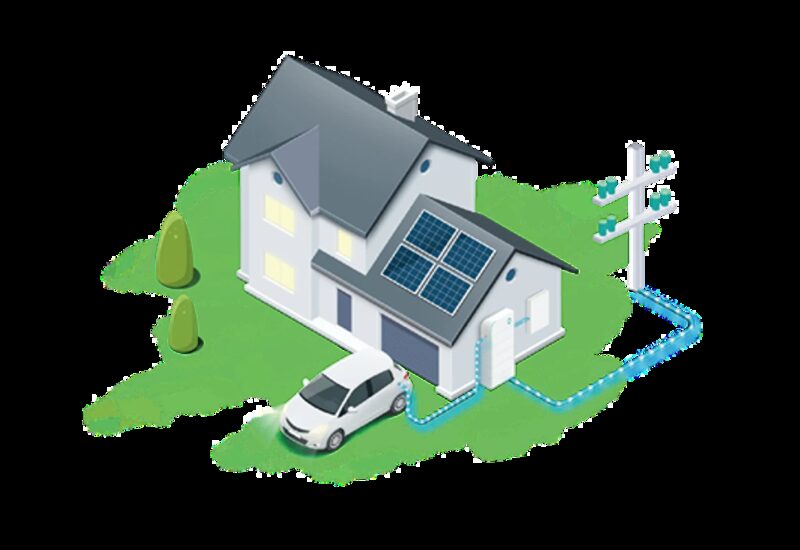
Several kinds of dependence remain. Prices follow a wholesale market in which gas still produced 33.3% of major producers' electricity in late 202512. A fixed tariff ends if the supplier fails35. Northern Ireland households have no price cap at all33. Standing charges are payable however little energy a home imports. The capped single-rate standing charge in the Northern region was £223.48 a year for July to September 2026, and that is what such a home pays before it uses a single unit31. Generating and storing energy at home reduces the number of units bought. It does not end the relationship with a supplier, because the supplier also pays the household for electricity it exports. The energy suppliers and household energy independence page looks at this in more detail.
Sources59 cited
- Complain about your energy supplier, Ofgem, 2026
- State of the energy market report: retail, Ofgem, 2025-04-15
- Big Six energy suppliers guide, Uswitch, 2026
- Customers' satisfaction with their supplier: supplier level findings, July to August 2025, Ofgem, 2025-12-02
- Switching electricity or gas supplier, Consumer Council for Northern Ireland, 2026
- Written statement: fuel poverty, Welsh Government, 2026-02-26
- Public Accounts Committee report on energy supplier failures, UK Parliament, 2022-11-13
- What happens if your energy supplier goes out of business, Ofgem, 2026
- Which? energy survey results, Which?, 2026-01-19
- Who is my gas and electricity supplier?, Confused.com, 2026-07-03
- Network operators, Energy Ombudsman, 2026
- Energy trends and prices statistical release, 29 January 2026, UK Government, 2026-01-29
- Written statement: rising energy costs, Welsh Government, 2026-03-12
- Research briefing CBP-9340, House of Commons Library, 2022-01
- Energy terms explained, Ofgem, 2026
- Future Insights Series paper 4, Ofgem, 2017
- Differences between green energy suppliers, Which?, 2026-03
- Open letter on supply licence condition 21BA, Ofgem, 2020-05-07
- Energy bills support: an update, National Audit Office, 2024-11-14
- Future of energy retail report, Nesta, 2024-04-29
- Future supply market arrangements: call for evidence, Ofgem, 2017-11-14
- Great British Insulation Scheme: energy suppliers, Ofgem, 2026
- Energy Companies Obligation, Bristol City Council, 2026
- Heat in buildings: quality assurance statement, Scottish Government, 2022-06-07
- Feed-in Tariffs guidance for licensed electricity suppliers, Ofgem, 2024-09-06
- Warm Home Discount cost recovery consultation, UK Government, 2025-12-08
- Energy Prices Act 2022, legislation.gov.uk, 2022-10-25
- Energy price cap explained, Welsh Government, 2026-03-04
- Research briefing CBP-9714, House of Commons Library, 2026-08-28
- Changes to the energy price cap between 1 October and 31 December 2025, Ofgem, 2025-08-27
- Energy price cap levels, 1 July to 30 September 2026, Ofgem, 2026
- Energy price cap levels, 1 October to 31 December 2025, Ofgem, 2025
- Energy Price Guarantee up until 30 June 2023, UK Government, 2026
- Cost of living statement, May 2022, ScottishPower, 2022-05-05
- Switch your home energy supplier, Ofgem, 2026
- Customers' satisfaction with their supplier: supplier level findings, July 2024, Ofgem, 2024-11-25
- Energy Consumer Satisfaction Survey: January 2025, Ofgem, 2025
- Tesla Energy Ventures Limited granted electricity supply licence covering Great Britain, Ofgem, 2026-03-12
- Feed-in Tariff licensee contact details, Ofgem, 2026
- Raise a dispute: Digital Power Energy Supply UK Ltd, Energy Ombudsman, 2026
- Consumer Survey 2021: decarbonisation and home energy use, Ofgem, 2021
- Advice if you're struggling to pay your energy bills, nidirect, 2026
- Low carbon heating, nidirect, 2026
- Ofgem price cap change sets sky high energy bills for winter, End Fuel Poverty Coalition, 2023-09-26
- Energy price cap wholesale costs review, Ofgem, 2023-12-15
- Improving debt standards in the domestic retail market, Ofgem, 2024-12-12
- Switching energy supplier if you're a tenant, Citizens Advice, 2026
- Green Deal: energy saving for your home, UK Government, 2026
- Getting help if you can't afford your energy bills, Ofgem, 2026
- Get help with your home or business energy bills, Ofgem, 2026
- Case studies: debt and payment, Energy Ombudsman, 2026
- Review of how suppliers support customers in vulnerable situations, Ofgem, 2022-11-22
- Energy Company Obligation: homeowners and tenants, Ofgem, 2026
- Energy Company Obligation: contacts, guidance and resources, Ofgem, 2026
- Great British Insulation Scheme: local authorities, Ofgem, 2026
- Electricity distribution networks study: government response, UK Government, 2025-07-07
- Domestic Renewable Heat Incentive annual report, scheme year 11, Ofgem, 2025-07
- Heat networks regulation: fair pricing protections, Ofgem, 2025-04-30
- Frequently asked questions, Energy Ombudsman, 2026