

In this guide
Good Energy is an independent British energy supplier that has traded for over 25 years and sells electricity it describes as 100% renewable, matched against customer usage over the course of a year1. It is one of the UK's first renewable energy companies, and it holds contracts directly with over 3,000 independent renewable generators2. Its standard variable tariff is exempt from the Ofgem energy price cap, on the basis that the tariff supports renewable generation and costs materially more than the cap allows3.
The practical consequence for a household is a trade: a named renewable supply and a direct relationship with British generators, in exchange for a standard tariff that is not capped and is therefore likely to sit above the capped default rates other suppliers charge. The company's own figures put its half-hourly matching of generation to demand at 87% in 2026, and it reports over 90% real-time matching over the past five years3.
What Good Energy is: 25 years of renewable supply
Good Energy has operated for over 25 years and describes itself as one of the UK's first renewable energy companies1. Its supply model rests on contracts with independent British generators rather than on buying wholesale power and retiring certificates against it. The company states it holds contracts directly with over 3,000 independent renewable generators2. A separate company page puts the generator community at over 3,300, so the two figures differ and the documents do not resolve which is current2.
That generator relationship is the substance of the offer. A household buying from Good Energy is buying into a supply chain that runs from named British wind, solar, hydro and community generators to the meter, rather than into a tariff that is green on paper only. Independent guidance on green tariffs makes the distinction that matters here: what separates suppliers is whether they buy renewable power directly and how they match it to consumption, not the label on the tariff7.
The company also sells installation services alongside supply, covering solar panels, batteries, heat pumps and EV chargers, and it states it has 25 or more years of renewable energy experience behind that work5. That combination, a supply business and an installation business under one brand, is unusual among smaller suppliers and shapes both the export offer and the customer relationship.
For household energy independence, the position is mixed and worth stating plainly. A Good Energy electricity account still depends on the national grid, on the company as the billing and balancing party, and on the wholesale market for the power it does not generate itself. What changes is the provenance of the matched electricity and the fact that money flows to British generators rather than to an undifferentiated wholesale pool. It does not make a home self-sustaining, and it does not remove the grid. For the wider picture of how suppliers sit against household independence, energy suppliers and household energy independence sets out the options.
How the electricity is sourced: 100% renewable, matched every half hour
Good Energy states that over the course of a year it matches all of the power used by its customers with 100% renewable power from its generator community3. That is an annual matching claim, and it is the standard most green tariffs are built on. What distinguishes Good Energy's published position is the half-hourly figure underneath it.
The company reports that its generators match supply with demand in real time over 90% of the time, working for every half hour of every day, and that it has achieved over 90% real-time matching, meaning energy generated and used within the same half hour, over the past five years3. Its 2026 figure is 87% matched every half hour2. The two numbers describe the same exercise at different points: a five-year record above 90%, and a current-year figure of 87%. Both are the company's own reporting.
Independent guidance on green electricity tariffs is clear that time-matching is the harder test and the more meaningful one, because it reflects whether renewable power is actually available when a household is using it rather than bought in retrospectively7. On that measure Good Energy's published figures are unusually specific for a UK supplier.
"Over the course of a year, we match all of the power used by our customers with 100% renewable power from our generator community."
The limit is structural rather than a matter of effort. Half-hourly matching at 87% means that for roughly one eighth of the time, on the company's own figure, generation and consumption do not line up, and the shortfall is met from the wider market. A household on this tariff is still drawing from a shared grid and still exposed to whatever is on it at that moment. What the tariff buys is a higher proportion of matched renewable power than most alternatives, not independence from the system.
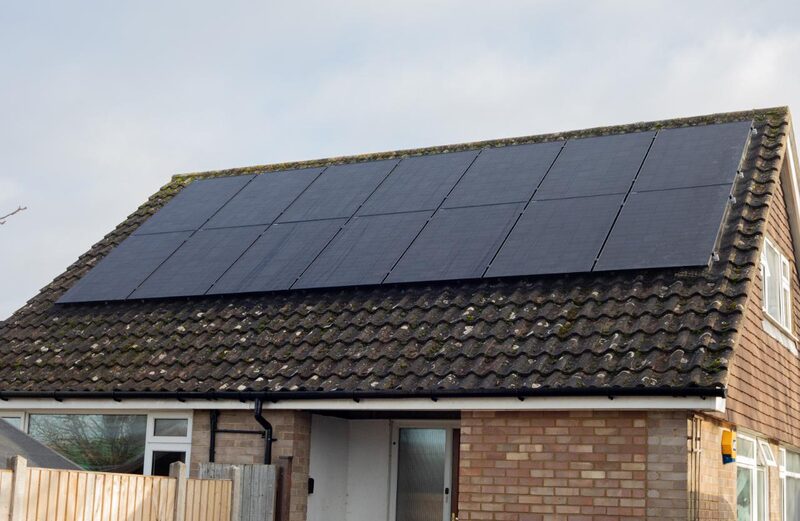
Gas supply: 10% biogas with the rest offset
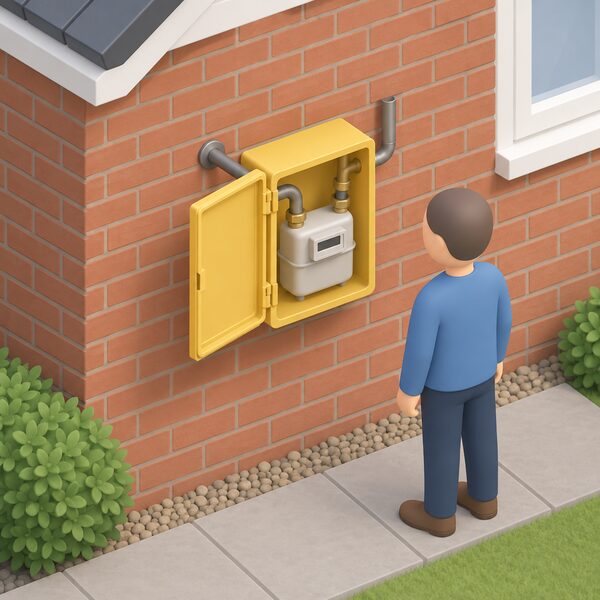
Good Energy's gas product is not renewable in the way its electricity is, and the company is direct about the split. It matches every customer's gas usage over the course of the year with a minimum of 10% renewable biogas, and states that 10% of the gas it supplies is renewable biogas generated in Britain2. Independent guidance records the same figure: 10% of its gas comes from biogas8.
The remaining 90% is offset rather than replaced. Good Energy states that it offsets all the emissions from the gas it supplies by funding projects that improve access to green energy around the world1. That is a carbon offsetting claim, not a renewable supply claim, and the distinction matters for a household weighing what a gas account actually delivers.
| Element | Share | Basis |
|---|---|---|
| Renewable biogas | 10% minimum | Matched against annual gas usage2 |
| Remainder | Balance of usage | Emissions offset through funded projects1 |
The practical position for a household is that a Good Energy gas account keeps the home on the gas grid and on a gas supplier, with the same physical dependence on imported and domestic gas as any other account. The biogas share is real but small, and the offset covers emissions rather than consumption. A household wanting to reduce gas dependence rather than offset it is looking at a different kind of change, and green energy tariffs explains what suppliers are actually selling when they describe a tariff as green.
Tariffs, pricing and the price cap exemption
Good Energy's tariff structure has a feature that no large supplier shares: part of its range sits outside the Ofgem price cap. The company states that its Good Energy Standard tariff is exempt from the price cap because of the additional support it provides to renewables, and that its supply tariffs are exempt due to the support they provide for renewable energy3. Independent guidance confirms the exemption and names the three companies that hold it: Good Energy, 100Green and Ecotricity9.
The exemption is not blanket, and this is where households most often misread the position. Good Energy's Default tariff is covered by the price cap and carries variable, not fixed, rates, and its Deemed tariff is likewise covered by the price cap with variable rates4. The Default tariff carries no exit fee4.
The legal basis is the Domestic Gas and Electricity (Tariff Cap) Act 2018, which sets the cap conditions and provides that they do not apply to domestic customers who benefit from the prepayment charge restriction cap or a replacement cap10. The government exemption for renewable suppliers rests on the argument that their tariffs support renewable generation and that their costs are materially greater than the price cap allows11.
What the cap does and does not cover is worth setting out, because the exemption only means something against that background. The cap protects households on a standard variable or default tariff, and those using a prepayment meter, paying by Direct Debit or by standard credit, with any supplier12. It does not apply to fixed tariffs, business contracts, heat networks or heating oil12. Independent guidance puts it simply: the cap does not apply if a household has signed up to a fixed term tariff13.
For a household, the exemption is the clearest expression of the trade at the centre of this supplier. Choosing the exempt standard tariff means accepting uncapped variable pricing in exchange for the renewable support the exemption is granted for. Choosing a fixed tariff means the cap does not apply either, because fixed tariffs sit outside it by definition. Either way, the capped default rate that most households compare against is not the rate this supplier's standard tariff is held to.
Export rates and solar-plus-battery rewards: up to 25p per kWh
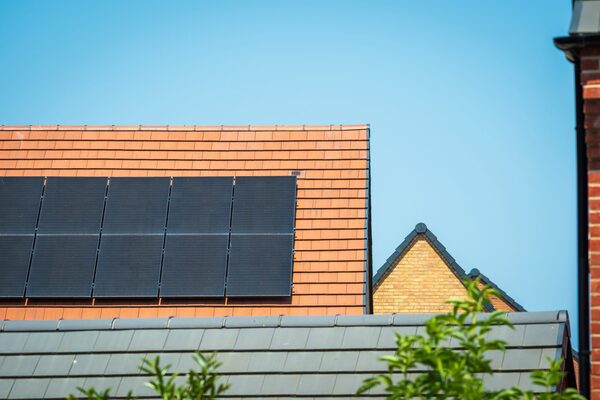
Good Energy's export offer is tied to buying an installation from the company rather than to the supply account alone. It states that it offers highly competitive export rates, allowing a household to sell excess energy back for up to 25p per kWh when installing both a solar and battery system with Good Energy14. The Solar Savings Exclusive export tariff pays 25p per kWh on exported electricity for the first 12 months after installing solar and battery with the company5.
The same 25p per kWh exclusive export tariff for 12 months appears as a feature of the company's Gold installation package5. The rate is therefore a first-year figure attached to a specific purchase, not a standing export rate available to any customer with panels.
| Offer | Rate | Condition |
|---|---|---|
| Solar Savings Exclusive export tariff | 25p per kWh | First 12 months after installing solar and battery with Good Energy5 |
| Gold package export tariff | 25p per kWh | First 12 months, Gold package5 |
| General export rate | up to 25p per kWh | Solar and battery system installed with Good Energy14 |
Two things follow. First, the headline rate is time-limited: after 12 months the household moves to whatever the standard export arrangement is at that point, and the documents do not state what that rate will be. Second, the rate is conditional on the installation being bought from Good Energy, so a household with an existing solar system, or one installed by another company, is not in line for it.
Export payments of this kind depend on metering and on the grid connection, and they are a payment for power the household does not use rather than a route to independence. A home exporting at 25p per kWh is still importing at other times, and the economics turn on the relationship between the two. For the wider context of what export tariffs are for, energy supplier rewards and referral schemes covers the category.
Installation services: solar, batteries, heat pumps and EV chargers
Good Energy sells installation as well as supply, and the published detail is specific. Its solar service uses its own in-house team for every solar panel installation, with no subcontractors14. It installs most solar systems in one day, and offers solar panels and batteries with 0% VAT5. The batteries it fits include Tesla Powerwall, Sig Energy and SolarEdge5. Solar panels carry 25-year product and 30-year performance guarantees5.
The in-house team claim is the one that carries most weight for a household, because it bears on who is accountable if something goes wrong after commissioning. A supplier that fits with its own staff rather than a subcontractor network has a single line of responsibility from sale to installation, and the company states this as a differentiator against other solar installers14.

The 0% VAT position applies to solar panels and batteries5. VAT treatment is a matter of tax rules rather than supplier policy, and it is worth confirming the position at the point of quote, since the published statement covers the products rather than the whole installation.
The independence question here is different from the supply question. A household that buys solar and a battery from Good Energy reduces its reliance on imported electricity and on the grid for the power it generates and stores itself. What remains is a dependence on the company for the installation warranty, on the battery manufacturer for the hardware, and on the grid for everything the system does not cover. The export tariff then ties the household back to Good Energy as a buyer of its surplus, at least for the first 12 months. A household that wants the installation without the supply relationship, or the reverse, is making two separate decisions, and the company sells them as two products.
Customer service ratings and how to get help
Good Energy's customer service record is measured by two independent sources, and they do not tell the same story. Citizens Advice rated the company 3.49 out of 5 overall for January to March 2026, ranking it sixth in the supplier comparison table6. Which?'s 2026 survey, based on 78 Good Energy customers, gave the company a customer score of 81%, a supporting customers score of 8 out of 10, a complaints score of 9 out of 15, and a contacting score of 5 out of 1215.
| Measure | Score | Source and period |
|---|---|---|
| Citizens Advice overall | 3.49 out of 5 | January to March 20266 |
| Which? customer score | 81% | 2026 survey, 78 customers15 |
| Which? supporting customers | 8 out of 10 | 2026 survey15 |
| Which? complaints | 9 out of 15 | 2026 survey15 |
| Which? contacting | 5 out of 12 | 2026 survey15 |
The pattern is a supplier that scores well on supporting customers and less well on being easy to contact. The contacting score of 5 out of 12 is the weakest of the four Which? measures, and it is the one a household is most likely to notice in practice. The survey sample of 78 customers is small, so the percentages carry a wider margin than the headline suggests.
The company also reports being rated by over 14,000 people on Trustpilot2. That is a much larger base than the Which? survey, but it is a self-selecting one, and the two are not comparable measures.
On complaints, the route is standard. A household complains to Good Energy first. If a reported problem is not fixed within 8 weeks, or the two sides cannot agree on how to fix it, or a deadlock letter is received, or the household is unhappy with the decision, the complaint can go to the Energy Ombudsman16. Ofgem's own guidance confirms the Ombudsman as the escalation route where a household is not happy with how a supplier has handled a complaint17. The full process, including what evidence helps, is set out in complaining about an energy supplier.
For households in financial difficulty, the National Energy Action Energy Advice and Support Service can be reached on 0800 304 715918.
Switching: timings, cooling off and smart meter setup
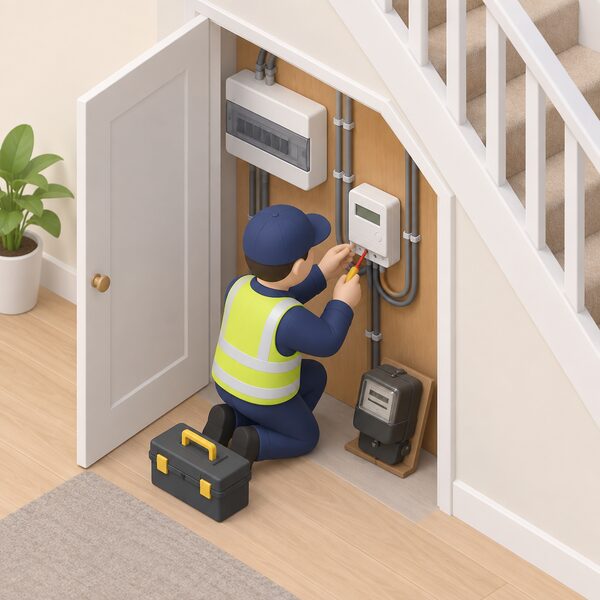
Good Energy states that switching takes on average 3 to 5 days to complete, and that the sign-up form takes about 2 minutes to fill in2. The company also states that switching takes just 2 minutes and ensures power usage is matched to 100% renewable electricity from independent generators3. The two-minute figure describes the application, and the 3 to 5 day figure describes the transfer, so they are not in conflict.
Good Energy asks everyone signing up to its fixed tariffs to set up a Direct Debit4. That is a condition of the fixed tariff rather than of supply in general, and the Direct Debit scheme gives advance notice before each collection.
Smart meters are free of charge and arranged through the supplier, with installation typically taking about 90 minutes19. A smart meter makes switching supplier easier21. With a second-generation meter, a household should be able to switch without any interruption to readings or bill payments, while a first-generation meter may lose some smart functionality on switching22. Participating suppliers in the Great Energy Savings Switch must have a live Data Communications Company interface for smart meter compatibility24.
Smart meters also open up flexibility arrangements: they allow suppliers to offer incentives to households that reduce energy use during peak hours, helping to balance supply and demand and reduce pressure on the grid25. Heat pumps and smart thermostats can pre-heat or cool a home before peak hours and then ease off when the grid is under pressure26, and official guidance for self-build homes recommends smart systems that control lighting, heating and cooling based on occupancy and time of day27. For a household, this is the point at which a supply account starts to interact with how the home uses power, rather than just what it buys.
A power cut is a network matter rather than a supplier one. If a supplier goes out of business, the household still has electricity and gas supplied and the supply is not cut off30. Where a gas supply incident affects an area, engineers visit all affected properties to turn off supplies at the meter, provide an information card or letter, and then visit each property to restore supply and carry out safety checks31.
Sources31 cited
- Why switch to Good Energy, Good Energy, 2026-09-02
- Good Energy tariffs, Good Energy, 2026-09-18
- Good Energy price cap exemption, Good Energy, 2026-07-17
- Good Energy tariffs explained, Good Energy, 2026-04-20
- Solar panels, Good Energy, 2026-09-18
- Compare domestic energy suppliers' customer service, Citizens Advice, 2026-01
- Green electricity tariffs, Centre for Sustainable Energy, 2026-09-04
- Green energy, Uswitch, 2026-07
- Differences between green energy suppliers, Which?, 2026-06-16
- Domestic Gas and Electricity (Tariff Cap) Act 2018, legislation.gov.uk, 2018-07-19
- How much does the energy price cap cut really save you, Which?, 2019-08-07
- Energy price cap, Ofgem, 2026-09-17
- Everything you need to know about the government's energy support, Which?, 2023-11-02
- Why choose us instead of another solar installer, Good Energy, 2026-09-04
- Which? energy survey results, Which?, 2026-01-19
- Complain about your energy supplier or network operator, Ofgem, 2026
- Understand your electricity and gas bills, Ofgem, 2026
- Keeping afloat with your water supply, National Energy Action, 2026-06-25
- Smart meters, Welsh Government, 2026
- Get help with your smart meter, Ofgem, 2026
- Smart meters, National Grid, 2026-09-17
- Smart facts, Smart Energy GB, 2026-03-16
- Myth busting smart meter problems, Smart Energy GB, 2026-09-17
- The Great Energy Savings Switch, Uswitch, 2026-09-19
- How does tidal energy work, Smart Energy GB, 2026-08-19
- What is flexibility, Flex Assure, 2026-09-19
- Sustainability, Planning Portal, 2026
- Take no chances with gas safety, Northern Gas Networks, 2026-09-14
- Smell gas, WWU, 2026-09-20
- What happens if your energy supplier goes out of business, Ofgem, 2026
- Gas supply updates, SGN, 2026
 Good Energy Tariffs and Export PaymentsIf you have solar panels, Good Energy is one of the suppliers that pays you for what you export, and its rates have been among the higher ones.