
In this comparison
Good Energy and Ecotricity are the two suppliers most often weighed against each other by households that want their money to support renewable generation rather than the wholesale market alone. Both sell 100% renewable electricity tariffs and both supply a proportion of green gas from biomethane, and both are exempt from the energy price cap because of how they buy their power1. That exemption is the single most important commercial fact about the pair: it means neither is bound by the default tariff ceiling that applies to standard variable tariffs, so a household comparing them is comparing two unregulated-by-cap offers rather than two capped ones3.
The two companies differ in where the electricity comes from. Good Energy buys from more than 1,700 independent renewable generators1, while Ecotricity generates 10% of its renewable electricity itself and buys the rest on the wholesale market from other renewable generators4. Both are named by the Centre for Sustainable Energy among the most significant suppliers buying renewable electricity and REGO certificates directly from generators, a group that also includes 100Green and Octopus2.
For a household thinking about energy independence, the practical question is what each supplier leaves you dependent on. Neither removes the grid, the meter or the standing charge. What they change is who owns the generation and how closely your consumption is matched to it in time, and on that measure the two take different routes.
Good Energy vs Ecotricity at a glance
The two suppliers sit in the same niche but not the same business model. Ecotricity describes itself as the UK's first green electricity supplier and is a key player in renewable generation as well as supply4. Good Energy is a pure buyer and matcher, sourcing from a large community of independent generators rather than owning the plant1. Both appear on Ofgem's Feed-in Tariff licensee contact list, which is the official register of suppliers with FIT obligations8.
| Good Energy | Ecotricity | |
|---|---|---|
| Electricity sourcing | More than 1,700 independent renewable generators1 | 10% self-generated, rest bought from renewable generators4 |
| Price cap | Exempt2 | Exempt2 |
| Green gas | 10% of gas supplied is biomethane5 | Supplies a proportion of green gas from biomethane1 |
| Which? Eco Provider | Named for six years running3 | Named for six years running9 |
| Smart meter | Standard industry installation route10 | Free installation, opt-out available6 |
| Solar and battery | In-house installation team, export up to 25p per kWh7 | Not offered as a supply-side product |
Both were named Which? Eco Providers for 2025 alongside 100Green and Octopus Energy1. The recognition is independent of price: Which? assesses environmental performance, not value for money, so a household should read it as evidence about sourcing rather than about bills.

How each supplier sources its green electricity
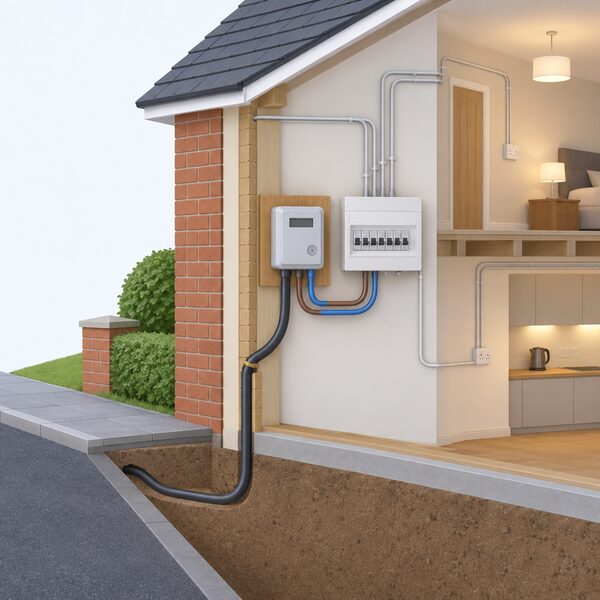
The distinction that matters most between these two is real-time matching versus own generation. Good Energy reports an 87% half-hourly match between renewable generation and customer demand in 2026, and the Matched Clean Power Index ranked it first among suppliers for real-time matching in May 20263. That figure is the supplier's own and describes how closely, half hour by half hour, the renewable output it contracts matches what its customers actually draw. A high match means less reliance on certificates bought after the fact to cover a gap.
Ecotricity takes the other route. It generates 10% of its renewable electricity itself and purchases the remainder on the wholesale market from other renewable generators4. Owning generation gives it a direct stake in new capacity, which is why the Centre for Sustainable Energy groups it with Good Energy, 100Green and Octopus as suppliers providing significantly greater support for renewables development than the market average2. The trade-off is that a smaller self-generation share means more of the electricity a customer uses is bought in rather than produced by the company they pay.
For a household, the difference shows up in what the tariff is actually backing. Both firms only sell tariffs backed by 100% renewable electricity and both supply a proportion of green gas from biomethane1. Neither can make a home independent of the grid: the wires, the meter and the standing charge remain, and the electricity still arrives through the same network regardless of who generated it. What changes is the direction of the money and the strength of the link between what you use and what was generated.
"The most significant of these are Good Energy, 100Green, Octopus and Ecotricity."
Gas: biomethane share and carbon offsetting compared
Good Energy publishes a specific biomethane figure: 10% of the gas it supplies is biomethane, with the remainder natural gas, and it offsets all of the emissions associated with the production and distribution of both the biogas and the natural gas it supplies to customers5. The offsetting is done by investing in Gold Standard carbon offsetting schemes5. That is a clear, checkable position: a tenth of the molecule is renewable, and the carbon account for the rest is settled separately.
Ecotricity supplies a proportion of green gas from biomethane, and the Centre for Sustainable Energy groups it with Good Energy and 100Green on that basis1. The published proportion is not stated in the same terms as Good Energy's, so a household comparing the two on gas should treat the biomethane share as a question to put to each supplier directly rather than assume they are identical.
The wider point is that gas is where green supply is weakest. Electricity can be matched to renewable generation half hour by half hour; gas cannot, because the network carries whatever is put into it and biomethane injection is a small fraction of total volume. Offsetting addresses the carbon account but not the physical dependence on the gas grid, and a household that wants to cut that dependence has to look at the fabric of the building and the heating system rather than at the supplier's fuel mix. Good Energy's own energy mix shows 27% biogeneration and 9% hydro, with 32% of its renewable electricity coming from biogeneration5.
Green credentials: certification and independent rankings
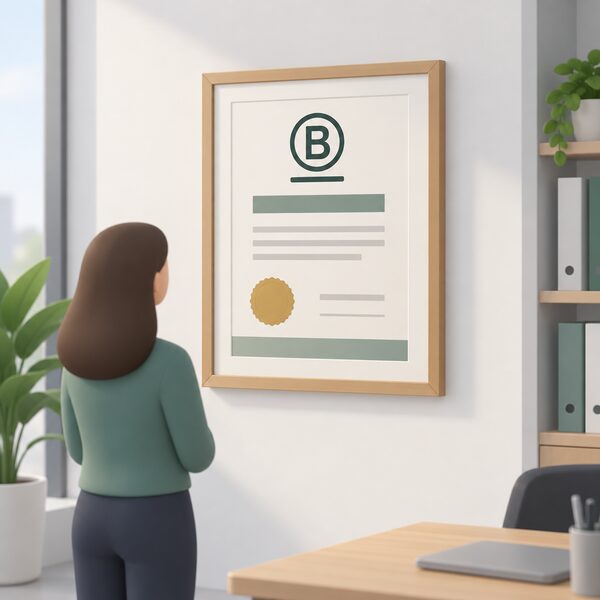
Good Energy is a B Corp certified energy supplier, meeting standards for environmental and social responsibility across its business6. B Corp certification is awarded by an external body and requires a company to meet verified social and environmental performance requirements, which makes it a stronger claim than a self-declared green label.
Both suppliers have a long record with Which?. Good Energy has been a Which? Eco Provider for six years running3, and Ecotricity was named a Which? Eco Provider for the sixth year running in 20269. Which? named 100Green, Ecotricity, Good Energy and Octopus Energy as Eco Providers for 20251, and in 2024 reported that Ecotricity and Good Energy had been named Eco Providers for four years in a row11. Ecotricity was also a Which? Recommended Provider in the 2024 research, which covered 18 energy firms12.
The two records are not identical in kind. The Eco Provider endorsement is about environmental performance; the Recommended Provider status is about the wider customer experience. A household weighing green credentials should note that both suppliers have held the environmental recognition for years, so the endorsement does not separate them. What separates them is the sourcing model described above and the service record below.
Ofgem's review of how suppliers support customers in vulnerable situations placed Ecotricity in a group identified with moderate weaknesses, alongside E (Gas & Electricity) and Green Energy UK13. That review dates from November 2022 and is the most recent official assessment of its kind in the record, so it should be read as a historical finding rather than a current rating.
Tariffs and pricing: fixed terms and the price cap exemption
The price cap applies to default tariffs regardless of how bills are paid, and it does not cover fixed, green or time of use tariffs14. It applies to customers on a standard variable tariff paying by standard credit, Direct Debit, prepayment meter or Economy 7 meter15. Because Good Energy, 100Green and Ecotricity buy their power in a way that takes them outside the default market, they are exempt from the cap2. The practical consequence is that a household on a Good Energy or Ecotricity tariff has no ceiling behind it: the protection that caps a standard variable tariff for most customers does not apply, and the price is whatever the tariff says.
Ecotricity runs a series of fixed tariffs with published principal terms. The Domestic EcoLoyalty 1 year Fixed Tariff for July 2026 is a retention tariff for existing customers, and its terms state that where a customer is switched to Ecotricity after a previous supplier exited the market, the company will take reasonable steps to fulfil any agreement made with Ofgem, including honouring any credit balance held on the account with the previous supplier16. That is the clearest published statement from either supplier on what happens to credit after a supplier failure, and it mirrors the supplier of last resort process that Ofgem operates.
Payment method affects cost. Paying by Direct Debit is usually cheaper than paying on receipt of a bill17. Ecotricity's retention tariffs carry conditions that go further: the September 2026 two year EcoLoyalty tariff is paperless and Direct Debit only, with £100 per fuel exit fees, while the August 2026 one year version carries a £75 per fuel exit fee. A household that prefers to pay another way, or that may move before the term ends, should read the principal terms before agreeing.
Smart meters: installation, partners and opting out
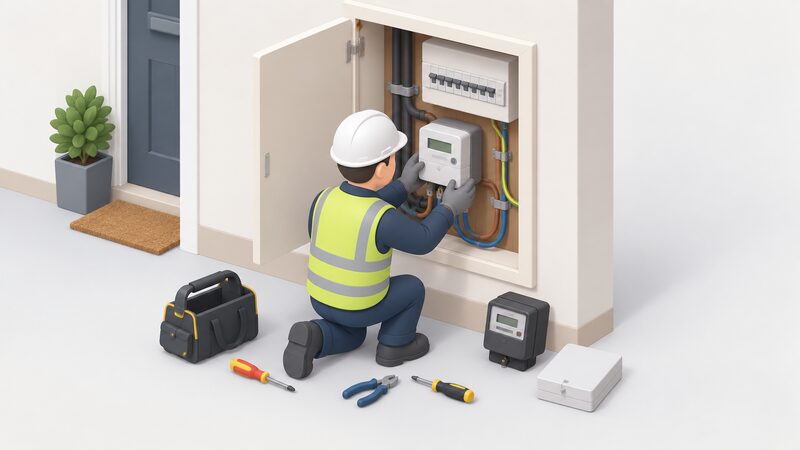
Ecotricity states that having a smart meter installed is currently free, and that although it recommends the benefits, there is no legal obligation to have one installed6. A household that wants to decline can email their name and account number to smart@ecotricity.co.uk or call 0345 812 55556. Smart meters do not need an internet connection to work, because they communicate over existing mobile or radio signals depending on location6.
The installation process itself follows industry rules. Where a household has separate suppliers for gas and electricity, individual appointments must be booked with both, and it is recommended that the electricity meter is changed first18. Private renters can choose a smart meter if the energy bills are in their name or they prepay for energy, after checking the tenancy agreement and letting the landlord know19. SMETS2 meters keep their smart functions across all suppliers using the national network, and are now the meter type used for any new smart meter installation19.
Opting out has no effect on the rest of the supply contract. The Energy Ombudsman handles disputes about smart meters among its common case types, alongside bills, customer service and switching problems20. Where a smart meter is installed under the Energy Company Obligation, the rules require the advice given on the benefits of using one to include guidance on arranging installation and an invitation to make a non-binding pledge to arrange it21. That is a condition on suppliers delivering efficiency measures, not a requirement on the household.
Service ratings and complaints

Complaints about either supplier follow the same escalation route. Ofgem's guidance is that a household can contact the Energy Ombudsman if it is not happy with the way the supplier has handled the complaint22. The Ombudsman is approved by Ofgem to deal with complaints about energy bills, mis-selling, problems with supply and problems with switching24. The most common dispute types are gas and electricity bills, smart meters and Feed-in Tariffs, customer service, problems arising from switching, the way a product or service was sold including doorstep sales, and the supply of energy to a home20.
The escalation conditions are specific. A household can complain to the Ombudsman if a reported problem is not fixed within eight weeks, if it and the supplier cannot agree on how to fix it, if a deadlock letter is received, or if it is not happy with the decision it has received25. Useful details to have ready include the supplier's name, the account holder's name, the account number and the date the complaint was first raised with the supplier26.
On published service measures, Good Energy scored 3.49 out of 5 overall in the Citizens Advice customer service rating for January to March 2026 and ranked sixth in the supplier comparison table3. That is a mid-table position rather than a leading one, and it is the most recent independent service figure available for either supplier in this comparison. Ecotricity's most recent official assessment in the record is the 2022 Ofgem review placing it in the group with moderate weaknesses13. Households that want the current picture for either supplier should check the live Citizens Advice comparison table, which is updated quarterly, and the energy supplier customer service ratings page for how the scores are built.
Which supplier fits a household seeking energy independence
Neither supplier delivers independence on its own. Both leave a household connected to the grid, dependent on a supplier for billing and metering, and, if gas is used for heating, dependent on the gas network. The price cap exemption means there is no regulatory ceiling behind the tariff either, so the household carries more price risk than a customer on a capped default tariff2. That is the honest starting point.
What the two offer is a different kind of leverage. Good Energy's model ties a household's money to a large community of independent British generators and to a high half-hourly match between generation and demand, reported at 87% in 20263. Ecotricity's model ties it to a company that builds and owns some of its own generation, at 10% of the renewable electricity it supplies4. A household that wants its payments to support new capacity directly may weigh the self-generation route; one that wants the closest possible match between what it uses and what was generated may weigh the matching route. Both are legitimate readings of what green supply means, and the evidence does not settle which is better.
The bigger independence gains sit outside the supply contract. Good Energy installs solar and batteries using its own in-house team rather than subcontractors7, and offers export rates of up to 25p per kWh to customers who install both a solar and a battery system through it7. Installing a battery through Good Energy unlocks its Exclusive export tariff for 12 months6. For a ten panel system the company estimates 65% of generated power is exported at 12p per kWh, rising to 70% for a sixteen panel system6. Those are the maker's own estimates and describe its own products, not an independent assessment.
For a household that already has solar and wants to add storage, the question of whether Good Energy will fit a battery to a system another company installed is one for the supplier, because the answer depends on the equipment in place. What is clear is that its installations use its own team7. Households weighing the wider picture can compare the two suppliers' profiles on the Good Energy and Ecotricity pages, and read how supply choice fits into the broader question of energy suppliers and household energy independence.
Sources26 cited
- How to choose the best energy company, Which?, 2026-01-19
- Green electricity tariffs, Centre for Sustainable Energy, 2026-07
- 100% renewable electricity here in Britain, Good Energy, 2026-09-02
- Green energy, Uswitch, 2026-09-04
- What is bioenergy?, Good Energy, 2026-04-01
- Solar panel savings, Good Energy, 2026-07-14
- Why choose us instead of another solar installer, Good Energy, 2026-09-04
- FIT licensee contact details, Ofgem, 2026-09-17
- Ecotricity smart meters, Ecotricity, 2026
- How to get a smart meter, Smart DCC, 2026
- Which? reveals the best and worst energy suppliers for sustainability, Which?, 2024
- Best energy companies for 2024, Which?, 2024-01-22
- Ofgem completes review of how suppliers support customers in vulnerable situations, Ofgem, 2022-11-22
- Energy price cap explained, Welsh Government, 2026-03-04
- Energy price cap briefing, House of Commons Library, 2026-02-26
- Domestic EcoLoyalty 1 year Fixed Tariff July 2026 principal terms, Ecotricity, 2026
- Direct Debit guide, Uswitch, 2025-10-22
- Smart meters your rights and expectations, GOV.UK, 2026-09-20
- Smart meters, Energy Ombudsman, 2026-09-20
- Energy suppliers, Energy Ombudsman, 2026-09-20
- The Energy Company Obligation Order 2025, legislation.gov.uk, 2025-07-31
- Complain about your energy supplier or network operator, Ofgem, 2026
- How your electricity or gas bill is calculated, Ofgem, 2026
- Problems with services, Isle of Anglesey County Council, 2025-10
- Creating a case with the Energy Ombudsman, Energy Ombudsman, 2026-09-20
- Understand your electricity and gas bills, Ofgem, 2026
 Green Energy TariffsDoes a green tariff really mean greener electricity comes into your home, or just that your supplier buys renewable certificates to match what you use?
 Fuel Mix DisclosureWhere does your electricity really come from, and how much of it is green?
 Export Rates Per kWhHow much will your supplier pay you for the solar power you send to the grid, and why do rates vary so much from one company to another?
 Home EV Charger ManufacturersWhich home EV charger brands are worth considering, and how do you choose between them?
 Erroneous TransfersSomeone else has switched your gas or electricity without asking you.
 The Big Six Energy SuppliersWho were the Big Six energy suppliers, and do they still exist?