
In this guide
Ecotricity is the UK's first green electricity supplier, and it remains one of the small group of suppliers selling tariffs backed entirely by renewable electricity1. It is licensed as Ecotricity Limited, holds a feed-in tariff licence, and its home customers reach it on 0345 555 7600 or at home@ecotricity.co.uk2. It is also one of three companies exempt from the energy price cap on default tariffs, alongside Good Energy and 100Green, which means the cap does not set its default rates4.
The green claim is real but partial. Ecotricity sells 100% renewable electricity, of which 10% is generated by Ecotricity itself and the rest bought on the wholesale market from other renewable generators1. On gas, the position is much thinner: Ecotricity supplies a proportion of green gas from biomethane, but it is not the supplier offering 100% green gas, which is 100Green5.
For a household, the practical questions are what the tariffs commit to, what the price cap exemption means for a bill, how the company rates on service, and what happens at the end of a fixed term. The answers sit in the published principal terms for each tariff and in independent survey work.
Ecotricity at a glance: the UK's first green electricity supplier
Ecotricity's distinguishing feature is that it buys renewable electricity and REGO certificates directly from renewable generators. The Centre for Sustainable Energy places it among the most significant suppliers doing this, naming Good Energy, 100Green, Octopus and Ecotricity as the companies providing significantly greater support for renewables development than the market norm2. That is a different claim from simply buying certificates on the open market, and it is the basis on which the company has built its position since it began supplying.
The supply mix is not entirely self-generated. Of the renewable electricity Ecotricity sells, 10% is generated by Ecotricity itself, with the remainder purchased on the wholesale market from other renewable generators1. That matters for how a household reads the word "green": the tariff is backed by renewable generation, but the company is not self-sufficient in it, and it depends on the wholesale market and on other generators for the great majority of what it sells.
Ecotricity also holds a feed-in tariff licence, and its published contact details for that scheme run through a separate email address, Microtricity@ecotricity.co.uk, with solar export handled through its own pages2. The company's home customer email is home@ecotricity.co.uk3.
The independence picture is therefore mixed. A household on an Ecotricity tariff is buying renewable electricity and supporting direct purchase from generators, but it remains connected to the national grid, dependent on a supplier for billing and settlement, and dependent on the wholesale market for the electricity itself. Nothing about a green tariff changes the physical supply.
What the tariffs cover: EcoFixed, EcoLoyalty and standard options
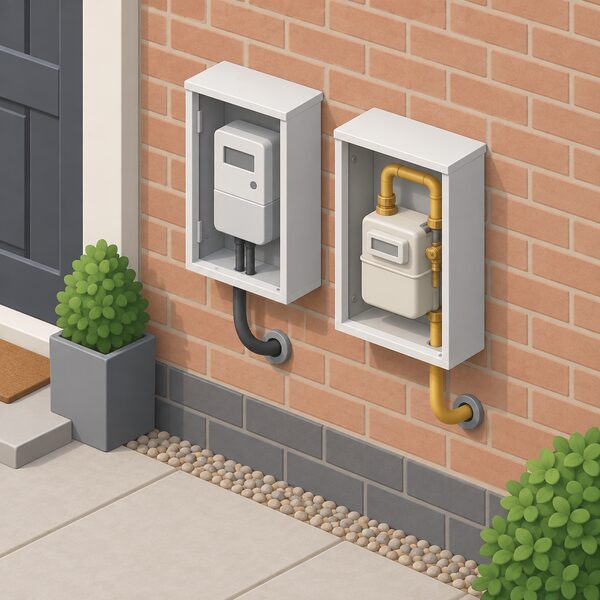
Ecotricity's published tariff types are fixed tariffs, where the price per unit is guaranteed for a set period, standard tariffs, and Economy 7 tariffs3. The named products in the current range are the Domestic EcoFixed 1 Year Fixed Tariff, published in May 2026, and the Domestic EcoLoyalty 2 Year Fixed Tariff, published in September 20266. The EcoLoyalty tariff is a retention product: it is offered to existing customers coming to the end of a fixed tariff rather than to new ones, and it carries paperless and Direct Debit conditions8.
The EcoFixed terms include a provision for customers who arrive after their previous supplier exited the market. Ecotricity states it will take reasonable steps to fulfil any agreement made with Ofgem, including honouring any credit balance held on the account with the previous supplier6. That is a meaningful protection for anyone who has been through a supplier failure, and it connects to the wider supplier of last resort process.
Both fixed tariffs can end earlier than their stated term. The EcoLoyalty terms list three triggers: the customer switching to another supplier, the customer agreeing a new contract with Ecotricity, or Ecotricity being required to end the tariff under a Supplier of Last Resort process8. The third is outside either party's control and is a reminder that a fixed term is a price commitment, not a guarantee that the supplier will still be trading.
| Tariff | Term | Exit fee | Notes |
|---|---|---|---|
| Domestic EcoFixed 1 Year Fixed, May 2026 | 12 months | Waived on metering-setup changes6 | Smart meter condition applies6 |
| Domestic EcoLoyalty 2 Year Fixed, September 2026 | 24 months | £100 per fuel in defined cases8 | Retention only, paperless and Direct Debit8 |
| Standard and Economy 7 | Variable | Not stated | Listed among current tariff types3 |
How green is the supply: 100% certified green electricity, but only about 1% green gas
The electricity side is straightforward. Ecotricity is one of three firms, with 100Green and Good Energy, that only sell tariffs backed by 100% renewable electricity and also supply a proportion of green gas from biomethane4. Uswitch's green accreditation requires 100% of electricity to be bought directly from renewable generators, which is the standard Ecotricity's supply is measured against1.
The gas side is where the green claim narrows sharply. The supplier offering 100% green gas, achieved through anaerobic digestion, is 100Green, not Ecotricity5. 100Green supplies at least 10% green gas on all its tariffs and 100% on its Ekoenergy tariff, and is the only firm from which a household can buy both 100% renewable electricity and 100% green gas6. Ecotricity supplies a proportion of green gas, but the great majority of what a dual fuel customer burns remains fossil gas.
That distinction is the one households most often miss. A green electricity tariff usually promises 100% renewably sourced electricity as a minimum, with some including renewably sourced gas7. The electricity is the certified part; the gas is not, unless a supplier specifically sells 100% green gas. For a household heating with gas, the larger share of energy use and emissions sits on the gas side of the bill, where Ecotricity's offer is a small proportion rather than the whole.
"All three firms only sell tariffs backed by 100% renewable electricity and supply a proportion of 'green gas' (from biomethane)"
The dependence that remains is therefore twofold: on the gas grid for heat, and on the electricity wholesale market for the renewable power itself. More on what suppliers are actually selling is at green energy tariffs.
Price cap exemption and what it means for bills
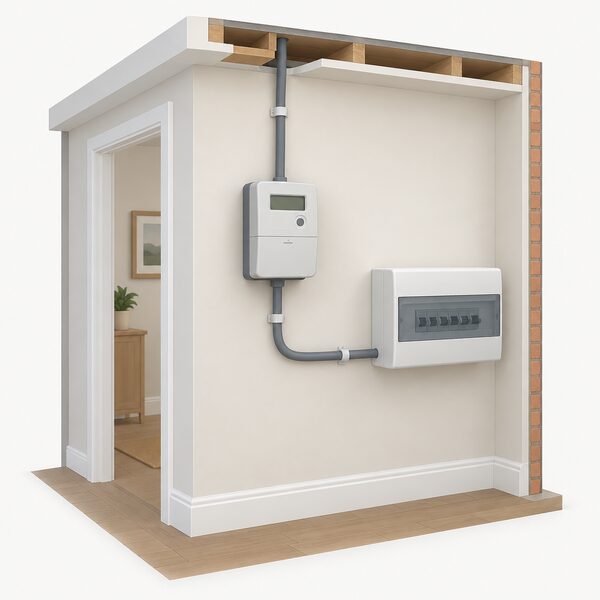
Ecotricity is exempt from the energy price cap, along with Good Energy and 100Green, because of the way it buys its renewable electricity2. Three energy companies in total are exempt from the cap on default tariffs3. The exemption is not a loophole: it reflects the higher cost of buying renewable electricity directly from generators rather than through the certificate market.
What the cap does and does not do is widely misunderstood. It limits how much a supplier can charge for each unit of electricity and gas used, not the maximum total bill9. There are separate caps for gas and electricity, and the cap does not limit annual bills, which depend on how much energy a household uses10. It applies to customers on a standard variable tariff paying by standard credit, Direct Debit, prepayment meter or Economy 7 meter11. It limits the unit rate and the daily standing charge but does not limit the total energy bill12, and it does not limit the total bill in Scotland either13.
For an Ecotricity customer the consequence is direct: the default or standard tariff is not held down by the cap, so the protection that applies to most households on a standard variable tariff does not apply here. Fixed tariffs are the route to price certainty, and the published fixed products carry exit fees in defined circumstances. A household weighing this should read the exemption as a trade-off between the sourcing model and the safety net that applies elsewhere.
Customer service and independent ratings: 3.36 out of 5 and a Which? Eco Provider
Ecotricity's overall customer service rating from Citizens Advice was 3.36 out of 5 for January to March 20267. For context, So Energy scored 2.86 out of 5 and E (Gas and Electricity) scored 3.22 out of 5 over the same period7. The rating sits in the upper part of that small comparison group without being the highest.
Which? awarded Ecotricity Eco Provider status for Energy for 2026, one of four companies to receive it alongside Octopus Energy3. Which? rated 14 energy suppliers in that analysis3. Ecotricity has also won the Customer Service category for small suppliers in a 2026 industry award14, and in earlier Which? survey work it received four stars for overall customer service and for the quality of communications about energy costs15.
The wider picture is that customer service is a weak point across the industry rather than a strength. A majority of consumers, 60%, give their supplier a rating of between 4 and 5 stars16, which means a substantial minority do not. Which? has called on providers to tackle customer service failings, with British Gas bottom of its annual rankings17. Against that backdrop, a 3.36 out of 5 is a middling to good result, and the Eco Provider status reflects environmental sourcing as much as service quality.
Smart meters: free installation, no legal obligation, and how to opt out
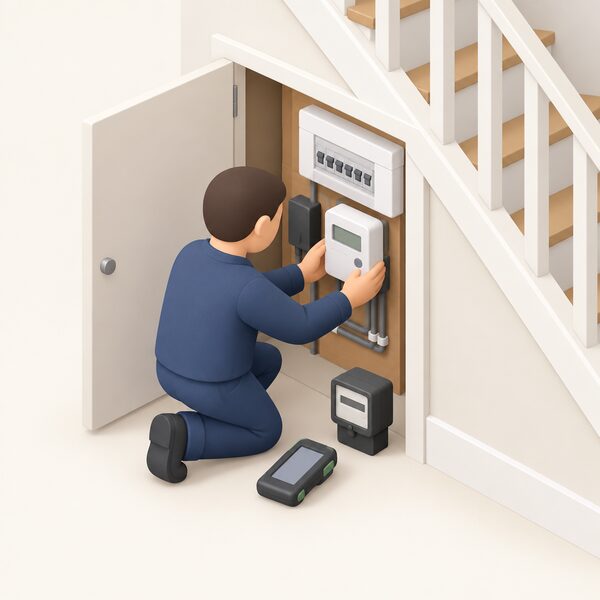
Smart meter installation is free to the household. Suppliers install them at no extra cost, and a household should not be asked to pay18. The rollout is an obligation on suppliers rather than on households, and there is no legal requirement for a household to accept one20. Energy suppliers must install smart meters at no extra cost19, and the installation carries no upfront charge21. Suppliers will install one at no extra cost to consumer homes22.
Ecotricity's fixed tariff terms make the smart meter more than a suggestion. On the May 2026 one year fixed tariff, if a meter is not installed or is refused within three months, and the delays are not due to Ecotricity, the account reverts to the Out of Contract tariff, which is protected by the price cap, and exit fees become payable6. A household that declines a smart meter on that tariff is therefore moved onto different terms, and the price cap protection that applies to the Out of Contract tariff is the consequence rather than a penalty rate.
That is the clearest example of how a tariff condition and a household choice interact. Declining a smart meter is lawful, but on this product it changes the contract. Households wanting to understand the wider obligations can read suppliers and smart meter installation.
Billing, Direct Debit and payment terms
Ecotricity's payment terms are set out in the tariff documents rather than in a single billing policy. On the EcoLoyalty 2 Year Fixed Tariff, Ecotricity takes the full amount of the gas or electricity bill 10 working days after the bill was generated8. That is a fixed collection window rather than a variable one, and it applies to the variable Direct Debit arrangement on that tariff.
Payments show on the account quickly. Card payments, Direct Debits and bank transfers show on an Ecotricity account by the end of the next working day3. The company's published bank account number for payments is 017413503. For households used to longer settlement times elsewhere, that is a same-or-next-day posting.
On prepayment, Ecotricity states there is an emergency credit of £10 on a Pay As You Go meter, which allows supply to continue even when the balance has run out3. Emergency credit is a small amount designed to maintain supply after regular credit runs out, and it is reclaimed from the next top-up23. It is a bridge of hours or days, not a substitute for topping up, and it does not prevent debt accumulating.
Where a household is struggling, Ofgem's guidance is that a supplier can agree a payment plan, a payment break or a reduction, review payments and debt repayments, and give access to hardship funds24. Asking the supplier directly is the route, and the options are set out in the regulator's consumer guidance. Separate charitable funds exist across the industry, with eligibility set by each fund rather than by the supplier25.
Moving home, switching away and closing your account

Giving a supplier notice before a move is the practical step that avoids problems. The Energy Saving Trust advises allowing time for the supplier to transfer the account to the new house, if that is offered, or to close the account26. Closing an account in credit is the point at which a refund becomes due, and households that closed old energy accounts when moving home or switching suppliers during the past five years may be due a refund27.
Ecotricity's exit fee structure is narrower than it first appears. On the EcoLoyalty 2 Year Fixed Tariff, exit fees of £100 per fuel apply if Ecotricity moves a customer before the fixed term ends because they no longer meet the eligibility criteria8. There is no exit fee where a customer remains with Ecotricity and switches to a tariff requiring a change in metering setup, such as moving to an EV tariff or switching between a standard rate and Economy 78. The same waiver appears in the EcoFixed terms, with the exit fee still applying when switching between fixed tariffs where the metering setup stays the same6.
Moving home is not itself listed as a trigger for the £100 charge in the published terms. The charge is tied to eligibility and to the supplier moving the customer, not to a change of address. Households wanting the wider picture on closing accounts and refunds can read final bills and credit refunds and moving home and your energy supplier.
Where Ecotricity sits for household energy independence
Ecotricity's contribution to a household's energy independence is on the sourcing side. It buys renewable electricity directly from generators, and the Centre for Sustainable Energy identifies it as one of the most significant suppliers doing so2. A household on its tariff is supporting that purchase model rather than the certificate market, and 10% of the renewable electricity it sells is generated by the company itself1.
The dependence that remains is substantial and worth stating plainly. The household is still on the national grid, still supplied by a company for billing and settlement, and still dependent on the wholesale market for the great majority of its electricity. On gas, the dependence is on the gas grid and on fossil gas, because Ecotricity supplies only a proportion of green gas rather than 100%4. The price cap exemption means the default tariff is not held down by the cap that applies to most standard variable customers2. Smart meter terms on the fixed tariffs tie the contract to accepting an installation6. And the fixed term can end early if Ecotricity is required to exit under a Supplier of Last Resort process8.
For a household, the honest summary is that Ecotricity changes where the electricity comes from and who is paid for it, and does not change the physical dependence on the grid, the gas network or a supplier. Households weighing that against other options can compare it directly at Good Energy vs Ecotricity and read the wider context at energy suppliers and household energy independence.
Sources27 cited
- Green energy tariffs explained, Uswitch, 4 September 2026
- Green electricity tariffs, Centre for Sustainable Energy, July 2026
- Differences between green energy suppliers, Which?, 2026
- How to choose the best energy company, Which?, 19 January 2026
- Gas only energy, Uswitch, 7 September 2026
- Domestic EcoFixed 1 Year Fixed Tariff May 2026 principal terms, Ecotricity, May 2026
- Compare domestic energy suppliers on customer service, Citizens Advice, 2026
- Domestic EcoLoyalty 2 Year Fixed Tariff September 2026 principal terms, Ecotricity, September 2026
- What role does National Grid play in your energy bill, National Grid, 17 September 2026
- Energy price cap research briefing, House of Commons Library, 20 September 2026
- Energy price cap briefing, House of Commons Library, 26 February 2026
- Help with your bills, National Energy Action, 25 June 2026
- Best deal energy, Home Energy Scotland, 20 September 2026
- Energy customer satisfaction reaches highest point since 2021 crisis, Uswitch, May 2026
- British Gas bottom in Which? annual energy firm rankings, Which?, 19 January 2024
- Understanding consumers' energy tariff choices, Ofgem, July 2025
- Which? energy survey results, Which?, 19 January 2026
- How to get a smart meter, Smart DCC, 2026
- A guide to smart meters, Age UK, 24 August 2026
- Do you have to have a smart meter by law, Smart DCC, 2026
- Guide to smart meters, Energy Saving Trust, 15 July 2026
- Smart meters help resources, MCS Certified, 24 July 2026
- Prepayment meters, Centre for Sustainable Energy, August 2025
- Get help with your home or business energy bills, Ofgem, 2026
- Government help with gas and electric bills, StepChange, 20 September 2026
- Moving house energy checklist, Energy Saving Trust, 1 May 2026
- Pay a bill, Ecotricity, 2026
 Ecotricity Tariffs and Green Export RatesEcotricity is not covered by the energy price cap, so it sets its own rates.