
In this comparison
An Economy 7 tariff splits the day in two. Electricity used during a seven-hour night window is charged at a lower unit rate, and everything used outside it is charged at a higher one. A single-rate tariff charges the same unit rate around the clock. The choice is not about which is cheaper in the abstract: it is about whether a household can move enough consumption into the cheap window to outweigh the premium it pays the rest of the day.
The gap between the two rates is the whole argument. On the Economy 7 Standard Credit price cap, electricity-only customers on Economy 7 meters pay £84 more than those on the same meter type paying by Direct Debit1. Independent guidance is blunter still: some Economy 7 tariffs charge almost double the night rate during the day2. A household that runs storage heaters overnight can absorb that premium. One that does not is simply paying more for daytime electricity.
The price cap applies to both. Ofgem sets one cap level for all suppliers, covering the unit rate and the standing charge on default tariffs, and reviews it quarterly3. The cap for 1 April to June 2026 fell by 7%4. What follows sets out how the two tariff shapes differ, what drives the numbers, and where the protections sit when a supplier fails.
Economy 7 vs a single-rate tariff: the core difference
A multi-rate tariff, of which Economy 7 is the standard example, charges one rate during a specified off-peak period and another, more expensive rate during peak hours6. That is the entire mechanism. There is no separate meter charge, no different billing system and no different set of consumer protections. The same supplier, the same account and the same price cap framework apply. What changes is the shape of the unit rate across the day.
Ofgem described the trade-off plainly as far back as 2010: all major suppliers offer Economy 7 tariffs, which offer cheaper electricity at night but slightly more expensive rates during the day7. That description has held for fifteen years. The premium is not a surcharge added on top of a normal tariff; it is the other half of the discount. The supplier recovers in the daytime what it gives away at night.
The practical consequence is that Economy 7 rewards a particular pattern of use and penalises everything else. A household with storage heaters charging overnight, or one that can shift a large load such as an electric vehicle into the night window, is buying most of its electricity at the low rate. A household that heats with gas and uses electricity mainly in the evening is buying almost all of it at the high rate. The tariff does not know which of those a household is; the meter simply records which register the units land on.
For energy independence, the distinction matters in a specific way. Economy 7 does not reduce a household's reliance on the grid, and it does not change the fact that the electricity still arrives through the same wires from the same supplier. What it does is give a household a measure of control over when it draws power, and therefore over what it pays. That control is real but narrow: it depends on the supplier's off-peak window, on the household owning appliances that can run unattended overnight, and on the household staying on the tariff long enough for the pattern to pay off.
The rates: 34.38p on-peak against 15.43p off-peak
The headline comparison on an Economy 7 tariff is between the two unit rates a household is charged. The daytime rate is the one that does the damage. Independent guidance notes that the daytime rate will usually be higher than on a normal tariff, and that some Economy 7 tariffs charge almost double the night rate during the day2. That is the range a household is working within: a night rate that is genuinely cheap, and a day rate that is genuinely expensive.
The off-peak window itself is seven hours, usually between midnight and 7 am2. The precise timings and costs can vary depending on the supplier2. That variation is not a detail. A household that runs a storage heater or a washing machine on a timer set to the wrong hours is buying at the peak rate while believing it is buying at the off-peak rate. The window is a supplier's choice within the Economy 7 framework, not a fixed national clock.
The window is supplier-specific. One source gives seven hours during the night, usually between midnight and 7 am2. Another describes a window running between 22:00 and 08:30. The two descriptions differ, so the window is best confirmed on the household's own tariff information rather than assumed from a general description.
The rate figures themselves are set by the supplier within the cap. Ofgem's cap sets a maximum for the unit rate and the standing charge on a default tariff, and it sets one cap level for all suppliers3. It does not set a single national Economy 7 rate, because the cap is expressed as a maximum rather than a fixed price, and because suppliers structure their multi-rate tariffs differently within it. A household comparing Economy 7 against a single-rate offer is therefore comparing two supplier-specific structures, both of which sit under the same cap.
How the price cap shapes both tariffs
The price cap is the reason neither tariff shape can drift far from the other in overall cost. Ofgem sets one cap level for all suppliers3, covering the unit rate and the standing charge on default tariffs. A supplier cannot charge an Economy 7 daytime rate above the cap any more than it can charge a single-rate unit above it. The cap is a ceiling on each element, not a target, and suppliers compete below it.
The cap moves quarterly. The cap for 1 April to June 2026 fell by 7%4. Earlier, the cap fell by 7% in July 20248. Each review resets the maximum unit rates and standing charges, and each reset flows through to both single-rate and multi-rate tariffs at the same time. A household on Economy 7 is not insulated from a cap rise, and it does not get a larger share of a cap fall.
For multi-register tariffs specifically, the cap rules require that any discount is applied properly across both registers. For customers on multi-register tariffs such as Economy 7, suppliers must apply the full discount to the individual rates within the tariff unless they have specific agreement from the Department for Energy Security and Net Zero9. That rule exists because a discount applied only to one register, or applied to the wrong one, would leave an Economy 7 household worse off than the headline figure suggests.
The cap also protects a household that has never actively chosen a tariff. More than half of consumers have never switched supplier or have switched only once, and are on more expensive default tariffs as a result10. The cap is what stops that inertia being exploited without limit. It does not make a default tariff cheap; it makes it bounded.
What the cap does not do is decide whether Economy 7 or a single rate suits a particular household. It caps both. The choice between them remains a question about consumption pattern, and the cap simply sets the terms within which that choice is made.
Standing charges and how bills are built up
Every domestic energy bill has the same skeleton. There is only one charging structure made up of a standing charge and the unit prices of the gas and electricity11. Ofgem's retail market review set out the intended shape: tariffs with a simple two-part structure, a standing charge (which can be zero) and a unit rate12. That two-part structure is what a household is comparing when it compares Economy 7 with a single rate.
The standing charge is the fixed daily amount, charged whether the household uses any energy or not. It covers the cost of supplying the property and maintaining the connection. It does not vary with consumption, and it does not vary with the time of day. On an Economy 7 tariff the standing charge is a single daily figure, not two.
Standing charges do vary between tariffs and suppliers. Economy 10 standing charges can be higher than on Economy 713. The same pattern of variation applies across single-rate tariffs, where the standing charge is one of the most visible differences between offers. A household comparing an Economy 7 tariff with a single-rate tariff is comparing two standing charges as well as two sets of unit rates, and a low unit rate paired with a high standing charge can cost more overall for a low-usage household.
The payment method adds a further layer. On the Economy 7 Standard Credit price cap, electricity-only customers on Economy 7 meters pay £84 more than those on the same meter type paying by Direct Debit1. That is a payment-method difference, not a meter-type difference, and it applies on top of whatever the tariff structure already costs.
| Element | Economy 7 | Single rate |
|---|---|---|
| Unit rate | Two rates: peak and off-peak6 | One rate all day6 |
| Off-peak window | 7 hours, usually midnight to 7 am2 | Not applicable |
| Standing charge | One daily figure, varies by tariff11 | One daily figure, varies by tariff11 |
| Payment method premium | £84 on Standard Credit vs Direct Debit, electricity only1 | Varies by tariff and payment method1 |
Storage heating and batteries: who Economy 7 actually suits
Economy 7 and Economy 10 tariffs are mainly intended for homes that run on an electric heating system and use storage heaters13. That is the design case, and it is the case in which the tariff arithmetic works. A storage heater charges overnight on the cheap rate and releases heat during the day, so most of the household's heating consumption lands on the low register. The daytime premium then applies only to lights, cooking and appliances.
The tariff also suits a household that can shift other large loads into the night window. An electric vehicle charged overnight, a tumble dryer run on a timer, a dishwasher set to start after midnight: each of these moves consumption from the expensive register to the cheap one. The more load a household can shift, the more of the premium it offsets.
It suits poorly a household that heats with gas and uses electricity mainly in the evening. That household buys almost all of its electricity at the higher daytime rate and gains nothing from the night window. The same applies to a household with a heat pump running through the day, unless the system is designed to pre-heat overnight and the property has the thermal storage to hold it.
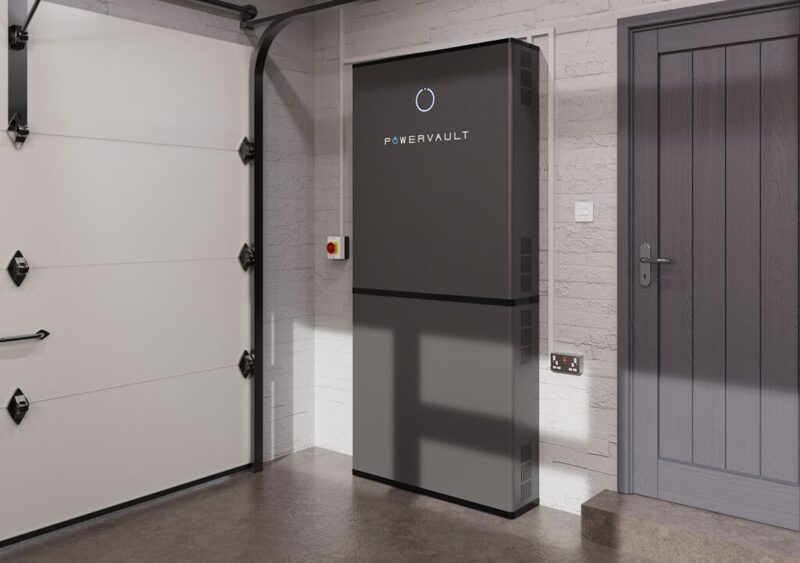
Batteries change the calculation in a way the tariff was not designed for. A home battery charged during the off-peak window and discharged during the day effectively moves consumption from the peak register to the off-peak one, without the household changing when it uses appliances. That is the same arbitrage a storage heater performs, applied to the whole house. It does not reduce reliance on the grid or the supplier; it changes the price at which grid electricity is bought.
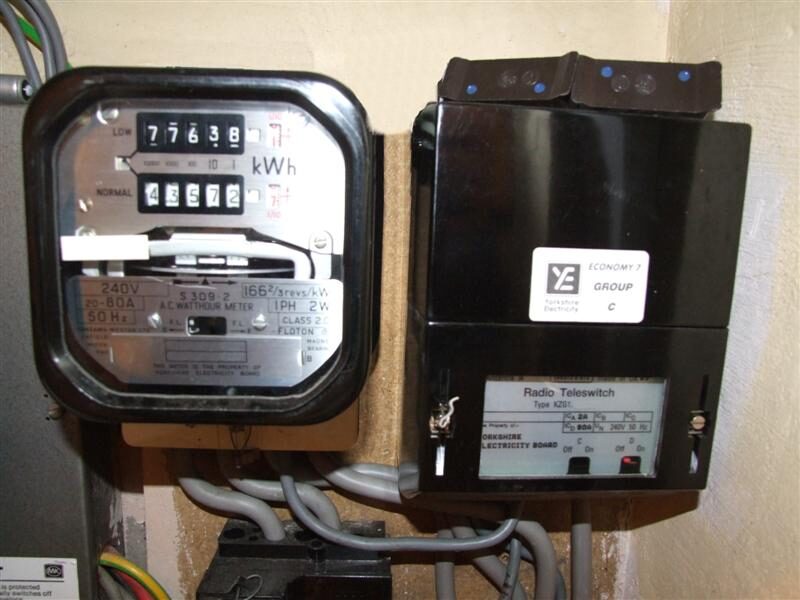
The meter is the gatekeeper. Economy 7 requires a specific Economy 7 meter or a smart meter; it is not accessible on a traditional energy meter13. Specific Economy 7 meters will only be compatible with the Economy 7 tariffs13. A smart meter, by contrast, is compatible with Economy 7 tariffs and fixed rate tariffs, and can also enable a household to join newer time-of-use tariffs13. That difference matters for anyone thinking about changing tariff shape later.
Switching, supplier failure and your protections
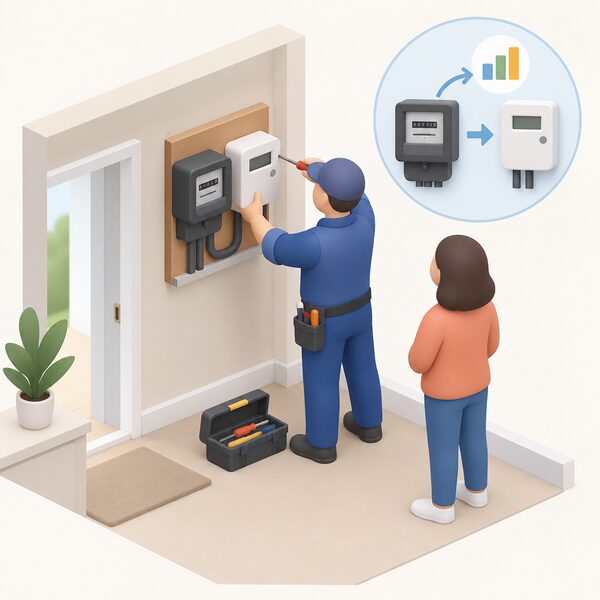
Changing tariff shape is not the same as changing supplier, and the meter determines what is possible. A smart meter allows a change of tariff without a change of meter, because it can run Economy 7, a fixed rate or a newer time-of-use tariff13. A traditional Economy 7 meter does not: it is only compatible with Economy 7 tariffs13. Moving onto Economy 7 without the right meter means the chosen supplier will need to install a new one2.
Switching behaviour in the market is uneven. More than half of consumers have never switched supplier or have switched only once, and are on more expensive default tariffs as a result10. Among those who do switch, the most common reason given is that the new tariff was better than the old one, at 51% of switchers15. Switching tariff without switching supplier is common: 78% of customers who switched tariff stayed with the same supplier16. That matters because exit fees can still apply on a fixed contract even when moving to another deal with the same supplier, a point only 57% net of consumers correctly identify17.
If a supplier fails, supply continues and the account transfers. For customers on multi-register tariffs such as Economy 7, suppliers must apply the full discount to the individual rates within the tariff unless they have specific agreement from the Department for Energy Security and Net Zero9. That rule protects the off-peak discount through a transfer, which is the point at which a multi-rate customer is most exposed to being moved onto a flat rate by default.
Credit balances are protected. When a household switches to a new supplier, the old supplier will refund any credit in the final bill, and compensation can follow if it does not5. The same principle applies where a supplier fails and the account is transferred, since the balance moves with the customer.
Where a dispute cannot be resolved, Ofgem does not directly get involved with complaints about energy suppliers or network operators, and does not investigate individual disputes18. Ofgem monitors suppliers and network operators to make sure they meet the rules set out in licences, regulations and law, and will start an investigation if it thinks a supplier has not met certain rules18. For an individual household, the route is the supplier's own complaints process first, then the energy ombudsman. The rules on deemed contracts, which apply where a household is supplied without an active contract, state that the terms should not be unduly onerous19.
Sources19 cited
- Summary of changes to energy price cap, 1 October to 31 December 2025, Ofgem, 2025-08-27
- What is Economy 7, Energy Helpline, 2026-09-20
- Decision on changes to the policy cost allowance methodology, Ofgem, 2022-02-04
- Energy price cap explained, Welsh Government, 2026
- How your electricity or gas bill is calculated, Ofgem, 2026
- Understand your electricity and gas bills, Ofgem, 2026
- Domestic supply review consultation, Ofgem, 2010-07-15
- Energy price cap research briefing, House of Commons Library, 2024-07
- Energy Price Guarantee regional rates, April to June 2023, Department for Energy Security and Net Zero, 2026-09-17
- Energy price caps information leaflet, Ofgem, 2018-12
- Problems with services: energy billing, Isle of Anglesey County Council, 2025-10
- The retail market review: final domestic proposals, Ofgem, 2013-03-27
- What is Economy 7, Smart Energy GB, 2026-04-07
- Price caps explained, easy read, Ofgem, 2020-07
- Consumer perceptions of the energy market, Q2 2021, Ofgem, 2021
- What drives consumer satisfaction with energy suppliers, Ofgem, 2025-07
- Understanding consumers' energy tariff choices, Ofgem, 2025-07
- Complain about your energy supplier, Ofgem, 2026
- Deemed contracts and rates, Energy Ombudsman, 2026-09-20
 Economy 7 TariffsEconomy 7 gives you seven hours of cheaper electricity at night, but the exact hours depend on where you live and who supplies you.
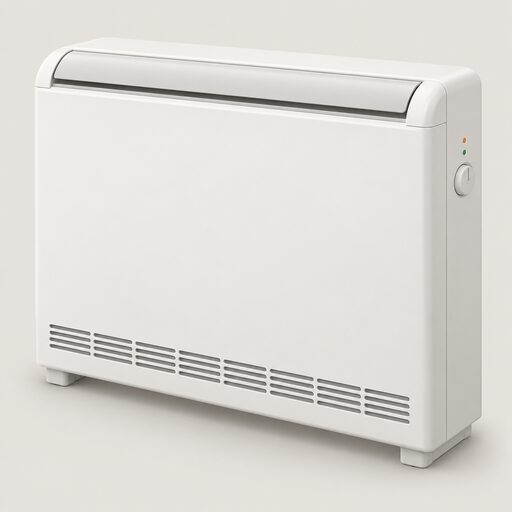 Economy 7 and TariffsHow off-peak and time-of-use electricity tariffs work for heating, including Economy 7, Economy 10, Scottish white meter arrangements and the end of the Radio Teleswitch Service.
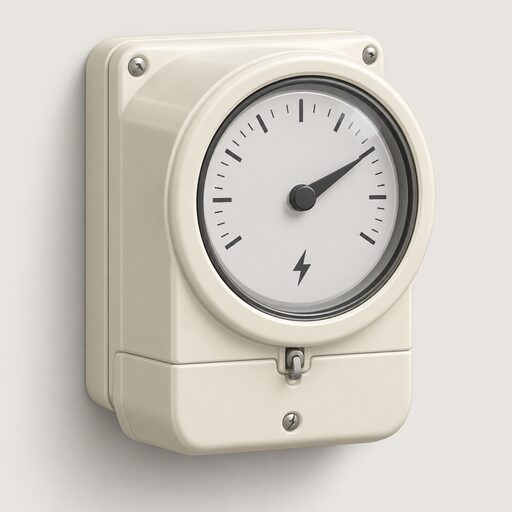 Which Tariffs Your Meter AllowsHow meter type decides which energy tariffs a household can access, from single-rate and two-rate meters to smart, prepay and restricted configurations, and the constraints faced by flats, rented homes and homes without a working smart connection.
 The Full Tariffs GuideWhich energy tariff suits how you live, and will switching really save you money?
 Time-of-Use Tariffs ExplainedCan you pay less for electricity by using it at different times of day?
 Meters and Time-of-Use TariffsDo you need a smart meter for a time-of-use tariff, and does it have to send readings every half an hour?