
In this comparison
Economy 7 and Economy 10 are both multi-rate electricity tariffs: they charge one price during a cheap off-peak window and a higher price for the rest of the day. The difference is the size and shape of that window. Economy 7 gives seven hours of cheaper electricity, usually in one continuous block overnight1. Economy 10 gives ten hours, usually split into three periods across the day2.
That extra three hours is the whole argument. Economy 10 spreads cheap electricity into the afternoon and evening, which suits homes that want to top up heating or hot water outside the night. Economy 7 concentrates the discount into a single night block, which suits storage heaters that charge once and release heat the next day3.
The trade-off is the same for both: the daytime rate is higher than on a standard single-rate tariff, so the tariff only works if enough consumption lands in the cheap hours4. Economy 10 is also harder to buy. It is not as widely used as Economy 7, many suppliers do not support it or will not take new customers, and most comparison sites cannot quote for it3.
Economy 7 and Economy 10 at a glance
Both tariffs belong to the same family. They are older time-of-use arrangements that rely on a specific meter type, and both are associated with radio teleswitch metering, the system being switched off7. A household that sees cheaper electricity at different times of day may be on Economy 7, Economy 10 or Total Heat Total Control7.
| Economy 7 | Economy 10 | |
|---|---|---|
| Cheap hours per day | 71 | 102 |
| Shape of the window | Usually one continuous overnight block1 | Usually three blocks across the day2 |
| Typical timing | Seven hours at some point between 11.00pm and 8.00am6 | Often three hours in the afternoon, two in the evening and five overnight3 |
| Day period | 17 hours at the higher rate8 | The hours outside the cheap blocks, at the higher rate |
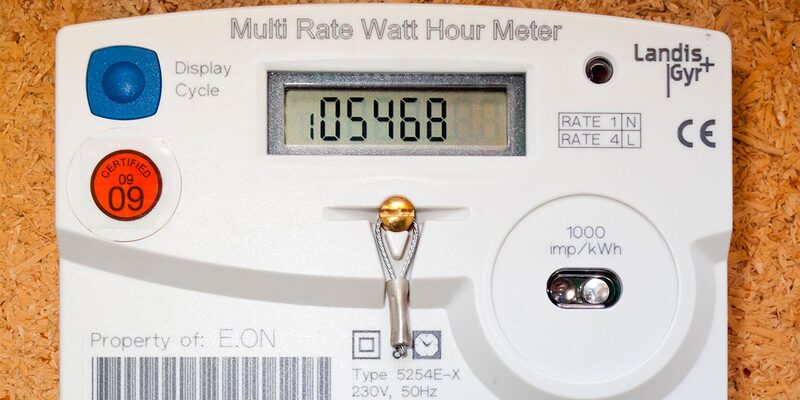
| Meter needed | A two-rate Economy 7 meter9 | A dedicated Economy 10 meter3 |
| Comparison site support | Widely compared | Most comparison sites cannot quote5 |
The two tariffs are not interchangeable products on a shelf. Each is tied to the meter installed at the property, and the meter decides when the cheap hours actually fall.
What each tariff is: seven hours versus ten hours of cheaper electricity
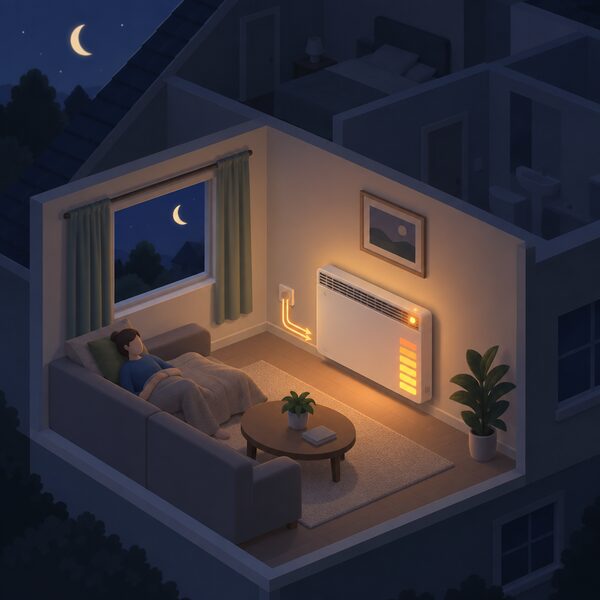
Economy 7 is a time-of-use electricity tariff that charges two different prices depending on when the electricity is used9. The cheaper off-peak rate applies for seven hours out of every 24, usually at night10. The other 17 hours of the day are charged at the higher rate8. In practice the cheap period usually runs between midnight and 7am, though this varies across suppliers2.
Economy 10 gives ten hours of cheaper electricity, usually in three time periods through the day2. One common split is seven hours during the night and three hours during the day, most likely in the afternoon or evening3. Another description puts it as three hours in the afternoon, two in the evening and five through the night3. A third arrangement is three hours in the afternoon, four in the evening and three in the early morning5.
The variation is not a detail. On Economy 7 the household gets one long charging window and a predictable daily rhythm. On Economy 10 the cheap hours are broken up, which means heating and hot water can be topped up during the day rather than stored in one go. That suits some homes and defeats others: a storage heater that charges fully overnight has nothing to gain from an afternoon window, while a household that is at home during the day may use it well.
Both tariffs are static. The cheap periods are fixed, unlike newer electric vehicle and tracker tariffs, which are more dynamic and usually work best with a smart meter11.
When the off-peak hours fall: why timing differs by supplier and meter
There is no national timetable. Economy 7's cheaper period runs for seven hours at some point between 11.00pm and 8.00am, and the exact window is set by the supplier and the meter6. The common description is midnight to 7am, but that varies across suppliers2. The National Energy Action guidance gives seven hours, usually between midnight and 7am12.
Economy 10 varies more. The off-peak times vary from supplier to supplier and region to region5. Not all Economy 10 tariffs operate on the same off-peak hours, and some suppliers change their off-peak hours when the clocks go forward and back3. Published examples include three hours in the afternoon, four in the evening and three in the early morning; two hours at lunchtime, three in the evening and five overnight; and four hours in the afternoon, two in the evening and four in the early morning5.
Because the meter controls the switching, the household cannot simply decide to treat a different window as cheap. A two-rate meter has a cheap and a more expensive rate, and it matters that consumption lands in the right one11. The practical step is to confirm the actual hours for the property with the supplier, or read them from the meter, before planning anything around them.
Who each tariff suits: storage heaters, hot water and household routines
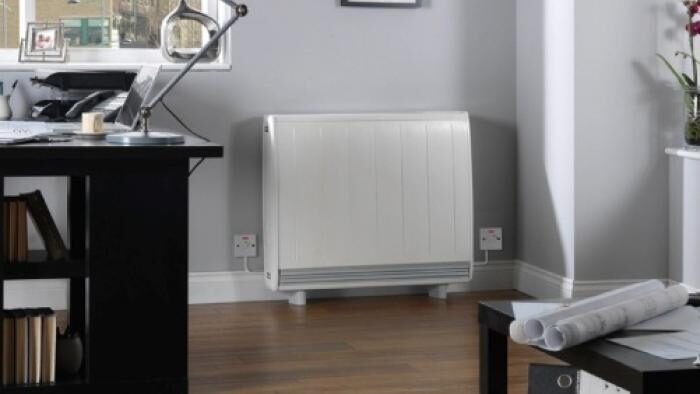
These tariffs are mainly intended for homes that run on electric heating and use storage heaters1. Storage heaters work by using cheaper off-peak night-time electricity to create and store heat for use the next day, and are sometimes called Economy 7 heaters1. They should always be used on an Economy 7 tariff to take advantage of cheaper overnight electricity13.
The fit is not limited to storage heaters. Economy 7 tariffs are typically used with electric storage heaters but are available to anyone14. Economy 10, like Economy 7, only works with electricity-heated homes and not those with a gas supply2.
Two conditions matter more than the marketing:
- Room heaters used regularly are best run on a single-rate electricity tariff; using them on Economy 7 would mean paying the higher day rate for heat used during the day13.
- Storage heaters use Economy 7 or Economy 10 tariffs for cheaper energy at night, so the appliance and the tariff are chosen together12.
For a household weighing independence, the picture is mixed. A storage-heated home on Economy 7 is buying its heat from the grid at a fixed cheap window, which is a form of price independence but not supply independence: the home still depends on the network, a supplier and, in most cases, a meter it does not control. Electric storage heaters do qualify as efficient heating under the current Decent Homes Standard summary table, which recognises off-peak or Economy 7 operation15.
Cost comparison: whether the off-peak discount outweighs the dearer day rate
The arithmetic is simple in shape and awkward in practice. Economy 10 offers unit rates of up to half the price of peak rates, but the standing charges are often higher5. During Economy 10 off-peak hours the price of electricity could fall by up to half of the average rate3. Economy 7's daytime rate will usually be higher than on a normal tariff4.
That means the tariff is a bet on load shifting. One published modelling assumption for Economy 7 uses 34.38p for on-peak and 15.43p for off-peak, with a 58:42 split between the two13. The split is the decisive number: a household that puts most of its consumption into the cheap window gains, and one that does not pays a premium on everything else.
The regulated caps show how the two-rate structure is treated. For 1 July to 30 September 2025, Economy 7 customers paying by Standard Credit faced an additional £82 a year compared with paying by Direct Debit, and prepayment customers paid £30 less than Economy 7 Direct Debit customers16. For 1 October to 31 December 2025, the Economy 7 Standard Credit premium was £84 against Economy 7 Direct Debit, and the prepayment position was £30 less than Direct Debit17. Payment method therefore moves the cost of an Economy 7 supply by tens of pounds a year before any consumption is counted.
Availability: where Economy 10 is offered and which suppliers support it
Economy 7 remains on offer as a tariff from most energy suppliers6. Economy 10 is a different proposition. It is not as widely used as Economy 7, and not all suppliers offer tariffs that support it12. There simply are not many Economy 10 suppliers available5. Many suppliers do not support Economy 10, or may not offer tariffs to new customers11.
Buying it is harder than buying Economy 7. Most price comparison sites, including Uswitch, do not compare Economy 10 deals, and Uswitch does not currently allow households to switch between Economy 10 plans5. Many comparison sites cannot support comparisons for Economy 10 meters because of the complexity of the three different rates6. Economy 10 tariffs are not offered by many UK suppliers, and those that do offer them do not always advertise the fact3. Most energy comparison sites also do not allow a search for them3.
The practical route is direct: approach suppliers individually to see which tariffs are available11. Time-of-use tariffs generally are becoming less common as the legacy meters that support them are phased out, which affects both Economy 7 and Economy 1018.
Northern Ireland has its own picture. The Consumer Council publishes a regular Economy 7 price comparison table for Northern Ireland, with editions dated 28 August 2024, 28 January 2026 and 28 August 2026, and states that the tariffs listed are correct on the day of comparison19. Households there should use that table rather than a GB-wide comparison.
Smart meters and Economy 7: what changes when you switch meters
A smart meter can be fitted on an Economy 7 or Economy 10 tariff21. All smart meters can support tariffs that charge different prices at different times of day and night, including Economy 7, and Economy 10 meters are also available22. Smart meters are compatible with Economy 7 tariffs and fixed rate tariffs, and can enable a household to join newer time-of-use tariffs without changing the meter again1.
The complications sit with Economy 10 and with older metering:
- Economy 10 tariffs do not work with existing smart meters, and many suppliers do not sell tariffs for them23.
- A smart meter on Economy 10 depends on which supplier the household is with3.
- An Economy 10 meter can be requested from a supplier, which may charge for it, while a smart meter can be requested at no additional cost1.
- Switching from one Economy 10 plan to another may require the meter to be reprogrammed by an engineer5.
- A specific Economy 7 meter is only compatible with Economy 7 tariffs, and records peak and off-peak usage separately1.
Radio teleswitch metering is the pressing issue. Anyone with these systems on Economy 7 or Economy 10 tariffs will need a new meter to ensure their heating and hot water continue turning on and off as usual16. Households no longer on an Economy 7 or Economy 10 tariff are in no rush: the meter will continue to function normally and, provided all electricity is on one circuit, there should be no difference, though the Centre for Sustainable Energy recommends smart meters16. The RTS switch-off is the deadline that forces the change for everyone still on a teleswitch-controlled supply.
Switching away from an Economy tariff: what to check first
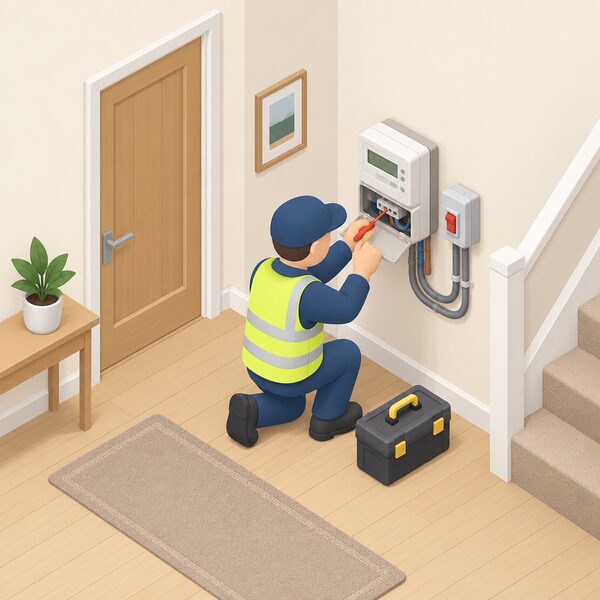
Economy 7 has not been withdrawn. It remains on offer as a tariff from most energy suppliers6. Moving to a single-rate product is therefore a normal change, but the meter is the constraint. If the property does not already have an Economy 7 meter, a supplier will need to install one to put the household on the tariff, and the reverse applies when leaving4.
Costs to check before switching:
- Switching away from Economy 10 to a standard tariff may require a fee to have a standard meter installed5.
- Switching back from Economy 10 to a fixed tariff means paying to replace the meter with a regular one3.
- A household that wants Economy 10 must have an Economy 10 meter to get the tariff12.
For homes with solar or a battery, the tariff choice interacts with self-consumption. Rates for selling electricity to the grid are much lower than tariffs for using electricity from the grid, so using solar electricity in the home is much more cost-effective than exporting it24. Guidance for solar and battery households points to a dedicated solar and battery tariff, or a good export tariff matched with a dynamic import tariff or an Economy 7 tariff19. A battery-only household is advised to look at either a dynamic tariff or Economy 719. Solar panels themselves are permitted development in many cases, with the associated electrical works covered by building regulations25, and solar PV is among the measures funded under the ECO scheme27.
The wider point for independence is that neither tariff changes where the electricity comes from. Both are grid tariffs with a supplier, a standing charge and a meter that decides the cheap hours. What they change is the price of shifting load, and that only helps a household that has something worth shifting.
Sources27 cited
- What is Economy 7?, Smart Energy GB, 7 April 2026
- Time of use tariffs explained, Which?, 23 April 2026
- What is Economy 10?, Energy Helpline, 20 September 2026
- What is Economy 7?, Energy Helpline, 20 September 2026
- Economy 10 guide, Uswitch, 8 December 2025
- Economy 7 guide, Uswitch, 8 September 2026
- Radio Teleswitch Service switch off, National Energy Action, 29 July 2026
- Types of energy tariff, Confused.com, 3 November 2025
- What is Economy 7?, Confused.com, 20 August 2025
- Should I switch to a time of use tariff?, Energy Saving Trust, 23 January 2026
- Energy tariffs explained, Uswitch, 17 February 2026
- Getting the most from Economy 7, National Energy Action, 10 September 2026
- Electric heating, Centre for Sustainable Energy, June 2026
- Tariffs for renewable technology, Energy Saving Trust, 12 August 2026
- Current Decent Homes Standard summary table, Northern Ireland Department for Communities, 5 August 2025
- Summary of changes to energy price cap 1 July to 30 September 2025, Ofgem, 2025
- Summary of changes to energy price cap 1 October to 31 December 2025, Ofgem, 2025
- How to switch energy supplier, Which?, 15 May 2026
- Economy 7 price comparison table 28 August 2026, Consumer Council for Northern Ireland, 27 August 2026
- Economy 7 price comparison table 28 January 2026, Consumer Council for Northern Ireland, 28 January 2026
- Can I get a smart meter?, Smart Energy GB, 16 March 2026
- Smart meters, Energy Ombudsman, 20 September 2026
- Gas meters and electricity meters: what you need to know, Which?, 16 January 2026
- Solar panels, London Borough of Hammersmith and Fulham, 17 September 2026
- Solar panels, East Hertfordshire District Council, 17 September 2026
- Solar panels guidance, City of York Council, 17 September 2026
- ECO4 Flex, South Cambridgeshire District Council, 17 September 2026
 Economy 7 TariffsEconomy 7 gives you seven hours of cheaper electricity at night, but the exact hours depend on where you live and who supplies you.
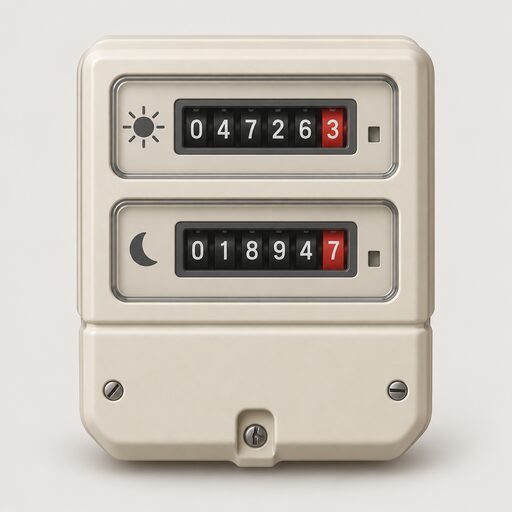 Economy 7 and Restricted MetersEconomy 7 and Economy 10 meters give you cheaper electricity for a set number of hours overnight and charge you more the rest of the day.
 Time-of-Use Tariffs ExplainedCan you pay less for electricity by using it at different times of day?
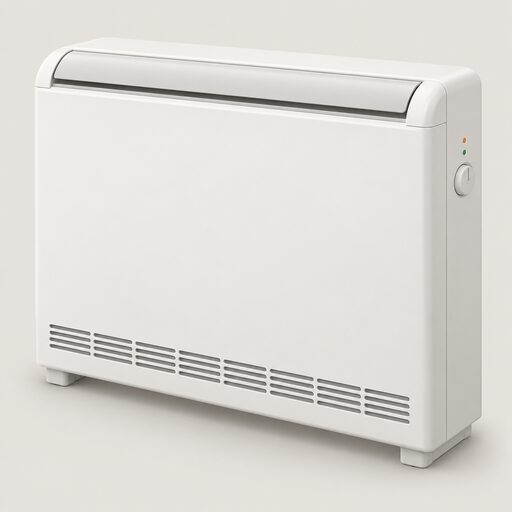 Economy 7 and TariffsHow off-peak and time-of-use electricity tariffs work for heating, including Economy 7, Economy 10, Scottish white meter arrangements and the end of the Radio Teleswitch Service.
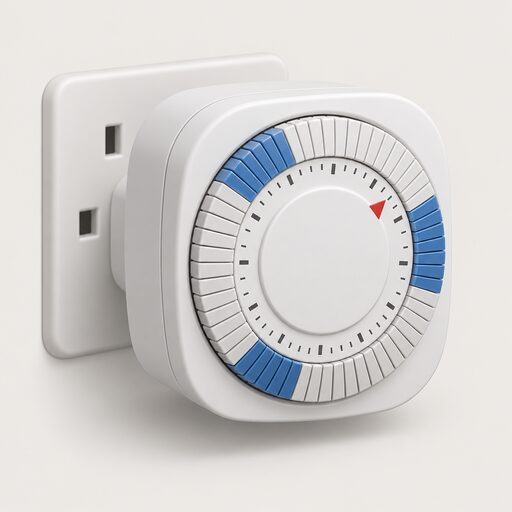 Controls and Time-of-Use TariffsCheaper electricity at night only saves money if your heating actually uses it then.
 Flexibility Payments for HomesCan you really get paid for using less electricity at peak times, and how much would a household actually earn?