
In this answer
Short answer
Economy 7 is worth it when a household can put roughly 40% or more of its electricity through the seven cheap hours overnight, and it loses money when it cannot. The tariff gives seven hours of cheaper electricity each night and charges a higher rate for the other 17 hours of the day1. For a home with electric storage heaters or an immersion cylinder that can be filled overnight, that trade is usually favourable. For a home whose demand sits in the evening peak, the daytime premium does the damage.
The break-even point is the whole question. The National Energy Action guidance is that a household should be able to use at least 40% of its electricity at night for Economy 7 to be economical3. Energyhelpline puts the threshold at more than 40%2, Uswitch at more than 35%4, and Which? at a minimum of 30%1. The spread reflects different assumptions about how wide the gap between the day and night rates is, not a disagreement about the direction of travel: the lower the night share, the more the daytime premium outweighs the discount.
What Economy 7 is: seven cheap hours, dearer daytime units
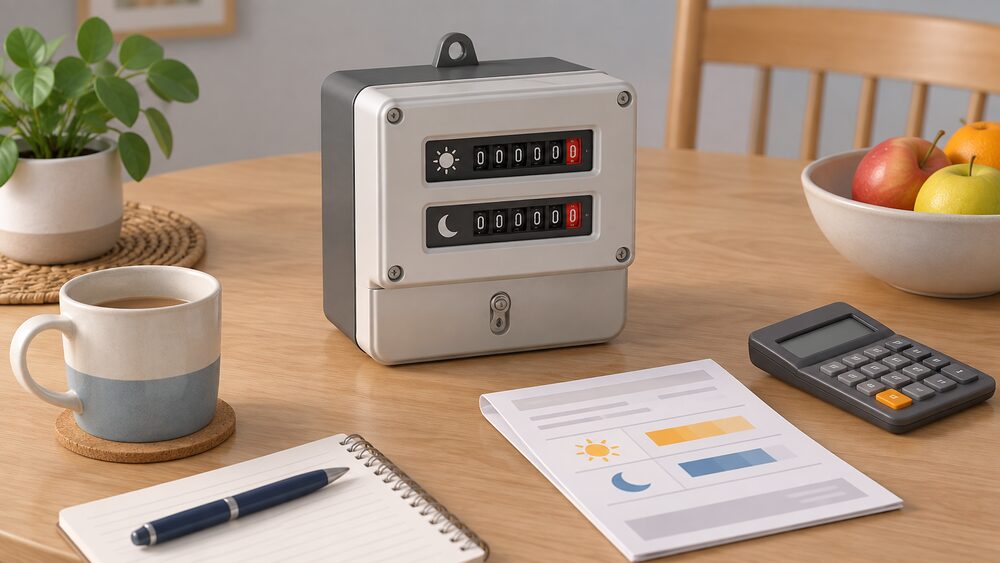
Economy 7 is a static time-of-use tariff. It gives a set number of hours of cheap electricity through the night, with electricity used during the day charged at a higher peak rate8. The cheap block is seven hours per 24 hours, usually in one continuous stretch overnight9, and the standard description across consumer bodies is seven hours of cheaper electricity overnight1.
The timing is not fixed nationally. Which? states the cheaper period usually runs between midnight and 7am but varies across suppliers1, and Citizens Advice gives a worked example in which off-peak times run midnight to 7am in winter and shift to 1am to 8am when the clocks go forward in March10. Uswitch describes a seven-hour period falling somewhere between 11.00pm and 8.00am4. Some suppliers add extra hours during winter1. The practical consequence is that a household cannot assume its cheap window matches a neighbour's, and the meter, not the marketing, defines it.
Economy 7 is not the only version. Economy 10 splits its discounted rates into seven hours at night and three hours during the day11, and both are described as older time-of-use tariffs that offer cheaper overnight rates, typically used with electric storage heaters12. Economy 7 remains on offer as a tariff from most energy suppliers4, and it is available to anyone, not only homes with storage heaters, though that is where it is typically used7.
For energy independence, the tariff itself changes nothing about where the electricity comes from: the home still draws from the grid and still depends on a supplier. What it changes is when the home buys, and therefore how much of its consumption sits in the cheapest part of the day. That is a real but partial form of control, and it depends entirely on the household being able to shift load.
The 40% rule: how much electricity must go through the night

The night-use threshold is the single figure that decides whether Economy 7 pays. The published guidance clusters between 30% and 40%, and the differences matter when a household sits near the boundary.
| Source | Night share needed | Date |
|---|---|---|
| Which? | at least 30% | 2026-04-231 |
| Uswitch | more than 35% | 2026-09-084 |
| National Energy Action | at least 40% | 2026-09-103 |
| Energyhelpline | more than 40% | 2026-09-202 |
| Fuse Energy (supplier) | at least 40% | 2026-04-0313 |
The reason for the range is the size of the daytime premium. Energyhelpline states that the daytime rate will usually be higher than on a normal tariff, and that some Economy 7 tariffs charge almost double the night rate during the day2. Where the day rate is close to a standard tariff, a 30% night share can still come out ahead; where the day rate is punitive, only a much higher night share recovers the difference. The Consumer Council's Economy 7 price comparison table is a reminder that the underlying numbers move: its figures are correct on the day of comparison only9.
There is a second threshold worth knowing, pointing the other way. Uswitch states that using less than 30% of electricity during the cheaper night-time hours could mean paying less on a single-rate tariff14. So the band between roughly 30% and 40% is genuinely marginal, and the answer depends on the specific rates on offer rather than on a rule of thumb.
When Economy 7 is worth it, and when a standard tariff wins
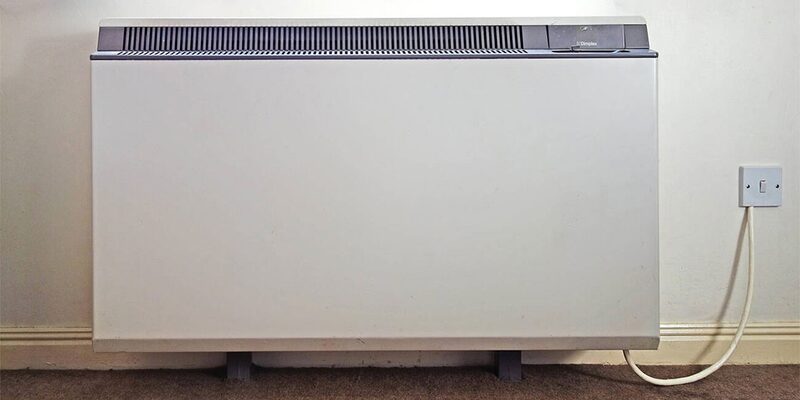
Economy 7 suits a home that can concentrate a large, controllable load into the cheap window. The clearest case is electric storage heating: storage heaters are designed to work with Economy 7, where night-time electricity is much cheaper, typically about half the price, but day-time electricity is more expensive16. National Energy Action states that storage heaters use Economy 7 or Economy 10 tariffs for cheaper energy at night3, and the Centre for Sustainable Energy goes further, saying they should always be used on an Economy 7 tariff to take advantage of cheaper overnight electricity17. Energyhelpline describes Economy 7 as an ideal option for customers with electric storage heaters, because they can be heated overnight and give off heat the following day2.
Water heating behaves the same way. The Energy Saving Trust notes that people with Economy 7 typically use the cheap hours to charge their electric storage heaters with heat7, and National Energy Action advises that an immersion heater on an Economy 7 tariff might need to be kept on overnight18. The Centre for Sustainable Energy makes the same point about making sure an electric immersion tank only comes on at night, when electricity is at a much cheaper off-peak rate19.
A standard single-rate tariff usually wins where that load does not exist. Fuse Energy states plainly that if Economy 7 is not suitable, a standard single-rate tariff is usually cheaper13. The pattern is consistent: a household with a large overnight thermal load, whether storage heaters or a cylinder, is buying most of its energy at the cheap rate. A household with an evening-heavy profile, cooking and lighting and television between 5pm and 10pm, is buying almost all of it at the premium.
Batteries change the arithmetic in a specific way. The Energy Saving Trust advises that a household with a battery and no solar is best off with either a dynamic tariff or Economy 77, and Cenex modelling found that a simple Economy 7 tariff would unlock most of the value achievable with a responsive half-hourly tariff20. That is a statement about value capture, not a recommendation, and it applies to homes that can charge a battery inside the cheap window.
Working out your own day and night split before switching
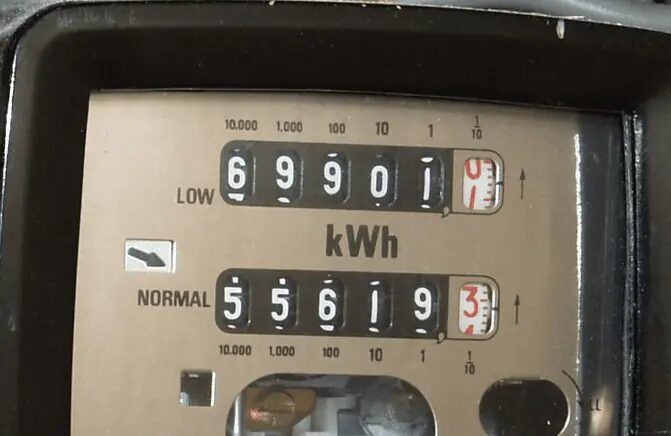
The split has to come from the household's own meter, not from an average. The Centre for Sustainable Energy advises that if a household is on Economy 7, a comparison will be more accurate if day and night usage are separated out21. A two-rate meter already records the two figures separately, so the numbers are on the bill or in the meter's registers.
The process is short:
- Read the day and night registers on the meter, or take the two figures from a recent statement.
- Compare the same period a year earlier if possible, so seasonal heating does not distort the picture.
- Express night units as a share of the total, and compare that share with the 30 to 40% band.
- Compare the actual day and night unit rates on the current tariff with the single rate on offer elsewhere.
A smart meter makes this easier because it records half-hourly consumption, and smart meters are compatible with Economy 7 tariffs, fixed rate tariffs and newer time-of-use tariffs, allowing a tariff switch without changing the meter22. That last point matters: on a smart meter, moving between an Economy 7 tariff and a single-rate tariff does not require new hardware.
"If you're on Economy 7 your comparison will be more accurate if you separate out day and night usage."
Heating, storage heaters and appliances: what makes night use add up
Night use only accumulates if something is actually running. Storage heaters are the classic case, and the mechanism is thermal: they charge overnight and release heat the following day2. That is why the tariff and the appliance are usually discussed together, and why the Centre for Sustainable Energy's advice on electric heating is that storage heaters should always be used on an Economy 7 tariff17.
The other large controllable loads are water heating and, increasingly, electric vehicles and home batteries. An immersion cylinder on a timer inside the cheap window converts the night rate into hot water for the morning19. A battery charged overnight does the same for daytime demand, and the Energy Saving Trust's position is that a battery-only household is best off with either a dynamic tariff or Economy 77.
What does not add up is a scatter of small appliances. Running a washing machine or dishwasher overnight is a genuine shift, and Citizens Advice covers appliance running costs in that context10, but a single appliance will not move a household across the threshold. The threshold is a share of total consumption, and only a load that dominates the total can move it. Storage heaters are the load that does: they should always be used on an Economy 7 tariff to take advantage of cheaper overnight electricity11, and people with Economy 7 typically use these hours to charge their electric storage heaters with heat12.
Switching, meters and what to check before changing tariff
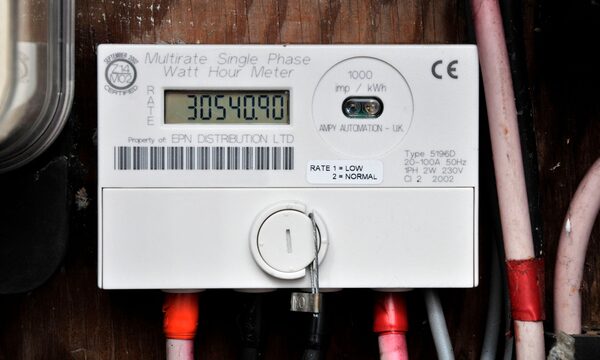
The meter is the gate. Economy 7 requires a special multi-rate meter to be installed at the home6, and specific Economy 7 meters are only compatible with Economy 7 tariffs, recording peak and off-peak usage separately22. If a home does not already have one, the chosen supplier will need to install a new one2. Economy 7 and Economy 10 are older time-of-use tariffs that need compatible meters, while newer flexible tariffs typically rely on smart meters24.
Moving the other way is possible but not always free. A household can talk to its current supplier and arrange for a credit meter to be installed, which may cost a fee25. Economy 10 guidance is more specific: switching back to a fixed tariff means paying to replace the meter with a regular one11. Households that have already left an Economy 7 or Economy 10 tariff need not rush: the meter will continue to function normally, and providing all electricity is on one circuit there should be no difference, though the Centre for Sustainable Energy recommends smart meters26.
Smart meters are compatible with Economy 7 tariffs, so a household can get one on Economy 7, but not all suppliers can offer this4. That is the practical constraint to check before assuming a smart meter will arrive with the tariff.
For renters, the tariff itself is not the barrier: Economy 7 tariffs are available to anyone7, and renters can hold an account and switch supplier. The barrier is the meter, since a multi-rate meter installation or exchange needs the landlord's agreement. The Centre for Sustainable Energy's advice for renters covers the wider set of measures a tenant can take without structural change27.
What Economy 7 does for independence is narrow and honest. It does not reduce reliance on the grid, on a supplier, or on the gas network for homes that still heat with gas. It shifts the timing of purchase into a cheaper window, and it rewards households that own a large controllable load. Where that load exists, the tariff is a genuine lever. Where it does not, the daytime premium is a cost with nothing on the other side of the ledger.
Sources27 cited
- Time of use tariffs explained, Which?, 2026-04-23
- What is Economy 7, Energyhelpline, 2026-09-20
- Getting the most from Economy 7, National Energy Action, 2026-09-10
- Economy 7, Uswitch, 2026-09-08
- Summary of changes to energy price cap, 1 October to 31 December 2025, Ofgem, 2025-08-27
- Energy: your questions answered, Confused.com, 2026-07-03
- Should I switch to a time of use tariff, Energy Saving Trust, 2026-01-23
- Heating fuel, Uswitch, 2026-01-27
- Economy 7 price comparison table, 28 March 2026, Consumer Council, 2026-03-28
- Save money using your electrical appliances, Citizens Advice, 2023-05-10
- What is Economy 10, Energyhelpline, 2026-09-20
- The best heating for your home, Which?, 2025-09-22
- What is the right Economy 7 tariff, Fuse Energy, 2026-04-03
- Gas meters and electricity meters: what you need to know, Which?, 2026-01-16
- Review of typical domestic consumption values decision, Ofgem, 2026-05-27
- Night storage heaters, Centre for Sustainable Energy, 2025-10
- Electric heating, Centre for Sustainable Energy, 2026-06
- Top energy savings tips, National Energy Action, 2026-07-13
- Energy saving myths, Centre for Sustainable Energy, 2026-07
- V2GB: Vehicle to Grid Britain, Cenex, 2026-09-17
- Dealing with your energy supplier, Centre for Sustainable Energy, 2026-01
- What is Economy 7, Smart Energy GB, 2026-04-07
- RTS meters, National Energy Action, 2026-07-08
- Time of use tariffs: the benefits, Smart Energy GB, 2026-08-17
- Energy tariffs explained, Uswitch, 2026-02-17
- Important reminder for Economy 7 and 10 meters, Centre for Sustainable Energy, 2026-06
- Energy saving advice for renters, Centre for Sustainable Energy, 2026-08
 Economy 7 TariffsEconomy 7 gives you seven hours of cheaper electricity at night, but the exact hours depend on where you live and who supplies you.
 Time-of-Use Tariffs ExplainedCan you pay less for electricity by using it at different times of day?
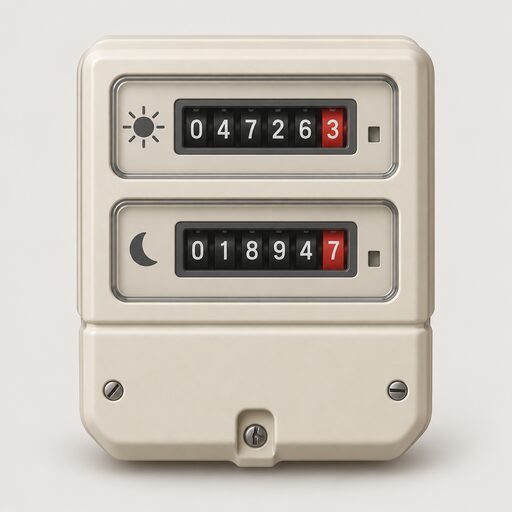 Economy 7 and Restricted MetersEconomy 7 and Economy 10 meters give you cheaper electricity for a set number of hours overnight and charge you more the rest of the day.
 Meters and Time-of-Use TariffsDo you need a smart meter for a time-of-use tariff, and does it have to send readings every half an hour?
 Flexibility Payments for HomesCan you really get paid for using less electricity at peak times, and how much would a household actually earn?
 EV Charging Bolt-OnsCan you get cheap electricity for your car without changing the tariff for the rest of your home?