
In this answer
Short answer
Economy 7 splits the day into a cheap window and an expensive one. The cheap window is seven hours, and the common pattern is midnight to 7am, but there is no single national start time. Overnight schedules differ depending on supplier, region and meter setup, so the only authoritative answer for a given home is the one on its own meter and bill1.
The pattern most sources describe is a seven-hour block somewhere between 11.00pm and 8.00am, with midnight to 7am the usual shape2. Some suppliers offer extra hours during winter, and Economy 10 tariffs split their cheaper hours differently, with seven at night and three during the day3. Because the daytime rate on Economy 7 is usually higher than on a normal tariff, the timing question is not trivia: it decides whether the tariff saves money at all5.
Night rate times: usually midnight to 7am, but check your meter
The seven-hour figure is consistent across guidance. Economy 7 gives seven hours of cheaper electricity overnight, and the cheaper off-peak rate applies for 7 hours out of every 24 hours, usually at night1. The National Energy Action leaflet puts the window at seven hours, usually between midnight and 7am7. Uswitch describes night as running between 12am and 7am on Economy 7 tariffs8.
That is the default, not a rule. The precise timings and costs can vary depending on your supplier, and the cheaper period usually runs between midnight and 7am but varies across suppliers5. Which? notes that cheaper rates apply overnight with times varying, and around 12pm to 7am is typical9. BEAMA, the manufacturers' body, states that electricity suppliers typically offer a 7-hour night tariff, which confirms the length without fixing the start10.
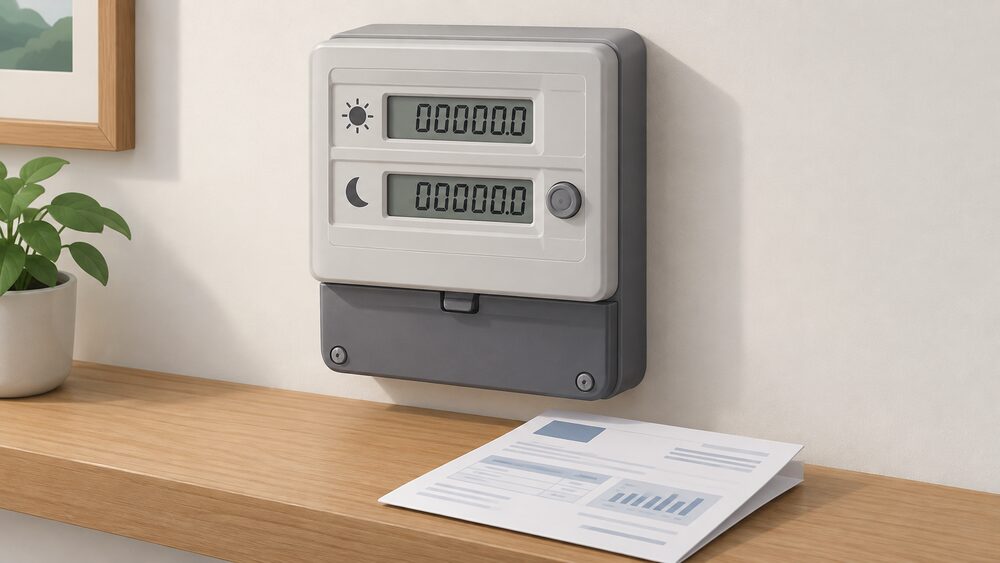
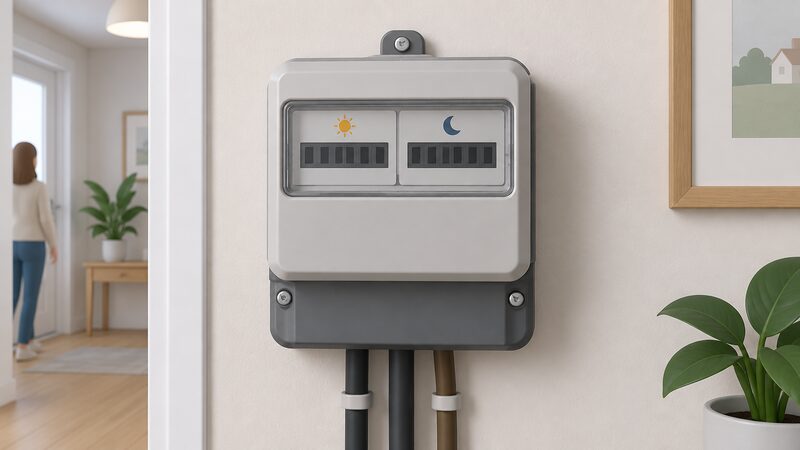
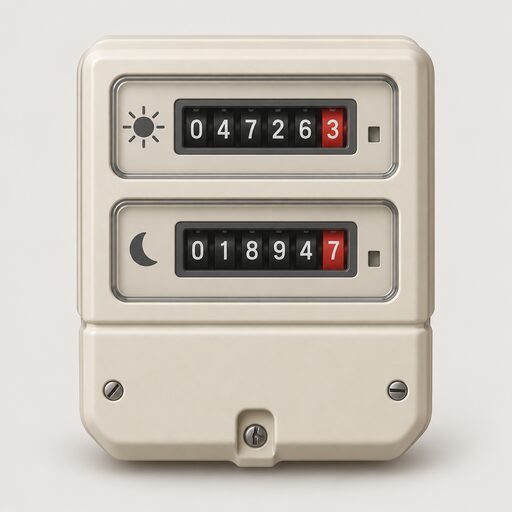
The practical consequence is that a household cannot assume its cheap window matches a neighbour's, let alone a figure read on a comparison site. The meter itself holds the answer. An Economy 7 meter displays two readings, one for on-peak hours marked normal or day and one for off-peak marked low or night, sometimes shown as Rate 1 and Rate 211. Some meters carry a number marked day rate alongside a red button that produces the night rate5.
Times vary by supplier and region: why your hours may differ

Three things move the window: the supplier's tariff design, the region's distribution arrangements, and the meter's own switching schedule. Smart Energy GB is explicit that there is no universal start time, and that Economy 7 and other time-of-use tariffs can have different overnight schedules depending on supplier, region and meter setup1.
Suppliers also vary the length at the edges. Some energy companies offer extra hours during winter, which stretches the cheap period beyond the standard seven3. Economy 10 tariffs show the same variability more sharply: not all Economy 10 tariffs operate on the same off-peak hours, and some suppliers change their off-peak hours when the clocks go forward and back4. Restricted meters go further still, often providing afternoon or early evening top-up cheaper rate periods in addition to an overnight period12.
One source gives the Economy 7 off-peak window as 7 hours during the night, while another describes a window between 22:00 and 08:30. That conflict is unresolved, which is itself the answer to the timing question: the hours are set per tariff and per meter, and a general figure is only a starting point.
Northern Ireland sits outside the Great Britain supplier market, and its import/export meter guidance describes a low (night rate) register reached by pressing the blue button repeatedly until a small 2 appears in the corner of the display13. The reading method is the same idea, but the tariff arrangements are not the same as in England, Scotland and Wales.
What the daytime premium rate means for your bills
Economy 7 is a trade, not a discount. It gives a set number of hours of cheap electricity through the night, with daytime electricity charged at a higher peak rate14. The daytime rate will usually be higher than on a normal tariff, and some Economy 7 tariffs charge almost double the night rate during the day5.
That structure is why the suitability test is about proportion, not preference. For Economy 7 to be economical, a household should be able to use at least 40% of its electricity at night, and more than 40% of night use is the threshold for making a switch worthwhile7. Below that, the premium paid across 17 daytime hours outweighs the saving across seven6.
The tariff is defined by this split: an electricity tariff in which the cost of the electricity used is different depending on the time of day, with one cheaper period during the night and more expensive electricity during the day15. Renters' guidance states the same plainly: on Economy 7, electricity is cheaper at night but costs a premium rate during the day17.
For a household's energy independence, the structure cuts both ways. It rewards homes that can generate or store their own heat overnight and coast through the day, and it penalises homes whose demand is fixed in daylight hours. The grid connection remains, and so does the supplier; what changes is the household's control over when it buys.
How to find and confirm your exact off-peak hours
The bill is the first check. A household can look at its bill to see whether it is charged two different rates for day and night, or check the tariff name for Economy 7 or Economy 1018. A two-tier meter with a nightly rate that is less expensive than the day rate is the confirming sign19.
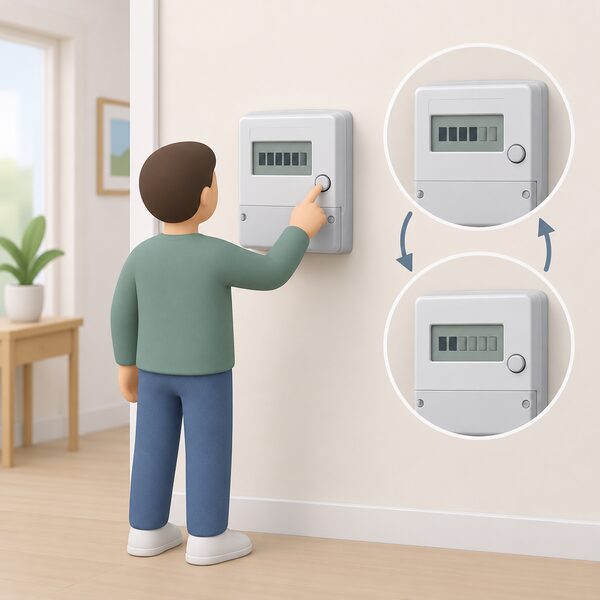
Reading the meter directly is the second check. On digital and prepayment meters, each reading is usually reached by pressing a button, sometimes marked Rate 1 and Rate 220. The two registers correspond to on-peak and off-peak consumption, so a household can watch which register advances during the hours it believes are cheap and settle the question empirically.
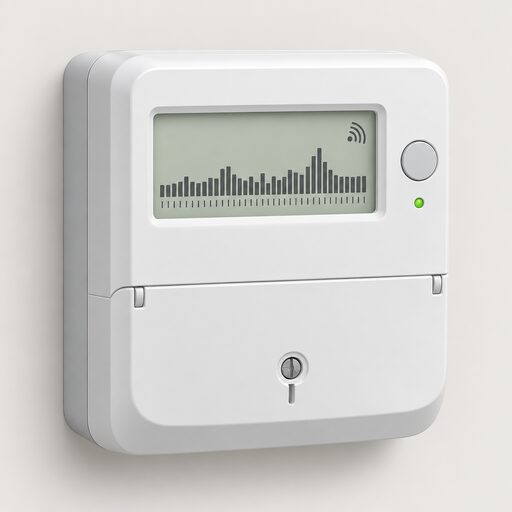
Smart meters do not change the hours by themselves, but they change how visible they are. All smart meters can support tariffs which charge different prices at different times throughout the day and night, including Economy 7, and Economy 10 meters are also available21. Some electricity smart meters show separate readings for day and night tariffs, Economy 7 pricing, and peak and off-peak usage22.
Where the meter is a radio teleswitch type, the switching schedule is held by the meter and the tariff, not by anything the household sets. The radio teleswitch tariffs and the switch-off page covers what happens to those meters, and Economy 10 and other restricted meter tariffs covers the multi-period variants.
Making the night hours count: storage heaters, hot water and timers
The night window only pays if something is set to use it. Storage heaters work by using cheaper, off-peak night-time electricity to create and store heat for use the next day, and are sometimes called Economy 7 heaters23. They are designed to work with Economy 7, where night-time electricity is much cheaper, typically about half the price, but day-time electricity is more expensive24.
The controls are where the saving lives. Night storage heaters are set to charge up at night, and the consumer body's verdict is that they are a cheap form of electric heating if the controls are understood, the settings are updated regularly to match the heat needed, and the household is on the Economy 7 tariff25. The same logic applies to water: an electric immersion tank should only come on at night, when electricity is at the much cheaper off-peak rate25.
"Storage heaters use Economy 7 or Economy 10 tariffs for cheaper energy at night."
Timers and appliance scheduling extend the principle beyond heating. The wider question of which loads can move is covered in shifting electricity use to cheap-rate periods, and the tariff family as a whole in time-of-use electricity tariffs explained. For the storage heater case specifically, is Economy 7 suitable for storage heaters? sets out the fit.
What remains outside the household's control is the window itself. The meter switches rates on its own schedule, the supplier sets the hours, and the region and meter setup can shift them. A household can confirm the hours, set the appliances to match, and read the two registers, but it cannot move the cheap period to suit its own routine.
Sources25 cited
- Energy flexibility, Smart Energy GB, 2026-08-17
- Economy 7 guide, Uswitch, 2026-09-08
- Time of use tariffs explained, Which?, 2026-04-23
- What is Economy 10, Energy Helpline, 2026-09-20
- What is Economy 7, Energy Helpline, 2026-09-20
- Types of energy tariff, Confused.com, 2025-11-03
- Getting the most from Economy 7, National Energy Action, 2026-09-10
- Balancing the grid, Uswitch, 2026-02-09
- Storage heaters, Which?, 2026-06-01
- Electric hot water, BEAMA, 2026-09-19
- How to read your gas and electricity meter, Confused.com, 2026-08
- Electric storage heaters, Energy Saving Trust, 2026-05-20
- Import and export meters, NIE Networks, 2026-09-20
- Heating fuel, Uswitch, 2026-01-27
- Economy 7, Centre for Sustainable Energy, 2026-07
- Tariffs for renewable technology, Energy Saving Trust, 2026-08-12
- Energy saving advice for renters, Centre for Sustainable Energy, 2026-08
- Radio teleswitch: what you need to know, Act on Energy, 2026
- Moving house gas and electricity guide, Uswitch, 2026-08-26
- Dealing with your energy supplier, Centre for Sustainable Energy, 2026-01
- Smart meters, Energy Ombudsman, 2026-09-20
- How can I read a smart meter, Smart Energy GB, 2026-08-17
- What is Economy 7, Smart Energy GB, 2026-04-07
- Night storage heaters, Centre for Sustainable Energy, 2025-10
- Energy saving myths, Centre for Sustainable Energy, 2026-07
 Economy 7 TariffsEconomy 7 gives you seven hours of cheaper electricity at night, but the exact hours depend on where you live and who supplies you.
 Economy 7 and Restricted MetersEconomy 7 and Economy 10 meters give you cheaper electricity for a set number of hours overnight and charge you more the rest of the day.
 Time-of-Use Tariffs ExplainedCan you pay less for electricity by using it at different times of day?
 Meters and Time-of-Use TariffsDo you need a smart meter for a time-of-use tariff, and does it have to send readings every half an hour?
 Agile and Dynamic TariffsAgile tariffs change the price of your electricity every half hour, so what you pay depends on when you use power.
 EV Charging Bolt-OnsCan you get cheap electricity for your car without changing the tariff for the rest of your home?