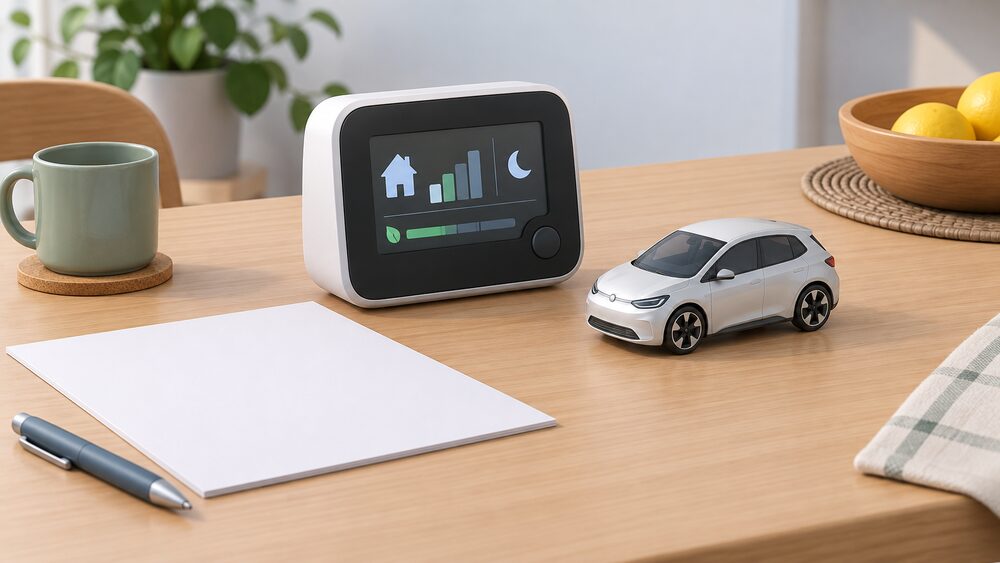
In this guide
A time-of-use tariff is a plan where the price of a unit of energy varies during a 24 hour period1. Instead of one flat rate for every kilowatt hour, the household pays more in the hours when the system is under strain and less when it is not. Smart time-of-use tariffs vary the cost of electricity based on the time of day it is used, and they charge at least two different rates for electricity used during peak and off-peak hours2.
The precondition is metering. To sign up to a time of use tariff, a household needs a smart meter, and to access any new flexible time-of-use tariffs it needs a smart meter that is set to send readings every half an hour2. Smart meters are compatible with Economy 7 tariffs and fixed rate tariffs, and they can also enable a household to join newer time-of-use arrangements, so the meter does not have to be changed to move between them4.
What follows is the structure of the market: the tariff models, the meter and consent settings each requires, the rates on offer, who gains and who loses, and the settlement rules that sit behind the bill. The lens throughout is energy independence. A time-of-use tariff does not reduce a household's dependence on the grid or on a supplier, and it does not generate a single unit of electricity. What it does is price the timing of demand, which is the one variable a household controls without buying anything.
What a time-of-use tariff is, and why the meter is the key
These tariffs use a smart meter to log electricity use and charge different rates during different time windows3. The half-hourly recording of energy use is what enables a supplier to charge different rates for use at different times of the day or week8. Without that record, a supplier has no way to know when a unit was used, and so no way to price it differently.
Smart time-of-use tariffs use half-hourly smart meter readings to allow companies to charge lower rates when demand is lower and electricity is cheaper9. The tariff will charge a higher price for electricity used in peak periods and a lower price during lower demand, off-peak periods2. Prices can vary depending on whether the time falls in peak hours, off-peak hours or shoulder hours2.
The potential saving depends on two things: the price set by the tariff, and how much demand can be shifted outside peak hours2. That second variable is the household's own, and it is why the same tariff can produce very different bills in two homes with identical annual consumption.
Access to time-of-use tariffs means cheaper rates during off-peak hours and incentives for energy usage on high-supply days4. Time-of-use tariffs are offered by some energy suppliers to their customers with smart meters10. Smart meters are optional, but without one a household misses out on easier billing and innovative tariff options4.
"To sign up to a time of use tariff, you'll need a smart meter."
The independence point is narrow but real. A household on a time-of-use tariff is still buying every unit from a supplier, and still exposed to that supplier's pricing. What changes is that the household can act on price signals rather than only on total consumption. That is a form of control over cost, not over supply.
Fixed-window, dynamic and legacy Economy 7: how the models differ
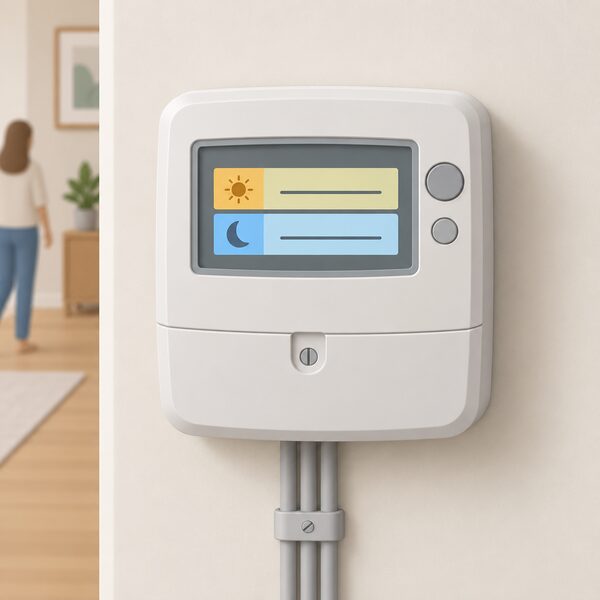
The market divides into three broad models, and they differ in who sets the price and how often it changes.
Fixed-window tariffs set cheaper periods in advance. Economy 7 and Economy 10 use fixed cheaper periods, while newer EV and tracker tariffs can be more dynamic and usually work best with a smart meter2. Economy 7 charges a cheaper rate for energy used at night, and may charge a higher rate for peak-time energy compared to a standard tariff4. Economy 7 and Economy 10 are older time-of-use tariffs that need compatible meters, while newer flexible tariffs typically rely on a smart meter2.
Dynamic tariffs follow a changing price. The price paid changes every half hour in line with the changing wholesale price of electricity11. Negative pricing can be an element of these tariffs, where a household is paid to use electricity1.
Export-linked tariffs combine import and export pricing, and are covered below.
All smart meters can support tariffs which charge different prices at different times throughout the day and night, including Economy 7, and Economy 10 meters are also available12. Some electricity smart meters show separate readings for day and night tariffs, Economy 7 pricing, and peak and off-peak usage13. A smart meter can access more flexible tariffs, including dual-rate tariffs14.
| Model | Who sets the price | Meter needed | Price changes |
|---|---|---|---|
| Economy 7 / Economy 10 | Supplier, fixed windows | Compatible legacy or smart meter2 | Fixed periods2 |
| Fixed-window smart tariff | Supplier, fixed windows | Smart meter2 | Fixed periods2 |
| Dynamic (for example Agile) | Wholesale market, passed through | Smart meter sending half-hourly readings2 | Every half hour11 |
| Export-linked (for example Flux) | Supplier, import and export rates | Smart meter, solar and battery15 | Variable15 |
Legacy time-of-use tariffs are becoming less common as the legacy meters that support them are being phased out9. Households no longer on an Economy 7 or Economy 10 tariff need not rush: the meter will continue to function normally and, providing all electricity is on one circuit, there should be no difference, though the Centre for Sustainable Energy recommends smart meters16.
What the rates look like: off-peak, peak and shoulder windows
Many energy suppliers offer lower rates during off-peak times, making it an attractive option for cost-conscious households17. The structure is consistent even where the numbers are not: a higher price in the peak window, a lower price off-peak, and often a middle band.
The exact windows are set by each supplier and each tariff. There is no national off-peak period, and the times on one tariff do not carry across to another. What can be said from the sources is the shape: at least two rates, across peak, off-peak and shoulder hours3.
For dynamic tariffs the range is wider and moves with the market. Octopus Energy has capped unit rates on its Agile tariff at 100p/kWh to protect customers from the biggest shocks5. The company states that price spikes are short-lived, typically lasting 30 minutes to an hour5. At the other end, negative pricing can pay a household to use electricity1.
The practical consequence for a household is that a time-of-use tariff cannot be compared on a single unit rate. Two tariffs with the same off-peak price can produce different bills depending on how long the cheap window runs and how deep the peak is. Some suppliers and comparison tools let a household upload its half-hourly data to estimate what it would pay on a smart tariff18. That is the only reliable way to compare, because it uses the household's own timing rather than an average.
Who benefits: shifting demand, batteries, EVs and heat pumps
The households that gain most are those with a large, movable load. An EV charger, heat pump or home battery make smart tariffs much more valuable18. Time-of-use tariffs suit households especially if they have green tech such as a heat pump, battery storage or an electric or hybrid car3.
The scale of the EV case is documented. Some innovative energy suppliers were able to offer tariffs, to consumers with smart meters, that could save up to two-thirds of the costs of charging electric vehicles if charging at certain times of day6. That figure is a committee's account of what suppliers offered, not a guarantee on any current tariff.
To benefit properly from smart appliances, electric vehicles and home batteries a household needs to be on a smart tariff11. Smart meters enable access to smart tariffs and demand-flexibility events, which could reward a household for using energy during off-peak times or when lots of clean electricity is available8. The half-hourly recording of energy use enables a supplier to charge different rates for use at different times of the day or week8.
Automation matters because the cheap window is often overnight. A smart charge point is pre-set to not charge during times of peak electricity demand, between 8am and 11am, and 4pm and 10pm on weekdays19. That default is a regulatory baseline for charge points, not a tariff term, but it shows how far timing has moved into the hardware itself.
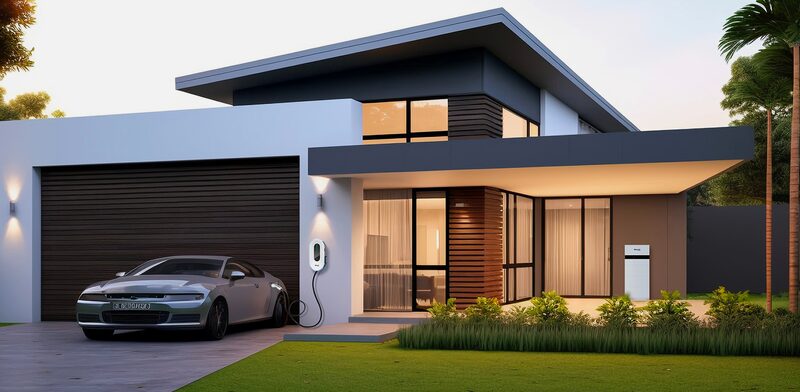
The independence reading is mixed. A battery paired with a time-of-use tariff lets a household buy cheap and use later, which is genuine self-sufficiency over cost. It does not disconnect the home from the grid, and the battery, the charger and the app that schedules them are all third-party products with their own company risk.
Octopus Agile: half-hourly wholesale pricing
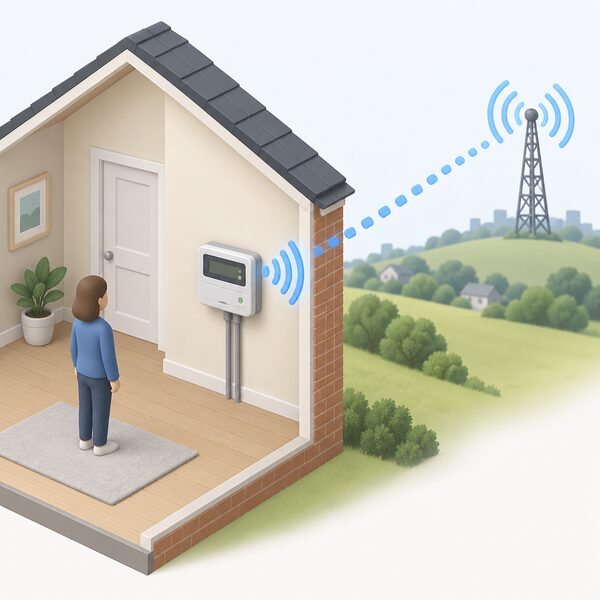
Agile is the clearest example of a dynamic tariff. The price paid changes every half hour in line with the changing wholesale price of electricity11. That is the whole design: the household carries the wholesale risk and, in exchange, gets the wholesale price.
The range runs from negative prices, where a household is paid to use electricity1, to a cap. Octopus Energy has capped unit rates on its Agile tariff at 100p/kWh to protect customers from the biggest shocks5. The company states that price spikes are short-lived, typically lasting 30 minutes to an hour5.
Two conditions apply. The first is metering: smart time of use tariffs need a smart meter that communicates with the supplier every half hour18. The second is behaviour: to benefit, a household needs to be able to move its electricity use to off-peak periods2. If most energy is used during peak times and cannot be shifted, a time-of-use tariff could cost a little more, and in that case a time-of-use tariff probably is not suitable18.
There is an independence argument here that is easy to overstate. Agile gives a household visibility of, and exposure to, the wholesale market. It does not give the household any ownership of generation, and it depends entirely on the supplier continuing to offer the tariff and on the meter continuing to communicate.
Intelligent Octopus Flux: solar and battery with matched import and export
Flux is the export-linked model. The Intelligent Octopus Flux export tariff was available to customers on the Intelligent Flux import tariff, who had solar PV and battery storage but also allowed Octopus to control their battery exports15. Ofgem's Smart Export Guarantee annual report records it as a variable tariff with no fixed end date20.
The eligibility conditions are the point. A household needed solar PV, a battery, and consent for the supplier to control battery exports15. That last condition is the trade: the supplier schedules when the battery discharges, in exchange for a tariff that prices import and export together.
For a household considering an export-linked tariff, the identifier to understand is the Export MPAN. Export MPANs export excess electricity back to the network and are mostly used with solar panel installations21. An eligible installation must have an export MPAN to manage exported electricity volumes to the SEG licensee22. An import MPAN is a separate thing: it is required for each new standard electricity meter, to measure the consumption of electricity and allow individual billing, for example a separate flat or landlord meter21.
The independence gain on an export tariff is the largest of any model here, because the household is generating. The dependence that remains is on the supplier's control of the battery, on the export MPAN and metering arrangements, and on the SEG licensee paying for what is exported.
Risks and drawbacks: peak prices, volatility and who can lose out

The risks are structural, not incidental.
- Peak exposure. A time-of-use tariff charges a higher price for electricity used in peak periods2. A household that cannot avoid the peak pays more for the same units.
- Volatility. On a dynamic tariff the price changes every half hour in line with wholesale prices11, and spikes, while short-lived, typically last 30 minutes to an hour5.
- No control over the tariff itself. Except by switching, a household does not control the tariff its energy supplier sets23.
- Equipment conditions. Some tariffs are only available if certain equipment is installed, such as an EV charger or solar panels2.
- Contract terms. Early termination fees, contract duration and penalties for switching tariffs or suppliers are all terms to check2.
- Switching risk. A meter may not work in smart mode when a household moves to a new supplier, and manual readings may be needed instead24.
The last point is the one most often missed. A meter may work in smart mode again if tariffs or suppliers change24, so the loss is not necessarily permanent, but a household that switches to a time-of-use tariff and then loses smart mode loses the half-hourly data the tariff depends on.
The independence ledger is honest here. A time-of-use tariff increases a household's control over when it buys, and decreases its insulation from market price. For a household with a battery, an EV and the ability to automate, that trade is favourable. For a household with none of those and an evening-heavy load, it is not.
Half-hourly settlement and the rules behind your billing data
Behind every half-hourly tariff sits a settlement system. Smart meters enable accurate billing by automatically recording energy use in half-hour periods, enabling energy suppliers to bill on actual rather than estimated usage26. The data shared through a smart meter is used to bill for the energy used, to offer new products and services such as new tariffs where permission has been given, and to help make the energy system more efficient by recording demand more accurately27.
The legal basis is the Smart Meters Act 2018. Section 11 exists for the purpose of enabling or requiring half-hourly electricity imbalances to be calculated using information about customers' actual consumption of electricity on a half hour basis28. In order to settle customers half-hourly, suppliers need access to their customers' half-hourly consumption data from the smart meter29.
Armed with this real-time information, energy suppliers can buy energy via the Market Half Hourly Settlement in a smarter way, lowering the cost of supply30. Consumers today already benefit from time-of-use tariffs30.
The consent position is the part a household can act on. Ofgem may change the rules to ensure half-hourly data is universally accessible to suppliers, rather than the current opt-in arrangement7. Until then, half-hourly readings are a setting the household agrees to.
The independence implication is that the household's own consumption data is the asset that makes these tariffs possible. A household that keeps half-hourly data local, or shares it selectively, limits which tariffs it can access. A household that shares it gets the tariffs and gives the supplier a detailed picture of its routine.
Checking the small print before you switch

The conditions that decide whether a time-of-use tariff works are mostly in the contract, not the headline rate.
- Confirm the meter setting. New flexible time-of-use tariffs require a smart meter set to send readings every half an hour2. If the meter is not set that way, the tariff cannot be delivered.
- Check the equipment conditions. Some tariffs are only available with certain equipment installed, such as an EV charger or solar panels2.
- Read the exit terms. Early termination fees, contract duration and penalties for switching tariffs or suppliers are the terms to check2.
- Ask about flexibility. The ability to switch between tariffs or opt out of time-of-use pricing is worth asking about directly2.
- Test the numbers against your own timing. Some suppliers and comparison tools let a household upload its half-hourly data to estimate what it would pay on a smart tariff18. Half-hourly usage data can usually be downloaded from the supplier or online account18.
- Check the export side if generating. An eligible installation must have an export MPAN to manage exported electricity volumes to the SEG licensee22.
Two further points sit outside the tariff itself. First, a smart meter is compatible with Economy 7, fixed rate and newer time-of-use tariffs, so moving between them does not require a meter change4. Second, if a meter is not operating in smart mode for over 90 days due to an issue within the supplier's control to resolve, Ofgem has consulted on a guaranteed standard that would apply7.
"To benefit, you'll also need to be able to move your electricity use to off-peak periods."
The final test is the household's own pattern. A time-of-use tariff rewards timing, not thrift. Where the load can move, the tariff pays. Where it cannot, the same tariff charges more for the same electricity, and the household's dependence on the grid and the supplier is unchanged either way.
Sources31 cited
- Time of use tariffs: all you need to know, Energy Saving Trust, 2026-05-20
- Energy flexibility, Smart Energy GB, 2026-08-17
- Five top tips from Which? to cut your energy bills, Welsh Government Climate Action, 2026-03-18
- Smart meters, Welsh Government Climate Action, 2026
- Getting a smart meter installed, Citizens Advice, 2026-09-17
- Public Accounts Committee report on the smart meter rollout, House of Commons Public Accounts Committee, 2023-10-20
- Smart Meter Guaranteed Standard statutory consultation, Ofgem, 2025-08-08
- How smart meters work with heat pumps, Smart Energy GB, 2026-04-24
- How to switch energy supplier, Which?, 2026-05-15
- How to use a smart meter to save money, Smart Energy GB, 2026-04-24
- Smart homes, lower carbon footprint, Energy Saving Trust, 2026-01-21
- Smart meters, Energy Ombudsman, 2026-09-20
- How can I read a smart meter, Smart Energy GB, 2026-08-17
- Getting a smart meter, Ofgem, 2026
- Smart Export Guarantee, Solar Energy UK, 2026-05-12
- Important reminder for Economy 7 and 10 meters, Centre for Sustainable Energy, 2026-06
- How do smart meters reduce my bills, Smart DCC, 2025
- Should I switch to a time of use tariff, Energy Saving Trust, 2026-01-23
- The Retail Market Review: statutory consultation on RMR domestic proposals, Ofgem, 2013-04
- Guide to EVSCP regulations 2021, Department for Transport, 2026-09-18
- MPAN only, UK Power Networks, 2026-09-17
- Draft licence conditions, Department for Energy Security and Net Zero, 2026-09-17
- How do smart meters save energy, Smart DCC, 2026
- What happens if your energy supplier goes out of business, Ofgem, 2026
- Smart meters: your rights and expectations, GOV.UK, 2025-08-08
- Get help with your smart meter, Ofgem, 2026-09-17
- The Smart Meters Act 2018, legislation.gov.uk, 2024-03-28
- Ofgem Consumer First Panel Year 9 Wave 3: half-hourly settlement, Ofgem, 2018-07-10
- Data protection and smart meter data, Open Energy, 2026-09-20
- How smart can a smart meter be in the connected home, Smart DCC, 2024
- Smart Export Guarantee Annual Report Year 5, Ofgem, 2025-12
 Time-of-Use Tariffs ExplainedCan you pay less for electricity by using it at different times of day?
 Batteries and Smart TariffsA home battery can earn its keep if your electricity prices change through the day.
 Meter Readings and EstimatesWhy is my energy bill estimated, and how often should my meter be read?
 The Full Smart Meters GuideDo smart meters really save you money, and how do you use one to cut your bills?
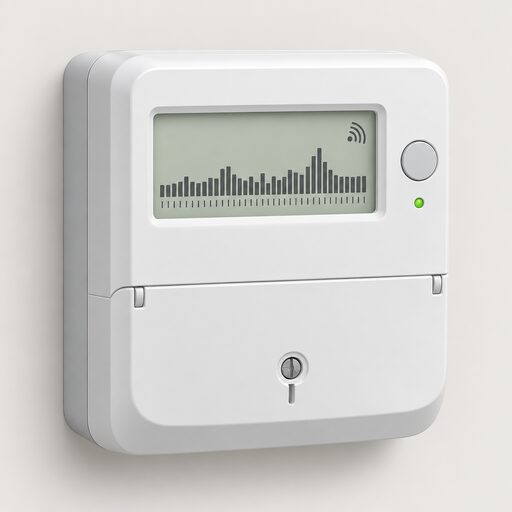 Agile and Dynamic TariffsAgile tariffs change the price of your electricity every half hour, so what you pay depends on when you use power.
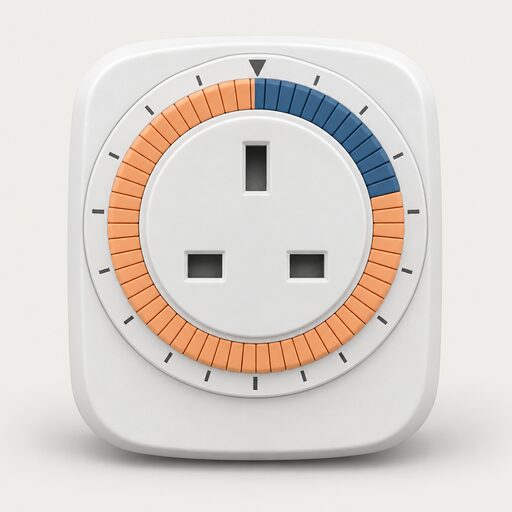 Heat Pump Electricity TariffsA heat pump tariff gives you cheaper electricity for part of the day, so running your heating costs less than on a standard rate.