In this guide
Flexibility schemes pay households for changing when they use electricity, not for using less of it overall. The reward is attached to a shift in time: a supplier or an aggregator watches half-hourly consumption from a smart meter, compares it with what that household would normally have used, and credits the difference. The Demand Flexibility Service rewards you for using less energy during peak hours, and it uses several energy saving events throughout the year1. Rewards vary depending on your supplier, but the more electricity you save during each event the greater your rewards will be1.
The two best documented household offers in the UK work in different ways. ScottishPower's Power Saver gives eight one-hour discount slots a week, with 50% slots available 98 hours per week and 20% slots available 50 hours per week2. Uswitch's Power Hours is an earning scheme operated by Uswitch Limited, open to households regardless of supplier, and redemption is strictly limited to off-peak weekend timeslots, being either 7:00 AM to 12:00 PM or 12:00 PM to 5:00 PM on a Saturday or Sunday only3.
Both depend on the same piece of hardware. A communicating smart meter, an online account and consent to share half-hourly readings are the entry conditions for Power Saver2, and the same data pipeline underpins every other scheme in the market. That makes flexibility one of the few areas where a household's energy independence is genuinely increased by a meter it already has, while leaving the household dependent on a supplier, an app and a communications network it does not control.
What energy flexibility schemes reward households for
Flexibility is a payment for timing. A household that runs a washing machine, charges a car or heats water outside the peak is reducing the strain on the network at the moment it is greatest, and the scheme pays for that reduction. The Demand Flexibility Service rewards you for using less energy during peak hours, and rewards take the form of pounds or points that you can use towards paying for your energy bills1. The mechanism is a comparison against a baseline, so the reward reflects how much a household departed from its own normal pattern rather than how frugal it is in absolute terms.
The same principle appears in the wider market. Demand side response solutions are being built so that customers will receive incentives and rewards for participating in grid-balancing programmes5. That language matters because it describes a commercial relationship rather than a grant: the household is providing a service to the grid, and the payment is for that service.
The scale of the ambition is set out in government policy. The government's CP2030 ambition includes achieving 10 to 12 GW of capacity through consumer-led flexibility4. That figure is a target for the system as a whole, not a promise to any individual household, and it explains why suppliers and third parties are competing to enrol homes now.
For a household's energy independence, the effect is partial. Flexibility income reduces the net cost of electricity and rewards load-shifting, which pairs naturally with a battery, an electric vehicle or a heat pump that can be run at a chosen hour. It does not reduce dependence on the grid, on a supplier, or on the meter and app that record the shift. A household that loses its communications link loses its eligibility with it.
Power Saver: ScottishPower's reward scheme and who can join
Power Saver is ScottishPower's own scheme, and the conditions are set by the supplier. To be part of Power Saver events, you must be an electricity customer with an online account, a communicating smart meter and consent to sharing half-hourly readings2. All three conditions are cumulative. A household with a smart meter that has fallen into dumb mode, or one that has declined to share half-hourly data, cannot take part even if the meter is otherwise working.
The consent requirement is the one households most often overlook. Half-hourly settlement data is what allows a supplier to see consumption within a specific hour and compare it with a baseline. Without explicit consent to share that resolution of data, the scheme has nothing to measure. The Consumer Consent Solution work at Ofgem is the regulatory backdrop to this, and the government's CP2030 ambition includes achieving 10 to 12 GW of capacity through consumer-led flexibility4.
ScottishPower also runs a separate rewards route for households that install generation. Customers who join its rewards club and install solar PV and a battery can get £250 worth of energy credits6. That is a distinct offer from Power Saver and is tied to a hardware installation rather than to load shifting.
The practical picture is that Power Saver is a supplier-specific scheme with a supplier-specific gate. A household that switches away from ScottishPower leaves the scheme with the account, and a household that moves house is automatically switched to the new property's supplier, with the tariff likely to change7. The scheme therefore rewards stability of supply relationship as much as flexibility itself.
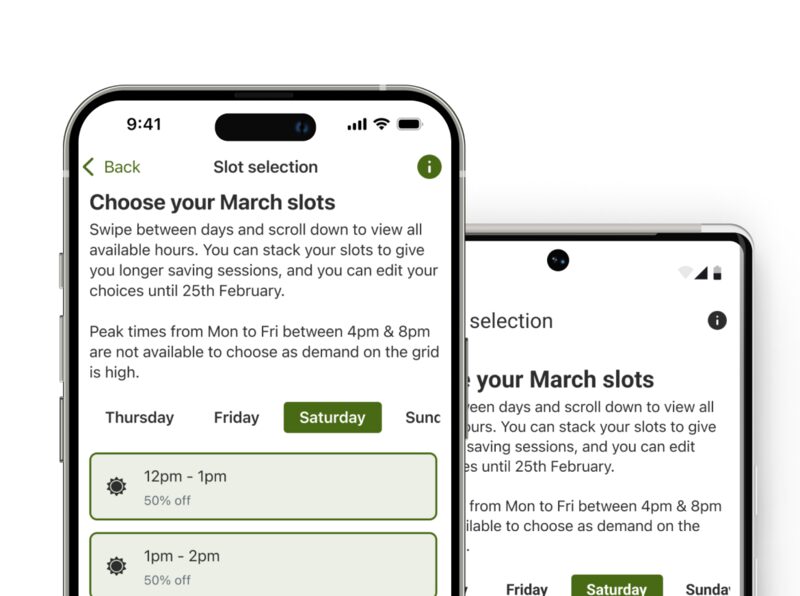
How Power Saver slots work: 8 one-hour slots, 50% or 20% discount
Power Saver is built around a weekly allocation of discounted hours rather than around unpredictable events. You can now get 8 one-hour slots of cheaper electricity at selected times throughout the whole week2. The discount is not uniform: 50% slots are available 98 hours per week, 20% slots are available 50 hours per week2. A household choosing its eight hours from the 50% pool is choosing from a wider set of windows than the headline eight might suggest.
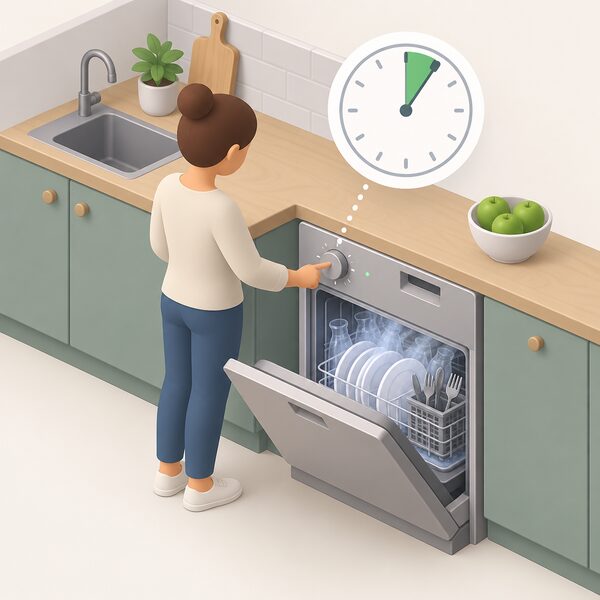
The structure has two consequences. First, the household decides in advance when it will use power, which suits predictable loads such as overnight charging, a dishwasher on a timer or an immersion heater. Second, the discount applies to electricity used in the chosen hour, so the value depends on how much load can actually be moved into it. A household with nothing to shift gains little from a slot.
The chosen pattern is persistent. ScottishPower states that if you choose your preferred 8 x 1-hour slots for the next month, these will carry across onto the following months2. That removes the need to re-select each month, and it also means an unchanged selection continues indefinitely until the household revises it.
| Feature | Power Saver | Power Hours |
|---|---|---|
| Operator | ScottishPower | Uswitch Limited3 |
| Basis | 8 one-hour discount slots a week2 | Free hours redeemed in fixed blocks of five3 |
| Discount or reward | 50% or 20% off in the chosen hour2 | Free electricity in the redeemed session3 |
| When | Selected times throughout the whole week2 | Off-peak weekend timeslots only3 |
| Supplier restriction | ScottishPower electricity customers only2 | Open to any supplier3 |
The comparison is not a ranking. The two schemes reward different behaviour: Power Saver rewards a weekly pattern of discounted hours, while Power Hours rewards a booked block of free weekend electricity. A household's own load profile determines which is worth more, and the terms of each set the ceiling.
Power Saver earnings: £47.84 average, £300 maximum, and how credit is paid
Power Saver pays by crediting the bill rather than by transferring cash. ScottishPower states: "We'll credit your bill based on how much energy you were able to shift"2. The credit therefore appears as a reduction in the amount owed, and its size tracks the load the household actually moved into its chosen slots.
The published figures for the scheme are an average of £47.84 and a maximum of £300. Those are the scheme's own numbers and they set expectations: a typical participant earns a modest annual credit, and the maximum is reached by households with substantial shiftable load and consistent participation. The gap between the two is the clearest signal that the reward is behavioural rather than automatic.
Because the credit lands on the bill, it interacts with how the household pays. Independent supplier data records that Octopus Energy does adjust direct debits8, and the general principle is that a credit reduces the balance a Direct Debit is set to cover. A household on a fixed monthly payment should expect the credit to show as a lower balance rather than as a separate payment.
The earnings ceiling is worth stating plainly. A maximum of £300 is a meaningful reduction but not a transformation of a household's energy costs, and the average of £47.84 is smaller still. Flexibility income works best as a marginal offset alongside other measures, not as a substitute for them.
Power Hours: Uswitch's free electricity scheme, open to any supplier
Power Hours is the main cross-supplier alternative. Power Hours is an earning scheme operated by Uswitch Limited3, which means the operator is not the household's energy supplier and the scheme is not tied to a particular tariff. That is its distinguishing feature: a household can stay with its existing supplier and still take part.
The current structure is a standing scheme rather than a series of one-off campaigns. The Uswitch App Free Electricity Scheme is an ongoing campaign sitting under the Power Hours Master Terms3. Members must redeem available hours in fixed blocks of five (5) hours, described in the terms as a Session3, and members may only redeem one (1) 5-hour Session per weekend3. Redemption is strictly limited to off-peak weekend timeslots, being either 7:00 AM to 12:00 PM or 12:00 PM to 5:00 PM on a Saturday or Sunday only3.
Booking is flexible within limits. Members may reschedule a booked Session within the App an unlimited number of times, provided such changes are completed before 11:59 PM on the Friday before the booked weekend, within the original Redemption Window3. There is also a connection deadline: members will have 30 days to ensure they have connected their Smart Meter to their Uswitch Account and that they have signed up to Power Hours in the App3.
Withdrawal is time-limited. Members have up to 90 days to withdraw earnings once they become available, except for any earnings accrued under Reduce and Earn or Increase and Earn Power Hours campaigns, for which Members have 365 days3. That distinction matters because the longer window applies only to those two campaign types.
Eligibility limits and exclusions: meters, tariffs and consent
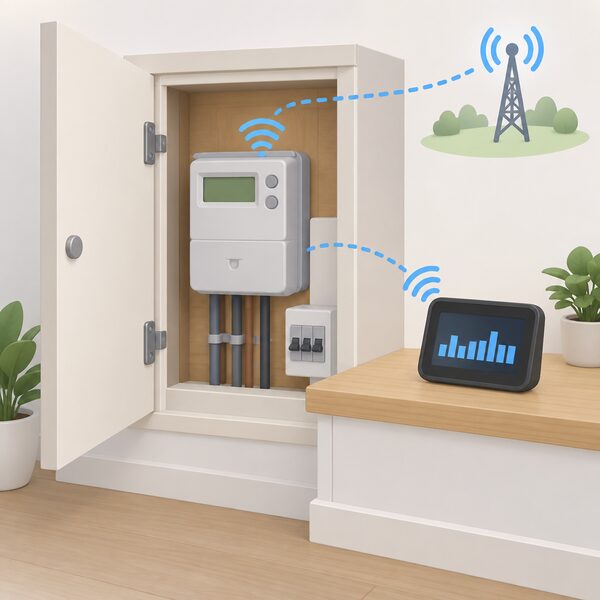
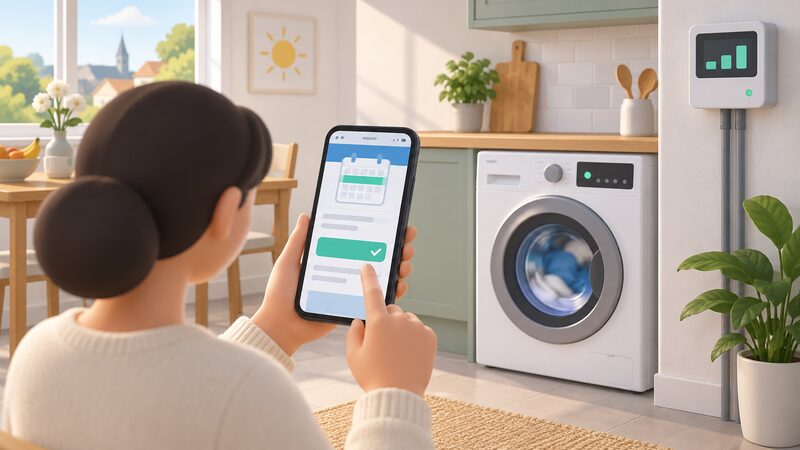
Every scheme in this market rests on the same three conditions: a meter that communicates, a tariff or account relationship the operator can credit, and consent to share the data that proves the shift. Power Saver states the requirement directly: to be part of Power Saver events, you must be an electricity customer with an online account, a communicating smart meter and consent to sharing half-hourly readings2.
The meter condition is the one that fails most often. ScottishPower states that if your smart meter experiences connection issues over a longer period, we may deem your smart meter as non-communicating, which loses eligibility2. A meter in dumb mode still measures and bills, but it cannot evidence a half-hourly shift, so the scheme has no basis on which to pay.
Regulation in this area is still developing. Ofgem has consulted on guaranteed standards that would provide that if a consumer's smart meter is not operating in smart mode for over 90 days, the consumer will receive compensation, and that if a smart meter installation fails due to a fault within the energy supplier's control, the consumer will receive compensation9. Those measures are proposed rather than implemented, so a household cannot yet rely on them.
Consent is the third gate and the least visible. Sharing half-hourly readings is a specific permission, distinct from allowing a supplier to read a meter for billing. The Consumer Consent Solution work at Ofgem sits alongside the government's CP2030 ambition, which includes achieving 10 to 12 GW of capacity through consumer-led flexibility4. Without that consent, the data resolution needed for a baseline comparison is not available.
How rewards appear on your bill, meter or app
Rewards reach households in three forms, and the form determines how quickly the value is realised. The Demand Flexibility Service pays in pounds or points that you can use towards paying for your energy bills1. Power Saver credits the bill based on how much energy you were able to shift2. Power Hours accrues earnings that the member withdraws, with members having up to 90 days to withdraw earnings once they become available3.
The size of any reward depends on the size of the shift. Rewards vary depending on your supplier, but the more electricity you save during each event the greater your rewards will be1. That relationship is the whole design: the scheme is buying a measurable reduction against a baseline, and the payment scales with it.
For comparison, some older schemes paid on a different basis entirely. People who join and follow the rules of the Domestic Renewable Heat Incentive receive quarterly payments over seven years for clean, green, renewable heat, with payments based on the estimated renewable heat the system produces10. That is a generation incentive rather than a flexibility one, and it illustrates how varied the payment mechanics across UK energy schemes can be.
In practice, a household should expect to see flexibility income as a line on a bill or a balance in an app, not as a separate payment into a bank account. That has a consequence for how it feels: the reward is real but it is absorbed into the energy account, and it is only visible if the household checks the credit against what it would otherwise have owed.
Consumer protection in a lightly regulated flexibility market: Flex Assure and HOMEflex

Flexibility sits in a lighter regulatory space than the supply of energy itself, and the protections are correspondingly thinner. The government has consulted on reforming consumer protection for home upgrade schemes, and its stated ambition is that the reformed consumer protection system provides additional benefits for self-funded installations11. That consultation concerns home upgrade work rather than flexibility events, but it signals the direction of travel for consumer protection in adjacent markets.
Where a dispute does arise, the Energy Ombudsman is the route for domestic energy complaints. It can offer financial awards up to £10,000, and its average award is around £5012. That average is a useful calibration: the ombudsman is a genuine remedy, but the typical outcome is modest, and it is not a substitute for reading the terms of a scheme before joining.
The practical protections for a flexibility participant are therefore contractual rather than regulatory. The terms of Power Hours, for example, set out redemption blocks, weekend limits, rescheduling deadlines and withdrawal windows in specific detail3. Those terms are the household's actual protection, and they are enforceable in the way any consumer contract is.
"Members have up to 90 days to withdraw earnings once they become available"
A household weighing a flexibility offer should treat the terms as the product. The reward rate matters less than the conditions attached to earning it, the window for withdrawing it, and what happens if the meter stops communicating. Those conditions are where the value is won or lost.
Where to get independent help: Citizens Advice
Independent advice on energy matters is available free, and it is separate from the supplier or the scheme operator. In Northern Ireland, NI Energy Advice offers free advice on saving energy in your home, energy efficiency grants, and oil buying clubs13. The same service provides independent advice on solar panels, heat pumps, and other energy efficiency measures, and homeowners are directed to seek that advice from organisations independent of the installer14.
That separation matters in a market where the party paying the reward is also the party setting the terms. A household that wants a view on whether a scheme suits its circumstances, rather than on whether it qualifies, is better served by an advice body than by the operator.
For households in Northern Ireland there is a further consideration: the support landscape differs from Great Britain. Belfast City Council's cost of living and winter support pages and its home heating guidance set out the local routes13, and the Northern Ireland Sustainable Energy Programme lists the schemes available16. NI Energy Advice offers independent and impartial energy advice to domestic householders in Northern Ireland, plus referrals to energy grants and other sources of help16. A household in Northern Ireland should check the local scheme list rather than assume a GB scheme applies.
The general principle is that flexibility income is one line in a household's energy position, and advice bodies can put it in context alongside tariffs, insulation and heating. The reward is worth having, but it is not a substitute for the structural measures that reduce consumption in the first place.
Why flexibility matters: the road to 10-12GW of consumer-led flexibility

The direction of policy is unambiguous. The government's CP2030 ambition includes achieving 10 to 12 GW of capacity through consumer-led flexibility4. That is a system-level target, and it can only be met if a very large number of households participate in schemes of the kind described here.
The commercial logic is already visible in adjacent markets. Demand side response solutions are being developed so that customers will receive incentives and rewards for participating in grid-balancing programmes5. Electric vehicle charging is one of the loads being drawn into that structure, with charging ecosystems expanding across the UK5. A household with a car, a battery or a heat pump has more shiftable load than one without, and therefore more to sell.
The regulatory framework is being built to match. Government expects to introduce secondary legislation covering energy smart appliances, load controllers and Flexibility Service Providers17. That legislation would formalise the role of the aggregators and intermediaries that sit between households and the grid, and it is the missing piece in the current arrangement.
For a household, the honest summary is that flexibility offers a real but bounded income, dependent on equipment and consent the household must maintain. It increases independence by turning consumption timing into a saleable service, and it leaves dependence on the grid, the supplier, the meter's communications and the operator's app. The schemes are worth understanding on those terms: a modest, conditional reward for a behaviour the household controls, in a market whose rules are still being written.
Sources17 cited
- Demand Flexibility Service, Energy Saving Trust, 2026-05-21
- Power Saver half price electricity, ScottishPower, 2026-09-17
- Power Hours terms, Uswitch, 2026-09-14
- Consumer Consent Solution impact assessment, Ofgem, 2026-01
- Toyota to expand EV charging ecosystem across the UK, SMMT, 2025-12-04
- Solar panel costs, Which?, 2026-08-03
- Who supplies my electricity and gas, Uswitch, 2026-06-29
- Octopus Energy customer service details, Citizens Advice, 2026-09-20
- Final decision on smart meter guaranteed standards, Ofgem, 2026-01-30
- Domestic Renewable Heat Incentive, Ofgem, 2026-09-17
- Reforming consumer protection for home upgrade schemes, GOV.UK, 2026-06-17
- We may be able to help resolve your energy dispute, Energy Ombudsman, 2026-09-20
- Cost of living and winter support, Belfast City Council, 2026-09-20
- Support to generate your own electricity, nidirect, 2025-09-22
- Home heating, Belfast City Council, 2026-09-20
- NISEP list of schemes 2026-27, UREGNI, 2026-04
- Clean Flexibility Roadmap update, GOV.UK, 2026-10
 Flexibility Payments for HomesCan you really get paid for using less electricity at peak times, and how much would a household actually earn?
 Demand Flexibility and the GridGetting paid to shift your electricity use away from peak times is now a real option for households with a smart meter.
 Smart Charging RewardsCovers the schemes that pay or reward households for shifting car charging, including the Demand Flexibility Service, app-based reward programmes and supplier incentives.
 Suppliers and IndependenceCan you really cut your energy bills by making your own power, and how much of your supplier do you still need?
 The Full Tariffs GuideWhich energy tariff suits how you live, and will switching really save you money?
 Export Rates Per kWhHow much will your supplier pay you for the solar power you send to the grid, and why do rates vary so much from one company to another?