
In this guide
Flexibility payments are money, credit or points paid to a household for changing when it uses electricity rather than how much it uses over the year. The formal definition is narrow: small, voluntary adjustments to when you use electricity, earning rewards for helping balance the grid1. The Demand Flexibility Service (DFS) is the national version of that idea. It launched in winter 2022/23 to help manage potential winter pressures by reducing demand during evening peak periods and reducing reliance on more expensive electricity generation2.
The scale is real but modest. In its first winter the service incentivised 1.6 million households and businesses, saving over 3.3GWh of electricity3. Between December 2024 and March 2025 it delivered 3.9GWh of flexibility across 44 events3. For an individual home the sums are smaller: a household with electric heating or an electric car charged at peak times might earn £0.81 for shifting a quarter of its use during an event, rising to £3.06 for shifting almost all of it4.
What a household gets out of this depends on three things: whether it has a smart meter sending half-hourly readings, whether its supplier is registered, and whether it has load it can genuinely move. The sections below set out the mechanics, the schemes, the calculation and the limits.
What flexibility payments are and why the grid pays for them
The grid has a problem that repeats every winter evening. Demand peaks, and the generation needed to meet that peak is the most expensive on the system. The DFS was designed to help manage potential winter pressures by reducing demand during evening peak periods and reducing reliance on more expensive electricity generation2. Paying households to use less at that moment is cheaper than firing up the plant that would otherwise cover the peak.
For a household, the transaction is straightforward: get paid or receive credits for adjusting your energy use at key times1. The adjustment can be a reduction, such as delaying a tumble dryer, or a shift, such as running the dishwasher at a time when demand on the grid is lower1. Both count, because both reduce the peak.
The service is not a tariff and not a subsidy. It sits alongside whatever tariff the household is on, and it pays for behaviour during declared events rather than for consumption across the year. That distinction matters for how the money arrives and for who can realistically take part.
The scheme has been reshaped since launch. From 9 April 2026 it operates with a reduced eligibility threshold of 0.1MW, the introduction of bi-directional flexibility, zonal procurement, and additional features including Primacy and a Self-Nominated Baseline option2. From 7 October 2026 it will launch the capability to procure constraint management actions, and participants will be able to take part in both margin and system tagged actions2. Those changes are aimed at providers and aggregators, but they shape what households are eventually offered.
"Small, voluntary adjustments to when you use electricity - earning rewards for helping balance the grid."
The Demand Flexibility Service: events of one to four hours, with up to 24 hours' notice
An event is a declared window in which the scheme asks participants to reduce or shift use. Each event usually lasts for around an hour in the evenings when demand for electricity is at its peak5. The service uses several energy saving events throughout the year rather than running continuously5.
Notice is short. You get a notification telling you the date and time of each event, and this might be on the same day or the day before5. That is enough for a household that can move a wash cycle or delay charging a car, and not enough for one that needs to plan around medical equipment, young children or shift work.
The reward depends on beating a baseline rather than on the size of the reduction in absolute terms. The scheme rewards households for reducing their electricity use below a calculated baseline at specified times, known as events, over the winter3. A household that normally uses very little in the evening peak has little room to go below its baseline, which is why the earnings tables show such different figures for different home types.
Events are declared by the scheme operator and delivered to households through their chosen provider. The operator publishes two tables that list all the registered providers, the first for domestic households and small businesses and the second for all other businesses2. A household checks the domestic table, then signs up through that supplier, aggregator or app.

Rewards: cash back, bill credit, gift cards and prize draws
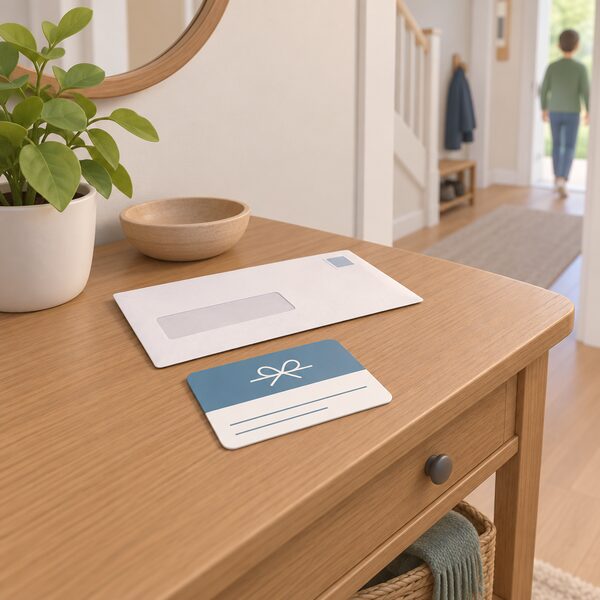
The form the reward takes varies by provider. Energy Saving Trust describes rewards as pounds or points that you can use towards paying for your energy bills5. Rewards vary depending on your supplier, but the more electricity you save during each event the greater your rewards will be5.
Ofgem's consumer research on domestic demand-side response found that reward mechanisms are likely to vary from direct financial rewards to being a part of bundled products or services, for example free EV miles in return for participating in DSR, or credits toward other products and services7. That is a wider menu than cash: a household might receive charging credit, a gift card, or an entry into a prize draw rather than a payment.
The practical consequence is that two households doing the same thing can receive different value. A provider paying bill credit delivers a reduction in the amount owed. A provider paying points delivers something that has to be redeemed. A provider bundling the reward into a product delivers value only if the household uses that product.
Who can take part: smart meters, registered suppliers, and the Northern Ireland gap
Two conditions gate participation. The first is metering: you will need a smart meter that is working in smart mode and sending half-hourly readings to take part in energy flexibility6. A smart meter installed but not communicating in smart mode does not qualify, and neither does an older meter, however the household uses electricity.
The second is the supplier. Get your energy from a supplier that's registered to take part in the service5. Customers sign up for the DFS scheme through participating energy suppliers, aggregators and apps6. A household on a supplier that has not registered cannot take part, whatever its meter can do.
There is a further limit on how many providers a household can use. Remember, you can only take part with one registered provider5. That prevents a household from stacking rewards across several aggregators for the same event.
Northern Ireland sits outside the Great Britain scheme. The support landscape there runs through different bodies: the Northern Ireland Housing Executive, Northern Ireland Electricity, Land & Property Services and Housing Associations operate the Third Party Payment scheme8, and the Northern Ireland Sustainable Energy Programme is an energy efficiency programme for domestic and non-domestic customers9. Those are efficiency and payment-support routes rather than a demand flexibility market, so a household in Northern Ireland should not expect a DFS event notification.
| Requirement | Detail |
|---|---|
| Meter | Smart meter working in smart mode, sending half-hourly readings6 |
| Supplier | Must be registered to take part in the service5 |
| Providers | One registered provider at a time5 |
| Provider list | Two tables: domestic households and small businesses, and all other businesses2 |
| Northern Ireland | Outside the Great Britain scheme; separate efficiency and support programmes8 |
Power Payback, Power Move and powerDOWN or powerUP: the other schemes on offer
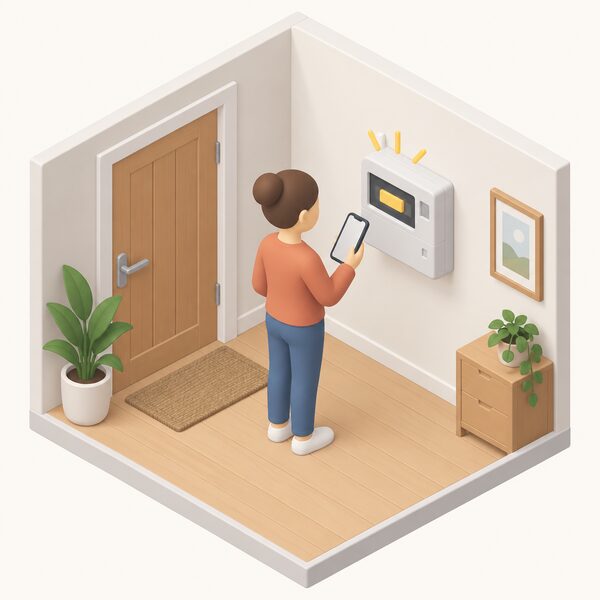
The DFS is the national scheme, but several suppliers run their own flexibility products under different names. These operate on the same principle, paying for reductions during declared windows, and they differ mainly in how the reward is delivered and how quickly.
Power Payback is the clearest example of a fast route. Within 72 hours, earned credits are directly applied to the customer's electricity meter3. Customers can transfer this credit to their gas meter if desired using the My Utilita app3. That is a materially different experience from waiting for a bill credit, because the value lands on the meter and can be seen there.
The distinction between the national scheme and supplier schemes matters for two reasons. First, the reward mechanics differ: a supplier scheme can pay to a meter, a national scheme pays through the provider. Second, the event calendar differs: a supplier scheme may run events that the national scheme does not, and vice versa.
For households in payment difficulty, flexibility payments are not a substitute for the support routes that exist. If you are struggling to pay for energy or think you may get into difficulty, you can ask your supplier to agree a payment plan, payment break or reduction, review payments and debt repayments, and give access to hardship funds10. Suppliers can agree a payment plan, payment break or reduction11. Flexibility income is small and irregular; the support routes are the ones designed for arrears.
How your reward is calculated: baselines, kWh saved and the £2.10 per kWh rate
The baseline is the counterfactual: what the household would have used had there been no event. It is based on each half hour of the day for either the 10 most recent weekdays (for weekday events) or the four most recent weekend days (for weekend events)4. The reward is then calculated on the difference between that baseline and what was actually used during the event.
That structure explains why earnings vary so much by household type. The Centre for Sustainable Energy's worked figures show the spread clearly.
| Household type | Shift a quarter of use | Shift half of use | Shift three quarters of use | Shift almost all |
|---|---|---|---|---|
| Gas heating, single occupant | £0.25 | £0.49 | £0.74 | not given |
| Electric heating or EV charged at peak | £0.81 | £1.61 | £2.42 | £3.06 |
Figures per event, from the Centre for Sustainable Energy4.
A single-occupant home with gas heating has a low and flat evening load, so there is little to move and little to earn. A home with electric heating or a car charged at peak has a large, movable block of demand, and the same proportionate shift produces several times the reward. The gap between £0.25 and £3.06 per event is not a difference in effort; it is a difference in what the household had to shift in the first place.
The scheme's own history shows the aggregate effect. The DFS delivered a reduction of almost 800 megawatt hours throughout events to date at the time of the operator's report, with some companies earning up to £8,000 so far2. Those are organisational figures, not household ones, and they illustrate how much more flexibility sits with businesses than with homes.
What participation means for household energy independence
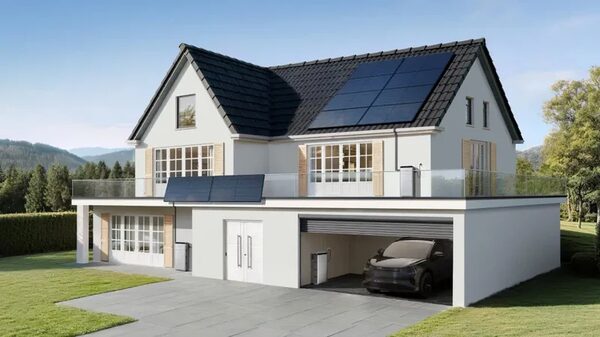
Flexibility payments do something specific and limited for independence. They turn a household's timing decisions into a small revenue stream, and they make the household a participant in balancing the system rather than only a consumer of it. That is a genuine shift in position, and it is the reason the scheme exists.
What it does not do is reduce dependence on the grid. A household taking part in an event is still importing electricity, still supplied by a company, still exposed to whatever the supplier charges outside the event window. The payment is compensation for cooperation, not a route to self-sufficiency. A home with solar and a battery has more genuine independence, and the Committee on Climate Change notes that at household level, further innovation in home battery technology, vehicle-to-everything (V2X), and solar can provide households with additional backup options during power outages13. Flexibility payments do not.
There is also a dependence on the provider. The reward arrives through a supplier, an aggregator or an app, and the terms are set there. A household that changes supplier may find its flexibility arrangement changes with it, and a household whose provider withdraws from the scheme has no route to the events.
The honest summary is that flexibility payments are a small, useful, conditional income stream that rewards households already able to shift load. They are not a substitute for insulation, a heat pump tariff, a battery or an export tariff, and they should not be counted on as a fixed contribution to a household budget.
Where flexibility payments fall short: low earners, Economy 7 and irregular events
The scheme's own research identifies the central fairness problem. Households with less ability to shift may end up paying more for their electricity14. A household that cannot move its load, because of medical equipment, shift patterns, young children or a prepayment meter, earns nothing from flexibility while the system-level savings accrue to those who can.
Prepayment customers are a specific case. Nesta's research on smart prepayment customers' experience of the Demand Flexibility Service examined how that group engages with the scheme, and the findings sit alongside the broader point that the households with the least discretionary load are the least able to benefit3.
Economy 7 and Economy 10 households face a structural mismatch. Those tariffs use fixed cheaper periods, while newer EV and tracker tariffs can be more dynamic and usually work best with a smart meter6. Economy 7 and Economy 10 are older time-of-use tariffs that need compatible meters6. A household already running appliances overnight to hit the cheap window has, by definition, less evening load left to shift during an event, so its baseline is low and its reward is small.
Event irregularity compounds this. The service uses several energy saving events throughout the year5, and they cluster in winter evenings. A household cannot budget on the income, because it does not know how many events will be called or when.
Where the service is heading: year-round operation and rewards for using surplus renewables
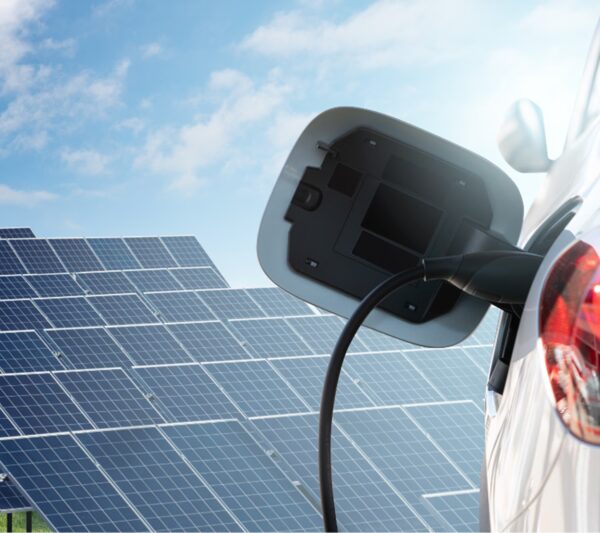
The direction of travel is towards a service that runs beyond winter peaks. From 9 April 2026 the scheme operates with a reduced eligibility threshold of 0.1MW, bi-directional flexibility, zonal procurement, and additional features including Primacy and a Self-Nominated Baseline option2. From 7 October 2026 it will launch the capability to procure constraint management actions, and participants will be able to take part in both margin and system tagged actions2.
Bi-directional flexibility is the significant change for households. A one-directional scheme pays for using less. A bi-directional scheme can pay for using more at times when there is surplus generation, which is the mechanism that would reward households for charging a car or running a heat pump when renewables are producing heavily. That is a different proposition from a winter saving session, and it points towards year-round participation.
The constraint management capability points the same way. Constraint actions address local network limits rather than national generation margins, which means events could be called in specific areas at specific times rather than across the country. Zonal procurement supports that.
For households, the practical implication is that the value of having controllable load, a smart meter and a provider relationship is likely to grow. The scheme's own reporting shows the trajectory: from a winter peak-reduction tool launched in winter 2022/232 to a year-round, two-directional market. Whether the household share of that value grows with it is not yet established, and the fairness concern about households with less ability to shift remains unresolved.
Sources14 cited
- What is flexibility, FlexAssure, 2026
- Demand Flexibility Service, NESO, 2026
- Smart prepayment customers' experience of the Demand Flexibility Service, Nesta, 2024
- How much could you earn from the Demand Flexibility Service, Centre for Sustainable Energy, 2026
- Demand Flexibility Service, Energy Saving Trust, 2026
- Energy flexibility, Smart Energy GB, 2026
- Smoothing the journey: engaging domestic consumers in energy flexibility, Ofgem, 2023
- Overdue utility bills, nidirect, 2026
- Northern Ireland Sustainable Energy Programme annual report, Utility Regulator, 2026
- Getting help if you can't afford your energy bills, Ofgem, 2026
- Get help with your home or business energy bills, Ofgem, 2026
- Get help with your energy bills, Ofgem, 2026
- Well-adapted energy system, Climate Change Committee, 2026
- Statutory security of supply report 2025, Department for Energy Security and Net Zero, 2025
 Demand Flexibility and the GridGetting paid to shift your electricity use away from peak times is now a real option for households with a smart meter.
 Time-of-Use Tariffs ExplainedCan you pay less for electricity by using it at different times of day?
 Reducing Your BillRanks household electricity and gas uses by share of the bill and sets out what each measure changes, from heating settings and insulation to appliance use and tariff choice.
 Energy Security for HouseholdsCan a household really protect itself from gas and electricity price shocks, and what actually makes a difference?
 The Full Energy Bills and the Price Cap GuideWondering why your bill went up even when you used less power?
 Shifting Use to Cheap RatesHow households move consumption into cheap-rate windows using timers, smart appliances and automated control, which loads are large enough to matter, and the practical limits of load shifting.