
In this answer
Short answer
The Demand Flexibility Service (DFS) is built around the smart meter. To take part in the standard scheme, a household needs a smart meter capable of sending half-hourly readings, a baseline measure of the last 60 days of electricity usage, and marketing consent1. Smart Energy GB states the position without hedging: "You have to have a smart meter if you want to take part in the Demand Flexibility Service scheme"2. The Energy Saving Trust lists a working smart meter as a requirement so the supplier can measure energy use accurately and quickly3.
There is a second route, and it does not run through the standard scheme. Smart Charging, delivered through an approved app such as ev.energy, shifts an electric vehicle's charging to cheaper and greener periods without the household changing supplier4. Zapmap's Smart Charging service states there is "no need to change your energy provider"4, and UK Power Networks confirms you do not need to switch supplier to sign up with innovative companies offering apps5.
So the honest answer is split. For the DFS as most people mean it, a smart meter is required. For flexibility rewards earned by moving EV charging, an app route exists that does not depend on the same meter data. What follows sets out what the service is, who qualifies, how rewards work, and where the app route's limits lie.
What the Demand Flexibility Service is and who it is for
The DFS is a scheme that pays households and businesses for shifting when they use electricity. NESO, which developed it, describes the purpose as making it easier for homes and businesses to take part in the electricity market and be rewarded for shifting when they use electricity9. Uswitch describes it as operated by National Grid to conserve energy supplies and reduce strain on the network10, and Electrical Safety First refers to it as developed by National Grid ESO11. The naming reflects the transfer of the system operator role to NESO; the scheme itself is the same.
Participation is not limited to owner-occupiers with an electric car. Energy UK states the service was designed to be accessible to any household or business with a smart meter12. Smart Energy GB notes it is also being offered to small businesses, working in the same way as the version offered to homes and requiring a smart meter1. A household with a smart meter and a willingness to turn things off or down during an event window is the target participant.
The events themselves are short, set periods when the network expects tightness or high prices. During those windows, a participating household reduces consumption, and the reduction against its own baseline is what earns the reward. That baseline is why the meter data matters: without half-hourly readings and a recent usage history, there is no reliable way to measure what a household would have used and therefore no way to calculate what it saved.
For energy independence, the DFS is a modest but real shift. It pays a household for timing its own consumption rather than for consuming less overall, and it keeps the household connected to the grid and to a supplier throughout. The dependence does not disappear; it becomes more actively managed.
Eligibility: smart meter, supplier or approved app
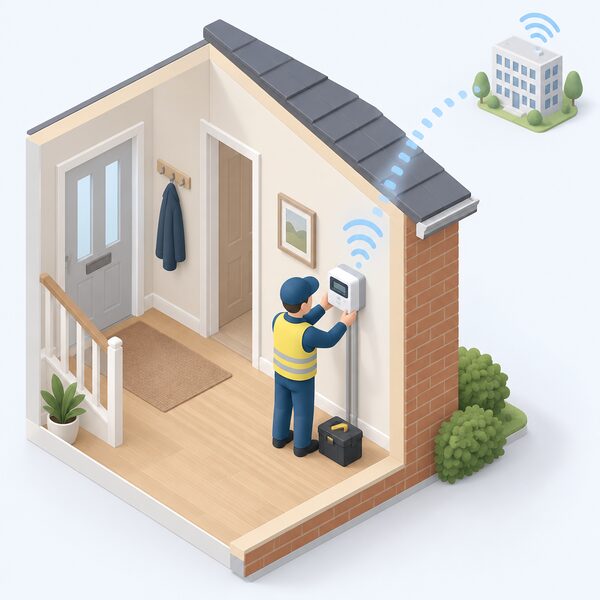
The standard eligibility conditions are cumulative. A household needs a smart meter operating in smart mode and set to send readings every half an hour13, a baseline of the last 60 days of electricity usage, and marketing consent1. The Energy Saving Trust puts the same requirement more simply: have a working smart meter so your energy supplier can accurately and quickly measure your energy use3.
There is a separate route through apps. The Centre for Sustainable Energy states you can also take part using registered third-party apps that connect to your smart meter3, and Smart Energy GB records that customers signed up for the DFS through participating energy suppliers, aggregators and apps13. UK Power Networks adds that you do not need to switch supplier to sign up with innovative companies offering apps5.
| Route | What it needs | Who delivers it |
|---|---|---|
| Standard DFS | Smart meter in smart mode, half-hourly readings, 60-day baseline, marketing consent1 | NESO with energy suppliers3 |
| Third-party app | Registered app connecting to your smart meter3 | Aggregators and app providers13 |
| Smart Charging | An electric vehicle and the provider's app; no supplier switch4 | Zapmap Smart Charging and similar services4 |
Two practical points sit underneath this. First, a smart meter does not need home broadband: it sends readings over a secure smart data network that does not use the internet14. Second, if a household does not yet have a smart meter, it can request one from its supplier, though there is currently no requirement for suppliers to install one on request17. Eligibility for installation can vary19.
How rewards work and what taking part costs
Taking part costs nothing. The Centre for Sustainable Energy states it is free to take part and you do not lose anything if you do not manage to shift any electricity use6. Energy UK confirms the DFS is voluntary and there are no penalties for not participating7.
Rewards are calculated per unit of load shifted. Uswitch describes the mechanism as giving customers money back for each kWh of energy they save by reducing their usage for a set time period20. The Energy Saving Trust notes rewards vary depending on your supplier, but the more electricity you save during each event the greater your rewards will be3. Smart Energy GB records that the reward can come as a payment, a credit on your energy bill, or other types of reward, depending on the terms set by your energy supplier1.
FlexAssure gives a worked example of what a household might see: a reward of +£8.40 in a month for energy flexibility8. That is one household's figure in one month, not a forecast, and it should be read as an illustration of scale rather than an expectation.
The cost side is genuinely zero for the standard service, but there is a cost in behaviour. Shifting load means running appliances, charging a car or heating water at different times. For a household already on a time-of-use tariff, that may align with existing habits. For one that is not, the DFS event windows may fall at inconvenient times, and the reward has to be weighed against the disruption. The scheme does not require any of it.
Voluntary status: you can opt in and out
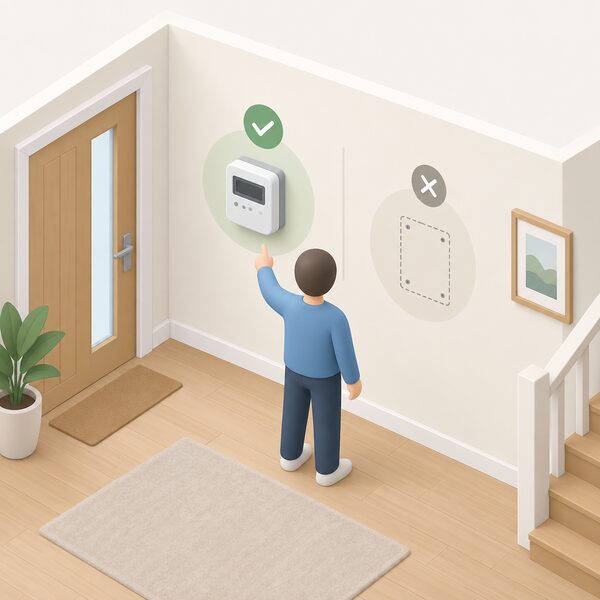
The DFS is opt-in at every stage. Smart Energy GB states that if you do have a smart meter, the scheme is still completely voluntary, and you do not have to take part if you do not want to2. Energy UK confirms there are no penalties for not participating7.
The same principle applies to the meter itself. Smart Energy GB states smart meters are not compulsory; it is entirely your choice21. Ofgem's consultation on the smart meter voluntary pledge records that there can be no penalties if the consumer decides not to sign the pledge23. A household that declines both the meter and the scheme faces no sanction.
For a household weighing energy independence, the voluntary structure matters. The DFS is a market mechanism a household can enter and leave, not an obligation attached to the meter. The meter enables participation; it does not compel it. A household can have a smart meter, decline every event, and lose nothing.
Smart Charging without a smart meter: how the app route works
Smart Charging is the route that does not depend on the standard DFS meter data. FlexAssure describes it as letting your car charge when electricity is cheapest and greenest, often overnight, without changing your routine8. Zapmap's Smart Charging service states there is no need to change your energy provider4.
The mechanism is scheduling rather than measurement. Instead of comparing a household's half-hourly consumption against a 60-day baseline, the app controls when the vehicle draws power. The reward comes from moving that load, not from reducing total consumption. That is why the meter requirement differs: the app knows what it scheduled, and the supplier or aggregator settles on that basis.
"no need to change your energy provider"
The Energy Ombudsman notes that you do not need a smart meter simply to charge an EV, but without one you may not be able to access some EV-specific tariffs25. That is the trade-off in plain terms: charging works without a smart meter, but the tariff menu narrows. Smart Charging through an app is one way to capture some of the value that a dedicated EV tariff would otherwise provide.
Homeowners can participate in demand response flexibility services using a number of assets, such as EV charge points, heat pumps, adjustable thermostats, air conditioning, smart appliances and batteries26. The electric vehicle is the most common entry point because its charging is already scheduled and interruptible, but it is not the only one.
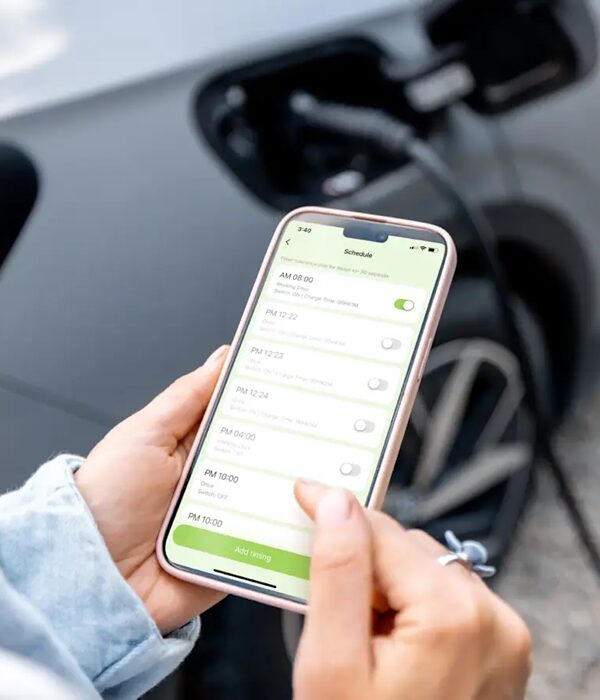
The limits are worth stating as firmly as the benefits. The app route depends on the provider's platform, its app and its continued operation; if the service closes, the scheduling and the rewards stop. It depends on the vehicle being plugged in and on the household accepting that the app, not the driver, decides when charging happens. And it delivers a narrower reward than the full DFS, because it captures one flexible asset rather than the whole home's consumption. For a household without a smart meter, that is the available route, and its constraints are part of the deal.
Sources26 cited
- Understanding the Demand Flexibility Service scheme, Smart Energy GB, 2026-03-16
- Do smart meters cost more, Smart Energy GB, 2026-03-16
- Demand Flexibility Service, Energy Saving Trust, 2026-05-21
- Smart charging, Zapmap, 2026
- Flexibility services, UK Power Networks, 2026-09-20
- Taking part in the Demand Flexibility Service, Centre for Sustainable Energy, 2024-02
- Energy UK explainer: Demand Flexibility Service, Energy UK, 2023-10-30
- What is flexibility, FlexAssure, 2026-09-19
- Demand Flexibility Service, NESO, 2026-09-17
- How does the Demand Flexibility Service work, Uswitch, 2025-09-04
- Saving money safely, Electrical Safety First, 2026-09-19
- How consumer-led flexibility works in power markets, Energy UK, 2026-04-14
- Energy flexibility, Smart Energy GB, 2026-08-17
- What is a smart meter, Smart Energy GB, 2026-08-10
- How do smart meters work, Smart Energy GB, 2026-08-27
- Smart meters and WiFi, Smart Energy GB, 2026-03-16
- How accurate are smart meters, Smart DCC, 2026
- Smart meters, Energy Ombudsman, 2026-09-20
- Smart meter cost, Smart Energy GB, 2026-04-07
- Balancing the grid, Uswitch, 2026-02-09
- Smart Energy GB FAQs, Smart Energy GB, 2025-08-08
- FAQs about the rollout, Smart Energy GB, 2026-03-16
- Consultation on administration of mid-scheme changes to ECO4 and GBIS, Ofgem, 2025-04-07
- Consumer standards decision, Ofgem, 2023-10-18
- EV tariffs and home charging: what consumers need to know, Energy Ombudsman, 2026-09-11
- Flexibility case study: homeowner, Electricity North West, 2026-09-19
 Demand Flexibility and the GridGetting paid to shift your electricity use away from peak times is now a real option for households with a smart meter.
 Flexibility Payments for HomesCan you really get paid for using less electricity at peak times, and how much would a household actually earn?
 Meters and Time-of-Use TariffsDo you need a smart meter for a time-of-use tariff, and does it have to send readings every half an hour?
 Smart Charging RewardsCovers the schemes that pay or reward households for shifting car charging, including the Demand Flexibility Service, app-based reward programmes and supplier incentives.
 Supplier Apps and AccountsWhat can you actually do in your supplier's app?
 Batteries and Smart TariffsA home battery can earn its keep if your electricity prices change through the day.