
In this answer
Short answer
The moratorium on involuntary prepayment meter installations is the pause on energy suppliers forcing households onto prepayment meters to recover debt. It followed the winter 2022 to 2023 scandal over warrant-led installations, and it sits alongside a set of involuntary prepaid meter rules that came into force in 20231. All suppliers have signed a Code of Practice for installing prepay meters or remotely switching customers to prepay, and those rules apply to both smart and traditional meters, closely controlled by Ofgem2.
The pause is not an absolute ban. Ofgem's own guidance is explicit that a supplier can get a warrant to enter a property and install a prepayment meter, or remotely switch an existing smart meter to prepayment mode3. What the moratorium changed is the sequence: before any such step, the supplier must make reasonable efforts to agree another way for the debt to be repaid and offer support if the household is struggling to pay4.
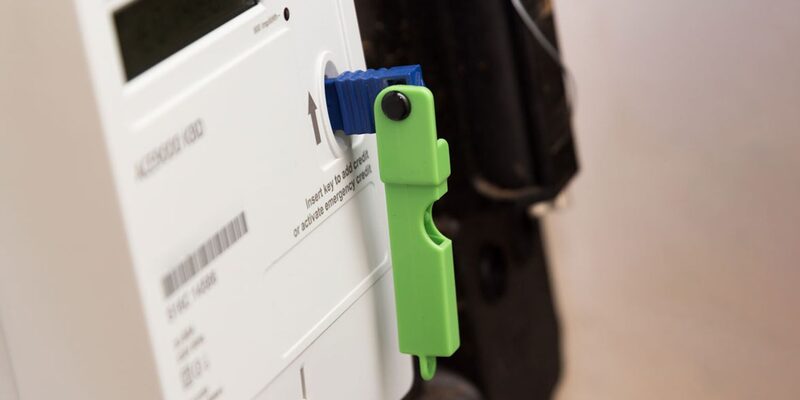
Around four million prepayment energy meters are in use in the UK, so the rules touch a large share of homes5. The stakes are high because a prepayment meter with no credit supplies no energy at all: once credit runs out, no energy is available until the next top-up6. That is the outcome the moratorium was designed to make rarer, not to make impossible.
What the moratorium is and when it was announced
The moratorium is best understood as a pause agreed in early 2023, after the scale of forced installations over the winter became public. Ofgem's debt strategy update records that the involuntary prepaid meter rules were implemented in 20231. Those rules replaced a lighter-touch regime with a set of conditions a supplier must satisfy before it can install a prepayment meter without the household's permission.
The immediate trigger was the winter period itself. Under the Consumer Energy Charter, electricity and gas suppliers agreed not to compel customers in debt to move onto a prepayment meter over the Christmas period, unless the customer specifically requested it, covering 16 December 2022 to 20 January 20239. That voluntary pause was time-limited. The moratorium that followed was broader and tied to enforceable rules rather than a seasonal undertaking.
A prepayment meter is a type of gas or electricity meter that requires the household to pre-pay for energy before it is used5. That definition matters to the moratorium, because the harm the pause addresses is not the meter itself but the way it is imposed. A household moved onto prepayment without agreement can find itself paying off accrued debt before it can access heating and power10.
The moratorium therefore sits at the intersection of debt recovery and consumer protection. It does not remove a supplier's ability to recover what it is owed. It changes the order of operations, requiring repayment options and support to be explored first, and it subjects the remaining route to closer control by the regulator2.
Why suppliers were forced to stop: the debt and arrears problem
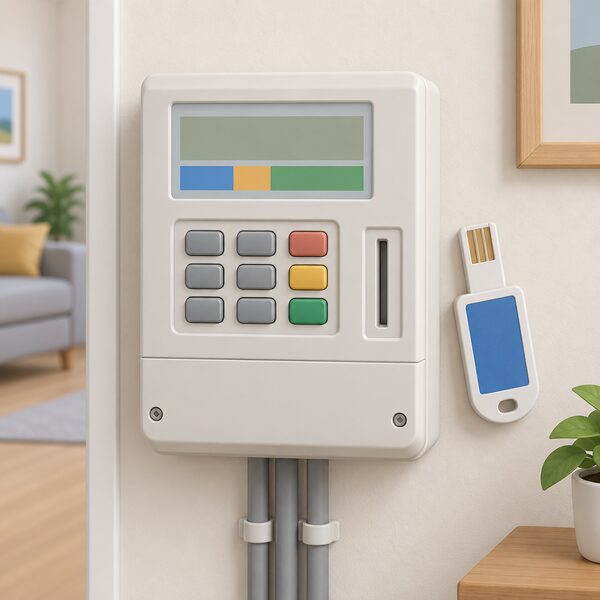
The forced installation issue grew out of a debt problem that had become unmanageable at household level. Prepayment customers can owe money even while paying in advance: debt can arise from standing charges or from emergency credit that has been used11. A household can also fall behind through missed standing charge payments or an existing repayment plan12.
The consequence for those households is severe. Fuel poverty organisations note that prepayment customers in debt are often made to pay off accrued debt before they can access their heating and power10. That is a structural feature of the meter, not a malfunction: a share of every top-up goes to the arrears before it buys energy.
Independent analysis has warned about where that trajectory leads. A Citizens Advice response to Ofgem's debt work identified risks including debt enforcement, prepayment meter disconnection, energy rationing, and deepening debt13. The moratorium was a response to exactly that chain of outcomes.
The scale of the underlying problem is large. Ofgem figures show combined domestic energy debt and arrears rose 5% from £4.55bn to £4.79bn between Q4 2025 and Q1 2026, up 15% on Q1 2025. That is a rise of £0.24bn on the two figures as published. With debt at that level, the pressure on suppliers to recover it through the meter is persistent, which is why the moratorium has been accompanied by a review rather than a simple ban.
"they are often made to pay off accrued debt before they can access their heating and power"
What suppliers must do instead: payment plans you can afford
The moratorium's practical effect is to require a repayment conversation before any forced installation. Ofgem's guidance states that suppliers can agree a payment plan, a payment break or a reduction14. The same options are set out in Ofgem's wider help-with-bills guidance15.
Affordability is the test. Citizens Advice guidance is that the supplier must consider how much the household can afford, and that the household should tell the supplier if anything has changed since repayments were agreed, such as energy prices rising or income falling16. That is a two-way obligation: the supplier must assess, and the household must keep the supplier informed.
The restriction on switching is the core protection. Energy suppliers cannot force a household to switch to a prepay meter, or remotely switch it, unless they have taken all reasonable steps to agree a repayment plan first2. Ofgem's own wording is that the supplier must make reasonable efforts to agree another way for the debt to be repaid and offer support if the household is struggling to pay4.
Where a credit meter customer stops paying, the supplier must give notice to pay and offer options such as a repayment plan if the household is struggling17. Tenants are covered too: a supplier might want to install a smart meter in prepayment mode, or switch an existing smart meter to prepayment mode, and the same protections apply18.
Switching supplier while in prepayment debt is possible within limits. A household can switch if it pays by prepayment meter top-up and has less than £500 debt for each meter, repaying the new supplier instead19. Ofgem's switching guidance gives the same £500 threshold for prepayment customers20.
Can a supplier still use a warrant during the moratorium?
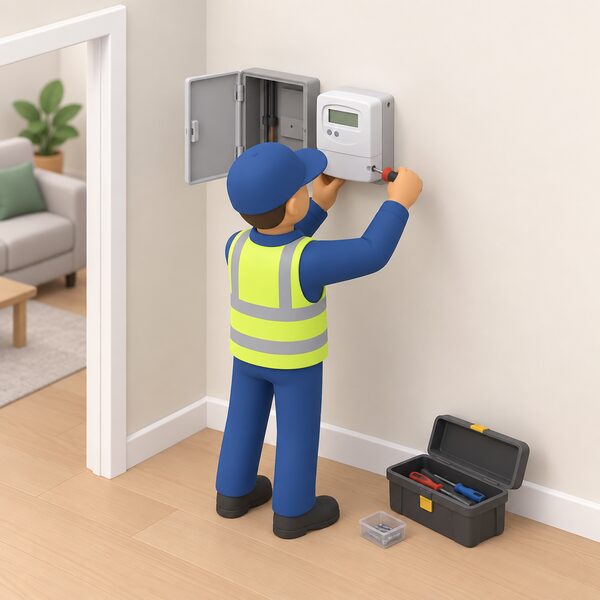
Yes, the warrant route remains available. Ofgem's guidance, repeated across its consumer pages, states that a supplier can get a warrant to enter a property and install a prepayment meter, or remotely switch an existing smart meter to prepayment mode3. The moratorium does not remove warrants; it constrains when they can be used.
What the supplier must do first is set out in the same guidance. Before installation, the supplier should explain why it has made its decision, tell the household when it plans to install the meter, explain what will happen during the installation, and tell the household how to contact it if circumstances have changed or the household thinks the decision is wrong3. That notification is the household's main opportunity to correct the record.
There is also a statutory layer. Under the Gas Act 1986 and the Electricity Act 1989, a creditor or its agent must not take steps to install a pre-payment meter to take payments in respect of a moratorium debt, or use an already installed pre-payment meter to take such payments, unless the debtor consented to installation before the moratorium started21. That provision concerns debt moratoriums under the debt respite scheme, and it is separate from the supplier moratorium, but it shows the same principle: consent and timing determine what a supplier may do.
Where a household believes the process was not followed, the escalation route is the Energy Ombudsman. Ofgem's guidance says a household can contact the Energy Ombudsman if it is not happy with the way the supplier has handled the complaint3.
Compensation for forced installations in 2022 and 2023
The moratorium followed a period in which installations were later found to have breached the rules. Ofgem's Market Compliance Review covered prepayment meters installed without permission in the period 1 January 2022 to 31 January 202322. Ofgem has published guidelines suppliers must follow when paying compensation to bill payers who had a prepayment meter installed in that window23.
The eligibility test is set out in Ofgem's consumer guidance: a household may be able to claim compensation if it was forced to have a prepayment meter between 1 January 2022 and 21 January 2023 and the supplier did not follow the rules properly7. Independent guidance describes the same window as 1 January 2022 to 31 January 2023, where the supplier installed a meter in the home or remotely switched the household over5. The two end dates differ by ten days, and the two figures stand as published.
Scope's guidance frames the same question for disabled households, asking whether the reader was moved to a prepayment meter between 1 January 2022 and 31 January 202324. The overlap between the sources is the start date of 1 January 2022; the end date is the point of conflict.
The review of the rules and what happens next
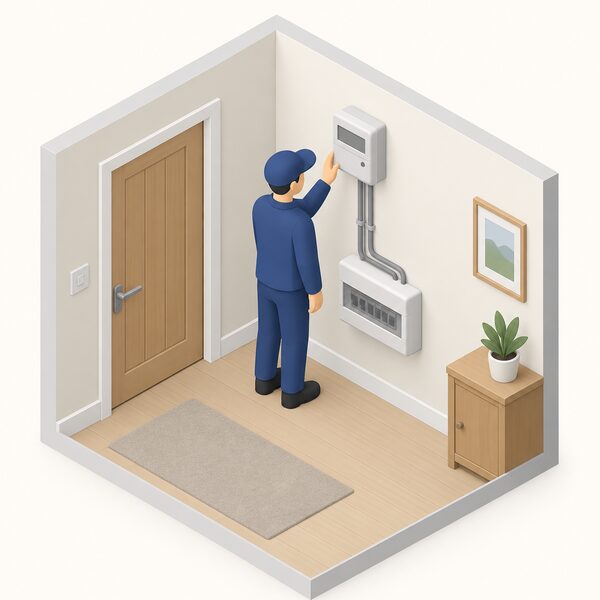
The moratorium has been accompanied by a formal review of the underlying rules. Ofgem stated that it intended to conclude the review in the first half of 2026, with interim findings expected to be shared ahead of that1. That timetable has now passed without a published conclusion in the material available, so the review's outcome remains open.
The review matters because the moratorium is a pause, not a permanent settlement. If the rules are revised, the conditions a supplier must meet before an involuntary installation could change. Until then, the 2023 rules and the supplier Code of Practice remain the operative framework, and Ofgem continues to control how they are applied2.
There is a parallel policy track on metering itself. The government's Smart Metering Policy Framework consultation states that once the consultation closes, all responses will be considered before the government response is published in due course25. Separately, all subsequent modifications to approved meters are subject to further examination and approval26. Those processes affect what meters can do, including remote switching capability, which is central to how involuntary prepayment is now carried out.
Enforcement has continued alongside the review. Ofgem's Market Compliance Review records that in May 2025 an ongoing enforcement investigation into OVO's pre-payment meter practices was extended to include the PPM MCR, with the assessment moved out of the MCR22. That indicates the regulator is still pursuing individual supplier conduct from the pre-moratorium period while the rule review runs.
Where to get help if you are behind on your energy bills
The first route is the supplier. Ofgem's guidance sets out that suppliers can agree a payment plan, a payment break or a reduction14. Where a household cannot afford to top up a prepayment meter, Citizens Advice guidance covers the options available16. The Centre for Sustainable Energy also sets out what applies when an energy bill cannot be paid17.
The Energy Ombudsman is the escalation route for complaints about how a supplier has handled a prepayment meter issue. The Ombudsman can be contacted on 0330 440 1624, pressing option 3 for heat networks when prompted27. The same number is listed for energy complaints8.
Local authority schemes advertise additional support. One council scheme offers a free telephone advice service to help with benefits, money and bill problems28. Availability varies by area, so the relevant local authority is the place to check.
For households moving home, the treatment of existing meter debt is worth knowing. Independent guidance states that any existing debt on the meter belongs to the last tenant and should be removed by the supplier30. That is a distinct protection from the moratorium, but it addresses the same risk: debt attached to a meter rather than to the person who ran it up.
What the moratorium does for a household's energy independence
The moratorium's contribution to household energy independence is procedural rather than physical. It does not reduce reliance on the grid, on a supplier, or on gas. What it does is preserve a household's ability to choose how a debt is repaid, rather than having that choice made by a warrant and a meter.
The dependence that remains is substantial. A prepayment meter ties supply to topping up: once credit runs out, no energy is available until the next top-up6. A household on prepayment is therefore dependent on the top-up network, on the supplier's systems, and on the meter's own credit logic. The moratorium limits how a household can be placed into that position without agreement; it does not change what the position involves.
There is also a dependence on the supplier's willingness to negotiate. The protections rest on the supplier taking all reasonable steps to agree a repayment plan2 and on the supplier considering what the household can afford16. Where that assessment is done poorly, the household's recourse is a complaint and, ultimately, the Ombudsman3.
For a household already in debt, the practical position is that the moratorium buys time and process, not relief. The debt remains payable, and the £500 threshold for switching while in prepayment debt shows how tightly the two are linked19. Independence, in this context, means knowing the sequence a supplier must follow and using the notification stage to correct the record before an installation goes ahead.
Sources30 cited
- Debt strategy update: supporting reduction of energy debt, Ofgem, 2025-11-06
- Advice for those worried about energy bills, Smart Energy GB, 2026-08-19
- Installing a prepayment meter without your permission, Ofgem, 2026
- Installing a prepayment meter without your permission, Ofgem, 2026
- Prepayment meter change to credit meter, Uswitch, 2026-04-23
- Get help with your prepayment meter, Ofgem, 2026
- Check if energy suppliers can install prepayment meters without household permission, Ofgem, 2026
- Energy Ombudsman FAQs, Energy Ombudsman, 2026-09-19
- Customer protection, Consumer Council, 2022
- Forced pre-payment meter transfer, End Fuel Poverty Coalition, 2026-01-08
- Energy debt, Uswitch, 2026-06-09
- Prepayment meters, Uswitch, 2026-08-26
- Citizens Advice response to Ofgem's technical working paper on the debt, Citizens Advice, 2025-09-03
- Getting help if you can't afford your energy bills, Ofgem, 2026-09-17
- Get help with your energy bills, Ofgem, 2026-09-17
- You can't afford to top up your prepayment meter, Citizens Advice, 2026-09-17
- What if you can't pay your energy bill?, Centre for Sustainable Energy, 2026-06
- Switching energy supplier if you're a tenant, Citizens Advice, 2026-09-17
- How to switch energy supplier, Which?, 2026-05-15
- Switch your home energy supplier, Ofgem, 2026
- The Debt Respite Scheme (Breathing Space Moratorium and Mental Health Crisis Moratorium) (England and Wales) Regulations 2020, regulation 7, legislation.gov.uk, 2026-09-17
- Market Compliance Review: prepayment meter installations, Ofgem, 2025-05
- Compensation for installing prepayment meters without permission, Ofgem, 2025-05-28
- Prepayment meters, Scope, 2025-01-08
- Smart Metering Policy Framework: post-2025 consultation document, Department for Energy Security and Net Zero, 2025-08
- Approved gas and electricity meters, GOV.UK, 2025-11-06
- Raise a dispute, Energy Ombudsman, 2026-09-19
- Grants and funding, Tameside Council, 2026-09-17
- Consumer protection rights, GOV.UK, 2026-09-17
- Moving home checklist, National Energy Action, 2026-06-12
 Prepayment and Vulnerable RulesThe licence obligations on energy suppliers when a household falls into debt: when a prepayment meter may be installed without consent, the warrant process, the ban covering highly vulnerable households, remote switching of smart meters, and the free help available.
 Disconnection and WarrantsCan your energy supplier force you onto prepayment or cut you off for debt?
 Prepayment Meter DebtHow debt repayment is set on a prepayment meter, the limits on the share of a top-up that can be taken, and how to have a rate reviewed.
 Prepayment Meters and DebtCan your energy supplier force you onto a prepayment meter because you owe them money?
 Smart Meter InstallationCan your supplier make you have a smart meter, and how long should you wait for an appointment?
 Smart Meter RulesCan your supplier make you have a smart meter?