
In this answer
Short answer
A smart meter can be switched to prepayment mode without a household's consent, but only in narrow circumstances and only after a set process. Ofgem's consumer guidance states that suppliers can move a customer to a prepayment meter without permission if that customer is building up an energy debt and has not responded to the supplier's attempts to help1. The same condition appears in Ofgem's dedicated page on installation without permission: the trigger is that you are building up an energy debt and other ways of recovering that debt have not worked2.
The process is not a single letter. Before an involuntary installation, a supplier must make at least 10 attempts to contact the household using different methods, for example phone calls, letters or text messages1. It must also make reasonable efforts to agree another way for the debt to be repaid and offer support if the household is struggling to pay3. Where a smart meter is already fitted, the switch can be made remotely, without a new meter and without entry to the property2.
What follows is the rule set, the conditions, the enforcement picture and the complaint routes. The short answer to the rights question is that consent is not always required, but the supplier carries a documented set of obligations before it can act, and a household that has been treated outside those obligations has routes to redress.
When a supplier can switch you to prepayment without consent
The permitted conditions are narrow and cumulative. Ofgem's guidance sets out that a supplier can install a prepayment meter without permission where a household is building up an energy debt and other ways of recovering that debt have not worked2. The consumer-facing version of the same rule adds the second limb: the household has not responded to the supplier's attempts to help1. Both elements must be present, so a debt alone is not the trigger.
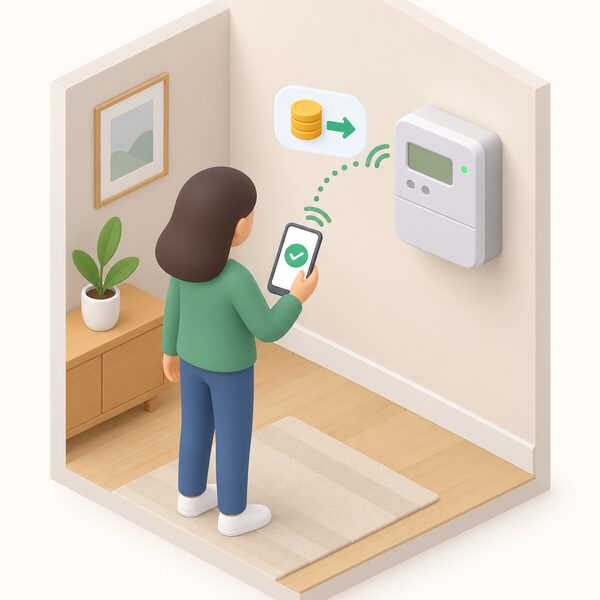
The mechanism matters for smart meter households. Ofgem states that a supplier can get a warrant to enter a property and install a prepayment meter, or remotely switch an existing smart meter to prepayment mode2. Remote switching is the route that applies where a smart meter is already in place, and it is the reason this question is asked specifically about smart meters rather than traditional ones. Smart Energy GB notes that if a household prefers to change between credit and prepay, the supplier can make that change without a whole new meter6, which is the same technical capability described from the customer's side.
There is a separate regime for heat networks. Citizens Advice states that a heat network supplier is not allowed to install a prepayment meter, install a smart meter in prepayment mode, or remotely switch a smart meter to prepayment mode without permission7. Ofgem's draft heat network consumer protection guidance adds that where a supplier switches an existing supply meter to prepayment mode without consent, it must ensure the consumer receives prepayment meter credit, unless that is technically infeasible or otherwise outside the supplier's control8. Heat network consumers therefore sit under different protections from gas and electricity customers, and the heat network regulation page covers that framework.
For gas and electricity, the practical position is that consent is not the gate. The gate is debt plus failed recovery plus failed contact. A household with a smart meter and no arrears is not in scope.
The rules suppliers must follow before forcing a prepayment meter
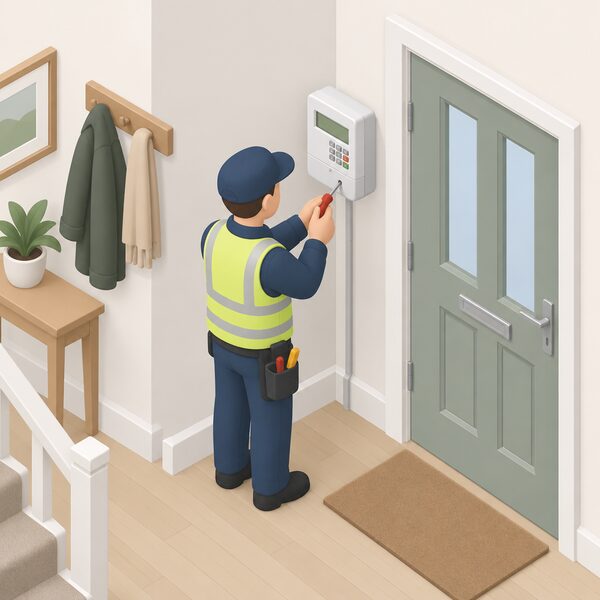
Scope, the disability equality charity, states plainly that energy suppliers must follow new stricter rules before they can install a prepayment meter without consent9. The Centre for Sustainable Energy puts the test in similar terms: suppliers must prove the switch is absolutely necessary10.
The licence condition behind this is broader than the installation decision itself. Ofgem's review of how suppliers support customers in vulnerable situations records an obligation that the functionality of a domestic customer's prepayment meters, including smart prepayment meters, be used only when safe and reasonably practicable in all the circumstances of the case11. That wording is the safety and practicability test, and it applies to the mode as well as the meter.
Ofgem also maintains a Code of Practice for involuntary prepayment installations. The Code sets out how suppliers should deal with a customer when considering whether to install an involuntary prepayment meter12. All suppliers have signed the Code of Practice for installing prepay meters or remotely switching customers to prepay, and the rules apply to both smart and traditional meters and are closely controlled by Ofgem6.
There is a standards-of-performance dimension for prepayment customers whose meter fails. The statutory consultation on amendments to the Electricity (Standards of Performance) Regulations 2015 sets out that the electricity supplier pays the prescribed sum where an appropriate person fails to attend the premises within the prescribed period to repair or replace a pre-payment meter not operating as designed13. That is a separate protection from the installation rules, but it bears on the same households.
"Energy suppliers must follow new stricter rules before they can install a prepayment meter without your consent."
The rules took effect on 8 November 2023. The Centre for Sustainable Energy records that from Wednesday 8 November 2023, new Ofgem rules protect more households from having a prepayment meter installed5. It also notes that Ofgem states references to the installation or removal of an Involuntary Prepayment Meter include the switching of any Electricity Meter to or from such a mode5, which confirms that remote switching of a smart meter is caught by the same rules as a physical installation.
Your supplier's obligation to agree a payment plan you can afford
The repayment plan duty is the part of the process most likely to be tested in practice. Ofgem's guidance states that the supplier must make reasonable efforts to agree another way for the household to repay the debt and offer support if there is difficulty paying3. The same obligation appears on Ofgem's installation-without-permission page2.
Smart Energy GB frames the restriction from the supplier's side: energy suppliers cannot force a switch to a prepay meter, or remotely switch a customer, unless they have taken all reasonable steps to agree a repayment plan6. Citizens Advice describes the consequence if no plan is agreed or kept to: the supplier might try to force a prepayment meter to be installed14.
Where prepayment is not safe or practical, the direction of travel reverses. Citizens Advice states that if it is not safe and practical to be on prepayment, the supplier should move the household to paying by credit, meaning payment for energy after use15. That is the mirror image of the involuntary installation rule and it applies in England in the guidance cited.
The pre-installation steps are documented. Ofgem states that the supplier should explain why it made its decision, tell the household when it plans to install the meter, explain what will happen during the installation, and tell the household how to make contact if circumstances have changed or if the household thinks the decision was wrong2.
For households in debt, the prepayment and vulnerable customer rules page sets out the wider protection framework, and the supplier change payment method debt page covers what happens when a supplier wants to change how a household pays.
Ofgem's role: monitoring, investigations and enforcement

Ofgem's function here is market-wide rather than case-by-case. National Energy Action has recommended that Ofgem should closely monitor disconnection and the forced installation of prepayment meters, which can lead to disconnection16. That recommendation sits alongside Ofgem's own enforcement activity.
The enforcement record is concrete. Ofgem's market compliance review found that energy suppliers that did not follow the rules when installing prepayment meters to collect debt without household permission affected at least 40,000 customers4. Energy suppliers also agreed to write off a further £13 million of debt from customers who had a prepayment meter installed without permission during the assessment period4. Those figures are the clearest available measure of how often the rules were breached before the current framework tightened.
Individual companies have been subject to investigation. Ofgem published in November 2024 that it had opened an Enforcement investigation into Utilita's compliance with the rules around installation and use of pre-payment meters17. An open investigation is not a finding, and the outcome is not recorded here.
Ofgem has also worked on the smart meter side of the same problem. National Energy Action records that Ofgem is working to ensure that all prepayment users can receive a smart meter as a priority18. The Energy Ombudsman, in its response to Ofgem's Forward Work Programme 2025/6 consultation, supported continuing to enforce the rollout of smart meters19.
The rules themselves are under review. Ofgem's debt strategy update records that the review of the involuntary prepayment meter rules was planned to conclude in the first half of 2026, with interim findings expected beforehand20. Ofgem has also consulted on automatic compensation for smart metering consumers where their energy supplier fails to meet certain expectations21.
What Ofgem does not do: individual disputes and complaints
Ofgem's own guidance is explicit about the boundary. Ofgem states that it does not directly get involved with complaints about energy suppliers or network operators, including heat network suppliers and operators, and does not investigate individual disputes22. A household with a specific grievance about a prepayment switch will not get that grievance resolved by writing to Ofgem.
What Ofgem does instead is set the rules, monitor the market, investigate companies and take enforcement action where a pattern of failure is found. The market compliance review and the resulting redress are examples of that model in operation4. The distinction matters for expectations: a complaint to Ofgem may contribute to a picture of a supplier's conduct, but it does not produce an individual remedy.
The Energy Ombudsman is the body that handles individual cases. It is approved by Ofgem to deal with consumer complaints about energy bills, mis-selling, problems with energy supply and problems with switching supplier23. That scope covers a disputed involuntary prepayment switch, because the dispute is about billing, supply or the treatment of the account.
There is a related consumer protection on the installation visit itself. Ofgem has enacted the Smart Metering Installation Code of Practice, which protects consumers by prohibiting sales attempts during installation unless previous consent has been given by the household24. That rule is about sales conduct rather than prepayment switching, but it applies to the same visit.
The energy complaints and redress page sets out the full escalation ladder, and the Ofgem page covers the regulator's remit in more detail.
Where to get help: Citizens Advice and complaint routes
The first step is the supplier's own complaints process. Ofgem's guidance states that a household can contact the Energy Ombudsman if it is not happy with the way the supplier has handled the complaint3. The same escalation route appears on Ofgem's installation-without-permission page3.
Citizens Advice provides free, independent advice on energy debt and prepayment problems. Its guidance covers what to do when struggling to pay energy bills14 and what to do about problems getting to or topping up a prepayment meter15. For heat network consumers, Citizens Advice has separate guidance on struggling to pay heat network bills7.
There is a compensation route for past cases. Ofgem's guidance states that a household may be able to claim compensation if it was forced to have a prepayment meter between 1 January 2022 and 21 January 2023 and the supplier did not follow the rules properly1. That window is closed to new cases but remains relevant to households assessing whether they were affected during the period the market compliance review covered.
On the practical side of prepayment itself, Ofgem notes that a smart meter in prepayment mode can add credit automatically or without having to visit a shop25. Smart Energy GB records that switching from an existing gas or electricity prepay meter to a smart credit meter is straightforward for customers who meet the eligibility condition26. Ofgem's debt strategy update also records proposals to switch existing smart meters into prepayment mode in situations of domestic customers moving homes, as part of trials20.
The energy regulation and policy pillar sets out how these rules fit with the wider framework, and the fuel poverty policy page covers how fuel poverty is defined and measured across the four nations.
Will the rules on involuntary prepayment meters change?
The involuntary prepaid meter rules took effect in 202320. Ofgem has been reviewing them since, and the debt strategy update records that the review was planned to conclude in the first half of 2026, with interim findings expected beforehand20.
Two further strands are live. Ofgem has consulted on automatic compensation for smart metering consumers where their energy supplier fails to meet certain expectations21. Separately, Consumer Scotland records that Ofgem's intention is only to allow a meter to be switched to prepay where it is known that there is no occupant27, which is a narrower position than the current debt-based trigger and would represent a significant change if adopted.
There is also a standards-of-performance strand. The government has announced tough new rules to force suppliers to fix faulty smart meters, with £40 compensation covering issues such as delayed or failed installations, following reforms brought forward by Ofgem28. That sits alongside the existing prepayment meter repair standard13.
National Energy Action has been critical of the pace of change. In response to Ofgem's decision not to lower the standing charge, it stated that while several options to better protect prepayment meter households have been identified, Ofgem has opted to do nothing29. That is a consumer body's assessment of one decision, not a statement about the involuntary prepayment rules themselves.
The parliamentary record shows why the issue has staying power. The Public Accounts Committee noted bad practice last winter around forced switching of consumers onto smart prepayment meters, which has deterred many from having a smart meter installed30. That deterrent effect is the independence cost of the problem: a household that refuses a smart meter to avoid the risk of remote switching also gives up the consumption data and time-of-use options that smart metering enables.
For a household's energy independence, the position is mixed. A smart meter in prepayment mode still requires a supplier, a top-up mechanism and, in most cases, a live connection to the network. What the rules do is constrain when a supplier can move a household onto prepayment without agreement, and give a route to redress when it acts outside those constraints. The dependence on the grid and the supplier remains; the protection is procedural rather than a route to self-supply.
Sources30 cited
- Check if energy suppliers can install prepayment meters without household permission, Ofgem, 2026
- Installing a prepayment meter without your permission, Ofgem, 2026
- Installing a prepayment meter without your permission, Ofgem, 2026
- Compensation for installing prepayment meters without permission, Ofgem, 2025-05-28
- New protections from forced prepayment meters, Centre for Sustainable Energy, 2023-11-08
- Advice for those worried about energy bills, Smart Energy GB, 2026-08-19
- Struggling to pay your heat network bills, Citizens Advice, 2026-09-17
- Heat networks consumer protections draft guidance, Ofgem, 2025-09-05
- Prepayment meters, Scope, 2025-01-08
- Smart meters, Centre for Sustainable Energy, 2025-05
- Ofgem completes review into how suppliers support customers in vulnerable situations, Ofgem, 2022-11-22
- Involuntary prepayment meter energy supplier Code of Practice, Ofgem, 2023-04-18
- Statutory consultation on amendments to the Electricity (Standards of Performance) Regulations 2015%20Regulations%2020151680596597411.pdf), Ofgem, 2023-04-04
- Struggling to pay your energy bills, Citizens Advice, 2026-09-17
- Problems getting to or topping up your prepayment meter, Citizens Advice, 2026-09-17
- Priorities for heat networks consumer protections: debt and affordability, Citizens Advice, 2025-05-07
- Market Compliance Review: prepayment meter installations, Ofgem, 2024-11
- Supporting vulnerable energy customers through the energy crisis, National Energy Action, 2022-05-20
- Ofgem Forward Work Programme 2025/6 consultation, Energy Ombudsman, 2025-02-07
- Debt strategy update: supporting reduction of energy debt, Ofgem, 2025-11-06
- Smart meters: your rights and expectations, GOV.UK, 2025-08-08
- Complain about your energy supplier, Ofgem, 2026
- Problems with services, Isle of Anglesey County Council, 2025-10
- Smart meters explained, Uswitch, 2026-07-29
- Get help with your smart meter, Ofgem, 2026
- How to get a smart meter, Smart DCC, 2026
- Ofgem consultation on tackling energy debt in the private rented sector, Consumer Scotland, 2026-01-21
- Tough new rules force suppliers to fix faulty smart meters, GOV.UK, 2026-03-10
- National Energy Action responds to Ofgem's decision not to lower the standing charge, National Energy Action, 2024-12-12
- Public Accounts Committee report, UK Parliament, 2023-10-20
 Prepayment and Vulnerable RulesThe licence obligations on energy suppliers when a household falls into debt: when a prepayment meter may be installed without consent, the warrant process, the ban covering highly vulnerable households, remote switching of smart meters, and the free help available.
 Smart Prepayment MetersHow prepayment mode works on a smart meter, remote switching between credit and prepay, topping up, emergency and friendly credit, the prepayment price cap, the £500 debt limit for switching, and the free help available when a household cannot top up.
 Prepayment Meters and DebtCan your energy supplier force you onto a prepayment meter because you owe them money?
 Smart Meter RulesCan your supplier make you have a smart meter?
 Smart Meter InstallationCan your supplier make you have a smart meter, and how long should you wait for an appointment?
 Disconnection and WarrantsCan your energy supplier force you onto prepayment or cut you off for debt?