

In this guide
National Energy Action is a UK charity working on fuel poverty, and it runs a free advice service for households alongside policy, research and training work. Its published advice line is 0800 304 7159, and the service covers energy bills, keeping warm and safe at home, benefits advice and income maximisation1. The charity describes its territorial extent as England, Wales and Northern Ireland, so Scotland is served by a separate national service2.
The scale of the problem it addresses is set out in parliamentary research. NEA estimated that 4.5 million households were in fuel poverty in the UK in October 2025, and the government estimated that 9.0 million households in England could be classed as fuel poor in 2024 using a version of the 10% definition, almost double its level in 20213. NEA's own definition is a household that needs to spend more than 10% of its income on energy to provide a satisfactory heating regime3.
For a household, the practical value is a free, independent route to advice and to grant referrals, without a commercial interest in what is installed. The dependence that remains is on the advice being available in your nation, on the schemes it can refer you to, and on the fact that advice alone does not change a building's fabric.
What National Energy Action is and who it helps
National Energy Action is a fuel poverty charity rather than an installer, a supplier or a regulator. Its work runs in four directions: advice to households, policy and campaigning, research, and training for the organisations that deliver energy schemes. The policy aims published for its Warm Homes Plan work include ensuring the safe passage of regulation setting new standards for landlords, working with the UK government to ensure grant funding comes with advice and handholding, and advocating that the new agency prioritises reaching those most vulnerable to fuel poverty1.
The people it helps are households that cannot afford to heat their homes adequately, and the frontline organisations that reach them. NEA reports that over the past three years it has experienced a significant rise in the number of households seeking emergency support7. That demand figure is the charity's own account of its caseload rather than a national statistic, but it matches the direction of the government's England estimate.
The charity also works through intermediaries. It has developed community retrofit hubs that offer handholding energy advice to the most vulnerable, and it recommends creating a clear health pathway that embeds health-connected energy referrals nationally, so that households are identified earlier and are more likely to receive support1. That model matters for independence: it treats energy advice as something delivered alongside health and care services, not as a standalone phone call.
Its Northern Ireland arm published a manifesto for homes in 2024 with three key actions it asked Westminster to commit to, and a headline priority of making domestic energy efficiency an infrastructure priority7. The framing is deliberate: infrastructure status brings long-term funding and planning treatment rather than short-term grant rounds.
Fuel poverty: the 10% definition and how many households are affected

The 10% definition is the one most often quoted, and it exists in more than one form. Ofgem describes fuel poverty as households who need to spend more than 10 per cent of their annual income on fuel to maintain an adequately heated home8. NEA defines a household as fuel poor if it needs to spend more than 10% of its income on energy to provide a satisfactory heating regime3.
Parliamentary research sets out two variants of the same threshold. A household is in fuel poverty if, in order to maintain a satisfactory heating regime, it would be required to spend more than 10% of its income, including Housing Benefit or Income Support for Mortgage Interest, on all household fuel use. An alternative version excludes Housing Benefit and Income Support for Mortgage Interest from the income figure2. The two produce different counts, and the choice between them is a policy decision rather than a measurement one.
The numbers that follow from those definitions are large. NEA estimated 4.5 million households in fuel poverty in the UK in October 20253. The government estimated that 9.0 million households in England could be classed as fuel poor in 2024 using a version of the 10% definition, almost double its level in 20213. The gap between the two figures reflects different geographies and different methods, not a contradiction: one is a UK estimate from the charity, the other an England estimate from government.
The human cost is stated bluntly by the charity. NEA estimates that more than 10,000 people across the UK die each year due to living in a cold home5. That is an estimate rather than a count from death registrations, and it is the figure the charity uses to argue that cold homes belong in public health planning as much as in energy policy.
The free advice service: what it covers and who can use it
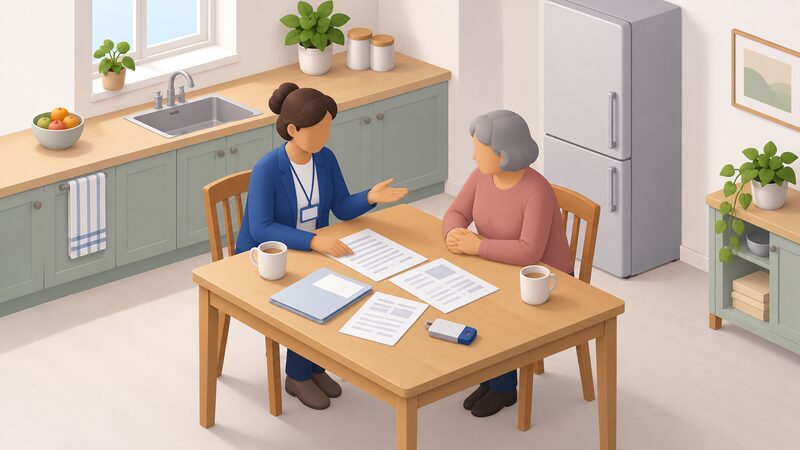
The core offer is free advice about energy bills and keeping warm and safe in your home, with benefits advice and income maximisation alongside it9. Income maximisation means checking entitlement to benefits and other support, which is often worth more to a household than a tariff change. The service is described as offering advice and support to help people across England, Wales and Northern Ireland stay warm and manage energy costs10.
The freephone number is 0800 304 71599. A British Sign Language interpreter can be requested9. That accessibility point is worth stating plainly, because advice services are only useful if the household can actually use them.
Northern Ireland has its own arrangements rather than a regional office of the same line. NI Energy Advice offers free independent and impartial energy advice to domestic householders in Northern Ireland, including referrals to energy grants and other sources of help, and it publishes a freephone number of 0800 111 445511. Its published scope includes free advice on saving energy in your home, energy efficiency grants and oil buying clubs13. The oil buying club point matters in Northern Ireland, where a large share of homes are off the gas grid.
Scotland is served separately. Home Energy Scotland, funded by the Scottish Government, is a network of local advice centres covering all of Scotland4. The Scottish Government also describes a free independent advice and referral scheme in its heat in buildings progress reporting14.
Elsewhere in the UK, local schemes fill gaps. The Local Energy Advice Programme offers a free telephone advice service to help with benefits, money and bill problems, on freephone 0800 060 756715. Councils and community organisations run their own versions: one local authority lists City and Guilds-accredited Energy Awareness training and short webinars for frontline workers and volunteers5, and another describes providing communities with advice and support for improving home energy efficiency16.
| Service | Nation | Number | Scope |
|---|---|---|---|
| National Energy Action | England, Wales, NI | 0800 304 71599 | Bills, warmth, benefits, income maximisation9 |
| NI Energy Advice | Northern Ireland | 0800 111 445511 | Energy advice, grant referrals, oil buying clubs13 |
| Home Energy Scotland | Scotland | Not stated | Local advice centres covering all of Scotland4 |
| LEAP | England | 0800 060 756715 | Benefits, money and bill problems15 |
Contacting NEA: the helpline and accessibility

The published route is the freephone number, 0800 304 7159, for households in England, Wales and Northern Ireland9. Because it is an 0800 number there is no call charge, which matters for the households most likely to need it. A British Sign Language interpreter can be requested through the service9.
The advice itself is not limited to a single call. NEA's community retrofit hubs offer handholding energy advice to the most vulnerable, which implies repeat contact through a retrofit or a debt problem rather than a one-off answer1. That is the difference between an advice line and casework.
For households in Northern Ireland, the freephone number is 0800 111 4455, and the service is described as free, independent and impartial advice to all domestic householders in Northern Ireland11. The Consumer Council NI and Northern Ireland Energy Advice give that advice jointly17. Northern Ireland also publishes separate guidance for households struggling to pay energy bills, which sets out the help available alongside the advice line18.
Where a household has a complaint about a supplier rather than a question about bills, the Energy Ombudsman is the route, and it publishes separate guidance for consumers worried about their energy bills10. Ofgem also publishes help for homes and businesses on energy bills, including supplier schemes and grants that fund paying off energy debt19. Those are different functions from NEA's advice work, and a household may need more than one of them.
Policy and campaigning: the price cap, debt and consumer protection
NEA's policy work sits close to the price cap and to the debt that builds up behind it. Ofgem's programme of work on the price cap for 2026 and 2027 lists supporting consumers through the energy crisis as a strategic priority, under the topic of energy pricing rules20. Ofgem has also consulted on a review of historical debt-related costs, run by its Consumer Protection and Retail Markets team, proposing to include costs and revenues across all tariff types rather than only customers on variable tariffs21.
The bill context has shifted. Government cut policy costs in April 2026 by ending a levy-funded scheme for energy efficiency and shifting funding for the largest renewable generation support scheme to general taxation22. In a debate on heating oil support, the government stated that its actions had taken £150 out of energy costs23. Policy costs are defined as government social and environmental schemes, and they appear as a line in the bill rather than as a separate charge24.
NEA's own positions are set out in its response to the government's consultation on consumer protections, built around six key asks25. It argues that the consumer protection system should not pursue simplicity that comes at the expense of vulnerable households, who need tailored, targeted support, and that trusted local advisers and community-based advocates should be embedded within the framework to support households throughout the retrofit journey25. It also wants the Warm Homes Agency to blend a national framework for advice with local delivery, and success measured with outcomes for consumers rather than only outcomes in the property, using wellbeing measures alongside EPCs25.
On redress, NEA calls for a clear, centralised system underpinned by first-line guarantee protections and backed by a solidarity fund as a second line of defence where installers can no longer remediate defective work25. It warns that consistency in protections and installation quality is particularly important to avoid a two-tier market, where outcomes depend on the funding route through which measures are delivered25. That is a consumer protection argument as much as an energy one, and it bears directly on whether a household can rely on a retrofit.
The Committee on Climate Change has separately recommended a UK Government public engagement campaign focused on reducing energy demand, aimed at both businesses and households26. Ofgem's consultation on the technical approach to market-wide half-hourly settlement lists charities and consumer groups among its target respondents, which is the channel through which organisations like NEA influence market design27.
Research and training: the Insights and Research team and specialist courses
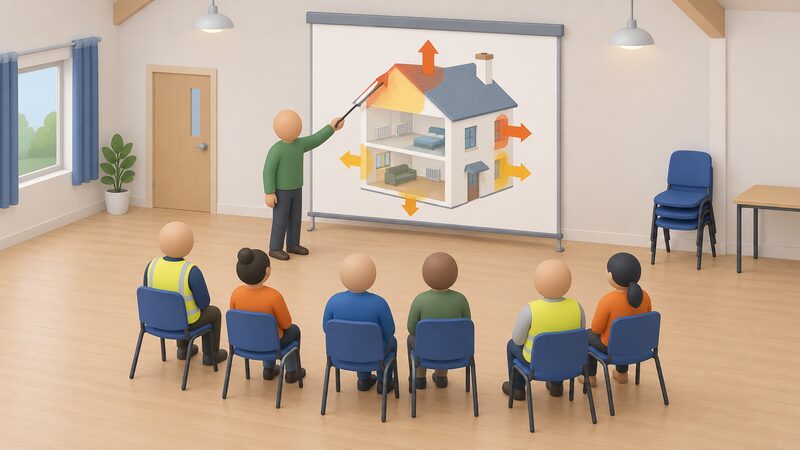
NEA's training offer is aimed at the organisations that deliver energy schemes rather than at householders directly. It runs specialist courses covering smart meters, renewable energy technologies and other innovations, designed to help organisations deliver the Warm Homes Plan1. That is a capacity-building function: the advice a household receives depends on the knowledge of the adviser.
The research side feeds the policy positions. NEA's work on health and homes underpins its estimate that more than 10,000 people across the UK die each year due to living in a cold home, and its argument that health-connected energy referrals should be embedded nationally5. Its Northern Ireland manifesto for homes sets out three key actions and a priority of making domestic energy efficiency an infrastructure priority7.
Comparable training exists elsewhere in the sector. Leicester Energy Action delivers City and Guilds-accredited Energy Awareness training as well as short webinar sessions for frontline workers and volunteers5. In Scotland, the Community and Renewable Energy Scheme has a network of development officers across Scotland providing free, expert and impartial advice and support to community groups, charities and other eligible organisations exploring renewable energy options28. Those are different organisations with overlapping purposes, and a household is most likely to meet their output through a frontline worker rather than directly.
Why insulating homes is NEA's preferred lasting solution
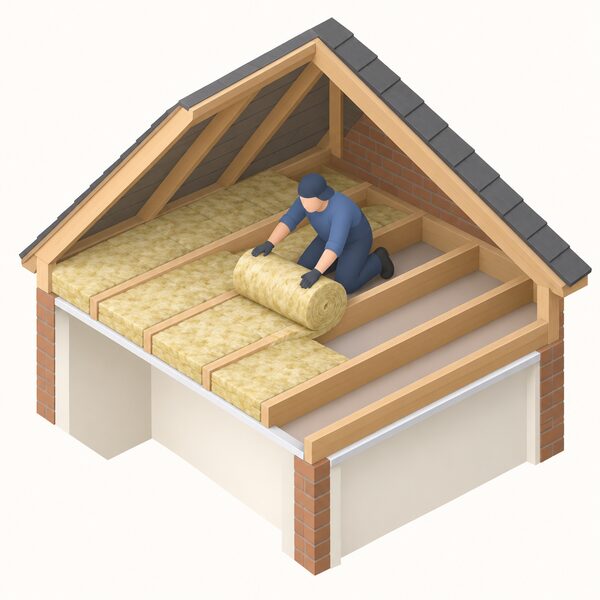
Advice changes what a household pays and what it claims. Insulation changes what the home needs. NEA's policy work consistently favours the second, and its recommendations are framed around making the fabric of homes a national priority rather than a series of grant rounds.
The clearest statement is the Northern Ireland manifesto's call to make domestic energy efficiency an infrastructure priority7. Treating it as infrastructure means long-term planning and funding rather than annual schemes, which is what makes a difference to a household deciding whether to take on work. NEA's Warm Homes Plan recommendations point the same way: grant funding should come with advice and handholding, and the new agency should prioritise reaching those most vulnerable to fuel poverty1.
The delivery model it proposes is local. Community retrofit hubs offer handholding energy advice to the most vulnerable, and the recommendation to embed a health pathway nationally would ensure households are identified earlier and are more likely to receive support1. The consumer protection asks reinforce this: local advisers embedded in the framework, a single end-to-end system with continuous quality assurance, and success measured by outcomes for consumers as well as for the property25.
For a household, the implication is that advice is the entry point and fabric work is the destination. The advice service can identify what is available and what a home needs; the insulation, glazing and heating work is what reduces the energy a home requires in the first place. That is the same logic that runs through fabric first and whole house plans, and it is why NEA argues for advice and grant funding to arrive together rather than separately.
The dependence that remains is on funding and on delivery capacity. A charity can define the problem, train the advisers and make the case, but it cannot insulate a home. Whether the work happens depends on government schemes, on installers and on the consumer protections NEA is campaigning to strengthen.
Sources28 cited
- Warm Homes Plan policy work, National Energy Action, 2026
- Fuel poverty definitions and statistics, House of Commons Library, 2026
- Fuel poverty in the UK, House of Commons Library, 2025
- Home Energy Scotland, Energy Saving Trust, 2026
- Our health, our homes, National Energy Action, 2026
- Breaking the cycle: how can we tackle fuel poverty, Smart DCC, 2023
- Warm, safe and healthy at home: NEA NI manifesto for homes 2024, National Energy Action, 2024
- Energy terms explained, Ofgem, 2026
- Getting help with your energy bills, Birmingham City Council, 2026
- Worried about your energy bills, Energy Ombudsman, 2026
- Energy efficiency tips, nidirect, 2026
- Energy, Northern Ireland Housing Executive, 2026
- Cost of living and winter support, Belfast City Council, 2026
- Heat in buildings progress report 2025, Scottish Government, 2025
- Energy saving grants and funding, Tameside Council, 2026
- Energy efficiency advice, Torridge District Council, 2026
- Low carbon heating, nidirect, 2026
- Advice if you're struggling to pay your energy bills, nidirect, 2026
- Get help with your home or business energy bills, Ofgem, 2026
- Energy price cap programme of work 2026 and 2027, Ofgem, 2026
- Energy price cap: review of historical debt related costs, Ofgem, 2026
- Energy price cap and policy costs, House of Commons Library, 2026
- Heating oil support debate, Hansard, 2026
- Check if you are owed money on your energy bill, Ofgem, 2026
- From home upgrades to better outcomes, National Energy Action, 2026
- Climate policy that cuts costs, Climate Change Committee, 2026
- Energy price cap: technical approach to market-wide half-hourly settlement, Ofgem, 2026
- Local and small-scale renewables, Scottish Government, 2026
 National Gas TransmissionWho actually owns and runs the pipes that carry gas across Britain, and does any of your bill go to them?