

In this answer
Short answer
Warm Homes, Healthy Futures is a health-and-warmth programme run by National Energy Action, the fuel poverty charity, and it does not operate in Northern Ireland. Its own project page describes it as "working to tackle fuel poverty and improve health for thousands of people across England, Scotland and Wales"1. A householder in Belfast, Derry or Craigavon searching for it will not find a scheme to apply to.
What Northern Ireland has instead is a different set of arrangements. The Warm Home Discount Scheme does not run there, and the official guidance points instead to the Affordable Warmth Scheme2. The Northern Ireland Executive has published a Warm Healthy Homes Strategy 2026 to 2036, and a Warm Healthy Homes Fund that the Department for Communities states will require £150 million over its first five years and launch in 20273.
The practical answer for a Northern Ireland household is therefore twofold: the health-referral model that Warm Homes, Healthy Futures represents is not available, and the replacement funding is not yet open. What exists now is the Affordable Warmth Scheme, delivered by the Housing Executive, plus the schemes listed under the Northern Ireland Sustainable Energy Programme5.
What Warm Homes, Healthy Futures is and who runs it
Warm Homes, Healthy Futures is a programme of National Energy Action, developed with its sister charity Energy Action Scotland and supported by Cadent, Northern Gas Networks, SGN and Wales & West Utilities8. That support base is telling: the gas distribution networks for Great Britain fund a programme that operates in the parts of the country they serve. Northern Ireland's gas network is not among them, and neither is Northern Ireland in the programme's reach.
The programme's stated aim is to address the root causes of fuel poverty by targeting those most vulnerable, with the intention of making what its launch material called "a tangible difference"9. It went live in October 2024 and was scheduled to run initially until March 20267.
Its design is unusual among fuel poverty interventions in that it does not begin with the building. It begins with the frontline worker: a health visitor, a social worker, a housing officer or a community adviser who encounters a household in cold or damp conditions. That person can refer into a set of funded services rather than simply signposting. The programme therefore sits closer to health and social care than to construction, and its reported outcomes are framed in health and income terms as much as in energy terms.
For a household's energy independence, the model matters in a specific way. It does not install generation or reduce reliance on a supplier. It reduces the harm caused by dependence: it tackles debt, maximises income and improves the thermal performance of the home so that less purchased energy is needed to stay warm. That is a meaningful reduction in exposure, but it is not independence from the grid or from a supplier, and the programme does not claim otherwise.

What the programme funds and who it is for
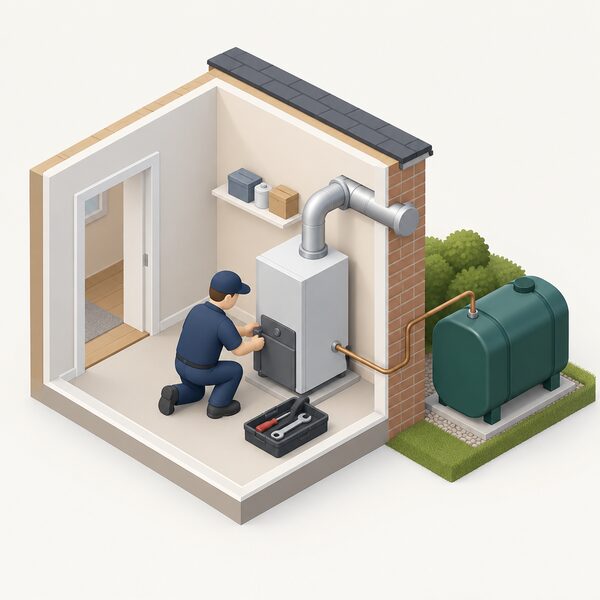
The services are fully funded and delivered through the health sector and trusted local partners. They include energy advice, income maximisation, debt support, frontline worker training, appliance servicing, and help with grants and measures8. That combination is deliberate: an energy advice conversation is of limited use to a household whose immediate problem is an unclaimed benefit or a debt repayment that is consuming the heating budget.
The target group is described as tens of thousands of people, with the programme aiming at those most vulnerable9. In practice the referral route determines who is reached. A household that never encounters a participating health or community worker is unlikely to enter the programme, which is a structural limit as well as a design choice.
The appliance servicing element is worth noting for Northern Ireland readers, because it addresses a risk that is more acute where heating is not gas. Northern Ireland has a high share of homes off the mains gas grid, and boiler and heating appliance failure in an oil-heated home is both a cost and a safety matter. Servicing support reduces the chance of a winter breakdown, though it does not replace the capital cost of a replacement appliance.
The programme does not fund the installation of heat pumps, solar panels or insulation as a general offer. Where measures are delivered, they come through help with grants and measures rather than as a direct programme output. That distinguishes it from the capital schemes described below, and it is the main reason its reported social return is measured in health and income terms rather than in kilowatt hours saved.
"It gives the health sector and trusted local partners access to fully funded services such as energy advice, income maximisation, debt support, frontline worker training, appliance servicing and help with grants and measures"
Coverage: England, Scotland and Wales, and where Northern Ireland sits
The programme's extent is stated plainly: England, Scotland and Wales1. Northern Ireland is not included, and no equivalent National Energy Action programme operates there under this name.
This is not an isolated gap. The Warm Home Discount Scheme covers England, Scotland and Wales and is scheduled to run until 31 March 2031, and the official guidance states directly that it does not run in Northern Ireland, where the Affordable Warmth Scheme is available instead2. The pattern repeats across scheme design: Great Britain-wide schemes tend to exclude Northern Ireland, and Northern Ireland provision is built separately.
The wider Warm Homes Plan does reach Northern Ireland, but through allocations rather than through a single UK-wide scheme. The UK Government has made specific allocations from the £15 billion budget for Scotland, Wales and Northern Ireland, so homes across the entire UK will benefit10. That is a funding transfer, not a delivery programme, and it leaves the design of Northern Ireland provision to the Northern Ireland Executive.
For a household, the distinction is practical rather than constitutional. A scheme that is funded UK-wide but delivered by a devolved administration will have its own eligibility rules, its own application route and its own timescale. The £15 billion headline does not mean a Northern Ireland household can apply to a Great Britain scheme.
| Nation | Warm Homes, Healthy Futures | Warm Home Discount | Main capital route |
|---|---|---|---|
| England | Yes1 | Yes, to 31 March 20312 | Warm Homes: Local Grant, delivered by Local Authorities11 |
| Scotland | Yes1 | Yes, to 31 March 20312 | Warmer Homes Scotland, funded by the Scottish Government12 |
| Wales | Yes1 | Yes, to 31 March 20312 | Warm Homes Nest scheme13 |
| Northern Ireland | No1 | No, Affordable Warmth Scheme instead2 | Warm Healthy Homes Fund, launching 20273 |
The devolution of these powers is the reason the table looks as it does, and it is covered in more detail in which energy powers are devolved and which are reserved and in why home energy grants differ across the four nations.
Results so far: people helped, homes warmed and social value
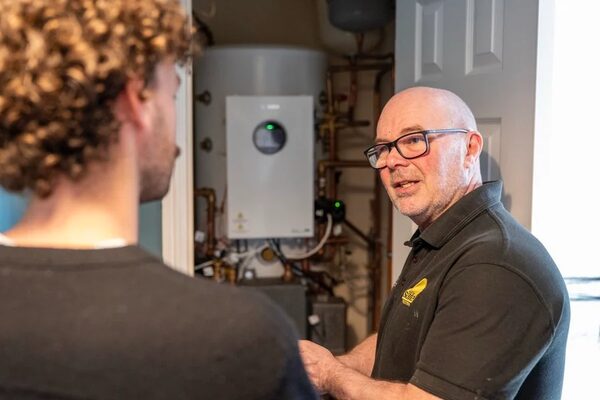
National Energy Action reports that the programme has so far unlocked £16.55 in total social value per £1 invested1. That is a social return figure, not a cash saving to a household, and it aggregates health, wellbeing and income effects rather than energy bill reductions alone. It is the programme's own reported measure.
The programme's reach is reported in people rather than properties. By March 2025 it had helped over 2,000 people, and it had formed partnerships with Warm Wales and Care & Repair Cymru9. Those partnerships extend the referral base into housing repair and Welsh energy advice organisations, which is how a programme without its own installation arm reaches households that need physical measures.
For comparison, capital schemes report in homes. Scotland's Area Based Schemes have helped over 125,000 households to make their homes warmer and more energy efficient since 201314. The Social Housing Decarbonisation Fund's first wave saw energy performance improvements in up to 20,000 social housing properties15. The Warm Homes Nest scheme in Wales delivered energy efficiency improvements to 348 households between October 2024 and March 20254. These are different kinds of intervention and the numbers are not directly comparable, but the scale difference is real: advice-and-referral programmes reach thousands, capital programmes reach tens of thousands.
The historical benchmark is Warm Front, which helped to improve the energy efficiency of over 2.1 million vulnerable households through the provision of heating and insulation measures16. No current programme operates at that scale.
The Northern Ireland alternative: the Warm Healthy Homes strategy and fund
Northern Ireland's answer to this territory is the Warm Healthy Homes Strategy 2026 to 2036, announced by the Department for Communities and intended to help address fuel poverty17. The strategy is the framework; the fund is the delivery mechanism.
The Warm Healthy Homes Fund is intended to support lower-income households who are experiencing, or at risk of, fuel poverty by improving the energy efficiency of homes and making them warmer, healthier and more affordable to heat3. Its stated objectives are to improve the energy efficiency of homes occupied by lower-income households, reduce fuel poverty and improve thermal comfort, support better health and wellbeing outcomes through warmer healthier homes, contribute to carbon reduction through improved home energy performance, and provide a longer-term framework for investment in private sector home energy efficiency3.
The target is lower-income households in owner-occupied and private rented homes3. That is a notable scope decision: social housing in Northern Ireland is addressed through separate standards, so the fund concentrates on the tenures where the householder carries the cost of improvement. The consultation describes it as an energy efficiency scheme to help low-income households experiencing or at risk of fuel poverty, with proposed qualification criteria including income thresholds and the use of certain benefits18.
The fund forms part of the wider Warm Healthy Homes approach and will help deliver the strategic actions set out in the strategy3. It will require £150 million over its first five years and is stated to launch in 20274.
A reference panel has been assembled to shape it, with representation from the H&A Group, the Insulation Association of Ireland, the Northern Ireland Housing Executive, the Department for Economy, Bryson Charitable Group, Disability Action, National Energy Action, the Department of Finance, Age NI, the Womens Support Network and the Landlords Association Northern Ireland3. The presence of the landlords' association reflects the private rented element of the target group.
Until it opens, the scheme that does operate in Northern Ireland is the Affordable Warmth Scheme, delivered by the Housing Executive5. Belfast City Council's winter guidance for older residents points to the same practical territory of staying warm and managing costs5. The Northern Ireland Sustainable Energy Programme list for 2026 to 2027 sets out the schemes running in the interim, including the Keep Warm Scheme managed by Workspace Ltd6.
For the wider picture of Northern Ireland's housing stock, heating fuels and fuel poverty measurement, fuel poverty in Northern Ireland and how Northern Ireland homes are heated set out the context this fund is designed to address.
How the programme is funded and what it costs

Warm Homes, Healthy Futures is funded by its supporting network companies: Cadent, Northern Gas Networks, SGN and Wales & West Utilities8. That is corporate funding from gas distribution, channelled through a charity, and it explains both the programme's geographic reach and its limits. The networks fund activity in their own areas.
The wider policy context is the Warm Homes Plan, which the UK Government published in January 2026 and which includes up to £15 billion in funding for solar panels, heat pumps, insulation and energy bill support19. The plan comprises over £4.4 billion grant funding plus £600 million from the Warm Homes Fund which the government intends to target at low income households20. The plan's modelling covers homes upgraded from July 2024 to December 203021.
Delivery of the capital elements sits with different bodies in each nation. The Warm Homes: Local Grant is a government-funded scheme delivered by Local Authorities that provides grants for energy performance upgrades and low carbon heating to low-income households living in the worst quality, privately owned homes in England, to achieve energy bill savings and carbon savings11. The scheme provides £500 million in funding from 2025 to 2028 for energy efficiency improvements12. In social housing, the Warm Homes: Social Housing Fund aims to deliver warm, energy efficient homes13.
Skills funding runs alongside: the programme will support up to 9,000 subsidised training places for installers and retrofit professionals22. That matters for delivery capacity in Northern Ireland as much as elsewhere, since a fund that opens in 2027 will need installers able to work to the required standards.
For a household, the funding structure determines what is available and when. A charity-funded advice and referral programme can start quickly and reach people through health services. A capital fund requires budget, criteria, a delivery body and an installer base, which is why Northern Ireland's fund is dated to 2027 rather than to the current year. The dependence that remains is straightforward: until the fund opens, a Northern Ireland household in fuel poverty is reliant on the Affordable Warmth Scheme and on the interim schemes listed under the Sustainable Energy Programme, and on whatever income and debt support it can reach through advice services.
Sources22 cited
- Warm Homes, Healthy Futures, National Energy Action, 2026-08-20
- Warm Home Discount Scheme, Ofgem, 2026-09-17
- Warm Healthy Homes Fund, Department for Communities, 2026-09-17
- Fuel poverty research briefing, House of Commons Library, 2026-09-17
- Stay warm at winter, Belfast City Council, 2026-09-20
- NISEP List of Schemes 2026-27, Utility Regulator, 2026-04
- Fuel poverty charity joins forces with gas distribution networks, Northern Gas Networks, 2024-10-24
- Our Health, Our Homes, National Energy Action, 2026-06-10
- Warm Homes, Healthy Futures news, National Energy Action, 2024-03-19
- Warm Homes Plan, Department for Energy Security and Net Zero, 2026-01-21
- Warm Homes Local Grant statistics, Department for Energy Security and Net Zero, 2026-08
- Home energy efficiency, Argyll and Bute Council, 2026-09-17
- Written statement on fuel poverty, Welsh Government, 2025-08-07
- Scotland's Climate Change Plan 2026 to 2040, Scottish Government, 2025-11-06
- Social Housing Decarbonisation Fund, Department for Energy Security and Net Zero, 2024-05-13
- Warm Front Scheme, Energy and Climate Change Committee, 2026-09-20
- Fuel poverty research briefing, House of Commons Library, 2026-08-06
- Consultation on Warm Healthy Homes Fund, Department for Communities, 2026-09-19
- What the Warm Homes Plan means for you, Energy Saving Trust, 2026-01-23
- Fuel poverty research briefing, House of Commons Library, 2026-05-13
- Warm Homes Plan technical annex, Department for Energy Security and Net Zero, 2026-09-17
- Carbon Budget and Growth Delivery Plan: heat and buildings factsheet, Department for Energy Security and Net Zero, 2026-06-23
 Home HeatingWhy do so many homes in Northern Ireland run on heating oil, and will that ever change?
 Housing Stock Data for NIMost homes in Northern Ireland heat with oil, so why are the grants and help different from the rest of the UK?
 Climate TargetsNorthern Ireland has committed to cutting its greenhouse gas emissions to almost nothing by 2050, with a big reduction due by 2030.
 Smart Meters in Northern IrelandWhen are smart meters coming to Northern Ireland?
 Fuel PovertyWhy does Northern Ireland have such a high rate of fuel poverty, and how many households are affected?
 The Full Grants and Schemes GuideWhich grants can you actually get right now, and how do you apply for them?