

In this guide
Northern Ireland has its own energy advice service, and it is free to every household in the province. NI Energy Advice offers independent and impartial energy advice to domestic householders in Northern Ireland, plus referrals to energy grants and other sources of help1. It is funded by the Department for Communities and delivered by the Housing Executive, which is also Northern Ireland's Strategic Housing Authority and Home Energy Conservation Authority1. The freephone number is 0800 111 4455, open 9am to 5pm Monday to Friday, and the email address is nienergyadvice@nihe.gov.uk1.
The service exists because Northern Ireland's energy market is separate from that of Great Britain. Electricity and gas are regulated by the Utility Regulator, the network is run by NIE Networks, and the price comparison and complaint functions that Ofgem and the Energy Ombudsman carry out in England, Scotland and Wales sit with the Consumer Council for Northern Ireland instead2. Advice here is not a signpost to a GB scheme: it is the front door to Northern Ireland's own grants, its own network operator and its own consumer body.
What follows sets out what the advice service covers, who can use it, how referrals to grants work, how the Consumer Council handles tariffs and complaints, what to do in a power cut, how to get a solar or heat pump connection assessed, and what the Energy Strategy proposes for the future of advice itself.
NI Energy Advice: free, impartial advice for every household
The service is deliberately broad in who it serves. The Housing Executive states that NI Energy Advice is for all households across Northern Ireland, and that its advice is free and impartial1. The same wording appears across the nidirect guidance pages that carry the service's name, each describing independent and impartial energy advice to domestic householders in Northern Ireland, plus referrals to energy grants and other sources of help4. The Consumer Council NI and Northern Ireland Energy Advice are described together as giving free, independent and impartial energy advice to all domestic householders in Northern Ireland7.
That impartiality is structural rather than a promise. The funding comes from the Department for Communities, not from suppliers, installers or fuel companies, and delivery sits with the Housing Executive, a public body with a statutory housing and energy conservation role1. An advice service paid for by the bodies it advises on would have a different incentive; this one does not have that problem.
The practical effect for a household is that the first conversation about energy costs nothing and carries no sales interest. A householder can ask about a grant, a heating system, a damp patch or a supplier switch without being routed towards a particular product. Where the answer lies outside the service's remit, the referral function exists to pass the household to the organisation that holds it, whether that is a grant administrator, a debt advice charity or the Consumer Council.
"NI Energy Advice offers independent and impartial energy advice to domestic householders in Northern Ireland - plus referrals to energy grants and other sources of help"
What the service covers: grants, heating, bills, damp and oil buying clubs
The published list of topics is wide. NI Energy Advice covers energy grants and support; heating and energy use; energy bills and fuel poverty support; damp, condensation and ventilation; insulation and home improvements; renewable energy; changing electricity or gas supplier; and heating-oil savings1. Belfast City Council's cost of living pages summarise the same offer as free advice on saving energy in your home, energy efficiency grants, and oil buying clubs8.
That last item matters more in Northern Ireland than in most of Great Britain, because a large share of homes outside the gas network heat with oil. An oil buying club pools orders so that a group of households buys at a negotiated price rather than each buying alone, and the advice service treats it as part of its core offer rather than an add-on8. For a rural household with a tank and no mains gas, that is often the most immediate lever on the winter bill.
Damp, condensation and ventilation sit in the same list for a reason. Northern Ireland has a wet, mild climate and a housing stock with a high proportion of solid-wall and older properties, so the advice service fields questions where insulation, airtightness and moisture interact. The nidirect guidance on ventilation systems covers the same territory from the technical side9, and the advice line is the route by which a householder reaches it without having to diagnose the problem first.
The service also handles the administrative side of grants: what exists, who qualifies, and how to apply. That is covered in more detail below, but the point here is that the advice and the referral are one conversation, not two.

Who can use it: all domestic householders, tenants and owner-occupiers alike

The Housing Executive answers the most common misconception directly: you do not need to be a Housing Executive tenant1. The service is for domestic householders in Northern Ireland, a phrase that appears in the same form across the nidirect pages4. Private tenants, social tenants, owner-occupiers and households in the private rented sector all fall inside it.
The distinction that does matter is between advice and grant eligibility. Advice is universal; grants are not. The Northern Ireland Sustainable Energy Programme list of schemes for 2026-27 sets out separate eligibility rules for each scheme it funds. The Priority PV Scheme, for example, is restricted to Northern Ireland Housing Executive tenants, outside a natural gas area, in a single storey Housing Executive property with oil or electric heating, and to a couple or single parent family with an income or pension below £35,000 gross10. Better Energy Homes Plus is for owner-occupiers throughout Northern Ireland, with a single person household income or pension below £28,000 gross, or a couple or joint or single parent family below £35,000 gross10.
So a householder can always get advice, and may or may not qualify for the grant the advice points to. The advice service is the correct first call precisely because it holds both sets of rules and can say which applies.
Referrals to energy grants and other sources of help
Referral is written into the service description rather than offered as a favour. NI Energy Advice offers independent and impartial energy advice to domestic householders in Northern Ireland, plus referrals to energy grants and other sources of help4, and the same sentence appears on the grants, heating and insulation pages5. The service can also make referrals to energy grants and other sources of help where the household's need sits outside its own remit7.
In practice this means the advice line acts as a router. A householder who qualifies for a scheme is passed to the body that administers it. A householder struggling with bills is pointed towards the organisations that energy suppliers themselves refer customers to, including Advice NI, which offers free, independent debt advice11. A householder with a complaint about a supplier is passed to the Consumer Council, which gives free advice and can investigate complaints about natural gas and electricity11.
The grant landscape itself is documented in the Northern Ireland Sustainable Energy Programme, which publishes the range of energy efficiency schemes funded through NISEP that are available for domestic and business customers12. The programme's list of schemes is published annually, and the 2026-27 list carries the eligibility rules for each10. The Energy Price Guarantee for domestic energy consumers in Northern Ireland was set out in ministerial directions and applies to Northern Ireland specifically13, and the domestic gas direction was made under section 22 of the Energy Prices Act 202214.
For households on heat networks rather than individual supplies, the Energy Bills Discount Scheme heat network support provides that customers who cannot resolve a complaint directly with their heat network can raise it with the Energy Ombudsman for Great Britain and the Consumer Council for Northern Ireland15.
Comparing tariffs and checking appliance costs with the Consumer Council

The Consumer Council offers an energy price comparison tool to compare electricity and gas tariffs for all suppliers in Northern Ireland2. That is a different arrangement from Great Britain, where comparison is largely a commercial market. In Northern Ireland the consumer body itself runs the tool, which means the comparison covers the suppliers that actually operate in the province rather than a national panel.
The value of checking is not theoretical. Northern Ireland households have faced some of the sharpest price movements in the UK, and the Energy Price Guarantee support that ran for domestic consumers in Northern Ireland was set at up to 13.6 p/kWh for electricity and 3.9 p/kWh for gas in Q1 202316. A separate set of figures for the same scheme, up to 19.9 p/kWh for electricity and 4.8 p/kWh for gas, also appears in the published statistics; the two figures should be read as the range the scheme reached rather than a single rate16.
Appliance running costs are the other half of the same question. The advice line offers free comprehensive advice on saving energy in the home, energy efficiency grants and more help that may be available11, and the Consumer Council's comparison work sits alongside it. For a household trying to work out whether a tariff switch or an appliance change matters more, the two services answer different halves of the question.
Domestic electricity consumption in Northern Ireland is measured and published by the Department for Energy Security and Net Zero (Northern Ireland)17, which gives a household a way to see how its own use compares with the local picture rather than a GB average.
Complaining about your energy supplier: how the Consumer Council can help
The Consumer Council for Northern Ireland is the contact for problems dealing with your fuel supplier2. It gives free advice and can investigate complaints about natural gas and electricity2. That investigative power is the practical difference between the Consumer Council and a general advice line: it can take a complaint up with the supplier rather than only explaining the householder's options.
The route matters because Northern Ireland does not use the Energy Ombudsman for individual electricity and gas complaints in the way Great Britain does. The Energy Ombudsman's role in Northern Ireland appears in the heat network context, where customers who cannot resolve a complaint directly with their heat network can raise it with the Energy Ombudsman for Great Britain and the Consumer Council for Northern Ireland15. For ordinary domestic electricity and gas supply, the Consumer Council is the body named2.
Where the problem is debt rather than service, the route changes. Energy suppliers refer customers who are struggling to pay bills to organisations like Advice NI, which offers free, independent debt advice11. nidirect's guidance on overdue utility bills sets out the position on arrears and disconnection2, and the guidance on what to do if you are struggling to pay your energy bills covers the support available11.
Power cuts in Northern Ireland: reporting, priority restoration and the medical care register
NIE Networks runs the electricity network and takes the calls. The customer helpline is 03457 643 643, and the WhatsApp service runs from 7.30am to 11.30pm, seven days a week, including public and bank holidays3. If you see electricity lines that are down or causing significant risk to the public, call 9993.
Preparation is set out plainly. NIE Networks advises keeping a torch and batteries in the house, knowing where the fuse box is, being able to open electric gates manually, keeping an electric vehicle battery charged, and joining the medical care register if you rely on electricity for medical equipment3. The Priority Services Register is a free service for households that need extra support in a power cut3.
When a severe weather event causes widespread damage, NIE Networks works to three priorities: public safety, providing information, and restoring power18. The first crews go to damage that has caused a loss of power to critical national infrastructure such as hospitals, airports, and water pumping and treatment sites. The next priority is fixing damage that restores power to the largest number of homes and businesses18. The Medical Care Register is checked so that those with the greatest need for electricity get it back as quickly as possible18.
During a cut, the advice is to switch off electric heaters and cookers to avoid a fire risk when power returns, leave a light on to tell when it is restored, and check on elderly or vulnerable neighbours, family and friends, making them aware of any planned emergency power cuts19. Generators must be sited with plenty of air flow to avoid carbon monoxide poisoning3. Fridge and freezer doors should stay closed: contents should be safe for many hours, but if in any doubt, food that appears to have defrosted should be disposed of19.
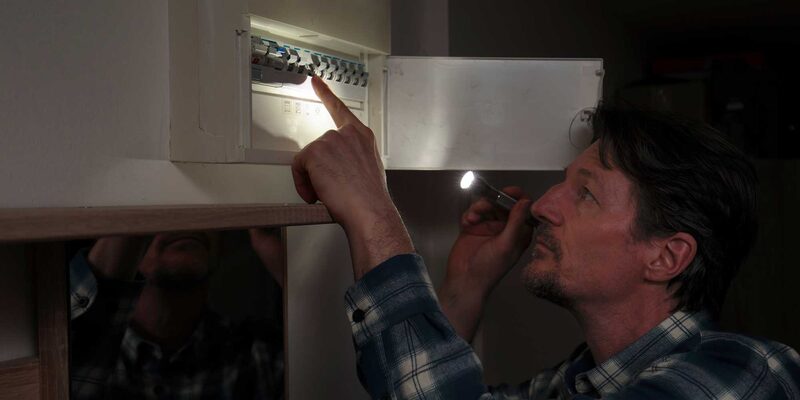
Connecting solar panels or a heat pump: the NIE Networks assessment process

Generating your own electricity in Northern Ireland means dealing with NIE Networks as the connection authority. The nidirect guidance on support to generate your own electricity states that homeowners should seek independent advice on solar panels, heat pumps, and other energy efficiency measures from organisations such as NI Energy Advice20. That is the official position: the advice comes before the connection application, not after.
The connection process itself sits with NIE Networks, which publishes guidance on additional works associated with connections21. A domestic solar installation, a battery or a heat pump may require an assessment of what the existing supply can carry, and the network operator is the body that determines it. The advice service's role is to make sure the household understands what it is buying and why before that assessment begins.
This is where the independence of the advice matters most. A household considering solar or a heat pump is making a decision worth several thousand pounds, and the official guidance directs it to a free, impartial source rather than to the company quoting for the work20. The same principle runs through the grant schemes: the Northern Ireland Sustainable Energy Programme funds energy efficiency schemes for domestic and business customers12, and the advice line is the route to finding out which apply.
For households weighing up which measure to do first, the wider site covers solar panels, a battery or a heat pump and checking your electricity supply before upgrades.
A one-stop shop energy advice service: what the Energy Strategy proposes
The Energy Strategy for Northern Ireland proposes establishing a new one-stop shop energy advice service for all domestic energy consumers22. The proposal is set out in independent guidance published by the Energy Saving Trust, which describes what such a service would need to do rather than confirming that it exists.
The design principles are specific. The service would be expert, delivering accurate and locally focused information across the whole customer journey; tailored, offering technical and behavioural advice and financial signposting on a case by case basis; educational, enabling behavioural change and climate action through public engagement; data-driven, following data insights to develop service functionality and accelerate Northern Ireland's energy transition; and accessible, providing information through a free, inclusive, multi-channel service22.
The implementation sequence is staged. An initial pilot domestic retrofit scheme would be followed by a more substantive offering that would later become the main interface on all energy matters in Northern Ireland22. That is a proposal, not a live service, and households should treat it as such: the advice available today is the one described in the sections above.
The direction of travel is nonetheless clear, and it points towards a single front door for grants, retrofit and behavioural advice. Until that exists, the practical route for a Northern Ireland household is the existing advice line for energy questions, the Consumer Council for tariffs and supplier complaints, and NIE Networks for the network itself. For the wider sequence of work, the site's getting started guide and checking what grant help you can get before you start work set out how the pieces fit together.
Sources22 cited
- NI Energy Advice, Northern Ireland Housing Executive, 2026
- Overdue utility bills, nidirect, 2026
- Power cuts advice, NIE Networks, 2026
- Energy saving grants in your area, nidirect, 2026
- Heating technologies to suit your home, nidirect, 2026
- Insulation, nidirect, 2026
- Low carbon heating, nidirect, 2026
- Cost of living and winter support, Belfast City Council, 2026
- Ventilation systems, nidirect, 2026
- NISEP List of Schemes 2026-27, Utility Regulator, 2026
- Advice if you're struggling to pay your energy bills, nidirect, 2026
- List of schemes published for the Northern Ireland Sustainable Energy Programme, Utility Regulator, 2024
- Energy Price Guarantee for domestic energy consumers in Northern Ireland: ministerial directions, GOV.UK, 2022
- Energy Price Guarantee for Domestic Gas Consumers in Northern Ireland Direction No.2, GOV.UK, 2023
- Energy Bills Discount Scheme heat network support, GOV.UK, 2023
- Energy Price Guarantee scheme documents, GOV.UK, 2023
- Domestic electricity consumption indicator, Office for National Statistics, 2025
- How do you prioritise faults in a severe weather event, NIE Networks, 2026
- Is there any action I should take when power is disrupted, NIE Networks, 2026
- Support to generate your own electricity, nidirect, 2025
- Additional works, NIE Networks, 2026
- Decarbonisation in Northern Ireland: the potential of a one-stop shop, Energy Saving Trust, 2025
 Energy Consumer BodiesWho do you call about an energy problem where you live?
 Utility Regulator NIWho sets your energy prices in Northern Ireland and who can you complain to?
 Housing Stock Data for NIMost homes in Northern Ireland heat with oil, so why are the grants and help different from the rest of the UK?
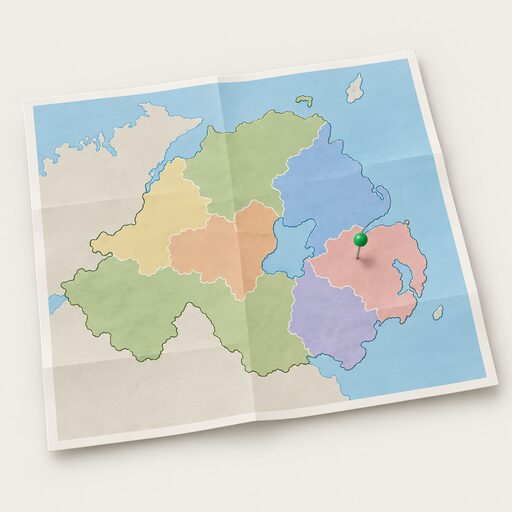 Community Energy in NICan a community group in Northern Ireland sell power to its neighbours, and is there funding to get a project off the ground?
 Who Supplies Your Energy?Not sure who bills you for gas or electricity?
 Energy Bills in Northern IrelandNorthern Ireland has no price cap.