

In this guide
The dividing line between a do-it-yourself energy improvement and one that needs a registered trade is not about difficulty. It is about notification. Draught-proofing, loft insulation and secondary glazing sit at the low-risk end, where the work is benign and reversible and no building control body needs to know. Electrical work sits on a different footing entirely: most repairs, replacements and maintenance jobs, and alterations or additions to existing circuits outside special locations, are non-notifiable, but extra power points or lighting points in a kitchen or bathroom, or outdoors, must be reported unless a registered competent person does them1.
Solar panels and heat pumps are rarely householder jobs, and the reason is usually the electrical connection rather than the panel or the pump. Installing solar panels may require approval under the Building Regulations, and the associated electrical works are the trigger3. For Boiler Upgrade Scheme work, installers must be MCS certified and certified to install heat pumps or biomass boilers, so the grant route closes to a self-installer regardless of competence4.
The consequence of getting the boundary wrong falls on the owner, not the tradesperson. If you own the building, it is ultimately you who may be served with an enforcement notice if the work does not comply with the regulations1. That single sentence shapes every decision on this page.
What counts as a DIY energy improvement, and what never should be
The measures that a householder can reasonably take on are the ones that change how a building loses heat without changing how it is serviced. Properly installed insulation, energy efficient windows and doors and reducing draughts can significantly reduce energy use, and reduce your energy bills6. Draught stripping for windows and doors is named in legislation as an energy-saving material, which places it firmly in the ordinary maintenance category rather than the regulated one7.
The measures that should never be treated as DIY are those that create, alter or extend a service. The Building Regulations will probably apply if you want to provide services and/or fittings in a building such as washing and sanitary facilities, hot water cylinders, foul water and rainwater drainage, replacement windows, and fuel burning appliances of any type1. They may also apply to certain changes of use of an existing building1. Replacement windows appear on that list, which surprises many householders who assume a like-for-like swap is exempt.
There is a second category that is not about competence at all: buildings where the fabric itself is the constraint. The energy efficiency of historic and traditional dwellings should be improved only if doing so will not cause long-term deterioration of the building's fabric or fittings8. For listed buildings, Listed Building Consent will be required for most energy efficiency works, including internal works such as internal wall insulation9. In conservation areas, energy efficiency will primarily be promoted using benign, reversible measures such as draught exclusion and secondary glazing9.
Draught-proofing, insulation and glazing: the low-risk end of DIY
This is where a householder's own labour is most defensible, and the reason is that the measures are reversible. Draught exclusion and secondary glazing are the two named as preferred in conservation areas precisely because they can be undone9. Draught stripping for windows and doors is listed as an energy-saving material in its own right7.
Loft insulation and cavity wall insulation are the measures most often asked about, and the honest answer is that the material is not the hard part. The Building Regulations set energy efficiency requirements that apply to building work, and Part 6 of the Building Regulations imposes additional specific requirements for energy efficiency10. Where insulation is installed as part of a wider alteration, that requirement bites. Where it is a straightforward top-up in an accessible loft, it generally does not.
The evidence on what actually prompts households to act is worth knowing before starting. Potential triggers for the installation of energy efficiency improvements were other building work (14%) or the heating system11. In other words, most people do this work when something else has already opened up the building, which is also when the notification questions become live.
Glazing is the awkward one. Replacement windows appear in the list of work where the regulations will probably apply1, so a window swap is not the same category as draught-proofing the window you already have. Secondary glazing, by contrast, is additive and reversible.

Electrical work: what Part P allows you to do yourself
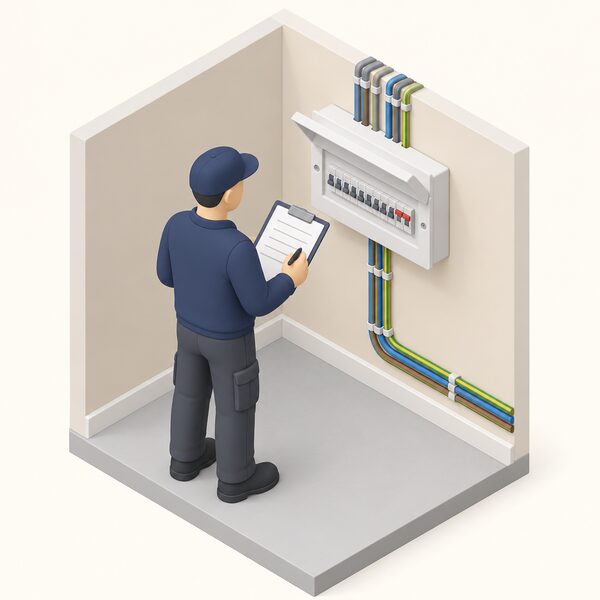
The Building Regulations allow certain works, known as non-notifiable or minor work, to be carried out without having to notify building control or use a registered electrician2. The scope is narrower than many householders assume. You do not need to tell them about repairs, replacements and maintenance work or extra power points or lighting points or other alterations to existing circuits, except in a kitchen or bathroom, or outdoors2.
Where the work is notifiable, it must be reported to the local building control body unless completed by someone registered on the competent person scheme12. The electrician must be registered by an organisation authorised by the Secretary of State and able to certify the work as safe without notifying Building Control2. That is the whole point of the scheme: the certification travels with the trade, not with the householder.
There is a limit to what the regulations cover. The Building Regulations do not set standards for the safety of electrical appliances but they do require that fixed connections of appliances are safe2. So the appliance itself is a product safety matter; the connection to the installation is a building regulations matter.
Safety can be checked in either of two ways: by using an electrician registered with a competent person scheme, or by notifying the building control section of the local authority2. Both routes end in the same place, a certificate that the work is safe. Only one of them lets a householder do the work.
Notifiable or not: when electrical work must be reported or certified
The test is location and circuit, not difficulty. Most repairs, replacements and maintenance jobs, and alterations or additions to existing circuits outside special locations, are non-notifiable1. A kitchen or bathroom counts as a special location, and so does anything outdoors2.
Solar changes the picture. All electrical work comes under Building Regulations and is notifiable to the local authority13. That is a broad statement, and it is the reason a self-installed array runs into trouble at the connection stage rather than at the mounting stage.
The practical sequence for notifiable work is short and unforgiving:
- Confirm whether the work is notifiable, by location and by whether it creates a new circuit.
- Notify the building control body or a registered third-party certifier before work starts1.
- Either use an electrician registered on a competent person scheme, who can self-certify, or have the local authority inspect2.
- Keep the certificate with the property paperwork.
The reason this matters beyond compliance is that a future buyer, a solicitor or an insurer may ask for it. A certificate that does not exist cannot be produced later.
Building regulations: the rules that apply even to your own home
Owner-occupation is not an exemption. The Building Regulations will probably apply if you want to put up a new building, extend or alter an existing one, or provide services and/or fittings in a building such as washing and sanitary facilities, hot water cylinders, foul water and rainwater drainage, replacement windows, and fuel burning appliances of any type1. They may also apply to certain changes of use of an existing building1.
Energy efficiency has its own layer. Part 6 of the Building Regulations imposes additional specific requirements for energy efficiency10. For new dwellings, the dwelling primary energy rate, dwelling emission rate and dwelling fabric energy efficiency rate must not exceed their respective target rates8. Those are design-stage targets for new build, but they set the standard against which alterations are judged.
Where a building is historic, the requirement is qualified rather than removed. The work should comply with standards in this approved document to the extent that it is reasonably practicable10. That is a real obligation with a reasonableness test attached, not a waiver.
The enforcement mechanism is what gives all of this teeth. If building regulations approval is not given, then the work should be changed so it meets standards12. There is no route that ends with the work staying as it is.
Solar panels and heat pumps: why these are rarely DIY jobs

Two separate obstacles stand in the way, and neither is about whether a competent householder could physically mount a panel.
The first is building regulations. Installing solar panels may require approval under the Building Regulations3, and the associated electrical works are the reason3. Regardless of whether or not planning permission is required for the installation of your solar panels, the installation itself is still subject to standard building regulations13. Planning and building control are separate regimes, and clearing one does not clear the other.
The second is scheme eligibility. Installers must be MCS certified and be certified to install heat pumps and/or biomass boilers4. Where a grant is involved, the property owner must become the legal owner of the heat pump or biomass boiler once the installation is complete14. A self-installed system has no MCS-certified installer behind it, so the certification route that schemes rely on is absent.
Planning is the easier half. Installing solar panels and equipment on residential buildings and land may be permitted development with no need to apply to the council for planning permission15. If you believe installing solar panels would be lawful under the permitted development regulations, and you require written confirmation, you can submit an application for a lawful development certificate15. Installing solar panels may also require approval under the Building Regulations6.
MCS certification: what it means and when you need a certified installer
MCS is a certification scheme for microgeneration installation companies and products4. It is the mechanism by which a householder's installer becomes traceable to a standards body rather than to a directory listing.
Its reach is narrower than the name suggests. MCS requires installers to provide a design-stage prediction of system efficiency, not verify actual performance, and third party non-modulating controls are not prohibited16. So certification tells you the installer followed a defined process; it does not tell you the system will perform as predicted.
There is oversight beyond the installer's own paperwork. MCS also undertake their own checks on installations completed by MCS-certified installers, separate from Ofgem's audit programme17. Property owners contacted for those checks should aim to respond within seven days14.
Where something goes wrong, MCS is the contact for issues with the installation process, the installer, or the MCS certificate or product5. The window is finite: for MCS certified installations, it is no more than two years after the date that the system was commissioned5.
Scheme rules also impose deadlines on the installer rather than the householder. No later than 10 working days after commissioning, the installation shall be registered by the MCS Contractor on the MCS Installation Database, and MCS Commissioning certification is to be issued to the Employer within 14 days of commissioning18. Those are the dates to check against if certification has not arrived.
Who carries the legal responsibility: owner or builder

The answer is uncomfortable and consistent. If you are the owner of the building, it is ultimately you who may be served with an enforcement notice if the work does not comply with the regulations1. Employing a competent trade does not transfer that exposure.
Responsibility for documentation is split differently. Where a building is under construction it is the responsibility of the person who carries out the construction to provide the energy performance certificate19. If it is being rented, then it is the responsibility of the landlord to provide the EPC to the potential tenant19. For furnished holiday lets, the occupier is responsible for meeting the energy costs for the property19.
Grant-funded work adds an ownership condition. The property owner must become the legal owner of the heat pump or biomass boiler once the installation is complete14. That is a condition of the funding, not a suggestion.
"if you are the owner of the building, it is ultimately you who may be served with an enforcement notice if the work does not comply with the regulations"
What happens if the work does not comply
The immediate consequence is remedial. If building regulations approval is not given, then the work should be changed so it meets standards12. In practice that means reopening the work, and the cost of doing so sits with whoever commissioned it.
There is a second consequence that is easy to miss: it can affect what the property is entitled to. Where the Energy Efficiency Requirement applies to a Feed-in Tariff installation and is not satisfied, the lower tariff is to be assigned to the installation20. A Display Energy Certificate will not be accepted as proof of meeting the EER20. So a compliance gap can reduce a payment stream, not just trigger an inspection.
For landlords, the minimum energy efficiency regime has its own exemptions, and they are narrow. The requirement to meet the minimum level of energy efficiency (EPC E) does not apply where a landlord has made all the relevant energy efficiency improvements for the property, or there are none that can be made, and the property remains below EPC E21. Regulation 31 provides a further exemption where the landlord has, within the preceding five years, been unable to increase the energy performance indicator as a result of the tenant refusing consent, or third party consent being refused or granted subject to a condition with which the landlord cannot reasonably comply22.
Where a scheme funded work, the funding body may have had no role in it. We did not pay for, choose, or install the energy efficiency improvements23. That is a statement about liability as much as about administration.
England, Scotland, Wales and Northern Ireland: where the rules differ
The building regulations regimes are separate, and the differences matter most for electrical work and for energy performance duties.
In England and Wales, if you are carrying out electrical work in your home or garden, you will have to follow new rules2. Wales publishes its own building regulations guidance on electrics24, and has consulted on its own Approved Document L volume for dwellings10. The Welsh energy performance picture is tracked separately, and the dashboard does not take into account properties that are exempt from the Minimum Energy Efficiency Standards25.
Scotland runs a distinct system. The Building Standards Technical Handbook for domestic work sets out Section 6 Energy (EC, energy, economy and heat retention)26. Scotland's housing stock performs comparatively well: the average energy efficiency ranking places it second highest, after Northern Ireland, followed by Scotland and England, with the lowest average rating in Wales27. Scotland also has its own constraints on communal work: works to install communal zero emissions heating systems, and certain communal energy efficiency works not deemed maintenance, are considered improvements and require unanimous approval from owners28. Certain energy efficiency measures may never be cost effective in terms of payback times for owners and will require additional support28.
Northern Ireland has its own building regulations, amended by Regulation 43 of the Energy Performance of Buildings (Certificates and Inspections) Regulations (Northern Ireland) 200829. Those regulations implement Articles 7, 9 and 10 of the Energy Performance of Buildings Directive 2002/91/EC29.

Where DIY stops being sensible
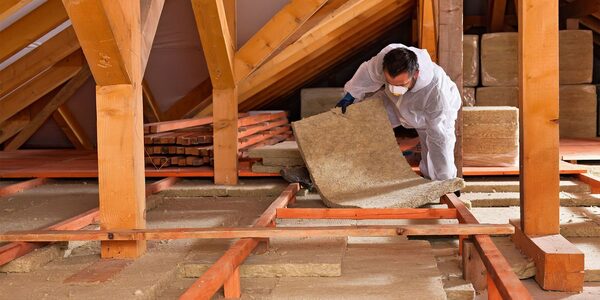
The pattern across the sources is consistent. Work that maintains the building, is reversible, and does not create or alter a service is generally open to a householder. Work that creates a circuit, connects a generating source, or replaces a controlled fitting is not, and the reason is the certificate rather than the competence.
There is also a limit on what certification itself delivers. Energy Performance Certificate ratings do not always capture the true efficiency of a retrofit; measures like PV panels or air-source heat pumps may improve an EPC score but fail to address fundamental building issues such as poor insulation or moisture risks30. A householder who does the low-risk work well, and brings in registered trades for the notifiable work, ends up with a building that performs better than its certificate suggests rather than one that scores well and performs badly.
For a household's energy independence, the split is straightforward. Draught-proofing, loft insulation and secondary glazing reduce demand and depend on nothing outside the home. Solar and heat pumps reduce dependence on a supplier and on gas, but they introduce a new dependence: on an MCS-certified installer, on a scheme administrator, and on a certification database that has to be updated within ten working days of commissioning18. That is a real trade, and it is worth naming plainly.
If the sequence of work is the open question rather than the division of labour, what order home energy improvements should be done in sets out the logic, and the paperwork to keep from every energy improvement covers what to retain once each stage is signed off.
Sources30 cited
- When you need approval, Planning Portal, 2026
- Building regulations: general information, Planning Portal, 2026
- Solar panels guidance, City of York Council, 2026
- Boiler Upgrade Scheme guidance for installers v5.1, Ofgem, 2026
- Domestic RHI: who to contact, Ofgem, 2026
- Solar photovoltaic (PV) panels, London Borough of Bromley, 2026
- Energy-saving materials legislation, legislation.gov.uk, 2024
- Approved Document L: Conservation of fuel and power, Volume 1, Dwellings, HM Government, 2021 with 2023 amendments
- Improving energy saving and sustainability in conservation areas and listed buildings, Brighton and Hove City Council, 2026
- Approved Document L Volume 1 consultation version, Welsh Government, 2025
- Able to pay retrofit research executive summary, Bristol City Council, 2022
- Electric vehicle charging: building regulations, Planning Portal, 2026
- Building regulations: renewables guidance, Bedford Borough Council, 2026
- Boiler Upgrade Scheme guidance for installers V5, Ofgem, 2026
- Guidance on retrofitting homes: solar panels, London Borough of Lambeth, 2026
- Clean heat transition report, HM Government, 2026
- Boiler Upgrade Scheme guidance for property owners v5.1, Ofgem, 2026
- Barcud Solar Panel Installation Scheme Specification, Sell2Wales, 2026
- Trading standards guidance: other consumer problems, Isle of Anglesey County Council, 2025
- Guidance for suppliers v14, Ofgem, 2021
- Guidance on PRS exemptions and exemptions register evidence requirements, HM Government, 2026
- The Energy Efficiency (Private Rented Property) (England and Wales) Regulations 2015, regulation 31, legislation.gov.uk, 2026
- ECO4 Flex open, South Cambridgeshire District Council, 2026
- Building regulations: electrics, Welsh Government, 2026
- Energy Performance Dashboard, Rent Smart Wales, 2026
- Building Standards Technical Handbook: Domestic (April 2026), Scottish Government, 2026
- Energy efficiency of housing in England and Wales, House of Commons Library, 2026
- Tenements short life working group: energy efficiency and zero emissions heating final report, Scottish Government, 2023
- Energy Performance of Buildings Regulations (Northern Ireland) 2008, Building Control Northern Ireland, 2008
- Review of retrofit assessment in Scotland, Scottish Government, 2025
 Building Regulations EnglandAdding a heat pump, solar panels or an extension usually needs building regulations approval, and it is separate from planning permission.
 Where to Start If You RentRenting means you can switch supplier or get a smart meter yourself, but insulation, glazing and heating need your landlord's agreement.
 Listed Buildings and AreasYour home is listed or sits in a conservation area, so do you need permission before adding solar panels, insulation or a heat pump?
 Order of Energy ImprovementsInsulating and draught-proofing first means you can then buy a smaller heat pump or boiler, so what order saves the most money?
 Grants and Energy IndependenceCan you get a grant for solar panels or a battery?
 Permitted Development RightsDo you need planning permission for solar panels or a heat pump?