

In this answer
Short answer
Most electrical work in a home is not banned for the householder, but a large part of it is notifiable, and notification is where the law bites. It is a legal requirement for certain electrical work, and where Building Regulations apply the work must either be done by an installer registered with a competent person scheme or be approved by a Building Control body1. A registered installer self-certifies, notifies the local authority and gives the householder a certificate; anyone else, including a householder doing the job, must make the application instead3.
The dividing line is not "big job versus small job" but "registered competent person versus everyone else". Registered installers can self-certify that their work complies with the Building Regulations, and the householder receives a certificate confirming it4. Where the plans or building notice route is used instead, an Electrical Installation Certificate must be provided when the work is finished5.
For renewable work the certification is different again. Solar panels, heat pumps and small wind turbines sit under MCS certification, and grant and export schemes require it: Boiler Upgrade Scheme installers must be MCS certified and certified to install heat pumps and/or biomass boilers, and the Smart Export Guarantee requires an MCS certificate for solar PV, wind and micro-CHP installations up to 50kW6.
When the law requires a registered electrician
The requirement is not that every socket and light needs a registered electrician. It is that notifiable work must be certified, and the simplest route to certification is an installer who is registered to self-certify. Electrical work calls for a properly qualified or registered electrician, and where the work falls under Building Regulations it calls for an electrician registered with a government-approved scheme who will take care of everything1.
What counts as notifiable varies by nation. In England, an electrician registered with a third-party certification scheme, a registered third-party certifier, is one route to certification for installers who are not themselves registered competent persons11. That option was introduced with the 2013 edition of Approved Document P, which allows installers who are not a registered competent person to use a registered third-party certifier to certify work as an alternative to using a building control body12.
In Wales the same broad structure applies, with the competent person providing a completed Electrical Installation Certificate showing the work was tested for safety14. In Scotland the route is different: an approved certifier of construction who has been assessed to have the professional skills and relevant experience can certify compliance, and the Approved Certifier of Construction Scheme allows electricians and other professionals to self-certify that notifiable work complies with the relevant regulations and standards15.
Northern Ireland is the outlier. There are no Building Regulations for domestic electrical work in Northern Ireland, although a registered electrician is still recommended3. That is a difference in the statutory route, not a statement that the work is safe to do badly.
Self-certification: how registered electricians sign off their own work
Self-certification is the mechanism that removes the householder from the paperwork. A registered competent person can self-certify compliance with the building regulations, and registered installers can self-certify that their work complies with building regulations and will give you a certificate4. The work is notified by the installer, not by the householder.
The certificates are not interchangeable, and the type tells you what was done. For minor electrical work, qualified electricians should give you a Minor Works Certificate, which means they have tested the work for safety14. For larger work, the competent person should provide a completed Electrical Installation Certificate showing that the work was tested for safety14. Independent guidance puts it in terms of the wiring standard: a BS 7671 certificate should be provided to you directly by the installer after the work is completed, entitled either Electrical Installation Certificate (EIC) or Minor Electrical Installation Works (MEIWC)18.
The exemption from notification is defined by who does the work. Work is exempt from notification where it is being carried out by an electrician who is qualified to self-certify under the Competent Persons Scheme19. That is why the same physical job can be notifiable in one household and not in another: the difference is the registration of the person doing it.
Solar PV is a useful illustration because it crosses both regimes. Installers who are members of a relevant competent person scheme can self-certify certain types of building work, including solar PV installation, avoiding separate building regulations approval20. The same installation also needs MCS certification for the grant and export routes, which is a separate scheme with a separate purpose.
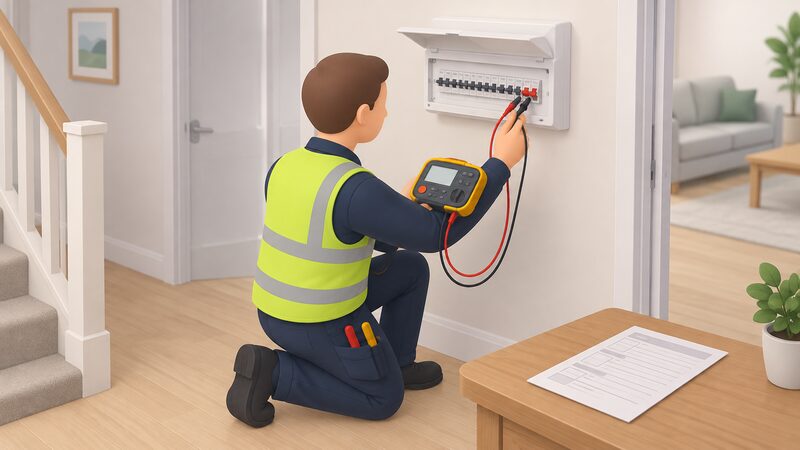
What competent person schemes like NICEIC cover
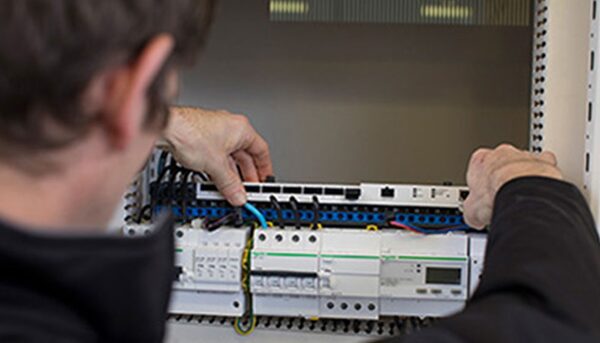
A competent person scheme is a way for tradespeople to prove their ability to carry out certain work to required standards, instead of the householder applying for building regulations approval4. The practical effect is that the installer takes on the notification and certification duty, and the householder receives the paperwork.
The schemes cover a defined set of work. Consumer unit installation must either be carried out by a qualified and competent person registered on a competent person scheme, or be inspected and approved by Local Authority Building Control in England and Wales21. Electric vehicle charger installation works the same way: electricians registered on a Competent Person Scheme like NICEIC's are deemed competent to self-certify their own work, saving householders time and money22. Wiring a shed is another job where a registered electrician certified with a recognised body like NICEIC is the expected route23.
The schemes are run by several bodies, and the government lists examples including NAPIT, ELECSA and NICEIC24. Checking registration is straightforward: the Competent Persons Register exists for checking whether an electrician is registered, and registered electricians can also be found through electricalcompetentperson.co.uk25. NAPIT publishes consumer advice for householders using its registered installers18.
Businesses, not individuals: who actually gets certified
This is the point most householders get wrong. NICEIC certifies businesses, not individuals, unless they are a sole trader8. When a householder checks a registration, the registration belongs to a company, and the named electrician on site may be an employee of that company rather than the certificate holder.
NICEIC describes itself as the UK's largest certification body for electrical businesses, with over 40,000 currently certified8. It assesses, certifies and trains electricians, plumbers, renewable energy installers, and gas and heating engineers, so the register is broader than domestic electrical contracting8. A business found through the NICEIC Find a Trusted Tradesperson tool is NICEIC-registered, and the tool allows users to find an electrical business nearby or check whether an electrician is registered9.
The protections attached to registration sit with the business too. A NICEIC-registered business has comprehensive insurance to protect the householder and property in the event of accidental damage or injury, and the business is assessed annually by an experienced NICEIC assessor to ensure it meets quality and technical requirements9. Those are business-level assurances, which is why the check matters before work starts rather than after.
For a household, the practical consequence is that the question to ask is not "are you qualified?" but "which scheme is your business registered with, and can I check it?" The registration number, the scheme and the business name are the three things that make the check possible.
MCS certification for renewable technologies: solar PV, heat pumps and storage
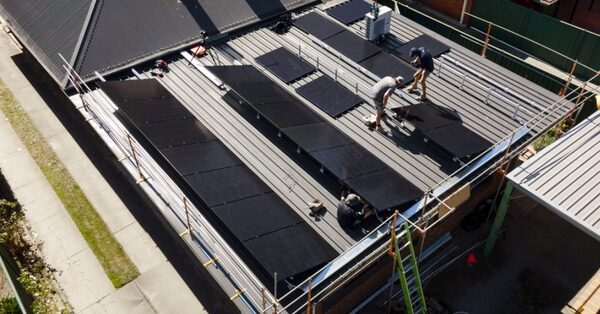
Renewable installations sit under a different certification from Part P work, and the scheme that matters most is MCS. Certification on the scheme shows a chosen contractor is competent to install and maintain low carbon technologies like heat pumps and solar panels28. MCS certification covers solar panels, heat pumps and small wind turbines10.
The certification is not optional where public money or export payments are involved. Boiler Upgrade Scheme installers must be MCS certified and be certified to install heat pumps and/or biomass boilers6. For the Smart Export Guarantee, solar PV, wind and micro-CHP installations up to 50kW require a Microgeneration Certification Scheme certificate or equivalent7. The Domestic Renewable Heat Incentive required the eligible renewable technology to be installed and commissioned by an MCS certified installer who can provide an MCS certificate29. Legislation for eligible installations of 50 kilowatts or less generating from combined heat and power, solar photovoltaic or wind requires the installation to be certified under MCS or an Equivalent Scheme and installed by an MCS or equivalent installer30.
Public procurement rules show the same pattern. A Welsh solar panel installation scheme specification states that solar photovoltaic systems should only be installed and certified by MCS certified contractors working to the latest published MIS3002 standards31. Independent guidance is blunt about the consequence: solar panels should be installed by MCS-certified professionals, which ensures compliance with UK standards and eligibility for schemes like the Smart Export Guarantee, and an installer who is not MCS-certified cannot offer access to those financial benefits32.
For a household, MCS certification is the gate to the money, not a mark of quality in the abstract. It also determines whether the installation can be registered for export payments at all.
How NICEIC assesses registered businesses each year
NICEIC-registered electricians are assessed on an annual basis, and their business is assessed annually by an experienced NICEIC assessor to ensure they meet stringent quality and technical requirements9. The assessment is of the business, which follows from the fact that the certificate is held by the business.
The annual cycle is the reason a registration can lapse quietly. A firm that was registered when a job was quoted may not be registered when the job is done, and the check is worth repeating at the point of signing rather than relying on an earlier conversation. NICEIC-registered electricians are also regularly assessed by NICEIC assessors, and any electrician chosen through the NICEIC process is NICEIC-registered33.
The scheme's scope has changed over time, and one change matters to households buying energy efficiency work. PAS 2030:2019 is the industry specification linked to the PAS 2035 guidelines, and it is the standard to which all energy efficiency installers must be certified and compliant34. NICEIC no longer offers certification for PAS 2030 from 31 March 2026, so a business presenting NICEIC PAS 2030 approval is describing a scheme the body has stopped running34.
What this means for a household's energy independence
Certification is the mechanism that lets a household add generation and storage without taking on the legal and safety burden itself. A registered competent person self-certifies the notifiable work and provides the certificate; an MCS-certified installer provides the certificate that unlocks grant and export payments4. Without those certificates, the installation may still work, but the household carries the compliance risk and loses access to the payments.
The dependence that remains is real. The registration belongs to a business, not to a person, so the assurance is only as durable as the company8. The annual assessment cycle means a registration can lapse between quote and completion9. MCS certification is a condition of scheme eligibility rather than a guarantee of performance, and the grant and export routes each have their own installer requirements6. A household that wants the certificates, the payments and the notification handled should check the business registration, the scheme and the certificate type before work starts, and keep the certificates afterwards.

Sources34 cited
- Before you get building work done, Citizens Advice, 2026-09-20
- 5 questions to ask your electrician, Electrical Safety First, 2026-09-19
- Choosing a registered electrician, Electrical Safety First, 2026-09-19
- Use a competent person scheme, GOV.UK, 2026-09-17
- Electrical safety, Cumberland Council, 2026-09-17
- Boiler Upgrade Scheme guidance for installers, Ofgem, 2026-07-02
- Smart Export Guarantee Annual Report Year 5, Ofgem, 2025-12
- Householders and landlords help hub, NICEIC, 2026-09-17
- Everything you need to know about choosing an electrician, NICEIC, 2025-11-21
- STRON Renewables: the next generation of heat pump installers, MCS Certified, 2026-08-20
- Building Regulations general information, Planning Portal, 2026
- Part P electrical safety, Planning Portal, 2013-01
- Approved Document P, Planning Portal, 2013-01
- Building Regulations: electrics, Welsh Government, 2026-09-17
- Building Standards technical handbook 2020: domestic, electrical safety, Scottish Government, 2020-12-02
- Rewiring your house, NICEIC, 2026-09-17
- Installing solar and saving energy, Energy Saving Trust, 2025-04-03
- Consumer advice, NAPIT, 2026-09-17
- Amended Part P electrical safety, Wigan Council, 2004-12
- Solar panels, Wirral Council, 2026-09-17
- Consumer units and fuse boxes, NICEIC, 2025-09
- Electric vehicle charger installation and maintenance, NICEIC, 2025-08
- Wiring a shed, NICEIC, 2026-09-17
- Installing solar panels at your home, Brighton and Hove City Council, 2026-09-17
- Application guidance notes, London Borough of Bromley, 2026-09-17
- Don't die for DIY, Electrical Safety First, 2026-09-19
- How to work with your tradesperson, NICEIC, 2026-09-17
- How heat pumps work: a guide for homeowners, NICEIC, 2025-09-17
- Domestic Renewable Heat Incentive applicants, Ofgem, 2026
- Draft licence conditions, Department for Business, Energy and Industrial Strategy, 2026-09-17
- Barcud Solar Panel Installation Scheme Specification, Sell2Wales, 2026-06-15
- Can solar panels charge electric cars?, The CPA, 2026-04-15
- How to check if an electrician is NICEIC registered, NICEIC, 2026-06-19
- PAS 2030 and the energy efficiency standards, House of Commons Environmental Audit Committee, 2026-09-20
 Competent Person SchemesIf a tradesperson says they can sign off their own work, how do you know they are genuinely registered?
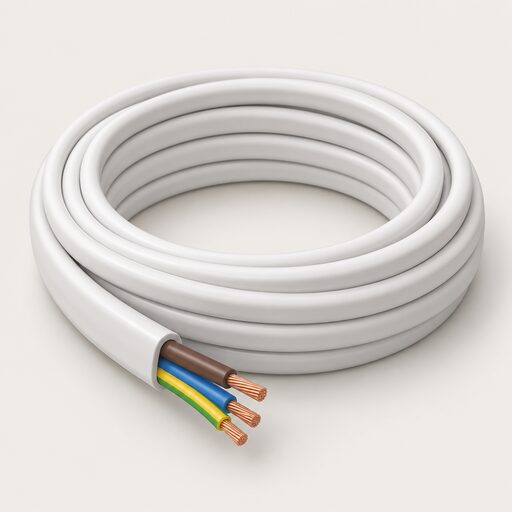 Electrical Safety RegulationElectrical work at home raises real questions about who can do it, what needs signing off, and what paperwork you should keep.
 DIY or ProfessionalLoft insulation and draught-proofing are jobs most people can tackle, but anything electrical near a kitchen, bathroom or outdoors needs a registered electrician.
 Certificates You Should ReceiveAfter work like solar panels or a new boiler, what paperwork should you actually be handed, and by when?
 Gas Safety RulesAnyone working on gas in your home has to be on the Gas Safe Register, whether they are installing, fixing or servicing an appliance.
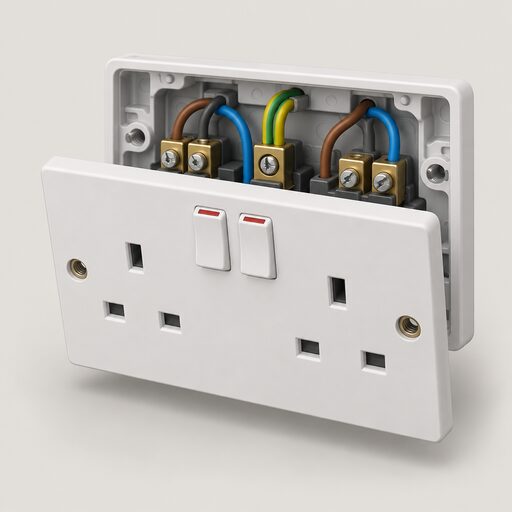 Arrange an Electrical InspectionHow to find and check a registered electrician, what an Electrical Installation Condition Report covers and the intervals usually recommended for owner-occupied homes.