

In this answer
Short answer
The supplier at a new home is not chosen by the person moving in. When you move in, whoever supplied energy to the previous owners automatically becomes your supplier, and the same is true of a newly built home, which will already be connected to a supplier when you arrive1. Nothing is signed and nothing is agreed: the supply simply continues, and a deemed contract begins.
A deemed contract is normally in place when a customer moves to new premises and starts to consume gas or electricity, or both, without agreeing a contract with a supplier3. It will be on that supplier's default or standard variable tariff4. That is the position until a tariff is agreed or a switch completes.
Finding the name is usually straightforward. For an existing home, the previous inhabitants, the estate agent or the landlord can say who supplies it2. For a new build, the developer or house-building company will know2. Where none of those is available, the Find My Supplier service identifies the gas supplier from a postcode alone, and the electricity network operator holds the record for who supplies electricity to the address5.
Who supplies a new home: how to find out
The starting point is the address, not the account. Energy supply attaches to a meter point, so the question is which company holds that meter point, and there are three reliable routes to the answer.
For an existing home, the previous inhabitants, your estate agent or your landlord can tell you2. For a newly built home, the developer or house-building company will be able to tell you who supplies the gas and electricity2. Where those routes fail, the Find My Supplier service requires only a postcode to identify your gas supplier, and your energy network operator can confirm who supplies electricity to the property5. The Energy Ombudsman points households to the Energy Networks Association website to find out who the network provider is6.
It is worth separating two different companies that both get called "the supplier". The gas supplier is the company a customer buys energy from and pays9. The network operator is the company that owns the pipes or wires and moves the energy; it is not who you pay for the units you use. A household that confuses the two will ring the wrong organisation and get no further forward.
In Northern Ireland the advice landscape differs. The NI Energy Advice Service is funded by the Department for Communities and delivered by the Housing Executive10. Households there sit in a separate market with its own suppliers and its own arrangements, so a lookup route built around Great Britain's network operators does not map cleanly onto it.
A letter addressed to "The Occupier" will probably arrive from the energy supplier soon after you move in5. That letter is often the first confirmation of the supplier's identity, and it usually arrives before any bill.
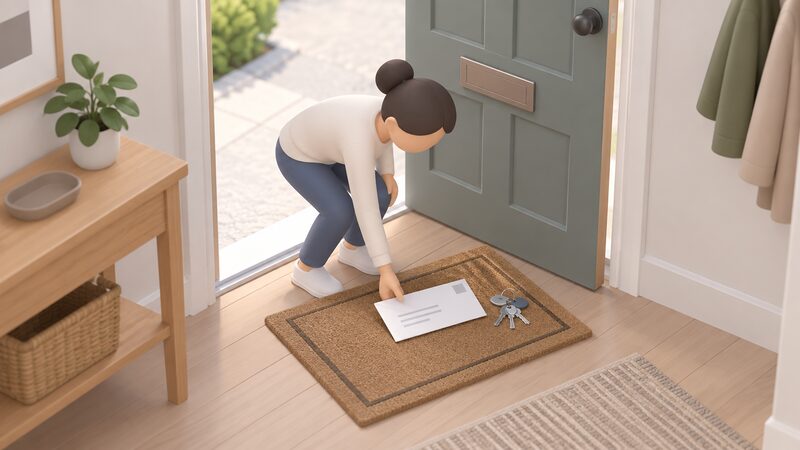
The developer or housebuilder is the source for a newly built home

A newly built home is already connected to a supplier when you arrive2. The developer or house-building company will be able to tell you who supplies the gas and electricity to it2, and that is the single most direct answer available to a buyer of a new property.
New builds also carry generation and efficiency obligations that affect what a household inherits. The system for renewable electricity generation should be designed so that generated electricity is available to residents of the dwellings11. Approved Document L puts it in similar terms: on-site renewable electricity generation systems should be designed to enable generated electricity to be available for the use of residents of the dwellings12. In other words, where a development has generation, the design requirement is that residents can actually use the output rather than it being absorbed elsewhere.
The energy efficiency characteristics of new dwellings are published as Official Statistics in Development, which means the figures carry a development status rather than being final13. That matters when comparing a new build's modelled performance with what a household experiences in the first winter.
For a household's independence, a new build with on-site generation and a modern connection starts from a better position than an older property, but the dependence remains: the home is still connected to the grid, still supplied by a licensed company, and still billed by whoever holds the meter point. Self-generation reduces the units bought; it does not remove the supplier.
Finding the supplier of an existing home: the main routes
Three routes cover almost every case, and they can be worked in order.
- Ask the previous inhabitants, the estate agent or the landlord2.
- Use the Find My Supplier service, which needs only a postcode, to identify the gas supplier5.
- Ask the electricity network operator, identified through the Energy Networks Association website, who supplies electricity to the address6.
Where gas and electricity come from different companies, the sequence matters. If you have different suppliers for gas and electricity, contact your electricity supplier first14. That is the order the guidance sets out, and it avoids two accounts being opened in the wrong sequence.
Once the supplier is known, the practical steps are the same for a new build and an existing home: identify your energy supplier, notify your energy supplier that you have moved in, and submit meter readings regularly2. The Energy Saving Trust's moving checklist adds finding your meter and getting a reading, looking into whether to switch, bleeding radiators, learning how to control the heating, and choosing energy efficient appliances1.
There is a wider advice structure behind this. Energy supply companies are obliged to provide advice on the efficient use of energy in the home to anyone requesting it15. The Home Energy Advice service on GOV.UK is intended as a single-entry point for consumer home energy advice, helping homeowners, landlords and tenants find tailored, impartial and trusted advice on how to heat their homes and make them more energy efficient16. Which? runs a home energy planning service, powered by Snugg, for personalised advice17.
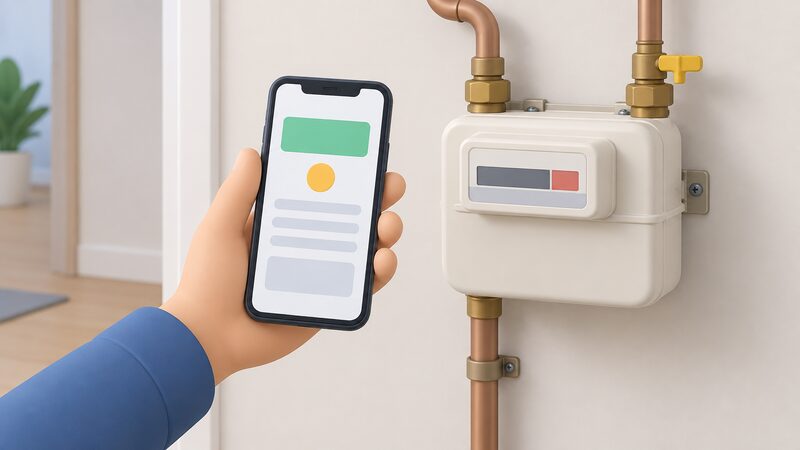
What to do once you know the supplier
The first action is contact. Tell the supplier you have moved in and give the initial meter reading from the day you moved in1. Suppliers are obliged to provide advice on the efficient use of energy in the home to anyone requesting it, so the same call can cover how the account will be billed and what the property's usage looks like15.
The second is to decide about the tariff. If you pay a supplier directly for the electricity or gas you use at home, you can choose to switch to a different supplier or tariff at any time7. Switching can begin as soon as you become responsible for the property, which for a purchase is after exchange of contracts2. A household that stays put remains on the deemed contract's default or standard variable tariff4.
The third is to keep evidence. Take meter readings and photographs at the point of moving in, because a supplier will pay back extra charges if you can prove when you moved in4. That protection depends entirely on the household being able to show the date and the reading.
Where the property is supplied through a business contract rather than a domestic one, the checks are different. Before moving to a home supplied through a business contract, it is worth checking who holds the energy contract, how energy charges are calculated, how much residents typically pay, whether charges are metered or estimated, whether you can choose your supplier or tariff, and whether it is possible to switch to a domestic contract18. Homes on communal or district heating arrangements commonly sit in this category, and the ability to choose a supplier may not exist at all.
Meter details that affect your setup
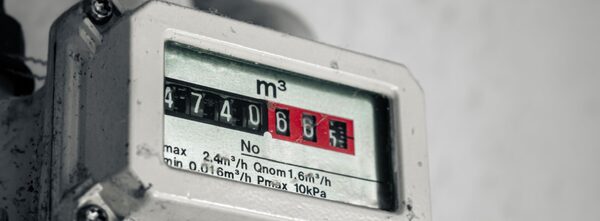
The meter point is the fixed part of the arrangement. The MPRN is the gas meter point reference number and can usually be found on your gas bill, or by searching the Find My Supplier service9. The electricity equivalent, the MPAN, sits with the electricity network operator's records. Both identify the meter point rather than the person, so they stay with the property when occupiers change, which is precisely why they are the reliable way to describe an address to a supplier.
Meter readings are the household's responsibility at the point of moving, and the supplier's thereafter. Your new supplier is responsible for taking a meter reading when you switch, and for all future meter readings at your property after the energy switch takes place19. Giving the initial reading from the day you moved in is what separates the previous occupier's usage from yours1.
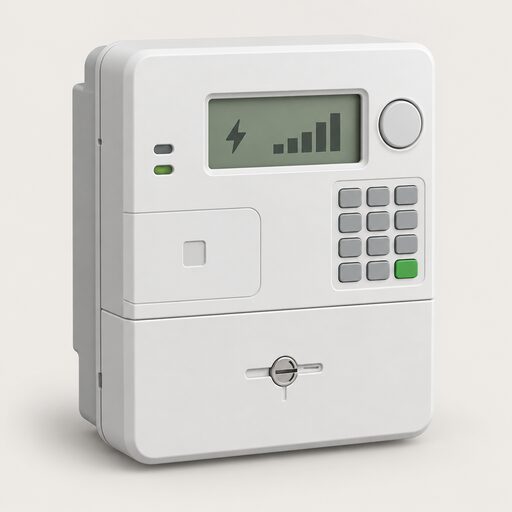
Smart meters change the mechanics but not the ownership question. Smart meters and the in-home display will be provided and fitted by your energy supplier20. It will always be your energy supplier or a third party working on its behalf that comes to the house to change the meter21. In a rented home, there might be rules in the contract about how energy is supplied, including the type of meter that can be installed22.
| Item | What it identifies | Where it is found |
|---|---|---|
| MPRN | Gas meter point | Gas bill, or the Find My Supplier service9 |
| MPAN | Electricity meter point | Electricity network operator's records |
| Initial reading | Usage from the day you moved in | The meter itself, on moving day1 |
| Smart meter | Metering and display | Provided and fitted by the supplier20 |
Suppliers who ceased trading: what it means for you
A supplier failure does not interrupt supply. If your energy supplier goes out of business because of financial problems, you will still have electricity and gas supplied to your home or business, and your energy supply will not be cut off8. You do not need to do anything: Ofgem automatically moves customers to a new supplier and makes sure supply is not interrupted7.
The replacement is chosen under the supplier of last resort process. A supplier will only be chosen if it can supply energy to the new customers without affecting existing customers, and the criteria include the type of energy originally supplied and who it was supplied to, the ability to arrange extra energy sources, and the ability to take on new customers8.
For a household moving into a property whose former supplier has failed, the practical position is that a new supplier has already been appointed and the deemed contract runs with that company. The Energy Ombudsman is not accepting any new disputes about Orbit Energy, Entice Energy, Yorkshire Energy and Tonik Energy following their ceasing to trade23. Consumer Energy Solutions ceased trading, as confirmed in a Welsh Government written statement24.
Where a household is struggling with the resulting account, suppliers can agree a payment plan, payment break or reduction, and can review current payments and debt repayments25. Energy supplier schemes and grants fund making energy-saving improvements to your home25. Complaints about late, incorrect or missing bills, back billing, being overcharged, a faulty meter, poor customer service, or a refusal to refund credit go to the supplier first26, and the Energy Ombudsman can be contacted if the handling of that complaint is unsatisfactory26.
"A deemed contract is normally in place when a customer moves to new premises and starts to consume gas or electricity, or both, without agreeing a contract with a supplier"
Sources26 cited
- Moving house energy checklist, Energy Saving Trust, 2026-05-01
- A step by step guide to setting up gas and electricity in a new home, Energy Helpline, 2026-09-20
- Deemed contracts and rates, Energy Ombudsman, 2026-09-20
- Moving home: dealing with your energy supply, Citizens Advice, 2026-09-20
- Who supplies my electricity and gas?, Uswitch, 2026-06-29
- Network operators, Energy Ombudsman, 2026-09-20
- Switch your home energy supplier, Ofgem, 2026
- What happens if your energy supplier goes out of business, Ofgem, 2026
- Gas connections FAQs and guidance, Northern Gas Networks, 2025-10-30
- Energy, Northern Ireland Housing Executive, 2026-09-17
- Approved Document L: energy and greenhouse gas emissions FAQs, GOV.UK, 2026-09-08
- Approved Document L Volume 1: Dwellings, GOV.UK, 2026
- Energy efficiency characteristics of new dwellings, GOV.UK, 2026-02-04
- How to get a smart meter, Smart Energy GB, 2026-08-03
- Energy consumer rights, Uswitch, 2025-08-19
- Reforming consumer protection for home upgrade schemes, GOV.UK, 2026-06-17
- Use our home energy planning service, Which?, 2026-06-18
- If you live in a home with a business energy contract, Ofgem, 2026
- Energy your questions answered, Confused.com, 2026-07-03
- What is a smart meter?, Smart Energy GB, 2026-08-10
- Do I have to accept a smart meter?, Which?, 2026-05-12
- Help me decide, Smart Energy GB, 2026-03-16
- Scottish Power, Energy Ombudsman, 2026-09-19
- Written statement: support for householders impacted by the closure of Consumer Energy Solutions, Welsh Government, 2026-03-13
- Get help with your energy bills, Ofgem, 2026-09-17
- Complain about your energy supplier or network operator, Ofgem, 2026
 The Full Energy Suppliers GuideWho the UK's domestic gas and electricity suppliers are, how the market is structured across Great Britain and Northern Ireland, what a supplier is licensed and obliged to do, how the price cap limits bills, what happens when a supplier fails, and who regulates it all.
 Moving Home Energy AccountsMoving home means you get a new energy supplier whether you choose one or not, so who supplies your new place and what happens to your old account?
 Who Owns Your Home Energy DataYour smart meter records how much gas and electricity you use, and that information belongs to you, not your supplier.
 Reading an Energy BillA line-by-line walk through a domestic gas and electricity bill: unit rate, standing charge, kWh consumption, meter readings, tariff name and balance, plus the 12-month back billing limit and the guaranteed standards payments that apply when a supplier or network operator gets it wrong.
 Who Supplies Your Energy?Not sure who bills you for gas or electricity?
 The Full Installers GuideHow do you find an installer you can trust, and what should you check before signing anything?