
In this answer
Short answer
Whether a property has a live gas supply is settled by three things: a meter that is physically present and connected, a Meter Point Reference Number (MPRN) registered to that address, and confirmation from the gas network that the supply point is live. The gas network SGN offers a free live or dead check for exactly this purpose, which tells a householder whether a supply exists before anyone commits to a connection or a reconnection1.
The MPRN is the identifier for the gas meter point, and it appears on the gas bill and on the meter itself, sometimes as an M number2. If you can read an MPRN off a bill or a meter, the property has a registered gas supply point. If there is no meter and no MPRN, the property is either not connected or has been disconnected, and the route back is a reconnection or a new connection rather than a supplier switch.
The practical sequence is to check the meter, check the MPRN, then ask the network. A property with a live supply carries obligations as well as convenience: in rented accommodation, a gas safety check must be carried out where there is a live gas supply to the premises, irrespective of whether the tenant uses gas, and access should be allowed for it4.
Ways to tell whether a gas supply is live: meter, appliances and the MPRN
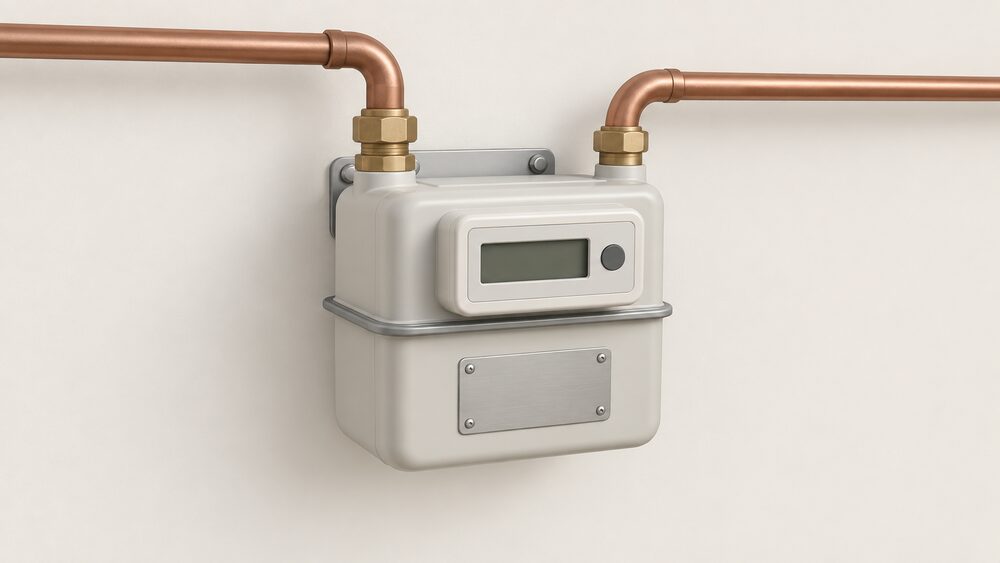
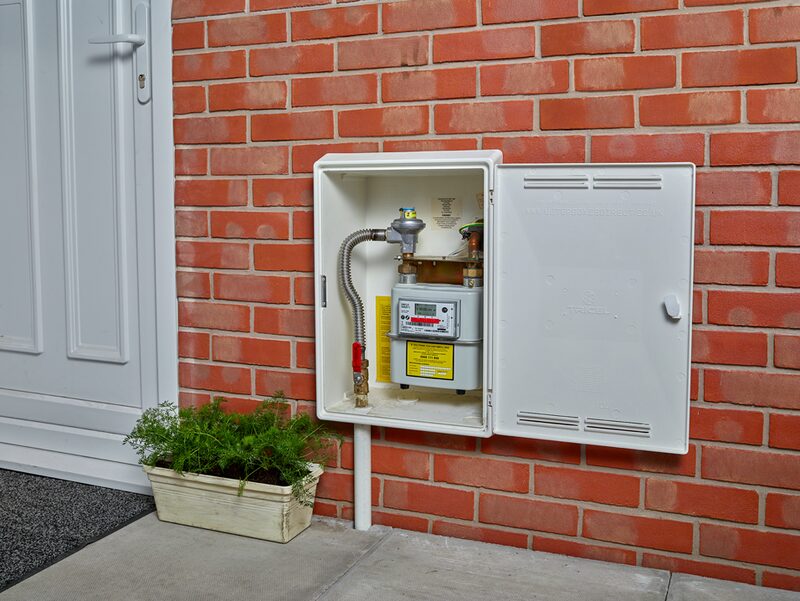
The first check is physical. A gas meter on the wall, with pipework running to it from the street and out to appliances, is the clearest sign of a supply point. The meter carries the MPRN, and so does the bill, which is why the two can be matched against each other2. In a block of flats with communal meters, the MPRN is the way to tie a particular gas meter to a particular bill, in the same way the MPAN identifies an electricity meter point10.
The second check is administrative. The Find My Supplier service can be used to discover who supplies your gas, as well as your MPRN number and gas transporter11. The same website is described as the quickest way to find out your gas supplier, and the MPRN can be found on your gas bill or through that search tool12. A dual fuel bill will show spending on both gas and electricity, which confirms a gas supply point is registered to the address14.
The third check is the network's own record. SGN's free live or dead check exists because a householder cannot always tell from the fabric of a building whether the supply is live, particularly after a period of vacancy or a change of tenancy1. Where a supply is live, the safety obligations follow it: the Health and Safety Executive states that if there is a live gas supply to rented premises a safety check will need to be carried out irrespective of whether a tenant uses gas4.
Who to contact: the network, the supplier and the emergency number
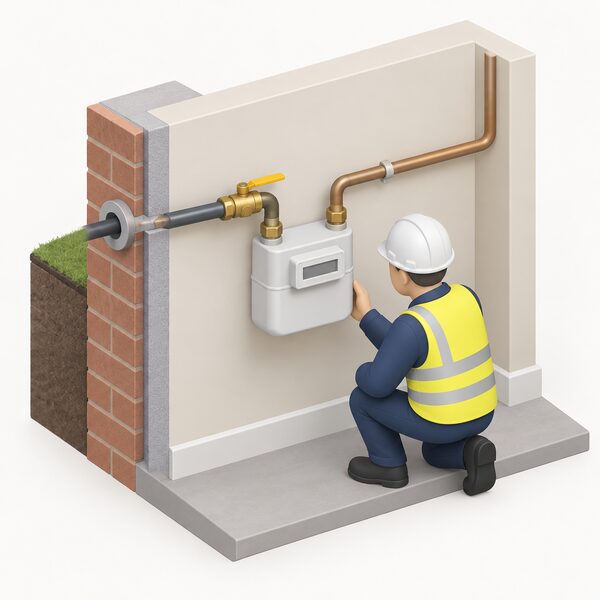
Three different organisations sit behind a domestic gas supply, and knowing which one to call saves time. The gas network owns and maintains the pipes in the street and up to the meter; the supplier owns the gas, installs and maintains the meter, and sends the bills15. The emergency line is separate again.
For a supply question, the network is the right first contact. SGN offers help with a new gas connection to a property, moving a meter or existing gas pipes, and disconnection from the gas network, and a household can apply online to get a quote for a new household gas connection, alteration or disconnection1. For anything to do with the meter itself, the supplier is responsible for your meter and any faults16.
If you smell gas, call 0800 111 999 immediately18. The National Gas Emergency Service number is staffed at any time of the day or night7. Northern Gas Networks describes its role as providing the region's 24/7 gas emergency service8. Any gas network or the Network Emergency Coordinator can declare a Gas Supply Emergency, and in that situation customers must give accurate emergency contact details to their gas supplier, keep those details up to date, and be ready to stop using gas as soon as asked20.
No meter or a removed meter: what reconnection involves and what it costs
A property with no meter is not necessarily without a supply. The pipe may still run to the wall, in which case the job is a reconnection rather than a new connection. Northern Gas Networks offers partial or full meter reconnection services for an additional charge of £40 to £231, depending on the length of the new pipe5. That is a network charge for the pipework, not the whole cost of restoring supply.
A full reconnection moves the meter to the new position and reconnects it to gas appliances, and is only available when there is no more than 2 metres of outlet copper pipework required to connect the meter to the appliances19. Where a meter is being changed because of a change to or from a semi-concealed meter box, the household needs to contact the gas supplier to arrange those reconnection works18. After an alteration is complete, an Ofgem Approved Meter Installer visits to connect the meter back to the service pipe, the internal pipework and the appliances so the gas can be used again18.
Two conditions matter over the longer term. The gas distribution network operator will not disconnect pipes and equipment until the gas meter has been safely removed by the energy supplier9. And if a new gas meter is not fitted within 12 months, the gas distribution network operator will contact the property owner; one network adds that it may assess whether the pipe itself should come out too9.
New connection to the network: price, timescale and what affects both
A standard new gas connection typically takes 6 to 8 weeks from the point payment is made to the work being completed6. One network gives a different figure, within 6 weeks of payment, so the two documents disagree and the timescale should be treated as indicative rather than fixed6.
Cost is determined by the type of property being connected, the position of the nearest viable main and how much pipework is required19. There is no published national price, because the quotation depends on the distance from the main and the nature of the ground. Where a property is not connected to gas or electricity mains, the household has to request a connection from a gas transporter or distribution network operator, and there will be a charge13. Applications are made online to get a quote17.
The timescale and the price move together. A property close to a viable main with a short service pipe is a smaller job than one at the end of a lane, and the trench, the pipe and the reinstatement all scale with distance. The service pipe runs from the meter to the gas main in the street, and one network flags that a service pipe of 3 inches in diameter or more requires particular attention at the application stage24.
Digging and building near gas pipes: what the law and the network require
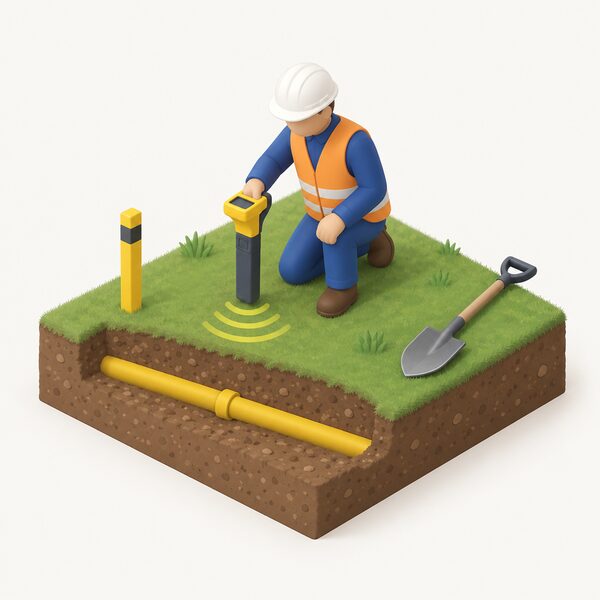
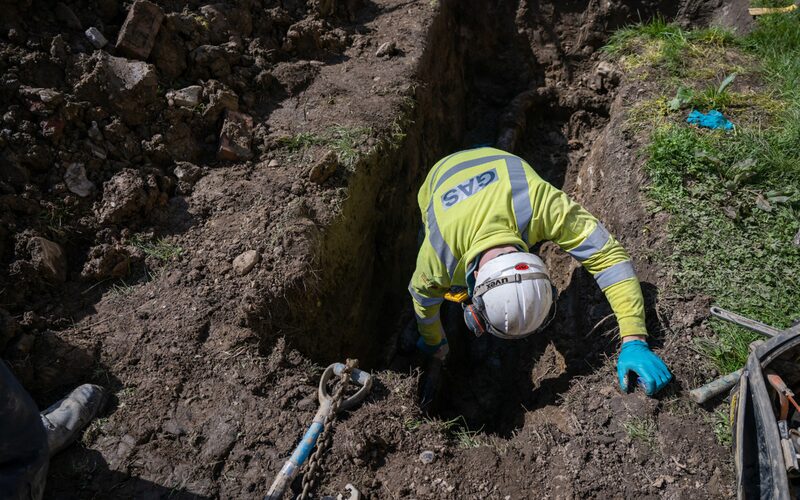
Anyone digging or building near a gas pipe needs to check for its location first. It is a legal requirement, and damaging a live pipe is a criminal offence22. The legal basis cited for checking before excavating near the gas network is the Health and Safety at Work Act 1974 and the Pipeline Safety Regulations 1996, with employers also having obligations under the CDM Regulations 201525. Landowners, contractors, third party utilities and residents planning any work near pipelines must follow safe digging practice26.
Networks manage the risk to surrounding properties during works. SGN carries out tests on its network to check the maximum lengths of pipe that can be disconnected at any one time, which limits how many sections are off supply simultaneously27. If building works have already taken place and the location of the gas pipe or meter may have been compromised, the network will need to come out and check to ensure there are no safety issues28.
There is also a statutory limit on disconnection for debt. A creditor or agent must not take steps to disconnect a debtor's premises from a supply of gas unless the debtor had taken the supply illegally, during a moratorium period29.
Where the network ends and your supplier begins: who does what
The boundary is the meter. The gas network transports the gas and maintains the pipes; the gas supplier is responsible for the installation and maintenance of your gas meter, owns the gas that is transported through the network, and sends the bills15. SGN states the same division plainly: your gas supplier is responsible for the maintenance of your gas meter and for sending you bills for the gas you use30.
That split matters when something goes wrong. A fault at the meter is a supplier matter; a fault in the street, or a loss of supply to the property, is a network matter. A smart meter in the home adds a display that updates in near real time for electricity and every half hour for gas, which gives a householder a live view of consumption but does not change who owns what31.
Supplier failure does not interrupt the physical supply. If an energy supplier goes out of business because of financial problems, electricity and gas are still supplied to the home and the supply will not be cut off32. The same point is made independently: if a supplier goes under or is bought by another firm, gas and electricity will not be cut off33.
For a household, the independence question is narrow. A live gas supply means dependence on the network for delivery, on a supplier for billing and metering, and on imported and domestic gas for the molecule itself. What a household controls is the meter point, the tariff and the consumption behind it; time-of-use tariffs alter the price of gas and electricity depending on the time they are used, which shifts some of that control back to the household34. The rest sits with the network and the supplier.
Sources34 cited
- Household gas connections, SGN, 2026
- Gas meters and electricity meters: what you need to know, Which?, 2026-01-16
- Energy back billing, Confused.com, 2026-07-06
- Gas safety in the home: FAQs, Health and Safety Executive, 2026
- How to move your gas or electricity meter, Uswitch, 2026-09-04
- Gas connections, Wales & West Utilities, 2026-09-20
- How to detect a gas leak, Cadent Gas, 2026-09-20
- Take no chances with gas safety, Northern Gas Networks, 2026-09-14
- Disconnecting from the gas network, IGEM, 2026-09-20
- How to read your gas and electricity meter, Confused.com, 2025-12-15
- Who supplies my electricity and gas?, Uswitch, 2026-06-29
- Who is my gas and electricity supplier?, Confused.com, 2026-07-03
- Moving house gas and electricity guide, Uswitch, 2026-08-26
- Dual fuel or single fuel tariffs, Energy Helpline, 2026-09-20
- What to expect, Northern Gas Networks, 2026-09-04
- Meter exchange, SGN, 2026
- Connections FAQ, SGN, 2026-09-17
- Make changes: FAQs and guidance, Northern Gas Networks, 2025-10-30
- Disconnect: FAQs and guidance, Northern Gas Networks, 2025-10-30
- Gas supply emergencies, Cadent Gas, 2026-09-20
- How do I know that the engineer at my property works for Northern Gas Networks?, Northern Gas Networks, 2026-01-14
- Disconnect your gas supply, Wales & West Utilities, 2026-09-20
- Installing, altering and disconnecting gas services: preventing illegal connections.pdf), Energy Networks Association, 2026-09-17
- Apply now, Northern Gas Networks, 2026-09-17
- Dial Before You Dig, Wales & West Utilities, 2026-09-20
- Ensuring a safe hydrogen gas network, SGN, 2026
- Upgrade work FAQs, SGN, 2026
- Building regulations, Cadent Gas, 2026-09-20
- The Gas Act 1986 (Gas Supply Disconnection) Regulations 2020, regulation 7, legislation.gov.uk, 2026-09-17
- Gas and carbon monoxide safety, Electricity North West, 2026-09-19
- What is a smart meter?, Smart Energy GB, 2026-08-10
- What happens if your energy supplier goes out of business, Ofgem, 2026
- Which? energy survey results, Which?, 2026-01-19
- Types of energy tariff, Confused.com, 2025-11-03
 Who Supplies Your Energy?Not sure who bills you for gas or electricity?
 Gas Safety in the HomeYour landlord has to arrange a yearly gas safety check by a Gas Safe registered engineer and give you the record if you rent.
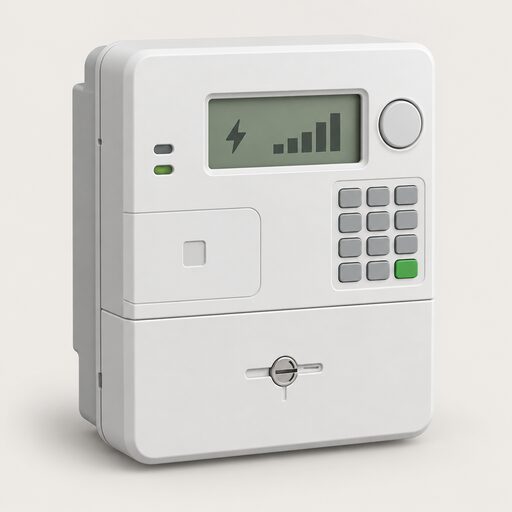 Who Owns Your Home Energy DataYour smart meter records how much gas and electricity you use, and that information belongs to you, not your supplier.
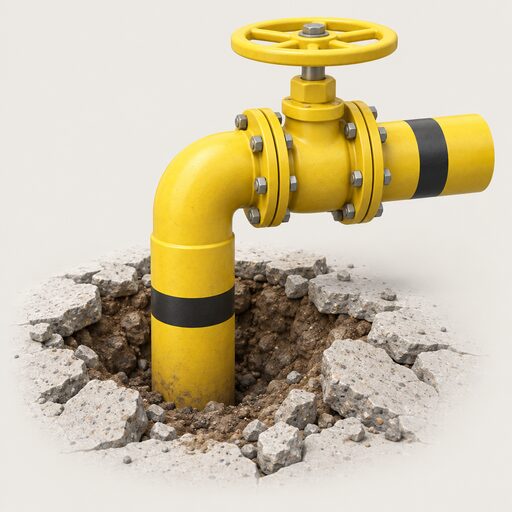 Gas Distribution NetworksWho actually owns the pipes under your street, and who do you call when gas smells or the supply fails?
 Meters and Energy IndependenceDo smart meters really save you money, and can you still get one fitted for free?
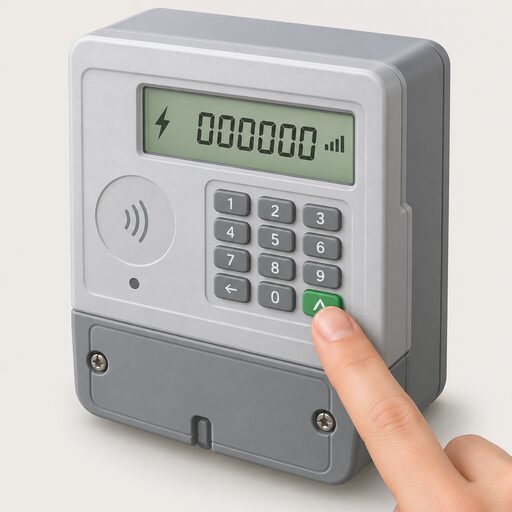 Get a Reading From a Smart MeterHow to bring up a meter reading on a smart electricity or gas meter when a manual reading is still needed, and the difference between the meter itself and the in-home display.