
In this answer
Short answer
A request to stop using gas is a legal instruction issued by the gas distribution network during a gas supply emergency. It is not a suggestion, a tariff nudge or a marketing letter. The network states plainly that you must stop using gas as soon as you are told to do so, and that you are legally required to do this1. Ignoring it is a criminal offence, and the network says this could lead to prosecution by the Health and Safety Executive, with your supplier also notified of your failure to cooperate1.
The practical consequence is that the supply can be turned off. Network operators hold the equipment at the meter and can act on it, and a supply that has been shut off cannot simply be switched back on by the householder. Restoration has to be carried out by an appropriately qualified person2. That is the whole shape of the answer: a legal duty on the household, a criminal sanction for refusing, and a physical intervention that leaves the property without gas until qualified work is done.
What follows sets out who issues the request, what happens if it is ignored, how a turned-off supply is restored and at whose cost, who to contact, and where the network operator's responsibility stops. It also covers the wider safety net that makes the instruction enforceable, including the position of heat networks, where consumer protections differ from those on the gas grid.
What a request to stop using gas is, and who issues it
A request to stop using gas comes from the gas distribution network that owns the pipes in your street, not from your energy supplier and not from the government. During a gas supply emergency, the network instructs households to stop using gas so that pressure and supply can be managed across the system. The instruction is issued under the emergency arrangements that govern the network, and it applies to every gas user in the affected area.
The duty on the household is set out in three parts. You must give accurate emergency contact details to your gas supplier, you must make sure those details are kept up to date, and you must be ready to stop using gas as soon as the network asks you to1. The first two exist so that the third can actually reach you. A household that has never given a current phone number cannot be warned, and the network treats that as a failure on the customer's side.
It is worth separating a genuine emergency instruction from an exercise. Networks test their emergency procedures, and Cadent states that in an exercise it will clearly state that it is an exercise and that you are not actually required to stop using gas1. If a message is ambiguous, the distinction matters: a real instruction carries the legal duty, an exercise does not.
The Gas Safety (Installation and Use) Regulations apply to buildings exempt under the Building Regulations, so a property's exempt status does not remove it from the safety regime6. The instruction reaches the same range of premises.
What happens if you ignore it: safety risks and a supply that can be turned off
Ignoring the request has two consequences running in parallel, one legal and one physical. The legal consequence is that it is a criminal offence to ignore the request, which could lead to prosecution by the Health and Safety Executive, and your supplier will also be notified of your failure to cooperate1. The physical consequence is that the network can act on the supply itself.
The safety logic behind the instruction is not abstract. Where gas is escaping, the responsible person who knows or suspects it must immediately take all reasonable steps to shut off the supply at the necessary place7. That duty sits on the person in control of the premises, and it is the same principle that underpins the network's emergency powers: gas that is not controlled is gas that can accumulate, ignite or asphyxiate.
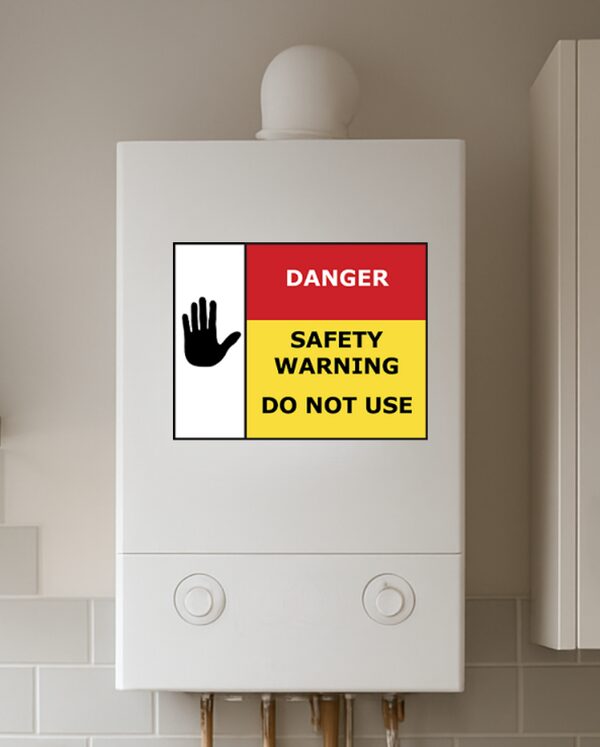
Gas engineers classify unsafe situations on a common scale. Where an appliance or installation is found to be either "at risk" or "immediately dangerous", both carry the same message on the warning label: "Danger Do Not Use"8. The label is a physical instruction attached to the appliance, and it has the same force as a verbal request to stop using gas.
"You must stop using gas as soon as you're told to do so. You're legally required to do this"
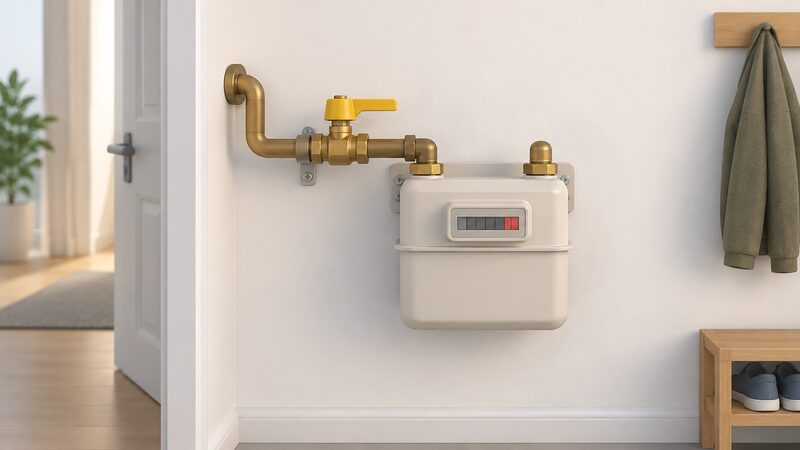
A supply can also be disconnected where it is no longer needed. SGN states that it can disconnect a gas supply if the customer no longer needs it9. That is a different route from an emergency shut-off, but it demonstrates that the network holds the means to end a supply at the meter.
Restoring a turned-off supply: who must do it and what it costs
A gas supply that has been turned off does not come back on at the flick of a handle. Restoration has to be done by an appropriately qualified person2. The guidance is explicit that a householder should not try to turn a gas supply back on again after it has been shut off, and that the work must be carried out by someone qualified to do it10. Attempting it yourself risks leaving gas escaping into a property with no one qualified present to check the installation.
The cost position has two parts. Where gas has been used but not metered or paid for through a gas supplier, the gas distribution network has an obligation to recover the cost of the gas used11. Separately, the cost of any works to rectify a defective gas supply may be passed back to the end user of the affected property11. In other words, a defective supply that has to be put right is not automatically the network's expense.
The consequences of an unmetered or unaccounted supply can be substantial. In a case study published by the Energy Ombudsman, a consumer received a call from the supplier in July 2021 informing them that they owed over £2,000 as they had never set up an account12. That figure is a single case, not a tariff, but it shows the scale a back-billing dispute can reach when a supply has been running without an account behind it.
| Stage | Who acts | What it involves |
|---|---|---|
| Supply turned off | Network or qualified person | Shut off at the emergency control valve or meter2 |
| Restoration | Appropriately qualified person | Must not be attempted by the householder10 |
| Appliance or pipework repair | Gas Safe Registered engineer | Further repairs after an emergency3 |
| Unmetered gas recovery | Gas distribution network | Network has an obligation to recover the cost of gas used11 |
Who to contact: Northern Gas Networks, the emergency line and your supplier
The contact route depends on what has happened. For a suspected leak or an emergency, the national gas emergency number is 0800 111 999, and it should be called immediately3. Northern Gas Networks also directs people to the gas emergency line on 0800 111 9992. The number is free and operates around the clock.
For everything that is not an emergency, Northern Gas Networks takes non-emergency calls on 0800 040 7766 through its customer care team4. That line covers enquiries, connections and general network questions. Using it for a suspected leak would delay the response, and using the emergency line for a routine enquiry takes an engineer away from genuine incidents.
Where a household is unsure whether a supply has been turned off, or is in a situation the network has listed as requiring action, the instruction is the same: contact Northern Gas Networks immediately to arrange for an engineer to safely turn off the gas supply13. That wording appears across the network's guidance for customers who are unsure, for affected customers, for restricted customers and for those in listed scenarios13.
Once an emergency engineer has arrived, the network's commitment is that they will not leave until the situation has been made safe3. That is the point of the visit: not repair, but safety. Further repairs to appliances or pipework may then require a Gas Safe Registered engineer3.
What Northern Gas Networks is responsible for, and where its duty ends
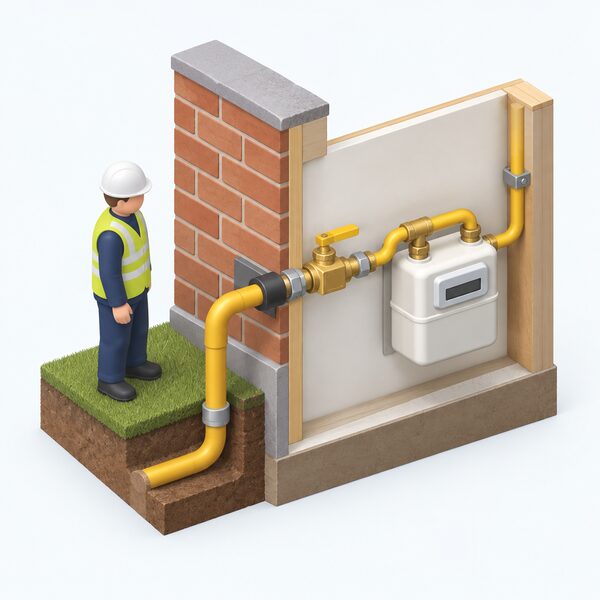
Northern Gas Networks is responsible for the network up to the Emergency Control Valve, which is located just before the gas meter5. Everything upstream of that valve is the network's; everything downstream, including the meter and the pipework inside the home, is not. That boundary explains why the network can turn a supply off but will not repair what sits beyond the valve.
The network's engineers do not repair appliances or pipework inside the home. Their specialist training means they can assess the situation, identify potential hazards and take the right action to make things safe in a gas emergency14. Making safe and repairing are different jobs carried out by different people, and the network is explicit about which one it does.
Northern Gas Networks is also not a gas supplier. It does not supply or install a gas meter, and after a new connection it provides an MPRN once the quotation is accepted, with the household arranging meter installation through its chosen energy supplier5. Asked directly whether it supplies gas meters, the network's answer is that it is not a gas supplier6. Ofgem oversees and approves the prices Northern Gas Networks can charge gas shippers to move gas through its pipes on behalf of gas suppliers15.
| Item | Responsible party |
|---|---|
| Pipes up to the Emergency Control Valve | Northern Gas Networks5 |
| Gas meter and installation | Chosen energy supplier5 |
| Appliances and pipework inside the home | Household, via a Gas Safe Registered engineer14 |
| Price approval for moving gas | Ofgem15 |
Why the network operator cannot simply be ignored: the wider safety net
The instruction to stop using gas sits inside a wider system of duties, and that system is what gives it force. The Gas Safety (Installation and Use) Regulations impose a duty on the responsible person who knows or suspects gas is escaping to take all reasonable steps immediately to shut off the supply7. The network's emergency instruction is the collective version of that individual duty.
The regulatory reach extends to how networks gather information. Ofgem has stated that if voluntary responses are insufficient, it may issue a Request for Information to regulated entities using its powers under Section 34A of the Gas Act 198616. That is the mechanism behind the requirement to keep emergency contact details current: the regulator can compel the information it needs to run an emergency response.
There is also a boundary to the safety net that households should understand. Households that get their heat delivered through a heat network are not covered by the energy regulator Ofgem, and while gas supply to a network is regulated as a commercial supply, heat supply to homes is not17. Most heat network customers are not protected by the price cap, since the supply of gas to heat networks is commonly classed as non-domestic18. Heat network consumers cannot switch suppliers or move to a different tariff, unlike consumers in gas and electricity19. Heat networks are promoted partly as a way of avoiding the need for individual gas boilers20, but the consumer protections attached to them are thinner than those on the gas grid.
Coverage of the gas network itself is not universal. Not all areas of Northern Ireland are connected to the gas network; urban and suburban areas tend to be well served, whereas many rural and western parts have limited or no access21. For a household off the network, the question of ignoring a request to stop using gas does not arise in the same form, because there is no network supply to interrupt.
Sources21 cited
- Gas supply emergencies, Cadent Gas
- Gas off, Northern Gas Networks
- Gas emergencies, Northern Gas Networks
- Apply now, Northern Gas Networks
- Get connected, Northern Gas Networks
- Make changes: FAQs and guidance, Northern Gas Networks
- Gas Safety (Installation and Use) Regulations 1998, legislation.gov.uk
- Gas safety FAQs, Health and Safety Executive
- Household customers, SGN
- Flood advice, Cadent Gas
- Installing, altering and disconnecting gas services.pdf), Energy Networks Association
- Unfair backbilling, Energy Ombudsman
- Am I eligible for compensation for being without gas?, Northern Gas Networks
- Take no chances with gas safety, Northern Gas Networks
- Your gas bill, Northern Gas Networks
- Call for input: disconnections, Ofgem
- Heat networks consumer protection guidance, House of Commons Library
- Heat networks and the price cap, House of Commons Library
- Heat networks consumer protections draft guidance, Ofgem
- The Heat in Buildings Programme, Scottish Government
- Continuous Household Survey: Heat and Insulation 2024-25, Northern Ireland Statistics and Research Agency
 Gas Supply EmergenciesIf gas runs short, will my home lose supply?
 Turn Off Gas, Water, PowerWhere the gas emergency control valve, internal stopcock and consumer unit main switch are usually found and how each is operated.
 Smell Gas or Suspect COThe emergency steps for a suspected gas escape or carbon monoxide alarm, including ventilation, ignition sources and turning the supply off at the emergency control valve.
 Disconnecting From the Gas GridThe practical route to removing a gas connection, including abandonment versus capping, who does the work, what it costs and the standing charge saved.
 Reading an Energy BillA line-by-line walk through a domestic gas and electricity bill: unit rate, standing charge, kWh consumption, meter readings, tariff name and balance, plus the 12-month back billing limit and the guaranteed standards payments that apply when a supplier or network operator gets it wrong.
 Living Off the Gas GridNo mains gas at your home?