
In this answer
Short answer
A permanent gas disconnection is not a single job. It is two, done by two different companies in a fixed order. Your energy supplier removes the gas meter. Only then does your gas network operator disconnect the pipe, and that pipe is cut as close to the gas main in the street as possible and more than 12 months after the meter has gone1. Until the meter is physically removed, the standing charge continues to apply2.
The practical effect for a household going all-electric is that the gas account closes, the standing charge stops, and the property loses its gas supply point. What remains is the pipe under the drive or garden, which may be capped rather than dug out. Full removal is usually only considered later, generally after 12 months, if there is no likelihood the pipe will be reconnected3.
The order matters because the network operator will not touch the pipes and equipment until the meter has been safely removed by your supplier1. Households that approach the network first are sent back to the supplier. The sections below set out who to contact, what it costs, what happens to the meter point, and what reconnection would involve.
What permanently disconnecting a gas supply actually involves
A permanent disconnection removes the property's connection to the gas distribution network. It is not the same as turning the gas off, and it is not the same as a temporary shutdown for building work. The network operator's own description of the work is that, depending on what pipes already exist, the gas will be turned off either once or twice6.
The sequence is fixed. You contact your energy supplier first1. The supplier removes the meter. The network operator then disconnects the service pipe, cutting it as close to the gas main as possible and more than 12 months after the meter removal1. Where the pipe is plastic, it may be left in place if there is no risk of corrosion and it could be needed again in future; metal pipes are handled differently3.
Work on gas fittings is defined in law to include installing, re-connecting, maintaining, servicing, permanently adjusting, disconnecting, repairing, altering, renewing, purging, repositioning where not readily movable, or removing the fitting. The definition excludes only the connection or disconnection of a bayonet fitting or other self-sealing connector7. In plain terms, the pipework side of a disconnection is regulated work, not a household task.
Who to contact: your gas network operator, not your supplier
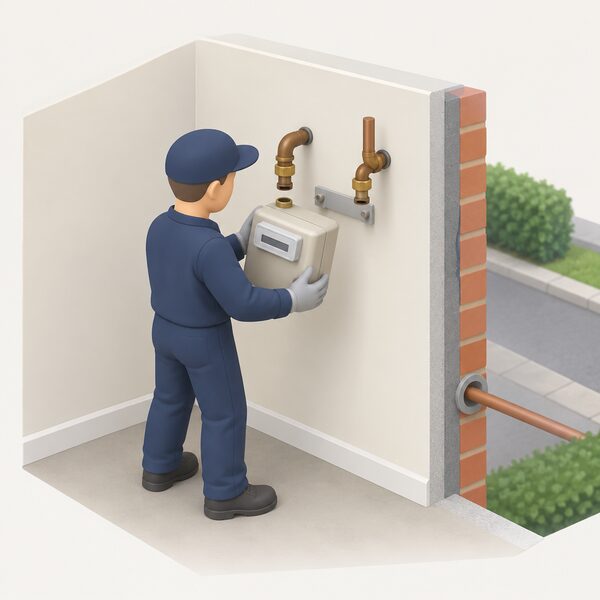
The first call is to your energy supplier, not the network. The guidance is explicit: a household wanting to disconnect from the gas network contacts its energy supplier1. Wales & West Utilities says the same for removing a meter entirely: the energy supplier is the first contact8. Cadent's route is to discuss disconnection plans with the existing supplier and arrange for the gas meter to be removed9.
The network operator is a different company from the supplier, and separate from it1. The Energy Ombudsman directs households to the Energy Networks Association website to find out who the network provider is2. The same distinction applies to complaints: for complaints about power cuts or connection problems, you contact your distribution network operator, the company in charge of the supply to your area10. Network operators, not suppliers, are responsible for fixing power cuts and paying compensation11.
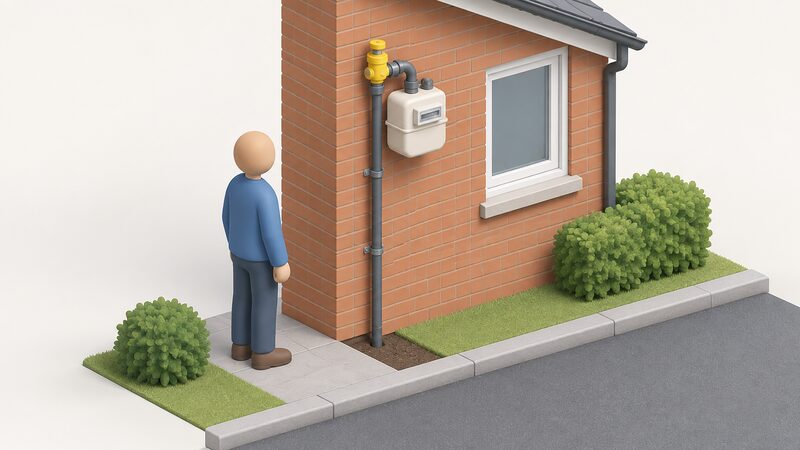
For Northern Gas Networks specifically, the split is the same. You will need to arrange your gas supplier, the company you pay your bills to, to remove your gas meter before the network can disconnect the supply3. Northern Gas Networks handles the service pipe, the small pipe that connects your meter to the gas main in the street12.
| Step | Who does it | What happens |
|---|---|---|
| 1 | You | Contact your energy supplier to start the disconnection1 |
| 2 | Your energy supplier | Removes the gas meter3 |
| 3 | Your gas network operator | Disconnects the service pipe, close to the main, more than 12 months after meter removal1 |
| 4 | Your supplier | Closes the account; standing charges stop3 |
What it costs: SGN and Northern Gas Networks prices
Published prices for a permanent disconnection are thin. The network operators quote individually rather than publishing a tariff. Wales & West Utilities states that full pipe removal, where required, is chargeable and quoted individually based on your property3. For portfolios, developments and multi-property disconnections, it asks to be contacted directly so it can scope the full project and provide a bespoke quote and timescale rather than pricing each property individually3.
Where a figure does exist, it is on the reconnection side. Northern Gas Networks offers partial or full meter reconnection services for an additional charge of £40 to £231, depending on the length of the new pipe4. That is a reconnection price, not a disconnection price, and it is the only published range in this area.
The cost that households most often overlook is the one that stops. Once the meter is gone, you stop paying standing charges and usage costs3. The Energy Saving Trust puts it plainly: you will then not have to pay the standing charge for gas13. For a household on a nil-consumption gas tariff, the standing charge is the whole bill. Under Charge Restriction Period 15b, the Northern gas cap for other payment method at nil kWh is £122.38, and the Northern Scotland equivalent is £122.6314. The Southern standard credit nil kWh figure is £149.1414. These are cap levels for a period, not a forecast, and the documents give differing figures for the same regions, so treat them as indicative of the scale of a standing charge rather than a fixed annual saving.
What happens to your meter, MPRN and standing charges after disconnection
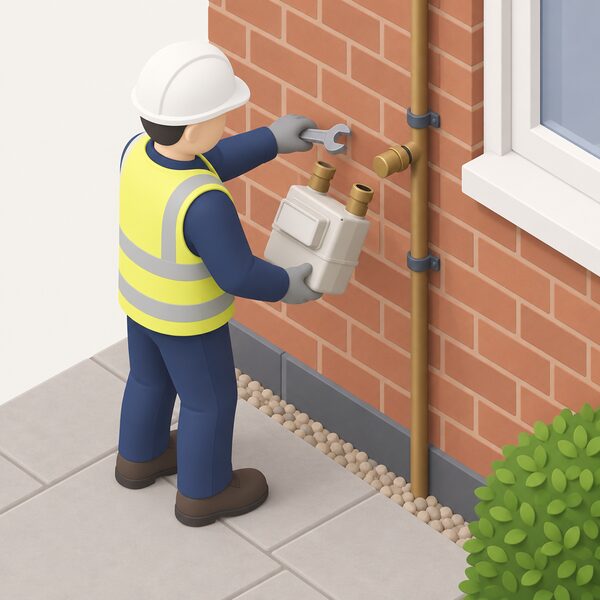
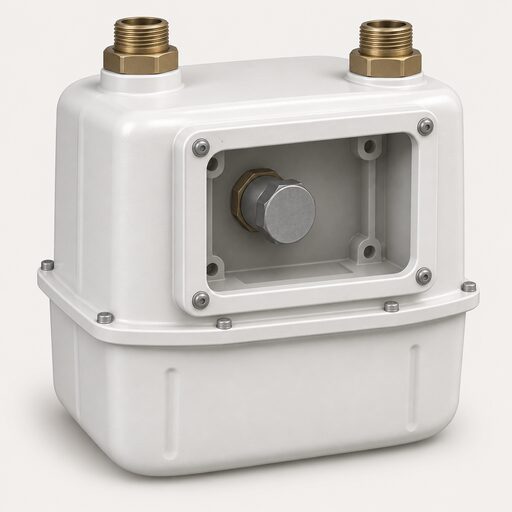
The meter goes first, and it goes with the supplier. Northern Gas Networks will not supply or install a gas meter; it provides a Meter Point Reference Number after quotation acceptance15. That reference number is the identifier for the supply point, and it is the network's record, not the supplier's.
Once the meter is removed, the billing stops. You will no longer pay standing charges, and you will no longer pay for gas usage1. Wales & West Utilities states that once the meter is gone, you will stop paying standing charges and usage costs3. The Energy Saving Trust confirms the standing charge effect13.
The distinction that catches people out is between a meter removal and a self-disconnection. Running out of credit on a prepayment meter and stopping topping up does not remove the standing charge: the standing charge and any fuel debt still apply even if you completely run out of credit, known as self-disconnection16. A permanent disconnection is the opposite: the meter is physically removed, and the charge ends.
On the electricity side, the equivalent identifier behaves in a comparable way. When electricity cables are disconnected, MPANs are automatically cancelled, which means the supplier stops billing and closes the account17. The gas MPRN follows the same logic once the meter and supply are gone.
Reconnecting later: prices and the Gas Safe requirement
Reconnection is not simply the reverse of disconnection, and in some cases it is not available at all. Electricity North West states that once the electricity supply is disconnected, the property will no longer have a supply to reconnect, so a new connection and fee are required for future supply18. The same principle applies to a fully disconnected gas supply: the network treats it as a new connection.
Where reconnection is possible, the price depends on the pipe. Northern Gas Networks charges £40 to £231 for partial or full meter reconnection, depending on the length of the new pipe4. That is a network charge for the pipework, separate from anything the supplier charges for a new meter.
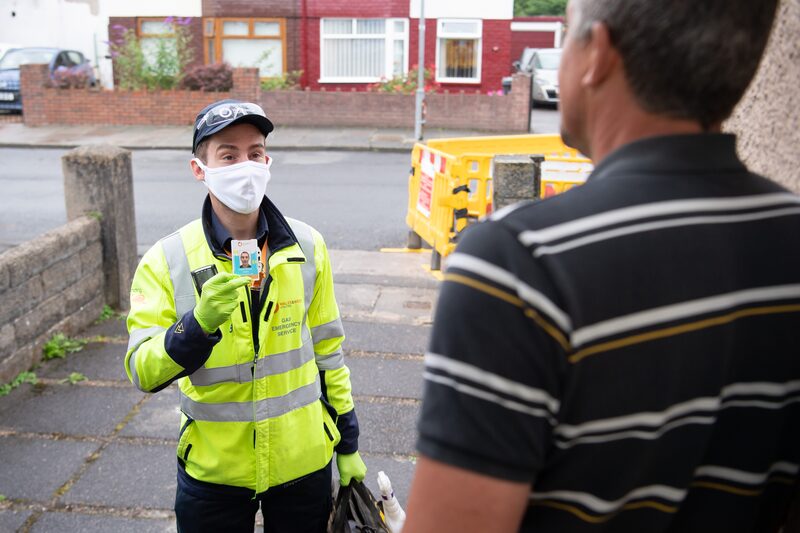
The safety condition is the one that surprises households. Cadent states that if an appliance has a fault, it will not be safe to turn the gas back on and the supply will not be reconnected until it has been checked by a Gas Safe engineer, and Cadent's own engineers are not qualified to repair appliances6. In other words, a property with an old boiler that has developed a fault may find that reconnection is blocked until the appliance is inspected.
"If your appliance has a fault, it won't be safe to turn your gas back on and we won't be able to reconnect your supply until it's been checked by a Gas Safe engineer."
When disconnection is not the right move: floods, emergencies and temporary shutdowns
A permanent disconnection is a one-way decision for most properties, so it is worth separating it from the situations that look similar but are not.
A temporary shutdown is different. Northern Gas Networks will temporarily disconnect your service pipe before your own tradesman removes an old meter box, then reconnect it once the new box is installed12. That is a service for meter box replacement, not a permanent disconnection, and the pipe is restored.
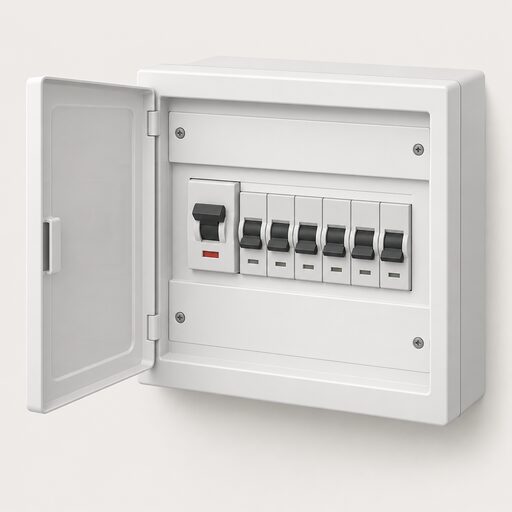
Flooding is a case where gas should be turned off, but by the service provider rather than the householder. Flood damage guidance says to arrange for other services, such as gas, to be turned off by the service providers19. In an emergency, you would be asked to turn off the gas at the emergency control valve by the meter20. If you smell gas, call 0800 111 999 immediately5.
Debt is another case where disconnection is constrained. A creditor or agent must not take steps to disconnect a debtor's premises from a supply of gas unless the debtor had taken the supply illegally, during a moratorium period21. Ofgem's guidance on heat networks states that a domestic premises must not be disconnected at any time where the occupants include a person who has a medical condition meaning they need to receive, or may need to receive, a supply of heating or hot water throughout the year22. The Green Deal framework regulations contain a similar protection, preventing a licence holder from permanently disconnecting the supply of gas or electricity to a Green Deal property23.
Supplier failure is not a reason to disconnect. If an energy supplier goes out of business because of financial problems, you will still have electricity and gas supplied to your home or business, and your energy supply will not be cut off24. Disconnection for debt is always a last resort for the energy company25.
Sources26 cited
- Disconnecting from the gas network, IGEM, 2026-09-20
- Network operators, Energy Ombudsman, 2026-09-20
- Disconnect your gas supply, Wales & West Utilities, 2026-09-20
- FAQs and guidance, Northern Gas Networks, 2025-10-30
- Under your feet, Cadent Gas, 2026-09-20
- Gas connections for household customers, SGN, 2026
- Gas Safety (Installation and Use) Regulations 1998, legislation.gov.uk, 1998-10-03
- Cutout, Electricity North West, 2026-09-19
- What to expect, Northern Gas Networks, 2026-09-04
- Gas connections, Wales & West Utilities, 2026-09-20
- Energy complaints, Age UK, 2026-08-26
- Meter box services, Northern Gas Networks, 2025-12-29
- Prepayment meters, Centre for Sustainable Energy, 2025-08
- Gas supply updates, SGN, 2026
- Heat pump installation: a step by step guide, Energy Saving Trust, 2026-07-15
- How to move your gas or electricity meter, Uswitch, 2026-08
- Disconnect and add temporary electricity supply, UK Power Networks, 2026-09-17
- Close down or remove an MPAN, UK Power Networks, 2026-09-17
- What happens if your energy supplier goes out of business, Ofgem, 2026
- Meter box services: what to expect, Northern Gas Networks, 2025-12-29
- Green Deal Framework Regulations 2011, legislation.gov.uk, 2011-10-18
- Additional works, NIE Networks, 2026-09-19
- Charge Restriction Period 15b cap tables, Ofgem, 2025-11
- Help from your energy company, Turn2us, 2026-09-08
- Debt Respite Scheme (Breathing Space) Regulations 2020, regulation 7, legislation.gov.uk, 2026-09-17
- Gas leaks and safety, Uswitch, 2026-06-01
 Disconnecting From the Gas GridThe practical route to removing a gas connection, including abandonment versus capping, who does the work, what it costs and the standing charge saved.
 Gas Supply EmergenciesIf gas runs short, will my home lose supply?
 Turn Off Gas, Water, PowerWhere the gas emergency control valve, internal stopcock and consumer unit main switch are usually found and how each is operated.
 Supplier Licensing and FailureWhat happens when your energy supplier goes bust?
 Gas Distribution NetworksWho actually owns the pipes under your street, and who do you call when gas smells or the supply fails?
 Leaving the Electricity GridCan you really cut your home off the grid completely, and what does it cost to have your electricity supply removed for good?