
In this guide
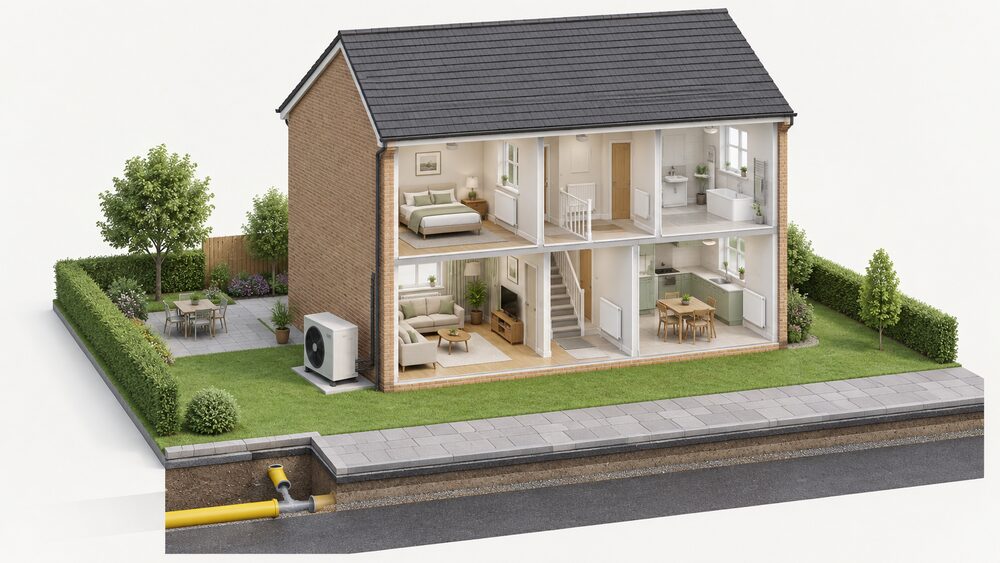
Disconnecting from the gas grid is a two-part process run by two different organisations. Your energy supplier removes the meter; the gas distribution network then deals with the service pipe. Ofgem's own definition of a voluntary disconnection is a disconnection carried out at the request of the consumer, not required under health and safety legislation, for which gas distribution networks charge a reasonable and cost reflective charge approved under their connection charging methodology1. The average gas disconnection price is approximately £1,9501.
The reason most households look at this is heating. Four million UK households, 15% of the total, are already off the mains gas grid, and the gas grid itself is a network of pipelines across Great Britain2. For a home that is on the grid, removing the connection means replacing a gas boiler with something electric, and the main route is an air source heat pump, the most commonly installed heat pump type in the UK4.
The consequences are not only financial. Disconnection removes a standing charge and a fossil fuel supply, but it also removes a fallback. What follows sets out the process, the alternatives, the costs, the planning rules and the limits, so that the trade-offs are visible before any work is booked.
What disconnecting from the gas grid actually involves
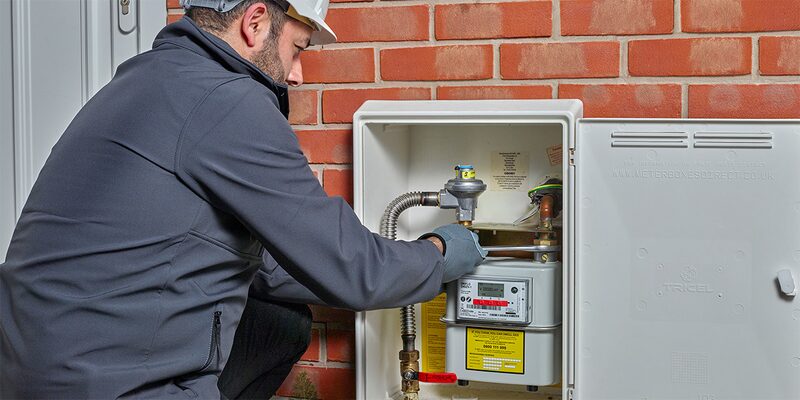
There are two distinct operations, and households often assume they are one. The meter removal is arranged through the energy supplier, which is the first step: contact the energy supplier to disconnect from the gas network9. The supplier removes the meter, and from that point the household no longer pays for gas usage9.
The pipework is a separate matter. If the pipe is disconnected, it will be disconnected as close to the gas main as possible and more than 12 months after the meter is removed by your energy supplier9. That gap is not administrative slack: it reflects the fact that the service pipe is the network operator's asset, and the work to cut and seal it at the main is a street-level job rather than a household one.
Ofgem draws a distinction that matters for cost. A voluntary disconnection is one carried out at the request of the consumer and not required under health and safety legislation, for which gas distribution networks charge a reasonable and cost reflective charge approved under their connection charging methodology1. A health and safety disconnection is different: gas distribution networks are not able to charge customers for any gas disconnection works required under health and safety legislation1. In other words, if you ask for it, you pay; if the law requires it, you do not.
There is also a protection that runs the other way. A creditor or agent must not take steps to disconnect a debtor's premises from a supply of gas unless the debtor had taken the supply of gas illegally, and not during a moratorium period10. Separately, a domestic premises must not be disconnected at any time where the domestic consumer has not paid charges and an occupant has a medical condition meaning they need to receive, or may need, a supply of heating or hot water throughout the year11. Those rules govern enforced disconnection, not voluntary removal, but they show how firmly the supply is treated as a lifeline rather than a luxury.
Why households consider going all-electric

The practical argument for going all-electric starts with coverage. Nearly every household in the UK has access to the electricity grid, though not all are connected to gas12. A household that removes gas is not moving off a network; it is consolidating onto the one network that reaches almost everywhere.
The second argument is that a heat pump can be supplied by a home's own generation in a way a gas boiler cannot. Electricity can come from rooftop solar, a battery, or a tariff that shifts load to cheaper hours, and a smart meter supports access to more flexible tariffs, including dual-rate tariffs13. Gas cannot be self-generated at domestic scale. That is the independence case in one sentence: the fuel that can be made at home is electricity.
The third is cost structure. Gas is significantly cheaper than electricity in terms of the cost per unit, at 7.33p against 26.11p5. That gap is the central obstacle, and it is why the running cost case for a heat pump rests on efficiency rather than on unit price. Government analysis is explicit that reducing the price of electricity relative to gas would make heat pumps more competitive14. The Climate Change Committee's assessment is that the ratio of electricity-to-gas prices is still too high for households who switch to heat pumps to see the full benefits of their greater efficiency15.
Scotland's progress report reaches the same conclusion in different words: savings are constrained by the higher cost of electricity relative to gas16. So the household considering disconnection is weighing a fuel it can generate itself against a fuel that is cheaper per unit but cannot be made at home, and the balance currently favours gas on running cost alone.
Electric heating: the alternatives to a gas boiler
Removing a gas boiler means choosing a replacement, and the options differ sharply in efficiency and in what they ask of the fabric of the home.
Air-to-water heat pumps transfer heat drawn from surrounding air to water in a wet central heating system17. That is the direct substitute for a gas boiler: same radiators or underfloor loops, same hot water cylinder arrangement, different heat source. Air-to-air systems are a different proposition, and one official guidance document states that this is not considered to be a renewable system in ECO417. That distinction matters for anyone expecting grant support.
Direct electric options are the other route. Direct electric panel heaters and night storage heaters are at least three times less efficient than heat pumps, which makes them very expensive to run6. Bristol's warm homes plan puts the same comparison the other way round: heat pumps are around three times more efficient than direct electric heating18. Which? states that heat pumps are much more efficient than traditional electric heating options, which make them cheaper to run12.
The practical consequence is that a household removing gas has a genuine choice only where a heat pump is feasible. Where it is not, direct electric heating will work, but the running cost penalty is structural rather than a matter of shopping around. For a household whose aim is energy independence, that penalty is the price of a simpler system with fewer moving parts and no combustion.
Air source heat pumps: the main replacement route
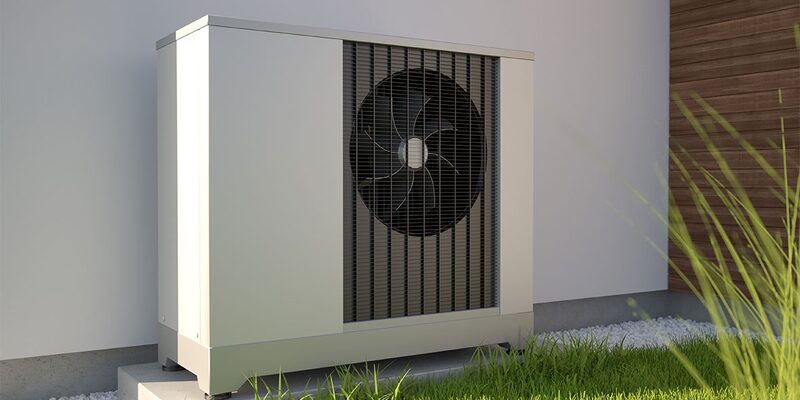
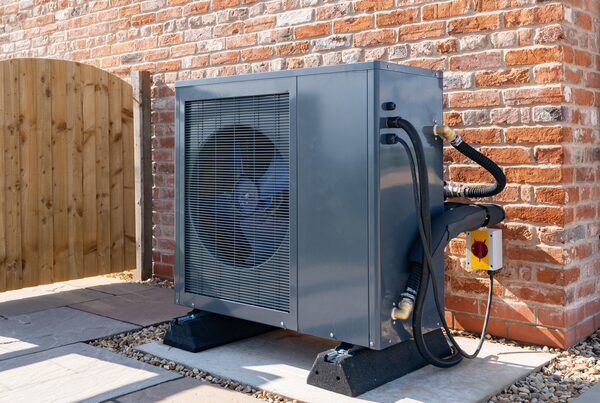
Air source heat pumps are the most commonly installed heat pump type in the UK4. Installation is generally permitted development in England, and the permitted development rights apply to the installation, alteration or replacement of an air source heat pump on a house or block of flats, or within the curtilage of a house or block of flats, including on a building within that curtilage19.
The conditions are specific. Development is permitted only if the air source heat pump installation complies with the Microgeneration Certification Scheme Planning Standards (MCS 020a)19. Class G of the General Permitted Development Order states that development is not permitted unless the air source heat pump complies with the MCS Planning Standards20. One local authority guidance adds a use restriction: the pump must not be used solely for cooling purposes21.
Cost is the point most households want first, and the published figures vary. Croydon Council's retrofit guidance gives a cost of £10,000 or more for air source heat pumps21. Independent guidance published in 2026 gives around £11,000 to install in one place and around £12,000 in another, and those two figures are not reconciled21. A separate pair of independent estimates gives £7,000 and £13,000 against a typical cost of around £14,000, again unreconciled. Where published figures conflict, the honest position is that installation is quoted per property and the range across sources is wide.
| Item | Figure | Source basis |
|---|---|---|
| Air source heat pump installation | £10,000 or more | Official local guidance21 |
| Air source heat pump installation | around £11,000 to £12,000 | Independent guidance, unreconciled21 |
| Air source heat pump installation | £7,000 to £13,000, or around £14,000 typical | Independent estimates, unreconciled |
| Boiler Upgrade Scheme, off-gas grid air-to-water | £9,000 grant from 21 July 2026 | Official guidance7 |
| Boiler Upgrade Scheme, off-gas grid ground source | £9,000 grant from 21 July 2026 | Official guidance7 |
The grant position is clearer than the installation cost. The Boiler Upgrade Scheme provides £9,000 for air-to-water or ground source heat pumps in off-gas grid properties replacing a heating system fuelled by oil or liquefied petroleum gas7. The scheme guidance sets a £9,000 grant value from 21 July 2026 for a ground source heat pump in an off-gas grid property replacing an oil or liquefied petroleum gas heating system, and the same £9,000 for an air-to-water heat pump in the same circumstances7. Note the condition: the higher grant is tied to off-gas grid properties replacing oil or LPG, which is not the situation of a household on the mains gas grid considering disconnection.
Cost: what replacing gas heating is likely to run to
The cost picture has three parts: the disconnection charge, the replacement heating system, and the running cost afterwards.
The disconnection charge is the most definite figure available. The average gas disconnection price is approximately £1,9501. That is an average across voluntary disconnections, and it is charged under the network's connection charging methodology, so it is cost reflective rather than fixed.
The replacement system is the largest item and the least predictable. Published installation figures for air source heat pumps range from £7,000 to £14,000 across sources, with official local guidance putting it at £10,000 or more21. Ground source heat pumps are typically considered permitted development but cost more to install because of the ground works, and the Boiler Upgrade Scheme grant for them in off-gas grid properties replacing oil or LPG is £9,000 from 21 July 20267.
Running costs are where the comparison is usually settled. Gas costs £1,300 to £1,500 annually for heating a three-bed semi-detached house at March 2026 prices, and gas is the cheapest heating fuel on that basis8. Heat pumps currently have similar running costs to gas boilers14. That similarity is the product of two opposing forces: a heat pump is typically over three times more efficient than the most efficient gas boilers or electric heaters, but electricity costs more per unit18.
For a household on the mains gas grid, the arithmetic of disconnection therefore starts with a disconnection charge of approximately £1,950, adds an installer-quoted heat pump installation, and lands on running costs that are currently similar to gas rather than lower. The independence gained is real; the saving is not yet.
Efficiency and running costs: heat pumps versus gas and direct electric
Efficiency is the strongest part of the case, and it is worth stating precisely because the figures come from different bodies and use different comparisons.
Heat pumps are around three times more efficient than direct electric heating18. They are typically over three times more efficient than the most efficient gas boilers or electric heaters18. Direct electric panel heaters and night storage heaters are at least three times less efficient than heat pumps, which makes them very expensive to run6. Which? states that heat pumps are much more efficient than traditional electric heating options, which make them cheaper to run12.
The running cost conclusion does not follow automatically from that efficiency, because unit prices pull the other way. Heat pumps currently have similar running costs to gas boilers14. The Climate Change Committee's assessment is that the ratio of electricity-to-gas prices is still too high for households who switch to heat pumps to see the full benefits of their greater efficiency15. Scotland's progress report says savings are constrained by the higher cost of electricity relative to gas16. Government analysis states that reducing the price of electricity relative to gas would make heat pumps more competitive14.
The same pattern appears on the industrial side, where a relatively high ratio of industrial electricity-to-gas prices presents a barrier to uptake15. The mechanism is consistent across domestic and industrial settings: efficiency gains are real, and the price ratio absorbs part of them.
For a household, the practical reading is that a heat pump is not a running cost saving today, it is a running cost equivalence with a much lower energy input. That matters for independence because the input is electricity, which a home can generate, store and buy at times of its choosing. A gas boiler's input is gas, which a home cannot generate at all.
Planning permission and building regulations for a heat pump
The planning position differs by nation and by building, and the differences are material.
In England, permitted development rights for air source heat pumps sit within Part 14 (Renewable Energy) of the Town and Country Planning (General Permitted Development) (England) Order 201522. Installation is permitted development, subject to compliance with the MCS Planning Standards21. Ground source heat pumps are typically considered permitted development21.
Those rights can be lost. Permitted development rights may be removed through a planning condition, Article 4 Direction or other restriction23. A household in a conservation area or a new-build subject to a condition should check before ordering equipment.
Listed buildings are a separate case. Planning permission and listed building consent are required for listed buildings, and listed building consent is needed for ground source heat pumps on listed buildings21. There is no permitted development route for a listed building.
England has recently changed one of the constraints. Amendments to permitted development rights in England include the removal of the rule that a heat pump must be installed at least one metre from the property boundary24. The same change is described in a government press release as removing the rule requiring them to be installed at least one metre from a property's boundary25. That widens what is feasible on tight urban plots.
Noise remains a live constraint, and the two published formulations differ. One official guidance states a limit at or below 42 decibels (dB) from a metre distance away from any habitable room, for the heat pump on its own. Another states that an air source heat pump cannot exceed 42dB at a distance of 1 metre from the centre of a neighbour's habitable room window, known as the assessment point.

Smart meters after disconnection: what changes and what doesn't
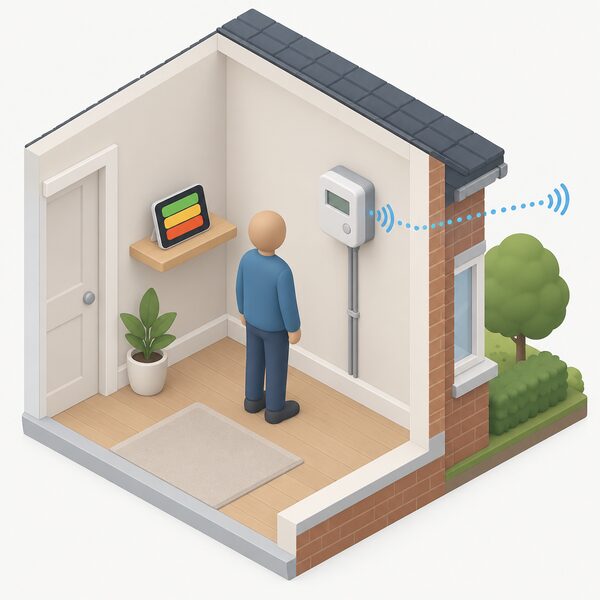
A smart meter automatically sends your electricity and gas meter readings to your supplier26. After a gas disconnection, the electricity side continues to do that, and the benefits that depend on accurate readings continue with it: bills based on accurate meter readings and not estimates, no need to submit meter readings yourself, and access to more flexible tariffs, including dual-rate tariffs13.
The gas side stops being relevant because there is no gas to measure. You will no longer pay for gas usage9. The meter itself is removed by the supplier, so there is nothing left to read.
What can change is whether the remaining meter operates in smart mode. A smart meter may stop recording the energy you use, or may no longer send readings to your supplier13. Ofgem lists the possible causes: it loses connection with your supplier, loses connection after you change supplier, or has been installed without being connected to the national communication system26. Where that happens, readings can be submitted manually, and the meter may work in smart mode again if you change tariffs or suppliers27.
There is a further point about supplier failure. If a supplier goes out of business, your meter may not work in smart mode when you move to the new supplier, and you may need to take meter readings manually and submit them to your new supplier instead27. That is a resilience consideration for any household relying on time-of-use tariffs to run a heat pump cheaply.
Smart meters are supplied free: contact your supplier to get a smart meter for free28. Readings are automatically sent via the DCC's secure network to your energy supplier, which ensures you only pay for the energy you've used, not estimated bill costs30. The meter's in-home display also shows you how much energy you're using during the day28. One limit is worth noting: except by switching, you don't control the tariff your energy supplier sets, but you can change how much energy you use30.
Where disconnecting falls short: the limits to weigh up
The limits are structural, and they do not disappear with a better specification.
- The unit price gap remains. Gas is significantly cheaper than electricity per unit, at 7.33p against 26.11p5. Efficiency narrows the running cost difference; it does not reverse it today.
- Running costs are similar, not lower. Heat pumps currently have similar running costs to gas boilers14. The Climate Change Committee attributes the shortfall to the electricity-to-gas price ratio15.
- The grant does not fit a mains gas household. The £9,000 Boiler Upgrade Scheme grant applies to off-gas grid properties replacing oil or LPG heating7.
- Comparison services are thin for gas-only. Uswitch states that it can't currently compare gas-only plans and is working on being able to offer gas-only deals for customers5.
- Smart mode can be lost. A meter may stop recording or stop sending readings, and may not work in smart mode after a supplier change26.
- Direct electric is a costly fallback. Direct electric panel heaters and night storage heaters are at least three times less efficient than heat pumps, which makes them very expensive to run6.
The independence gained is genuine: the household moves onto a fuel it can generate, store and time-shift, and off a fuel it can only buy. The dependence that remains is on the electricity grid, a supplier, and the price ratio between electricity and gas, which no household controls. For the wider picture of what a home can and cannot supply for itself, the guide to household energy independence sets out the measures, and going off-grid covers the case where the electricity connection goes too.
Sources30 cited
- Call for Input: A review of the gas disconnections framework, Ofgem, 2025-01-13
- Constituency casework: off-gas grid households, House of Commons Library, 2026-09-17
- The gas grid and disconnections, House of Commons Library, 2026-09-17
- Heat pumps explained: experts answer your questions, GOV.UK, 2024-03-28
- Gas only energy guide, Uswitch, 2026-09-07
- Bristol Warm Homes Plan, Bristol City Council, 2025-04
- Boiler Upgrade Scheme guidance for installers v5.1, Ofgem, 2026-07-21
- Research briefing CBP-9838: heating costs, House of Commons Library, 2026
- Disconnecting from the gas network, IGEM, 2026-09-20
- The Gas Act 1986 (Moratorium) Regulations 2020, legislation.gov.uk, 2020
- Heat networks consumer protections draft guidance, Ofgem, 2025-09-05
- Electric central heating, Which?, 2025-09-22
- Get help with your smart meter, Ofgem, 2026-09-17
- Heat pumps and the electricity price ratio, Parliamentary Office of Science and Technology, 2026-09-19
- Progress in reducing emissions: 2025 report to Parliament, Climate Change Committee, 2025
- Heat in Buildings: progress report 2025, Scottish Government, 2025-10-02
- ECO4 new measures and products guidance v3.0, Ofgem, 2026-03-26
- Bristol Warm Homes Plan, Bristol City Council, 2025-04
- Planning permission: air source heat pump, Planning Portal, 2026-09-17
- Class G: installation of air source heat pumps, legislation.gov.uk, 2025-05-29
- Air and ground source heat pumps, Croydon Council, 2026-09-17
- Planning guidance: heat pumps, Richmond Council, 2026-04-22
- Air source heat pumps planning advice, Cornwall Council, 2026-09-17
- Amendments to the Boiler Upgrade Scheme: government response, DESNZ, 2025-11
- Help to save households money and deliver cleaner heat, GOV.UK, 2024-11-21
- Smart meter performance, Ofgem, 2026
- What happens if your energy supplier goes out of business, Ofgem, 2026
- Get help with your smart meter, Ofgem, 2026
- Getting a smart meter, Ofgem, 2026
- How do smart meters save energy?, Smart DCC, 2026
 Getting a New Gas ConnectionHow a household applies for a new or upgraded gas connection, who carries out the work, the quotation and contribution rules, typical timescales, and what a connection means for a home's energy independence.
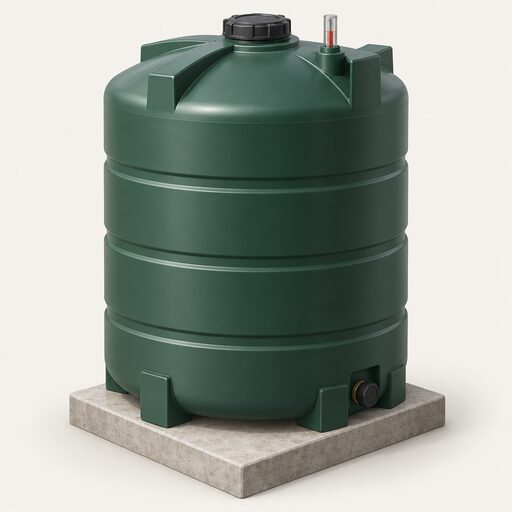 Living Off the Gas GridNo mains gas at your home?
 Leaving the Electricity GridCan you really cut your home off the grid completely, and what does it cost to have your electricity supply removed for good?
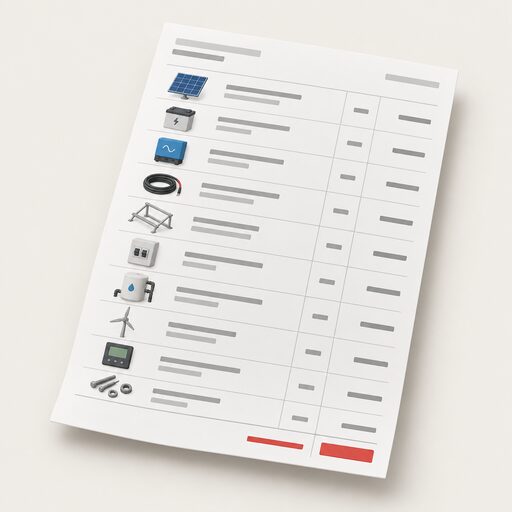 Off-Grid System CostWhat does going off grid really cost, and what makes up most of that figure?
 Reducing Your BillRanks household electricity and gas uses by share of the bill and sets out what each measure changes, from heating settings and insulation to appliance use and tariff choice.
 Planning Energy IndependenceCutting what you use, moving heating off gas, putting solar on the roof and adding a battery all help, but none of them takes you off the grid completely.