In this guide
Peer-to-peer energy trading in the UK is not, at present, a market where one household sells a kilowatt hour to the household next door. It is a set of arrangements that sit behind a licensed supplier: a community or smaller-scale generator registers with a supplier, that supplier offers a service agreement allowing the site to sell electricity to local consumers through a community or smaller-scale energy tariff, and the settlement runs through the supplier's licence1. The direct neighbour-to-neighbour sale that the phrase suggests is constrained by the structure of the retail market itself.
That structure is the supplier hub. Britain's current energy retail model has been around for 30 years and is based on the supplier hub model, where suppliers act as the single link between customers and the wholesale energy market2. Every unit a household buys or sells passes through a licensed supplier, and the licence conditions, the price cap and the dispute routes all attach to that relationship rather than to the trade between two homes.
The technology that has moved fastest is not trading between houses but discharge from vehicles. V2X allows for electric vehicles to operate bidirectionally, charging from the electricity grid but also discharging to the grid, building or home as needed3. Ofgem's case study reports that if 50% of the UK's EVs were V2G enabled, this would open up 22 TWh of flexible EV discharging capacity per year by 2030, and could provide around 16GW of daily flexible capacity to the grid4. The household benefit is real but conditional on a bi-directional chargepoint, a compatible car and a supplier willing to buy the export.
What peer-to-peer energy trading is
The term covers several different things, and the differences matter for what a household can actually do. At its narrowest it means a household with generation or storage selling surplus to another household. At its widest it covers community energy schemes, shared ownership of generation, group buying, and the export of power from a vehicle battery.
The regulatory frame is the same in each case. The energy price cap applies across Great Britain, and Ofgem is the energy regulator7. Licensed suppliers are the counterparties that make the trade possible, and the Feed-in Tariffs scheme shows how the settlement layer works: the costs of the scheme are spread across all licensed electricity suppliers in Great Britain through the levelisation process, based on their share of the electricity supply market8. A supplier's market share is determined by calculating the amount of electricity supplied to customers in Great Britain, less the exempt amount supplied to qualifying Energy Intensive Industries, expressed as a percentage of the total relevant electricity supplied by all licensed electricity suppliers in Great Britain9.
That machinery exists because electricity supply is a licensed activity. A household that wants to sell power to a neighbour is not simply making a private arrangement; it is participating in a market where the supplier is the hub, the licence conditions apply, and the consumer protections run through the supplier relationship. The Energy Ombudsman, for example, is approved by Ofgem to handle service disputes in the energy sector, but only handles disputes involving suppliers trading in Britain10.
The practical consequence is that peer-to-peer trading in the UK is mostly peer-to-supplier-to-peer. The household generates or stores, the supplier buys and settles, and the neighbour buys from the same supplier under a tariff designed for that purpose. Peer-to-peer and prosumer-centred electricity markets are discussed as a potential business model rather than an established one11.
"offer a Community and Smaller-scale Electricity Supplier Service agreement to any registered Community or Smaller-scale"
How it works in practice: the licensed supplier barrier
The barrier is not technical. It is the licence. A supplier must be authorised to supply electricity to domestic and non-domestic consumers in Great Britain, and that authorisation carries obligations that a household cannot meet12. The Feed-in Tariffs guidance sets out how a licensed supplier's market share is calculated for the purpose of scheme costs, which shows the level at which these transactions are accounted for9.
There is a defined route for smaller sellers. Eligible licensed suppliers must offer a Community and Smaller-scale Electricity Supplier Service agreement allowing registered sites to sell electricity to local consumers via a community or smaller-scale energy tariff, having regard to the export price paid to that site1. That is the mechanism by which a village hall, a school roof or a community turbine can sell into its own locality without the buyer and seller each holding a supply licence.
The market is also changing at the entry level. New entrants to the energy supply market face a 250,000-customer threshold at which they must currently comply with all licence obligations, and there is a case for allowing innovative entrants to grow past that threshold2. Tesla Energy Ventures Limited was granted a licence authorising it to supply electricity to domestic and non-domestic consumers in Great Britain, dated 12 March 202612. New supply licences widen the range of counterparties a household or community scheme might deal with, but they do not remove the requirement for one.
For households in unusual arrangements, the supplier relationship determines the rights. Residents on a landlord's business contract may not have the right to choose their own energy supplier or switch suppliers themselves, and may not be able to make a complaint directly to the energy supplier if they do not have a contract with them13. Any local trading arrangement that runs through an intermediary inherits that structure. The Energy Price Guarantee, for comparison, covered 30 suppliers on the scheme14, and legislation has included powers to oblige intermediaries such as private landlords to pass through the benefit they receive to end users15.
Microbusiness contracts add a further layer: energy suppliers agreeing microbusiness contracts through Third Party Intermediaries must only work with TPIs that are signed up to a suitable Qualifying Dispute Settlement Scheme16. The pattern is consistent across the market. Trading is permitted, but it is intermediated, licensed and dispute-settled rather than direct.
Vehicle-to-grid: the technology that makes households sellers
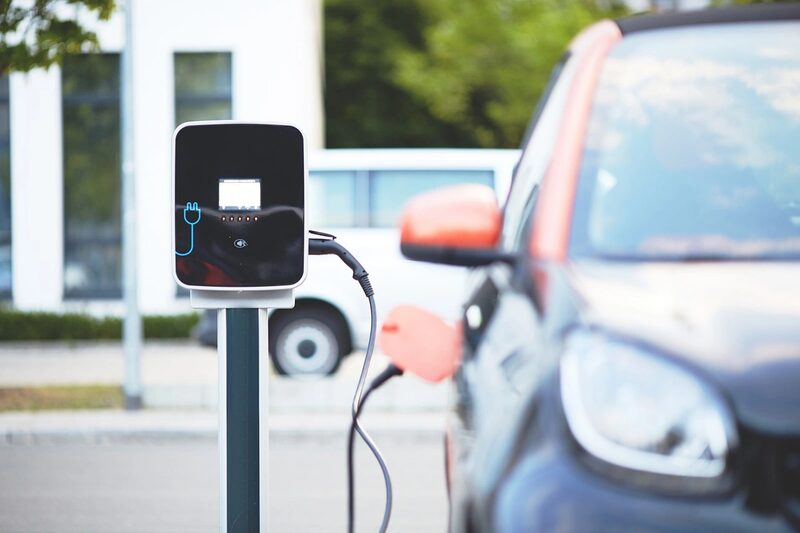
Vehicle-to-grid is the part of this field where UK households have the clearest route to being sellers rather than buyers. A V2G enabled EV chargepoint is able to draw power to charge the vehicle and export the electricity from the car battery back to the home or the grid17. The car becomes a store that can be filled when power is cheap or abundant and emptied when the grid values it.
The scale of the resource is what has drawn official attention. Ofgem's case study states that if 50% of the UK's EVs were V2G enabled, this would open up 22 TWh of flexible EV discharging capacity per year, and could provide around 16GW of daily flexible capacity to the grid4. The same case study records over three million free miles made available to customers who exported energy back to the grid during peak times4. The National Energy System Operator estimates that in 2050, vehicle to grid, effectively batteries on wheels, could offset as much as 85% of the residual EV demand that remains in peak periods, after smart charging has shifted the majority of EV demand outside peak hours18.
The household base is already substantial. In England in 2023, 608,000 households reported having a plug-in electric vehicle available, and around 1 million households reported having access to a self-charging hybrid electric vehicle without plug-in facilities19. Only the plug-in group can export from a traction battery, and only where the car and charger support it.
Toyota's expansion of its charging ecosystem across the UK includes plans to expand energy collaborations to additional countries and introduce more advanced solutions, including vehicle-to-grid integration20. That is a maker's statement about its own plans, not a live UK product commitment, and it illustrates the pattern: the hardware capability is arriving ahead of the mass-market tariff products that would pay households for it.
V2G earnings: £150 to £400 a year, and how it is achieved
No verified annual earnings figure for a UK household from V2G is published. What is published is the aggregate value already delivered and the price context in which export is valued. The UK V2G case study reports over three million free miles made available to customers who exported energy back to the grid during peak times4. That is a delivered benefit expressed in miles rather than pounds, and it is the strongest official figure available on what participants have actually received.
The reason earnings are hard to state as a single number is that they depend on when the car is plugged in, what the supplier pays for export, and how much of the battery the owner is willing to commit. The Feed-in Tariffs annual report for scheme year 14 records that just over 1.3 TWh was exported to the grid, with associated export payments of around £78.4 million21. That is the legacy solar export market, not V2G, but it shows the order of magnitude of a national export payment pot and how thinly it spreads across many small generators.
The price context matters because export value is set against import cost. The Energy Price Guarantee was extended at £2,500 per year for a further 3 months with limited notice, as recorded in Ofgem's wholesale costs review22. A household weighing whether to cycle a car battery for export is comparing what it is paid against what it would otherwise pay to charge, and both sides of that comparison move.
What a V2G setup needs: a bi-directional chargepoint and a compatible car

Two conditions must both be met, and neither substitutes for the other. A V2G enabled EV chargepoint requires a bi-directional chargepoint and for the car to be V2G compatible17. A compatible car on a standard charger cannot export, and a bi-directional charger on an incompatible car has nothing to draw from.
The installation is not a plug-in appliance. If a V2G chargepoint is being installed, it needs to be installed and commissioned in accordance with ENA's EREC G98 or G99 depending on the capacity17. That is the same connection standards regime that governs any generator connected to the distribution network, and it is why a V2G installation is an electrical engineering job rather than a consumer purchase.
The wider category is V2X, which allows for electric vehicles to operate bidirectionally, charging from the electricity grid but also discharging to the grid, building or home as needed3. The variants differ only in where the power goes: to the grid, to the home, to a building, or to a load. Only the grid-facing version earns export payments, and only where a supplier has a product that buys the power.
| Requirement | What it means in practice |
|---|---|
| Bi-directional chargepoint | Able to draw power to charge the vehicle and export electricity from the car battery back to the home or the grid17 |
| V2G compatible car | The vehicle itself must support discharge17 |
| Connection standards | Installed and commissioned in accordance with ENA's EREC G98 or G99 depending on capacity17 |
| Supplier product | A tariff or scheme that pays for the export4 |
Costs and payback: charger prices, hardware and the V2G premium
The published cost figure is for an EV charger generally: an EV charger can be up to £1,0005. That is the Northern Ireland guidance figure and it is stated as a ceiling rather than a typical price. A bi-directional V2G unit is a different and more complex piece of equipment, and no separate published price for it is available, so any figure for a V2G-specific chargepoint would be installer-quoted rather than published.
Grant support exists for charging infrastructure but is not aimed at V2G export. The electric vehicle chargepoint grant for renters or flat owners requires the property to be in the UK23. The EV pavement channels grant applies to England24. Neither is a V2G subsidy, and neither pays for the export capability itself.
On the generation side, the picture for household support is thin. Northern Ireland guidance states that there is no financial support available for homeowners who wish to generate their own electricity through domestic renewable technologies25. The Feed-in Tariffs scheme, which once provided export payments, now operates as a legacy scheme with costs spread across licensed suppliers through levelisation8.
Payback therefore rests on three variables: the cost of the chargepoint, the value the supplier places on exported units, and how often the car is available to export. The aggregate case is strong, with 22 TWh of flexible discharging capacity per year available by 2030 if half of EVs were V2G enabled4, but the household case is a calculation each owner has to run against their own tariff and mileage.
Battery health: does exporting power wear your EV out?
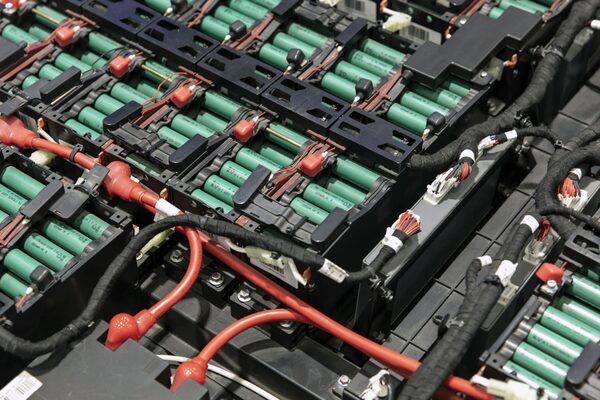
No verified figure on battery degradation from V2G cycling is published. What is published is the aggregate capacity figure and the manufacturer-side position. Ofgem's case study states that if 50% of these vehicles were V2G enabled, this would open up 22 TWh of flexible EV discharging capacity per year4. That describes the resource, not the wear.
The relevant documents for a household are the car maker's warranty terms and the chargepoint's own operating limits. No warranty condition on V2G cycling from any manufacturer is published, so no claim can be made here about whether a particular model's warranty permits or excludes it. What can be said is that the connection standards regime treats a V2G chargepoint as a generating installation, which is why commissioning to EREC G98 or G99 is required17.
The scale of the projected resource also implies that the system operator expects substantial cycling to be technically acceptable at fleet level. The National Energy System Operator's estimate that vehicle to grid could offset as much as 85% of residual EV peak demand in 2050 assumes widespread discharge18. That is a system-level assumption, not a statement about any individual battery.
For a household, the practical position is that battery health depends on cycle depth, thermal management and the maker's own terms, and no published figure would let a buyer predict degradation from V2G participation. The honest answer is that the evidence base for household-level battery wear from UK V2G schemes is not in the published material available.
Community energy and shared ownership: the wider trading picture
Community energy is where local trading has the longest track record, and it operates through grants, shared ownership and licensed supply rather than direct household sales. Great British Energy's Community Fund was launched, providing £5 million in grant funding for community energy groups6. The government also published a working paper seeking views on introducing a mandatory community benefit fund scheme and facilitating shared ownership of renewable generation infrastructure6.
The funding landscape has widened. Community energy organisations in England, Scotland and Wales became eligible for the Main Fund of the Energy Redress Scheme, around 75% of scheme funding, following Community Energy England lobbying6. The Community and Renewable Energy Scheme in Scotland is delivered by Energy Saving Trust under the local Energy Scotland brand26. The Community Energy Saving Programme targeted households across Great Britain27, and the heat market mechanism consultation recorded a territorial extent of the United Kingdom28.
Group buying is a parallel route. Switch Together Birmingham is a group-buying scheme which brings Birmingham households together29. iChoosr Ltd, which runs such schemes, entered the UK energy market in 2012 after focusing on group-buying schemes in the Netherlands and Belgium29. The Optimised Retrofit Programme in Wales funded projects including environmental sensors, fabric upgrades, battery, low energy lighting and heat pump measures in Bridgend and Rhondda Cynon Taff30.
The trading element in all of this is indirect. A community scheme sells through a licensed supplier under the Community and Smaller-scale Electricity Supplier Service agreement route1, and the household benefit arrives as a tariff, a dividend or a shared asset rather than as a direct sale to a neighbour. That is the shape local energy trading takes in the UK today.
Where V2G and trading help the grid: balancing, constraints and curtailment
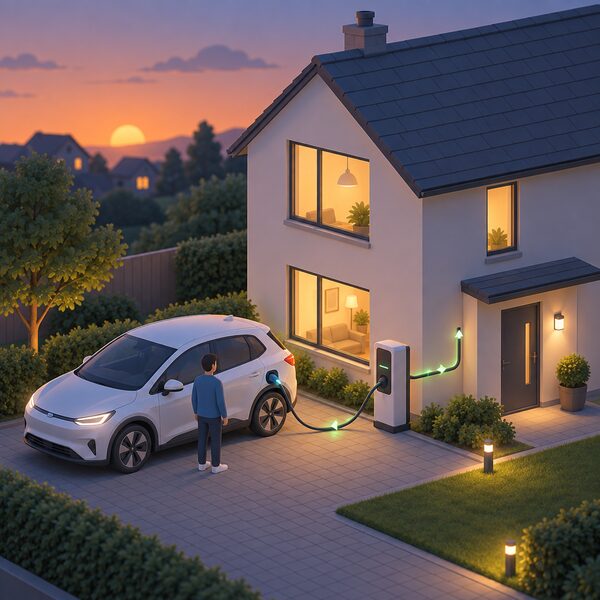
The grid case for household participation is about timing rather than volume. Ofgem's case study records that if 50% of the UK's EVs were V2G enabled, this would open up 22 TWh of flexible EV discharging capacity per year and could provide around 16GW of daily flexible capacity to the grid4. That capacity is valuable because it can be called on when demand peaks, not because it adds to total generation.
The National Energy System Operator's projection puts the peak-period contribution in sharper terms: in 2050, vehicle to grid could offset as much as 85% of the residual EV demand that remains in peak periods, after smart charging has shifted the majority of EV demand outside peak hours18. The sequencing matters. Smart charging moves demand off peak first; V2G then addresses what is left.
The legacy export market shows what a large population of small exporters adds up to. In scheme year 14 of the Feed-in Tariffs scheme, just over 1.3 TWh was exported to the grid, with associated export payments of around £78.4 million21. That is a national figure from many small installations, and it illustrates both the aggregate contribution and the administrative machinery required to settle it.
For a household, the grid benefit translates into an independence benefit only where the export is paid for. A car that discharges to the grid without a supplier product that rewards it is providing a service without a return. The independence gain from V2G is therefore conditional on the commercial layer, not just the hardware layer.
UK availability today: pilots, lead markets and what depends on your provider
The UK has run V2G at pilot scale rather than as a mass-market product. Ofgem's case study reports that since the beginning of the project, 330 V2G devices have been installed across the UK4. That is the clearest official count of live installations, and it sets the current scale.
Availability depends on three things a household cannot control from its side: whether its supplier offers an export product for vehicle discharge, whether its car model is V2G compatible, and whether a bi-directional chargepoint can be installed and commissioned to the connection standard17. The supplier hub model means the supplier is the single link between the customer and the wholesale market2, so without a supplier product there is no route to payment.
The market is not static. Tesla Energy Ventures Limited was granted a licence authorising it to supply electricity to domestic and non-domestic consumers in Great Britain, dated 12 March 202612. New entrants to the supply market face a 250,000-customer threshold at which they must currently comply with all licence obligations, and there is a case for allowing innovative entrants to grow past it2. More licensed suppliers means more potential counterparties for export products.
The vehicle side is broadening. The Society of Motor Manufacturers and Traders reports that there is currently just one standard charger available for every 35 plug-in cars on the road31, and that British buyers enjoy the best ever EV choice with more than a hundred models now available32. Toyota plans to expand its energy collaborations to additional countries and introduce more advanced solutions, including vehicle-to-grid integration20. That is a maker's forward plan, not a current UK offering.
For a household, the practical test is a short list of questions put to the supplier and the car maker: does the supplier buy vehicle export, does the car support discharge, and can the chargepoint be commissioned to EREC G98 or G9917. Where all three are answered yes, the household has a route to being a seller. Where any is missing, the car remains a load.
Sources32 cited
- Energy Act 2023 provisions on community and smaller-scale electricity supply, UK Parliament, 2023
- Future of energy retail report, Nesta, 2024
- Well-adapted energy system, Climate Change Committee, 2026
- Case study: UK electric vehicle to grid (V2G) charging, Ofgem, 2021
- Electric vehicles, nidirect, 2026
- UK solar roadmap, Department for Energy Security and Net Zero, 2025
- Energy price caps explained, Ofgem, 2020
- Feed-in Tariffs (FIT) scheme, Ofgem, 2026
- FIT guidance for licensed electricity suppliers V17.1, Ofgem, 2024
- Energy Ombudsman FAQs, Energy Ombudsman, 2026
- Ofgem Consumer First Panel year 7 wave 3: future energy, Ofgem, 2016
- Tesla Energy Ventures Limited granted electricity supply licence covering Great Britain, Ofgem, 2026
- If you live in a home on a business energy contract, Ofgem, 2026
- Energy bills support: an update, National Audit Office, 2024
- Energy Prices Bill provisions on intermediaries, UK Parliament, 2022
- Decision on third party intermediary alternative dispute resolution scheme criteria, Ofgem, 2022
- Register energy devices in homes or small businesses: guidance for device owners and installation contractors, GOV.UK, 2021
- Batteries, wheels and smart charging, National Energy System Operator
- English Housing Survey 2023 to 2024: low carbon technologies in English homes fact sheet, GOV.UK, 2023
- Toyota to expand EV charging ecosystem across the UK, Society of Motor Manufacturers and Traders, 2025
- FIT annual report scheme year 14, Ofgem, 2024
- Energy price cap wholesale costs review, Ofgem, 2023
- Electric vehicle chargepoint grant for renters or flat owners: eligibility, GOV.UK, 2026
- Apply for the electric vehicle EV pavement channels grant, GOV.UK, 2025
- Support to generate your own electricity, nidirect, 2025
- Heat in buildings strategy, Scottish Government, 2021
- Carbon budget delivery plan, GOV.UK, 2023
- Heat market mechanism consultation, UK Parliament, 2021
- Switch Together Birmingham: buying solar panels and battery storage made easy, Birmingham City Council, 2026
- Optimised retrofit programme: 3 funded projects, Welsh Government, 2023
- Brits enjoy best ever EV choice with more than a hundred models now available, Society of Motor Manufacturers and Traders, 2024
- Guide for energy suppliers and debt advice providers, Ofgem, 2025
 Community Energy in EnglandCommunity energy lets neighbours own their own power together, often through solar panels, and share the money it makes.
 Microgrids and Local EnergyA microgrid shares electricity between neighbours, using local solar and batteries instead of relying only on the national grid.
 Community Energy in NICan a community group in Northern Ireland sell power to its neighbours, and is there funding to get a project off the ground?
 Who Owns Which Energy SupplierWho is actually behind the company that sends your energy bill?
 The Full Tariffs GuideWhich energy tariff suits how you live, and will switching really save you money?
 Local Energy Supply ClubsJoining a local energy club means your area's wind or hydro power is matched to your home's use, so you pay less for the electricity you use when it is being generated nearby.