

In this guide
ISO 50001 is the international standard for energy management systems. It does not set a performance figure for a building or a product. It sets a management discipline: an organisation must measure its energy use, set objectives, act on them, review the results and improve on a repeating cycle. Certification is granted by a certification body, and those bodies are themselves accredited, in the UK by UKAS, against the international benchmark ISO/IEC 17021-11.
For a household the standard matters indirectly. A home cannot hold ISO 50001 certification, because there is no organisation, no management review and no documented system to audit. But the products and installers a household buys from sit inside that chain. A manufacturer's factory production control is audited periodically, and further product testing is carried out where required, as a condition of keeping certification3. The same accreditation logic runs through the Boiler Upgrade Scheme, whose approved standards list BS EN ISO/IEC 17065:2012 for bodies certifying products, processes and services4.
The practical value to a household is the measurement habit. ISO 50001 forces an organisation to know what it uses before it claims to have improved. That is the same discipline behind home energy monitoring, and it is the reason the standard is worth understanding even if it will never appear on a domestic certificate.
What ISO 50001 is and what it requires
ISO 50001 belongs to a family of management system standards, alongside quality and environmental management. Its subject is energy: how much an organisation uses, where it uses it, and whether that use is falling. The standard requires a policy, a baseline of consumption, objectives with targets, monitoring and measurement, and a management review that feeds the next cycle. Nothing in it specifies a boiler, a tariff or a technology.
The reason it reads as unfamiliar to a householder is that its obligations are procedural. A building regulation tells you what a dwelling must achieve. A management standard tells an organisation how to organise itself so that it keeps achieving. The distinction shows up in the language of the standards that do govern homes. Approved Document L, Volume 1 applies to dwellings only, and Volume 2 applies to non-domestic parts of mixed-use buildings and rooms for residential purposes7. Those are performance instruments. ISO 50001 is not.
Where the two meet is in verification. A claim that a product performs to a standard usually has to be backed by test data, and that data has to come from somewhere credible. Official guidance on efficiency claims for fixed building services states that the test data should be certified by a conformity assessment body accredited by UKAS to carry out this work1. That is the same accreditation architecture that sits behind ISO 50001 certification, applied to a different object.
For a household, the useful transfer is the baseline. An organisation cannot manage what it has not measured, and neither can a home. The measurement discipline that ISO 50001 imposes on a business is the discipline behind reducing base load and behind any honest claim about self-consumption.
Continual improvement: the standard's core obligation
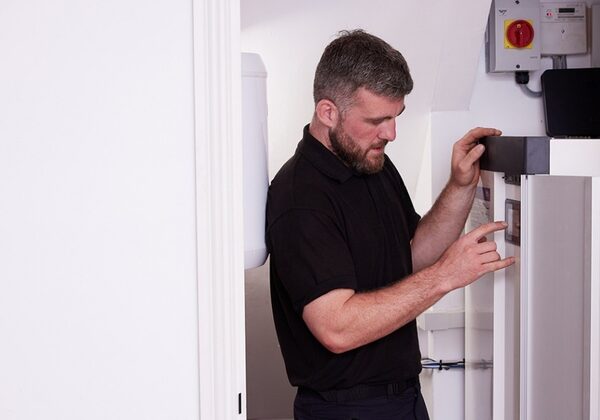
Continual improvement is the obligation that distinguishes ISO 50001 from a one-off energy audit. An audit produces a report. A management system produces a cycle: measure, set an objective, act, review, revise the objective. Certification depends on being able to show that the cycle is running and that performance is being reviewed against it.
The building world uses a different word for part of the same idea. Approved Document L defines commissioning as regulation, that is, testing and adjusting repetitively, to achieve the specified performance9. The word doing the work there is repetitively. A system that is set once and left is not commissioned in that sense, and a management system that is reviewed once and left is not improving in the ISO 50001 sense.
The same pattern appears in product certification. Maintaining certification for a product is based on periodic audits of the product manufacturer's factory production control, and further product testing where required3. The manufacturer must have the staff, processes and systems in place to ensure the product is consistently manufactured to high standards, and every item off the production line made to the same rigorous standards3. Consistency across a production run is the manufacturing expression of continual improvement.
Incentive schemes have had to put numbers on improvement to make it comparable. Under ECO4 guidance, a standard innovation measure attracts a 25% score uplift where a reasonable explanation of improvement over comparable measures has been provided, and a substantial innovation measure attracts a 45% score uplift where a substantial improvement over comparable measures has been demonstrated10. Those percentages are scheme scoring, not ISO 50001 requirements, but they show how a regulator translates improvement into a measurable claim.
"Regulation (that is, testing and adjusting repetitively) to achieve the specified performance."
How certification is accredited: ISO/IEC 17021-1
Certification is a two-layer arrangement, and confusing the layers is the commonest misunderstanding. The certification body audits the organisation and issues the certificate. The accreditation body audits the certification body and confirms that it is competent to do that work. ISO/IEC 17021-1 is the international standard that sets the requirements for the bodies that audit management systems.
The UK accreditation body is UKAS. Official guidance on efficiency claims for fixed building services is explicit that the test data should be certified by a conformity assessment body accredited by UKAS to carry out this work1. The same structure appears in the Boiler Upgrade Scheme regulations, whose approved standards include BS EN ISO/IEC 17065:2012, conformity assessment requirements for bodies certifying products, processes and services4. The regulations also list BS EN ISO/IEC 17025:2017, general requirements for the competence of testing and calibration laboratories, as a separate approved standard, and the two are not interchangeable: one covers certification bodies, the other testing laboratories4.
Building control bodies may accept certification under independent schemes of certification and accreditation of installers as evidence of compliance with a relevant standard, for installers, systems, products, components or structures11. That is the route by which an accredited certificate substitutes for an inspection on site.
For a household, the accreditation layer is what makes a certificate worth reading. A certificate issued by a body that is not accredited tells you that someone audited something. A certificate issued by an accredited body tells you that the auditor was itself assessed against a published international standard.
BSI's role as the UK national standards body
BSI, the British Standards Institution, is the UK national standards body, and it publishes European standards in the UK as BS EN2. That role makes it the publisher through which most standards a UK household encounters arrive, whether they concern electrical installations, gas appliance ventilation or retrofit work.
The standards that govern work in homes are a mixed set. Electrical safety standards are set out in British Standard 7671, and in Northern Ireland the standards for electrical installations are defined by reference to the eighteenth edition of the Wiring Regulations, published by the Institution of Engineering and Technology and the British Standards Institution as BS 7671: 20186. Part P in England and Wales refers to the fundamental principles for safety set out in Chapter 13 of BS7671:200112. Flueless gas appliances are expected to meet BS 5440-2:2009 or equivalent for ventilation13. Carbon monoxide detectors must comply with BS EN 50291, and where hard-wired or wireless installations are adopted, applicable European directives14. Combined smoke and carbon monoxide detectors must meet BS EN 50291 for CO detection and alarm activation and BS EN 14604 for smoke detection and alarm activation15.
BSI has also published standards for newer territory. In May 2021 it published two standards for integration and communication between energy sector IoT devices5. That is the standards work that sits closest to home energy monitoring, where devices from different makers have to exchange data.
There is a practical limit worth stating. The majority of British Standards require paid access, which can hinder widespread adoption and best practice16. A householder or a small community group cannot simply read the standard that governs the work being done on their building.
How international standards become British Standards
Adoption is not automatic. BSI's agreement with the European Committee for Standardisation obliges it to withdraw UK national standards after a harmonised European Standard with the same scope and field of application has been produced2. Where a European standard exists, the national standard gives way to it, and the British designation becomes a BS EN.
The Boiler Upgrade Scheme regulations show the result in practice. Their approved standards list carries designations such as BS EN ISO/IEC 17065:2012, a European adoption of an international standard, cited by its full title and number4. The chain runs from ISO at the international level, through CEN at the European level, to BSI at the national level, and the designation records each step.
The same chain explains why a household may see a standard referred to by different numbers in different documents. A carbon monoxide detector requirement may appear as BS EN 50291 in one place and as EN 50291 in another, and the underlying technical content is the same14. In Scotland, scheme rules for an area based scheme specify a British Kitemark EN 50291-1 for carbon monoxide detectors17.
Adoption also depends on there being a standard to adopt. PAS 2030 is the certification required by installers to be able to carry out energy efficiency measures on domestic properties18. PAS 2035 covers the entire energy efficiency retrofit process in homes, from initial assessment and design to installation and evaluation, and incorporates the updated PAS 2030 installer standard19. BSI has also developed a retrofit standard for non-domestic buildings, published as PAS 2038:202119. These are publicly available specifications rather than full international standards, which is why they carry the PAS designation.
Where households meet ISO 50001: certified products like DMEGC panels
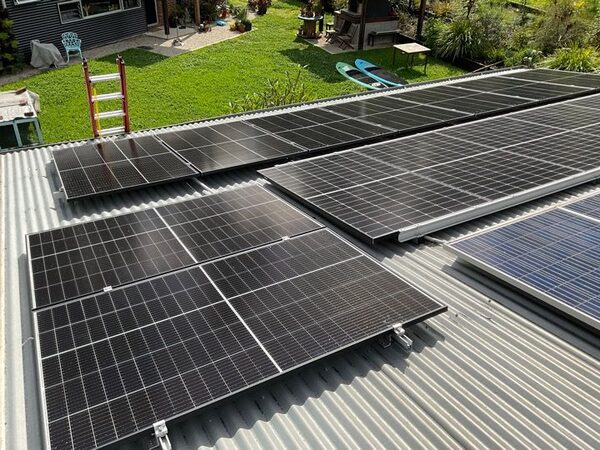
A household meets the certification chain at the point of purchase. The Microgeneration Certification Scheme certifies, quality assures and provides consumer protection for microgeneration installations and installers, covering small-scale renewable electricity technologies such as solar photovoltaic panels, biomass, wind, heat pumps and heat products20. It includes certification for products and installer companies, and a code of practice based on The Office of Fair Trading Consumer Code22. The scheme was developed in partnership with the industry and other organisations representing consumer interests22.
For renewable heating, Ofgem maintains a Product Eligibility List showing the makes and models of renewable heating products assessed as eligible for the scheme based on information supplied by the Microgeneration Certification Scheme24. Biomass installations have a further condition: all models of biomass product installed need an RHI Emission Certificate showing they meet the required air quality standards25. Installations up to 50kW are evidenced by a Microgeneration Certification Scheme certificate or equivalent26.
A manufacturer such as DMEGC reaches this position through the same route any manufacturer does: an accredited certification body audits the management system and the factory production control, and certification is maintained by periodic audits with further product testing where required3. The manufacturer must have the staff, processes and systems in place to ensure the product is consistently manufactured to high standards, and every item off the production line made to the same rigorous standards3. That is the substance behind a certification mark on a panel datasheet.
| Layer | What is assessed | Standard or scheme |
|---|---|---|
| Manufacturer's management system | Staff, processes and systems for consistent production | ISO 50001 certification, audited periodically3 |
| Product | Safety and efficacy of the measure on installation | Certified by a body accredited to ISO/IEC 17065:201210 |
| Installer | Competence to carry out energy efficiency measures | PAS 2030 certification18 |
| Whole retrofit process | Assessment, design, installation, evaluation | PAS 203519 |
| Microgeneration product and installer | Quality assurance and consumer protection | MCS certification20 |
Related standards in the ISO 50000 family
The 50000 numbering is reserved for energy management, and the family has grown beyond the original systems standard. ISO 50100:2026 was published on 30 March 2026 and covers energy management systems and energy savings decarbonization, with requirements and guidance for use27. Where ISO 50001 sets up the management system, ISO 50100 addresses how savings and decarbonisation are framed and demonstrated within it.
The distinction matters because the two answer different questions. ISO 50001 answers whether an organisation has a functioning system for managing energy. ISO 50100 addresses how the resulting savings and decarbonisation claims are structured. An organisation can hold ISO 50001 certification without making any particular claim about the size of its savings.
Around the family sit the technical standards that do the measuring. BS EN ISO/IEC 17065:2012 governs bodies certifying products, processes and services, and BS EN ISO/IEC 17025:2017 governs the competence of testing and calibration laboratories4. Both appear in the Boiler Upgrade Scheme's approved standards, and both are conformity assessment standards rather than energy management standards. They are the machinery that makes an energy claim checkable.
For a household, the family is relevant mainly as a way of reading claims. A statement that a product is certified is only meaningful alongside the standard it is certified against and the accreditation of the body that issued the certificate. The ISO 50000 family supplies the first part of that sentence; ISO/IEC 17021-1 and its siblings supply the second.
What energy management standards mean for household energy independence

The honest answer is that ISO 50001 does nothing directly for a household's energy independence. It cannot be held by a home, it does not set a performance level, and it does not change what a dwelling draws from the grid. What it does is underwrite the credibility of the organisations a household deals with, and impose a measurement discipline that a household can copy without any certification at all.
The domestic rules that do bear on independence are separate instruments, and they differ across the four nations. In Scotland, proposals for legislation would require a minimum energy efficiency standard to be met before the end of 2033 for privately-owned homes17. Minimum energy efficiency standards in the domestic private rented sector in Scotland are being introduced initially under Section 55 of the Energy Act 2011, with proposed regulations consulted on in 202528. In England and Wales, the Energy Efficiency Rating is currently the basis for Minimum Energy Efficiency Standards in the domestic private-rental sector30. New dwellings must be energy efficient to a reasonable standard, minimise greenhouse gas emissions, have effective controls and be commissioned by testing and adjusting as necessary, under requirement L11.
Those are the rules that shape a home's fabric and services. The management standards shape the supply chain that installs them. A household buying a retrofit, a heat pump or a battery is relying on PAS 2030 and PAS 2035 certification, on MCS certification and on the accreditation behind both18. The measurement habit that ISO 50001 formalises for organisations is the same habit that lets a household know whether its own system is working, which is the practical foundation of household energy independence.
Sources30 cited
- Approved Document L Volume 1: Dwellings, GOV.UK, 2026
- Technical Booklet B: Materials and Workmanship, Building Control Northern Ireland, 2013
- MCS010 Product Requirements, MCS Certified, 2026
- Boiler Upgrade Scheme: Notice of Standards, GOV.UK, 2026
- Energy IoT Standards, Parliamentary Office of Science and Technology, 2021
- Electrical Safety Standards in the Private and Social Rented Sectors, GOV.UK, 2025
- Electrical Safety Standards Regulations (Northern Ireland), Legislation.gov.uk, 2024
- Approved Document L Volume 1: Dwellings (2026 edition), Welsh Government, 2026
- Approved Document L: Conservation of Fuel and Power, GOV.UK, 2023
- ECO4 New Measures and Products Guidance, Ofgem, 2026
- Approved Document L Volume 1 Consultation Version, Welsh Government, 2025
- Part P Electrical Safety, Wigan Council, 2004
- Building Regulations Guidance Part J: Heat Producing Appliances, Welsh Government, 2025
- Carbon Monoxide Alarms in Private Rented Properties, Scottish Government, 2016
- Tolerable Standard Guidance: Fire and Carbon Monoxide Detection, Scottish Government, 2023
- Review of Retrofit Assessment in Scotland, Scottish Government, 2025
- Energy Efficiency in Homes, Scottish Government, 2033
- Home Energy Efficiency Key Terms Explained, Development Bank of Wales, 2024
- Heat in Buildings Quality Assurance Statement, Scottish Government, 2022
- ECO4 Flex Information Document, Ceredigion County Council, 2025
- ECO Flexibility Funding, Ceredigion County Council, 2026
- The Microgeneration Certification Scheme, Planning Portal, 2026
- Planning Permission: Wind Turbines, Welsh Government, 2026
- Product Eligibility List, Ofgem, 2026
- Eligible Heating Systems, Ofgem, 2026
- SEG Annual Report 2022-23, Ofgem, 2023
- Energy Management Systems and Energy Savings Decarbonization, BSI, 2026
- Energy Efficiency (Domestic Private Rented Property) (Scotland) Regulations 2026, Scottish Government, 2025
- Private Rented Property Consultation, Scottish Government, 2026
- Reforms to the Energy Performance of Buildings Regime, GOV.UK, 2026
 Community Energy in the UKWhat community energy means in practice, the legal structures used, and the types of project householders can join or benefit from.
 Welsh Housing Quality StandardWhat does the Welsh Housing Quality Standard mean for your home if you rent from a council or housing association in Wales?
 How to Read Energy StatisticsWhy do energy figures change after they are first published, and how much can you trust them?
 Social and Rented Home StandardsWhat condition is your landlord legally required to keep your home in?
 What a HEMS DoesWhat does a home energy management system actually do, and is it worth having one?
 EPC Regulations and ReformSelling or renting out a home means you need an Energy Performance Certificate.