In this guide
Living off-grid is lawful in the UK. The planning and building rules that govern homes regulate the building and the work done on it: whether the dwelling has planning permission, whether alterations fall within permitted development, and whether construction and replacements meet building regulations. None of the rules covered on this page makes a mains gas or mains electricity connection a condition of occupying a home. What changes when a household goes off-grid is not whether the law applies but which parts of it matter most.
Living without mains gas is already ordinary. In 2024, 16.0% of domestic properties in Great Britain were not connected to the gas grid, and the share was highest in inner London at 26.6%1. The House of Commons Library puts the figure at four million UK households, or 15%2. Fully disconnecting from the electricity grid is far rarer, and the same planning and building rules apply to it.
The practical questions are therefore: does the dwelling itself have lawful planning status, do works to it need an application or fall within permitted development, and do new building work and replacement fittings meet the energy and safety standards of building regulations? The answers differ between England, Scotland, Wales and Northern Ireland, because planning and building control are devolved.
Yes, it is legal to live off-grid in the UK
The legal starting point is that the law is concerned with land use and building standards. A home is lawful when it has planning permission and was built or altered in line with the rules in force. How it obtains heat and power sits largely outside that question, which is why millions of households already live without mains gas.
The numbers show how normal part of this is. Across Great Britain, 16.0% of domestic properties were not connected to the gas grid in 20241. The regional pattern is uneven:
| Area | Share of domestic properties off the gas grid, 2024 |
|---|---|
| Great Britain | 16.0%1 |
| Inner London | 26.6%3 |
| Wales | 19.5%3 |
| Outer London | 14.9%3 |
In Scotland, approximately 11% of dwellings were estimated to be outside the coverage of the gas grid in 2023, while 55% of dwellings in rural areas were not within it4. That rural figure is the clearest sign that for large parts of the country, life off the gas main is the default rather than a choice.
Two meanings of "off-grid" need separating. Most official statistics and grant schemes use it to mean off the mains gas grid. Going fully off the electricity grid is a different undertaking with its own technical and financial questions, covered in disconnecting from the electricity grid and disconnecting from the gas grid. Legally, both leave the building subject to the same framework. A household that plans the whole move can find the wider picture in going off-grid in the UK, and the water and sewage side, which carries its own consents, in off-grid water, drainage and waste.
What the law does not offer is any exemption for being off-grid. A cabin or converted building occupied as a home without the proper planning status is not made lawful by generating its own power.
The Town and Country Planning Act 1990: the main legal framework
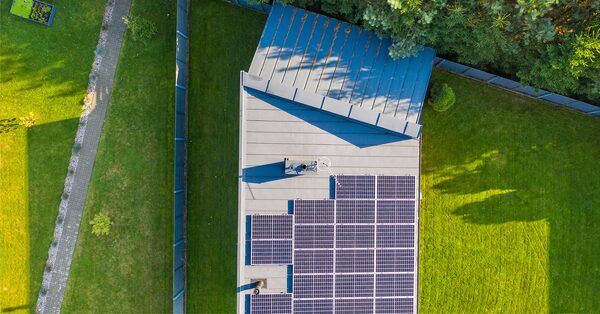
Planning control decides whether a building may be used as a dwelling and what may be done to it. In England, the day-to-day rules that let householders carry out many works without an application are permitted development rights, and the Town and Country Planning (General Permitted Development) (England) Order 2015 is the principal order that sets them out5. Specific classes cover specific works: roof alterations other than extensions, for example, fall under Schedule 2, Part 1, Class C of that Order (as amended)7.
Permitted development is only one route. Government guidance lists the different types of planning permission available in England8:
- permission granted by the local authority on an application;
- national permission granted under the General Permitted Development Order;
- local permission through Local or Neighbourhood Development Orders or Community Right to Build Orders;
- development authorised by a relevant government department.
Some projects fall outside the need for permission altogether. Official guidance states that projects with no impact on neighbours or the environment might not need planning permission, and that under Community Rights in England, building projects that benefit the local community and have community support may not have to go through the normal planning permission process9.
Use of the home matters too. Planning permission will not normally be required to work from home or run a business from home where that use is incidental to use as a dwellinghouse8. Outside Greater London, planning permission is not required to short-term let a dwellinghouse so long as there is not a material change of use8.
Where the building is listed, a separate consent regime applies under the Planning (Listed Building and Conservation Areas) Act 199010. This is relevant to off-grid plans because generating equipment, flues and replacement windows on a historic building can need listed building consent even where ordinary permitted development would cover them.
The rest of the UK has parallel but distinct laws, set out below. For an off-grid household the point is straightforward: the equipment that makes independence possible (panels, turbines, flues, stores) is judged under these rules like any other alteration.
Building Regulations: U-value rules for new builds and replacements
Building regulations set the technical standards for construction. All new housing in England must adhere to building regulations under the Building Act 1984 and the Building Regulations 201011. Government guidance on the regulations for replacements and repairs is marked as applying to England12. Being off-grid does not remove a home from them, and for an off-grid home the energy standards arguably matter more, because every unit of heat lost has to be made on site.
New dwellings
The energy standards sit in Approved Document L, Volume 1: Dwellings. For new dwellings, doors (including glazed doors) have a limiting U-value of 1.6 W/(m2·K)6. U-values should be assessed using the methods and conventions set out in the Building Research Establishment's BR 4436. Alongside heat loss, Part O of the Building Regulations, which deals with overheating, came into force in England on 15 June 202213.
Replacements in existing homes
Replacing windows and doors is one of the alterations listed as needing building regulations approval14. The Planning Portal states the rule plainly:
"This U-Value should not be exceeded. For information on the maximum U-Value allowed please refer to Approved Document L-"
The limits differ with the situation:
| Situation | Element | Limiting U-value |
|---|---|---|
| New dwelling (Table 3.1) | Doors, including glazed doors | 1.6 W/(m2·K)6 |
| Existing dwelling (Table 3.2) | Doors with more than 60% of internal face glazed | 1.4 W/(m2·K) or Doorset Energy Rating Band C minimum6 |
| Existing fittings in a material change of use or change to energy status | Windows, roof windows and doors | 3.30 W/(m2·K)16 |
The 3.30 W/(m2·K) figure is a threshold for existing controlled fittings when a building changes use or energy status, and it is looser than the limits for new or replacement work. It is relevant to anyone converting a barn or other building into an off-grid home.
Electrical work and energy certificates
The Building Regulations set standards for electrical installation work in relation to dwellings, including houses and flats17. A home wired to panels and batteries rather than a supplier's meter is still a dwelling for this purpose. Separately, the Energy Performance of Buildings (England and Wales) Regulations 2012 apply to all buildings, including buildings exempt from building regulations, subject to the exemptions in those Regulations18.
Where the law varies: nations, local rules and planning authorities
Planning is devolved, and the four nations work from different instruments.
| Nation | Principal permitted development law |
|---|---|
| England | Town and Country Planning (General Permitted Development) (England) Order 20155 |
| Wales | Town and Country Planning (General Permitted Development) Order 1995, the principal order, subject to later amendments20 |
| Scotland | Town and Country Planning (General Permitted Development) (Scotland) Order 1992, as amended21 |
In Scotland, Schedule 1 of the Order sets out the developments which are granted planning permission22. The 2024 amending Order was made under sections 30, 31 and 275 of the Town and Country Planning (Scotland) Act 199723. Scottish guidance adds a rule with direct force for anyone occupying an unauthorised structure:
"PDR do not apply in relation to a development or use of land or buildings which is itself unlawful."
In other words, a household cannot add solar or a flue under permitted development to a dwelling that lacks lawful status in the first place.
Much of the official planning guidance on the equipment off-grid homes rely on is written for England. Guidance on solar equipment on a house, and on flues, chimneys and soil and vent pipes, states that it relates to the planning regime for England and that policy in Wales may differ24. Consent for power lines and wood poles runs under the Planning Act 2008, which so far as relevant extends to England and Wales26. Changes to permitted development for domestic solar announced in August 2026 were intended to broaden the scope of solar installations for houses in England without an application27.
Local planning authorities also shape what is allowed. Permitted development can be removed in an area, and where the limits and conditions are not met, or the rights have been removed, a householder or full planning application is needed7. A council's own guidance illustrates the effect: external wall insulation does not need planning permission for a dwelling, except where permitted development rights have been removed or the home is in an Area of Outstanding Natural Beauty or a conservation area28. Roof alterations under permitted development are also not available where the house was itself created from a non-residential use under permitted development7.
Building regulations differ too. Scotland has its own Building (Scotland) Regulations, which a UK grant scheme recognises as similar regulations from 5 June 202329. Some newer safety legislation extends across the UK in part: amending regulations on plugs and sockets made in 2026 extend regulations 1 and 2 to England and Wales, Scotland and Northern Ireland, while regulation 3 extends to England and Wales and Scotland only30.
Local conditions vary as much as local rules. In Scotland's 2022 to 2024 survey tables, of the seven councils with higher than average shares of A, B or C rated homes, all but South Lanarkshire had a lower than average share of dwellings off the gas grid31.
What going off-grid means for your household's independence
Legal freedom to go off-grid is not the same as independence from the rules or from other people. A household that leaves the gas main or the electricity network swaps one set of dependencies for another.
What it gains is control over supply. Without a gas meter there is no exposure to the gas price or standing charge, and without an electricity connection there is no supplier. The scale of existing off-gas living, 16.0% of Great Britain's domestic properties in 20241, shows the first step is well trodden.
What remains is set out below.
- The planning system. Every panel array, turbine, flue or outbuilding is judged under the same planning rules as any home, and permitted development can be restricted locally7.
- Building control. Replacement windows and doors, new heating and electrical work need to meet building regulations whatever the energy source14.
- Fuel supply chains. Many homes off the gas grid rely on delivered fuels. Government has set 2035 as the phase out date for installing new oil and LPG boilers and new coal heating for off-grid homes, put back from an earlier date3.
- Manufacturers and installers. An off-grid system depends on the makers of its batteries, inverters and controls, and on whoever can service them. There is no compulsory licensing scheme for builders19.
The definition of "off-grid" used by schemes also matters in practice. Ofgem's Boiler Upgrade Scheme guidance defines an off-gas grid property as one not attached to a heat network, not fuelled by mains gas, with no record of an existing gas meter point, and not a new-build property32. A home that has capped its gas supply but still has a recorded meter point may not meet that test.
For the technical side of self-reliance, sizing a self-sufficient home system, the winter gap and getting through a UK winter off-grid cover what the law does not. Lenders and insurers also take a view of homes without mains supplies, set out in mortgages, insurance and valuation.
Support and funding routes that touch off-grid households
Grant schemes in England have repeatedly singled out homes off the gas grid, largely because they tend to be harder and dearer to heat. Most target low income households and are run through councils or landlords rather than paid to individuals directly.
| Scheme | Who it covers | Key figure |
|---|---|---|
| Home Upgrade Grant Phase 1 | Low income homes off the gas grid, England | £152 million allocated to local authorities33 |
| Warm Homes: Local Grant | Low income households in private housing in England, including off-grid homes | Open to all fuel types34 |
| Warm Homes: Social Housing Fund Wave 3 | Social homes off the gas grid | Additional £7,500 per home for low carbon heating35 |
| Energy Bills Support Scheme Alternative Funding | Households whose main home is off the mains electricity or gas grid | Closed scheme, 202336 |
The Home Upgrade Grant aimed to support low income households living off the mains gas grid in England, funding energy efficiency upgrades and low carbon heating33. Its successor, the Warm Homes: Local Grant, is open to low-income households in the worst quality privately owned homes, including both on-gas-grid and off-gas-grid households37.
For social housing, the Wave 3 guidance of June 2026 provides an additional £7,500 of grant funding where the grant recipient installs low carbon heating measures in homes off the gas grid35. That money goes to the landlord, not the tenant.
The Energy Company Obligation interacted with these schemes. Under ECO4, an uplift for measures delivered to off-gas premises does not apply in England, because these homes are expected to receive support under the Home Upgrade Grant38. ECO has been extended to 31 December 2026 and is closing to new applications34.
The Energy Bills Support Scheme Alternative Funding, from 2023, was aimed at households whose main home was off the mains electricity or gas grid36. It is shown here because it is one of the few schemes to name electricity-grid disconnection explicitly, not because it remains open.
What these schemes do for independence is reduce the heat a home needs and help replace delivered fuels with low carbon heating. What they do not do is pay for disconnection from the grid itself. The full cost picture is in what an off-grid home system costs.
Upcoming policy changes to watch
Several changes already announced will affect off-grid households over the next decade.
- Standards for new homes. A further update to requirements for new homes is set out on different timetables: England and Wales in 2025, Scotland in 2024, and Northern Ireland in 2026 or 202739. Anyone building a new off-grid home falls under whichever standard is in force when the work is approved.
- Solar permitted development in England. The August 2026 changes broaden the solar installations houses in England can fit without an application27. They do not apply in the other nations.
- Fossil fuel boiler phase out. A Scottish consultation paper records a UK Government plan to ban new fossil fuel boilers being installed in homes and non-domestic buildings after 203540. The same consultation refers to exempting certain households from the 2035 phase out of fossil fuel boilers, including gas41. For off-grid homes, 2035 is the phase out date for installing new oil and LPG boilers and new coal heating, having been put back from an earlier date3.
- The electricity grid in Wales. A Welsh Government report recommends that by 2025, planning for the electricity grid in Wales should be based on policy considerations as well as functionality42.
These changes cut both ways for independence. Easier permitted development for solar makes on-site generation simpler to add. Tighter rules on fossil fuel heating remove oil and LPG as long-term options, pushing off-grid homes towards electric heating that has to be powered either from the grid or from a much larger on-site system. The full picture of what a home can realistically supply for itself is in can a UK home be fully self-sufficient, and the wider guide to household energy independence sets the legal questions alongside the technical and financial ones.
Sources42 cited
- Households off the gas grid, House of Commons Library
- Energy briefing on off-gas grid households, House of Commons Library
- Off-gas grid households briefing (PDF), House of Commons Library, 2024
- Scottish House Condition Survey 2023: key findings, Scottish Government, 2023
- Permitted development rights, Planning Portal
- Approved Document L, Volume 1: Dwellings, GOV.UK, 2026
- Roof: planning permission, Planning Portal
- When is permission required?, GOV.UK
- When you don't need planning permission, GOV.UK
- Listed building consent, Planning Portal
- Building regulations debate pack, House of Commons Library, 2024
- Building work, replacements and repairs to your home, GOV.UK, 2014-11-03
- Are London's homes ready for a heatwave? Call for evidence, Greater London Authority, 2026-06
- Building regulations approval, GOV.UK
- Doors and windows: building regulations, Planning Portal
- Approved Document L, Volume 1, 2021 edition incorporating 2023 amendments, GOV.UK
- Building regulations: electrics, Welsh Government
- Energy Performance of Buildings (England and Wales) Regulations 2012, legislation.gov.uk, 2012-12-17
- Regulation of builders debate pack, House of Commons Library
- Permitted development rights in Wales, Planning Portal
- Permitted development rights to support new homes: consultation, Scottish Government, 2025-09-03
- Circular 1/2024: householder permitted development rights, Scottish Government, 2024-05-28
- Permitted Development (Scotland) Amendment Order 2024 policy note, legislation.gov.uk, 2024-03
- Solar equipment on a house: planning permission, Planning Portal
- Flue, chimney or soil and vent pipe, Planning Portal
- UK Solar Roadmap, Department for Energy Security and Net Zero, 2025-06
- Changes to permitted development rules for domestic solar, Planning Portal, 2026-08-28
- Retrofit and permitted development, Cotswold District Council
- EV Chargepoint Grant for Renters and Flat Owners, GOV.UK Find a Grant, 2026-09-18
- Plugs and Sockets and Electricity Safety amendment regulations 2026, legislation.gov.uk, 2026-07-16
- Scottish House Condition Survey local authority tables 2022 to 2024, Scottish Government
- Boiler Upgrade Scheme guidance for installers v5.1, Ofgem, 2026-07-02
- Household energy efficiency statistics, March 2023, Department for Energy Security and Net Zero, 2023-03-30
- Warm homes and energy efficiency schemes, House of Commons Library
- Warm Homes: Social Housing Fund Wave 3 guidance addendum, Department for Energy Security and Net Zero, 2026-06
- Energy Bills Support Scheme Alternative Funding, Carmarthenshire County Council, 2023-03-24
- Heat pump deployment tables Q2 2026, Department for Energy Security and Net Zero, 2026-09-10
- ECO4 delivery guidance v1.1, Ofgem, 2023-02-03
- Energy efficiency standards for new homes, House of Commons Library
- Delivering net zero for Scotland's buildings: Heat in Buildings Bill consultation (PDF), Scottish Government, 2023-11
- Delivering net zero for Scotland's buildings: consultation, Scottish Government, 2023-11-28
- Preparing Wales for a Renewable Energy 2050, Welsh Government, 2024-03
 Going Off-Grid in the UKA whole-picture account of an off-grid UK home: electricity, heat, hot water, cooking, water and waste, and the seasonal management it demands.
 Off-Grid in a UK WinterHow does a home with no mains connection keep the lights on through the darkest, stillest weeks of a UK winter?
 The Full Energy Independence GuideCan you really run your home on your own power in the UK, and how far can that go before the grid still matters?
 Living Off the Gas GridNo mains gas at your home?
 The Full Your Type of Home GuideLiving in a flat, an old listed house or somewhere off the gas grid changes what energy help you can get and what you are allowed to install.
 Off-Grid Water and WasteWhere does your water come from if there is no mains supply, and where does everything you flush away actually go?