
In this guide
The Grant Vortex is Grant UK's oil-fired boiler line, sold into homes that have no mains gas connection. The model the maker publishes most detail on is the Vortex Eco External, an outdoor condensing boiler offered in three output bands: 15-21kW, 21-26kW and 26-35kW, each also available as a sealed system model1. Grant UK states the range achieves space heating efficiencies of 91.7 to 92.7%, with the 15-21kW unit at 92.7%, the 21-26kW at 91.7% and the 26-35kW at 92.4%1.
Those figures matter because oil is the fuel of last resort for roughly a million UK homes beyond the gas network, and because the policy direction has turned against it. The Boiler Upgrade Scheme pays capital grants towards heat pumps rather than oil boilers, with an uplifted £9,000 grant for air-to-water or ground source heat pumps in eligible off-gas-grid properties replacing oil or LPG heating, available from 21 July 2026 to 31 March 20272. Scotland's Heat in Buildings Strategy set out phasing out the need to install new or replacement fossil fuel boilers in off-gas properties from 20254.
For a household, the Vortex is a high-efficiency appliance on a fuel that is being steered away from. It delivers independence from the gas grid and from a gas supplier, but not from a fuel distributor, a delivery tanker or the price of heating oil.
What the Grant Vortex range covers
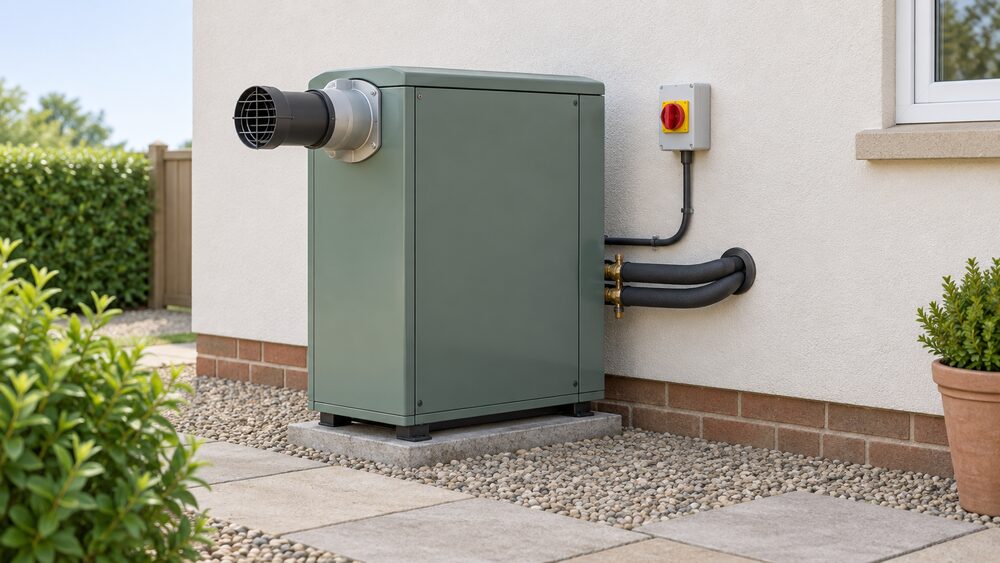
The Vortex is Grant UK's oil boiler family, and the Eco External is the variant the maker documents in most detail. It is a condensing oil boiler designed to sit outside the building rather than in a kitchen or utility room, which is why it ships with a factory-fitted multi-directional flue and built-in frost protection, a mains isolating switch and a test switch1. Those are the features that make an outdoor installation practical in a British winter.
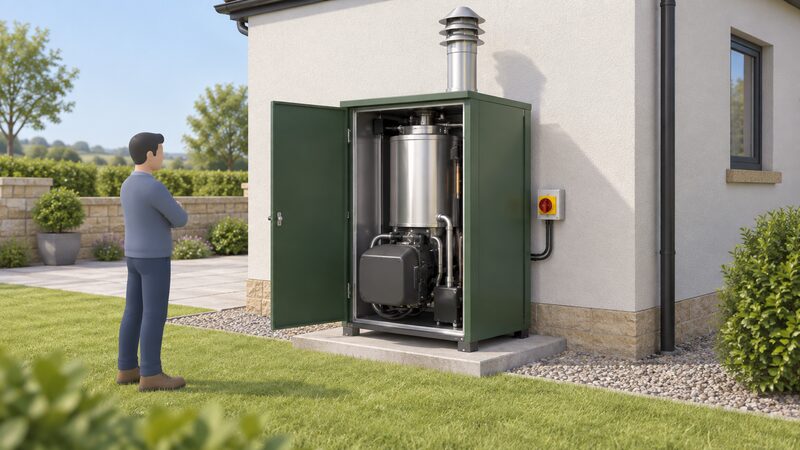
Inside, the appliance uses Grant's patented stainless steel heat exchanger paired with the latest Riello low NOx burner technology1. The combination is the core of the design: a corrosion-resistant exchanger to handle the acidic condensate that condensing oil boilers produce, and a burner specified to meet low NOx limits. Grant UK also states that the range is biofuel compatible, depending on the type of biofuel and the percentage blend1. That is a maker's statement about the appliance's tolerance of a blend, not a claim about what a distributor will deliver or at what price.
The wider Vortex family sold in the UK extends well beyond the Eco External, covering internal, external, kitchen and utility formats. This page deals with the Eco External because it is the model for which the maker publishes output, efficiency and specification figures. Households weighing oil against other off-grid options can read the wider picture in oil boilers and heating oil and heating a home off the gas grid.
Outputs from 15kW to 70kW: matching a model to the house
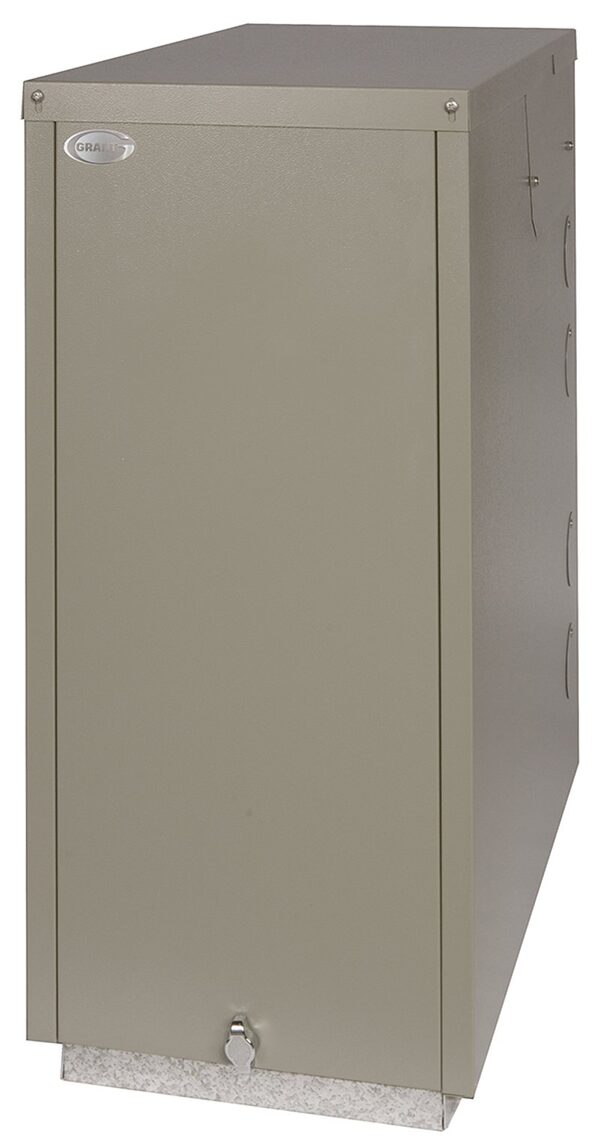
The published Eco External range steps through three bands: 15-21kW, 21-26kW and 26-35kW1. Each band is a range rather than a single figure because the burner is set at commissioning to match the property's actual heat loss, so the same appliance can serve a smaller or larger house within its band. The maximum output of each is 21kW, 26kW and 35kW respectively1.
That structure is the practical heart of choosing a Vortex. A small cottage with modest heat demand sits at the bottom of the range, while a larger detached house with more exposed walls and a bigger radiator circuit needs the top band. The bands overlap deliberately, so an installer can commission a unit to the calculated demand rather than to a nominal badge. Getting that calculation right matters more than the model name: an oversized oil boiler cycles, condenses less and burns more fuel than the house requires. The general method is set out in boiler sizing.
The plan for this page refers to outputs running to 70kW. The maker's published figures for the Eco External stop at 35kW, so no higher output is stated here. Households needing more than the published bands should treat the figure as unconfirmed and check the current range with the manufacturer or an OFTEC-registered technician, whose registration requirements are covered in OFTEC registration.
| Model band | Maximum output | Published efficiency |
|---|---|---|
| Vortex Eco External 15-21 | 21kW1 | 92.7%1 |
| Vortex Eco External 21-26 | 26kW1 | 91.7%1 |
| Vortex Eco External 26-35 | 35kW1 | 92.4%1 |
Thirty-four models: how the range is organised
Grant UK does not publish a single model count for the Vortex line on the pages available here, so the widely quoted figure of thirty-four models cannot be confirmed from the maker's own material. What can be confirmed is how the range is organised. The Eco External splits into three output bands, and each band is also offered as a sealed system model1.
That sealed system option is the significant structural choice. A sealed system model includes a factory fitted expansion vessel, filling loop, pressure gauge, automatic air vent, pressure relief valve and high efficiency circulating pump1. In other words, the components that would otherwise be added separately on site are built into the appliance. For a household, that means a pressurised heating circuit with no feed and expansion tank in the loft, which suits properties where loft space is limited or where a traditional open vented arrangement is awkward.
The distinction between a heat-only boiler and a sealed system model is the same one that runs through gas heating, and it is explained in system boilers and regular, heat-only and conventional boilers. The Vortex Eco External is a heat-only appliance in its standard form, so domestic hot water comes from a separate cylinder rather than from the boiler itself. Cylinder types and sizing are covered in hot water cylinders.
Wall-hung options: the Vortex Eco Internal
The Eco External is not a wall-hung indoor boiler. It is an outdoor unit, and its specification reflects that: a factory-fitted multi-directional flue, built-in frost protection, a mains isolating switch and a test switch1. The multi-directional flue gives flexibility in where the terminal points, which matters when the unit is sited against a wall with windows, doors or a boundary nearby. Flue rules generally are set out in boiler flues.
For households that need the boiler inside the building, Grant's wider Vortex family includes internal and kitchen or utility formats. Those variants are not documented with output and efficiency figures on the pages available here, so no figures are given for them. The practical question is siting: an outdoor unit frees internal space and removes the flue route through the building, but it needs a suitable external position, a frost-protected location and a condensate route. An indoor unit avoids the weather but consumes internal space and needs a conventional flue path.
Frost protection is worth understanding in either case. The Eco External is supplied with built-in frost protection1, but that protects the appliance, not necessarily the whole installation. Pipework running to an outdoor boiler is the exposed part of the system, and it is the part most likely to be affected in a hard winter.
Efficiency: what the Vortex is designed to achieve
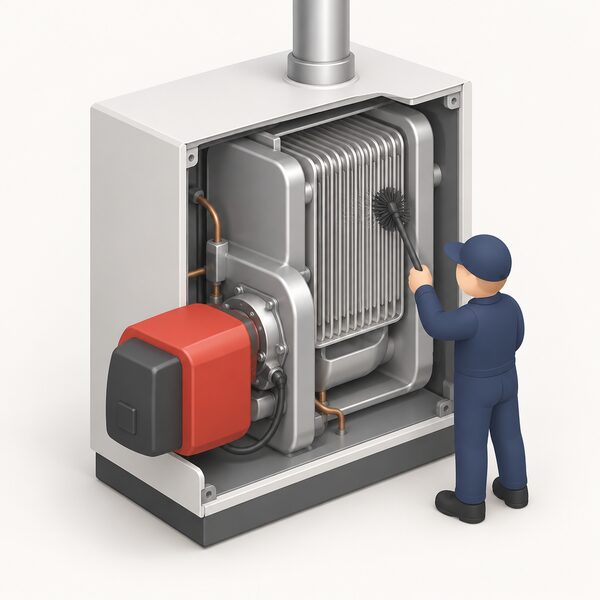
Grant UK publishes space heating efficiencies of 91.7 to 92.7% for the Eco External range1. The individual figures are 92.7% for the 15-21kW unit, 91.7% for the 21-26kW and 92.4% for the 26-35kW1. The smallest unit in the range carries the highest published figure, which is a common pattern: lower-output appliances spend more of their running time at the part-load conditions where condensing boilers perform best.
Those are maker figures for specific appliances, and they describe the appliance rather than the installation. A condensing oil boiler only reaches its rated efficiency when it actually condenses, which depends on the return water temperature coming back from the radiators. That in turn depends on flow temperature, radiator sizing and how the system is balanced. The principles are the same as for gas and are covered in condensing boilers, boiler flow temperature and heating system design and balancing.
The gap between a published figure and a real installation is where most of the variation sits. A Vortex commissioned to the correct output, with a clean system and correctly sized radiators, will run closer to its published number than one oversized and left at a high flow temperature. Annual servicing matters too, since a fouled heat exchanger or a badly adjusted burner erodes efficiency over time. Servicing requirements are covered in boiler servicing and maintenance.
Oil boilers and the move away from fossil heating
The policy context for any new oil boiler is now the decisive part of the decision. The Boiler Upgrade Scheme provides upfront capital grants to support the installation of heat pumps and biomass boilers in homes and non-domestic buildings5. An air-to-water heat pump in an off-gas grid property replacing any other fossil fuel heating system is an approved grant category2, and an uplifted grant of £9,000 applies to air-to-water or ground source heat pumps in eligible off-gas grid properties, added in July 20263. Independent guidance puts that £9,000 figure on eligible off-gas-grid properties replacing oil or LPG heating, available from 21 July 2026 to 31 March 20276. Standard grants are up to £7,5007.
Take-up has been dominated by fossil fuel replacement from the start. In the scheme's first year to 31 March 2023, 74.1% of grants paid replaced fossil fuelled heating systems8. By 31 July 2026, around 76.3% of grants paid since the start of the scheme were for the replacement of fossil fuelled heating systems such as gas boilers9. The scheme covers England and Wales10, and its purpose is to help cover the cost of installing low carbon heating technologies11.
Scotland has taken a separate path. The Heat in Buildings Strategy set out phasing out the need to install new or replacement fossil fuel boilers in off-gas properties from 2025, and in on-gas areas from 20304. A later consultation described phasing out the need to install new or replacement fossil fuel boilers in off gas areas from 202512. A call for evidence focused on action to decarbonise off gas grid buildings heated by high carbon fossil fuels such as oil and coal13. The Future Homes Standard moves new homes away from fossil-fuel boilers to low carbon heating systems, often heat pumps14. Wales has its own Warm Homes Programme, under which gas boiler replacements move to be the exception rather than the default, with the programme favouring repair of fossil fuel assets and a shift towards low carbon heating15.
For a household on oil, the practical position is that a Vortex remains a legal and efficient appliance to install and run, while the grant money and the regulatory direction both point at heat pumps. Heat pumps require a water storage cylinder to provide hot water, similar to older generations of gas boiler systems16, so a household already running a cylinder with an oil boiler is not starting from scratch on the hot water side. The comparison between the two routes is set out in heat pumps compared with boilers and Grant vs Worcester oil boilers.
What the Vortex means for energy independence
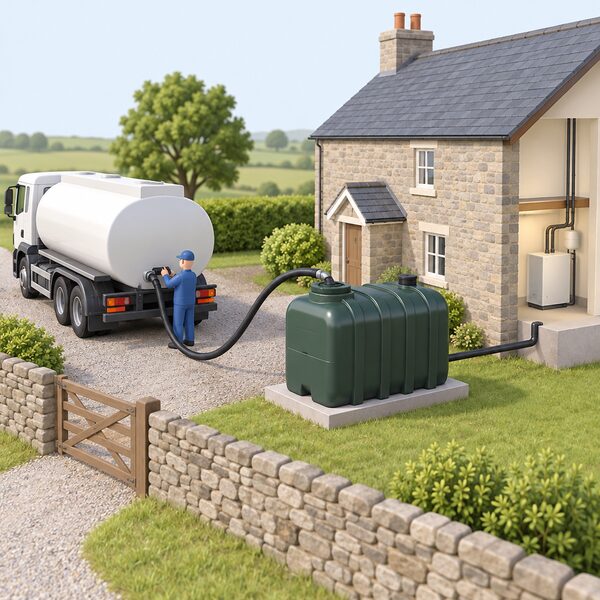
An oil boiler gives a household something a gas boiler cannot: independence from the gas grid and from a gas supplier. There is no mains connection to depend on, no standing charge to a gas network, and no interruption to the property's heat when the gas system has a problem. For a rural property that has never been connected, that is the whole point of the fuel.
The dependence that remains is on a fuel distributor and a delivery tanker. Heating oil is bought in bulk, stored on site and priced at the point of order, so the household carries both the storage risk and the price risk. The tank itself is a regulated installation with siting and inspection rules, covered in domestic heating oil tanks. Biofuel compatibility, which Grant UK states for the Eco External depending on type and blend1, is a route to lowering the carbon content of that delivered fuel, but it does not remove the delivery.
There is also an electrical dependence. An oil boiler needs mains electricity for the burner, the pump and the controls, so a power cut stops the heating even with a full tank. That is the same position as a gas boiler, and it is the reason off-grid households sometimes pair a generator or battery storage with the heating system. The wider picture is covered in home heating and energy independence.
Sources16 cited
- Vortex Eco External oil-fired boiler, Grant UK, 2026-09-20
- Notice of approved grant categories and values for the Boiler Upgrade Scheme, GOV.UK, 2026-07-21
- Summary of updates for BUS guidance for property owners v5.1, Ofgem, 2026-07
- Heat in Buildings Strategy, Scottish Government, 2021-10
- Boiler Upgrade Scheme quarterly report, issue 17, Ofgem, 2026-08-31
- The Warm Homes Plan, Elmhurst Energy, 2026-07-21
- Boiler Upgrade Scheme: approved grant categories and values, Ofgem, 2026-09-18
- Boiler Upgrade Scheme annual report 2022-23, Ofgem, 2023-07-31
- Boiler Upgrade Scheme annual report, April 2025 to March 2026, Ofgem, 2026-07-31
- £5 million to help Welsh households invest in greener homes, Welsh Government, 2026-03-05
- Boiler Upgrade Scheme guidance for property owners, Ofgem, 2025-02-03
- Changing the way we heat our homes and buildings: consultation, Scottish Government, 2023-11-28
- A future framework for heat in buildings, CIBSE, 2026-09-17
- Get Future Homes Standard ready, Future Homes Hub, 2026-03-04
- New Warm Homes Programme: children's rights impact assessment, Welsh Government, 2024-03-08
- What impact can heat pumps have in domestic heating today, GOV.UK, 2023-11-21
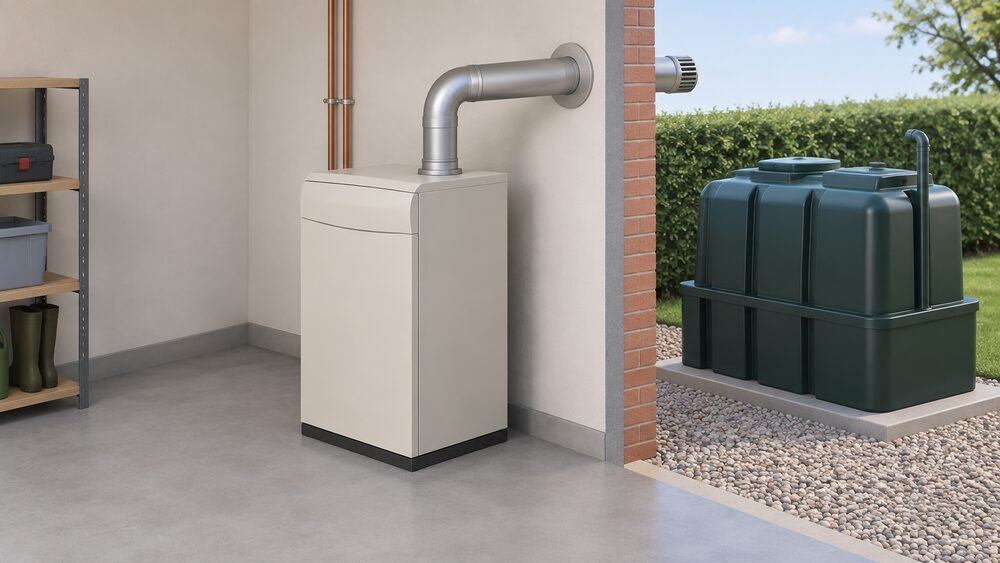 Grant oil boilersGrant oil boilers suit homes with no gas supply, so which Vortex model fits your house, and can it run on greener fuel later?
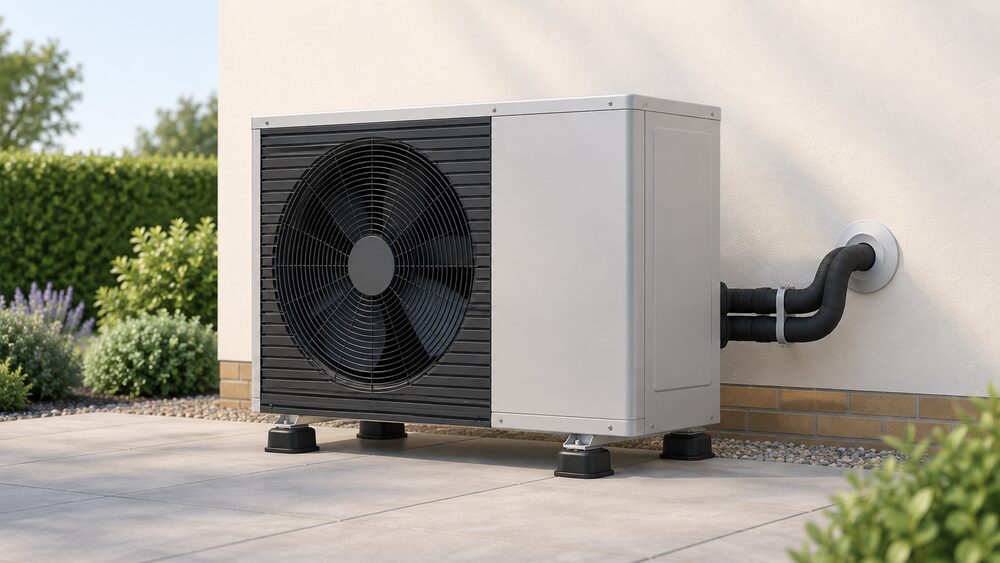 Grant Aerona 290 heat pumpThinking about a Grant Aerona 290?
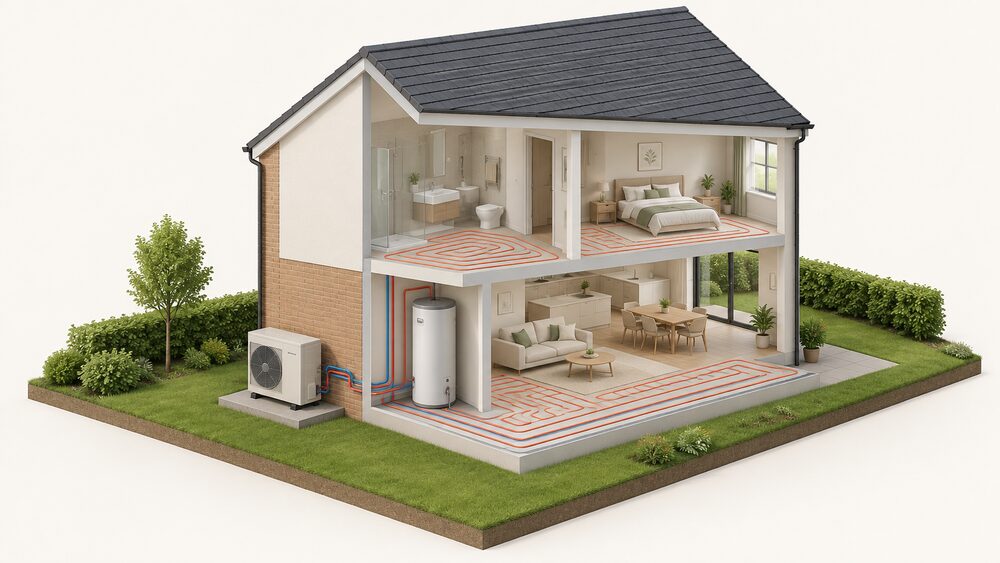 Grant heat pumpsGrant air source heat pumps run on electricity and heat your home through radiators or underfloor heating.
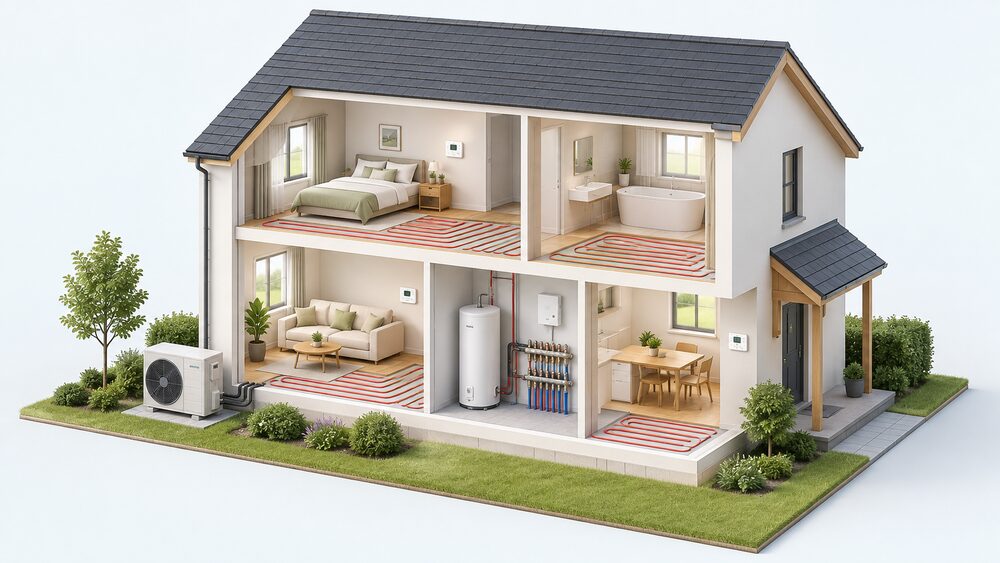 Grant Heating ControlsGrant makes heating controls for its own air source heat pumps, not for boilers.
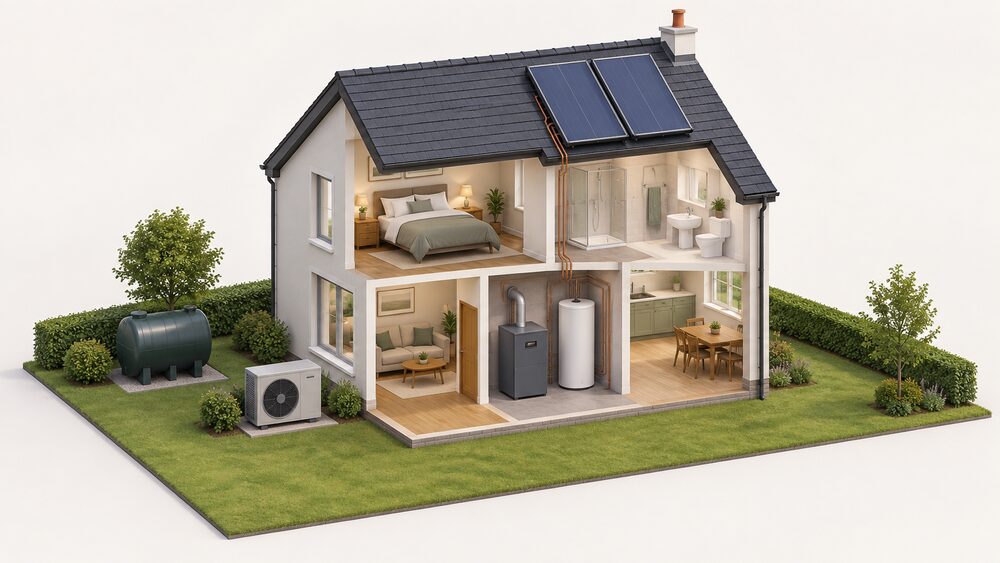 Grant UK oil boilers and heat pumpsGrant UK makes oil boilers for homes off the gas grid, and also sells air source heat pumps if you would rather move away from oil.
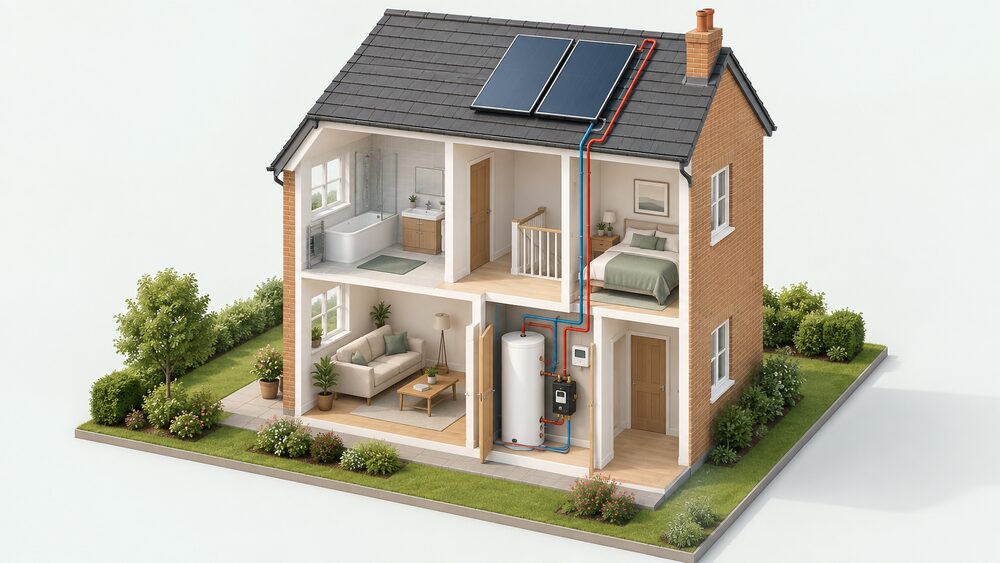 Grant solar thermalGrant solar thermal panels heat your hot water using sunlight, working alongside your boiler rather than replacing it.