
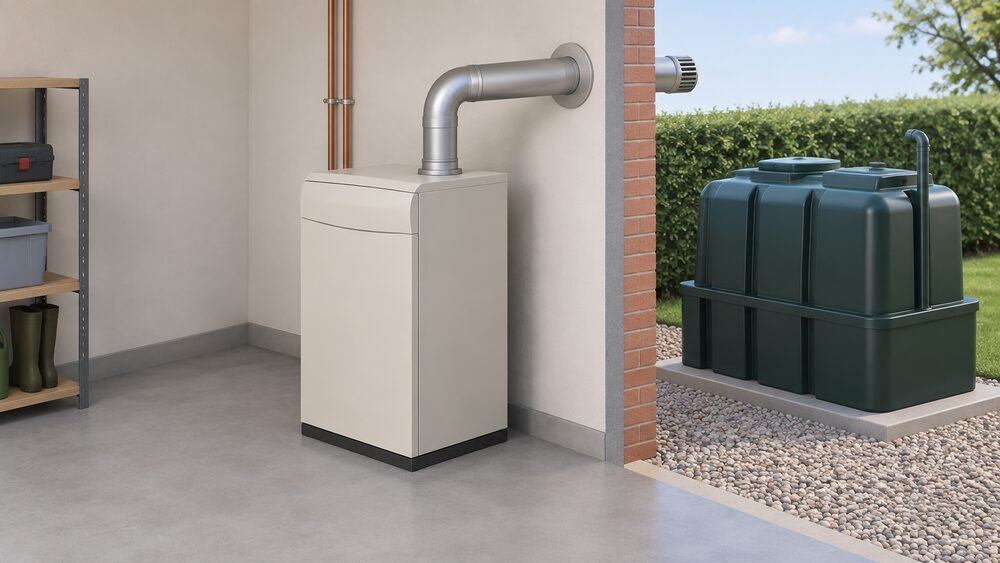
In this guide
Grant UK is a British oil boiler manufacturer that has been building oil-fired boilers for over 40 years, and its products have been heating homes since 19781. The Vortex is the range that carries the brand in off-gas-grid homes, and it covers floor standing, wall hung, boiler house and combi boiler models1. All of the Grant Vortex floor standing oil boilers are HVO compatible, which means they can be converted to run on Hydrotreated Vegetable Oil biofuel in a few simple steps1.
Oil boilers serve an estimated four million homes in the UK with no access to mains gas2. For those households the choice is not between oil and gas, because gas is not available; it is between oil, LPG, electric heating and a heat pump. Grant's position in that market rests on a long manufacturing history, a wide model range and a guarantee of up to 10 years when the boiler is installed by a G1 Oil Boiler Installer, with terms and conditions applying1.
What follows sets out the company, the range, what the condensing heat exchanger does, what HVO compatibility actually means, how the Vortex sits alongside hybrid and heat pump options, what servicing involves, and where oil heating stands as the Boiler Upgrade Scheme changes.
Grant UK: the company behind the Vortex
Grant UK has been designing and manufacturing oil-fired boilers for over 40 years, and its products have been heating homes since 19781. That makes it one of the longer-standing names in a market that serves an estimated four million UK homes without a mains gas connection2. The company has won over 35 awards recognising its product innovation and support, and it has marked a 30th anniversary with a timeline video1.
The company's activity is not confined to selling boilers. Grant UK has a partnership with Colchester Institute, supplying HVO compatible Vortex oil boilers for OFTEC training and assessment, and delivering heat pump training at Colchester Institute's Net Zero Training Centre1. It has also opened its Swindon training facility to homeowners in partnership with Nesta, under a "Visit a Grant Heat Pump" programme, and runs a podcast series on heat pump installation1. A three-year sponsorship deal positions it as an Official Partner and Club Sustainability Partner to a rugby club1.
For a household, the practical significance of this is continuity. A manufacturer that trains technicians, supplies equipment for OFTEC assessment and maintains a technical support function is a manufacturer whose boilers can be serviced and repaired by people who have been trained on them. That matters more in oil heating than in gas, because oil boilers are serviced by OFTEC-registered technicians rather than by the gas safe network, and the availability of trained engineers in a rural area is a real constraint on how usable a boiler is over its life.
The dependence that remains is straightforward: an oil boiler ties a home to a fuel supplier and to a delivery schedule, and to a technician network. Grant UK's own manufacturing and training presence in the UK shortens the supply chain for parts and support, but it does not remove the fuel dependency.
The Vortex range: floor standing, wall hung, boiler house and combi
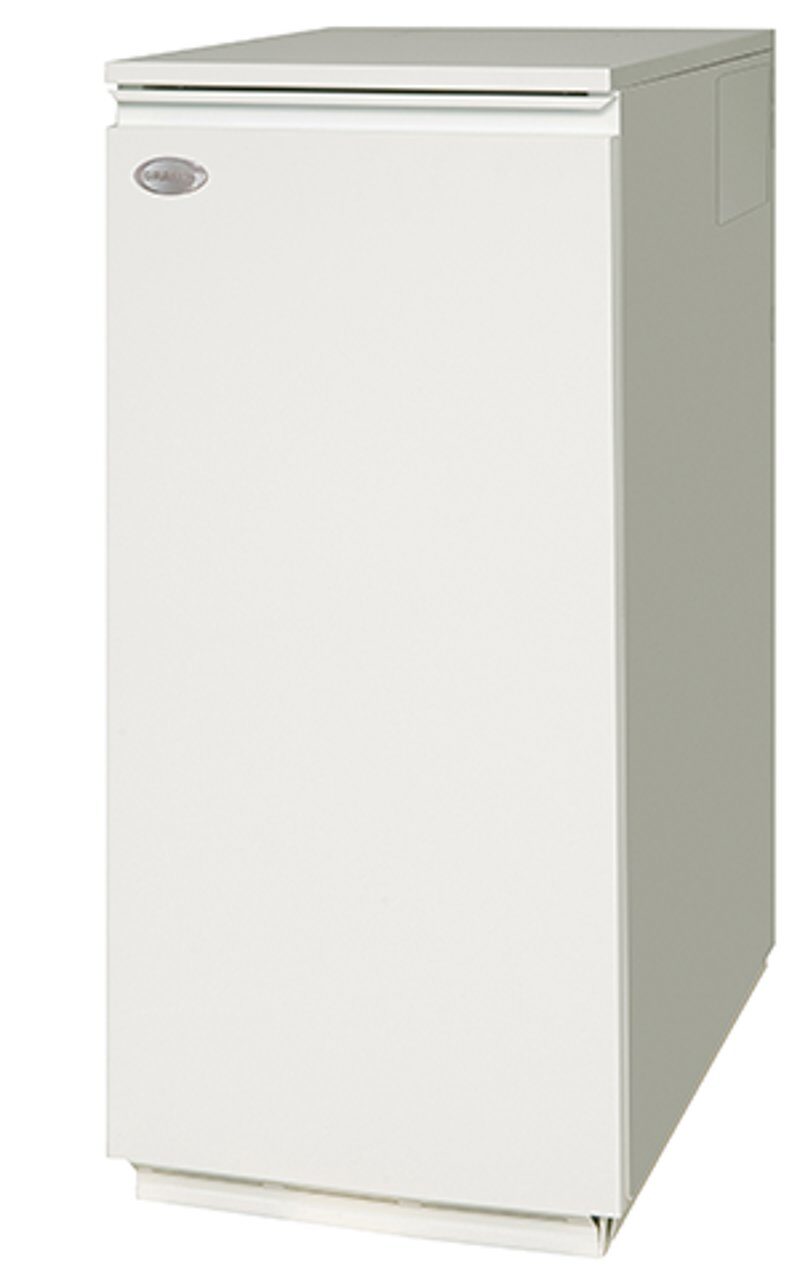
The Vortex oil boiler range includes floor standing, wall hung, boiler house and combi boiler models1. Those four categories map onto the physical situations that off-gas-grid homes actually present: a utility room or kitchen with floor space, a wall with enough clearance, an outbuilding or external boiler house, and a home where hot water comes from the boiler itself rather than from a separate cylinder.
| Vortex format | Where it fits | Hot water arrangement |
|---|---|---|
| Floor standing | Utility room, kitchen or outbuilding with floor space | Cylinder or combi, depending on model1 |
| Wall hung | Wall with sufficient clearance | Cylinder or combi, depending on model1 |
| Boiler house | External or outbuilding installation | Cylinder or combi, depending on model1 |
| Combi | Home with no cylinder or cold water tank | Instantaneous, from the boiler itself1 |
The distinction between them matters for more than siting. A combi model removes the need for a hot water cylinder and a cold water tank, which frees space and reduces the number of components that can fail, but it also means hot water output is limited by the boiler's ability to heat water instantaneously. A floor standing or boiler house model paired with a cylinder can serve multiple bathrooms at once. The combi, system and regular distinctions are explained in more detail elsewhere on this site, and they apply to oil boilers in the same way they apply to gas.
Grant UK's range breadth is deliberate. A manufacturer that offers only one or two chassis sizes forces installers to compromise on siting; a range that spans floor standing, wall hung, boiler house and combi gives the installer a unit that fits the building rather than a building that has to be adapted to the unit. For a householder, the practical question at quotation stage is which of the four categories the property can accommodate, because that determines the model family before output is even discussed.
Efficiency and the condensing heat exchanger
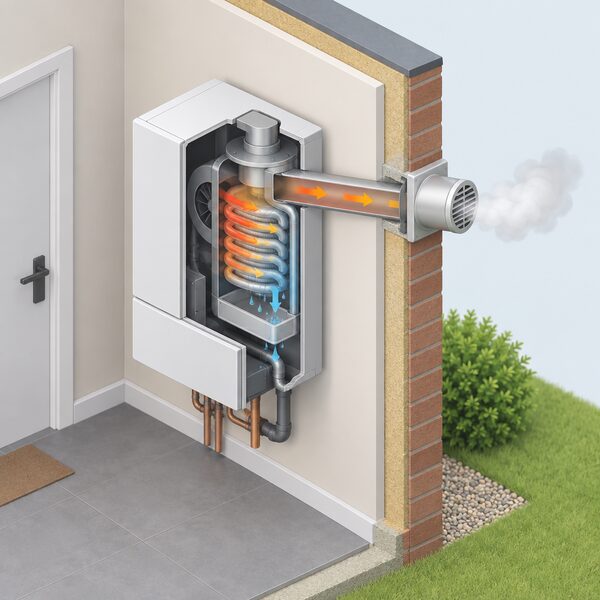
Condensing boilers are more efficient than older boilers because they capture and reuse more of the heat from gases that normally escape in the boiler's flue3. A condensing boiler recovers more heat and loses less heat through its flue pipe than older models4, and the principle is that it extracts the heat from the hot exhaust gases, or flue gases, to pre-heat the water fed into the boiler5. Independent guidance puts a condensing boiler's capability at using around 90% of their heat2, and describes them as up to 97% efficient as opposed to the 60 to 70% efficiency of an older boiler, in the context of replacing a boiler over six years old6.
The Scottish House Condition Survey gives a useful picture of how far this has spread. In 2024, 90% of gas and oil boilers in Scotland were condensing boilers, an increase of 52 percentage points since 20127. That is official statistics rather than a manufacturer's claim, and it shows that the condensing transition in oil heating is largely complete: a household replacing an oil boiler today is almost certainly replacing a condensing unit with another condensing unit, not making the leap from an old non-condensing model.
One comparison is worth stating plainly because it bears on running costs. Modern gas condensing boilers are more energy efficient than the average oil boiler8. That is not a statement about Grant's products specifically, and it does not help a household with no gas connection, but it explains why oil heating carries a running-cost penalty relative to mains gas even when both appliances condense.
What determines real-world efficiency in a fitted system is whether the boiler actually condenses, which depends on return water temperature and therefore on flow temperature and radiator sizing. The flow temperature setting is the single largest lever a household has over this, and the wider subject is covered under boiler efficiency and ErP ratings.
HVO biofuel: what compatibility means for an oil-heated home
Hydrotreated Vegetable Oil is a renewable liquid fuel that offers a lower-carbon alternative to traditional heating oil9. All of the Grant Vortex floor standing oil boilers are HVO compatible, which means they can be converted to using Hydrotreated Vegetable Oil biofuel in a few simple steps1. A bunded oil tank is compatible with renewable liquid fuels like HVO9, and is also described as compatible with liquid biofuel10.
The fuel oil industry has proposed introducing these fuels as a blend with kerosene, enabling immediate carbon reductions in existing oil boilers without upfront cost or disruptive change11. That proposal is the crux of the HVO case: a blend would let existing oil boilers cut carbon without replacing the appliance or the tank, whereas a full switch to unblended HVO would require a conversion and a fuel supply that is not yet general.
The limit is supply, not the appliance. A boiler that can run on HVO still needs a supplier delivering HVO to the property, and the industry's own framing is that blending with kerosene is what makes immediate reductions possible. Until that supply exists at scale, HVO compatibility is a future-proofing attribute rather than a change a household can make on its own. The wider picture is set out under heating a home off the gas grid and oil boilers and heating oil.
Vortex, hybrid and heat pumps: how the ranges fit together
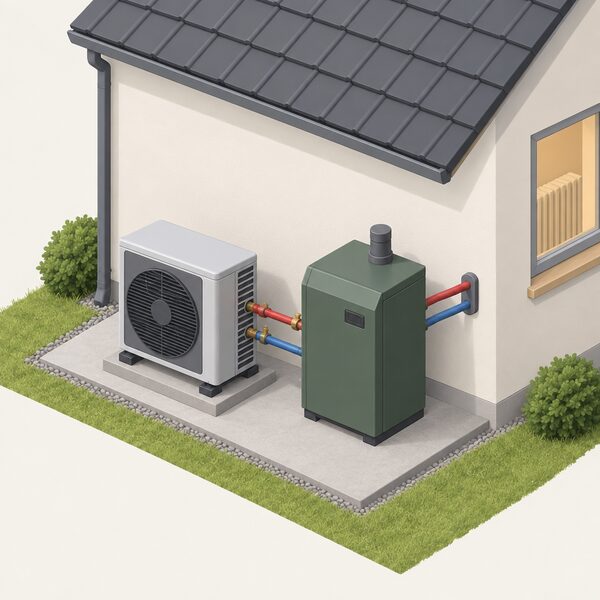
Grant UK has discontinued the VortexAir Hybrid12. The company's own support article states that the hybrid has been discontinued and directs attention to the EvoLink Smart Hybrid System Hub instead12. That is the first thing to know about the hybrid option: it is not a current product.
The VortexAir was designed to be installed outdoors, with both the boiler and heat pump located next to each other outside the building12. The boiler was always fitted first and the heating system in the building connected directly to it, with the heat pump then connected directly to the boiler12. The boiler and heat pump did not need to be installed at the same time, and the oil boiler could be installed and, if necessary, operated as a stand-alone unit for an indefinite period until the heat pump was connected12. It was supplied meter ready to allow both a heat meter and an electricity meter to be easily fitted12.
Two fuel conditions applied to that unit and are worth recording because they show how specific oil appliances can be. The VortexAir Hybrid was only suitable for use with standard kerosene, Class C2 to BS2869, and gas oil, Class D to BS2869, must not be used with the hybrid boiler12. Its control panel sat inside the boiler casing, immediately above the burner12.
Hybrid systems more generally remain a recognised approach. Independent guidance notes that oil and LPG boilers can also be used in hybrid arrangements, that systems running on an electric heat pump along with natural gas, LPG, or oil are an effective interim solution, and that this should include both integrated and non-integrated appliances, and both new and existing gas condensing, LPG or oil boilers using a single hybrid intelligent control13. For a household already on oil, that describes a route where a heat pump is added alongside the existing boiler rather than replacing it outright.
The wider comparison between the two approaches is covered under heat pumps compared with boilers.
Servicing and maintenance: what an annual service covers
Grant UK publishes troubleshooting guidance that lists the checks a heating engineer can carry out on an oil boiler14. Those checks include cleaning the boiler heat exchanger, checking the air damper setting, checking whether there is insufficient draught, checking the condition of the flue, checking the nozzle size and type, checking the condition of the fan, and checking and adjusting the fuel pressure as required14. The article frames these as tasks a heating engineer can check, not as householder maintenance14.
That list is a useful description of what an oil boiler service actually involves, because it shows the service is not a single inspection but a set of adjustments across the combustion side of the appliance. Nozzle size and type, fuel pressure and air damper setting together determine how cleanly the burner fires; draught and flue condition determine whether combustion products leave safely. A service that skips any of these is not a full service.
For comparison, an annual boiler service is included as standard across the entire British Gas HomeCare range, and the HomeCare Basic policy provides cover for a gas boiler and controls including all repairs and, subject to certain terms, replacement of the boiler if necessary, plus accidental damage protection and an annual boiler service15. That is a gas-focused product and does not apply to oil boilers, but it illustrates the shape of the cover market. Oil boiler cover is arranged separately, and the boiler cover and service plans page sets out how these products differ.
The practical expectation for an oil-heated home is an annual service by an OFTEC-registered technician, with the checks above carried out and the appliance adjusted. Between services, the householder's role is limited to monitoring the tank, watching for changes in how the boiler sounds or fires, and booking the service before the heating season rather than during it. The general subject is covered under boiler servicing and maintenance.
What owning an oil boiler means for energy independence
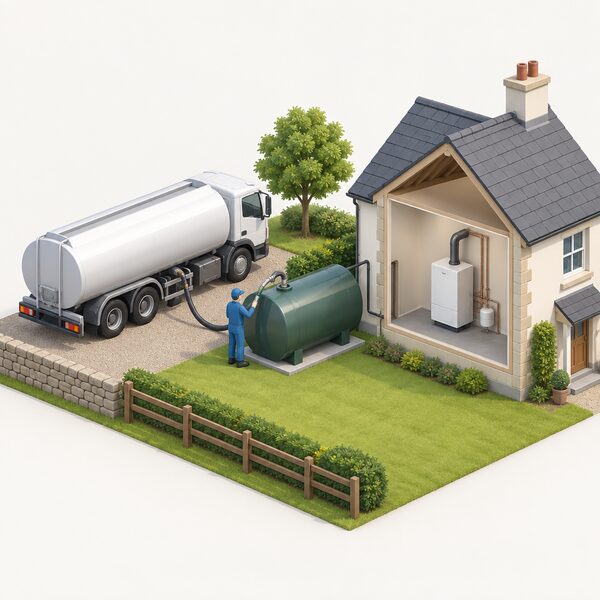
Oil heating gives a household a form of independence that mains gas cannot: the fuel is stored on site, so a delivery fills a tank and the home can run for weeks without further contact with a supplier. That is a genuine resilience advantage in rural areas where power and gas infrastructure is thin. It is also a dependence of a different kind, because the household is tied to a delivery schedule, to a fuel price it does not control, and to a supplier network that may be thin in remote locations.
The Boiler Upgrade Scheme illustrates how policy treats oil. The scheme provides grants to encourage property owners to replace existing fossil fuel heating with more efficient, low carbon heating systems16, and fossil fuel heating systems include oil, gas, electric or LPG17. A property heated by oil or LPG with no mains gas connection at the property meets an additional grant eligibility condition17. The scheme provides upfront capital grants to support the installation of heat pumps and biomass boilers in homes and non-domestic buildings18, and grants for heat pump installations across England and Wales16.
For a household weighing independence, the position is that an oil boiler keeps the home on a delivered fuel, with storage on site and no connection to a gas network. What it does not do is remove the dependence on a supplier, a delivery schedule or a fuel market. The wider subject is covered under home heating and energy independence.
Where oil boilers sit as the Boiler Upgrade Scheme changes
The Boiler Upgrade Scheme currently bases grant categories on replacement technology type19. One approved grant category is a biomass boiler in an off-gas grid property replacing an oil heating system, with a grant value of £5,00020. Eligible technology under the scheme includes ground source heat pumps21, and the scheme is administered with grants for heat pump installations across England and Wales16.
Take-up figures show how significant oil replacement has been. Of the grants awarded, 11,792, or 17.5%, replaced oil systems22. That is official statistics and it makes oil-heated homes one of the larger single groups using the scheme, which is consistent with the fact that these households have no mains gas alternative and are therefore the most obvious candidates for a heat pump.
Eligibility conditions are worth setting out because they are specific. A householder must own the property being applied for, including if it is a business, a second home, or a property rented out to tenants, and must be replacing a fossil fuel heating system such as oil, gas, electric or LPG17. A self-build property is eligible if it has never been owned by a business or organisation17, and eligible self-builds are owned by individuals and built either through a builder or as a DIY project, not by companies or developers, and must meet criteria including that the building was built principally with the labour or resources of the first owner, has never been owned wholly or partly by a person who is not an individual, and was first occupied after the first commissioning date of the heat pump24. A biomass boiler grant requires the property to be off the gas grid, in a rural location, and the boiler to have an emissions certificate showing that polluting emissions are kept to a minimum17.
The direction of travel for new build is separate and firmer. Under the Future Homes Standard consultation, gas boilers, including hybrid and hydrogen-ready boilers, will not meet the proposed standards, and fossil fuel heating will not meet this standard, including hydrogen-ready and hybrid boilers25. That applies to new homes rather than to replacements in existing ones, but it signals where policy is heading. The Future Homes Standard and new build heating page covers that in full, and the Boiler Upgrade Scheme page covers the grant mechanics.
Sources26 cited
- Grant UK, Grant UK, 2026-09-20
- Different boiler types, Uswitch, 2026-09-18
- Boilers advice, Energy Saving Trust, 2026-05-20
- Boilers, Home Energy Scotland, 2026-09-20
- Upgrading and replacing your boiler, Centre for Sustainable Energy, 2026-06
- Help and advice, UKIFDA, 2026-01-29
- Scottish House Condition Survey 2024 key findings, Scottish Government, 2024
- Heating fuel guide, Uswitch, 2026-01-27
- Energy efficiency tips, UKIFDA, 2026-02-18
- Future liquid fuels, UKIFDA, 2026-01-27
- Government launches consultation on the future of heating for oil heated homes, UKIFDA, 2025-12-22
- Hybrid product support, Grant UK, 2026-09-17
- HHIC hybrid heat pump guidance, HHIC, 2026-09-17
- What to check if the burner flame is slow to stabilise, Grant UK, 2026-09-17
- British Gas HomeCare guide, Uswitch, 2026-06-01
- Apply for the Boiler Upgrade Scheme, GOV.UK, 2026-09-17
- Check if you're eligible for the Boiler Upgrade Scheme, GOV.UK, 2026-09-17
- Boiler Upgrade Scheme installers, Ofgem, 2026-09-17
- Boiler Upgrade Scheme guidance for installers, Ofgem, 2026-04-28
- Notice of approved grant categories and values, GOV.UK, 2026-07-21
- Boiler Upgrade Scheme quarterly report issue 14, Ofgem, 2025-11-26
- Boiler Upgrade Scheme quarterly report issue 17, Ofgem, 2026-08-31
- Boiler Upgrade Scheme consumer grants and incentives, MCS Certified, 2026-09-17
- Boiler Upgrade Scheme participant guidance, Ofgem, 2023-09-25
- The Future Homes and Buildings Standards consultation, GOV.UK, 2026-09-17
- Warm Homes: Local Grant policy guidance, GOV.UK, 2026-07
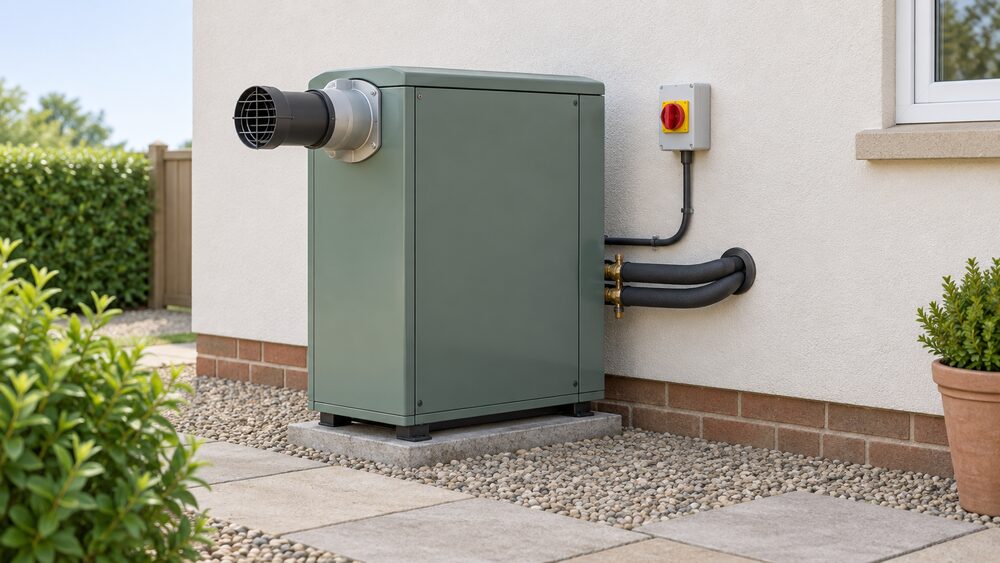 Grant Vortex oil boilerLiving off the gas grid with an oil boiler means you may be comparing a Grant Vortex with a heat pump.
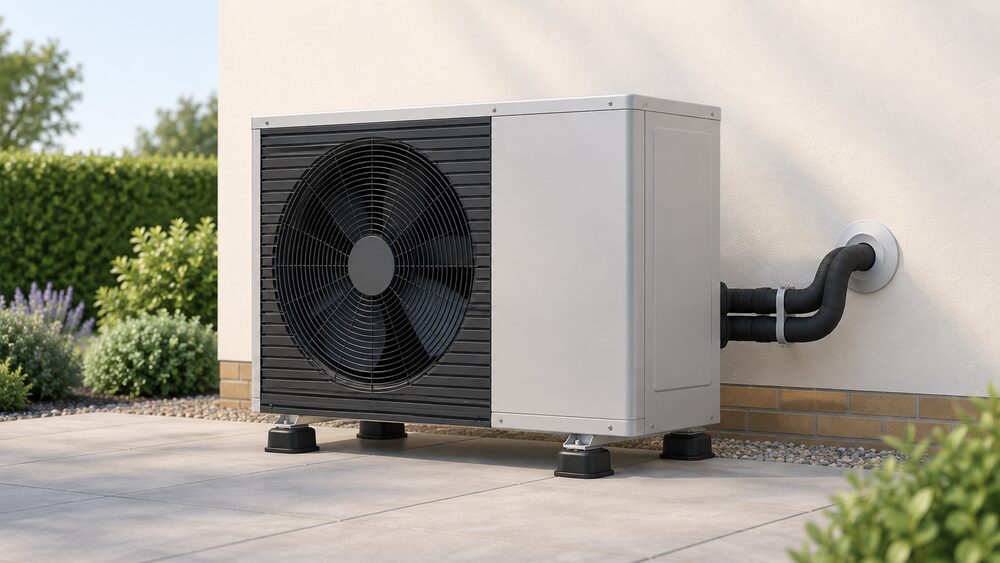 Grant Aerona 290 heat pumpThinking about a Grant Aerona 290?
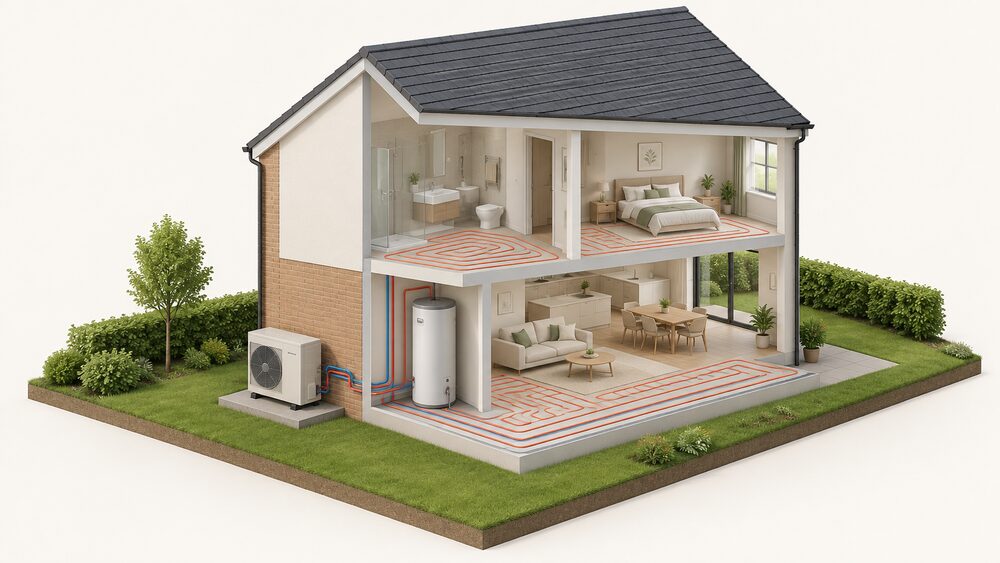 Grant heat pumpsGrant air source heat pumps run on electricity and heat your home through radiators or underfloor heating.
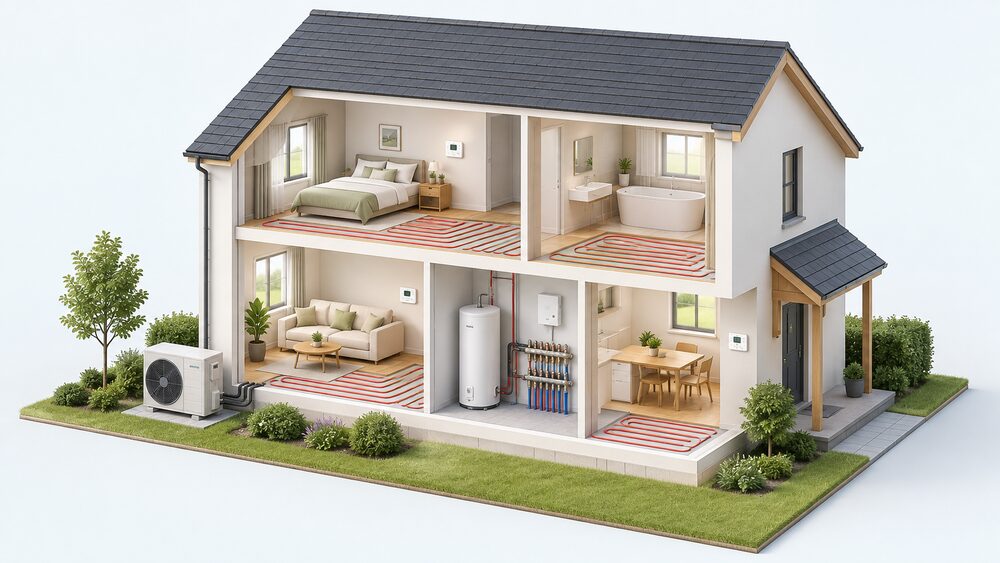 Grant Heating ControlsGrant makes heating controls for its own air source heat pumps, not for boilers.
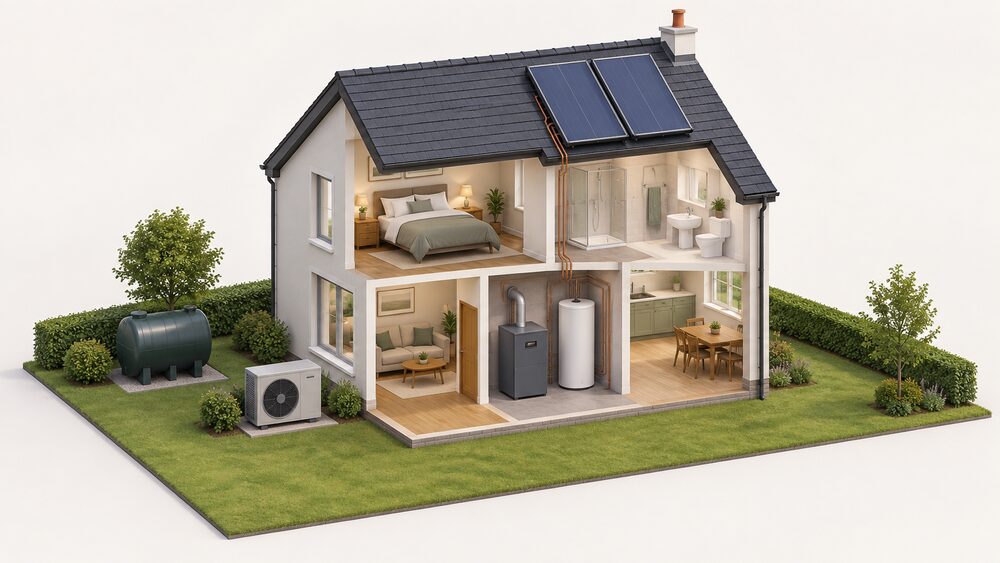 Grant UK oil boilers and heat pumpsGrant UK makes oil boilers for homes off the gas grid, and also sells air source heat pumps if you would rather move away from oil.
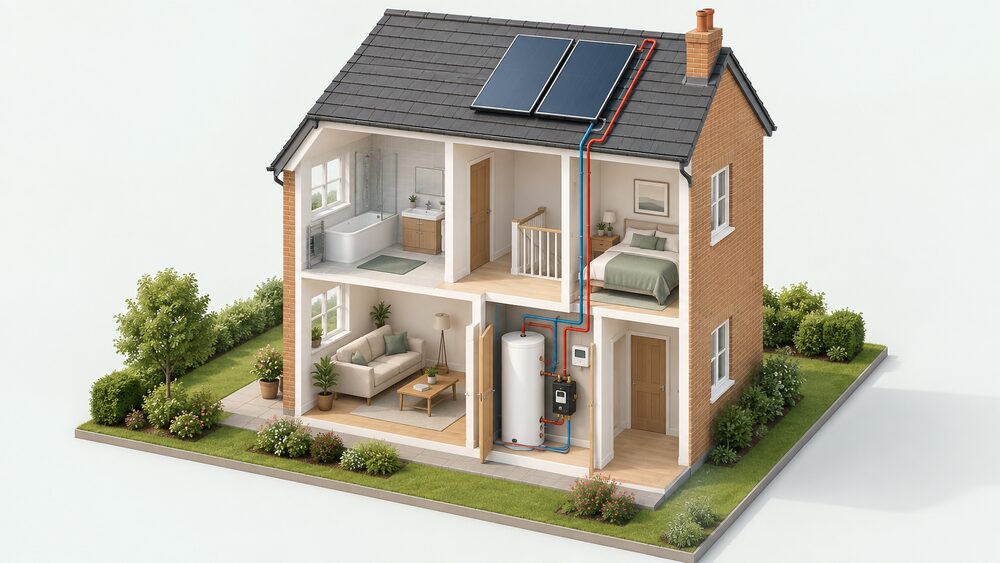 Grant solar thermalGrant solar thermal panels heat your hot water using sunlight, working alongside your boiler rather than replacing it.