

In this answer
Short answer
For an oil-heated home in Northern Ireland, NISEP is the main route to a funded heating upgrade, and the answer to what you can get is narrower than the question suggests. The Northern Ireland Sustainable Energy Programme is administered by the Energy Saving Trust on behalf of the Utility Regulator, and it funds fully or part-funded energy efficient home improvements, varying by location, tenure and income1. Its stated aim is to reduce carbon emissions1.
The critical rule for oil households is this: properties with oil heating at the time of application will be able to have a replacement oil system installed if natural gas is not available1. So an off-gas-grid oil home is not shut out, and is not forced onto a heat pump. Whole house solution schemes provide an upgraded heating system to a less carbon intensive fuel where one is available, with full heating controls such as smart controls2.
What NISEP is not is a single national grant with one application form. It is a collection of schemes, each with its own manager, its own eligibility test and its own contribution rate. Some are fully funded, some require a household contribution of 40% or 50% for heating measures2. The sections below set out what each part covers, who qualifies, and what remains outside the household's control.
What NISEP is and who runs it
NISEP is a Northern Ireland programme, funded through the energy industry and overseen by the Utility Regulator. The Energy Saving Trust is the Programme Administrator, acting on behalf of the Utility Regulator1. It is not a government department scheme and it is not administered by the Northern Ireland Housing Executive, although Housing Executive schemes and NISEP schemes can both appear in the same list of support.
The mechanism matters for a household trying to understand why the offer varies. Scheme managers bid into NISEP to deliver energy efficiency schemes each year2. That means the measures available, the contribution rates and the qualifying criteria are set scheme by scheme, and they can change between programme years. The Utility Regulator publishes a list of schemes for each year, and the current list runs to 2026-273.
The programme's objective is carbon reduction, and the Energy Saving Trust describes it as a collection of energy saving schemes across Northern Ireland offering fully funded or part-funded energy efficient home improvements, varying by location, tenure and income1. For a household, that phrasing is the honest summary: what you get depends on where you are, whether you own or rent, and what you earn.
"NISEP is administered on behalf of the Utility Regulator by Energy Saving Trust"
Oil heating and NISEP: what the scheme covers
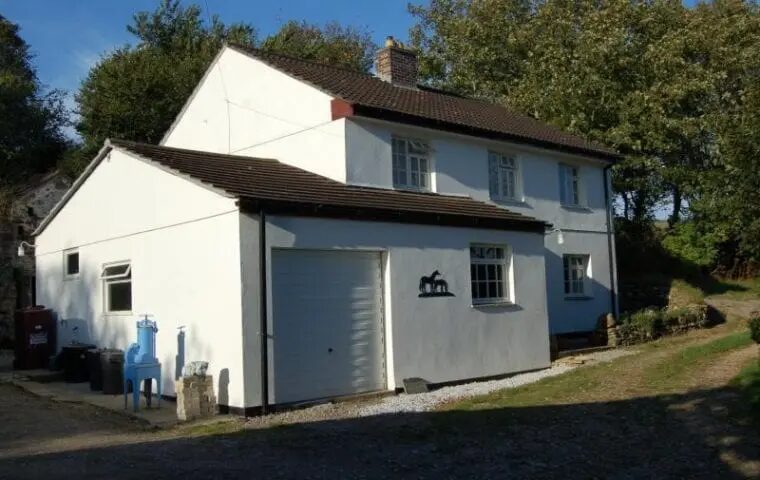
Oil heating is treated as a starting point, not a disqualification. The programme's own rule is that properties with oil heating at the time of application will be able to have a replacement oil system installed if natural gas is not available1. For a rural Northern Ireland household with no gas main, that is the practical answer: the funded replacement can be another oil system.
Where a less carbon intensive fuel is available, whole house solution schemes provide an upgraded heating system to that fuel, with full heating controls including smart controls2. The same schemes cover fabric measures alongside the heating work, including hot water cylinder insulation2. That combination matters more than the boiler swap alone, because a cylinder that loses heat undermines the efficiency of whatever system replaces the old one.
NISEP whole house solution schemes also list an existing solid fuel central heating system among the situations they address2, which reflects the wider Northern Ireland pattern of homes off the gas network using oil, solid fuel or Economy 7 electricity.
What you can get: grant amounts and eligible upgrades

NISEP does not publish a single grant figure. What it publishes is a contribution rate per scheme. Under the Heating and Insulation schemes part funded by NISEP, a 50% financial contribution is required by the applicant for heating only, with the remainder of costs funded under NISEP3. Under the Better Energy Homes Cashback scheme, the applicant contribution for heating only is 40%, with the remainder funded under NISEP3. Under Better Energy Homes Plus, the scheme is fully funded by NISEP and no financial contribution is required by the applicant for any measure3.
That spread, from nothing to half the heating cost, is the single most important thing to establish before applying. It is set by the scheme, not negotiated.
| NISEP scheme | Applicant contribution for heating | Remainder |
|---|---|---|
| Better Energy Homes Plus | None for any measure | Fully funded by NISEP3 |
| Better Energy Homes Cashback | 40% | Funded under NISEP3 |
| Heating & Insulation (part funded) | 50% | Funded under NISEP3 |
For households that want a heat pump rather than a replacement oil system, the funding sits outside NISEP. The Boiler Upgrade Scheme offers £9,000 towards an air-to-water or ground source heat pump for eligible off-grid properties heated by LPG or oil6. The standard grant is up to £7,500, with the higher figure applying to oil and LPG heated properties8. That is a Great Britain scheme, and Northern Ireland households should check the current position before relying on it.
Eligibility: income and benefit criteria for oil-heated homes
NISEP's general targeting rule is that schemes are aimed at households who do not qualify for assistance from other government schemes such as Affordable Warmth3. That is a deliberate division of labour: the Affordable Warmth Scheme, run by the Northern Ireland Housing Executive, handles the benefit-linked households, and NISEP picks up those who fall outside it.
The exclusions are as important as the inclusions. A household is not eligible if it has been approved under another grant-funded programme for the same measure at the same property, or if it received a grant within the last 15 years for the same measure at the same property3.
Individual schemes then add their own tests. The Priority PV Scheme, for example, is open to Northern Ireland Housing Executive tenants only, outside a natural gas area, in a single storey Housing Executive property with oil or electric heating, where a couple or single parent family has an income or pension of less than £35,000 gross3.
For the separate Home Heating Oil Support Scheme, the criteria are explicit: households who use oil as their primary source of heating, are resident in Northern Ireland, and, in either of the qualifying months, are in receipt of a qualifying benefit, or are a single person or couple, including pensioners, with an annual income of less than £30,000 net of allowable deductions5. The published eligibility groups include households in receipt of disability benefits and households on incomes below £30,000 not in receipt of income related benefits9. An award from that scheme will not affect your benefit claim4.
How to apply for a NISEP grant if you heat with oil
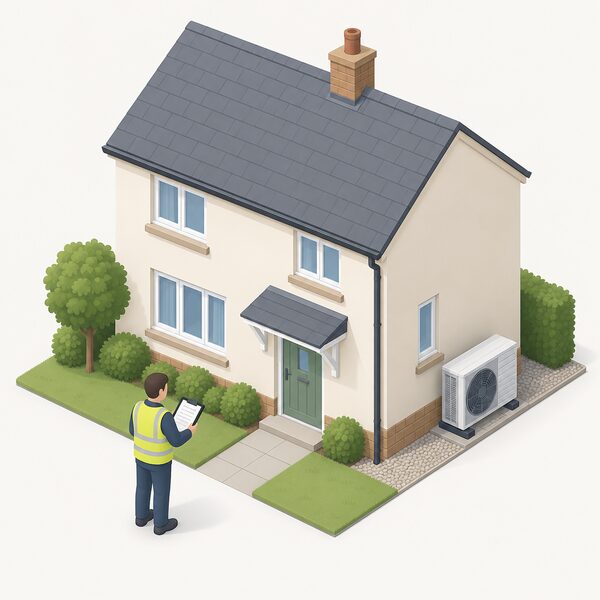
The application route is not a single portal. The Utility Regulator's published process is to identify the scheme you want to apply for, check that you are eligible to receive funding and that it is available in your area, then contact the relevant scheme manager via the telephone number or email address provided7. Each scheme manager runs its own intake.
- Find the current NISEP list of schemes and identify those open in your area and tenure3.
- Check the scheme's own eligibility rules, including the contribution rate for heating measures3.
- Contact the scheme manager directly using the contact details published with the scheme7.
- Complete the scheme's assessment, which for air source heat pump schemes includes an EPC carried out by an accredited domestic energy assessor before and after installation3.
- Wait for approval. The Northern Ireland Housing Executive states it can take up to six months to provide an Approval of Application10.
For the Home Heating Oil Support Scheme, the route is different and quicker: apply online through nidirect, which should take about 10 minutes, and you will need your National Insurance number, your own or joint household income if you are not getting a qualifying benefit, and a contact email address or smartphone number4. Once activated, the voucher can be used to purchase home heating oil with any Northern Ireland oil supplier5.
Oil heating versus the alternatives: what a grant could replace it with
The realistic alternatives to an oil system in Northern Ireland are a replacement oil system, natural gas where a main exists, a heat pump, or a high efficiency electrical storage system where neither gas nor oil is available. NISEP's own rule keeps the first of those open: a replacement oil system can be installed where natural gas is not available1.
The Affordable Warmth Scheme, which sits alongside NISEP rather than inside it, sets out the wider menu. Its Priority 2 heating measures include replacing solid fuel, LPG or Economy 7 by providing natural gas or oil central heating, converting Economy 7 to a high efficiency electrical storage system only where gas and oil are not available, and boiler replacement or system upgrade for homes11. That ordering shows the hierarchy the schemes work to: gas first where it exists, oil where it does not, electric storage only as a last resort.
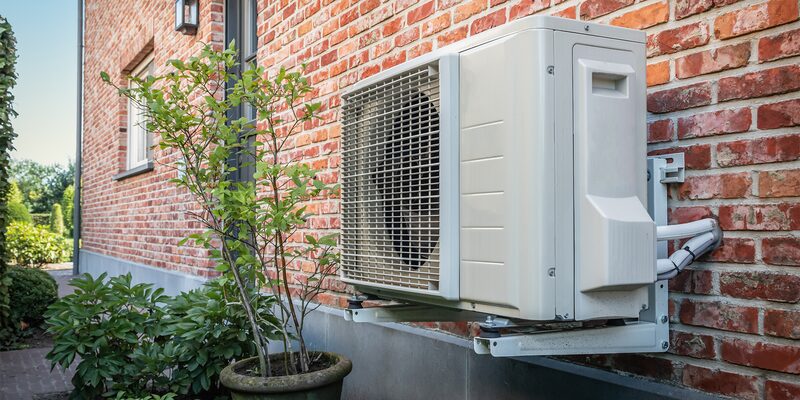
Heat pumps are the other route, and the funding for them is larger. The Boiler Upgrade Scheme pays £9,000 towards an air-to-water or ground source heat pump for eligible off-grid properties heated by LPG or oil6. Installers apply for that grant on the householder's behalf through Ofgem12. For Northern Ireland specifically, the Energy Saving Trust's advice is that there is not a specific heat pump grant currently available, but a household can still get heat pump ready and apply for funding for insulation through NI Energy Advice13.
On the record of delivery, official statistics for the Boiler Upgrade Scheme to 29 November 2024 show 7,143 oil systems replaced, 19.1% of the scheme total to that date14. That is a Great Britain figure and it is the only published count of oil-to-heat-pump conversions in the material available.
Where the household's independence ends
A NISEP-funded upgrade changes what a household depends on, but it does not remove dependence. A replacement oil system leaves the household tied to oil deliveries, to the oil supplier, and to a fuel whose price is set outside Northern Ireland. The Home Heating Oil Support Scheme's £100 voucher is spent with any Northern Ireland oil supplier5, which keeps supplier choice open but does not change the underlying exposure.
A heat pump funded through the Boiler Upgrade Scheme shifts the dependence from a delivered fuel to the electricity grid and to a supplier, and adds a dependence on the installer and on the manufacturer for servicing and parts. Where a scheme installs smart heating controls, the household also takes on a dependence on the control system and any app that runs it.
What NISEP does offer is a reduction in the capital barrier, and in some schemes the removal of it entirely. Better Energy Homes Plus is fully funded by NISEP with no applicant contribution for any measure3. That is the strongest form of support in the programme, and it is the one worth identifying first when reading the current list of schemes.
The limits are firm. NISEP is Northern Ireland only1. It excludes new builds, self-builds under construction and homes being extended1. It excludes properties already funded for the same measure, and properties funded for the same measure within the last 15 years3. And it does not blend with ECO4, whose rules state that funding for measures delivered under ECO4 must not be blended with funding from other government schemes or grants15, nor with the Social Housing Decarbonisation Fund, where funding from ECO4 and that fund cannot be blended for the same measure16.
For a household comparing routes, the Northern Ireland energy grants page sets out the wider landscape, and NISEP vs the Affordable Warmth Scheme covers how the two Northern Ireland routes divide. Households weighing a heat pump against a replacement oil system can read the Boiler Upgrade Scheme rules, and those checking whether two funding streams can be stacked should read whether ECO4 measures can be funded with other government grants.
Sources16 cited
- NISEP programme page, Energy Saving Trust, 2026
- Energy grants in Northern Ireland, Energy Saving Trust, 2026
- NISEP List of Schemes 2026-27, Utility Regulator, 2026
- Home heating oil support, nidirect, 2026
- Home Heating Oil Support Scheme, Department for Communities, 2026
- Boiler Upgrade Scheme statistics, July 2026, Department for Energy Security and Net Zero, 2026
- NISEP 2024/2025 list of schemes, Utility Regulator, 2024
- Community Energy England funding guidance, Community Energy England, 2026
- Lyons announces agreement on Home Heating Oil Support, Department for Communities, 2026
- How long will the whole process take, Northern Ireland Housing Executive, 2026
- Affordable Warmth Scheme, Northern Ireland Housing Executive, 2026
- Heat pump grants, UK Government, 2026
- Air source heat pumps, Energy Saving Trust, 2026
- Boiler Upgrade Scheme quarterly report, issue 10, Ofgem, 2024
- ECO for homeowners and tenants, Ofgem, 2026
- ECO4 delivery guidance v3.2, Ofgem, 2025
 Living Off the Gas GridNo mains gas at your home?
 Heating Off the Gas GridThe options for the four million UK households with no mains gas connection: oil, LPG, electric, heat pump, biomass and solid fuel, and how their costs, storage and supply security compare.
 Heating and Energy IndependenceCan you heat your home without relying on gas or oil, and what would that take?
 Energy IndependenceA heat pump runs your heating on electricity instead of gas or oil, so how much does that really cut what you pay and how exposed you are when fuel prices jump?
 Replacing a Gas or Oil BoilerSwapping a gas, oil or LPG boiler for a heat pump changes how your home is heated and how much it costs.
 Home HeatingWhy do so many homes in Northern Ireland run on heating oil, and will that ever change?