
In this guide
A heat pump can take over from a gas, oil or LPG boiler, and it will heat both the rooms and the hot water. What it will not do is behave like the appliance it replaces. A heat pump sends water to radiators at a lower temperature, often between 35 and 45°C, and it stores hot water in a cylinder rather than heating it on demand the way a combi does1. That single difference drives most of the design work, the cost and the disruption of a conversion.
The financial picture is the first thing most households want. The nominal median cost of an air-to-water heat pump installation reported under the Boiler Upgrade Scheme in 2026 Q2 was £12,908 including the grant value, with a lower quartile of £11,128 and an upper quartile of £15,6272. A new gas boiler installation is quoted at between £2,500 and £4,5003. The grant itself is £7,500 towards an air-to-water heat pump, with a voucher valid for three months4.
The case for switching is not primarily a bill case. Government guidance states that heat pumps are typically more than three times as efficient as a gas boiler, and that the higher efficiency means the energy needed can be less than a third of that needed by a gas boiler to produce an equivalent amount of heat5. Welsh Government guidance is equally direct about the money: for households currently using a gas boiler, heating bills are likely to stay similar after installing a heat pump, because government policy currently makes gas cheaper than electricity6.
What actually changes when a boiler comes out
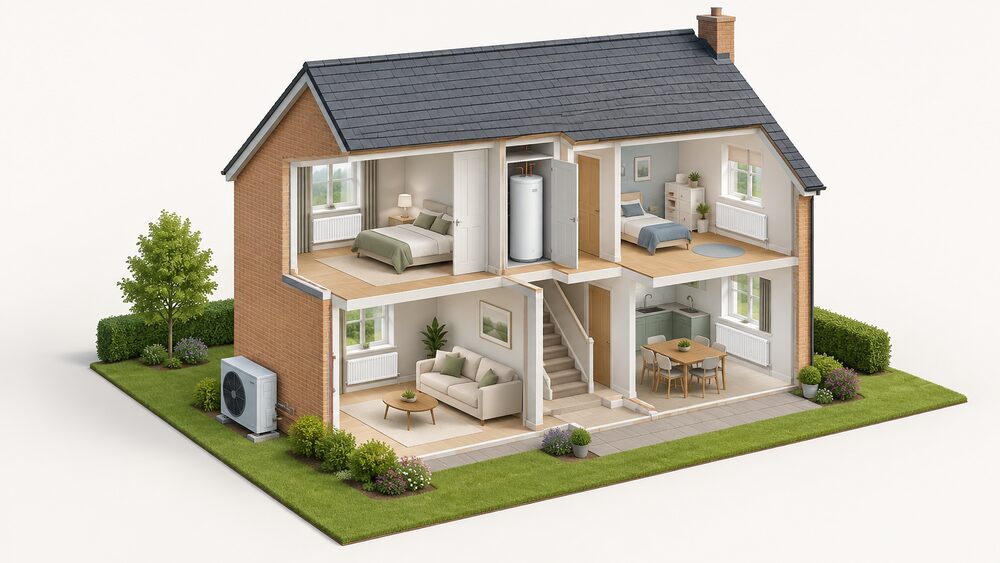
The physical conversion is a set of linked changes rather than a single swap. Each one follows from the lower flow temperature and from the fact that a heat pump runs on electricity rather than burning a fuel on site.
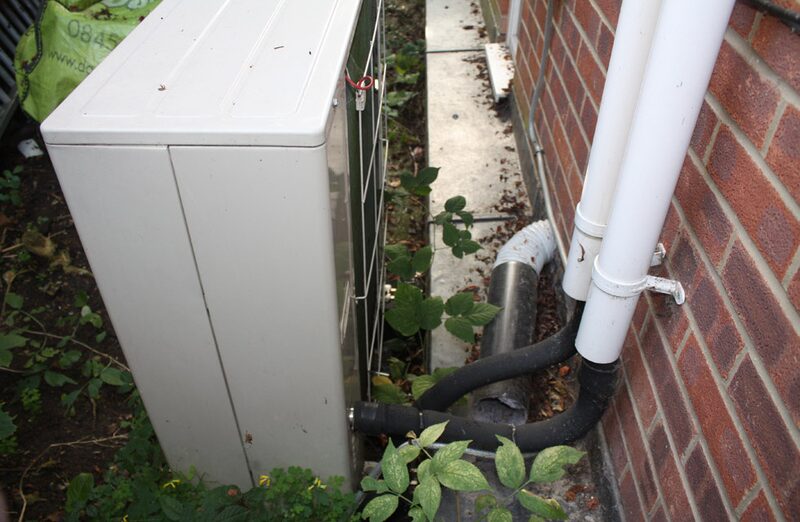
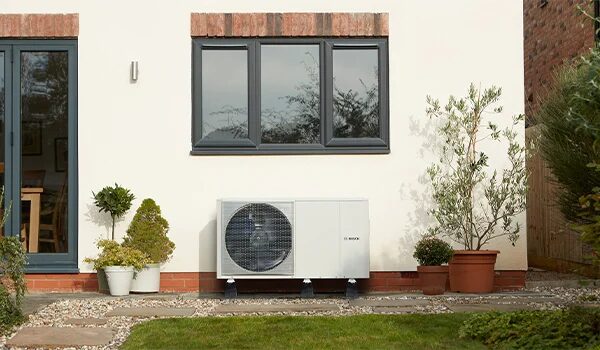
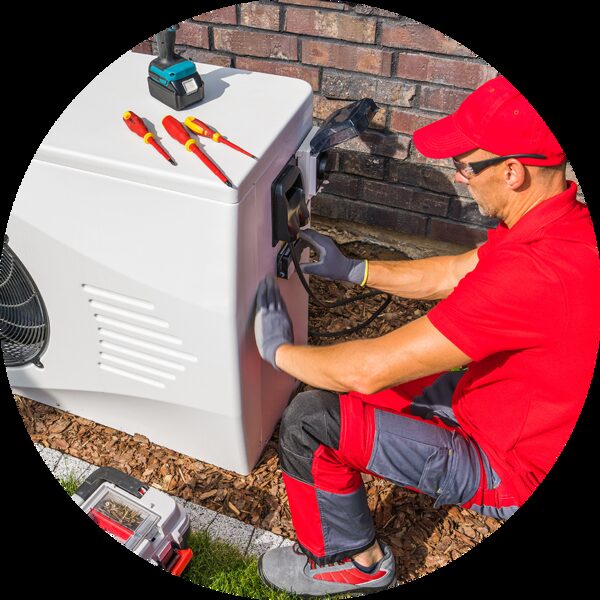
- The heat source moves outside. An air-to-water unit sits outdoors. These external units vary in size but may be as much as 1 metre by 1.5 metres1.
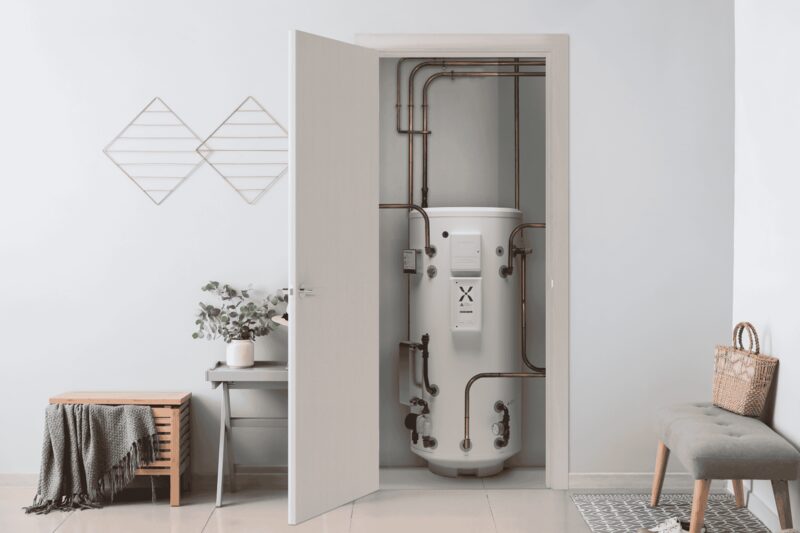
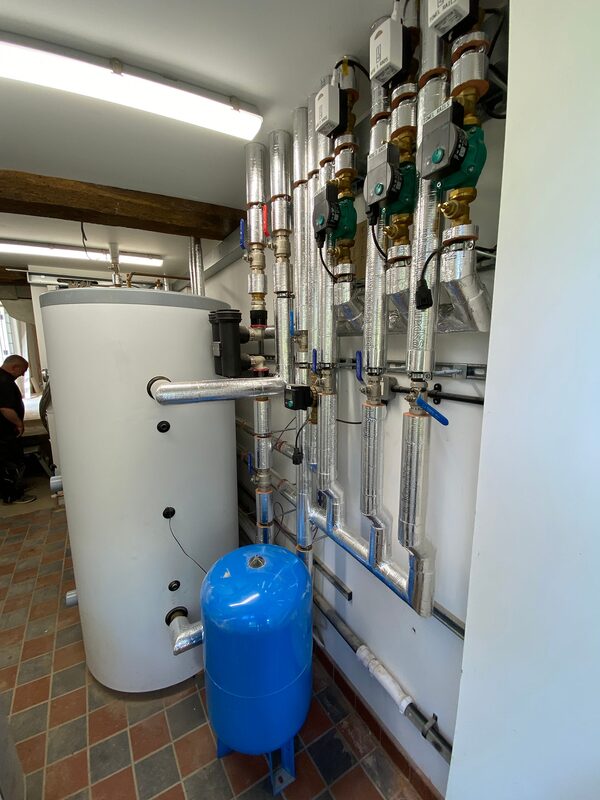
- Hot water moves into a cylinder. Heat pumps do not provide hot water on demand like a combi boiler, so another way of providing hot water is needed, and usually the installer fits a cylinder to store water heated by the heat pump1.
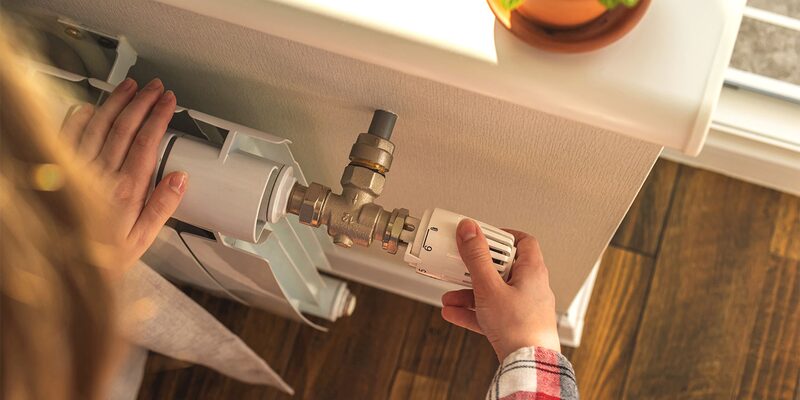
- Emitters are reviewed. Because radiators receive water at 35 to 45°C rather than the higher temperatures a fossil fuel system produces, the existing radiators may or may not be adequate, and this is settled by a room-by-room assessment1.
- The fuel supply changes. A heat pump runs on electricity, so the gas, oil or LPG supply is no longer the energy input9.
- The old appliance goes. Under the Boiler Upgrade Scheme the new low carbon heating system must completely replace an existing fossil fuel heating system or electric heating system which does not include a heat pump10.
The last point matters for anyone imagining a belt-and-braces arrangement with the old boiler kept as a fallback. That is a hybrid design, and it is a different proposition from a full replacement. Hybrid package heat pumps are sold as complete packages, with components that may be integrated into a single product or supplied separately11.
What are the figures?
The cost figures come from two different places and should be read separately. The Boiler Upgrade Scheme statistics record what installations actually cost, while the boiler figures are market quotations.
| Item | Figure | Basis |
|---|---|---|
| Air-to-water heat pump, median installation cost | £12,908 including grant value | 2026 Q2, England and Wales2 |
| Air-to-water heat pump, lower quartile | £11,128 | 2026 Q2, England and Wales2 |
| Air-to-water heat pump, upper quartile | £15,627 | 2026 Q2, England and Wales2 |
| Median installed capacity | 8.0 kW | 2026 Q2, England and Wales2 |
| New gas boiler installation | £2,500 to £4,500 | Market quotation3 |
| Boiler Upgrade Scheme grant, air-to-water | £7,500 | From 21 July 20264 |
The gap between the two technologies is the headline. An average heat pump is currently four times more expensive than a gas boiler, at around £11,6006. Parliamentary briefing material repeats the same comparison, describing an average heat pump as four times more expensive than a gas boiler12. Official guidance attributes the difference in part to the need for additional retrofitting rather than to the appliance alone5.
Two figures for the Boiler Upgrade Scheme grant for an air-to-water heat pump are in circulation and the conflict is not resolved. One official guidance document gives the grant value as £7,500 from 21 July 20264, while another gives £7,500 from 28 April 20265. Households checking their own eligibility should confirm the current value with the scheme administrator rather than relying on either figure.
What drives the cost and the disruption
Three things push a conversion above the price of a boiler swap: the appliance itself, the retrofitting around it, and the labour of a more involved design.
Official guidance is explicit that heat pump installation costs are higher than gas boilers, in part due to the need for additional retrofitting5. That retrofitting is where the spread between the lower quartile of £11,128 and the upper quartile of £15,627 comes from2. A home that needs several radiators enlarged, a cylinder fitted into a cupboard that does not yet exist, or a longer run between the outdoor unit and the plant room will sit at the upper end. A home with generous existing emitters and a spare cupboard will sit lower.
The scheme data also shows what is being replaced. Of redemptions paid, 56% replaced gas systems, followed by oil at 17% and then properties which did not previously have a heating system at 13%2. Oil households are a distinct group: an oil boiler to heat pump conversion removes a fuel that must be bought, stored and delivered, and replaces it with electricity. Welsh Government consultation material uses exactly this example, changing a worked example to replacing an oil boiler with a heat pump13.
Satisfaction is not uniform, and the difference is instructive. Participants in the Electrification of Heat work who replaced electric heating almost always reported lower bills5. Those replacing previously functioning gas boilers typically expressed a preference for a new boiler over the heat pump5. The pattern suggests that the comparison a household carries into the decision shapes how the result feels, and that a working gas boiler is a harder act to follow than storage heaters.
Appetite exists regardless. Evidence submitted to a parliamentary inquiry found that up to 38% of homeowners would choose a heat pump to replace a gas boiler even at an early stage in their development14.
How does it differ across the UK nations?
The grant, the building rules and the planning rules are not uniform, and the differences matter at the point of ordering work.
England and Wales. The Boiler Upgrade Scheme operates here. Cumulative figures to July 2026 show 140,474 voucher applications received, of which 98% were for air-to-water heat pump grants, 116,832 vouchers issued and 88,092 redemptions paid since May 20222. Air-to-water, air-to-air and biomass boiler vouchers are valid for three months2.
Wales. The Warm Homes Programme sets a different direction for publicly funded work: gas boiler replacements will move to be the exception rather than the default, with the programme instead favouring repair of fossil fuel assets and a shift towards low carbon heating6. Welsh building regulations for boilers and heating are published separately by the Welsh Government15.
Scotland. The Heat in Buildings Strategy sets out the Scottish approach, including the finding that the higher efficiency of a heat pump means the amount of energy needed can be less than a third of that needed by a gas boiler to produce an equivalent amount of heat16. A separate regulatory impact assessment accompanies it17. Scottish building standards guidance addresses heat pumps in new dwellings and states that if installed in a new dwelling, heat pumps should use refrigerants complying with the provisions of current F-gas Regulations18.
Northern Ireland. nidirect guidance confirms that heat pumps run on electricity, which is the same starting point as elsewhere, but the grant and building control arrangements are administered separately9.
What are the rules?
The regulatory position is lighter than many households expect, but it is not absent.
Building control is the first question. Planning Portal guidance states that if a heating system or hot water system is to be replaced then a building control application may not be required, and, if required, it may not be necessary to apply in advance of the work7. The same guidance covers the installation or replacement of a hot water cylinder, which is relevant because most heat pump conversions add one19.
Where a gas boiler is being replaced by another gas boiler, the rules are tighter than for a heat pump. Each boiler must have a minimum efficiency of 86% for gas and 85% for oil, the replacement of a gas boiler will probably have to be a condensing boiler unless there is sufficient reason why one cannot be installed, and a gas boiler installer should be Gas Safe Registered from 1 April 200915. Those requirements apply to combustion appliances, not to a heat pump taking their place.
For the grant, the conditions are specific. The heat pump or biomass boiler must provide both space and hot water heating and be capable of meeting the full space heating and hot water heating demands of the property20. The new low carbon heating system must completely replace an existing fossil fuel heating system or electric heating system which does not include a heat pump10. Heat pumps must have a compressor which is driven by electricity21.
There is also a refrigerant rule to be aware of. Scottish guidance states that if installed in a new dwelling, heat pumps should use refrigerants complying with the provisions of current F-gas Regulations18. Refrigerant choice is a live regulatory area, and the rules tighten over time.
Where a conversion is not straightforward
Some homes present obstacles that a survey will surface, and it is better to know them before quotes are sought.
- No cylinder space. A combi household has no cylinder and may have no obvious place for one. The cylinder has to go somewhere accessible and insulated1.
- Radiators sized for a hotter system. Emitters designed around a fossil fuel flow temperature may need enlarging to deliver the same heat at 35 to 45°C1.
- Outdoor siting. An external unit may be as much as 1 metre by 1.5 metres, and it needs a position with clearances1.
- Electricity supply. The heat pump runs on electricity, and the supply arrangements are a separate consideration from the heating design9.
- A working boiler is hard to beat on familiarity. Households replacing a functioning gas boiler typically expressed a preference for a new boiler over the heat pump in trial feedback5.
The alternative for some households is not a heat pump at all. Electric boilers are nearly 100% energy-efficient, do not need a flue so can be installed on internal walls, and do not produce any emissions when running, but their warranties are typically only for two to three years, against up to 10 years or more for gas boilers, and manufacturers still recommend annual servicing22. An average electric boiler size is around 15kW or less22. Electric boilers were also removed from the ECO4 delivery guidance as an acceptable post-main heat source, so they are not a funded route23.
What it means for energy independence
A conversion changes where a household's heat comes from, and that change is real but partial.
The gains are measurable. Government guidance states that a heat pump delivers up to 70% less CO2 over 15 years than a gas boiler and zero emissions at point of use24. The efficiency advantage is the mechanism: the higher efficiency of a heat pump means the amount of energy needed can be less than a third of the amount needed by a gas boiler to produce an equivalent amount of heat16. A household that was buying gas, oil or LPG is no longer buying a delivered fuel at all.
What remains is electricity. A heat pump runs on electricity, and that electricity comes from the grid and a supplier9. The household has swapped one dependency for another, and the new one is a network rather than a tank in the garden. For an oil or LPG household the change is substantial, because the deliveries, the tank and the price volatility of a delivered fuel all disappear. For a gas household the change is more modest, because the gas network is already reliable and the Welsh Government's own assessment is that bills are likely to stay similar6.
The wider policy direction is worth stating plainly. The government intends to stop the sale of new gas boilers for installation in existing homes from 2035, though the timeline remains subject to revision25. Gas remains the dominant heating method in the meantime: three quarters of people, 75%, said they used a gas boiler as their main method of heating the home in Winter 2025, against 4% using electric boilers8. Heat pumps are currently more expensive than conventional options such as gas-fired boilers, as a parliamentary committee noted26, and installation costs are higher than gas boilers in part due to the need for additional retrofitting5.
The honest summary is that a heat pump conversion reduces a household's exposure to delivered fossil fuels and increases its reliance on electricity and the grid. It does not make a home self-sustaining on its own. Households wanting to go further look at generation and storage alongside the heating system, and the wider picture is set out in heat pumps and household energy independence.
The equipment and what it looks like in practice
The UK market carries a wide range of air-to-water and ground source units, and the specification of a given model shows what a conversion involves in concrete terms.
| Specification | ALT06-SF0 (Mono) 6kW Air to Water Heat Pump |
|---|---|
| Type | Air-to-water heat pump27 |
| Heating capacity | 6 kW27 |
| Functionality | Heating, cooling and domestic hot water27 |
| Heating water temperature range | 25 to 80°C27 |
The 25 to 80°C range is the point worth pausing on. A heat pump capable of 80°C flow can serve existing radiators at higher temperatures than the 35 to 45°C typical of a standard design, which changes the amount of emitter work a conversion needs1. That is a design decision for the installer, not a default.
The stages of a conversion follow a recognisable order, and the Energy Saving Trust sets out a step-by-step account of heat pump installation covering survey, design, installation and handover28. The practical sequence runs from a heat loss assessment, through emitter and cylinder decisions, to the electrical and outdoor unit work, and finally commissioning and handover. Each stage is covered in more depth in heat pump installation, and the cylinder question specifically in hot water cylinders for heat pumps.
For households weighing the alternatives before committing, the comparison pages set out the running cost position in heat pump vs gas boiler running costs and the oil-specific case in converting an oil-heated home to a heat pump. The grant position across the four nations is covered in heat pump grants and funding across the UK.
Sources28 cited
- Getting your broken boiler repaired or replaced, Citizens Advice, 2024-08-16
- Boiler Upgrade Scheme statistics, July 2026, Department for Energy Security and Net Zero, 2026-08-27
- Heat pumps vs boilers, The CPA, 2025-02-18
- Boiler Upgrade Scheme guidance for installers v5.1, Ofgem, 2026-07-21
- Heat pump transition report, Department for Energy Security and Net Zero, 2026-05
- New Warm Homes Programme: children's rights impact assessment, Welsh Government, 2024-03-08
- Boilers and heating: building regulations, Planning Portal, 2026
- Public attitudes tracker: heat and energy use in the home, Winter 2025, Department for Energy Security and Net Zero, 2025
- Heat pumps, nidirect, 2025-02-24
- Boiler Upgrade Scheme guidance for installers v2.1, Ofgem, 2023-05-18
- Domestic hybrid heat pumps, Department for Energy Security and Net Zero, 2016-11
- Heat pumps: research briefing, Parliamentary Office of Science and Technology, 2024-05-26
- Part L and F review stage 2a: government response, Welsh Government, 2021-10
- Written evidence to the Environmental Audit Committee, Nesta, 2023-08
- Building regulations: boilers and heating, Welsh Government, 2026-09-17
- Heat in Buildings Strategy: achieving net zero emissions in Scotland's buildings, Scottish Government, 2021-10
- Heat in Buildings Strategy: business and regulatory impact assessment, Scottish Government, 2021-11
- Draft guidance: domestic building services compliance guide, Scottish Government, 2021-07
- Boilers and heating: smart search, Planning Portal, 2026
- Summary of updates to Boiler Upgrade Scheme guidance for property owners v2.4, Ofgem, 2023-12
- Boiler Upgrade Scheme installer guidance, Ofgem, 2022-07-21
- Electric boilers: what you need to know, Which?, 2025-09-17
- Summary of updates to ECO4 delivery guidance, Ofgem, 2024-04-05
- Heat pump, Department for Energy Security and Net Zero, 2026-09-10
- Gas boiler ban overview, Mitsubishi Electric, 2035
- MPs to consider the merits and drawbacks of rolling out heat pumps, Environmental Audit Committee, 2020-10-12
- ALT06-SF0 (Mono) 6kW air to water heat pump, Quiet Mark, 2026-09-17
- Heat pump installation: a step-by-step guide, Energy Saving Trust, 2026-07-15
 Heat Pumps vs BoilersWill a heat pump actually cost less to run than my boiler, and does it heat the house as well?
 Hybrid Heat PumpsHow hybrid systems pair a heat pump with a gas, oil or LPG boiler, what decides which appliance runs, what they cost, how much gas they displace, and why the Boiler Upgrade Scheme will not fund them.
 The Full Boilers and Heating GuideWhich boiler suits your home, and when is it worth swapping the old one?
 Heat Pump Running CostsWhat does a heat pump cost to run each year, and is it cheaper than a gas boiler?
 Energy IndependenceA heat pump runs your heating on electricity instead of gas or oil, so how much does that really cut what you pay and how exposed you are when fuel prices jump?
 Running Costs by FuelHow the cost of heat compares across mains gas, heating oil, LPG, electricity, solid fuel and heat pumps once efficiency and the price cap are applied.