In this guide
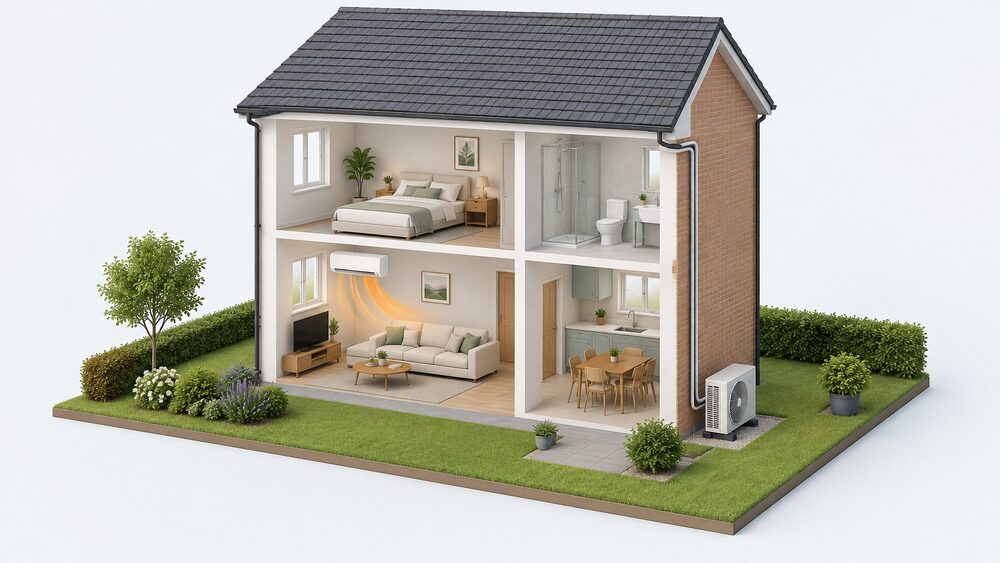
An air-to-air heat pump takes warmth from the outdoor air, passes it through a refrigerant circuit and uses it to warm the air inside a home. Instead of heating water in radiators or underfloor pipes, it warms the air in the room directly, delivering it through fans from indoor units that are often wall-mounted1. The hardware is the same family of equipment sold in the UK as air conditioning, which is why these systems are, as Nesta puts it, "often mislabelled as air conditioning in the UK"1.
Costs are quoted per room rather than per house. Energy Saving Trust puts a single-unit system serving one room at around £1,9002. Nesta gives typical installation costs ranging from £2,400 in a one bedroom flat to £8,800 in a four bedroom house4, and separately quotes £1,700 to £2,700 per room for systems that do not provide hot water5. The Boiler Upgrade Scheme lists £2,500 towards an air-to-air heat pump, against £7,500 for an air source (air-to-water) heat pump6.
The defining limitation is hot water. Most models currently available in the UK do not provide it, so taps and showers need a separate system8. That single fact shapes where these systems make sense: smaller properties, flats and homes without a conventional wet central heating system.
What an air-to-air heat pump is, and why the label confuses people
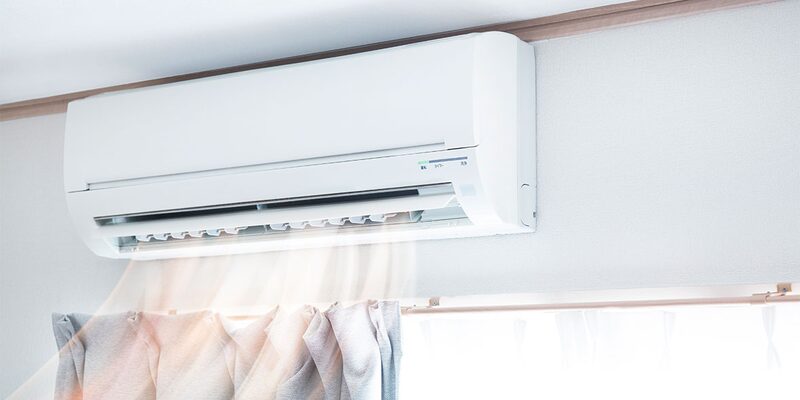
Written evidence to Parliament describes air to air heat pumps as "often known as air conditioning units", and treats them as an alternative, efficient heating option12. The confusion is understandable: the outdoor unit, the refrigerant pipework and the wall-mounted indoor head look exactly like a split air conditioner, because in engineering terms that is what they are. The difference is direction of use. A reversible split system run in heating mode all winter is a heat pump, and the UK market has historically sold it as cooling kit with heating as an afterthought.
Nesta describes the machines as transporting and compressing heat from the air outside and transferring it to a home as blown air1. MCS describes heat delivered via fans to circulate warm air, rather than through radiators or underfloor pipes, from an outdoor unit usually placed on a wall or the ground outside the property3. Electricity North West puts the same point plainly: "An air-to-air system produces warm air which is circulated by fans to heat your property"13.
The contrast is with air-to-water heat pumps, which transfer heat drawn from the surrounding air to water in a wet central heating system and distribute it through the hot water system14. Both are air source machines; only one of them ends up in a cylinder. The wider family is covered on the air source heat pumps page and on the heat pumps pillar.
How the heat gets from outside air into the room
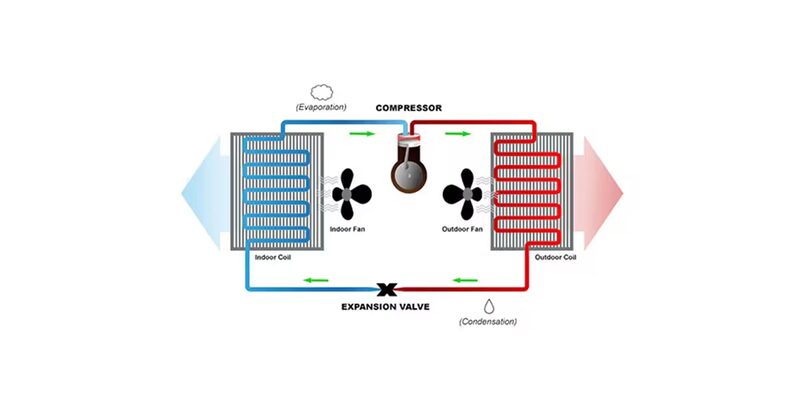
The physical principle is shared across all air source machines: they absorb heat from the outside or surrounding air and transfer it into useable heat in the home14. Approved Document L frames it as capturing heat from ambient air, ventilation exhaust air, or a water or ground heat source using a heat pump14. MCS states the transfer is done using electricity3, which is the point that matters for a household: the machine does not create heat, it moves it, and the electricity buys the movement.
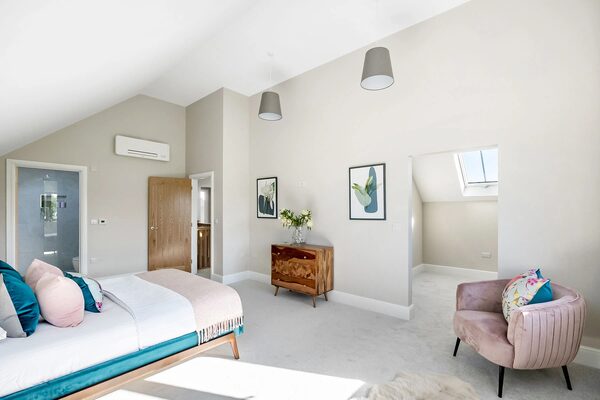
What distinguishes the air-to-air arrangement is the last step. There is no heat exchanger feeding a water circuit, no radiators to size and no cylinder to reheat. Refrigerant runs from the outdoor unit directly to each indoor head, and the head blows warm air into the room. Response is fast: Nesta reports supply heat arriving in 3 to 4 minutes and rooms typically becoming comfortable in 10 to 20 minutes5.
Control works differently too. A wet heat pump commonly uses weather compensation, where the system varies the flow temperature according to the season16. Air-to-air systems are, in Nesta's words, "load compensated" rather than "weather compensated", with each internal head monitoring its room temperature directly17. In practice that means room-by-room control rather than a single whole-house curve, which suits homes where only some rooms are occupied at a time. More on control strategies is set out under heat pump controls.
Heating in winter, cooling in summer: one machine, two seasons
The same equipment reverses. Which? states plainly that air to air heat pumps "can both heat and cool air depending on what you need"18, and the Centre for Sustainable Energy notes that air-to-air heat pumps can provide cooling as well, "very useful in a heatwave"19. Energy Systems Catapult quotes the same duality: "They offer both heating in winter and cooling in summer, making them a smart, future-proof investment"20.
This is the clearest advantage over a wet system, most of which are installed for heating only. A household that would otherwise buy a portable air conditioner in July and run electric heaters in January can do both jobs with one machine, at heat pump efficiency in both directions. The trade-off is that cooling capacity is easy to over-use: summer cooling is electricity demand that the home did not previously have, so lower winter running costs can be partly offset by a new summer load. The heat pump cooling page covers the same question for wet systems.
Efficiency: three to four times a boiler, for space heating only
The Climate Change Committee states that heat pumps are "around three-to-four times more efficient than gas boilers, which should lead to lower household energy bills"10. Nesta puts the same relationship the other way round: heat pumps use 3 to 4 times less energy to provide the same heat as a boiler, and are three to four times more efficient than other heating systems including other electric ones21. Energy Saving Trust says more than three times more efficient than a gas or oil boiler22. The Welsh Government's guide is more conservative, at up to 3 times more efficient10. Nesta's technology assessment simply records air-to-air heat pumps as "very energy efficient"1.
The figures differ because they describe different things: laboratory coefficients of performance, seasonal averages across a heating season, and modelled comparisons against different counterfactual fuels. A household should read them as a band, not a number, and expect real performance to depend on the outdoor temperature, how well the home holds heat and how the system is run. The underlying metrics are explained on the heat pump efficiency page.
Two cautions apply specifically to air-to-air. First, the efficiency gain covers space heating only; it does not extend to water heating the machine does not do. Second, most published efficiency evidence for UK homes concerns wet systems. The Heat Pump Association's 2026 report excludes air-to-air heat pumps from its scope entirely23, which is a fair illustration of how thin the UK evidence base for this technology still is.
Where these systems fit: flats, small homes and homes with no wet system
Nesta identifies smaller properties, flats, and homes currently without, or poorly suited for, traditional central heating8. Energy Saving Trust reports that air-to-air systems are more often installed in smaller properties such as flats and park homes2. Which? found them particularly well suited to smaller homes and flats, taking up less wall space than traditional radiators24, and especially cost-effective in a smaller house or flat with relatively few rooms, particularly homes that overheat in warm weather11.
Energy Saving Trust's Northern Ireland work makes the structural argument: there are housing types that air-to-water, ground-to-water and water-to-water heat pumps are not suitable for, but which air-to-air can serve, flats among them25. nidirect lists air source heat pumps as suitable for residential homes, apartments and small commercial buildings26. Energy Saving Trust also flags the potential benefits as cooling as well as heating, working in homes with limited space, and suitability for homes without an existing radiator system, while noting there is currently not a very active UK supply chain for indoor heat pump technologies16.
Cost scales with rooms, not floor area alone. Nesta notes these systems can be very affordable in small homes, especially studio flats, but that costs rise sharply for larger homes1. Which? also warns that air-to-air heat pumps cannot generally be used to heat larger homes18.
The hot water gap
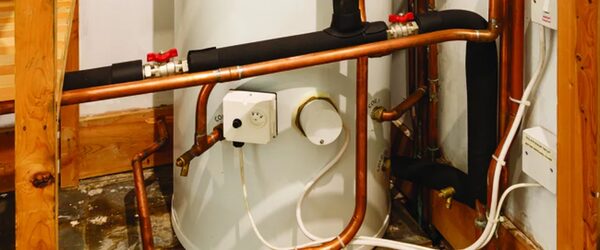
Energy Saving Trust states that air-to-air systems "don't usually provide hot water for your taps and shower"2. Nesta says most models currently available in the UK do not provide hot water8, and its consumer blog adds that although some air-to-air heat pumps can also provide hot water, most UK models do not currently do this5. MCS is blunt: "They don't provide hot water."29 Which? notes that some air-to-air systems can be connected to a domestic hot water tank, although not all do this11.
So a household installing air-to-air almost always keeps or adds a second appliance for water. That might be an existing cylinder with an immersion, an instantaneous electric shower, or a dedicated hot water heat pump. The consequence for independence is that a home does not shed its second heat source; it swaps which one does the larger job. It is worth noting that even a wet heat pump does not provide hot water on demand like a combi boiler, so a cylinder is needed either way30; the difference is that an air-to-air machine is not the thing that fills it.
The practical planning point is that indoor heads are generally not suitable for bathrooms or wet rooms, because of high humidity and potential water exposure17. That constrains layout in exactly the rooms where hot water matters most.
What it costs
| Scenario | Cost | Source basis |
|---|---|---|
| Single room, single unit | around £1,9002 | Energy Saving Trust, 2026 |
| Per room, system without hot water | £1,700 to £2,7005 | Nesta, 2026 |
| Per unit | £1,500 to £4,00027 | Nesta, 2025 |
| One bedroom flat to four bedroom house | £2,400 to £8,8004 | Nesta, 2025 |
| Large property | £8,8001 | Nesta, 2025 |
For comparison, air-to-water installations are consistently quoted higher: around £11,00019, an average of £13,00031, £8,000 to £12,00032, and £13,600 for a large property, or £6,100 after a £7,500 grant33. The Centre for Sustainable Energy gives £6,000 to £18,000 to install a heat pump in an average flat or small home, with annual space heating of £800 to £1,050 on a single-rate tariff19.
The ranges differ because they count different things: some are equipment plus fitting for one room, some are whole-property jobs across several indoor heads, and some include or exclude grant support. Two rules follow. Air-to-air is cheapest where rooms are few, and the advantage narrows as rooms multiply. And because prices are installer-quoted, the figures above are published typical ranges rather than a price any household can rely on. Wider comparison sits on the heat pump cost page.
Grants: the £2,500 Boiler Upgrade Scheme route, and its conditions
Government guidance lists £2,500 towards an air-to-air heat pump under the Boiler Upgrade Scheme6, against £7,500 towards an air source heat pump34 and £7,500 for exhaust air-to-water systems9. Ofgem's installer guidance names the eligible technologies as "Air-to-Water Heat Pumps, Air-to-Air Heat Pumps, Biomass Boilers and Ground Source Heat-Pumps"9, and the July 2026 version repeats air-to-air in the same list35.
Two restrictions matter more than the headline figure.
- Residential only. Ofgem states: "Only residential properties are eligible for air-to-air heat pumps."9 The guidance for property owners says the same36.
- A narrow approved category. The notice of approved grant categories describes the qualifying case as "an air-to-air heat pump in an off-gas grid property that is replacing a liquefied petroleum gas heating system"7.
Because the Boiler Upgrade Scheme is an England and Wales scheme, households in Scotland and Northern Ireland should check their own national routes; the heat pump grants page sets out what is available in each nation. Background on why air-to-air was excluded for so long is covered under air-to-air heat pump grant eligibility.
Noise, indoor units and air quality
Energy Saving Trust notes that indoor units of air-to-air systems "can be noisier than other heat pumps"2, which is the direct consequence of putting a fan in the room rather than a radiator. Outdoors the picture is different: Nesta reports the noise from an air-to-air outdoor unit is likely to be the same as an air-to-water heat pump5. Pendle Borough Council warns that external fan units "can generate a considerable level of noise"38.
Planning and permitted development rules turn on measured limits. Bedford Borough Council states that noise levels for an air source heat pump on its own must stay at or below 42 decibels from a metre away from any habitable room39. The Welsh Government's consultation response records that where two units operate together they must not exceed the 40dB limit40. Hammersmith and Fulham's guidance expects applications to cover location, design and appearance, noise and vibration, and the efficiency of the unit41, while Westmorland and Furness lists the assessment factors as background noise, the character of the noise, levels in all operating modes including defrost cycles, distance to neighbours, and any barriers or mitigation42. MCS published guidance in November 2025 on mitigating noise from air source heat pumps during installation, service and maintenance, covering both air to water and air-to-air, to support installers applying the Air Source Heat Pump Sound Calculation Standard43. See MCS 020 and heat pump noise for the method.
Sizing, siting and what installation involves
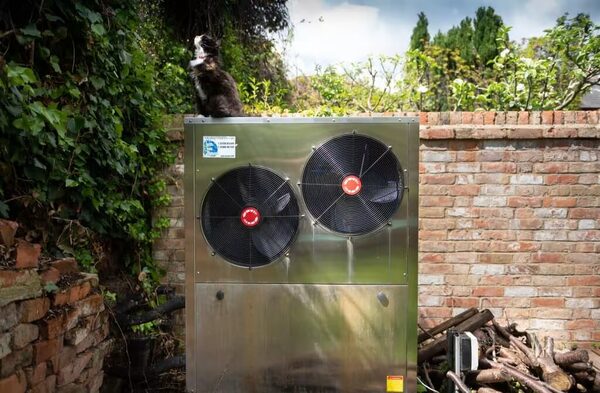
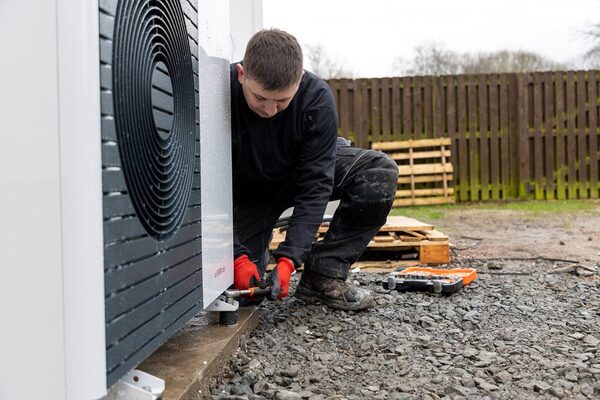
The outdoor unit is usually fixed to a wall or placed on the ground outside the property3, and needs space around it for a good flow of air22. Nesta gives typical outdoor dimensions of roughly one metre high, 50cm to 100cm wide and around 50cm deep5, which is smaller than a typical air-to-water external unit at as much as 1 metre by 1.5 metres30. Energy Saving Trust notes that air-to-air outdoor units are typically smaller than those for air-to-water systems2.
Indoors, one outdoor unit can serve up to five indoor heads11, so a four-room flat can be covered by a single outdoor machine. Heads are usually wall-mounted3 and, as above, are not generally suited to bathrooms or wet rooms17.
Permitted development in England limits the number of machines: not more than one air source heat pump on, or within the curtilage of, a dwellinghouse that is not detached or a block of flats, and not more than two on a detached dwellinghouse44. Wales made the same two-unit limit for detached dwellinghouses in 202645. Nation-by-nation detail sits on the planning permission pages for England, Scotland, Wales and Northern Ireland.
Energy Saving Trust puts heat pump installation at typically around three days, longer in some cases30. An air-to-air job involves no radiator replacement and no wet pipework, so disruption is concentrated on drilling for refrigerant lines and mounting heads. The general sequence is described under heat pump installation.
Maintenance: an annual service and clean filters
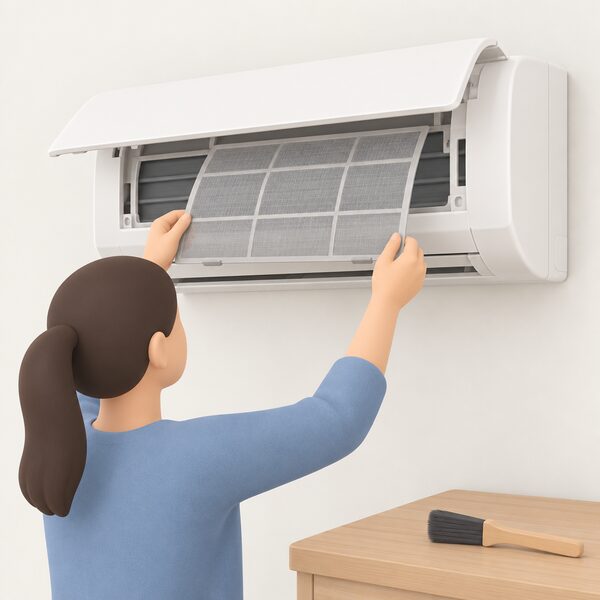
Daikin recommends a service by a qualified engineer once a year, alongside regular owner checks, to keep the system working efficiently46. The manufacturer describes an annual service as covering topping up refrigerant, measuring airflow, inspecting filters and parts for dirt, checking wear and tear, and checking that the remote control works46. Government guidance makes the general case for all heat pumps: an annual heat pump service "will help it remain clean and ensure it runs efficiently and sounds as quiet as possible"47.
Filter cleaning is the owner's routine task, and the manufacturer sets out seven steps: turn off the unit, lift the panel, remove the air filters, remove the deodorising filter panels, brush or wash the filters, air dry them away from direct sunlight, and wipe the outside of the unit46. Because an air-to-air system moves room air across those filters continuously, neglecting them reduces airflow and therefore output, in a way that has no equivalent in a radiator circuit. Broader servicing expectations are set out under heat pump servicing and maintenance.
Refrigerant rules ahead
Air-to-air systems carry refrigerant into the building, which places them squarely in the F-gas rules. UK guidance states that from 2025, F gases with a global warming potential above 750 are banned in single split systems that contain less than 3 kg of refrigerant48. The direction of travel is towards lower values still: DESNZ's Heat Pump Ready programme defines low-GWP refrigerants as below 150 GWP48.
For a household this is mainly a question of what is available to buy and what can be serviced in future. A system installed on a refrigerant heading for restriction may face rising charge costs over its life. The detail of R32, R290 and the regulatory timetable is covered on the heat pump refrigerants page and in R290 vs R32.
What it does, and does not do, for energy independence
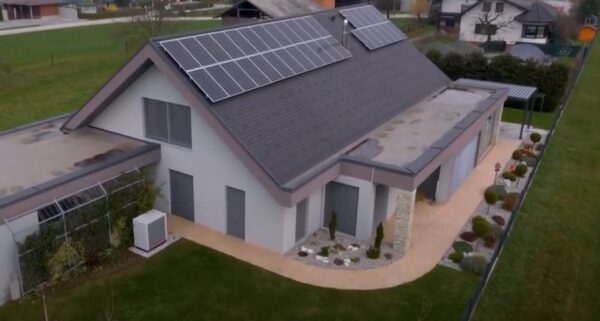
An air-to-air heat pump removes gas or oil from the space heating job and replaces it with electricity used three to four times more efficiently than a boiler burns fuel10. In a flat with no gas connection and no room for a cylinder, that may be the only practical route to a heat pump at all25. Paired with on-site generation, the electricity demand is at least partly addressable by the household, and the fast room-by-room response suits heating only the rooms in use.
The dependencies that remain are real. The machine runs on grid electricity and does nothing without it. Most models leave hot water to a separate appliance and therefore a separate load8. The refrigerant circuit is manufacturer-serviced, annually, by a qualified engineer46, and the UK supply chain for indoor heat pump technologies is described as not very active16. And grant support, where it applies at all, is restricted to residential properties and to a narrow off-gas-grid LPG replacement category9. The relationship between heat pumps and self-supply is taken further on the heat pumps and energy independence page, and the head-to-head comparison at air-to-air vs air-to-water.
Sources48 cited
- Air-to-air heat pumps: domestic heating technology options, Nesta, 2025-02-03
- Air-to-air heat pumps advice, Energy Saving Trust, 2026-09-11
- Air-to-air heat pumps for consumers, MCS, 2026-07-24
- Should I choose an air source or an air-to-air heat pump?, Nesta, 2025-01-21
- Air-to-air heat pumps: common questions on air conditioning, Nesta, 2026-06-24
- Boiler Upgrade Scheme: what you can get, GOV.UK, 2026-09-17
- Notice of approved grant categories and values for the Boiler Upgrade Scheme, GOV.UK, 2026-07-21
- Air-to-air heat pumps project, Nesta, 2026-09-17
- Boiler Upgrade Scheme guidance for installers, version 5, Ofgem, 2026-04-28
- The Seventh Carbon Budget, Climate Change Committee, 2025-02-26
- How a heat pump can cool your home, Which?, 2026-07-17
- Written evidence on heating technologies, UK Parliament, 2023-08
- Air source heat pumps, Electricity North West, 2026-09-19
- VAT: energy-saving materials and grant-funded heating supplies, HMRC, 2026-09-17
- How heat pumps work: a guide for homeowners, NICEIC, 2025-09-17
- Heat pump questions answered, Energy Saving Trust, 2026-05-27
- Air-to-air heat pumps: a low carbon solution for UK homes, Nesta, 2026-02-17
- Heating your home with renewable energy, Which?, 2025-09-22
- Electric heating advice, Centre for Sustainable Energy, 2026-06
- Cooling as the new normal: rethinking comfort in a warming climate, Energy Systems Catapult, 2025-07-16
- Domestic heating technology options, Nesta, 2025-02-03
- Air source heat pumps advice, Energy Saving Trust, 2026-07-16
- From Carbon to Competitiveness, Heat Pump Association, 2026-01
- What it's really like to have a heat pump, Which?, 2025-09-22
- Low carbon heating in buildings, Northern Ireland, Energy Saving Trust, 2025-07-03
- Heat pumps, nidirect, 2025-02-24
- Five ways to make air-to-air heat pumps take off, Nesta, 2025-12-02
- DESNZ Public Attitudes Tracker: heat and energy use in the home, Winter 2025, DESNZ, 2025
- Air source heat pumps for consumers, MCS, 2026-07-24
- Heat pump installation: a step-by-step guide, Energy Saving Trust, 2026-07-15
- Boiler retirement: using trigger points to support homeowners, Which?, 2026-07-10
- The real cost of a heat pump, Low Carbon Hub, 2025-10-30
- Air source heat pumps (air to water), Nesta, 2025-02-03
- Energy efficiency and grants, Pembrokeshire County Council, 2026-09-17
- Boiler Upgrade Scheme guidance for installers, version 5.1, Ofgem, 2026-07-02
- Boiler Upgrade Scheme guidance for property owners, version 5, Ofgem, 2026-03-25
- Boiler Upgrade Scheme consumer guidance, MCS, 2026-09-17
- Fact sheet 5: air source heat pumps, Pendle Borough Council, 2026-09-17
- Building regulations renewables guidance, Bedford Borough Council, 2026-09-17
- Changes to permitted development rights: summary of responses, Welsh Government, 2025-12
- Air source heat pumps and planning, Hammersmith and Fulham Council, 2026-09-17
- Air source heat pumps: common planning projects, Westmorland and Furness Council, 2026-09-17
- MCS publishes guidance to support installers to mitigate heat pump noise, MCS, 2025-11-18
- Class G: installation or alteration of air source heat pumps on domestic premises, legislation.gov.uk, 2026-09-17
- The Town and Country Planning (General Permitted Development) (Amendment) (Wales) Order 2026, legislation.gov.uk, 2026-03-10
- How often does an air conditioner require service?, Daikin UK, 2026-09-20
- Heat pumps explained: experts answer your questions, GOV.UK, 2024-03-28
- Bans on F gas in new equipment, GOV.UK, 2025
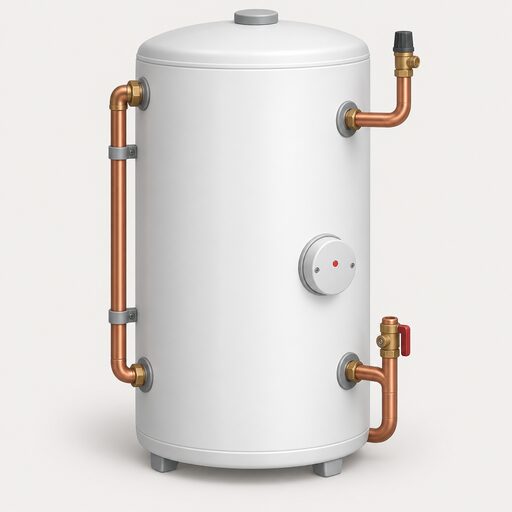 Air-to-Water Wet SystemsAir-to-water heat pumps feed radiators, underfloor heating and a hot water cylinder, and are the most common domestic heat pump in the UK.
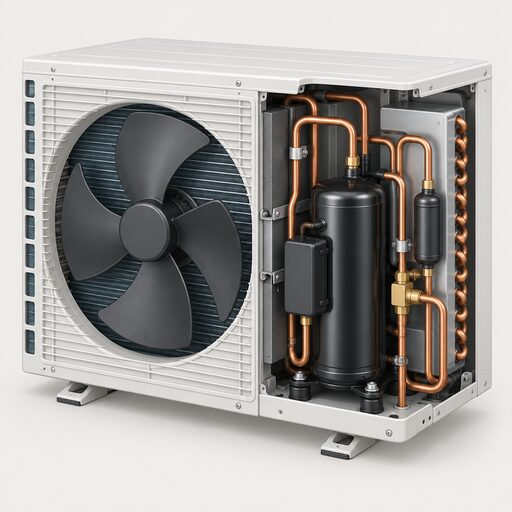 Air Source Heat PumpsHow an air source heat pump takes heat from outdoor air, the difference between air-to-air and air-to-water systems, typical efficiency, the £7,500 Boiler Upgrade Scheme grant, noise and planning limits, and what ownership means for a household's energy independence.
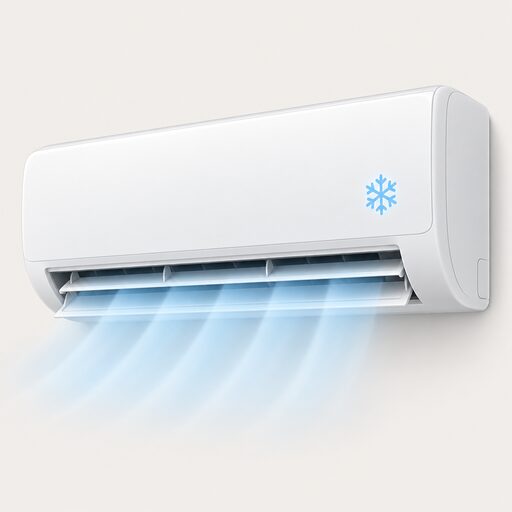 Using a Heat Pump for CoolingCan a heat pump cool your home in summer as well as heat it in winter?
 Warm Air Heating SystemsWarm air heating works by pushing heated air through vents in your floors or walls.
 Hot Water Heat PumpsA hot water heat pump heats only the water in your cylinder, using air instead of a boiler flame.
 High Temperature Heat PumpsHigh-temperature heat pumps deliver flow temperatures of roughly 65 to 80°C, close to boiler levels, so existing radiators can often stay in place.