
In this answer
Short answer
There is no published median installation cost for an air source heat pump in a flat. The figures that exist are for air source heat pumps generally: around £13,000 as the average cost of installation1, around £12,000 as the typical cost2, and around £14,000 on Energy Saving Trust estimates3. The one flat-specific figure in the public record is a modelled estimate for a small home and apartment heat pump of around £6,000 to £8,000 combined with installation, depending on whether any radiators need to be replaced4.
That gap matters, because a flat is not simply a small house. The cost of the job is set by the heat loss of the property, the emitters that have to be changed, and the route the outdoor unit takes to the outside wall. In a block, two further costs sit outside the installer's control: the freeholder's consent and, where permitted development does not apply, a planning application.
What a heat pump costs in a flat: the figures that exist
The headline numbers are national averages across all property types, and they disagree with each other by a margin that reflects different samples and different dates. The average cost of installing an air source heat pump is around £13,0001. The Energy Saving Trust puts the typical cost at around £12,0002, and a separate Energy Saving Trust estimate cited by Which? puts it at around £14,0003. MCS data gives an average of around £13,300 in 20257. Citizens Advice recorded an average of around £13,000 in 20248.
None of these is a flat figure. The nearest thing to one is the Scottish Government's retrofit work on multiple-ownership and mixed-use buildings, which modelled a heat pump cost of £8,000 for flats in 2030, alongside £7,500 for a bio-hybrid alternative9. The same body's small home and apartment case estimated around £6,000 to £8,000 combined with installation, depending on whether any radiators need to be replaced4. That is a modelled figure for a small property, not a quoted market price, and it predates the current grant levels.
What drives the spread is what the installer has to do beyond hanging the box. Cost includes one-off installation costs and some home retrofit costs such as replacing radiators10. Access to the ground, trenches or boreholes, brand, model and size of heat pump, property size and heat need, new build or existing property, and radiator or underfloor heating upgrades all move the number11. In a flat, the last of those is often the largest single line.
Why flats often cost less than houses
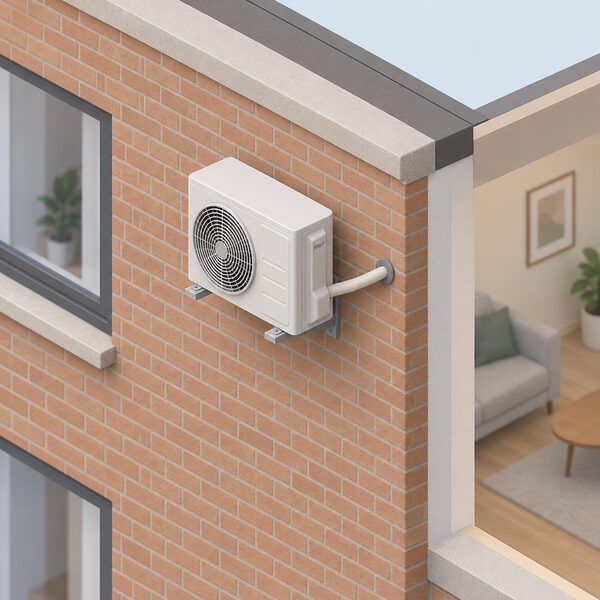
A flat has less external envelope per square metre of floor than a house, so the heat loss is usually lower and the heat pump smaller. A smaller unit costs less, needs less refrigerant, and takes less time to commission. Air-to-air systems, which are more often installed in smaller properties such as flats and park homes, have outdoor units typically smaller than air-to-water heat pumps12.
The counterweight is that flats often have less room for the work. A wet system needs somewhere for a cylinder if hot water is to come from the heat pump, and internal space is the constraint that most often decides the system type. Air-to-air heat pumps are particularly well suited to smaller homes and flats and can take up less wall space than traditional radiators13, which removes the cylinder question entirely but also removes the hot water.
There is also a running-cost caveat that applies to any property, flat or house. If the home is not well insulated, installing a heat pump may increase energy bills instead of reducing them, because electricity is more expensive than gas14. Air source heat pump efficiencies are higher in warmer parts of the country, making it easier for them to be cheaper than gas there15. Where a suitable time-of-use tariff is available, air source heat pumps should cost no more to run than a gas boiler and, in the right home, can be considerably cheaper16. Tariffs of this kind offer a set, cheaper rate per kWh regardless of where you live, or a discount against the region's standard tariff17.
For a household, the independence question is straightforward: a heat pump moves space and water heating off gas and onto electricity, which can be generated at home or bought on a tariff of your choosing. It does not remove dependence on the grid, and in a flat it does not remove dependence on the freeholder.
Air-to-air or air-to-water: which system fits a flat
Air source heat pumps are classified as air-to-air or air-to-water depending on whether the heat distribution system in the building uses air or water18. Both absorb heat from the outside or surrounding air and transfer it into usable heat in the home for space or water heating, or both19. An air-to-water unit transfers heat drawn from surrounding air to water in a wet central heating system20.
| Air-to-air | Air-to-water | |
|---|---|---|
| Distribution | Air, via indoor units | Water, via radiators or underfloor heating |
| Hot water | Not from the heat pump | Yes, with a cylinder |
| Typical setting | Smaller properties such as flats and park homes12 | Wet central heating systems20 |
| BUS grant | £2,500 in residential properties only5 | £7,500, or £9,000 off the gas grid replacing oil or LPG from 21 July 20265 |
| Space taken inside | Less wall space than traditional radiators13 | Cylinder and emitter space needed |
The choice usually turns on hot water. An air-to-water system can serve both heating and hot water, which is why it carries the larger grant. An air-to-air system heats air only, so a separate source of hot water is needed, and it attracts £2,500 rather than £7,5005. Air source heat pumps are easier and cheaper to install than ground source because they do not use buried pipes21, and in a flat with no garden that is not a choice at all.

Planning permission and freeholder consent: the flat-specific hurdles
Permitted development rights allow air source heat pumps to be installed on detached houses or blocks of flats without a planning application22. The rights apply to the installation, alteration or replacement of an air source heat pump on a house or block of flats, or within the curtilage of a house or block of flats, including on a building within that curtilage23. But permitted development rules for air source heat pumps are more restricted for flats and shared buildings, and planning permission is more likely to be required24.
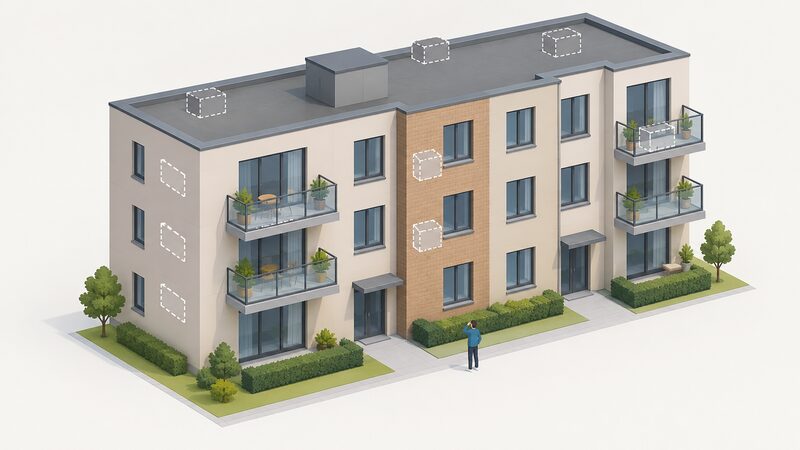
Several conditions decide whether the rights apply. Planning permission is needed if the unit is on a pitched roof or less than 1m from the edge of a flat roof6. It is needed if the volume of the unit including housing exceeds 1.5 cubic metres within the curtilage of a dwelling house, or 0.6 cubic metres within the curtilage of a block of flats6. It is needed where there is an existing air source heat pump on a non-detached dwelling or block of flats, or two existing units on a detached dwelling house6. More than one air source heat pump on a non-detached property or a block of flats requires permission25. The unit must be located within your property and meet the size and location limits24.
For leasehold flats in England and Wales, the freeholder's approval is required for the installation of a heat pump on any part of the building or land for which they own or share the freehold28. Leaseholders will usually require freeholder consent to install an air-to-air heat pump, because of either structural changes or external additions to the building29. That consent is a private legal matter between leaseholder and freeholder, separate from the planning system, and it is the step most likely to delay a flat installation.
Grants: what the £7,500 BUS support means for flat owners

The Boiler Upgrade Scheme provides property owners with up to £7,500, or £9,000 for owners with properties heated by oil and liquid petroleum gas30. The £7,500 applies to air-to-water heat pumps and ground source heat pumps5. From 21 July 2026 the grant value for an air-to-water heat pump in an off-gas-grid property replacing an oil or LPG heating system is £9,0005. Air-to-air heat pumps attract £2,500 in residential properties only5. In Wales, grants of £7,500 are available for air source and ground source heat pumps under the fossil fuel heating replacement scheme31.
The scheme has been at £7,500 for air source heat pumps since 23 October 202332. The grant is not paid to the household: it is a voucher the installer redeems, and the amount is deducted from the quoted price. That means the figure a flat owner sees is the installer's price minus the grant, and the installer's price is the variable.
For a flat, the practical effect is that an air-to-water installation is supported at £7,500 while an air-to-air installation is supported at £2,500. Where a flat cannot take a wet system, the lower grant is the one that applies, and the difference of £5,000 is a real part of the cost comparison.
Retrofit challenges in blocks: shared decisions and technical complexity
The Heat Pump Ready Programme identified the barriers that hold back domestic heat pump uptake: the capital cost of heat pump system hardware and components, the in-property changes required, the internal and external space requirement, and the time taken for a heat pump install from accepted quote33. Every one of those is sharper in a block of flats.
Space is the first constraint. A wet system needs a cylinder, and a flat may not have a cupboard to spare. The outdoor unit needs a wall, a balcony or a roof position that satisfies the 0.6 cubic metre curtilage limit for blocks and the 1m flat-roof edge rule6. Where the block is listed, consent adds a further stage27.
Shared decisions are the second. The freeholder's approval is required for leasehold flats28, and in a block the freeholder may be a residents' management company or a landlord with other priorities. Where more than one unit is proposed, planning permission is required25, which turns an individual purchase into a collective process.
Cost is the third. The general retrofit figure for an air source heat pump in a semi-detached home is £12,00034, and the modelled flat figure is £8,000 for 20309. The difference between those two numbers is the reason a flat can be the cheaper job, but only where the flat can take the system at all. Suitability depends on space, budget and efficiency35, and in a block the first of those is usually the binding one.
Sources35 cited
- What is the Boiler Upgrade Scheme?, Which?, 2025-10-22
- Energy saving upgrades for home renovation, Energy Saving Trust, 2026-05-05
- Air source heat pumps vs ground source heat pumps, Energy Saving Trust, 2026-07-16
- Heat buildings: multiple ownership and mixed use buildings, Scottish Government, 2023-11-28
- Boiler Upgrade Scheme guidance for installers v5.1, Ofgem, 2026-07-02
- Heat pumps, New Forest District Council, 2026-09-17
- Air source heat pump, MCS Certified, 2025
- Deciding if a heat pump is right for you, Citizens Advice, 2024
- Green Gas Taskforce report: bio-hybrids, Cadent, 2030
- HFC phasedown reform de minimis assessment, Defra, 2025-09-02
- Ground source heat pumps, Energy Saving Trust, 2026-07-16
- Air to air heat pumps, Energy Saving Trust, 2026-09-11
- What it's really like to have a heat pump, Which?, 2025-09-22
- Air and ground source heat pumps, Croydon Council, 2026-09-17
- Heat Pump Myths Busted, AECB, 2025-08
- I'm a sustainability expert, here's why I'm not getting a heat pump, Which?, 2026-02-12
- Time of use tariffs explained, Which?, 2026-04-23
- Air source heat pumps, Electricity North West, 2026-09-19
- VAT energy saving materials and grant funded heating supplies, HM Revenue and Customs, 2026-09-17
- ECO4 new measures and products guidance v3.0, Ofgem, 2026-03-26
- Fact sheet 5: air source heat pumps, Pendle Borough Council, 2026-09-17
- Air source heat pumps, Westmorland and Furness Council, 2026-09-17
- Planning permission: air source heat pump, Planning Portal, 2026-09-17
- Air source heat pumps: householder planning advice, Central Bedfordshire Council, 2026-09-17
- Making alterations to a listed building, Bristol City Council, 2026-09-17
- Four realities for installing a heat pump in a flat, Nesta, 2026-05-20
- Five ways to make air-to-air heat pumps take off, Nesta, 2025-12-02
- Boiler Upgrade Scheme guidance for installers V5, Ofgem, 2026-04-28
- Boiler Upgrade Scheme, House of Commons Library, 2026-05-13
- BUS annual report 2024 to 2025, Ofgem, 2023-10-23
- Ynni Cymru capital grant funding scheme 2026 to 2027, Welsh Government, 2026-04
- Boiler Upgrade Scheme statistics July 2026, Department for Energy Security and Net Zero, 2026-08-27
- Heat Pump Ready Programme round 2, Department for Energy Security and Net Zero, 2026-04-21
- Retrofit explained, Energy Saving Trust, 2026-02-06
- Beyond affordability: why heat pumps feel like a gamble, Which?, 2026-07-02
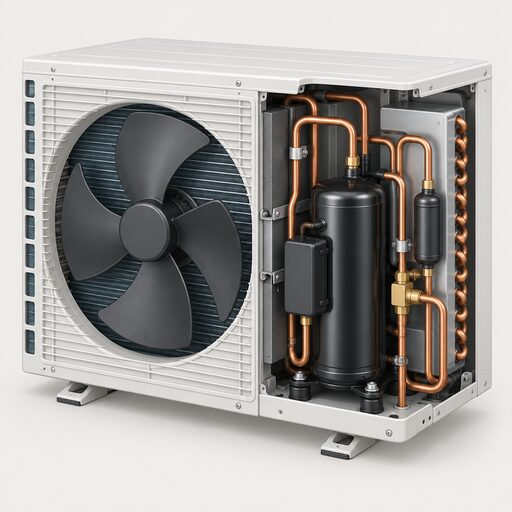 Air Source Heat PumpsHow an air source heat pump takes heat from outdoor air, the difference between air-to-air and air-to-water systems, typical efficiency, the £7,500 Boiler Upgrade Scheme grant, noise and planning limits, and what ownership means for a household's energy independence.
 Water Source Heat PumpsYour home sits near a river, lake or the sea.
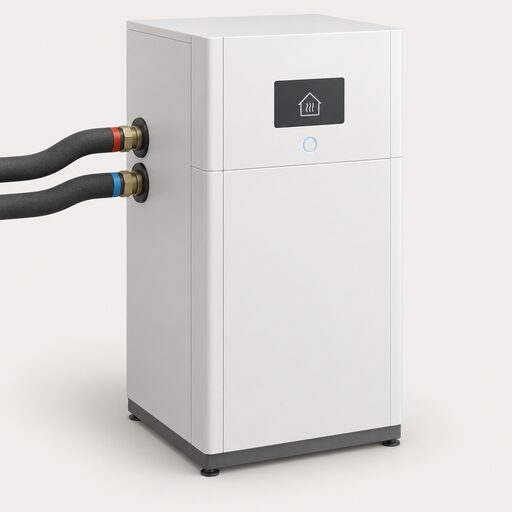 Ground Source Heat PumpsA ground source heat pump takes warmth from the ground to heat your home and water.
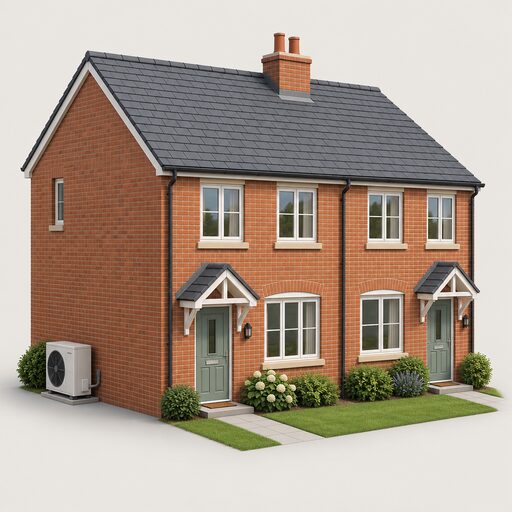 Which Homes Suit a Heat PumpMost UK homes can have a heat pump fitted, so the real question is whether yours makes it easy or expensive.
 Heat Pump Running CostsWhat does a heat pump cost to run each year, and is it cheaper than a gas boiler?
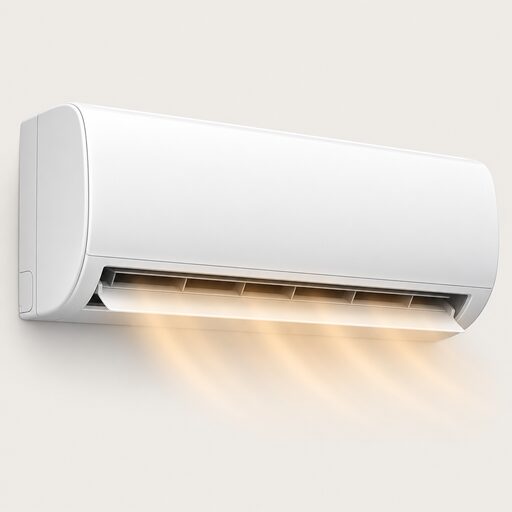 Air-to-Air Heating and CoolingAir-to-air heat pumps deliver warm air through indoor fan units rather than hot water to radiators.