

In this guide
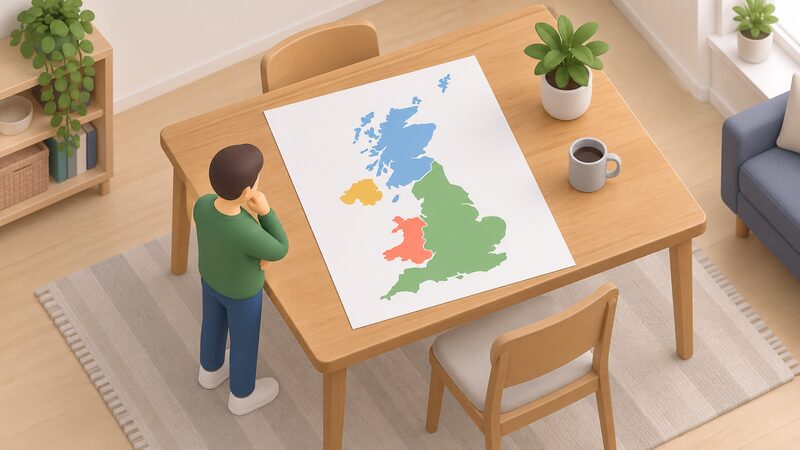
A household's home energy grant options in the United Kingdom depend on its postcode nation, not only on its income or its heating system. The Boiler Upgrade Scheme, which provides upfront capital grants of up to £7,500 towards low carbon heating, supports properties in England and Wales only1. Ofgem's installer guidance is explicit that "Only properties in England and Wales are eligible"2. Scotland runs its own Home Energy Scotland Grant and Loan Scheme and the Warmer Homes Scotland fuel poverty programme; Northern Ireland runs the Affordable Warmth Scheme and the Northern Ireland Sustainable Energy Programme (NISEP).
The split has two causes. Some schemes are reserved and levy-funded, paid for through energy bills and applied across Great Britain: the Energy Company Obligation applies "in England, Scotland, and Wales"3, and Northern Ireland, with its separate energy market, sits outside it. Other schemes are devolved: fuel poverty and housing are matters for the Scottish Government, the Welsh Government and the Northern Ireland Executive, and each spends its own budget on its own programme. The Welsh Government's Warm Homes Nest scheme, for instance, is "separate to ECO4 and GBIS"4.
The practical result is three different grant landscapes on one island plus a fourth across the Irish Sea. A rural oil-heated home in Devon can apply for an uplifted Boiler Upgrade Scheme grant of £9,0002. A comparable home in the Highlands cannot, but may draw on a £1,500 rural and island uplift to both the Scottish clean heating and energy efficiency grants5. A comparable home in County Fermanagh has neither, but owner occupiers and private renters in Northern Ireland may be able to get up to £7,500 for energy-efficiency upgrades through the Affordable Warmth Scheme6.
Why the four nations run different schemes
Energy supply and the levies raised on bills are handled at a Great Britain level, while housing, building standards and fuel poverty policy are devolved. That divide is the whole explanation. ECO4 is a supplier obligation with a defined territorial extent of England, Scotland and Wales3, so it is designed once and delivered across three nations. Fuel poverty, by contrast, is a devolved matter, and the Scottish Government has determined eligibility for the Warm Home Discount in Scotland for its own scheme period within the funding limit7.
Climate law reinforces the divergence. The Climate Change Committee notes that Scotland, Wales and Northern Ireland have their own legal frameworks and decarbonisation targets, and that it provides separate advice to each of the devolved administrations on their carbon budgets8. Different targets produce different retrofit priorities, different budgets and different scheme designs.
Divergence has costs, and the energy industry has said so. Responding to a Scottish Government consultation, sector respondents pointed to "the need to minimise differences between the schemes in Scotland, England and Wales, particularly in relation to administration and reporting arrangements, to minimise costs to suppliers and not impact on their competitiveness"9. That tension, between policy tailored to a nation's housing stock and the administrative simplicity of a single GB scheme, runs through every programme described below.
Northern Ireland sits further apart again. It has a separate electricity market, no ECO obligation and its own regulator, the Utility Regulator, approving the annual NISEP schemes10. For more on the constitutional mechanics, see which energy powers are devolved and which are reserved and the overview at home energy across the UK nations.
England and Wales: the Boiler Upgrade Scheme
The Boiler Upgrade Scheme launched on 23 May 2022 to support the decarbonisation of heat in buildings11. It provides upfront capital grants towards the cost of installing approved heat pumps and biomass boilers in homes and non-domestic buildings12, administered by Ofgem1. The scheme's listed opening date is 23 May 2022 and its closing date 30 December 20291; as of 28 April 2026 it has been extended to 20302.
Grant values are fixed per technology rather than means-tested:
| Technology | Grant | Property scope |
|---|---|---|
| Air source heat pump | £7,5001 | Residential and non-residential2 |
| Ground source (including water source, shared ground loops) | £7,500 standard, £9,000 off-gas-grid uplift2 | Residential and non-residential2 |
| Air-to-air heat pump | Eligible technology2 | Residential properties only2 |
| Biomass boiler | £5,0001 | Residential and non-residential2 |
Conditions attach. The installer must be certified by the Microgeneration Certification Scheme1, and all heating systems installed under the scheme "must meet the relevant MCS standards approved and published by the Secretary of State"2. One grant is available per property13, only one voucher can be redeemed per property, and a property is not eligible if a previous grant has already been paid for a heat pump or biomass boiler at the same address2. The system being replaced must be a fossil fuel system such as gas, oil or LPG, or an electric heating system that does not include a heat pump14. Hybrid systems are excluded: there is no grant for a combination of gas boiler and air source heat pump13. Properties classed as social housing, including shared ownership properties, are not eligible14.
In Wales the Boiler Upgrade Scheme sits alongside devolved support. The Welsh Government states that Green Homes Wales "can be used alongside the UK Government's Boiler Upgrade Scheme, which provides grants for heat pump installations across England and Wales"15. The separate Warm Homes Nest scheme funds heat pumps, insulation and solar panels for eligible households16, and is distinct from the GB obligations4.
Warmer Homes Scotland and the Home Energy Scotland grants
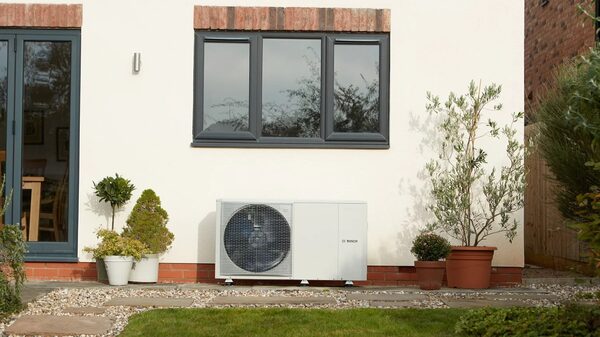
Scotland runs two main domestic routes. Warmer Homes Scotland is the national fuel poverty programme: it helps households in, or at risk of, fuel poverty improve their heating and energy efficiency17, is funded by the Scottish Government18 and funds the installation of a range of heating measures, including renewable and micro-renewable heating, and insulation measures19. It mainly supports owner occupiers but also covers tenants in private rented homes20.
The Home Energy Scotland Grant and Loan Scheme is the broader route. It provides grants and loans to all domestic owner-occupiers in Scotland to install clean heat and energy efficiency measures20, and the Scottish Government states that no eligibility criteria are based on age or any other protected characteristic, with homeowners accessing the scheme on an equal basis as funds last21. Unusually among UK schemes it mixes instruments: the scheme "offers grant only, loan only and a combination of both for heat pumps", while the Private Rented Sector Landlord Loan Scheme offers loan funding only22. Heat pump grants are offered to homeowners under the wider Heat in Buildings Programme23.
Alongside these sit area-based schemes delivered with councils. West Lothian Council, in partnership with the Scottish Government, offers grant funding focused on solid wall insulation and other measures for homes hard to treat because of non-standard construction24. More detail sits on HEEPS area based schemes in Scotland and the Home Energy Scotland Grant and Loan Scheme.
Rural geography is handled through an uplift rather than a separate scheme: an uplift of £1,500 is available for rural and island homes to both the clean heating and energy efficiency grants25, described in the 2025 progress report as applying to remote rural and island homes26.
Northern Ireland: Affordable Warmth and NISEP
Northern Ireland has neither the Boiler Upgrade Scheme nor ECO. Its two standing domestic routes are the Affordable Warmth Scheme, run by the government of Northern Ireland5, under which owner occupiers and private renters may be able to get up to £7,500 for energy-efficiency upgrades6, and NISEP, an £8 million fund collected from both domestic and non-domestic energy consumers6.
NISEP's annual list of schemes is approved by the Utility Regulator and funds three categories: priority whole house solutions covering heating and insulation measures; priority individual measures covering insulation and various other energy efficiency measures; and non-priority schemes covering various measures for domestic, non-domestic and innovative schemes10.
The two programmes are deliberately complementary rather than stackable. NISEP scheme rules state that schemes are in general targeted at households who do not qualify for assistance from other government schemes such as Affordable Warmth, and that a household is not eligible if it has been approved under another grant-funded programme for the same measure at the same property, or has received a grant within the last 15 years for the same measure at the same property27.
Further detail sits on the Affordable Warmth Scheme in Northern Ireland and NISEP; the question of obligation coverage is handled at does the Energy Company Obligation apply in Northern Ireland.
What each scheme funds: heat pumps, biomass and insulation
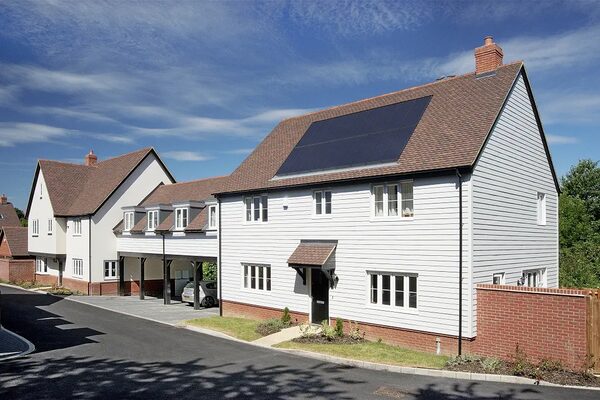
The four nations fund different baskets of measures, which is why comparing grant headline figures alone misleads.
| Nation | Main capital scheme | Technologies named in the rules |
|---|---|---|
| England | Boiler Upgrade Scheme | Air-to-water, air-to-air and ground source heat pumps (including water source and shared ground loops), biomass boilers2 |
| Wales | Boiler Upgrade Scheme plus Warm Homes Nest | As above, plus heat pump, insulation and solar panels under Nest16 |
| Scotland | Home Energy Scotland Grant and Loan Scheme; Warmer Homes Scotland | Clean heat and energy efficiency measures20; heating including renewable and micro-renewable measures, and insulation19 |
| Northern Ireland | Affordable Warmth Scheme; NISEP | Energy-efficiency upgrades6; whole house heating and insulation, individual insulation and other efficiency measures10 |
Two structural points follow. First, solar panels appear in the Welsh Nest list16 but are not among the Boiler Upgrade Scheme's eligible technologies, which are confined to heat pumps and biomass2. Second, the historic UK-wide scheme has gone: the Domestic Renewable Heat Incentive covered households in England, Scotland and Wales that had installed air source heat pumps, ground source heat pumps, biomass boilers or solar thermal heating28, again leaving Northern Ireland to its own arrangements.
The divergence even distorts the statistics. Official heat pump deployment statistics note that the schemes cover installations across the UK, "however, some devolved administration schemes in Scotland and Northern Ireland are currently not included"29, and that additional heat pumps installed in new-builds and under devolved schemes fall outside the published totals14. Anyone comparing installation counts between nations should expect Scottish and Northern Irish activity to be understated.
Eligibility compared: who qualifies where
The English and Welsh scheme is largely tenure-and-technology based rather than income based. There is no means test in the Boiler Upgrade Scheme rules: the tests are ownership of an eligible property type, the nature of the system being replaced, MCS certification and the one-grant-per-property limit2. Social housing, including shared ownership, is excluded14. Since 28 April 2026, properties are no longer required to have a valid EPC to apply2.
Scotland runs both types of gate in parallel. Warmer Homes Scotland is targeted: it helps households in, or at risk of, fuel poverty17. The Home Energy Scotland Grant and Loan Scheme is open to all domestic owner-occupiers20, with access on an equal basis as funds last21. A separate Scottish Central Government Energy Efficiency Grant scheme is targeted at public bodies with no borrowing powers rather than households20.
In Northern Ireland the Affordable Warmth Scheme reaches owner occupiers and private renters6, and NISEP explicitly picks up households who do not qualify elsewhere27.
Benefit-linked schemes diverge too. The Warm Home Discount (Scotland) Regulations require that broader group eligibility criteria include descriptions of persons in receipt of every type of benefit specified in Part 1 of Schedule 3, excluding core group customers, and that those covered will wholly or mainly be persons in fuel poverty or a fuel poverty risk group30. See the Warm Home Discount in Scotland.
Even the underlying measurement differs. The Scottish fuel poverty index is "not strictly directly comparable" with the England and Wales indices because of data availability and spatial granularity [17 - see fuel poverty pages]. Comparisons of who is in greatest need across borders are therefore approximate: fuel poverty in Scotland, in Wales and in Northern Ireland set out each definition.
Grant amounts and the off-gas-grid difference
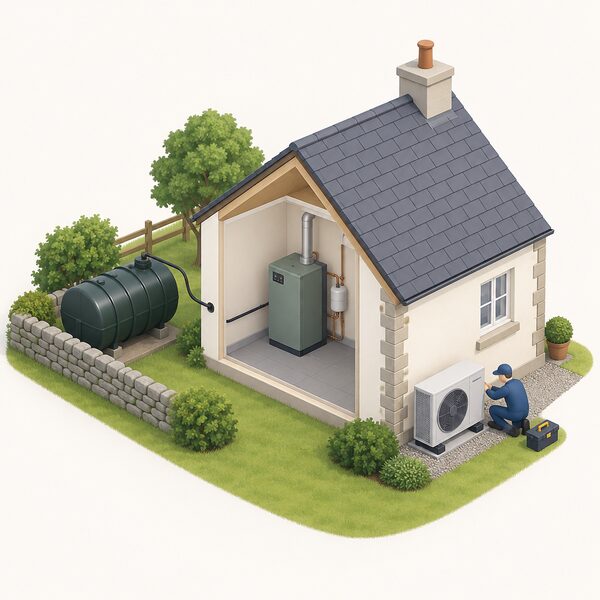
Off-gas-grid homes are the sharpest illustration of divergence. From 21 July 2026, eligible off-gas grid properties in England and Wales can apply for an uplifted grant of £9,000 for an air-to-water or ground source heat pump, where the previous heating system being replaced was fuelled by oil or liquefied petroleum gas2. Properties that do not qualify may still be eligible for a grant of £7,5002. The uplift is time-limited: it remains available from 21 July 2026 until 31 March 20272.
Scotland addresses the same problem differently, through geography rather than fuel. Its uplift of £1,500 applies to both the clean heating and the energy efficiency grants for rural and island homes25, a commitment reflected in the 2025 Heat in Buildings progress report for remote rural and island homes26 and in Commons Library material describing up to £1,500 extra for energy-efficiency improvements and up to £1,500 extra for clean heating systems in rural areas6.
Northern Ireland has no capital heat pump uplift of either kind. Its ceiling is the Affordable Warmth figure of up to £7,500 for energy-efficiency upgrades6, and its wider fund is the £8 million NISEP6.
How the application process differs
In England and Wales the process is installer-led. The installer applies for the grant on the property owner's behalf, discounts the grant from the invoice, applies to Ofgem for a grant voucher and redeems the voucher after installation and commissioning1. Ofgem describes it as a two-stage process: voucher application, voucher issued, redemption application, grant payment31. The application must be properly made within 120 days of the commissioning date2. General queries go to the Ofgem enquiries team14; where a complaint concerns the scheme's underlying policy, including the eligibility criteria, the guidance directs it to the Energy Department instead32.
Scotland's grant and loan route is householder-led and also two-stage, but in the opposite order of exposure. The applicant submits an application to request funding before any work takes place, then submits a claim once the work has been completed33. That sequencing matters for cash flow: the Scottish householder secures approval first, whereas the English or Welsh householder receives the grant as a discount applied by the installer.
Northern Ireland's grant handling sits with the Housing Executive, which states that how quickly a grant is processed depends on the level of demand, the amount of money available and how quickly the applicant sends requested documents34.
Historic application volumes show how small the devolved pipelines can be. Scotland recorded 2,537 applications including heat pumps under the Home Energy Scotland Grant and Loan Scheme in financial year 2022-23 [25 - see FOI], and under the Renewable Heat Incentive there were 403 domestic applications in Scotland in the six months from April to September 2014 [9 - see POST].
No blending: the rule that catches households out

Across the nations, the single most common surprise is that funds cannot be stacked on the same measure. Ofgem states that "Funding from BUS and ECO cannot be blended for the same measure or be included within an ECO4 project"35. The wider ECO rule is broader still: funding for measures delivered under ECO4 must not be blended with funding from other government schemes or grants, including the Warm Home Discount, the Boiler Upgrade Scheme, the Social Housing Decarbonisation Fund and the Home Upgrade Grant36.
There are exceptions where a devolved government has designed for compatibility. The Welsh Government states that Green Homes Wales can be used alongside the Boiler Upgrade Scheme15. In Northern Ireland, NISEP works the other way: it is targeted at households who fall outside schemes such as Affordable Warmth, and bars a repeat grant for the same measure at the same property within 15 years27.
Smart meters and the Northern Ireland gap
Metering is not a grant, but it shapes what a household can do with the equipment a grant buys, from time-of-use tariffs to export arrangements. Here Northern Ireland is furthest behind: the Department for the Economy has announced plans for a rollout of smart meters to all homes there starting in 2028, and as of early 2026 the Consumer Council stated that no smart electricity meters had been installed in homes in Northern Ireland.
Within Great Britain, coverage is uneven rather than absent. Ofgem reports that domestic electricity smart meter coverage in Scotland is 13% lower than in England, and 10% lower than in Wales37. Scottish research into fuel poor households identified practical barriers: concerns about perceived inaccuracy, concerns about data privacy and security, and connectivity problems, "with some suggesting that this was due to poor phone or internet signal"38. Rural and island signal quality is therefore a metering issue as well as a heating one.
Building standards are also on separate clocks, with a further update to requirements for new homes expected in Northern Ireland in 2026 or 2027, after England and Wales in 2025 and Scotland in 202439. Related pages: do I have to do anything to get a smart meter in Northern Ireland and who will install smart meters in Northern Ireland.
What the differences mean for household energy independence

A capital grant reduces the cost of leaving a fossil fuel boiler, which is the largest single step most households can take towards controlling their own heat. But each scheme leaves dependencies in place, and they differ by nation.
In England and Wales the household depends on an MCS-certified installer to make the application at all1, on Ofgem to issue and honour a voucher31, and on the scheme year's budget, which does not carry over31. The off-gas-grid uplift is a policy decision with an end date of 31 March 20272, not an entitlement. In Scotland the household depends on funds lasting21, and on a two-stage approval that must precede any work33. In Northern Ireland the household depends on demand and available money in the year it applies34, and on a NISEP fund whose successor arrangements are still being developed.
The common residue is that none of these schemes removes the grid or the supplier. A heat pump replaces a gas, oil or LPG dependence with an electricity dependence, and in Northern Ireland that electricity connection currently lacks the smart metering that would let a household shift consumption to cheaper periods. Insulation, funded under every nation's programme, is the measure that reduces demand outright and depends on no supplier afterwards.
The practical reading for a householder is simple enough: identify the nation, then the scheme, then the measure, and expect that a neighbour across a national border faces different amounts, different tests and a different application route for the same house. Devolution and household energy independence sets out the longer-run implications.
Sources39 cited
- Boiler Upgrade Scheme grant listing, Find a Grant, 2026-09-18
- Boiler Upgrade Scheme guidance for installers v5.1, Ofgem, 2026-07-02
- ECO4 government response, GOV.UK, 2022-04-01
- Written statement on GBIS and ECO4, GOV.WALES, 2025-01-23
- Home energy efficiency schemes briefing, House of Commons Library, 2026
- Home energy efficiency schemes briefing paper CBP-9585, House of Commons Library, 2026-05-13
- Continuing the Warm Home Discount scheme: government response, GOV.UK, 2026-01-30
- The Seventh Carbon Budget, Climate Change Committee, 2025-02-26
- Analysis of responses to the consultation on Scotland's energy, Scottish Government, 2017-11-14
- NISEP list of schemes 2026/2027 published, Utility Regulator, 2026-04-01
- Boiler Upgrade Scheme annual report April 2025 to March 2026, Ofgem, 2026-07-31
- Boiler Upgrade Scheme quarterly report issue 17, Ofgem, 2026-08-31
- Apply for the Boiler Upgrade Scheme: what you can get, GOV.UK, 2026
- Boiler Upgrade Scheme guidance for property owners v5, Ofgem, 2026-04-28
- £5 million to help Welsh households invest in greener homes, GOV.WALES, 2026-03-05
- Get free home energy efficiency improvements: Nest, GOV.WALES, 2026
- Warmer Homes Scotland scheme headline data, Scottish Government, 2025-10-29
- Home energy efficiency advice, Argyll and Bute Council, 2026
- Tackling fuel poverty in Scotland: a strategic approach, Scottish Government, 2021-12-23
- Heat in Buildings progress report 2024, Scottish Government, 2024-10-10
- FOI release on Home Energy Scotland scheme eligibility, Scottish Government, 2024-05-15
- FOI release on grant and loan funding types, Scottish Government, 2025-02-20
- The Heat in Buildings Programme, Scottish Government, 2026
- Energy Efficient Scotland Area Based Schemes, West Lothian Council, 2026
- Energy saving home improvements, Scottish Government, 2026
- Heat in Buildings progress report 2025, Scottish Government, 2025-10-02
- NISEP list of schemes 2026-27, Utility Regulator, 2026-04
- Domestic Renewable Heat Incentive annual report April 2023 to March 2024, Ofgem, 2024-07-31
- Heat pump deployment quarterly statistics June 2024, GOV.UK, 2024-09-26
- The Warm Home Discount (Scotland) Regulations 2026, legislation.gov.uk, 2026-04-30
- Boiler Upgrade Scheme quarterly report issue 14, Ofgem, 2025-11-26
- Boiler Upgrade Scheme property owner guidance v2.3, Ofgem, 2023-09-25
- Home Energy Scotland Grant and Loan Scheme application and claim processing times, Scottish Government, 2026-03-12
- How long will the whole process take, Northern Ireland Housing Executive, 2026
- ECO4 delivery guidance v3.2, Ofgem, 2025-12-08
- Energy Company Obligation: homeowners and tenants, Ofgem, 2026
- Smart Meter Guaranteed Standards statutory consultation, Ofgem, 2025-08-08
- Research on the lived experience of fuel poverty in Scotland, Scottish Government, 2020-09-03
- Energy efficiency in new homes briefing, House of Commons Library, 2026
 Check Which Energy Grants ApplyWhich energy grants can you actually get right now, and which have closed?
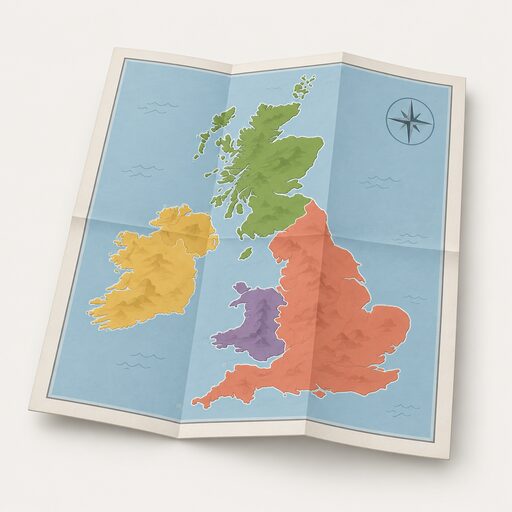 The Full Scotland, Wales and Northern Ireland GuideWhy a householder in Glasgow, Cardiff or Belfast faces different schemes, standards, targets and markets from one in England.
 Devolution and Energy PowersLiving in Scotland, Wales or Northern Ireland can mean different grants and building rules for your home than in England.
 The Full Grants and Schemes GuideWhich grants can you actually get right now, and how do you apply for them?
 Housing Stock Data for NIMost homes in Northern Ireland heat with oil, so why are the grants and help different from the rest of the UK?
 Devolved vs Reserved PowersWho decides what you pay for gas and electricity, and who decides how your home is insulated or improved?