
In this answer
Short answer
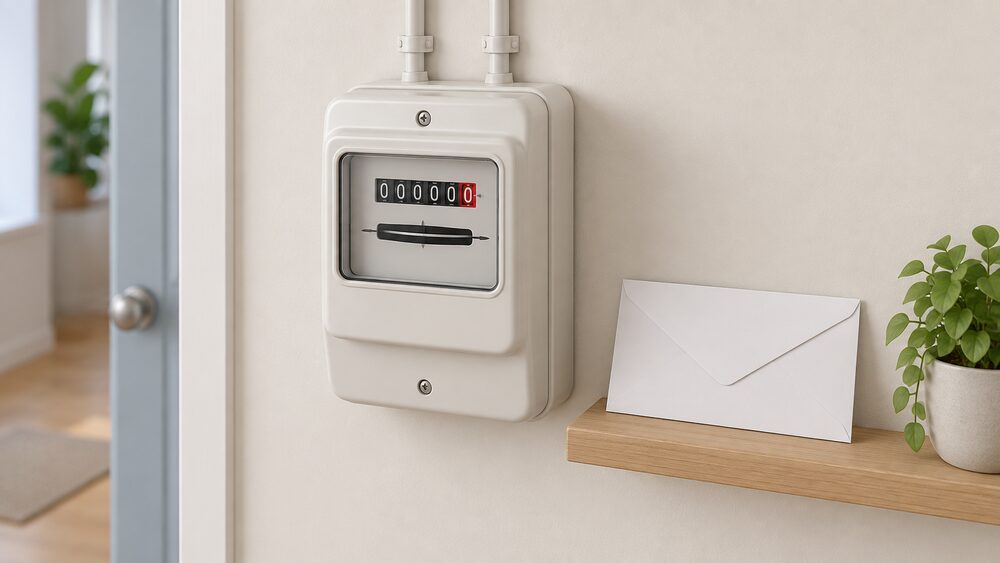
No. There is nothing for a Northern Ireland householder to do, apply for or book. Consumers do not have to do anything to receive their smart meter: NIE Networks and electricity suppliers will contact consumers when it is time for installation1. The Department for the Economy has announced plans for the rollout of smart meters for all homes in Northern Ireland starting in 20281.
That is the short answer, and it is the same answer whether the property is owned or rented, and whether the household is on credit or a keypad meter. The longer answer is that Northern Ireland is at a different stage from the rest of the UK. As of early 2026, no smart electricity meters have been installed in homes in Northern Ireland yet2. Smart meters are not currently being installed there, but that is set to change3.
Why no smart meters are installed in Northern Ireland homes yet
Northern Ireland has not been part of the Great Britain smart metering programme, and the practical result is a blank. There are currently no smart electricity meters in Northern Ireland, but they have already been rolled out in Great Britain and the Republic of Ireland1. The Consumer Council's fact sheet is blunt about the position: as of early 2026, no smart electricity meters have been installed in homes in Northern Ireland yet2.
Awareness among consumers reflects that. Research published in November 2024 found that two in five (40%) respondents stated that they were familiar with smart electricity meters, 43% stated that they had only heard of them, and 18% were unfamiliar or had never heard of them5. As of early 2026, no smart electricity meters have been installed in homes in Northern Ireland yet, and there are no plans to install smart gas meters5.
The delay is not a technology problem. Northern Ireland has different connection arrangements from the rest of the UK, and the metering arrangements follow that pattern6. All meters in Northern Ireland are provided by NIE Networks rather than by the retail supplier, which changes who does the work and how a programme has to be organised2. NIE Networks Meter Readers already read, test and inspect all electricity meters in Northern Ireland, even where customers submit their own readings, so the network company is the constant party across every property7.
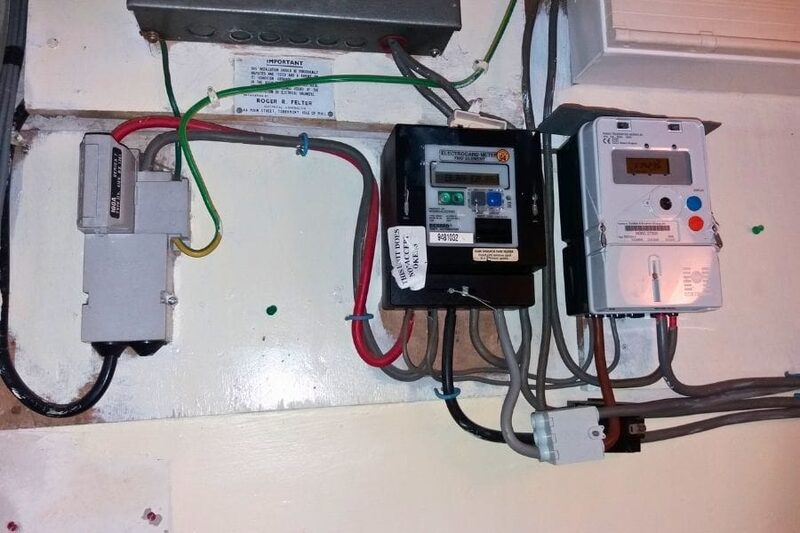
For a household, the effect is straightforward: the meter on the wall is the analogue one, readings are still taken or submitted, and none of the functions that depend on a smart meter, such as automatic reading transmission or time-of-use tariff access, are available yet.
The planned rollout: electricity meters only, over six years
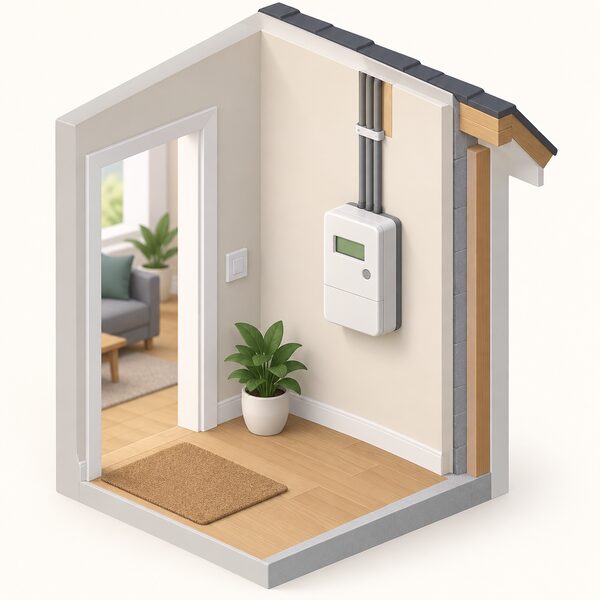
The shape of the programme is now reasonably clear, though the dates in circulation differ. The Department for the Economy has announced plans for the rollout of smart meters for all homes in Northern Ireland starting in 20281. Analysis published in July 2026 proposed a rollout over six years starting in 20274. The same analysis recommends that a roll-out over six years, starting in 2027, would be most cost-effective3.
So two start years appear in the documents: 2027 in the cost-effectiveness analysis, and 2028 in the departmental announcement. Both describe a six-year programme. A household should treat the start date as a plan rather than an appointment, and expect contact from NIE Networks or the supplier rather than a fixed date.
The scope is narrower than in Great Britain in one important respect. The Department for the Economy is developing an electricity smart meter implementation plan, but not smart gas meters4. There are no plans to install smart gas meters in Northern Ireland3. Households that use gas will therefore keep their existing gas metering arrangement while the electricity meter changes.
The programme also has to be read against Northern Ireland's wider climate commitments. England, Wales and Northern Ireland have committed to reaching net zero by 20508. Smart metering is one of the infrastructure pieces that supports that, because it allows demand to be measured and managed over time rather than estimated.
What the rollout covers: homes, businesses and who holds your data
The rollout is not limited to houses. Businesses, including small and medium sized firms, will also be covered by the rollout1. That matters for households in two ways: it means the programme is a national infrastructure exercise rather than a consumer offer, and it means the same network and data arrangements apply across domestic and small commercial premises.
On data, the position is more protective than many households assume. Smart meter data is classified as personal data, owned by the consumer, and the consumer is the source of consent for any onward data-sharing9. Consumption information is sent to NIE Networks at regular intervals1. Readings are transmitted automatically to the energy supplier10. Where a household has a pay-as-you-go or keypad meter, the information is used to keep the account up to date11.
"smart meter data is classified as personal data, owned by the consumer. The consumer is the source of consent for any onward data-sharing"
In practice, three parties touch the data: the network company, the supplier, and whoever the consumer consents to share it with. The consent point is the one a household controls. Nothing in the Northern Ireland arrangements changes the underlying rule that the consumer is the source of consent for onward sharing9.
What you can do in the meantime
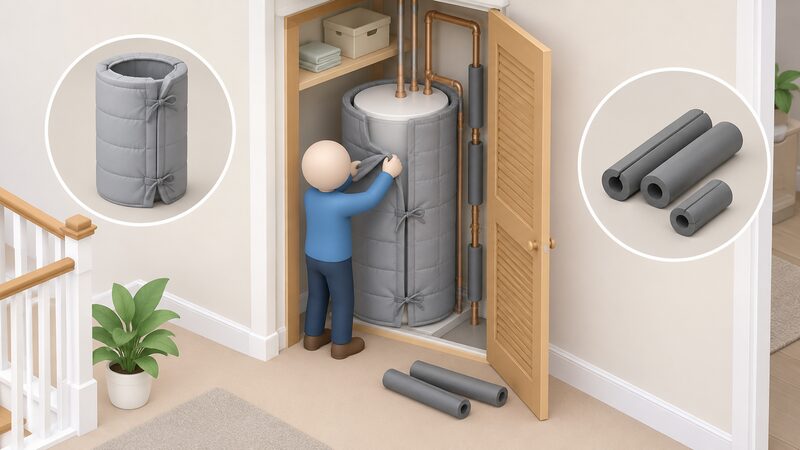
Waiting for a meter does not mean waiting for everything. The Northern Ireland Sustainable Energy Programme funds a set of measures that do not depend on smart metering. These may include LED light bulbs, low-flow or eco shower heads, hot water tank jackets, reflective radiator panels, draught proofing measures and remote smart heating controls12. The programme is a separate route to efficiency improvements while the metering programme is still being built.
For owner-occupiers, NI Energy Advice directs households to check eligibility for grants to improve the efficiency of their home, through the Housing Executive's energy pages or by telephone13. There is currently no funding towards installing renewable technology at home if you live in Northern Ireland, so the grant landscape there is narrower than in Scotland or Wales14.
Two practical points are worth knowing before any meter work happens. NIE Networks contacts the customer to arrange meter works on site once a connection is being energised, which is the pattern the smart rollout will follow15. And if a household wants a different meter type from the one applied for, the route is through the electricity supplier, who arranges it, rather than directly with NIE Networks16.
How this differs from Great Britain
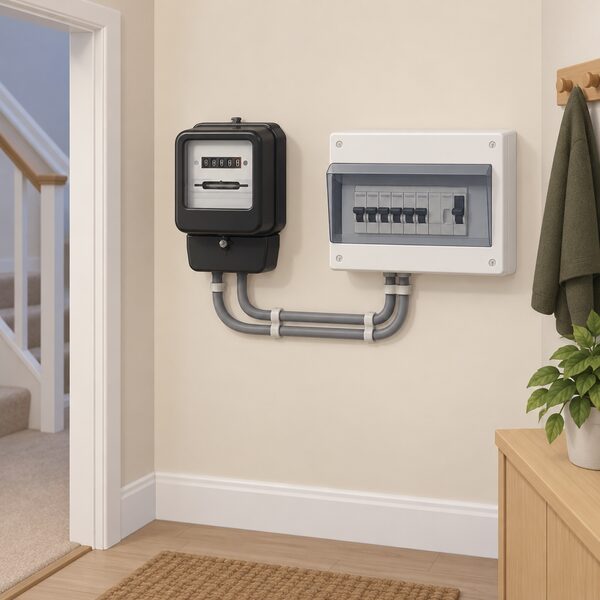
Great Britain has been running its smart metering programme for years, and the contrast with Northern Ireland is stark. Energy suppliers aim to provide every home and business in England, Scotland, and Wales with free smart meters17. Smart meters are being installed in homes across Great Britain at no extra cost, to replace traditional meters18. In Northern Ireland, none have been installed in homes yet2.
The technical architecture also differs. The secure smart meter network, which operates outside of the public internet, is divided into three areas in Great Britain: north, central and south19. The North region of Great Britain primarily uses long range radio, while the Central and South regions use the 2G/3G network20. The smart meter network primarily uses long range radio in the north of Great Britain, including Scotland, and 2G/3G elsewhere3. Northern Ireland sits outside that structure entirely, with different connection arrangements applying6.
| Northern Ireland | Great Britain | |
|---|---|---|
| Smart electricity meters installed in homes | None, as of early 20262 | Being installed across England, Scotland and Wales17 |
| Rollout start | 2028 announced; 2027 recommended1 | Under way since the 2010s21 |
| Smart gas meters | No plans3 | Replacing analogue gas and electricity meters22 |
| Meter provider | NIE Networks provides all meters2 | Supplier-led installation18 |
| Network communications | Outside the GB three-region structure6 | North, central and south regions19 |
The Great Britain programme has its own history of slippage, which is a useful caution when reading any start date. The 2019 framework proposal aimed to give suppliers until the end of 2024 to install smart meters in at least 85% of consumers' homes and small businesses, and energy suppliers were later granted an extra 6 months to ensure they had taken all reasonable measures to install smart meters in households and small businesses21. A 2023 consultation set a proposal for the proportion of meters in homes to be smart by the end of 202521. Rollout timetables move.
For a Northern Ireland household, the practical difference is that the choice available in Great Britain, where a household that has not been offered a smart meter can request one from its supplier, does not exist locally10. Eligibility for that route excludes Northern Ireland24. Until the Northern Ireland programme reaches a property, the meter stays as it is.
Sources24 cited
- Smart meters, Consumer Council
- Smart Electricity Meters Fact Sheet, Consumer Council, April 2026
- What is a smart meter, Which?, 7 April 2026
- Guide to smart meters, Energy Saving Trust, 15 July 2026
- Attitudes to the Energy Transition 2024/2025, Consumer Council, November 2024
- G98 Single Premises, Energy Networks Association, 17 September 2026
- Why do we need to read your meter, NIE Networks, 19 September 2026
- Research briefing CBP-9888, House of Commons Library, 10 July 2026
- Data protection and smart meter data, Open Energy, 20 September 2026
- How do smart meters save energy, Smart DCC, 2026
- What will the meter information reading be used for, NIE Networks, 20 September 2026
- Northern Ireland Sustainable Energy Programme, Energy Saving Trust, 7 September 2026
- NI top energy saving tips, National Energy Action, 7 September 2026
- Grants and loans, Energy Saving Trust, 19 February 2026
- Energising your connection, NIE Networks, 19 September 2026
- How can I change my meter type, NIE Networks, 19 September 2026
- How to get a smart meter, Smart DCC, 2026
- The accessible in-home display, Smart Energy GB, 16 March 2026
- Do smart meters use 3G, Smart DCC, 2024
- Energy company complaints, Which?, 28 October 2025
- Update on the rollout of smart meters, National Audit Office, 2023
- Smart meters: your rights and expectations, Department for Energy Security and Net Zero, 8 August 2025
- Government sets out plans to drive up smart meter installations, Department for Energy Security and Net Zero, 18 June 2020
- Get a smart meter, Smart Energy GB, 10 June 2026
 Smart Meters in Northern IrelandWhen are smart meters coming to Northern Ireland?
 Power Cuts in Northern IrelandNorthern Ireland has a single electricity distribution network, run by NIE Networks, and its own reporting number, registers and compensation arrangements.
 NIE Networks Meter ReplacementExplains the programme replacing electricity meters across Northern Ireland, who carries out the work and how appointments are made.
 Energy Bills in Northern IrelandNorthern Ireland has no price cap.
 Home Energy Planning Rules in NIDo you need planning permission for solar panels or a heat pump in Northern Ireland?
 Suppliers in Northern IrelandNorthern Ireland runs its own energy market, with its own regulator, its own suppliers and no price cap.