
In this guide
A smart meter collects one thing: how much gas and electricity the property uses, and when. That measurement, plus the tariff applied and the technical information needed to run the meter, is the whole of the data set. Personal details such as a name, address and bank account details are not stored on, or transmitted by, the meter, and it has no video or audio recording components1. It does not record conversations, browsing history, personal activities or details about individual appliances2.
How often that measurement leaves the property is a household choice. Readings can be sent monthly, weekly, daily or half-hourly, with monthly the minimum and daily or half-hourly optional3. Since 3 November 2022 the position has shifted: meters installed before that date, where the household has not switched supplier or changed contract since, were set to daily and can be moved up to half-hourly or down to monthly; meters installed or re-contracted since then default to half-hourly and can be reduced to daily, but not to monthly5.
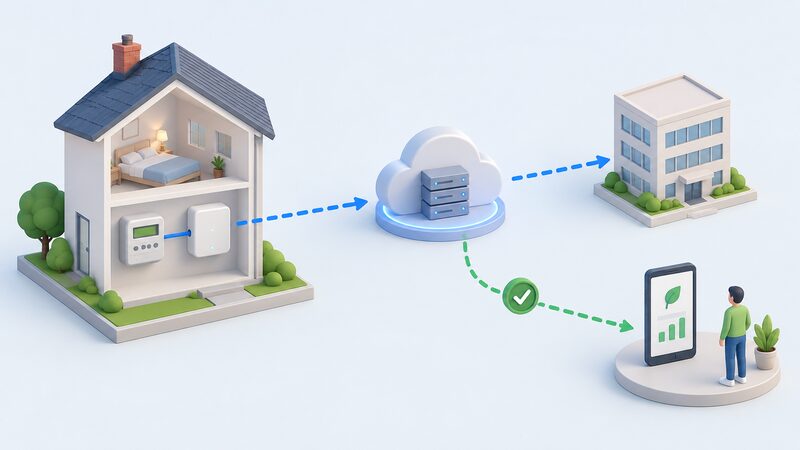
Who sees it is tightly drawn. Only the energy supplier and the local network operator can decrypt what the meter sends, and they may use it only for specific regulated purposes such as billing without further permission6. Anyone else, an app, a comparison service, a flexibility provider, needs explicit opt-in consent from the household7. Data travels over the Data Communications Company's closed network, wrapped in two layers of encryption, and the DCC states it never sees or keeps the data, it transports it securely straight to the energy supplier8.
What the meter actually collects, and what it does not
Smart meter data collection is limited to essential data about the total amount of energy used1. At the simplest level the DCC describes two categories: message contents, and system data11. Message contents are the consumption figures and tariff information; system data covers the technical information needed for meter operation and smart services2.
The limits matter more than the contents. A smart meter measures household energy use only and does not know when individual appliances are turned on or off12. The supplier will know how much energy has been used, not how it has been used13. That distinction is the boundary of what any party downstream can see: a half-hourly consumption curve, not an inventory of the home.
"The only information a smart meter holds is about how much energy you've used, and what tariff you're on."
Energy monitors and smart thermostats sit outside this entirely. They are not smart meters, are not linked to energy accounts, and do not send any information to energy suppliers14. A household using home energy monitors or a consumer access device is generating a separate data stream under separate terms.
There is a caveat on granularity that households should understand. Parliamentary analysis notes that where smart meter data is collected at 10 to 30 minute intervals, occupancy and activity patterns can be inferred, and gives the example of data recorded at half a second intervals as the high-frequency end of the scale10. The meter does not identify appliances, but a fine-grained consumption curve carries information about when a home is occupied. That is the privacy argument for choosing a lower frequency, and the reason consent sits at the frequency level as well as the recipient level.
How often readings are taken: from half a second to monthly
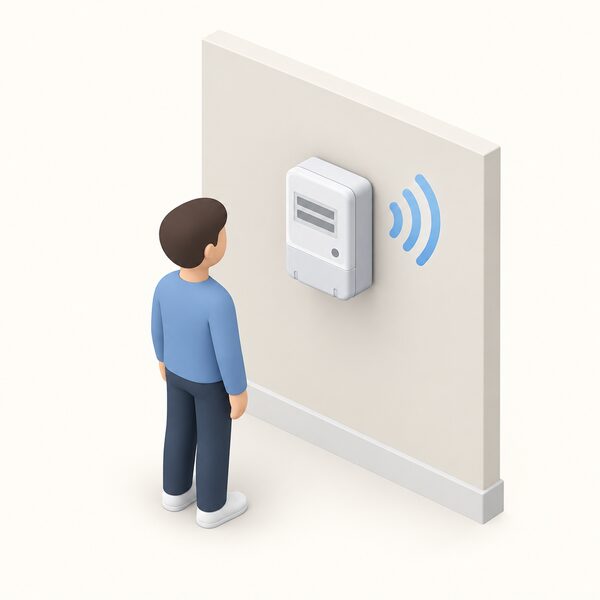
Automatic meter readings can provide the supplier with monthly, weekly, daily or even half-hourly readings3. Half-hourly means the meter sends a reading every 30 minutes15. In practice most descriptions settle on three household-facing options: half-hourly, daily or, in some cases, monthly16.
| Frequency | What it means | Availability |
|---|---|---|
| Half-hourly | A reading every 30 minutes15 | Optional; default for meters installed or re-contracted since 3 November 20225 |
| Daily | One reading a day | Optional; default for meters installed before 3 November 2022 with no switch since5 |
| Monthly | The regulatory minimum4 | Available, but not always reachable once a meter has been set to half-hourly5 |
The 3 November 2022 change is the point households most often trip over. Citizens Advice describes the position plainly: an electricity smart meter installed before that date will have been set to send meter readings once a day, and after switching tariff, switching supplier or agreeing to send readings more often since that date, the meter will be set to send meter readings every half hour17. From there, "You can only change the settings to send readings once a day"17. Monthly is not offered back.
Gas behaves differently from electricity at the meter. Electricity use is recorded in near real time for the in-home display, with gas recorded every half hour4. That is a measurement characteristic, not a sharing choice.
Reading frequency is not fixed for life. The preference can be changed by contacting the supplier directly9, and Smart Energy GB states the preference can be changed at any time18, within the constraint above. Suppliers describe their own menus in the same terms: one large supplier offers every half-hour, once a day, or once a month19.
Who can see your data
Only the supplier, or third parties given explicit permission by the consumer, can see how much energy is being used and when8. The encryption boundary enforces it: only the energy supplier and the local network operator can decrypt the information the meter sends6.
The supplier. Sees consumption at the agreed frequency, uses it for billing without separate consent, and cannot share it further or use it for sales or marketing without permission1.
The distribution network operator. Can access smart meter data for regulated purposes only, and must agree a privacy plan with Ofgem before doing so7. What reaches them is constrained: data recorded at 30 minute intervals can be obtained by network operators in aggregated and anonymised form10, described elsewhere as anonymised energy use data that cannot be linked back to an individual12. The purpose is running the networks more efficiently.
Third parties. Organisations that have signed the Smart Energy Code can access smart meter data of any granularity, but only via opt-in consent, with regular reminders of that consent, and based on confirmation that the request for the service comes from the individual7. Consumers can authorise other DCC users, such as switching websites, to access consumption data directly from the meters via the DCC20. Where a supplier needs to share data with a third party, the household is notified and can opt out1.
Other data bodies. Not everything about a meter sits in the consumption record. Electralink stores data on smart meter installation, including numbers and location, on supplier switching, and on industrial and commercial consumption, among other datasets7.
What the supplier uses it for: billing, tariffs and system efficiency
Ofgem sets out three uses for the data a household shares: to bill for the energy used; to offer new products and services, for example new tariffs, where permission has been given for that; and to help make the energy system more efficient by recording demand more accurately22.
Billing is the load-bearing one. Readings arrive automatically over the DCC network, so bills are based on accurate meter readings and not estimates, and there is no need to submit readings manually22. Suppliers bill only for energy actually used23.
The tariff use is conditional, and the condition is permission. Time-of-use pricing depends on the half-hourly record: a household on a time-of-use tariff is billed against readings sent every 30 minutes15. Opting out of sharing removes access to dynamic tariffs and to accurate billing24. That is the practical trade: privacy at the frequency level costs access to the products that depend on frequency.
The system-efficiency use is where household data becomes network data, in aggregated and anonymised form, feeding more accurate demand recording rather than individual profiling10.
Supplier apps are a separate layer again. Suppliers may offer an app or online portal to view usage data, and while these use the internet, they do not change the way the smart meter talks to the supplier9. Some app features, such as graphs of daily energy use, only work where a smart meter is sending that data25. The distinction is worth holding: the meter link is closed, the app link is an ordinary internet service with its own cloud dependence.
Your consent choices
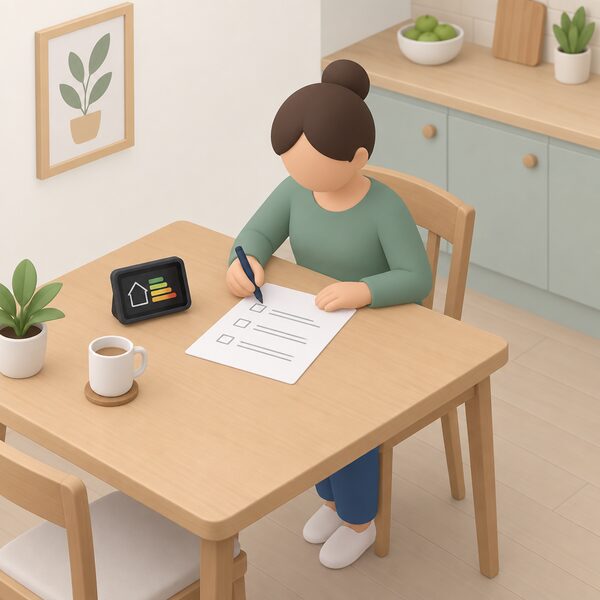
Smart meter data is classified as personal data, owned by the consumer, and the consumer is the source of consent for any onward data-sharing7. Government guidance states that the household has control over who can access the energy use data, including how often and for what purposes, except where the data is required for regulated purposes such as billing26.
Three separate choices sit under that:
- How often the meter sends data to the supplier: monthly as a minimum, daily or half-hourly optional4.
- Whether data is shared with other organisations, such as price comparison websites or tariff comparison services4.
- Whether the supplier may use the readings for sales and marketing purposes4.
Each is independent. Declining marketing use does not affect billing; agreeing to half-hourly readings does not itself hand data to a third party.
Consent is also required at the service level. A household joining the Demand Flexibility Service must authorise its provider to access the smart meter so it can read the data every half-hour for the duration of the service28. An app that works from smart meter data needs permission to access it before it can do anything1.
Households in rented property face an extra step. A private renter can choose a smart meter where the energy bills are in their name or they prepay for energy, after checking the tenancy agreement and letting the landlord know29. Further detail sits in the page on monitoring in flats and rented homes.
How the data is protected
The DCC network wraps smart meter data within two layers of encryption before sending it over a dedicated communications system, backed by the National Cyber Security Centre and in line with governance and data protection standards3. The network operates to security levels endorsed by the National Cyber Security Centre, part of GCHQ11. Data transmitted via the DCC network is encrypted end to end24.
The architectural point is separation. Smart meters do not use the internet, and have their own closed, dedicated communications system8, operating entirely separately from the potential pitfalls of the public internet11. A communications hub creates a home area network to reach the in-home display11. Nothing in this path touches household broadband, which is why a smart meter cannot be reached from a home network and why Wi-Fi problems do not stop readings.
The DCC's own role is transport, not storage: "The DCC network never sees or keeps the data, it transports it securely straight to the energy supplier"11. Elsewhere the DCC describes itself as custodian of smart meter data, underpinned by a clear consumer consent capability30. Both statements can hold, the first about the message path, the second about the consent framework, but households comparing them should note the difference in framing.
The network is national in scope: the DCC operates the secure national network that connects smart meters across Great Britain31, with millions of meters connected11, and relies on interoperability so that all smart meters can communicate securely regardless of manufacturer32. More on the mechanics sits in how smart meters communicate and on the threat model in smart meter security.
The Consumer Consent Solution: one place to manage access
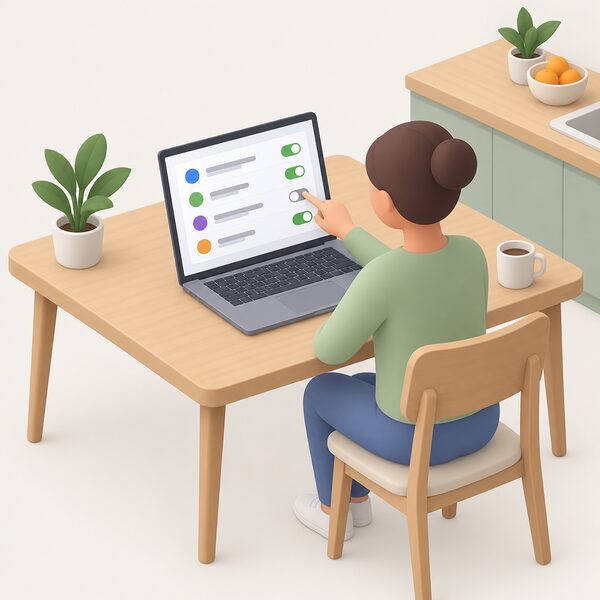
Ofgem has been developing a single mechanism for managing who may access household energy data. The stated objective is to develop a consent solution that enables consumers to share their energy data simply and securely with relevant service providers and third parties, whilst promoting transparency and empowering consumers in the energy sector33, and to enable consumers to share that data with trusted third parties to receive tailored services to manage their energy bills34.
The requirement on the solution is that consumers can provide, manage and revoke consent for third parties to access their energy data at any time, and view and modify consent on demand35. Citizens Advice has advocated for a portal to allow consumers to see who is accessing their smart meter data and make choices about it36, on the basis that the ability to make choices as to whether or not to share smart meter data is important to consumers36.
Scope and delivery are set. The solution starts with smart meter consumption data and will expand to other datasets as the delivery body's resources and priorities allow37. The initial scope applies to domestic and small business smart meter data only, with scope to expand to non-domestic meters and advanced meters in future iterations38. Ofgem has appointed the Consumer Consent Solution to RECCo, establishing a delivery model for its future development and operation39.
A dedicated page covers the Consumer Consent Solution in more detail.
Where the rollout stands and what happens to older meters
The Rollout Framework that ran from 1 January 2022 to 31 December 2025 has now concluded40. The rollout itself has been underway for over 12 years42, and the DCC refers to completing it by the end of 203043. The legal obligation on suppliers to offer all consumers a smart meter expired at the end of 202544. Progress and targets are set out on the smart meter rollout page.
First-generation meters sit on a different data path. All SMETS1 meters use a third-party communications network to send metering information to the energy supplier29, rather than the DCC's own network, which is the source of the familiar problem of a meter losing functionality after a supplier switch. The DCC is in the process of upgrading older meters so that households with one can switch suppliers without problems45, and has worked with Citizens Advice on a tool to check whether a meter has been migrated onto the DCC network, using gas and electricity MPANs and a postcode46. The differences between generations are covered in SMETS1 and SMETS2 meters.
Installation and data have been costed in official modelling. The government's 2025 report puts customer benefits at 5.4 billion pounds in 2011 prices discounted to 2019 for the 2023 dead-stop scenario, and 9.2 billion pounds in 2024 prices discounted to 2025 for the same scenario, with demand-shifting benefits of 0.9 billion pounds in 2011 prices discounted to 2019 for the 2024 dead-stop47. These are modelled programme figures, not household savings.
What smart meter data means for household energy independence
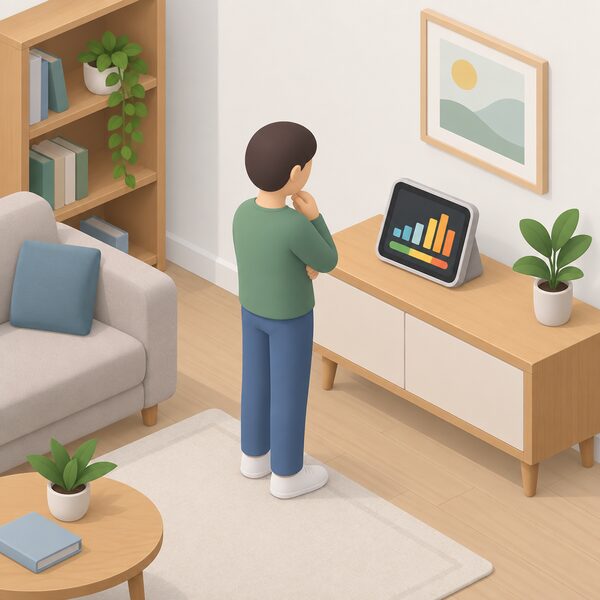
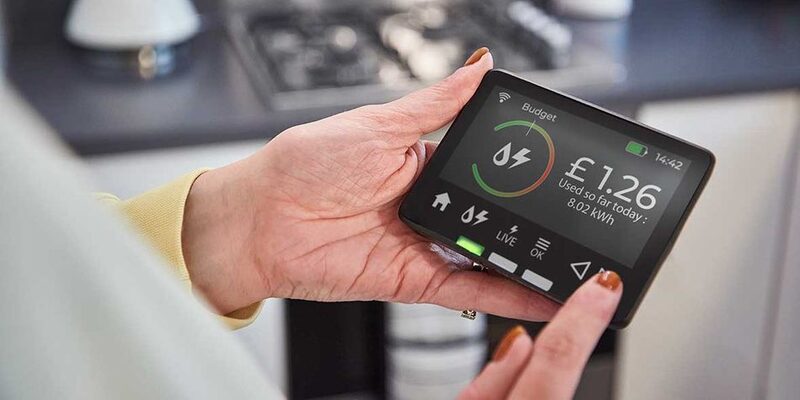
The independence gain is informational, and it is real but bounded. Near real-time data on energy use, shown on the in-home display, is what allows a household to see the effect of its own decisions48. The DCC frames it as data that puts the household in control of its energy usage so it can take energy-saving steps49. Smart meters provide real-time information that helps customers avoid wasting energy and avoid estimated readings and bills50. A display can help identify which appliances are using the most electricity, by observation of the total51, though the meter itself does not know when individual appliances are on or off12.
That data is also the entry ticket to the things that reduce reliance on a flat grid price: time-of-use tariffs, flexibility services, and sizing decisions for solar, battery or a heat pump. Smart meters are described as the foundation of a smarter energy system, helping integrate renewable power such as wind, solar and hydropower and reduce reliance on fossil fuels52. Households working through using energy data to size a system are using exactly this record.
The dependence that remains is worth naming. The measurement route runs through the supplier, over a national network operated by a single body, the DCC, with the supplier as the party that decrypts and stores the record. Access to a household's own data is largely mediated by the supplier's app or in-home display, both of which can fail, and the app route depends on the supplier's cloud service. A household that wants a copy of its consumption data under its own control, independent of the supplier relationship, needs a separate device: a consumer access device reading the meter's home area network, or an independent monitor that is not linked to the energy account at all14. Reducing the reading frequency to protect privacy also reduces access to dynamic tariffs and accurate billing24: there is no setting that delivers both maximum privacy and maximum flexibility revenue.
Getting help and making a complaint
If a smart meter or display stops working, the supplier is responsible for maintenance and will fix or replace the meter as needed53. A display that breaks or goes missing in the first 12 months can be replaced free54. A replacement in-home display is paired with the existing smart meter and should not involve replacing the meters55. Where a display has simply lost signal, turning it off, moving it closer to the electricity meter and turning it back on should restore connectivity and begin displaying data again within 24 hours56. Suppliers should promptly investigate suspected or identified issues, resolve them themselves or with third parties, and keep the consumer informed26. More in smart meter faults and troubleshooting.
Where a supplier has not met its obligations, Citizens Advice may be able to assist57. Government has given Citizens Advice a formal role to monitor and advise on customer experience and energy supplier service2.
| Contact | Number | Coverage |
|---|---|---|
| Citizens Advice consumer helpline | 0808 223 113358 | England and Wales58 |
| Welsh language line | 0808 223 114458 | England and Wales58 |
| Additional England line | 0808 144 884459 | England59 |
Opening hours are Monday to Friday, 9am to 5pm58. Citizens Advice covers England and Wales58; households in Scotland and Northern Ireland should note that consumer advice arrangements differ, and the pages on smart meters in Scotland and smart meters in Northern Ireland set out the local position. The smart meters in Wales page covers Welsh arrangements, including that a supplier is responsible for maintaining the meter53.
Installation itself remains free of charge to the household3, and the wider position on smart meter cost is set out separately. The full picture across metering and control sits on the smart meters and home energy management pillar.
Sources59 cited
- Smart meter data access and privacy, Smart Energy GB, 2026-03-16
- How do smart meters work, Smart Energy GB, 2026-08-27
- How to get a smart meter, Smart DCC, 2026
- What is a smart meter, Smart Energy GB, 2026-08-10
- How to use your smart meter data, Which?, 2026-07-14
- Smart meter problems and solutions, Which?, 2026-08-24
- Data protection and smart meter data, Open Energy, 2026-09-20
- Protecting data on the smart meter network, Smart DCC, 2026
- Do smart meters need WiFi, Smart Energy GB, 2026-03-16
- Smart meter data POSTnote, UK Parliament POST, 2026-09-17
- How do smart meters send readings, Smart DCC, 2026
- Smart meters are safe, Smart Energy GB, 2026-03-16
- Automatic meter readings, Smart Energy GB, 2026-04-07
- How do you know if you have a smart meter, Smart DCC, 2026
- Time of use tariffs: the benefits, Smart Energy GB, 2026-04-24
- Do I have to accept a smart meter, Which?, 2026-05-12
- Getting a smart meter installed, Citizens Advice, 2026-09-17
- Smart meter FAQs, Smart Energy GB, 2025-08-08
- Smart meter code of practice, OVO Energy, 2026-09-17
- Written evidence on smart meters, UK Parliament, 2016-06
- Smart meters and carers, Smart Energy GB, 2026-08-19
- Get help with your smart meter, Ofgem, 2026-09-17
- How accurate are smart meters, Smart DCC, 2026
- Smart meter explainer, tado, 2026-07-03
- Why you should use your energy supplier's app, Which?, 2024-04-18
- Smart meters: your rights and expectations, GOV.UK, 2025-08-08
- Smart electricity meters fact sheet, Consumer Council for Northern Ireland, 2026-04
- Demand Flexibility Service explainer, Energy UK, 2023-10-30
- Smart meters, Energy Ombudsman, 2026-09-20
- Smart data tackling fuel poverty, Smart DCC, 2024
- How do smart meters help the environment, Smart DCC, 2026
- Interoperability, digitalisation and the UK energy sector, BEAMA, 2025-04
- Data sharing in a digital future: consumer consent, Ofgem, 2023
- Consumer Consent Solution consultation, Ofgem, 2024-08-09
- RECCo's role in shaping energy data sharing, Retail Energy Code Company, 2026-02-03
- Response to RECCo's Consumer Consent Solution design consultation, Citizens Advice, 2026-05-05
- Consumer Consent decision, Ofgem, 2025-04-29
- Consumer Consent Solution impact assessment, Ofgem, 2026-01
- Consumer vulnerability strategy progress report, Ofgem, 2026-07-21
- Supplier smart metering installation targets, Ofgem, 2026-09-17
- Supplier smart metering installation targets, Ofgem, 2026-09-17
- Final decision on smart meter guaranteed standards, Ofgem, 2026-01-30
- Supporting customers with non-communicating smart meters, Smart DCC, 2026
- Response to Ofgem consultation on improved guaranteed standards, Consumer Scotland, 2025-05-12
- SMETS1 and SMETS2 smart meter generations, OVO Energy, 2026-04-21
- Upgrading Britain's first-generation smart meters, Smart DCC, 2026
- Smart Metering 2025 Costs and Benefits Report, UK Parliament deposited papers, 2025
- Smart facts, Smart Energy GB, 2026-03-16
- Smart meters and decarbonisation, Smart DCC, 2026
- Support with energy bills, Energy UK, 2025-09-03
- Standby power and vampire devices, NICEIC, 2026-01-28
- How to get the bill payer where you live to get a smart meter, Smart Energy GB, 2026-03-16
- Smart meters, Welsh Government, 2026
- Understanding your home energy usage, ivie, 2026-09-20
- Do I already have a smart meter, Smart Energy GB, 2026-03-16
- Troubleshooting smart meter issues, Smart Energy GB, 2026-04-01
- About the rollout, Smart Energy GB, 2026
- Consumer protection rights, GOV.UK, 2026-09-17
- Getting help if you can't afford your energy bills, Ofgem, 2026-09-17
 Who Owns Your Home Energy DataYour smart meter records how much gas and electricity you use, and that information belongs to you, not your supplier.
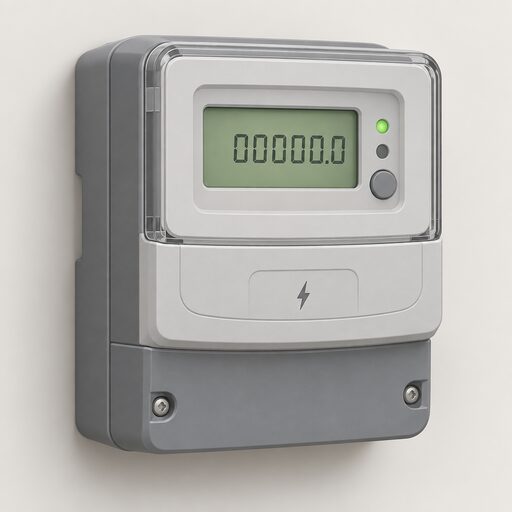 Take Control of Your EnergyHow do you read your own energy use and keep hold of your meter readings?
 Can a Smart Meter Be Hacked?Can someone break into your smart meter, see your personal details or switch off your power?
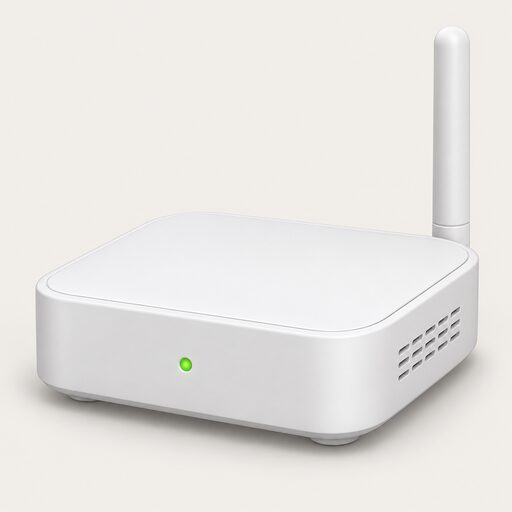 Consumer Access DevicesHow do you get your smart meter readings into your own app instead of the supplier's display?
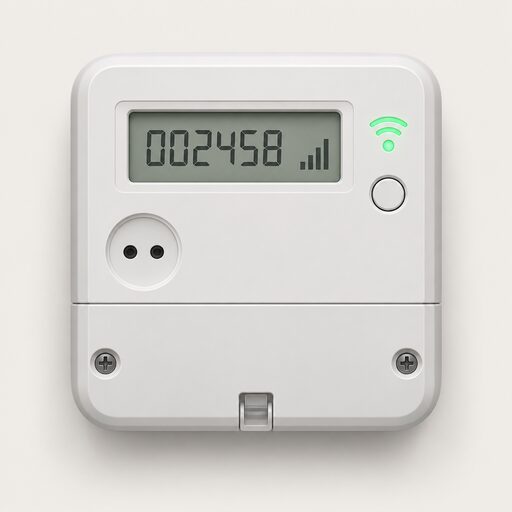 The Full Smart Meters GuideDo smart meters really save you money, and how do you use one to cut your bills?
 Take a Meter ReadingWhich numbers do you actually read on a gas or electricity meter, and which ones do you ignore?