
In this answer
Short answer
The Consumer Consent Solution is a single, industry-wide mechanism for managing permission to use smart meter data. It is being delivered by the Retail Energy Code Company (RECCo), appointed by Ofgem after an August 2024 consultation that weighed RECCo against ElectraLink and Smart DCC1. Ofgem's decision set out a two-year development programme costing approximately £2.7 million in the first year and £4.6 million in the second, a total of £7.3 million, with running costs estimated at £2 million per annum2.
The point of it is consent. Smart meter data is classified as personal data, owned by the consumer, and the consumer is the source of consent for any onward sharing3. Today that consent is handled inconsistently across suppliers and third parties. The solution is intended to make it a single, revocable act: consumers can provide, manage and revoke consent for third parties to access their energy data at any time, and view and modify consent on demand4.
The first working version, the Minimum Marketable Product, is expected in March 20271. Until then, the existing rules apply: you control who can access your energy use data, including how often and for what purpose, except where it is required for regulated purposes such as billing5.
What the Consumer Consent Solution is and who delivers it
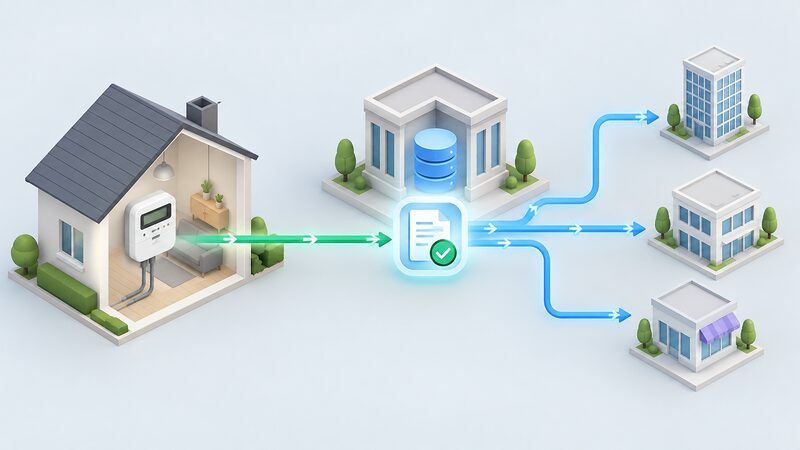
The Consumer Consent Solution is not a product a household buys. It is market infrastructure: a shared mechanism that sits between a household's smart meter data and any organisation that wants to use it. Ofgem's April 2025 decision appointed RECCo to establish a delivery model for the future development and operation of the solution1.
The choice followed a formal process. In August 2024 Ofgem consulted on its preferred policy option to appoint RECCo as the delivery body, having identified three candidates: ElectraLink Ltd, the Retail Energy Code Company Ltd and Smart DCC Ltd7. The final impact assessment records that respondents supported RECCo as the most appropriate of the three potential delivery bodies6. Ofgem's decision document confirms the same three options were consulted on2.
The design has been developed with wide industry input through multiple workshops and consultations8. A design consultation invited views on the proposed Minimum Marketable Product, covering technical design, governance, user experience, accessibility and the future roadmap9. Three working groups were named in the decision: Consumer Protection and Accessibility; Technical Design and Security; and Implementation and Governance2.
For a household, the significance is structural rather than immediate. A single consent mechanism means a household's permission does not have to be re-established separately with every supplier, app or service, and it means withdrawal of that permission has one route rather than many. What it does not do is remove the underlying dependence: the data still travels through the national smart metering network, and the consent record itself will be held by an industry body rather than by the household.
What it lets you do with your smart meter data
The purpose Ofgem set out is to enable consumers to share their energy data with trusted third parties to receive tailored services to manage their energy bills7. The initial data scope is smart meter consumption data, expanding to other datasets as the delivery body's resource and priorities allow2.
Under the current rules, the data you share through your smart meter is used to bill you for the energy you use, to offer you new products and services such as new tariffs if you have given permission, and to help make the energy system more efficient by recording demand more accurately10. The permission condition is repeated across Ofgem's consumer guidance: new products and tariffs are offered only where permission has been given10.
Third parties signed up to the Smart Energy Code can access smart meter data of any granularity, but only via opt-in consent, with regular reminders of that consent and based on confirmation that the request for the third party service comes from the individual3. That is the standard the Consumer Consent Solution is designed to make routine rather than exceptional.
The practical uses a household would recognise are tariff comparison and switching, time-of-use tariffs that need half-hourly consumption to bill correctly, and services that analyse usage to suggest where energy is being wasted. The data also supports the wider system: the Data Communications Company notes that data from smart meters puts households in control of their energy usage, allowing energy-saving steps that reduce CO2 emissions11.
What the solution does not change is the regulated use. Billing and the operation of the network continue without consent because they are required purposes. Consent governs the onward, optional sharing, which is where the household's choice actually bites.
How it is funded and what it costs
Funding for development and delivery comes from the Retail Energy Code cost recovery model2. That means the cost is recovered across the industry rather than charged to households as a separate item.
Ofgem's indicative costings put development at approximately £2.7 million for the first year and approximately £4.6 million over the second year, a total of £7.3 million over two years of development2. Subsequent running costs are estimated at £2 million per annum2. When the development cost is split between consumers, Ofgem calculated it works out to 26p per household over the two years of development2.
The impact assessment models the wider cost case across scenarios. It gives a best case of £78.69 million, an average scenario of £86.48 million and a worst case of £101.27 million6. Those figures are the modelled costs of the measure across the analysis period, not a household bill, and they sit alongside modelled benefits calculated in September 2025 prices, weighted for inflation6.
For energy independence, the funding model matters less than the access model. A household does not pay directly for the consent layer, but it also does not own it. The mechanism is industry infrastructure, governed through the Retail Energy Code, which is the trade-off for having one route to consent rather than many.
The business case: benefits, costs and scenarios

Ofgem's consultation on the solution drew 50 responses from a wide range of stakeholders, and 10 of those respondents asked for more detail on the benefits and indicative costs2. That pressure shaped the impact assessment published with the January 2026 consultation, which sets out the direct benefits case across four sub-scenarios based on low or high uptake and low or high savings potential6.
The preferred option was clear. Option One, a single technical solution, emerged as the preferred approach with 74% of respondents identifying it as the most favourable6. The alternatives considered in the 2023 consultation on data sharing in a digital future included a single technical solution to obtain consent such as a consent dashboard, a set of principles such as Data Best Practice, and an industry-developed code of conduct such as the Confidence Code12.
The timeline of the analysis runs from 2025 to 2033, with a monetised base year of 20256. That is a long appraisal period for a mechanism whose first release is expected in March 2027, and it reflects the fact that the benefits accrue as uptake builds rather than at launch.
RECCo has framed the wider role in terms of friction. It states that the solution could help enable consent-based data sharing and "tell us once" style auto-onboarding to reduce friction for consumers13. That is a claim about process rather than a measured saving, and it is worth reading as an intention rather than a result.
"could help enable consent-based data sharing and “tell us once” style auto-onboarding to reduce friction for consumers"
The independence question here is honest but limited. A smoother consent route makes it easier for a household to move data between services, which supports switching and participation in flexible tariffs. It does not reduce dependence on the grid, on a supplier, or on the industry bodies that hold the consent record.
Design principles, data scope and security
Ofgem's decision set out six design principles for the solution: simple and low friction; interoperable; agile, flexible and scalable; transparent and informative; inclusive by design; and secure by design2. An earlier consultation had framed the same territory as five principles that set the bar a consent solution needs to meet12.
Security is specified rather than assumed. The decision requires recommendations that development of the solution meets suitable cyber security standards, including quantum-safe encryption2. That is a notable requirement for a system whose whole purpose is to move personal data between parties.
The data model is a hybrid. Ofgem's decision records that a hybrid model with more decentralised aspects was considered the most supported approach, as shown through the responses2. RECCo recommends a token-based design approach, noting that it has been successfully implemented in other sectors such as open banking, and that one benefit is that it allows consumers to only engage with brands they choose4.
| Element | Position |
|---|---|
| Design principles | Six, from simple and low friction to secure by design2 |
| Security requirement | Suitable cyber security standards including quantum-safe encryption2 |
| Data model | Hybrid, with more decentralised aspects most supported2 |
| Design approach | Token-based, modelled on open banking4 |
| Initial data scope | Smart meter consumption data, expanding to other datasets2 |
| Initial meter scope | Domestic and small business smart meter data6 |
The scope limits are explicit. The decision was clear that the initial scope of the Minimum Marketable Product would apply to domestic and small business smart meter data only, with scope to expand to non-domestic meters and advanced meters in future iterations6. The measure is classified as a retail competition measure6.
For a household, the security and scope rules are the parts that determine whether the mechanism is worth using. A token-based model means a household does not hand over standing credentials to every service it tries, and the opt-in requirement with regular reminders means consent has to be renewed rather than assumed.
Timeline and what happens next
The solution is expected to have been developed throughout 2025 and launched in 2026, according to RECCo's account of its role4. Ofgem's own progress reporting is more specific about the first release: delivering the Consumer Consent Solution Minimum Marketable Product is expected in March 20271.
Several governance steps sit between now and then. Ofgem's decision states that a consultation will be published in 2026 setting out its governance approach, and that the licence obligation will be the subject of a full statutory consultation in 20262. Further detail on consent porting requirements is expected in a RECCo consultation paper in Spring 20266.
The design consultation itself invited views on the proposed Minimum Marketable Product, including technical design, governance, user experience, accessibility and the future roadmap9. That is the stage at which the consumer-facing detail, including how a household sees and withdraws consent, is being settled.
On data scope, RECCo states that it would be expected to expand the solution so that other datasets, such as tariff data, could be available in the future4. Citizens Advice supports standardising tariff pricing data as an important step in enabling consumer-led flexibility and helping households and small businesses14.
Consent, access and the limits of the mechanism
The Consumer Consent Solution is one part of a wider set of consumer protections, and it is worth being clear about which parts it does not replace. The Renewable Energy Consumer Code, for instance, operates on a legal basis that includes the Consumer Contracts (Information, Cancellation and Additional Charges) Regulations 2013, the Consumer Rights Act 2015, the Alternative Dispute Resolution for Consumer Disputes (Competent Authorities and Information) Regulations 2015 and the Digital Markets, Competition and Consumers Act 202415. Those protections apply to how a service is sold and performed, not to whether data can be shared.
Where a household has a problem with a service that uses its data, the existing routes remain. The Consumer Council can help with billing issues, meter issues, faults not being repaired correctly, customer service and issues switching suppliers16. Citizens Advice can give practical and impartial advice on how to resolve a consumer problem, explain the law that applies, and pass information about complaints to Trading Standards17.
RECCo has recommended partnering with trusted organisations such as Citizens Advice to reach consumers who are digitally excluded4. That matters because a consent mechanism that only works through a smartphone or web account excludes the households least able to absorb the consequences of getting it wrong. Citizens Advice also provides advice in Welsh, reflecting the fact that the mechanism operates across Great Britain18.
The independence picture is therefore mixed, and it is worth stating plainly. The solution gives a household a clearer, single route to grant and withdraw permission for its energy data, which is a real gain in control. It does not give the household ownership of the consent record, which sits with an industry body. It does not remove the need for the smart metering network, the supplier relationship or the grid. And it does not change the regulated uses of data, such as billing, which continue without consent. What it changes is the optional layer: who can use your data, for what, and how easily you can stop them.
Sources18 cited
- Consumer Vulnerability Strategy progress report, Ofgem, 2026-07-21
- Consumer Consent Decision, Ofgem, 2025-04-29
- Data Protection and Smart Meter Data, Open Energy, 2026-09-20
- Responding to Ofgem's Consumer Consent consultation: RECCo's role, Retail Energy Code Company, 2026-02-03
- Smart meters: your rights and expectations, GOV.UK, 2025-08-08
- Consumer Consent Solution impact assessment (final), Ofgem, 2026-01
- Consumer Consent Solution consultation, Ofgem, 2024-08-09
- Citizens Advice response to Smart Energy Code modification report, Citizens Advice, 2026-03-10
- Consumer Consent Solution design consultation, Retail Energy Code Company, 2026-03-30
- Get help with your smart meter, Ofgem, 2026-09-17
- Smart meters and decarbonisation, Smart DCC, 2026
- Data Sharing in a Digital Future: Consumer Consent, Ofgem, 2023
- Our response to consultation on the role and powers of the Energy Ombudsman, Retail Energy Code Company, 2025-12-04
- Citizens Advice response to DESNZ's tariff interoperability consultation, Citizens Advice, 2026-01-19
- Consumer Code, Renewable Energy Consumer Code, 2026-07-01
- Complaints about electricity, oil and gas, Consumer Council, 2026
- If you need more help about a consumer issue, Citizens Advice, 2026-09-17
- Riportio problem i safonau masnach, Citizens Advice, 2026-09-17
 Smart Meter Data and Who Sees ItWhat does your smart meter actually record, and who gets to see it?
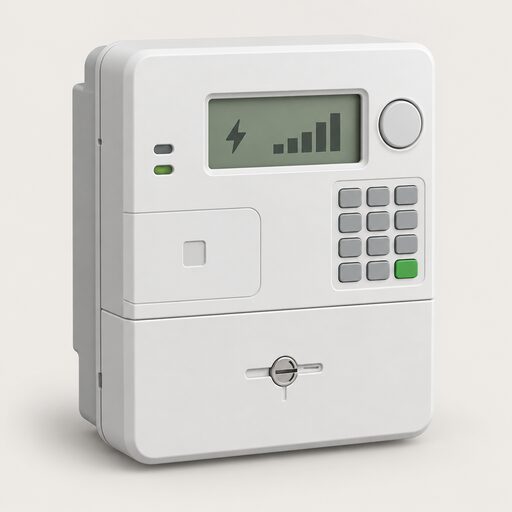 Who Owns Your Home Energy DataYour smart meter records how much gas and electricity you use, and that information belongs to you, not your supplier.
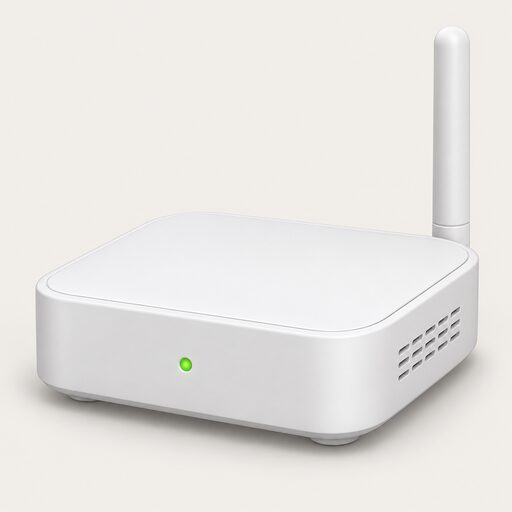 Consumer Access DevicesHow do you get your smart meter readings into your own app instead of the supplier's display?
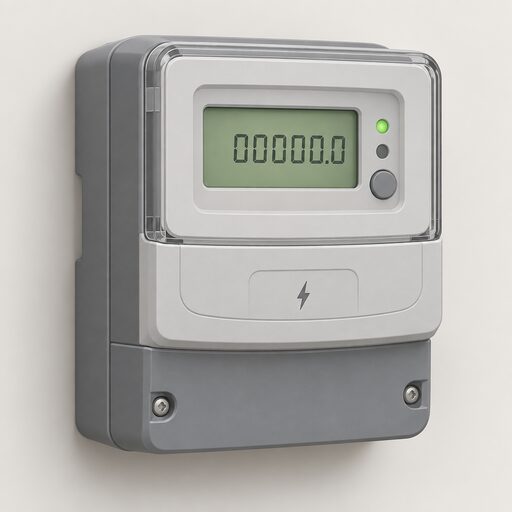 Take Control of Your EnergyHow do you read your own energy use and keep hold of your meter readings?
 Meters and Energy IndependenceDo smart meters really save you money, and can you still get one fitted for free?
 Monitoring in Flats and RentalsCan you get a smart meter in a rented flat, and who decides?