In this guide
Every smart meter in Great Britain that sends a reading without anyone visiting depends on one piece of national infrastructure: the secure network run by the Data Communications Company, usually shortened to DCC. It is not a supplier, not a regulator and not a government body. It operates the secure national network that connects smart meters across Great Britain, and it has held the Smart Meter Communications Licence to build and maintain that infrastructure since 20131.
The scale is easy to underestimate. As of the end of March 2025 there were 39 million smart meters in domestic and non-domestic premises across Great Britain, over two-thirds of all meters3. Ofgem's market reporting put smart meter installation at 65% of homes and 61% of businesses, with 90% of those meters operating in smart mode4. The DCC's own material describes more than half of British homes connected to its network5.
For a household, the DCC is the reason a smart meter can be switched between suppliers and keep working, the reason readings arrive without a visit, and the reason a first-generation meter can be brought back to life years after installation. It is also the point at which a home's energy data leaves the property, which makes consent and security central rather than incidental.
A secure, standalone network for smart meters in Great Britain
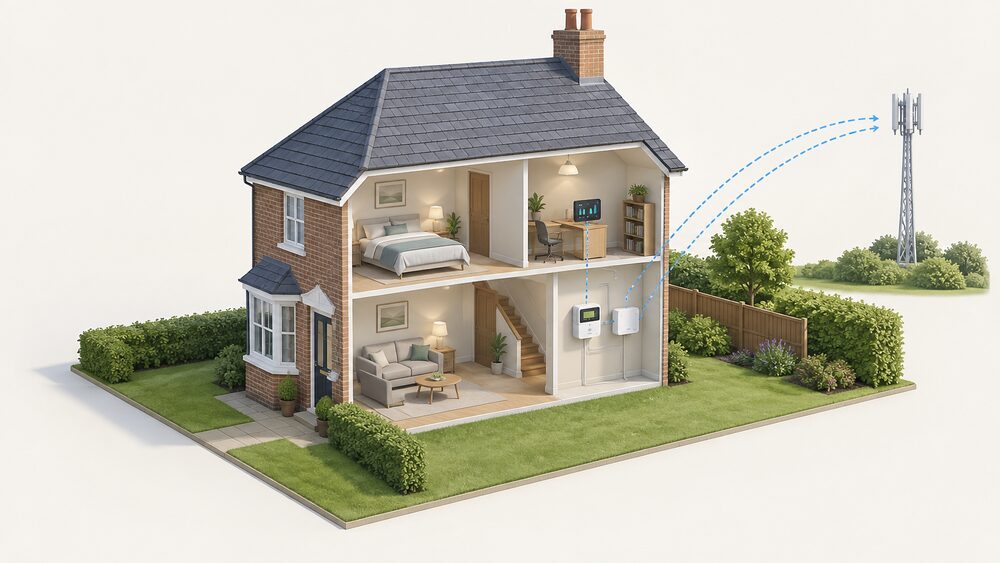
The DCC network is deliberately separate from the public internet. It is divided into three areas in Great Britain, north, central and south, and in the central and southern regions smart meter data is transmitted using 2G and 3G cellular and wireless mesh technology provided by Virgin Media O29. Readings travel from the meter to a wide area network made up of mobile phone or radio masts, then onward to the supplier2.
Security is layered rather than assumed. The network wraps smart meter data within two layers of encryption before sending it over a dedicated communications system, and operates to security levels endorsed by the National Cyber Security Centre, part of GCHQ8. A communications hub in the home creates a home area network that links the meter, the in-home display and any connected devices2.
That architecture explains a question households ask constantly: whether a smart meter needs home broadband. It does not. The meter talks over its own wide area network, not the household's Wi-Fi, which is why a smart meter keeps sending readings during a broadband outage10. The dependence runs the other way: the home depends on a national network it does not control, operated under licence and funded through the energy industry rather than by the household directly.
The network supports almost 150 different types of messages, including service requests and alerts, so it is doing considerably more than carrying a monthly reading2. It also carries tariff information, and SMETS meters can connect to the DCC for that purpose6.
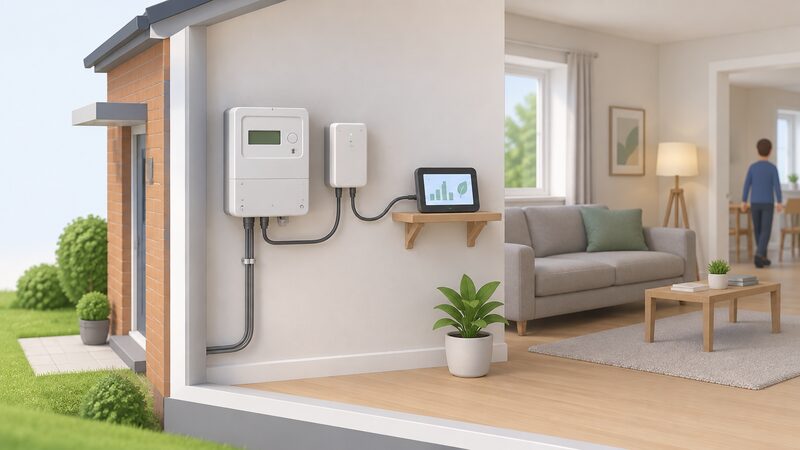
Coverage: at least 99.25% of premises
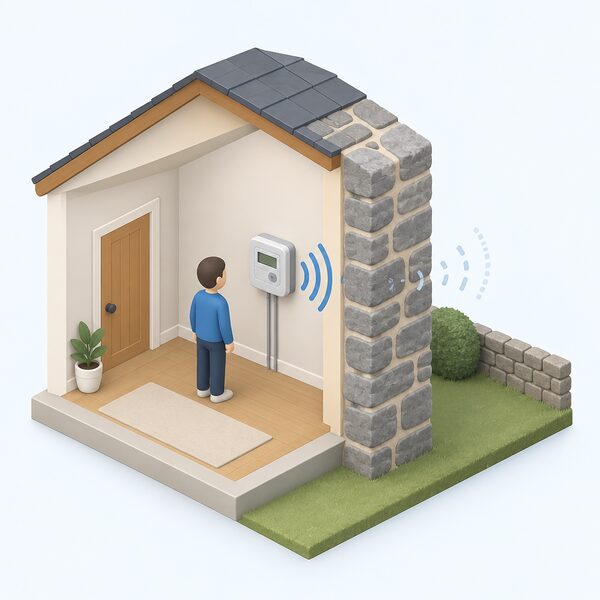
Coverage is the DCC's central promise and its central limitation. Ofgem's guaranteed standards documentation states that the network currently provides coverage to 99.3% of Great Britain6. That is a wide-area figure, not a guarantee for every individual property. Thick stone walls, basements, rural locations and some blocks of flats can still leave a meter unable to reach the network, which is one reason a smart meter can be installed and then fail to send readings.
Where coverage exists, the practical test is whether the meter is operating in smart mode. Ofgem's performance statistics define meters that are not in smart mode as those that have lost connection with the supplier, lost connection after a supplier change, or were installed without being connected to the national communication system1. The same source states that the vast majority of smart meters in Great Britain are operating in smart mode, and the market data puts the figure at 90%1.
The gap between 99.3% network coverage and 90% of meters in smart mode is where most household frustration sits. It is not usually a coverage failure at the point of installation; it is a connection that was never completed, or was lost later. Suppliers with more than 150,000 customers report against these performance measures, which is how the picture is tracked1.
Coverage also differs by nation in practice. The network covers England, Scotland and Wales as Great Britain. Northern Ireland runs a separate metering arrangement and is not part of the DCC's Great Britain network, so households there should not expect the same supplier switching behaviour or the same migration programme. Wales publishes its own consumer guidance on smart meters, and the DCC's coverage figures are stated for Great Britain as a whole rather than broken down by nation11.
SMETS1 and SMETS2: how each connects to the DCC
The two generations of smart meter connect in fundamentally different ways, and that difference explains most of what households experience when they switch supplier.
Second-generation meters, known as SMETS2, were designed to connect directly to the DCC's secure national network, allowing supplier switching while retaining smart functionality12. They allow consumers to switch supplier while retaining smart functionality, including automatic meter readings13. This is the design intent: the meter belongs to the network, not to the supplier that fitted it.
First-generation meters, known as SMETS1, were installed before the DCC's national smart metering network became available12. They use a third-party communications network to send metering information to the energy supplier, which is why they historically lost smart functionality when a household changed supplier14. The fix has been a migration programme rather than a replacement programme: through it, millions of first-generation meters were enrolled onto the DCC network, and about 12 million have now been connected via over-the-air software updates12.
The DCC states that the vast majority of eligible SMETS1 meters have now been migrated, and that almost all meters it can proactively identify and upgrade have been migrated, restoring smart functionality12. The word eligible matters. A SMETS1 meter that cannot be reached or identified may still need physical replacement, and the DCC worked with Citizens Advice to provide a tool that allows a household to check whether its meter has been migrated onto the network12.
| Generation | How it connects | Supplier switching | Migration route |
|---|---|---|---|
| SMETS1 | Third-party communications network14 | Historically lost smart functions | Over-the-air enrolment, about 12 million done5 |
| SMETS2 | Direct to the DCC network12 | Retains smart functionality13 | Not applicable |
The development and maintenance of communications hubs for SMETS2 meters is the responsibility of the DCC, which is why hub replacements are a DCC programme rather than a supplier one6.
Switching suppliers: the upgrade programme for older meters
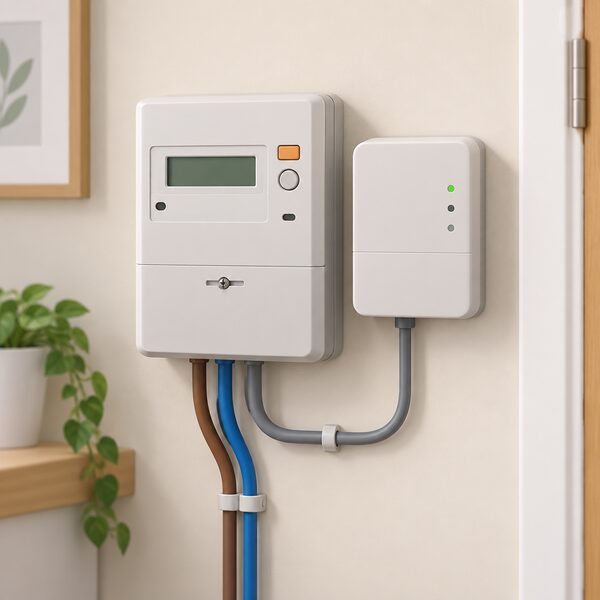
Switching supplier with a smart meter is possible, but the experience depends on which generation is on the wall. Consumer guidance is explicit that a household can switch suppliers if it has a smart meter, but the new supplier might not offer all smart meter services such as remote meter readings, and the meter may need replacing15. That caveat is largely about first-generation meters that have not been migrated.
For a migrated SMETS1 meter or a SMETS2 meter, switching should preserve automatic readings. The migration programme exists precisely to make that true, and the DCC describes the outcome as restoring smart functionality to meters that had lost it13.
Where a meter has not been migrated, the practical consequences are the ones Ofgem lists as reasons a meter is not in smart mode: it loses connection with the supplier, or loses connection after a supplier change1. In that situation the household returns to manual readings until the meter is either migrated or replaced.
The upgrade programme is also where the DCC's role becomes visible to a household. The migration happens remotely, without a visit, which is why a meter can regain functionality without anyone knocking on the door. Where remote migration is not possible, replacement is the fallback, and that is a supplier-led visit.
Your data and consent: the DCC as custodian
The DCC describes itself as custodian of smart meter data, underpinned by a clear consumer consent capability16. The legal position underneath that description is stronger than many households assume: smart meter data is classified as personal data, owned by the consumer, and the consumer is the source of consent for any onward data-sharing17.
That ownership principle shapes who can see what. Distribution network operators can access smart meter data for regulated purposes only, and before doing so they must agree a privacy plan with Ofgem17. The Data Access and Privacy Framework states that no central repository of smart metering energy consumption data is held by the DCC, Government or any other organisation, and that data is encrypted between the smart meter and the user18.
Through the network, smart meter data can be shared securely between authorised users, helping to support smart energy services and innovation across the energy sector19. That sharing is the point of the consent framework: it enables services without making consumption data freely available.
"No central repository of smart metering energy consumption data is held by the DCC, Government or any other organisation"
The independence question here is genuine and cuts both ways. A household gains from services built on its data, and from the ability to switch supplier without losing functionality. It also depends on a consent framework administered by bodies it did not choose, over a network it does not own. The DCC's own framing, that it is a custodian rather than an owner, is the clearest statement of where the boundary sits16.
The 2G and 3G switch-off: hub replacements ahead
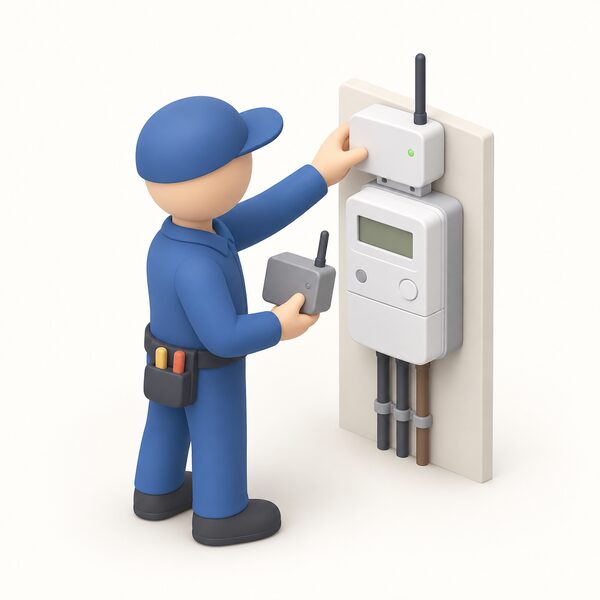
The largest physical change coming to the smart meter estate is the retirement of the mobile networks the earliest meters were built around. Mobile network operators are expected to close 2G and 3G services by the end of 2033, and communications hubs using 2G or 3G, along with associated metering devices as relevant, will need replacement with 4G-capable devices by that point20.
The immediate effect of the 3G closure alone is smaller than headlines suggest. The DCC states that a smart meter will continue to operate as normal following the 3G switch-off, because smart meters switch seamlessly to the 2G network9. The harder deadline is the closure of both networks.
Second-generation smart meters that rely on 2G or 3G will require a replacement communications hub in order to communicate with 4G networks9. The Public Accounts Committee reported that an estimated seven million communications hubs, part of the electricity smart meters, will need to be replaced because they will lose functionality when the 2G and 3G mobile communications networks are closed, and that these will be replaced with an equivalent module which communicates using the 4G network7. The Department's estimate covers the South and Central regions7.
Replacement has already begun. Since December 2024, new 4G communication hubs have been installed as part of the DCC's commitment to evolve the smart meter network9. The government has also required suppliers to replace all smart meters still connected to 2G and 3G before the services are switched off by 203322.
The cost treatment is worth noting. The government's 2025 costs and benefits report maintained a distinction between the original rollout and the technological upgrade from 2G and 3G networks to 4G, excluding transition costs and reducing modelled benefits for 2034 to reflect the switch-off3. In other words, the upgrade is being accounted for separately from the rollout that preceded it.
Service levels and accountability
Accountability for the DCC runs through its licence and through Ofgem's guaranteed standards of performance, which set out consumer protections and minimum service standards23. Those standards are the mechanism a household can actually use: they cover how quickly a supplier must act when something goes wrong.
The division of responsibility matters. If a smart meter stops working, the household contacts its supplier, which is responsible for maintenance and will fix or replace the meter as needed11. The DCC operates the network; the supplier owns the customer relationship and the repair obligation. A smart meter may stop recording the energy used, or may no longer send readings to the supplier, and both are supplier-side issues to resolve24.
The DCC's own service description is technical rather than consumer-facing: the network supports almost 150 different types of messages, including service requests and alerts2. Its accountability to households is indirect, mediated through suppliers and through Ofgem.
The programme's wider record has been criticised. The Public Accounts Committee reported that the delayed smart meter programme failed to hit targets and secure public support, and that additional home visits will be needed to replace communications hubs ahead of the network closures21. That criticism sits alongside the coverage and smart-mode figures: the infrastructure works for the large majority, but the programme has not met its own timetable.
For a household, the practical position is that the DCC is not a body to contact. Faults go to the supplier, disputes can go to the Energy Ombudsman, and the guaranteed standards set the timescales14. The DCC's role is to keep the network underneath those arrangements running, and to migrate and upgrade the meters attached to it.
Does the DCC cover small businesses as well as homes?
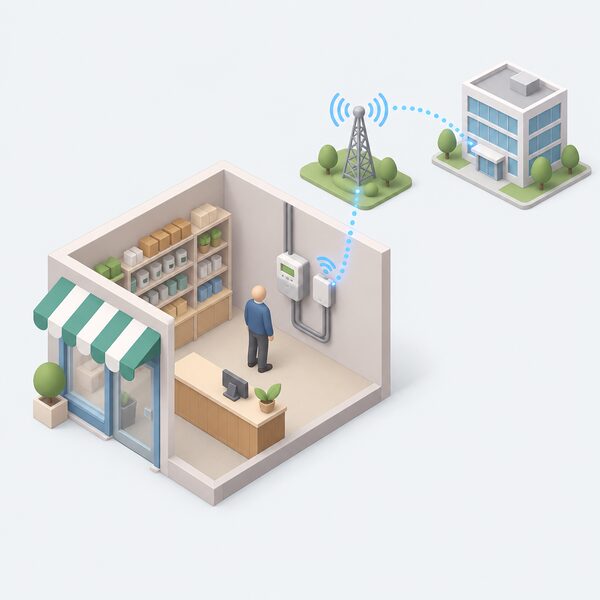
Yes. The network carries data for domestic, microbusiness and small and medium-sized enterprise premises, and tariff information is provided across those sectors20. Ofgem's market reporting found smart meters installed in 65% of homes and 61% of businesses, with 90% of those meters operating in smart mode4.
The DCC's own material refers to more than half of British homes connected to its secure smart meter network, and to smart meters in more than half of British homes5. The business side is smaller in absolute numbers but follows the same architecture: a communications hub, a wide area network, and readings delivered to the supplier without a site visit.
For a small business, the independence implications are the same as for a home. The meter depends on the DCC network, the supplier relationship governs repair and replacement, and switching supplier depends on the meter generation. A microbusiness on a migrated SMETS1 or a SMETS2 meter keeps automatic readings through a switch; one on an unmigrated first-generation meter may not15.
What the uZero software shows about the network's data
The DCC's data role extends beyond billing. Its uZero software helps to tackle fuel poverty through anonymised smart meter data and ground-breaking AI, and in November 2024 it won edie.net's Net Zero Innovation of the Year award26.
That is a useful illustration of what a national metering network makes possible: patterns across millions of households, analysed without identifying individuals, to target support. It is also a reminder that the consent framework is what allows the data to be used at all. The DCC's position as custodian, underpinned by consumer consent, is what separates this kind of aggregate work from anything that would identify a single home16.
For a household weighing energy independence, the honest summary is that the DCC is infrastructure, not a service. It makes automatic readings, supplier switching and remote migration possible, and it removes the need for a meter reader to visit. What remains is dependence on a licensed national network, on a supplier for faults and replacement, and on a mobile network operator for the radio path. The 4G transition is the current test of whether that dependence is managed well.
Sources26 cited
- Smart meter performance, Ofgem, 2026
- How do smart meters send readings?, Smart DCC, 2026
- Smart Metering 2025 Costs and Benefits Report, Department for Energy Security and Net Zero, 2025
- State of the energy market report: retail, Ofgem, 2025
- How to get a smart meter, Smart DCC, 2026
- Smart Meter Guaranteed Standards of Performance, Ofgem, 2025
- Update on the rollout of smart meters, Public Accounts Committee, 2023
- How do smart meters help the environment?, Smart DCC, 2026
- Do smart meters use 3G?, Smart DCC, 2024
- Does a smart meter need Wi-Fi?, Smart DCC, 2026
- Smart meters, Welsh Government, 2026
- Upgrading Britain's first-generation smart meters, Smart DCC, 2026
- How do you know if you have a smart meter?, Smart DCC, 2026
- Smart meters, Energy Ombudsman, 2026
- Problems with services, Isle of Anglesey County Council, 2025
- Smart data tackling fuel poverty, Smart DCC, 2024
- Data protection and smart meter data, Open Energy, 2026
- Written evidence on smart meters, Science and Technology Committee, 2016
- How do smart meters reduce my bills?, Smart DCC, 2026
- Smart metering policy framework post-2025, Department for Energy Security and Net Zero, 2025
- Delayed smart meter programme fails to hit targets, Public Accounts Committee, 2023
- Tough new rules force suppliers to fix faulty smart meters, Department for Energy Security and Net Zero, 2026
- Supplier smart metering installation targets, Ofgem, 2026
- Get help with your smart meter, Ofgem, 2026
- Smart meters: your rights and expectations, Department for Energy Security and Net Zero, 2025
- DCC and Vodafone win Alliance of the Year, Smart DCC, 2024
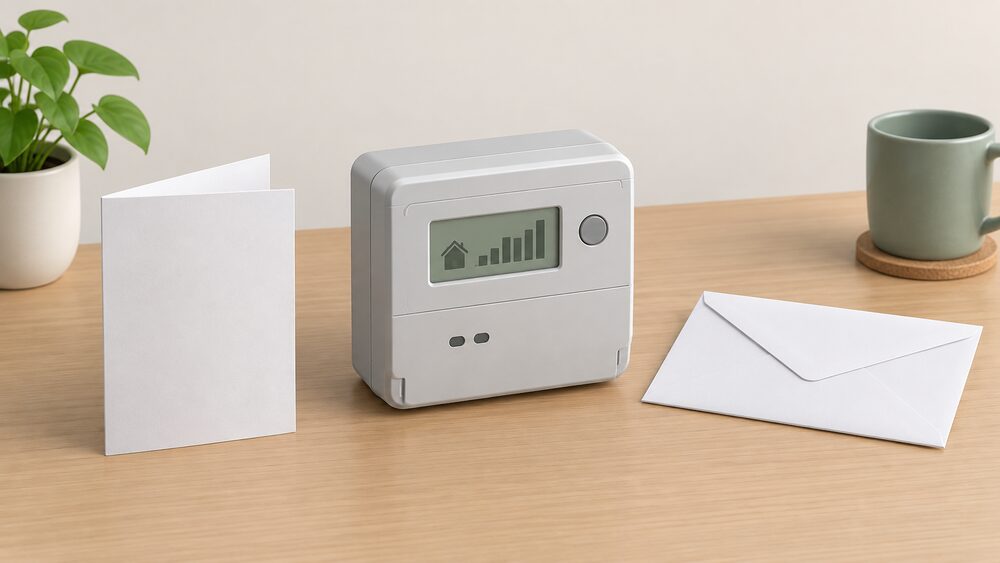 Smart Energy GBSmart Energy GB runs the adverts about smart meters, but it does not fit them, set the rules or sort out complaints.