
In this comparison
If your gas and electricity come from different suppliers, book the electricity smart meter first. That is the recommendation from the body that runs the national smart metering network, and it is repeated by Smart Energy GB: where a home's gas and electricity are supplied by different companies, the electric smart meter should be installed before the gas one1. Each supplier is responsible for its own meter, so two separate appointments are needed, and the order is not a matter of preference but of how the two installations interact3.
Where one company supplies both fuels, the question largely disappears. Most dual-fuel homes need one smart meter for gas and one for electricity, usually replaced in a single visit with one in-home display4. The whole appointment takes about two hours when both meters are fitted together, and each supply is switched off for roughly 30 minutes during the changeover2.
The installation itself is free to the household. Getting a smart meter installed is free for UK energy customers, with the cost spread across everyone's bills rather than charged to the property having the work done5. What follows sets out how the appointments are arranged, what happens on the day, who has the right to book, and what protections apply if the supplier misses its deadline.
Why the order matters when gas and electricity come from different suppliers
The order is a consequence of how the retail market is organised. Each supplier is responsible for its own meter, so a household with two suppliers needs two installations, and the electricity meter is the one to book first1. The same guidance appears across the consumer-facing material: if your gas and electricity accounts are with different suppliers, each supplier is responsible for its own meter, so two separate installations may be needed, with the electricity smart meter installed first4.
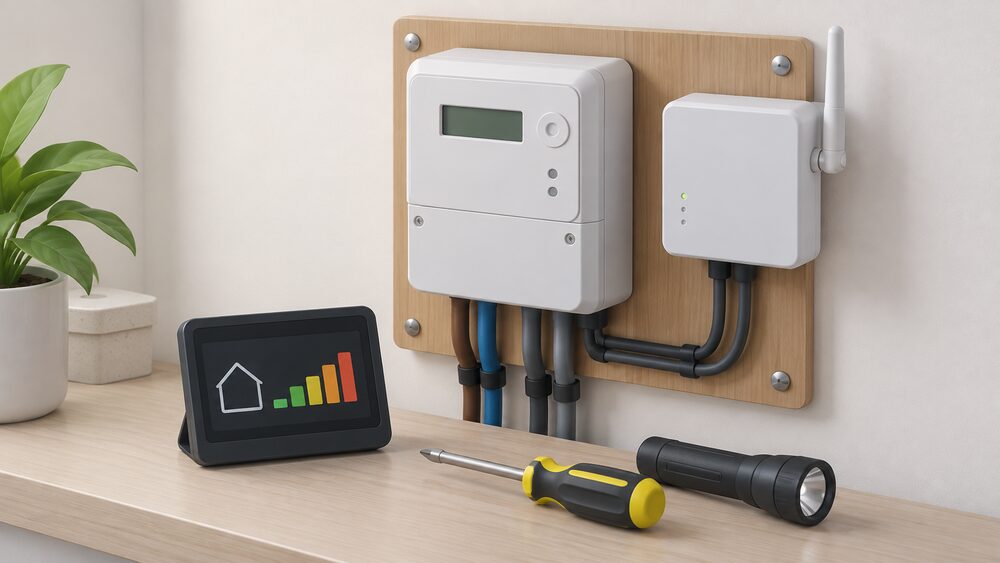
The practical reason is that the electricity meter is the anchor of the smart system in the home. A smart meter automatically sends your electricity and gas meter readings to your supplier, and the communications hub that carries those readings sits with the electricity meter10. Energy suppliers must take all reasonable steps to ensure that smart meters automatically send them your gas and electricity meter readings, so the electricity side is the one that establishes the link12.
There is also a sequencing effect on the household's own administration. Once the electricity meter is smart, readings for that supply flow automatically, and the gas meter follows when its own supplier attends. Until both are done, the home is running a mixed estate: one smart meter and one traditional meter, with the traditional one still needing manual readings. That is a temporary state, but it is the reason the advice is to get the electricity side done first rather than leaving the two appointments in an arbitrary order.
For a household's energy independence, the sequence matters less than the endpoint. A smart meter does not generate or store energy, and it does not reduce dependence on the grid or on a supplier. What it does is remove the manual reading task and give the household a near-real-time view of electricity use and half-hourly gas data, which is the information layer that any later decision about tariffs, load shifting or self-generation depends on13.
One supplier or two: how the appointments are arranged
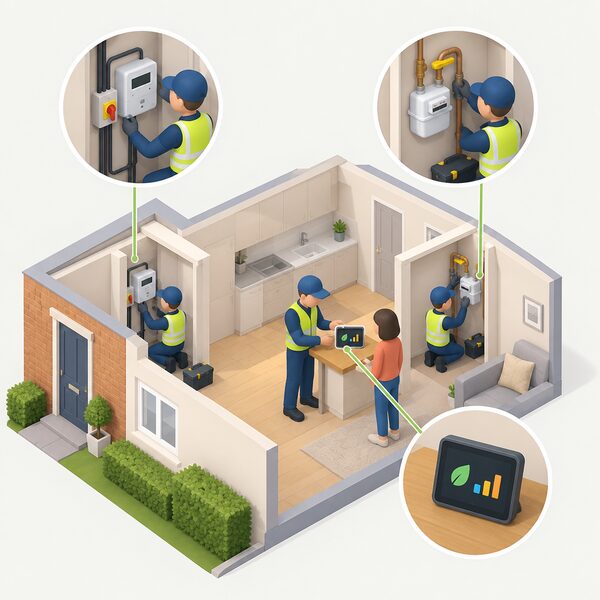
Where a single company supplies both fuels, the arrangement is straightforward. Most dual-fuel homes need one smart meter for gas and one for electricity, usually replaced in one visit with one in-home display4. Installations normally take about two hours, arranged in advance4. The engineer attends once, isolates each supply in turn, and leaves with both meters commissioned and the in-home display demonstrated.
Where the suppliers differ, the household is dealing with two separate organisations, each with its own scheduling, its own engineer or contractor, and its own record of the property. The recommendation is to contact the electricity supplier first11. Each supplier is responsible for its own meter, so two separate installations may be needed, with the electricity smart meter installed first9.
Suppliers are expected to make this work. Ofgem's stated expectation includes ensuring customers who want a smart meter can receive one quickly, and gas and electricity suppliers are responsible for providing and fitting smart meters for everyone in Britain at no extra cost14. If you have not already been offered a smart meter, you can request one from your supplier16.
There is a limit worth knowing about the older stock. First-generation smart meters, known as SMETS1, were installed before the national smart metering network became available, and they do not always allow the consumer to change energy supplier without losing the ability to send meter readings automatically1. Second-generation meters keep all smart functions through a supplier switch with no interruption18. A household booking its first smart meter today is not choosing between the two generations, but a household that already has an early meter and is changing supplier should know which it holds.
What happens during the visit: timing, power cuts and safety checks
The visit is a scheduled engineering appointment, not a sales call. It usually takes approximately one hour to install each smart meter, with about two hours for the whole process when both meters are fitted at the same time2. Other guidance puts a typical installation at about 90 minutes, and a couple of hours with each supply switched off during the changeover3. The electricity and gas will need to be switched off for around an hour each, with the changeover itself typically taking about 30 minutes per meter3.
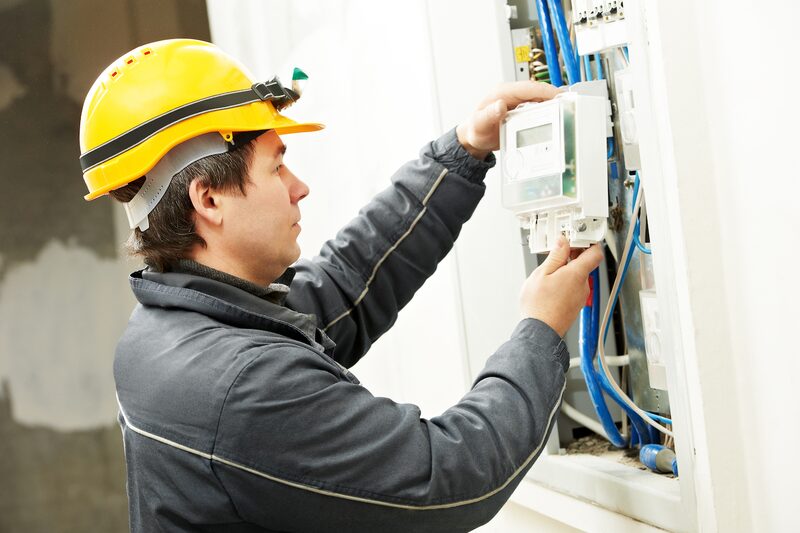
The engineer's work goes beyond swapping the unit. They will usually do a visual inspection of your boiler and other gas appliances to check they are working properly, take final meter readings, check the gas supply and relight pilot lights, and test a plug socket3. If a gas meter is being installed, the installer will also perform a visual safety check on your gas appliances as part of the installation, and the trained installer will perform visual safety checks to identify signs of risk in your gas appliances2.
Once commissioned, the meter records electricity use in near-real time and gas every half hour13. That is the data layer the household gains: no manual readings, and a record granular enough to see what a particular appliance or a particular hour costs. It does not change the gas or electricity coming into the home, only how usage is measured and shared9.
What the installation costs and what you get
Installation is free at the point of booking. Getting a smart meter installed is free for UK energy customers, and you can get a smart meter installed by your energy supplier at no extra cost5. There is no additional cost for installation of your smart meter, and the costs are spread across everyone's bills rather than billed to the property6. Contact your energy provider to arrange installation, which typically takes about 90 minutes and is free of charge20.
What the visit delivers is a defined set of equipment. The funded package is an electricity and/or gas smart meter, an in-home display, and a communications hub19. The smart meter system is made up of two parts: the smart meters, which replace your traditional gas and electricity meters, and the in-home display21. During your appointment, key safety checks should be carried out, and an in-home display should be offered and demonstrated22.
| What the visit covers | Detail |
|---|---|
| Electricity smart meter | Replaces the traditional electricity meter21 |
| Gas smart meter | Replaces the traditional gas meter, where gas is supplied21 |
| In-home display | Offered and demonstrated during the appointment22 |
| Communications hub | Fitted as part of the installation19 |
| Cost to the household | Free; costs spread across everyone's bills5 |
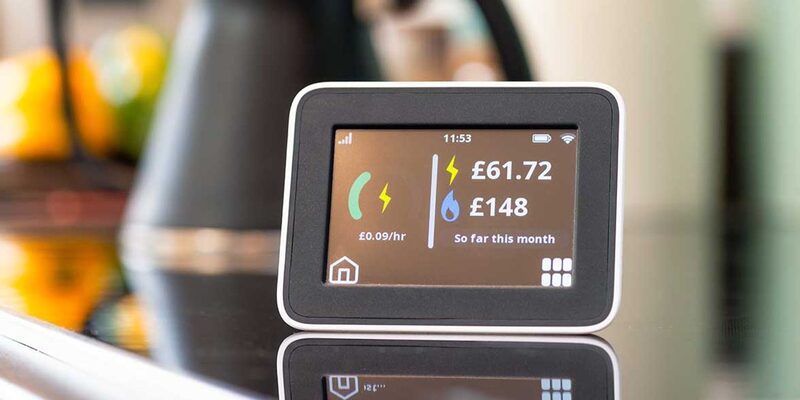
The in-home display is the part of the package a household actually uses day to day, and it is worth being clear about what it is not. It shows consumption; it does not control supply, and it does not by itself reduce a bill. The saving, where it comes, is behavioural: the display makes consumption visible at the moment it happens, which is the point at which a household can act on it.
Who books it: bill payers, renters and landlord permission
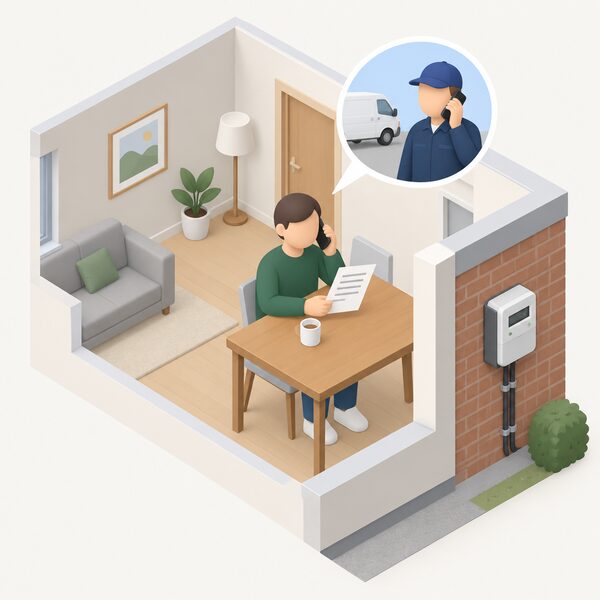
The bill payer makes the decision. Any household that pays for its energy, whether owning or renting, can book a smart meter installation where it is expected to work in the property22. The bill payer at the property ultimately makes the decision on whether or not to get a smart meter installed, so a household paying the bills can request one23. Where the energy bills are in the renter's name, whether renting a flat or a home, the choice to have a smart meter installed is the renter's24. If the bill is in the landlord's name, it is the landlord's decision25, and a landlord who is the energy account holder and pays the gas and electricity bills directly decides whether to install one26. A renter whose landlord pays the bills can still have a smart meter, but the landlord organises it on their behalf27. Ofgem says a landlord or letting agency should not unreasonably withhold permission or prevent a tenant from getting a smart meter28.
For renters, the position turns on whose name is on the account. If you are a private renter, if the energy bills are in your name or you prepay for your energy, you can choose to have a smart meter installed, after checking the tenancy agreement and letting the landlord know24. If you are a tenant and pay the bills in your rental property, you are entitled to ask for a smart meter, though Ofgem recommends telling the landlord before getting one18. As long as you are the account holder for the energy bills, you are entitled to ask for a smart meter from your supplier without your landlord's permission25.
Where a tenancy agreement requires consent, the regulator's position is clear. If your lease says that you need your landlord's permission to change the meter, Ofgem says they should not unreasonably prevent this, and your landlord or letting agency should not unreasonably withhold their permission or prevent you from getting a smart meter26. It is recommended that you let your landlord know before you make the change26.
The position reverses where the landlord pays. If your landlord pays the energy bills for your home, it is their decision on whether or not to install a smart meter, and if the bill is in your landlord's name, it is their decision23. If your landlord pays the bills, you can still get a smart meter, but you will need them to organise it on your behalf11. The same logic applies to small businesses in rented premises: if you pay the energy bills you can make the decision about whether to get a smart meter, and if the landlord pays, the conversation is with them4.
When a single appointment covers both meters
A single visit covering both meters is the normal case for a dual-fuel household, and it is also the case that attracts the strongest consumer protections. Most dual-fuel homes need one smart meter for gas and one smart meter for electricity, usually replaced in one visit with one in-home display4.
The guaranteed standards that sit behind the appointment are drawn narrowly. The installation appointment availability standard applies to first-time smart meter installations only, meaning the installation of a smart meter in a premise where a smart meter is not already installed7. The consultation position was that the standard was applicable to first-time smart meter appointments only and did not apply to other types of installation appointments29. A separate proposal on failed installations would be applicable to both first-time and replacement smart meter appointments, with no restriction on the number of payments29.
That distinction matters to a household replacing an early meter or a faulty one. The six-week appointment guarantee is a first-time protection; a replacement appointment does not carry the same clock. The standard covering meters that are not operating in smart mode applies to both gas and electricity SMETS1 and SMETS2 meters, including unenrolled SMETS1 meters, with no specific gas exemptions but a technical eligibility exemption29.
Your rights during the visit: no selling, ID checks and opting out
The installation visit has rules attached. There must be no sales during the installation visit, and installers must provide energy efficiency advice as part of the visit31. Some providers may offer a free energy efficiency inspection during installation32. It will always be your energy supplier or a third party working on its behalf that will come to your house to change your meter, which is the basis for checking identification at the door31.
On data, the meter itself holds very little. Personal details such as your name, address and bank account details are not stored or transmitted by your smart meter, and it does not store other personal information that could identify you18. Personal information such as your name, address and bank details are not stored on your smart meter33.
On consent, the position is that installation is not compulsory. There are no provisions in the Bill that would allow anyone to enter a property by force to install a smart meter, and consumers retain the right to refuse installation34. You can get a smart meter installed by your energy supplier at no extra cost, but the choice to have one remains with the bill payer19.
If something goes wrong, the escalation route is defined. If you suspect an issue with your smart meter, or your energy supplier identifies an issue, they should promptly investigate and resolve it, keeping the consumer informed22. The guaranteed standard on investigating smart meter operational issues requires the supplier to complete an initial assessment, take an appropriate action and offer to update the consumer, within 5 working days7. Where a first-time appointment is not offered within six weeks of the request, or an appointment fails because of a fault within the supplier's control, compensation is due, and if it is not paid within 10 working days, a further £40 is added3.
Sources34 cited
- How to get a smart meter, Smart DCC, 2026
- The installation process, Smart Energy GB, 2026-04-01
- Smart meter installation, Which?, 2026-02-26
- Smart meters FAQs, Smart Energy GB, 2025-08-08
- Does a smart meter save money?, Smart DCC, 2024
- How can I read a smart gas meter, Smart Energy GB, 2026-08-17
- Final decision: smart meter guaranteed standards of performance, Ofgem, 2026-01-30
- Getting a smart meter installed, Citizens Advice, 2026-09-17
- How do smart meters work, Smart Energy GB, 2026-08-27
- Get help with your smart meter, Ofgem, 2026-09-17
- How to get a smart meter, Smart Energy GB, 2026-08-03
- Smart meter performance, Ofgem, 2026
- What is a smart meter, Smart Energy GB, 2026-08-10
- Debt strategy update: supporting reduction of energy debt, Ofgem, 2025-11-06
- Getting a smart meter, Ofgem, 2026
- How accurate are smart meters, Smart DCC, 2026
- Upgrading Britain's first generation smart meters, Smart DCC, 2026
- Myth busting smart meter problems, Smart Energy GB, 2026-09-17
- Do you have to have a smart meter by law, Smart DCC, 2026
- Smart meters in Wales, Welsh Government, 2026
- Smart meters explained, Uswitch, 2026-07-29
- Smart meters: your rights and expectations, GOV.UK, 2025-08-08
- Help me decide, Smart Energy GB, 2026-03-16
- Smart meters, Energy Ombudsman, 2026-09-20
- Guide to smart meters, Energy Saving Trust, 2026-07-15
- Smart meters for renters, Smart Energy GB, 2026-03-16
- Can I get a smart meter, Smart Energy GB, 2026-03-16
- Do I have to accept a smart meter, Which?, 2026-05-12
- Smart meter guaranteed standard statutory consultation, Ofgem, 2025-08-08
- The Electricity and Gas (Smart Meters) (Guaranteed Standards of Performance) Regulations 2015, legislation.gov.uk, 2026-02-23
- Smart meter guaranteed standards of performance, Ofgem, 2025-03-28
- Protecting data on the smart meter network, Smart DCC, 2026
- Smart metering policy framework post-2025 consultation, Department for Energy Security and Net Zero, 2025-08
- Smart meters and the Energy Bill, House of Commons Library, 2026-09-20
 Smart Meter Installation DayWhat happens during a smart meter fitting appointment: how long it takes, the supply interruption, the safety checks, the in-home display demonstration, who can book it, and what happens when gas and electricity come from different suppliers.
 Meters and Energy IndependenceDo smart meters really save you money, and can you still get one fitted for free?
 Get a Reading From a Smart MeterHow to bring up a meter reading on a smart electricity or gas meter when a manual reading is still needed, and the difference between the meter itself and the in-home display.
 Smart Meter InstallationCan your supplier make you have a smart meter, and how long should you wait for an appointment?
 Who Owns Your Home Energy DataYour smart meter records how much gas and electricity you use, and that information belongs to you, not your supplier.
 The Full Smart Meters GuideDo smart meters really save you money, and how do you use one to cut your bills?