
In this answer
Short answer
A meter reading is the difference between a bill built on what a household actually used and a bill built on what a supplier guessed it used. Ofgem's position is that a smart meter means households "get bills based on accurate meter readings and not estimates"1, and the same principle applies to any meter: the reading is the evidence, and the estimate is only a stand-in until the evidence arrives.
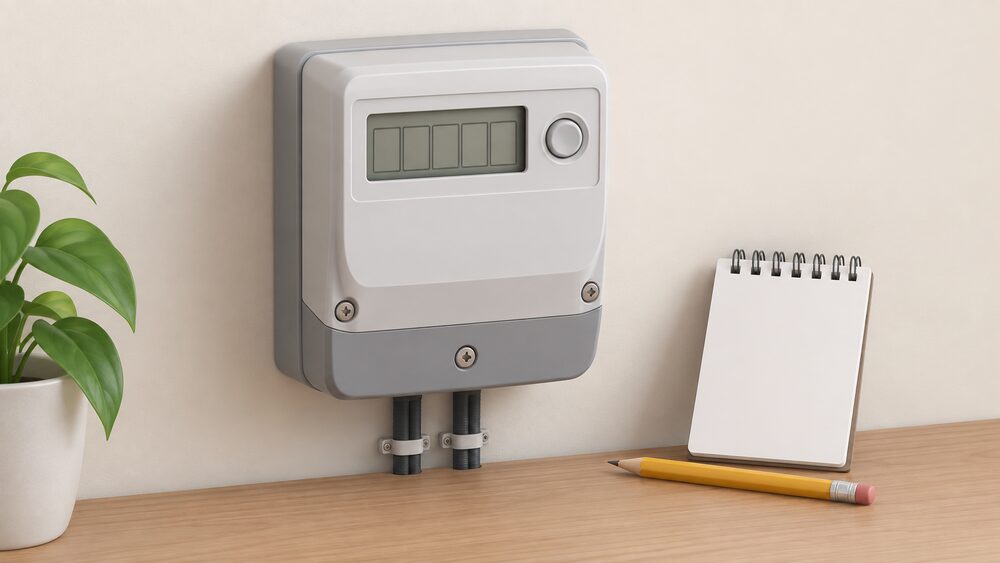
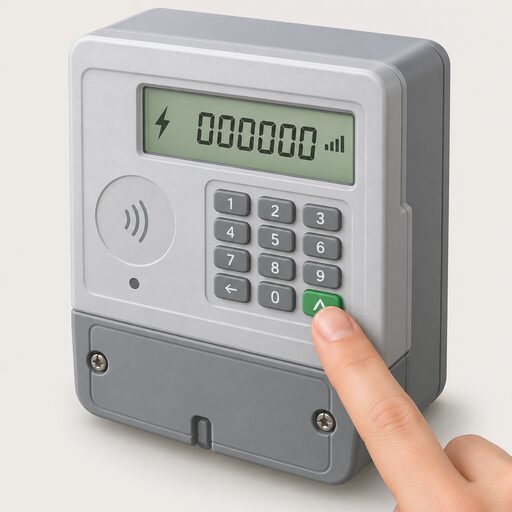
The reading itself is short work. On a digital display, for both gas and electricity, the first five digits from the left are usually the ones that count2. On a dial meter, electricity has five digits to read and gas has four3. On a smart meter, nobody reads anything: the meter sends the readings itself, and the in-home display is for information only4.
What follows covers each meter type in turn, when a manual reading is still needed, and what a smart meter costs the household that has one.
Why meter readings matter: estimated bills against accurate ones
An estimated reading is a placeholder. The National Energy Action guidance is blunt about the consequence: "Estimated readings can lead to large unexpected bills, so regularly submit accurate readings"8. A bill built on an estimate is not wrong in itself, but it is provisional, and the correction lands later.
Bills carry a code that says which kind of reading produced them. If a read is estimated, the bill or statement generally says "estimated" or "e" next to the reading; if it is customer supplied or actual, it says "c" or "a"9. That single letter is the quickest way to tell whether a bill reflects real consumption.
Ofgem's proposed billing outcome monitoring would test regular energy bills to ensure actual meter readings match real consumption and that charges are applied correctly, with statistical sampling possible, and estimated meter reads are not classed as accurate if they differ from actual consumption10. In other words, the regulator treats an estimate that diverges from reality as an accuracy failure, not a neutral event.
For a household, the practical effect is that a reading submitted at least once a month, ideally on the same day of the month, keeps the account close to reality11. Where a smart meter is fitted, the correction is automatic: any differences between the estimate and actual energy use are corrected on the next bill when the automated reading arrives on a different day to bill creation12.
The independence point is modest but real. A household that reads its own meter and submits the figure is not dependent on a supplier's estimate, and it holds the evidence if a bill is disputed. That is the same principle that runs through meter readings and estimated bills.
Digital meters: read the first five figures
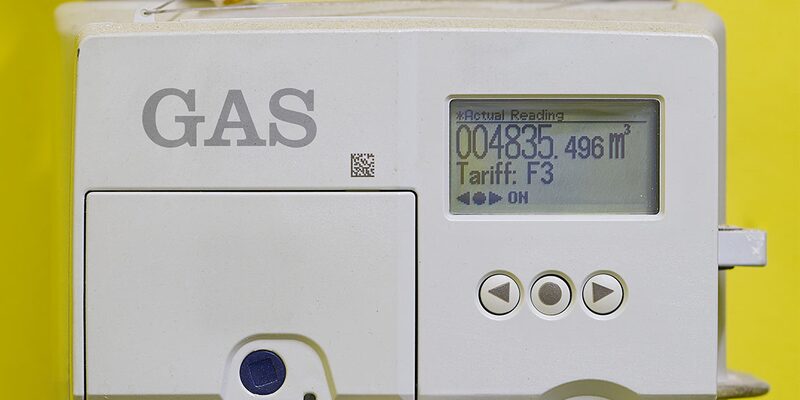
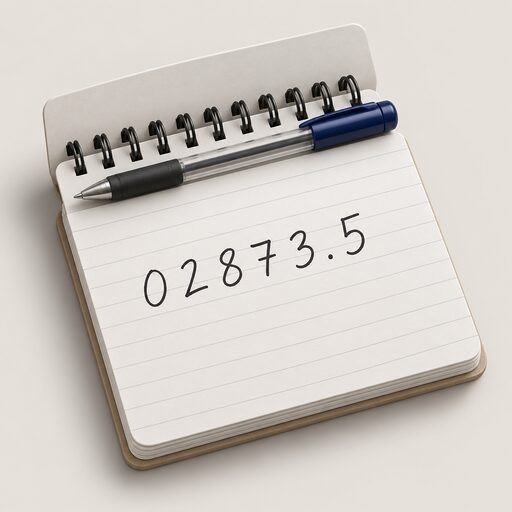
A digital meter is the simplest to read because the display gives the figures directly. For both gas and electricity, the first five digits from the left are usually the reading2. On a standard gas meter, the first four or five numbers are the ones needed2, and on a standard electricity meter, the first five digits from the left2.
The method is consistent across the guidance. Make a note of the first five figures and ignore the last figure if it begins with 0.113. On a digital metric gas meter, record the five numbers from left to right, including the zeros, but do not include the numbers in red or any numbers after the decimal point14. On a digital imperial gas meter, write down the first four numbers from left to right and ignore the rest of the numbers shown in red15.
The unit matters because it tells a household what the figures mean. Digital metric gas meters measure gas usage in cubic metres and usually show "m" or "m3"16. Most gas meters are metric, show readings in cubic metres and have five numbers to read, while imperial gas meters, which include dial and some analogue meters, show readings in cubic feet and have four numbers17.
| Meter type | Figures to read | Unit |
|---|---|---|
| Digital metric gas | 5 numbers, left to right, including zeros14 | cubic metres (m3)16 |
| Digital imperial gas | first 4 numbers, left to right15 | cubic feet (ft3)17 |
| Standard electricity | first 5 digits from the left2 | kWh |
Dial meters: five dials for electricity, four for gas
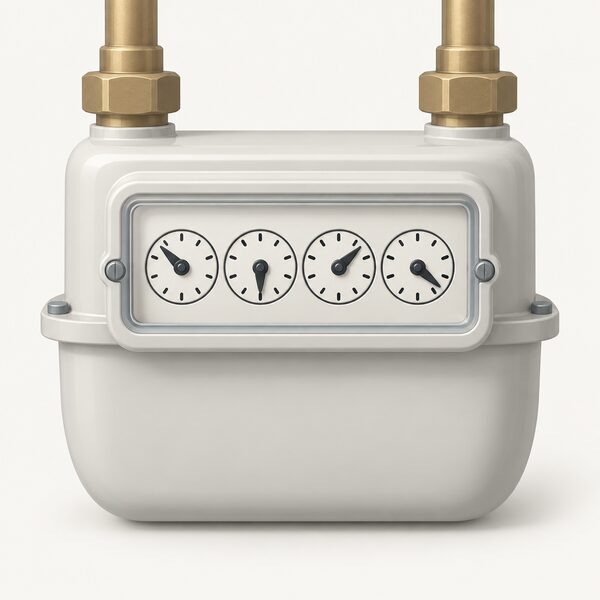
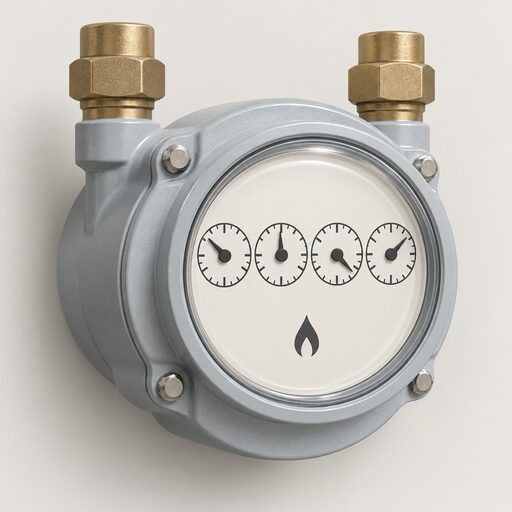
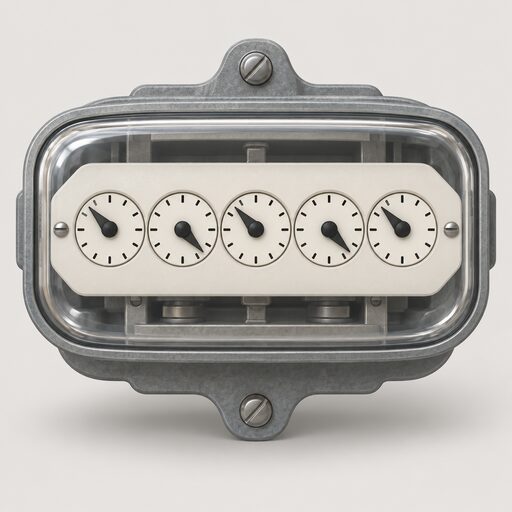
A dial meter is the older format and the one that causes most misreadings. An electricity dial meter has five or more dials, and a gas dial meter has four or more dials, next to each other7. A gas dial meter has four or more dials, each turning to point to a number between 0 and 915.
The reading method is to read the first four dials from left to right, ignore the large dials or red dials, and write down the number the pointer is directly over15. The red dials record fractions of a unit and are not part of the billed figure.
The digit count differs by fuel. Electricity has five digits to read and gas has four3. That difference trips up households that read a gas dial meter as though it were an electricity one, adding a digit that does not exist on the meter.
A dial meter gives a household the same independence as a digital one: the reading is taken at the meter and submitted to the supplier. The trade-off is that it is easier to get wrong, and a misread figure can produce a bill that is too high or too low until the next reading corrects it.
Smart meters: readings sent automatically, at least monthly
A smart meter removes the reading task altogether. Ofgem states that a smart meter "automatically sends your electricity and gas meter readings to your supplier"18, and the same wording appears in its consumer guidance1. The readings travel automatically via the secure network to the energy supplier19.
The frequency varies. Automatic meter readings provide the supplier with monthly, weekly, daily or even half-hourly readings5. For gas specifically, the initial frequency is every month, with every day or every half hour available20. In Wales, the guidance states that gas usage updates arrive every half hour21.
The in-home display is a separate device from the meter and does not feed the bill. It is for information only, and a household still receives regular energy bills in the same way as before, with the meter sending readings automatically4. Smart meters come with an in-home display so consumers can see and manage energy use to save money22. If current energy use is visible on the display, the meter is in smart mode23.
"A smart meter automatically sends your electricity and gas meter readings to your supplier."
The independence a smart meter gives is partial. The household no longer reads or submits anything, and bills rest on actual consumption rather than estimates. What it gives up is the manual check: the reading is taken by the meter and transmitted by the supplier's systems, so a household that wants to verify a bill has to look at the meter or the display rather than at its own note. The dependence on the supplier's network is the trade, and it is the reason the supplier carries the maintenance obligation described below.
When a manual reading is still needed
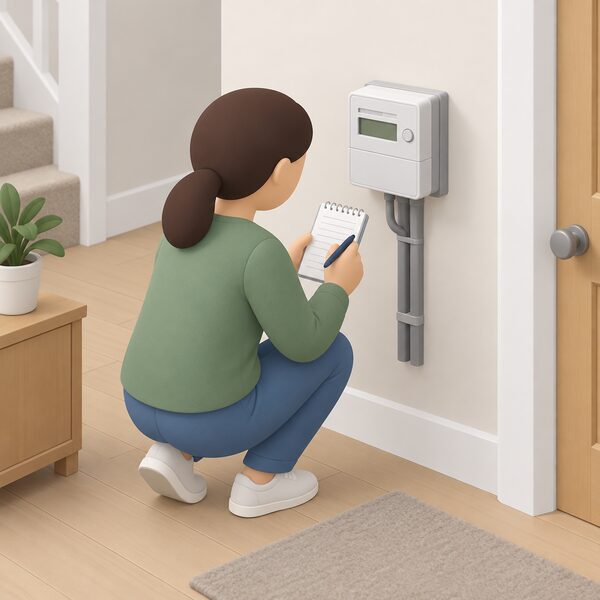
A smart meter does not remove the manual reading in every circumstance. The clearest case is a change of supplier. A household can switch suppliers with a smart meter, but the new supplier might not offer all smart meter services, such as remote meter readings, and the meter may need replacing24. Where remote readings stop, the household is back to reading the meter itself.
A supplier failure is the second case. Where an energy supplier goes out of business, the guidance is to take a meter reading as soon as possible and keep a record of it to make sure the household is billed correctly by the new supplier25. That reading is the household's protection against a disputed opening balance.
Prepayment meters work differently again. For pay-as-you-go and prepayment meters, a reading does not need to be submitted to the supplier, because the supplier takes a reading at least once a year26. The meter is read by the supplier rather than the household.
There is also a wider trend. Citizens Advice reports that more people are regularly having to give manual readings27, which suggests the automatic path is not universal in practice. Where a manual reading is needed, the rule of thumb is at least once a month, ideally on the same day of the month11.
One conversion is worth knowing for anyone checking an imperial gas meter against a metric bill. If an annual meter reading is in cubic feet, multiply by 2.83 to convert to metres28. That is a conversion factor, not a reading method, and it applies to the annual figure.
What a smart meter costs, and the right to refuse one
The cost of the smart meter programme is spread across households rather than charged as an installation fee. The working assumption is a cost of £5 per electricity and gas household per year for the next five years, to represent the cost of installation6. That is an assumption used in policy work, not a bill line a household will see.
The rollout has a deadline. All UK households are expected to have been offered a smart meter by the end of 20307. An offer is not an obligation, and the decision sits with the household.
For private renters, the position is that a household can choose a smart meter if the energy bills are in its name or it prepays for energy, after checking the tenancy agreement and letting the landlord know29. The tenancy agreement is the governing document, and it is read before anything is arranged.
Once a smart meter is in place, maintenance is the supplier's responsibility. If a smart meter stops working, the household contacts its supplier, which is responsible for maintenance and will fix or replace the meter as needed21. Suppliers must take all reasonable steps to ensure smart meters automatically send gas and electricity meter readings31. A meter that has stopped sending is therefore a supplier problem, not a household one.
The dependence that remains is on the supplier and its systems. A smart meter does not make a household independent of the grid or of a supplier; it makes the billing accurate and the reading automatic. For the wider picture of what a bill contains and how the cap interacts with it, the energy bills and the price cap guide is the starting point.
Sources31 cited
- Get help with your smart meter, Ofgem, 2026-09-17
- How to read your gas and electricity meter, Confused.com, 2025-12-15
- How to read your energy bills, National Energy Action, 2026-06-12
- Switching supplier, tariffs and bills, Smart Energy GB, 2026-03-16
- How to get a smart meter, Smart DCC, 2026
- How to pay for energy policy, Cadent Gas, 2026-09-20
- Gas and electricity meter reading, Uswitch, 2026-04-23
- Struggling with energy bills, National Energy Action, 2026-05-06
- Understanding your gas or electricity bill, Centre for Sustainable Energy, 2026-02
- Energy Consumer Outcomes: proposed implementation, Ofgem, 2026-06-23
- How to submit a meter reading, Uswitch, 2026-04-23
- Troubleshooting smart meter issues, Smart Energy GB, 2026-04-01
- Meters, Age UK, 2026-09-10
- Energy meters, Energy Helpline, 2026-09-20
- How to read your energy meter, Citizens Advice, 2026-09-17
- Gas meters and electricity meters: what you need to know, Which?, 2026-01-16
- How to read your gas meter, National Energy Action, 2026-07-13
- Getting a smart meter, Ofgem, 2026
- How do smart meters save energy?, Smart DCC, 2026
- Getting a smart meter installed, Citizens Advice, 2026-09-17
- Smart meters, Welsh Government, 2026
- Smart meters: your rights and expectations, GOV.UK, 2025-08-08
- Moving house energy checklist, Energy Saving Trust, 2026-05-01
- Problems with services, Isle of Anglesey County Council, 2025-10
- What happens if your energy supplier goes out of business, Ofgem, 2026
- Bills and metering, Consumer Council, 2026
- Fully operational: maximising consumer protection and transparency in smart metering, Citizens Advice, 2026-08-27
- How to estimate your energy use, Which?, 2026-08-03
- Smart meters, Energy Ombudsman, 2026-09-20
- Gas connections: FAQs and guidance, Northern Gas Networks, 2025-10-30
- Smart meter performance, Ofgem, 2026
 Get a Reading From a Smart MeterHow to bring up a meter reading on a smart electricity or gas meter when a manual reading is still needed, and the difference between the meter itself and the in-home display.
 Read a Gas MeterHow to read dial, digital metric and older imperial gas meters, including which dials to ignore and what to record when a pointer sits between two numbers.
 Take a Meter ReadingWhich numbers do you actually read on a gas or electricity meter, and which ones do you ignore?
 Meter Readings and EstimatesWhy is my energy bill estimated, and how often should my meter be read?
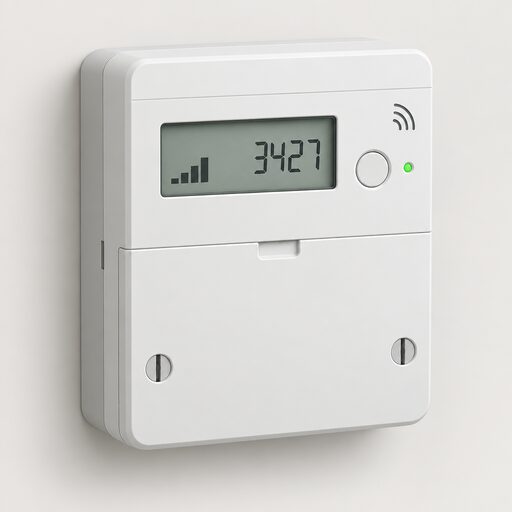 How a Smart Meter WorksHow a British smart meter measures gas and electricity, how the in-home display and the DCC's secure network fit together, what data leaves the house, what it costs, and where smart mode goes wrong.
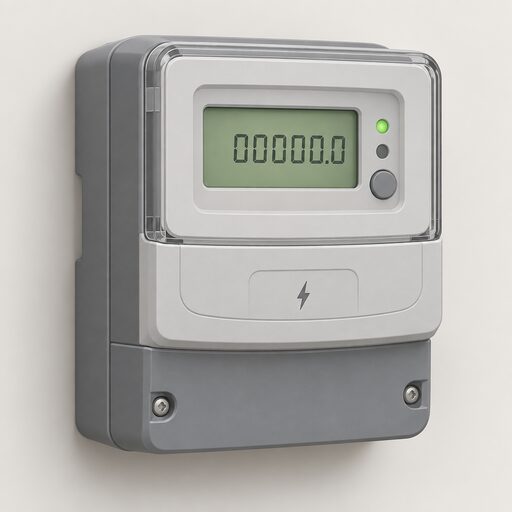 Take Control of Your EnergyHow do you read your own energy use and keep hold of your meter readings?