In this guide
Household Energy Independence in the UK: The Full Guide
Household energy independence in the UK is a matter of degree. The installer standards body MCS measures it as grid electricity independence, or self-sufficiency: the percentage of electricity consumed in the property over a year which is met by either behind-the-meter solar or electrical energy storage. In one MCS worked example, a home occupied all day with 3,879 kWh of annual consumption and 4,059 kWh of annual solar generation self-consumed 29% of that generation without a battery. A roof that generates roughly as much as the home uses in a year still leaves the home importing for most of its needs unless storage and control are added.1
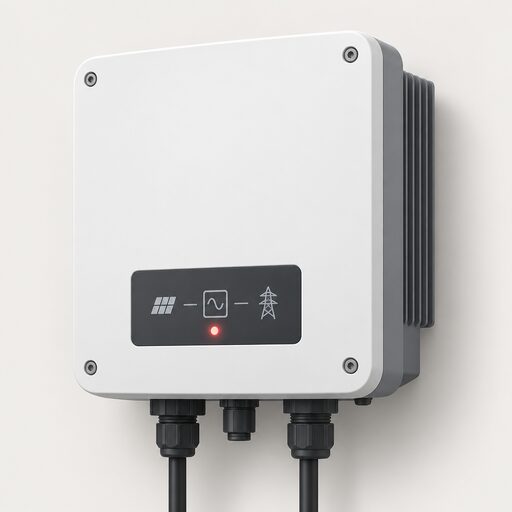
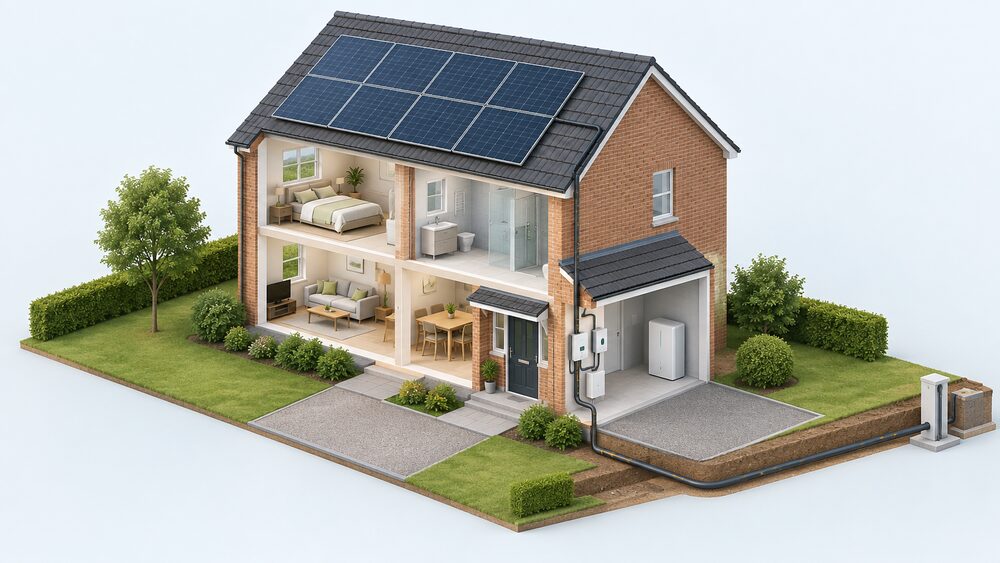
The practical route is a behind-the-meter system. This is on-site generation, typically rooftop solar PV, often paired with battery storage and managed so that the home uses its own electricity first. A grid connection is not mandatory for such a system, but it adds value by allowing surplus to be exported. Most UK households that pursue independence therefore cut their imports and stay connected.2
The national picture is about imported fuel. Analysis by the Energy and Climate Intelligence Unit models a 2030 household at EPC C with an electric heat pump and an electric vehicle, assuming faster growth in UK renewables. That household needs only 3.4MWh of primary energy imports a year. A home without upgrades, in a scenario with no new UK renewables, needs more than 20MWh. Household independence and national energy security are closely linked: both come down to efficiency, electrification and domestic generation.3
What energy independence means for a UK household
The term is used at two levels. Nationally, the Treasury's Spring Statement 2022 described the UK as "a net energy importer with a high dependence on gas and oil".7 The British energy security strategy, published in April 2022, set out how Great Britain would "accelerate homegrown power for greater energy independence".8 The solar trade association makes the same link in its Scottish manifesto: "More homegrown energy means greater energy independence".9 Uswitch says a better balanced grid makes the UK less reliant on expensive foreign imports, which both saves money and gives more control over the country's own energy supply.10
For a household, independence means meeting its own demand from its own equipment. MCS gives two related definitions. The first is self-consumption: the amount of solar electricity generated by a domestic system which is subsequently consumed within the property and not exported to the distribution network. The second is grid electricity independence: the fraction of electricity consumed in the property which is met by self-consumed electricity. The first measures how much of the generation the home uses, and the second how much of the home's consumption is covered. A small array on a high-consumption home can score highly on the first and poorly on the second. The pages on self-consumption and the self-sufficiency ratio cover each measure in detail.1
Both definitions cover electricity only. A home heated by gas and running a petrol car is dependent on imported fuel however high its solar figures are. For that reason, household import dependence is assessed across heat and transport as well as power. Demand also counts. Households across Great Britain have reduced their domestic energy consumption by at least 15% on average, according to Uswitch's energy statistics, and lower consumption raises the share that any given system can cover.11
Independence is different from isolation. A home can cut its imports sharply while keeping a grid connection for export income and for winter. Leaving the grid entirely is a separate undertaking with its own rules and costs, covered under going off-grid. Whether a UK home can close the gap completely is addressed in can a UK home be completely energy self-sufficient.
Behind-the-meter systems: the core concept
"Behind the meter" describes where the equipment sits. It is on the household's side of the supply meter, so electricity generated there can be used before any is drawn from the network. Welsh Government guidance, updated on 28 July 2026, defines the term:
"Behind-the-meter (BTM) energy systems are localised energy solutions installed at a specific site, typically featuring on-site generation like rooftop solar PV, often paired with battery storage"
The same guidance sets out the main features. These systems use smart energy management to prioritise on-site use of generated electricity. They suit both domestic and commercial buildings. Surplus energy can often be exported. They are adaptable, integrating with battery storage, heating and electric vehicle charging. On-site generating technology is fundamentally required, so a battery charged only from the grid does not meet the definition.2
Three parts of the definition bear on independence:
- Generation on site sets the upper limit on what the home can supply for itself.
- Smart energy management decides how much of that generation is used rather than exported.
- Integration with heat and transport extends independence from electricity into the gas and petrol parts of the household's energy use.
How dependence is counted also matters. The UK Government's consultation on reforming Energy Performance Certificates describes two candidate metrics. A "delivered energy" metric would measure the amount of energy from fuels that are consumed in the building. A "primary energy" metric would also take account of the upstream processes involved in producing and transporting fuels before final consumption. The import figures later on this page are primary energy figures, which is why they are larger than a household's metered consumption.12
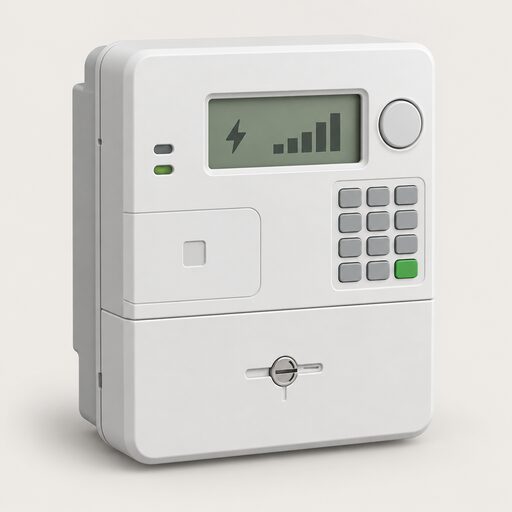
Control and data are the last parts of the system. The UK Government's energy digitalisation framework, which delivers a commitment in the clean flexibility roadmap, aims at "delivering the digitalisation of the energy system in a coordinated and connected way".13 At household level this rests on metering. Ofgem describes an automatic meter reader as having three components: the meter, a means of storing data, and a means of communicating data.14 A home energy system also depends on software, communications and sometimes a manufacturer's servers, a dependence examined in local control versus the cloud. The full concept is covered in behind-the-meter systems explained.

Solar PV: the foundation of on-site generation
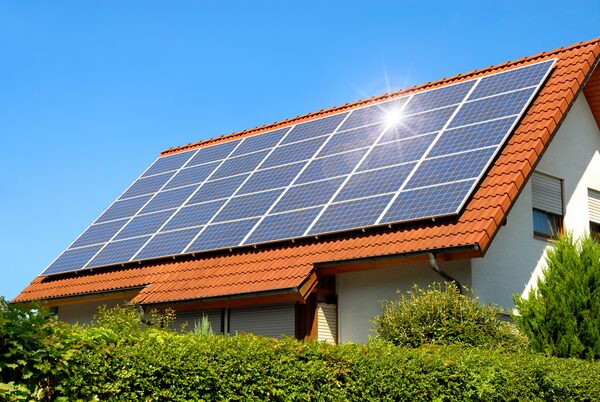
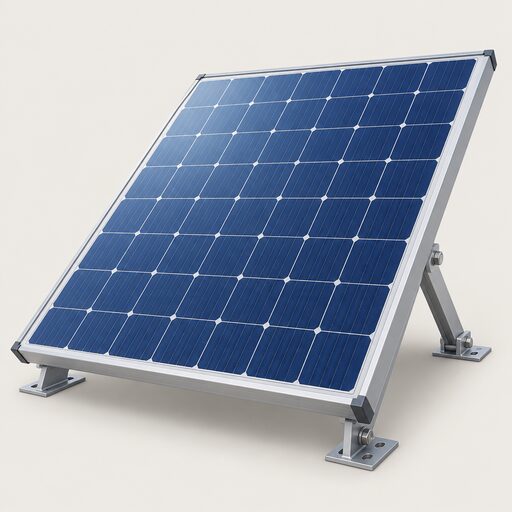
For most UK homes, on-site generation means solar photovoltaics. Welsh Government guidance describes solar energy as "the use of the sun's free energy to provide electricity using solar photovoltaic panels (PV)".15 National Energy Action's advice leaflet states that domestic solar PV systems convert sunlight into electricity which can be used in the home, and that they can help reduce energy bills.16 Solar Energy UK describes PV systems as "affordable, reliable, low-impact, and popular".17
The law defines the technology broadly. In England's permitted development legislation, "solar PV" means solar photovoltaics including plug-in solar, and "stand-alone solar" means solar PV or solar thermal equipment which is not installed on a building.18 Northern Ireland's 2015 Order defines "stand alone solar" in the same terms.19 Ofgem's Feed-in Tariff guidance uses a narrower test, defining a standalone installation as one "not attached to a building and not wired to provide electricity to an occupied building".20 A ground-mounted array in a garden that feeds the house is stand-alone for planning purposes but not under the Feed-in Tariff definition. For independence it functions like a rooftop array, because it is wired to the home.
One independent guide summarises the benefit as "Generate your own electricity instead of relying on the grid". It lists savings from electricity bills among the income streams of a domestic system.21 That saving only serves independence if the household owns the system. The Renewable Energy Consumer Code's information on "free" solar PV systems sets out what a provider must make clear, including legal ownership of the system and any additional charges. A roof leased to a third party generates electricity on site, but the asset and the income belong to someone else.22
MCS publishes a method for estimating the electrical self-consumption of solar PV installations in domestic buildings. Installers use it when they give a household a performance estimate.1 How solar compares with other household generators is covered in solar panels vs small wind.
Output on cloudy days
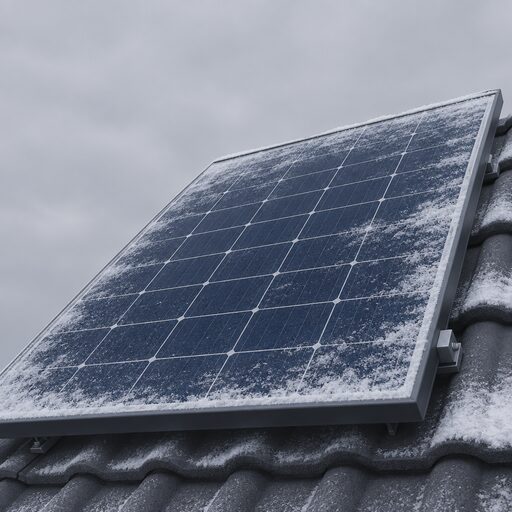
UK guidance is consistent that panels work in overcast weather, and the reason is the same in each source. Panels respond to light, not heat or direct sun.
| Source | What it says |
|---|---|
| House of Commons Library | The cells "don't need direct sunlight to work" and can still generate some electricity on a cloudy day23 |
| Which? | Panels work during daylight, even when it's cloudy or overcast, "as they use light, not heat, to generate energy"24 |
| AgilityEco | Systems "work best under clear, sunny skies, but can produce electricity even on cloudy days"25 |
| Energy Saving Trust | "They even work on cloudy days."26 |
Oxfordshire County Council says that "even on a cloudy day, good generation can be achieved".27 Welsh Government guidance states that power can be generated even on a cloudy day.15 Smart Energy GB says a panel can power the different appliances in the home even on cloudy days.28 The same holds for solar thermal: nidirect states that solar thermal panels can work even in cloudy or overcast conditions.29 None of these sources gives a figure for how much output falls. The limit on independence comes less from the occasional cloudy day than from the season, as set out in the winter gap.
What a solar roof needs: orientation, pitch and shading
Three properties of the roof determine how much a given array produces: orientation, pitch and shading. The Energy Saving Trust summarises the ideal: "An unshaded, south-facing roof is ideal for maximum performance."6
Orientation. Renewables First states that ideally the roof would face directly south, to maximise exposure to the sun and generate the most energy.30 The other sources give a wider range of workable roofs. Which? says a mainly south-facing roof gives the best power output and that southwest or southeast-facing roofs are also good.24 In its installation guide, Which? says panels are worth considering for a south, east or west-facing roof with little or no shade. It adds a condition that has nothing to do with the roof: that the household is not thinking of moving home in the near future.31 The Centre for Sustainable Energy asks whether the roof is roughly south-facing, and notes that a roof with an east-west aspect could take panels on both sides.32
Pitch. Renewables First gives the optimum pitch on a south-facing roof as around 40°, to maximise energy generation and ensure consistency throughout the year.30 The energy assessment methodology for existing homes, RdSAP 10, uses a different default where the details of an array are not known: facing south, pitch 30°, modest overshading. The two figures do not conflict. One is an optimum for generation, and the other is an assumption used in energy certificates.33
Shading. AgilityEco begins its surveys by assessing the roof pitch and orientation and any overshading from trees or other buildings.25 Where shading cannot be avoided, the Energy Saving Trust notes that an installer might recommend microinverters or power optimisers, which let each panel work independently. It also notes that trimming trees causing partial shade is an option.26
| Factor | Ideal | Workable | Source |
|---|---|---|---|
| Orientation | Directly south | Southeast, southwest, east or west; east-west roofs can take panels on both sides | 24 |
| Pitch | Around 40° on a south-facing roof | 30° is the RdSAP 10 default assumption | 30 |
| Shading | None | Partial shading mitigated by microinverters, power optimisers or tree trimming | 26 |
For independence, an east-west array has one property that a south-facing array lacks: its output is spread towards morning and evening. None of these sources quantifies that effect. Matching an array and a battery to a household's demand is covered in sizing generation and storage.

Lifespan and maintenance: 25 years or more
The sources agree closely on lifespan. A Parliamentary Office of Science and Technology briefing gives the estimated lifespan of new solar panels as 25 to 30 years, although this can vary depending on their environment.4 Which? says panels are "pretty much maintenance-free and should last for at least 25 years".31 The Energy Saving Trust says a solar system can be expected to last for 25 years.34 AgilityEco says panels are made to last for 25+ years and need very little maintenance.25 The Centre for Sustainable Energy says most systems require little or no maintenance and the panels should last for decades, though it is worth checking every year that the panels are not too dirty, as this can reduce performance.32
These figures describe panels. The sources cited here give no lifespan for inverters, batteries or control systems.
Costs, savings and payback: the numbers
No official or independent installed price for a full rooftop system appears in the sources cited here. Prices for roof-mounted systems are installer-quoted. The detail available is on what energy independence costs. The sources do give a payback benchmark, a worked example for plug-in solar, the tax position, and the carbon figures.
The payback test. Building regulations guidance treats 15 years as the test of economic feasibility. The Welsh Government's consultation version of Approved Document L treats an energy efficiency measure as economically feasible if it achieves "a payback of the initial cost within 15 years through energy savings". This test is used for building regulations purposes and says nothing about what any individual household will achieve. It does give a reference period, and that period is well inside the 25 to 30 year estimated panel life.35
Plug-in solar. The UK Government announced on 26 August 2026 that plug-in solar panels were coming to market, "saving households up to £110 a year on their bills through clean, homegrown power". It stated that this comes "with no installation cost and without taking any electricity from the grid".36 The Parliamentary briefing sets out the arithmetic: with an upfront cost of £500 and Carbon Brief's calculated saving of £110 a year, the payback time is five years.4 Carbon Brief's analysis of 2 April 2026 scaled this to three million households. It found that this would not significantly cut UK emissions overall, but could save those households more than £330m in total and avoid around two tankers' worth of imported liquified natural gas each year.37
VAT differs between Great Britain and Northern Ireland.
| Nation | VAT on supply and installation of solar PV |
|---|---|
| England, Scotland and Wales | 0%, as solar thermal and PV systems are on the list of energy-saving materials5 |
| Northern Ireland | 20% unless a reduced rate of 5% applies5 |
HMRC's consumer guidance gives a Northern Ireland example for solar panels and a battery. An installer charges £5,385 excluding VAT, made up of £3,500 for materials and £1,885 for labour. Materials are 65% of the total, which is more than 60%, so the standard 20% rate applies to the materials and 5% to the labour.38 Solar Energy UK has argued that residential energy storage should also qualify for 0% VAT when installed as a standalone measure. That is a trade body's recommendation, not a statement of the current rules.5
Free assessment tools and support. Manchester City Council points residents to the Green Economy solar calculator, which can assess feasibility, capacity, carbon savings, cost and payback and produces a free report.39 Home Energy Scotland's Home Renewables Selector is free to use and gives a personalised report on suitable technologies.40 Ofgem notes that energy supplier schemes and grants can help with energy costs, paying off energy debt, and making energy-saving improvements to the home.41
Carbon. The Energy Saving Trust and Smart Energy GB both state that a typical home system could save around one tonne of carbon per year, depending on where you live in the UK.6 Uswitch, writing on 16 September 2026, gives around 0.5 to 0.6 tonnes of CO2 for a 4kW system, based on "the current 2026 grid intensity average (approx. 150g CO2 per kWh)".42 The two figures differ because of the grid intensity each assumes. As grid electricity becomes cleaner, each unit of solar displaces less carbon. The contribution to a household's independence is unchanged.
Surplus electricity and the Smart Export Guarantee
Solar Energy UK puts it plainly: "If you have a solar PV system, and generate more power than you need, the surplus will be put onto the grid."43 Oxfordshire County Council describes this as being able to sell surplus energy back to the grid.27 The Energy Saving Trust identifies the Smart Export Guarantee as the mechanism.34 Home Energy Scotland confirms that payments can be received for excess energy generated and sent back to the grid.40 Solar Energy UK maintains a league table of export tariffs, which lists suppliers and their products. One entry is Good Energy's Solar Saving.43
Export brings income but does not add to independence. Every exported unit is one the home did not use, and the home may import the same amount again after dark. More detail is in can a behind-the-meter system export surplus electricity.
Battery storage and compatible technologies
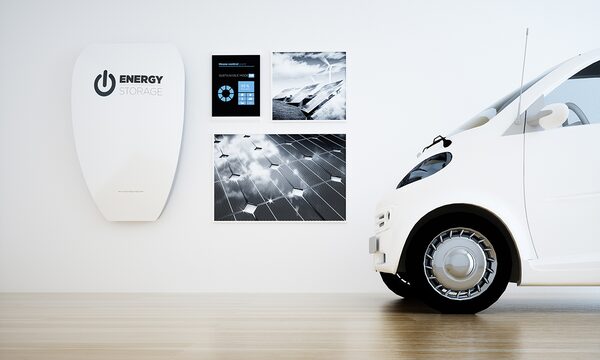
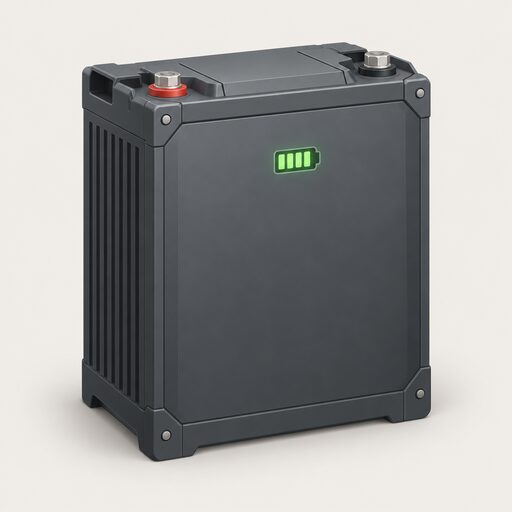
Storage determines how much on-site generation the household actually uses. The Energy Saving Trust lists the household options: "Battery storage, thermal storage, and heat batteries are examples of energy storage systems." According to the Trust, the amount of storage needed depends on two things: the household's current energy use, and the size of any generation technologies already installed.44
The 29% worked example shows why storage matters. Annual generation was slightly higher than annual consumption, yet without electrical energy storage most of the generation left the property.1 A battery holds midday surplus for use in the evening. A hot water cylinder or heat battery holds it as heat. The effect of each is examined in how much a battery increases self-consumption, home battery vs hot water tank and solar diverter vs battery.
Welsh Government guidance names three groups of technology that integrate with a behind-the-meter system: battery storage, heating and electric vehicle charging.2 Heating and EV charging bring energy use that was previously gas or petrol onto the electricity side, where on-site generation can supply it:
- Heating: an electric heat pump replaces gas or oil, and a cylinder can absorb surplus solar. See can solar panels heat your home in winter.
- Transport: an EV charger can be set to follow solar output. See charging an EV from home solar vs a cheap overnight tariff.
- Control: an energy management system sets the priority between these loads, as described in designing a whole-home energy system.
A household battery moves electricity across hours, not across seasons. No source cited here suggests that household storage can carry summer generation into winter.
Going off-grid: when a grid connection isn't needed
The grid is optional under the definition of a behind-the-meter system. The Welsh Government states the trade-off in a single sentence:
"While not mandatory, a grid connection enhances the value of BTM systems by enabling the export of surplus electricity."
Going off-grid makes most sense where no connection exists to begin with. The Planning Portal says that for houses with no mains connection but with access to a micro hydro site, a good hydro system can generate a steady, more reliable electricity supply than other renewable technologies at a lower cost. It adds that total system costs can be high but are often less than the cost of a grid connection, with no electricity bills to follow. That comparison is between a hydro system and the cost of a new connection. It is not a comparison with an existing connection that already works.45
A connected home can also run on its own supply for a period. The Climate Change Committee's framework for a well-adapted energy system describes this capability: "When a building or home also has the functionality to operate independently from the grid (known as 'islanding')", vehicle-to-everything technology can enable the vehicle to act as a backup power source in a power cut. Islanding is a function a system must be built to perform, and a home with panels and a battery does not have it by default. Why most systems shut down in a power cut is explained in islanding and anti-islanding.46
Plug-in solar is the smallest step towards independence. The Government describes it as coming with no installation cost and "without taking any electricity from the grid".36 It reduces imports and leaves the home fully dependent on the grid. The rules and costs of full disconnection are covered in is it legal to go off-grid, off-grid cost, disconnecting from the electricity grid and getting through a UK winter off-grid.

Permissions and network requirements
Two bodies may have a say over a household system: the planning authority and the electricity network operator. Welsh Government guidance states that behind-the-meter systems "may be subject to certain regulatory requirements, such as permission from planning authorities and District Network Operators".2
Planning. Installing behind-the-meter equipment typically falls under permitted development.2 England's permitted development order has a dedicated part covering domestic microgeneration, including solar PV and stand-alone solar.18 In Northern Ireland, the explanatory memorandum to the 2015 Order describes permitted development as "removing the need to apply for planning permission".47
The network operator. Notification and approval are separate processes:
- Small systems usually only need the electricity network operator to be notified.2
- Larger systems, over 3.68kW, will usually need the operator's approval before they can be connected to the grid.2
- Welsh Government solar guidance states that electrical grid connection requires approval from the distribution network operator.15
Export limits set by the operator affect system design. UK Government guidance on Approved Document L lists the factors relevant to sizing on-site generation: the on-site energy demand, the capacity and nature of the available infrastructure including export limits set by the District Network Operator, the relationship between export limits, generation and demand, and other characteristics of the site.48 Some homes are served by an Independent Distribution Network Operator. The UK Solar Roadmap notes that these operators are not restricted by geography as DNOs are but are still licensed by Ofgem.49
Smart appliances and data. A House of Commons Library briefing describes powers in Part 8 of the Energy Act 2023. These allow regulations requiring energy smart appliances to meet requirements on cyber security, data privacy, interoperability and grid stability.50 The Government expects to introduce secondary legislation covering energy smart appliances, load controllers and flexibility service providers in October 2026. The Data Communications Company, which runs the smart meter network, states that it "can only access your energy consumption data with your explicit permission".51 Ownership and access are covered in who owns your home energy data.
Complaints. A complaint must first be raised with the supplier. If it is not resolved after eight weeks, or a deadlock letter is received, the Energy Ombudsman's service is free.56 Ofgem describes the Ombudsman as an independent service, separate from Ofgem, that handles problems with an energy supplier, an energy broker, a network operator or a heat network supplier.57
Brands and product ranges sold in the UK
Only one maker's product statement is available for this guide, and it is reported here as the maker's claim alone. Liniar states that its Zero|90 range is "the first of its kind in the UK". This is the maker's own statement. No independent source verifies it, and no published price is available.58
For the main product categories on this page (solar panels, inverters, batteries, heat pumps and EV chargers), prices are installer-quoted. Whatever the brand, a household's dependence on a manufacturer has the same components: the warranty lasts only while the company does, and any app or cloud service can be withdrawn. Documented outcomes from UK homes are in the case studies with real numbers.
How a household system fits the wider energy picture
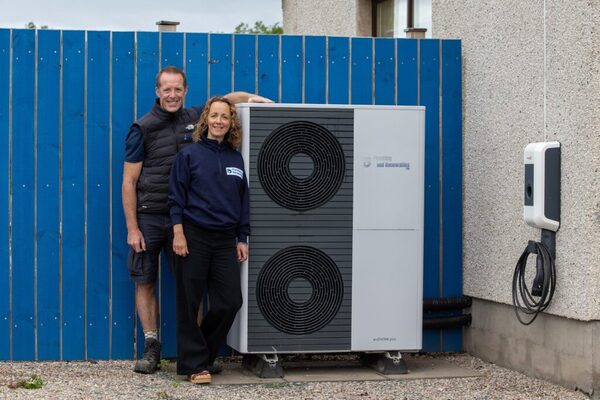
The most detailed household-level picture of import dependence comes from the Energy and Climate Intelligence Unit's modelling for 2030. It compares two households under different national scenarios.
| Household in 2030 | National scenario | Imported primary energy per year |
|---|---|---|
| EPC C, electric heat pump, electric vehicle | Faster trends in renewables, even without new oil and gas licences | 3.4MWh3 |
| Typical household, no upgrades | No more UK renewables, even if new licences increased production | Over 20MWh, an increase of 3MWh (20%)3 |
The upgraded household's imports are "almost 85% lower" than those of the home without upgrades.3 These are modelled figures in primary energy, which counts the fuel used upstream, and they depend on national generation as well as the home itself. The three upgrades are fabric efficiency, electrified heat and electrified transport. A behind-the-meter system is suited to supply all three. The reduction in imports does not depend on the household generating everything itself. It depends on moving demand onto electricity while the national supply becomes more domestic. See how much a heat pump and EV cut reliance on imported energy.
Citizens Advice reaches the same conclusion on bills. In its response to Ofgem on energy system cost allocation, dated 26 September 2025, it states that investment in a clean energy system "should reduce bills over the longer term by reducing dependency on imported gas".59
Efficiency upgrades have measurable effects. The Government's National Energy Efficiency Data-Framework publishes tables that assess the impact of installing home efficiency measures such as loft insulation on household energy consumption. The 2025 edition was published on 26 June 2025.60 England's Approved Document L requires that, when a complete new or replacement system is installed in an existing dwelling, the energy performance of the whole system is assessed and recorded. The record is given to the building owner with the manufacturer's supporting literature. A household comparing imports before and after an upgrade can use that record as its baseline.61
Some independence is achieved collectively. Households that cannot host generation can take a share in it through community energy, local energy supply and Energy Local clubs or microgrids and local energy systems. The link between the single home and national planning is set out in household resilience and national risk. Terms such as "zero bills" are explained in zero bills and net zero energy homes.
Several dependences remain even in a well-equipped home. These are the grid in winter and after dark, the network operator's export limits, a supplier for export payments, the manufacturers and software behind the equipment, and national energy policy. In the ECIU model, national generation policy sets the scenario for both households.
Sources61 cited
- MCS 032: self-consumption and grid independence method for domestic solar PV and storage, MCS, 2025-01-01
- Behind-the-meter energy systems guidance, Welsh Government, updated 2026-07-28
- Household energy security in 2030, Energy and Climate Intelligence Unit, 2024
- POSTnote 771 on solar, Parliamentary Office of Science and Technology, 2026-06-25
- VAT on solar and battery storage, Solar Energy UK, 2026-09-17
- Solar panels advice, Energy Saving Trust, 2026-08-27
- Spring Statement 2022, HM Treasury, 2022-03
- British energy security strategy, UK Government, 2022-04-07
- Solar Energy Scotland manifesto, Solar Energy UK, 2026-09-17
- Balancing the grid, Uswitch, 2026-02-09
- UK energy statistics, Uswitch, 2025-12-17
- Technical annex for chapter 2: what EPCs measure, UK Government, 2026-03-09
- Energy digitalisation framework, UK Government, 2026-03-23
- Feed-in Tariffs guidance for licensed electricity suppliers, Ofgem, 2024-09-06
- Generating your own energy: solar electricity, Welsh Government, 2026-09-17
- Solar PV advice leaflet, National Energy Action, 2026-04-23
- Everything under the sun: the facts about solar energy, Solar Energy UK, 2026-09-17
- General Permitted Development Order 2015, Schedule 2, Part 14, legislation.gov.uk, 2026-09-17
- Planning (General Permitted Development) Order (Northern Ireland) 2015, legislation.gov.uk, 2026-09-17
- Guidance for Feed-in Tariff generators, Ofgem, 2026-04-01
- Solar PV technology guide, Flexi-Orb, 2025-04-22
- Information regarding free solar PV systems, Renewable Energy Consumer Code, 2026-09-17
- Research briefing CBP-8090, House of Commons Library, 2026-09-17
- Solar panel myths debunked, Which?, 2026-06-09
- Solar PV panels, AgilityEco, 2026-09-20
- Solar panel installation, Energy Saving Trust, 2026-09-07
- Solar panels: retrofitting your home, Oxfordshire County Council, 2026-09-17
- How do solar panels work, Smart Energy GB, 2026-03-16
- Solar thermal panels, nidirect, 2024-10-22
- What makes a good solar PV roof, Renewables First, 2026-04-08
- Solar panel installation guide, Which?, 2026-08-12
- A complete guide to solar PV, Centre for Sustainable Energy, 2025-11
- RdSAP 10 specification, BRE, 2024-02-12
- Solar power facts, Energy Saving Trust, 2026-08-13
- Approved Document L Volume 1, consultation version, Welsh Government, 2026-09-17
- Households can save as plug-in solar panels come to market, UK Government, 2026-08-26
- Analysis: how plug-in solar can save UK homes money on energy bills, Carbon Brief, 2026-04-02
- VAT on energy-saving materials: consumer guidance, HMRC, 2026-09-20
- Homes and energy: action for residents, Manchester City Council, 2026-09-20
- Offset bills with green energy, Home Energy Scotland, 2026-09-20
- Get help with your energy bills, Ofgem, 2026-09-17
- Are solar panels worth it, Uswitch, 2026-09-16
- Smart Export Guarantee league table, Solar Energy UK, 2026-05-12
- Storing energy, Energy Saving Trust, 2026-07-15
- Hydro electricity: home energy generation, Planning Portal, 2026
- Monitoring framework: well-adapted energy system, Climate Change Committee, 2026-09-19
- Explanatory memorandum to the Planning (General Permitted Development) Order (Northern Ireland) 2015, legislation.gov.uk, 2026-09-17
- Approved Document L: frequently asked questions, UK Government, 2026-09-08
- UK Solar Roadmap, Department for Energy Security and Net Zero, 2025-06
- Research briefing CBP-9787, House of Commons Library, 2026-09-20
- Upgrading Britain's first generation smart meters, Smart DCC, 2026
- Draft Buildings (Heating and Energy Performance) and Heat Networks (Scotland) Bill, Scottish Government, 2025-11-18
- Heat networks: policy, guidance and resources, Ofgem, 2026-09-17
- Research briefing CBP-9528, House of Commons Library, 2026-09-17
- Heat network dispute resolution, Energy Ombudsman, 2026-09-19
- Worried about your energy bills, Energy Ombudsman, 2026-03-24
- Complain about your energy supplier or network operator, Ofgem, 2026
- Energy saving products, Liniar, 2026-09-20
- Response to Ofgem's call for input on energy system cost allocation, Citizens Advice, 2025-09-26
- National Energy Efficiency Data-Framework: impact of measures data tables 2025, UK Government, 2025-06-26
- Approved Document L Volume 1: Dwellings, 2021 edition incorporating 2023 amendments, UK Government, 2026-09-17