
In this comparison
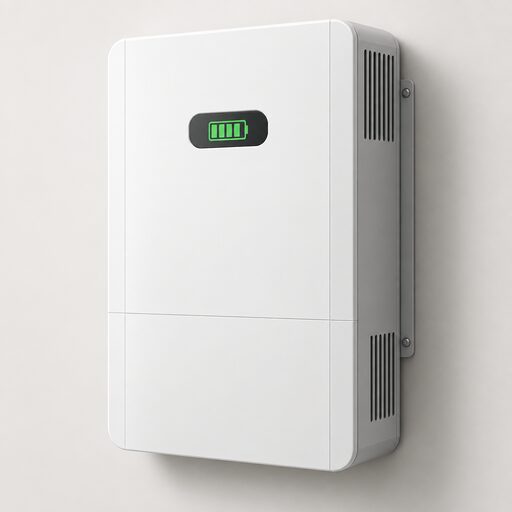
A home battery and a hot water tank both store surplus energy, but they store different things. A home battery holds electricity, usually in lithium-ion or lead-acid cells, and can run any circuit in the house1. A hot water tank holds heat in water, and can only serve hot taps, showers, baths and, in some designs, space heating2. The choice between them is not a straight contest: it is a question of what the surplus is for.
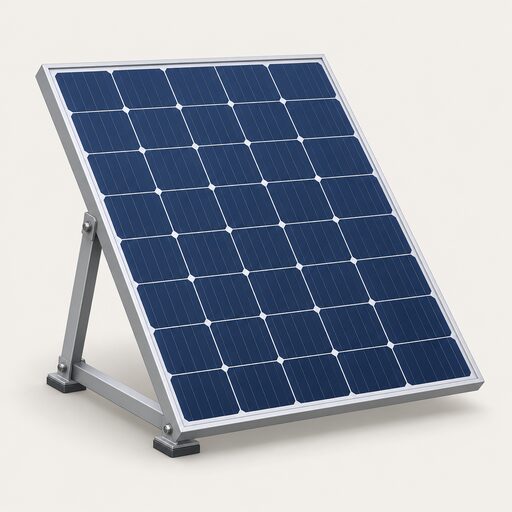
The distinction matters most for solar households. Home battery storage is usually used in combination with solar panels or a smart time of use tariff, or both, which lets a household shift cheap or free electricity into the evening1. A hot water tank instead absorbs surplus generation as heat, and a modern insulated cistern can keep water warm for up to two days3. Neither replaces the other, and many homes end up with both.
Where space is tight, the comparison changes shape. Heat batteries, which store heat in a phase change material rather than a tank of water, can be up to four times smaller than equivalent hot water cylinders4. Nearly half of those surveyed in able-to-pay retrofit research reported that they did not have the space for a hot water tank in their home5. That single constraint decides the question for a large share of UK properties.
Two ways to store energy at home: electricity or heat
Energy storage systems store electricity or heat for you to use when you need it, and battery storage, thermal storage and heat batteries are the three examples that matter domestically8. The first is electrical, the second and third are thermal. That split runs through every decision a household makes about storage.
Electricity storage is the more flexible of the two. Battery energy storage in association with residential buildings allows users to store electricity from local generation, which is why it pairs so naturally with solar9. Home batteries store free, renewable electricity to power a heat pump, making a household less reliant on grid electricity10. The same battery can run lighting, appliances, an immersion heater or an electric vehicle charger, because electricity is a universal carrier.
Heat storage is narrower but cheaper to achieve in some cases. Heat batteries store energy as heat provided by electricity, whether from the grid or your own renewable source, and by surplus heat from a boiler, heat pump or another heating system8. Conventional thermal storage, such as additional tanks for hot water, sits alongside more innovative heat battery technologies in the same family11. The energy is real and useful, but it can only leave the store as heat.
There is a third form worth naming: the heat stored in the fabric of the building itself. Storage can take several forms including the heat stored in the fabric of the building, hot water storage, electric battery storage and heat batteries using phase change materials12. A well-insulated home is itself a thermal store, which is why fabric measures come before storage in most retrofit sequences.
For a household's independence, the two routes differ in what they leave you dependent on. An electrical battery reduces reliance on grid electricity and on the wholesale prices that set it. A hot water tank reduces reliance on gas or on an immersion heater running at peak rates, but it still needs a heat source, and that source is usually a boiler, a heat pump or an electric element. Neither store generates anything; both shift when energy is used rather than how much is bought.
What a hot water tank stores, and when it counts as a battery
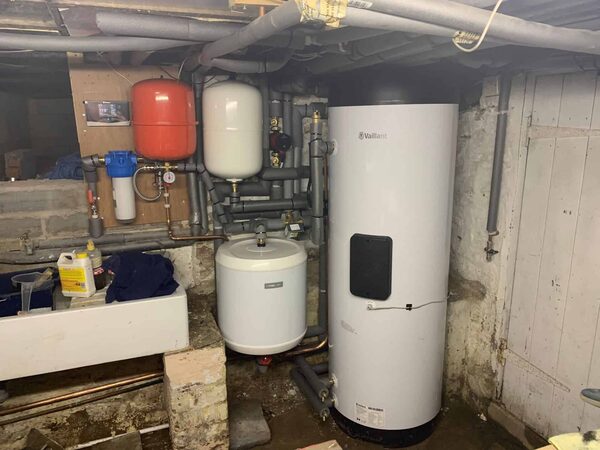
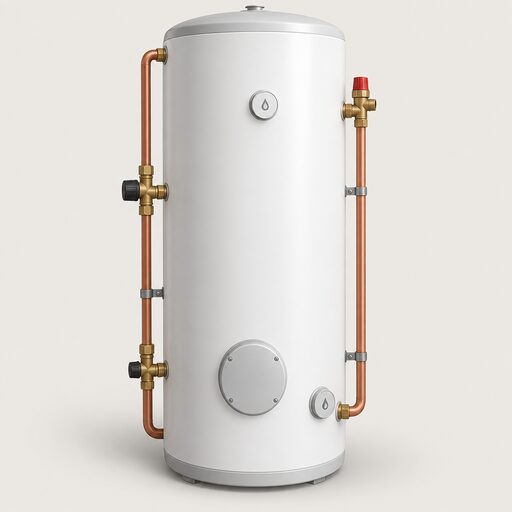
A hot water tank stores heated water. Heated water is usually stored in a large, well-insulated cylinder often called a buffer or accumulator tank, and a wood-fuelled system with one can store hot water for days if properly insulated13. That is the sense in which a cylinder behaves like a battery: energy goes in when it is cheap or abundant, and comes out later as hot water at the tap.
The term "water battery" is informal, but the underlying idea is recognised in official guidance. A buffer tank should not be confused with a domestic hot water cylinder, and it may make a difference to metering requirements whether a meter is installed before or after a buffer tank14. The two vessels look similar and both hold hot water, but they sit in different parts of a heating system and do different jobs.
A cylinder counts as a store when three conditions hold. First, it is insulated well enough to hold temperature for hours or days; a modern insulated cistern can keep water warm for up to two days3. Second, it is paired with a heat source that can run when energy is cheap, such as a heat pump on an off-peak tariff. Third, the household actually draws the water before it cools, which is a matter of usage rather than equipment.
Heat-only boilers show the older pattern. They have two extra header tanks to store cold water, usually installed in the loft if there is one, which is a feed and expansion arrangement rather than an energy store15. Those tanks hold cold water for pressure and supply, not heat for later use, and they are not what anyone means by a water battery.
"Water can stay warm for up to two days and it could perform much better even compared to an old-fashioned tank with a jacket"
The practical limit is that a cylinder's store is fixed by its volume and its temperature. Once the hot water is drawn, the store is empty until the heat source runs again. A home battery has the same characteristic in electrical terms, but it can be refilled from any source, including the grid at 3am, whereas a cylinder needs a heat source capable of reaching usable temperatures.
Water battery vs home battery: the distinction that decides which you need
The distinction is the form of energy, and it decides which store a household needs because the two cannot substitute for one another. A home battery delivers electricity to any circuit. A water battery delivers heat to hot water outlets and, in some designs, to radiators or underfloor loops. If the goal is to run a heat pump, an EV charger or the fridge through a power cut, only the electrical store will do.
Heat pumps make the split concrete. A heat pump installation requires a hot water tank, often replacing one removed for a combi boiler after 200516. All heat pumps which provide hot water have a storage tank, so shifting hot water heating is possible and is a useful form of flexibility17. An air source heat pump heats water stored in a hot water cylinder for your hot taps, showers and baths18. The cylinder is not optional in that setup; it is part of the system.
The electricity that runs a heat pump is a separate question. In both water source and air source systems, electricity is needed to power the compressor, but the amount of heat energy delivered to your home is more than the amount of electricity used by the system19. A heat pump uses electricity, but the heat energy delivered to your home is much more than the electrical energy used to run it20. That efficiency is why a home battery paired with a heat pump can displace a large amount of imported energy from a modest electrical store.
Direct electric heating is the weaker pairing. Infrared panels, storage heaters and electric boilers use three to four times more electricity than a heat pump, and the battery needed to shift that load would be three times as big and three times as expensive as for a heat pump setup16. A household heating water or rooms with resistive elements needs a far larger electrical store to achieve the same shifting, which is why the cylinder often wins on cost in those homes.
For independence, the electrical store does more work. It can cover base load, run a heat pump in a power cut if the system is designed for it, and absorb cheap overnight electricity for any use. The thermal store covers one load well and cheaply. A household weighing the two is really weighing how much of its demand is hot water against how much is everything else.
Heat batteries: the smaller alternative to a hot water tank
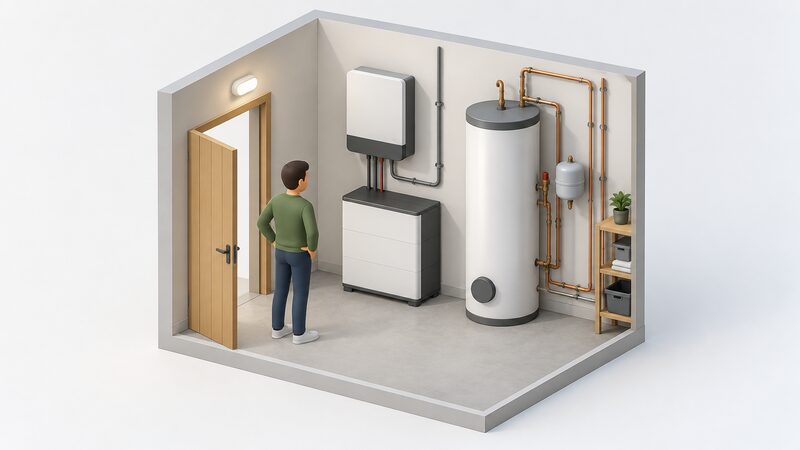
A heat battery is a thermal store that uses a phase change material rather than a large volume of water. A heat battery is smaller than a hot water tank and stores energy in phase change material, which can be used for space heating or hot water when needed21. The material changes state as it charges and discharges, which packs more usable heat into less space than water alone.
The size difference is the headline. Heat batteries can be up to four times smaller than equivalent hot water cylinders4. A separate assessment puts them at a half to a third of the space of hot water tanks of equivalent storage capacity6. The two figures come from different studies and measure different things, one against cylinders and one against tanks of equivalent capacity, but both point the same way.
Official work has settled on a definition. An electric heating appliance that can be used flexibly to utilise periods of cheap and clean electricity generation by heating a thermal storage medium, which then heats water via a heat exchanger to feed a central heating system and/or a sanitary hot water system22. That definition places heat batteries firmly in the electrical family even though they store heat, because the input is electricity.
They are not only for hot water. Heat batteries can heat hot water for your central heating or your taps, and some can be used as a thermal store within a central heating system, typically alongside a heat pump8. Heat batteries may also have a longer lifespan than electrical batteries, which matters for a household comparing lifetime cost rather than purchase price8.
A case study shows the space argument in practice. A couple decided to install a heat battery instead of a hot water cylinder since they were concerned that there was not enough space in the flat, and it was installed in the utility room21. They were both happy with the heat battery as it provides enough hot water to meet their needs21. That is the trade: less volume, and a store sized to the household rather than to the cylinder it replaced.
Space and size: how the two options compare in a real home
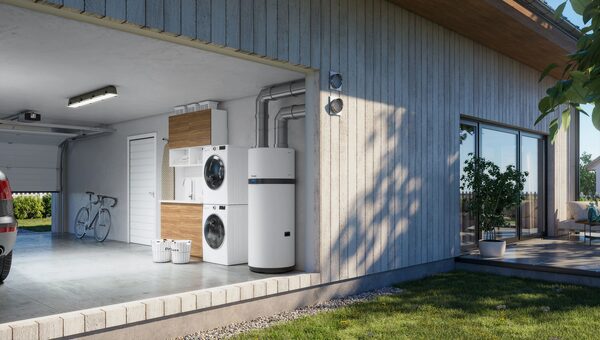
Space is where the comparison is usually settled, and the evidence favours the thermal options on volume. Lithium-ion batteries can have roughly double the energy density of water storage, so could be effective in space-constrained homes4. That is the electrical store's advantage: it holds more usable energy per unit of volume than a tank of hot water.
The cylinder's problem is not density but bulk. Nearly half of those surveyed reported that they did not have the space for a hot water tank in their home5. That finding comes from able-to-pay retrofit research, so it describes households with the means to consider a cylinder rather than the whole housing stock, but the constraint is familiar across UK housing.
Heat batteries narrow the gap further. The cost is similar to a heat battery, but the volume is smaller, in a comparison of a Tesla Powerwall against a heat battery6. In other words, an electrical battery and a heat battery can cost broadly the same while the electrical unit takes less room, which complicates the simple claim that thermal storage always wins on space.
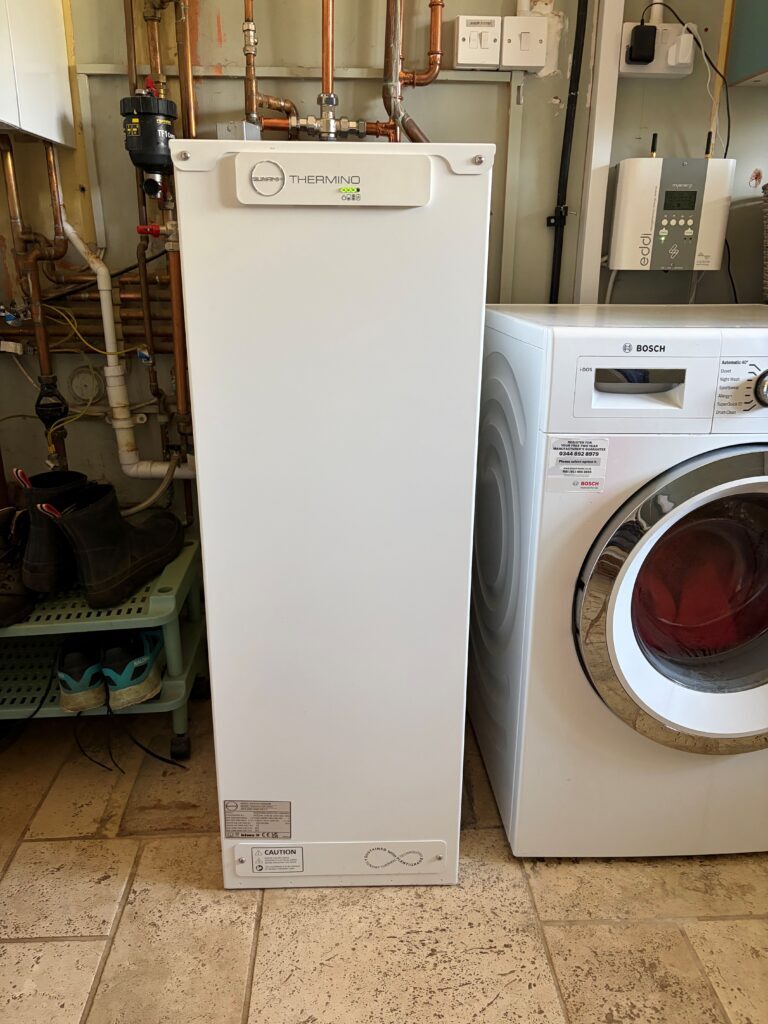
Installation location matters as much as footprint. When a cylinder is replaced, it may move: in one case study the tank is now in their garage, whereas previously it was located in a cupboard upstairs23. A garage or utility room can absorb a cylinder that would never fit in an airing cupboard, and solar water heating guidance notes that a hot water cylinder is needed, ideally inside the home but a garage or similar space can work24.
In-line heaters offer a third route where there is no tank at all. They can be used with or without hot water tanks but are more often used when there are space constraints, meaning there is no tank25. That removes the store entirely, which solves the space problem by giving up the storage benefit.
| Store | Form of energy | Typical space claim | Best suited to |
|---|---|---|---|
| Home battery | Electricity | Roughly double the energy density of water storage4 | Any circuit, EV charging, heat pump shifting |
| Hot water cylinder | Heat in water | Nearly half of surveyed households lacked space5 | Hot water for taps, showers and baths |
| Heat battery | Heat in phase change material | Up to four times smaller than equivalent cylinders4 | Space-constrained homes needing hot water |
| Thermal store or buffer tank | Heat in water | Large, well-insulated cylinder13 | Wood-fuelled and some heat pump systems |
Using a well-insulated tank as your energy store
A well-insulated tank is a genuine energy store, and its performance depends almost entirely on insulation and on how the heat gets in. Heated water is usually stored in a large, well-insulated cylinder often called a buffer or accumulator tank, and a wood-fuelled system can store hot water for days if properly insulated13. Days, not hours, is the figure that makes a cylinder competitive with a small battery for hot water duty.
The heat source determines when the store can be filled cheaply. For homes with a hot water cylinder, there is the potential to use off-peak electricity for heating and storing hot water to balance the energy supply26. That is the same logic as charging a home battery overnight on a time of use tariff, applied to a thermal load instead of an electrical one.
Solar thermal is the other filling route. Solar water heating uses energy from the sun to heat water for your home through roof-mounted collectors, and it is also known as solar thermal27. It can be used in the home or for larger applications, such as swimming pools28. Along with solar collector panels on your roof, you will need a hot water cylinder24.
The limits are real. Since the amount of sunlight varies throughout the year, solar water heating won't give you 100% of your hot water needs, and it is best used alongside your boiler or an immersion heater to make up the difference15. Solar water heating systems are designed to provide the hot water you use for bathing, showering and hot taps rather than 100% of your household's hot water3. Solar water heating also works well with heat pumps because together they provide efficient water and space heating, at a more expensive cost20.
For independence, a well-insulated tank does something a battery cannot: it stores heat for days at almost no standing loss, using a vessel that costs far less per unit of stored energy than a lithium-ion pack. What it cannot do is cover the rest of the house. A household relying on a cylinder alone remains dependent on a heat source, on a boiler or heat pump, and on the grid or a fuel delivery to run it.
Which store fits which household
The fit follows the load. Home battery storage is usually used in combination with solar panels or a smart time of use tariff, or both, which suits households with a meaningful electrical surplus or a cheap overnight window1. Combining solar panels with a home battery lets you store free, renewable electricity to power your heat pump, making you less reliant on grid electricity10. That is the strongest case for the electrical store: it serves every load, not just one.
A hot water tank fits where hot water is the dominant flexible load and where a heat pump or solar thermal is planned or present. A heat pump installation requires a hot water tank, often replacing one removed for a combi boiler after 200516. Eight respondents proposed that domestic hot water storage should be included for future proofing heat pump installation, and four proposed it be required where it does not currently exist, in a Welsh Government consultation on Part L and Part F29. The direction of policy is toward cylinders, not away from them.
A heat battery fits where space rules out a cylinder. A heat battery is smaller than a hot water tank and stores energy in phase change material21. It suits flats and small homes where nearly half of comparable households report no space for a tank5.
The sequence question has a practical answer. If a heat pump is coming, the cylinder comes with it, and a home battery can follow to shift the electricity that runs it. If the household has solar and wants to cut evening imports across all loads, the battery comes first and the cylinder can wait. Where both are wanted, the electrical store is the more flexible purchase and the thermal store the more specific one.
Sources30 cited
- Battery storage, Energy Saving Trust, 2026-08-19
- Air source heat pumps, Energy Saving Trust, 2026-07-16
- Hot water guide, Uswitch, 2025-01-31
- The suitability of clean heating options for challenging dwelling types, ClimateXChange, 2024-09-20
- Able to Pay retrofit research executive summary, Bristol City Council, 2022-07
- Existing and future technologies for retrofitting the UK housing stock, CREDS, 2021-06-08
- Solar battery storage guide: is a home battery worth it?, The IAA, 2026-09-20
- Storing energy, Energy Saving Trust, 2026-07-15
- Extending permitted development rights in Scotland: sustainability appraisal, Scottish Government, 2019-06
- How to ensure a heat pump runs efficiently, Energy Saving Trust, 2026-05-19
- Our response to the Treasury's consultation on VAT relief for energy saving materials, Energy Saving Trust, 2025-10-08
- Energy Company Obligation ECO guidance 2022-2026, Department for Business, Energy and Industrial Strategy, 2022-07
- Thermal energy stores, Energy Saving Trust, 2025-05-15
- Domestic RHI guide to metering, Ofgem, 2026
- Boilers, Energy Saving Trust, 2026-05-20
- Seven reasons we still need heat pump subsidies, Nesta, 2025-11-20
- Summary of findings from heat pump flexibility expert workshop, CREDS, 2023-10-04
- Air source heat pump, MCS Certified, 2026-07-24
- Water source heat pumps, Energy Saving Trust, 2024-04-24
- Renewable heating: what are the options for your home, Energy Saving Trust, 2024-03-01
- Michael and Joan's air source heat pump, Energy Saving Trust, 2022-04-20
- Delivering a smart and secure electricity system: implementation, Department for Energy Security and Net Zero, 2024-05-08
- Stephen, Dina and Layla's air source heat pump, Energy Saving Trust, 2024-03-11
- Solar water heating, Energy Saving Trust, 2026-05-20
- Research on electricity network constraints: 2024 new build heat standard, Scottish Government, 2021-10-07
- Hybrid heat pumps guidance, HHIC, 2026-09-17
- Solar thermal water heating, Planning Portal, 2026-09-17
- Self-build homes: sustainability, Planning Portal, 2026
- Part L and Part F review stage 2a: government response, Welsh Government, 2021-10
- The UK government resilience action plan 2026 implementation report, UK Government, 2027
 Whole-Home Energy DesignHeating and hot water use more energy than anything else at home, so that choice shapes everything.
 The Full Home Batteries GuideA home battery stores cheap or solar power for later, but will it really cut your bills enough to be worth it?
 Home Battery Install StatisticsHow many homes in the UK actually have a battery, and is that number growing quickly?
 Batteries by Home TypeLooks at how house type, occupancy pattern, electrical supply and available space change what storage can achieve, from flats and terraces to rural and off-grid properties.
 Phase-Change Heat StorageA heat battery that melts and freezes a special material can hold several times more heat than a hot water cylinder of the same size.
 Solar DivertersYour panels often make more electricity than your home needs.