
In this comparison
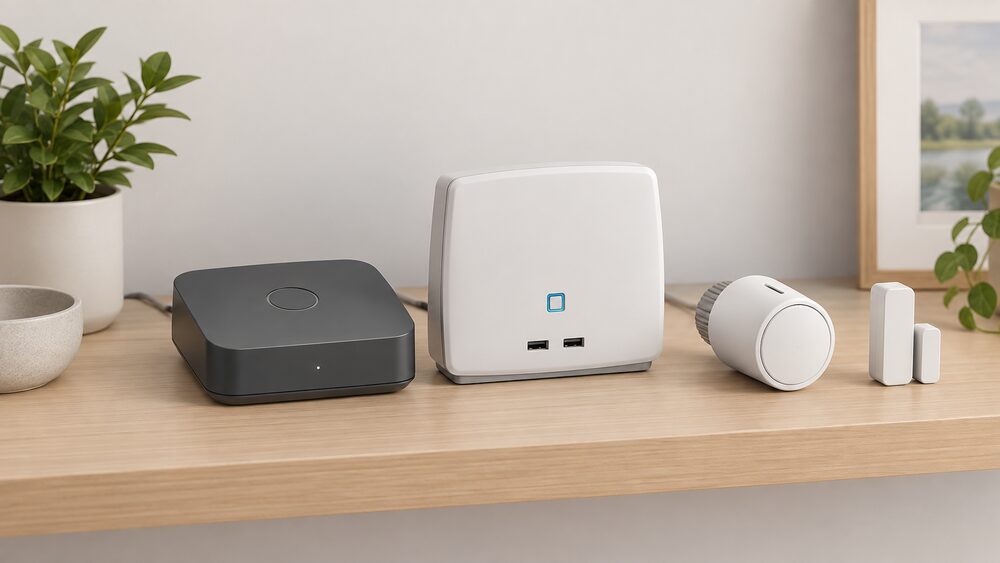
Bosch Smart Home and Homematic IP are two hub-based home energy management platforms sold in the UK, and the choice between them turns less on sensors than on where the intelligence sits. Homematic IP is the broader system: its Home Control Unit supports up to 350 devices, including a maximum of 120 wireless products, and the brand describes itself as the European market leader1. Bosch Smart Home is the more curated one, built around a controller and app that tie into Bosch's own heating controls and into Apple HomeKit, Amazon and Google Home3.
The decisive difference for a household is cloud dependence. Homematic IP's Home Control Unit has an offline mode that works independently of the Homematic IP Cloud and needs no internet connection, with all control commands and automation routines stored and executed locally2. The cheaper Access Point does not: the Heating Starter Set basic states that its Access Point requires an active internet connection via Wi-Fi5. Bosch's controller needs an active internet connection for initial setup to download software updates6.
Both systems claim heating savings of up to 33 percent, and both qualify that claim heavily. Homematic IP attaches it to the use of window and door contacts and to user behaviour, building conditions and the heating system7. Bosch frames its saving as depending on usage, the building and the connected devices8. Neither figure is a guarantee, and neither is verified by an independent body in the material available.
Bosch Smart Home and Homematic IP at a glance
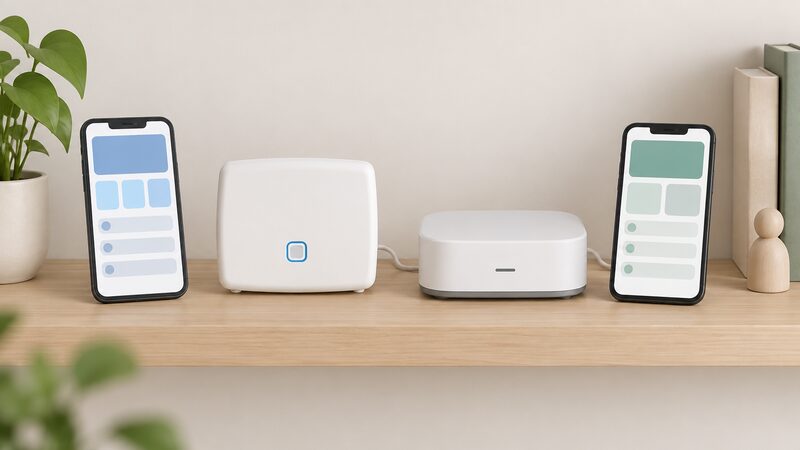
The two platforms share a shape: a mains-powered hub, a phone app, wireless battery devices and a cloud account. They diverge on how much of the system keeps working when the internet does not.
Homematic IP's Home Control Unit is the fuller hub. It supports up to 350 devices, including a maximum of 120 wireless products, carries two USB host ports, runs on 100 to 240 VAC at 50 Hz, and is rated IP202. It can be used together with the CCU3 to integrate older Homematic devices, and with the Homematic IP Wired Access Point to control wired devices, so it spans both the current and previous generations of the range2. Its anthracite variant carries the same device ceiling and the same German server location10.
Bosch Smart Home's controller is the pivot of that system. Initial setup requires an active internet connection to download software updates, and transferring data to a Controller II requires the old controller running the latest software, both controllers and the smartphone on the same network, VPN disabled, and the system password6. Bosch's app does not support beta versions of iOS or Android11.
Both systems are wireless at the device level. Homematic IP's starter sets, wall thermostats, radiator thermostats, window handle sensors and smart meter interface all list wireless connection5. Bosch's devices pair to the controller and app rather than to each other.
Range: more than 80 Homematic IP devices against Bosch's curated set
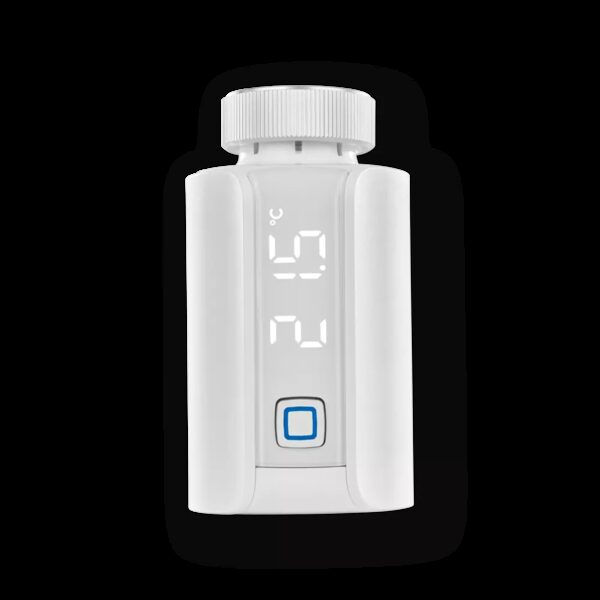
Homematic IP's range is the wider of the two by a distance. The Home Control Unit's 350-device ceiling and 120-wireless limit describe a system designed to be built out room by room2. The catalogue covers heating, switching, metering, sensing and outdoor use: radiator thermostats, wall thermostats with humidity sensing, glass wall thermostats including a CO2-sensing variant, a Multi IO Box, a switching and measuring cable rated IP44 for outdoor use, window and door contacts, a window handle sensor, pluggable switches and meters, and flush-mounted switching actuators12.
Bosch Smart Home's set is smaller and more deliberately curated. The Smart plug compact extends the range of the Radiator Thermostat II, Light/Shutter Control I, Smoke Detector II and Door/Window Contact II and II Plus3. Bosch's individual room thermostats offer multi-zone control in combination with the Bosch EasyControl, for systems with radiators or water-based underfloor heating21. One limit is worth noting: the Bosch Smart Home Room thermostat II 230 V is not compatible with Bosch EasyControl, and a connection is currently not possible for technical reasons23.
| Homematic IP | Bosch Smart Home | |
|---|---|---|
| Hub device ceiling | Up to 350 devices, maximum 120 wireless2 | Not stated in the material available |
| Older-generation support | CCU3 integrates Homematic devices; Wired Access Point controls wired devices2 | Not stated |
| Smart meter interface | Yes, optical sensor on the meter9 | Not stated |
| Outdoor-rated device | Switching and Measuring Cable outdoor, IP4416 | Not stated |
| Heating control | Radiator and wall thermostats, starter sets5 | Individual room thermostats with EasyControl21 |
| Voice assistants | Alexa and Google Assistant14 | Alexa, Google Assistant and Apple HomeKit3 |
For a household, the range question is really a question about how far the system will be extended. A home that wants to add metering, outdoor switching or a CO2 sensor has more to work with in Homematic IP. A home that wants a small, Bosch-branded set tied to Bosch heating hardware has enough in the Bosch range.
Heating and energy saving: where each system claims its gains
Both makers put a 33 percent figure in front of buyers, and both attach conditions that matter more than the number.
Homematic IP's claim appears across its heating pages: up to 33 percent energy savings on the Heating Starter Set basic, up to 33 percent of heating costs on the radiator thermostat basic and compact plus, and up to 33 percent of heating energy on the wall thermostat with humidity sensor5. The conditions are consistent: in combination with window and door contacts and depending on user behaviour, building conditions and heating system7. The mechanism the maker describes is demand-based heating profiles and intelligent window-open detection, which it says can reduce heating costs immediately and noticeably1. Smart radiator thermostats can be adjusted manually at the thermostat, via the app and by voice command, with programmable heating profiles per room, remote access, open-window detection and holiday mode25.
Bosch's saving claim is framed differently. Bosch states that adjusting the home for comfort only when it is in use can reduce energy consumption, depending on usage, the building and connected devices8. Its individual room thermostat integrates with smart scenarios for comfortable heating and energy saving through IFTTT, and offers multi-zone control with the EasyControl21. For underfloor heating, Bosch advises scheduling heating profiles to start in advance, typically one to two hours earlier23.
Neither figure is an independent measurement. Both are maker claims, both are conditional, and neither should be read as a prediction for a particular house. What the systems actually do for independence is narrower and more solid: they let a household see and schedule heating room by room, and they can cut the heat when a window opens. That is control over gas or electricity use, not independence from the fuel itself.
"Saving you up to 33 %* of valuable heating energy."
Security and data handling: encryption, certification and server locations
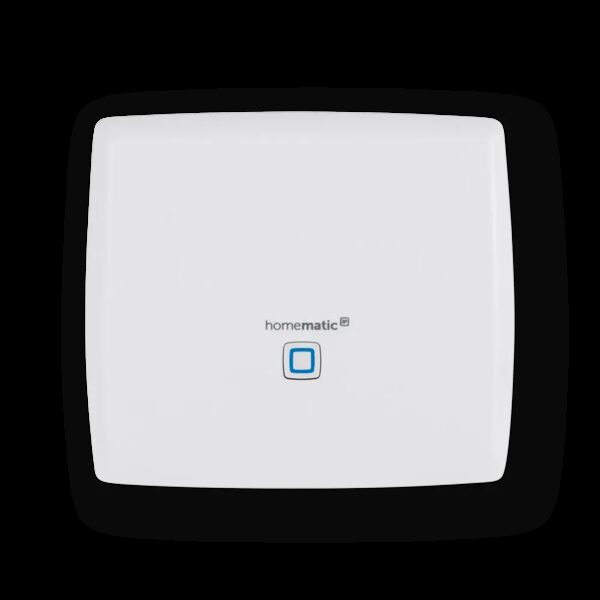
Homematic IP's data story is the more explicit of the two. The system operates without collecting personal data and uses server locations in Germany1. Communication between the app, the cloud and devices is secured with AES-128 encryption, and the brand states that its VDE certification confirms tested protection mechanisms against unauthorised access for IT security in residential and commercial properties1. The Home Control Unit keeps its server in Germany and requires no registration or user account, and in offline mode all settings, measurement data and automations are saved locally2.
Individual Homematic IP product pages repeat the same privacy line: no personal data is collected except for the IP address9. The Homematic IP Cloud operates exclusively on German servers7.
Bosch Smart Home's published material is thinner on encryption and certification. What it does show is a system that depends on a controller and app, with device-level integration into Apple HomeKit, Amazon and Google Home requiring the Bosch Smart Home Controller and the Bosch Smart Home App on iOS or Android3. Bosch's Smart plug compact can also be controlled through Alexa, Google Assistant and Apple HomeKit3.
For a UK household, the practical reading is this: Homematic IP publishes where its servers are and what it encrypts, and offers a hub that can run without the cloud at all. Bosch publishes compatibility and function, and its independence from third-party clouds is limited by its reliance on HomeKit, Alexa and Google for voice control. Neither system removes the household's dependence on a manufacturer's account, app and firmware pipeline.
Cloud dependency and firmware updates: what the certificate change means for camera and doorbell owners
The clearest dated event in either system concerns Homematic IP's cameras. An update to the cloud security certificate on or after 20 September 2026 will require a firmware update for the Homematic IP video doorbell and rechargeable outdoor camera7. Owners of those two devices should expect to apply it; the change is tied to the cloud certificate rather than to the wider device range.
Firmware handling differs between the platforms. Bosch's Smart plug compact requires firmware updates to be performed manually, with a notification arriving in the MessageCenter of the Bosch Smart Home App3. Homematic IP's app updates arrive through the app stores: version 2.4.0 on iOS or 2.4.3 on Android can be updated there if automatic updates are off7. The Home Control Unit's system transfer assistant needs app version 3.4.7 or later, and moves devices, groups, automations and the last 12 months of measurement data from an Access Point within minutes2.
Homematic IP has also dated its next control feature. The control technology certification applies exclusively to smart Homematic IP radiator thermostats featuring control algorithm 2.0, which is expected to be made available via a free firmware update from the end of October 202627. Camera features are scheduled further out: five features including custom alarm zones, doorbell group integration, door opening from live view, room view access and adjustable outdoor camera light brightness are listed for a Q4 2026 app update, with central private mode control, central alarm notification management and a multi-view of up to four live feeds listed for Q2 20277.
The independence question here is blunt. A cloud certificate change can force a firmware update on a device in your home, and a feature you have bought can arrive months after the hardware. Homematic IP's offline mode on the Home Control Unit is the strongest counter to that in either system, because control commands and automations run locally2. The Access Point does not offer it5.
Smart meter connection and what each system can measure
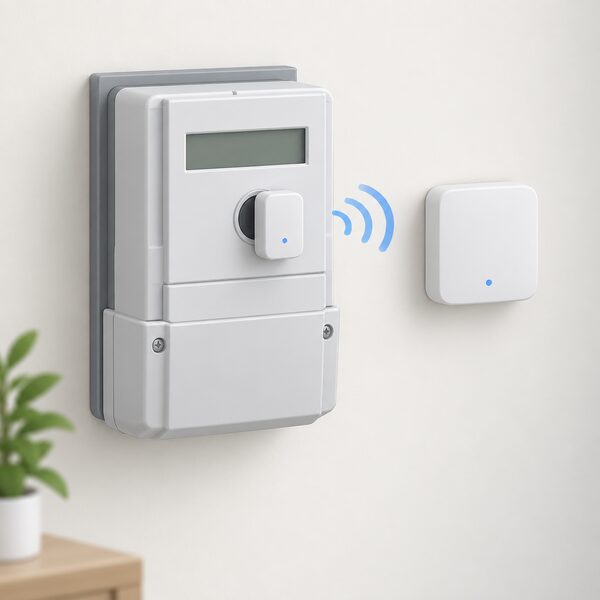
Homematic IP connects to the meter directly. Its interface for smart meters attaches magnetically to the optical data interface of the smart meter and connects wirelessly, with a typical battery life of five years and an operating temperature range of 5 to 35 degrees Celsius9. It requires one of three things to operate: a Homematic IP Access Point with the free app and cloud service, a CCU3 central control unit with a local WebUI, or a partner solution from a third party9. That third option is the one that matters for a household that wants meter data to stay in the home.
Homematic IP also meters at the socket and the circuit. The pluggable switch and meter connects wirelessly and pairs by Push-to-Pair, and a wall-mounted remote control with two buttons allows direct switching without a smartphone19. The flush-mounted switching actuator and meter also connects wirelessly20. Push-to-Pair itself works without the Homematic IP app, connecting and controlling up to five devices directly29.
Bosch Smart Home's metering is narrower in the published material. The Smart plug Plus features power metering as well as the integration of electric heaters3. Bosch's room thermostats handle heating zones rather than whole-house electricity measurement21.
For a household pursuing energy independence, the distinction is between measuring the meter and measuring the appliance. Homematic IP does both, and its smart meter interface can be run through a local CCU3 rather than the cloud9. Bosch's system measures at the plug and controls heating, and its published material does not describe a smart meter interface. A household wanting its own meter data has more to work with in Homematic IP, and more still if it pairs that with a consumer access device or a local data route.
Voice control, BMW integration and app features
Both systems lean on third-party voice assistants, which is itself a form of dependence.
Bosch Smart Home states that control of the system from a BMW is supported, and that BMW supports Siri, Alexa and Google Assistant through Apple CarPlay, Amazon Alexa Car Integration or Android Auto8. Through the assistant, devices, scenarios, heating, lights, shutters, smart plugs and window and door status can be controlled8. Bosch devices including the Smart plug compact and the Door/Window Contact II work with Alexa, Google Assistant and Apple HomeKit, given the Bosch Smart Home Controller and app3.
Homematic IP supports Amazon Alexa and Google Assistant across its range, including the glass wall thermostat, the glass wall thermostat with CO2 sensor, the wall thermostat with switching output, the wall thermostat with humidity sensor, the radiator thermostat basic and the Home Control Unit in online mode14. The Home Control Unit can also integrate gateways from other manufacturers such as Alexa, Google Assistant or Philips Hue10.
| Feature | Homematic IP | Bosch Smart Home |
|---|---|---|
| Alexa | Yes14 | Yes3 |
| Google Assistant | Yes14 | Yes3 |
| Apple HomeKit | Not stated | Yes3 |
| Car integration | Not stated | BMW via Siri, Alexa or Google Assistant8 |
| Local control without app | Push-to-Pair, up to five devices29 | Not stated |
The pattern is consistent across both: the hub is the maker's, the voice layer is someone else's. A household that wants voice control accepts that dependence; a household that wants to avoid it can use Homematic IP's Push-to-Pair for small direct setups or its offline mode on the Home Control Unit2.
Where each system falls short
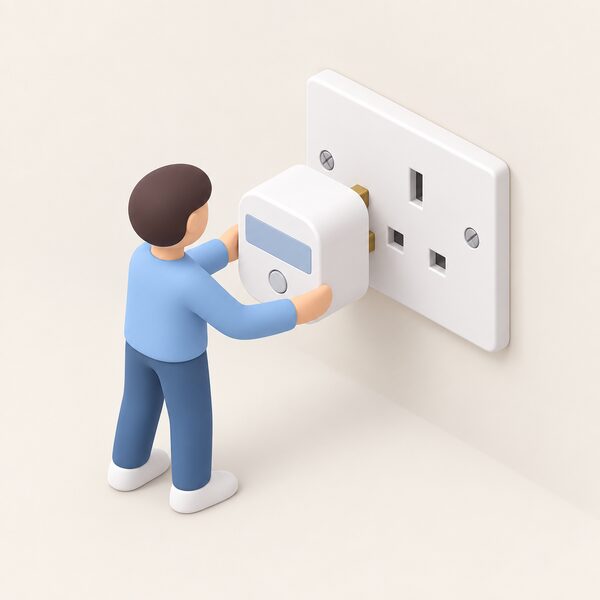
Homematic IP's limits are the Access Point's cloud requirement and the camera firmware event. The Heating Starter Set basic states that its Access Point requires an active internet connection via Wi-Fi, so the cheapest entry point is the least independent5. The video doorbell and rechargeable outdoor camera need a firmware update once the cloud security certificate changes on or after 20 September 20267. Feature dates slip: custom alarm zones and multi-view are listed for Q4 2026 and Q2 2027 respectively, not for now7.
Bosch Smart Home's limits are compatibility and setup. The Room thermostat II 230 V is not compatible with Bosch EasyControl, and a connection is currently not possible for technical reasons23. Initial setup of the Controller II requires an active internet connection to download software updates, and data transfer to a new controller requires the old one on the latest software, both controllers and the phone on the same network, VPN disabled and the system password6. The app does not support beta versions of iOS or Android11. Firmware updates on the Smart plug compact must be performed manually3.
Neither system is a route to independence from the grid, a supplier or gas. Both are control and monitoring layers over energy a household still buys. What they change is how much of that use a household can see, schedule and switch locally, and how much of the system keeps working when the internet or a manufacturer's cloud does not. On that measure, Homematic IP's Home Control Unit is the more independent hub of the two, and its Access Point is not.
Sources30 cited
- What is Homematic IP, Homematic IP, 2026
- Home Control Unit, Homematic IP, 2026
- Smart plug compact help, Bosch Smart Home, 2026-09-20
- Door/window contact II help, Bosch Smart Home, 2026-09-20
- Heating Starter Set basic, Homematic IP, 2026
- Smart Home Controller II help, Bosch Smart Home, 2026-09-20
- Homematic IP FAQs, Homematic IP, 2026
- BMW compatibility, Bosch Smart Home, 2026-09-20
- Interface for smart meters, Homematic IP, 2026
- Home Control Unit, anthracite, Homematic IP, 2026
- Technical requirements for the system, Bosch Smart Home, 2026-09-20
- Radiator thermostat basic, Homematic IP, 2026
- Wall thermostat with humidity sensor 2, Homematic IP, 2026
- Glass wall thermostat, Homematic IP, 2026
- Glass wall thermostat with CO2 sensor, Homematic IP, 2026
- Switching and measuring cable outdoor, Homematic IP, 2026
- Window and door contact optical, Homematic IP, 2026
- Window handle sensor, Homematic IP, 2026
- Pluggable switch and meter, Homematic IP, 2026
- Switching actuator and meter, flush mounted, Homematic IP, 2026
- Bosch smart individual room thermostat, Worcester Bosch, 2026-09-17
- Bosch smart individual room thermostat 24V, Worcester Bosch, 2026-09-17
- Room thermostat II 230 V help, Bosch Smart Home, 2026-09-20
- Radiator thermostat compact plus, Homematic IP, 2026
- Hydraulic balancing, Homematic IP, 2026-09-17
- Control heating, Homematic IP, 2026-09-18
- Save money, Homematic IP, 2026-09-18
- Pluggable switch and meter, anthracite, Homematic IP, 2026
- Push-to-Pair, Homematic IP, 2026
- Multi IO Box, Homematic IP, 2026
 Smart Home Hubs for EnergyHow a smart home hub joins Zigbee, Thread and Matter devices, runs schedules and automations, and whether it keeps working without internet access.
 How a Smart Meter WorksHow a British smart meter measures gas and electricity, how the in-home display and the DCC's secure network fit together, what data leaves the house, what it costs, and where smart mode goes wrong.
 What a HEMS DoesWhat does a home energy management system actually do, and is it worth having one?
 Can a Smart Meter Be Hacked?Can someone break into your smart meter, see your personal details or switch off your power?
 Smart Plugs and MonitoringWhich appliances are worth putting a smart plug on, and will it really show you what each one costs to run?
 How Smart Meters CommunicateSmart meters send readings without using your home wifi or broadband, so they still work if your internet goes down.