In this guide
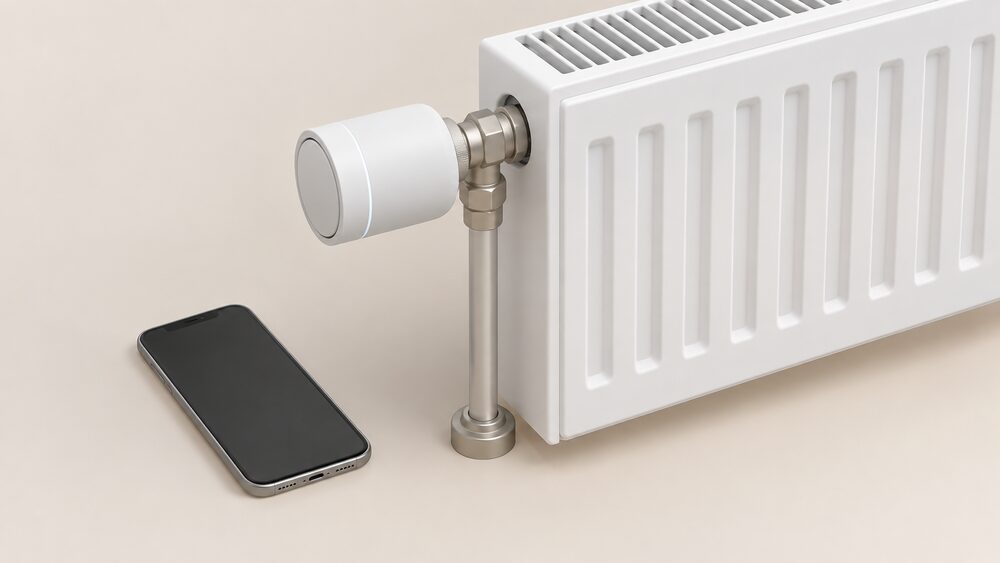
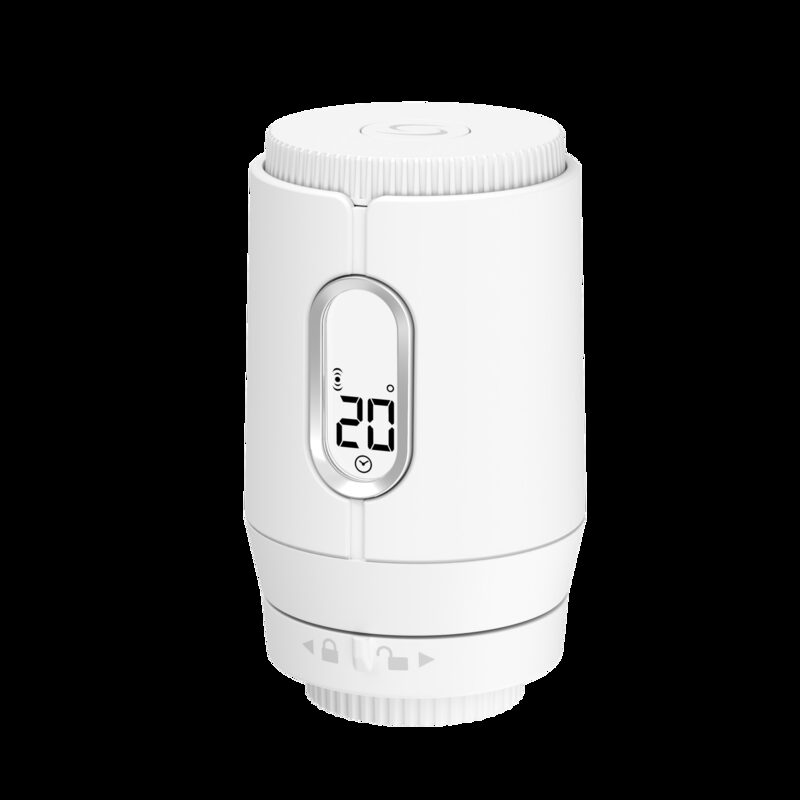
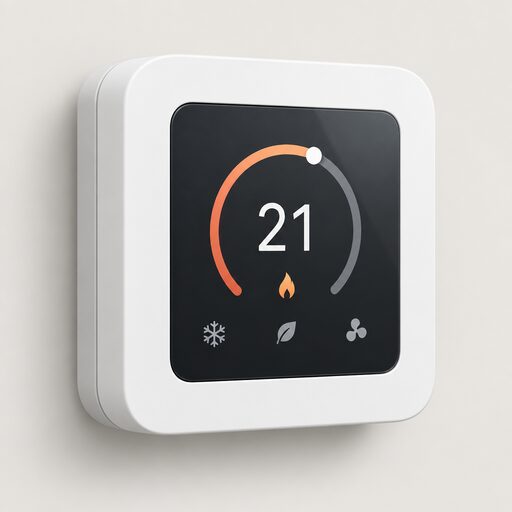
A smart TRV is a battery-powered, motorised thermostatic radiator valve head: the initials stand for smart thermostatic radiator valve1. It replaces the twist-and-guess head on a radiator's thermostatic valve body with an electronic one that holds a target temperature, follows a schedule, and reports back to an app or a hub. Like a mechanical TRV it works by throttling the hot water flowing into that radiator, but it decides when to do so from a sensor and a programme rather than from a wax capsule alone2. Most connect to a home network so the room can be adjusted from a phone, and several will monitor a single radiator's temperature and energy use as well as change its setting remotely3.
The practical effect is room-by-room zoning on a heating system that has only one zone. A typical UK house has one room thermostat governing the whole of the wet circuit; smart TRVs let a bedroom run a different schedule from a living room without any new pipework or wiring. Savings claims vary widely and mostly come from manufacturers: tado° puts smart TRVs at an additional 10 to 20 per cent on heating costs over basic control4, Fuse Energy cites estimates of up to 15 to 20 per cent against a system with no zonal control5, and Drayton claims as much as 30 per cent for a full upgrade from a basic non-programmable thermostat6. Independent figures are lower and narrower in scope: the Energy Saving Trust puts TRVs added to a system that already has a programmer and thermostat at £30 a year in Great Britain and £40 in Northern Ireland7.
On cost, Which? found smart radiator valves typically cost between £35 and £80 each, about five times a traditional TRV, as of September 20268. That is per radiator, before any hub, so the arithmetic scales quickly in a house with ten radiators. And a smart TRV never removes the dependencies that matter most: the boiler or heat pump, the fuel supply, the manufacturer's hub and app, and in many cases a cloud account.
What a smart TRV controls, and what it does not
A smart TRV controls one radiator. It carries an electronic sensor that regulates the room temperature to a programmed schedule3, and it throttles hot water flow into that radiator once the target is reached, exactly as a mechanical TRV does12. What it does not control is the heat source. The boiler or heat pump still needs a call for heat from a room thermostat, programmer or appliance control; a set of radiator heads closing in every room while the appliance fires is a recipe for short cycling rather than saving.
That division explains why smart TRVs are sold as an addition to a system rather than a replacement for it. Netatmo describes a connected system as switching off the heat in the main room as soon as the desired temperature is reached, leaving the TRVs to fine-tune settings elsewhere3. Bosch positions its smart radiator thermostats the same way, as individual room control working with the EasyControl thermostat13.
Regulation reinforces the pairing. Viessmann states that Building Regulations require every radiator on a wet central heating system to have a TRV, apart from those in the same area as a room thermostat14, and the Planning Portal states that any new radiator installed will require a thermostatic radiator valve to be installed15. Leaving one radiator without a head, in the room with the main thermostat, is also the conventional way of retaining a path for flow. tado° describes the same practice: fit TRVs on all radiators except one in the room with the main thermostat, or leave one radiator without a TRV to act as a bypass and prevent boiler cycling4.
For the household, the independence gain is real but bounded. Rooms that are not in use stop being heated to living-room temperature, which cuts fuel demand. The system still depends on the gas or electricity supply, on the appliance, and on the control manufacturer continuing to run its hub and app.
Zoning, schedules, remote access and learning
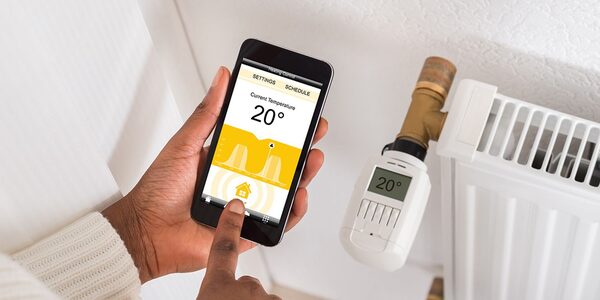
The feature set is broadly consistent across brands, with differences in how much runs locally. Smart TRVs remove the need to adjust anything by hand, because scheduling is done remotely and multiple devices give room-to-room control12. They allow individual rooms or zones to be controlled through a smartphone app1, and Drayton states its heads connect to a home Wi-Fi network so they can be operated by app or by a voice assistant such as Alexa or Google Assistant16.
Beyond schedules, three behaviours matter in practice:
- Learning and prediction. Some smart TRVs learn household habits and the home's thermal performance, and over time predict when to adjust settings1.
- Weather response. Some adjust temperatures based on weather conditions1.
- Open window detection. Drayton states the Wiser Radiator Thermostat (2nd Generation) can automatically reduce heating when a window is left open9.
Reporting is the other half of the value. Drayton states that Wiser smart TRVs provide usage data straight to the smartphone app17, which is what turns a schedule into something a household can check and correct. Commissioning is generally wireless pairing, then naming the device (for example "Living room") and setting up a schedule16.
The caution is dependence. Remote access, voice control and learning all route through a manufacturer's app and, usually, its servers. Local control at the dial remains, and Drayton states Wiser heads can be managed by app, voice, preset schedules or manual control16, but the automation layer is not owned by the household. That trade-off is covered further under heating controls and energy independence.
How much a smart TRV saves: the claims and the evidence
The honest answer is that the range is wide and the strongest numbers come from manufacturers. tado° states smart TRVs typically save an additional 10 to 20 per cent on heating costs through intelligent automation and remote access4. Fuse Energy puts proper use of ordinary TRVs at around 10 per cent, with estimates of up to 15 to 20 per cent overall against a system with no zonal control5. Drayton claims as much as 30 per cent on annual heating bills when upgrading from a basic Class I non-programmable thermostat with no multi-room control to a smart thermostat with smart TRVs6, and cites up to 19 per cent for adding radiator thermostats to an existing Wiser system, with the 30 per cent figure attributed to BEAMA and Salford University research from 20219.
Independent figures sit lower. The Energy Saving Trust is quoted at savings of around £75 a year for a smart thermostat18, and separately puts TRVs added to a system that already has a programmer and thermostat at £30 a year in Great Britain and £40 in Northern Ireland7. That Northern Ireland difference reflects fuel costs and is worth noting for anyone budgeting there.
| Claim | Figure | Who says it |
|---|---|---|
| Smart TRVs vs basic control | extra 10 to 20% on heating costs | tado°, maker4 |
| Zonal control vs none | up to 15 to 20% | Fuse Energy, maker5 |
| Full smart upgrade from Class I thermostat | up to 30% of annual heating bills | Drayton, maker6 |
| Adding radiator thermostats to a Wiser system | up to 19% of annual energy bills | Drayton, maker9 |
| TRVs added to existing programmer and thermostat | £30/yr GB, £40/yr NI | Energy Saving Trust, independent7 |
| Smart thermostat | around £75/yr | Energy Saving Trust, cited by CPA18 |
The gap is not dishonesty so much as different baselines. A 30 per cent figure compares a smart system against the worst common alternative, a single non-programmable thermostat in a house with no room control. A £30 figure compares TRVs against a home that already has a programmer and a room thermostat. A household that already zones by habit, turning off unused rooms, should expect the lower end. Whether the payback works at £35 to £80 a head8 depends entirely on which baseline the home starts from. Do smart heating controls actually save money? takes the question further.
Smart TRVs and heat pumps: where setback on every radiator goes wrong
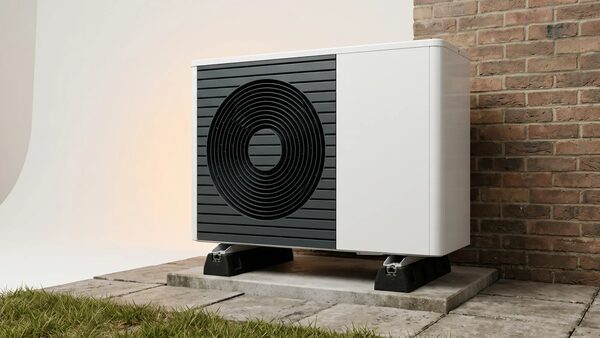
This is the single most important limitation on the page. BEAMA's Salford Energy House testing of air source heat pumps with TRVs found that using smart TRVs on all radiators to provide a setback between heating periods significantly increased heat pump cycling11. The same testing programme is cited by Drayton as delivering 6 to 8 per cent energy savings without impacting heat pump performance19, so TRVs themselves are not the problem: the problem is closing most of the emitter circuit at once while the pump is trying to run at low flow temperature.
The recommendation that follows is explicit.
"A whole house setback period should be programmed using the heat pump controller, rather than smart TRVs on all radiators."
Two pieces of hardware support that. BEAMA states that a volumiser and automatic bypass valve should be installed alongside an air source heat pump where TRVs are used11. On the control side, ClimateXchange describes the Scottish retrofit pattern as constant running with minimal setback, for example to 18 degrees Celsius, particularly in solid wall homes with radiator upgrades20. A deep overnight drop on every radiator is the opposite of that.
There is an equivalent rule for boilers. A smart TRV in the same room as the main thermostat makes the two controls compete: Which? states temperature-limiting valves should not be used in the room where the main boiler thermostat is8, and Hive warns that a thermostat in the same room as a TRV-controlled radiator may never reach its target, leaving the heating on21. Bosch takes the same line, recommending a smart TRV on every radiator for optimum comfort but not on radiators in the room with the EasyControl13. See also why TRVs are often left off heat pump installations.
Wiser, tado°, Aqara and Bosch: which ecosystem fits which home
The ecosystem decision is effectively made when the first head is bought. Which? notes that most smart radiator valves will not work with another manufacturer's smart thermostat and connecting device8, so mixing brands across one heating system is generally not an option.
Wiser (Drayton) is a Zigbee system built around a hub. The Wiser Radiator Thermostat (2nd Generation) is Zigbee certified and compatible with all Wiser hubs, including the 1st Generation HubR, the 2nd Generation HubR and the 2nd Generation Non-relay Hub9. Drayton states Wiser connects with Matter, Amazon Alexa and Google Assistant, and that 2nd Generation Wiser can be integrated with wider smart home ecosystems for automations spanning multiple brands22.
tado° runs on Thread and integrates through Matter23. The tado° Smart Radiator Thermostat X fits directly onto existing thermostatic valves for room-by-room control, and the heads clip on and can work alongside a central thermostat or independently, battery-powered with no wiring4. tado° Room Link syncs the central Smart Thermostat with the radiator thermostats in each room so each room can request heat individually24. tado° states every Smart Thermostat includes remote control, Smart Schedule, smart home and voice assistant integration and Room Link at no additional cost, and that it is compatible with air-to-water, water-to-water and geothermal heat pumps25.
Aqara offers the Radiator Thermostat W600, model WT-A03D / WT-A03E, with an M30 x 1.5 mm threaded connection26, the common European valve thread.
Bosch ties its smart radiator thermostats to the EasyControl thermostat, with the recommendation of a head on every radiator except those in the room with the EasyControl itself13.
| Ecosystem | Radio / standard | Hub needed | Notes |
|---|---|---|---|
| Wiser (Drayton) | Zigbee certified; Matter, Alexa, Google22 | Yes, any Wiser hub9 | Heads add zones to an existing Wiser kit9 |
| tado° | Thread, Matter23 | Room Link syncs heads to the central thermostat24 | Heads can run independently of a central thermostat4 |
| Aqara | Radiator Thermostat W60026 | Per Aqara system | M30 x 1.5 mm thread26 |
| Bosch | Smart TRVs with EasyControl13 | EasyControl13 | Not fitted in the EasyControl's own room13 |
Brand-level detail sits on the Wiser heating controls, tado° smart thermostats and TRVs, Aqara heating controls and Bosch smart home heating controls pages, and the protocol differences on Zigbee, Matter, KNX and Wi-Fi for heating controls.
Cost per radiator, and the whole-house number

Which? found smart radiator valves typically cost between £35 and £80 each as of September 2026, roughly five times a traditional TRV, with the Habi Smart Thermostatic Radiator Head listed at £31 at Screwfix and the tado° Smart Radiator Thermostat at £74.99 at the tado° shop8. Drayton lists the Wiser Radiator Thermostat (2nd Generation) from £59.99, with free delivery over £75 and estimated delivery of 3 to 5 working days27. Drayton has separately promoted 25 per cent off its Smart Radiator Thermostats28. A tado° smart radiator attachment has been quoted at £79.99 as an addition to a thermostat29. All of these are retail prices read in 2026 and change with promotions.
The whole-house figure matters more than the per-head price. The Energy Saving Trust puts adding TRVs to all radiators, where a programmer and thermostat already exist, at around £370, and a full set of programmer, room thermostat and TRVs at around £600 where no controls exist30. Those are conventional TRV figures; at £35 to £80 a head, a smart set in a ten-radiator house sits well above them before any hub is counted.
Costs across the wider control set are gathered on how much heating controls cost.
Installation: valve compatibility, adapters and fitting without draining
The head unscrews and the new one screws on. Drayton states Wiser Radiator Thermostats are supplied with two adaptors providing compatibility with around 90 per cent of UK valve bodies, and that the system should not need draining down where radiators have existing mechanical TRVs10. Elsewhere Drayton states compatibility with over 95 per cent of existing radiator valves9 and, in its radiator guide, 95 per cent, noting that less common valves such as Oventrop, Herz, TA, Giacomini, Markaryd, Ondal and Vaillant may require additional adaptors17. Those two compatibility figures, around 90 per cent and 95 per cent, come from the same maker and are not reconciled; treat the lower one as the safer assumption.
tado° states its Smart Radiator Thermostat is compatible with most thermostatic radiator valves with adapters included as standard31, and that its heads fit onto an existing valve body in minutes with no wiring and no access to the boiler needed23. Salus supplies its RA-ADAPT adaptor with selected TRVs for quick, tool-free installation32. Warmup states the Konekt Wireless eTRV fits all common radiator valves and mounts without draining any water or intervening in the heating system33.
The dividing line is whether the radiator already has a thermostatic valve body. Which? is clear: a smart radiator valve can be installed without a professional if the radiator already has a TRV, but replacing manual valves will likely need a plumber8. Changing a valve body means isolating or draining part of the system, which is a different job in cost and risk.
- Identify the existing valve: thermostatic body with a removable head, or a plain manual wheelhead.
- Check the head thread or the adapter list for the brand chosen, including the less common bodies noted above17.
- Where a thermostatic body exists, remove the old head and fit the new one with the supplied adapter, no draining required10.
- Where only a manual valve exists, the valve body is changed, which is plumbing work8.
- Pair the head wirelessly to the hub, name the room and set a schedule16.
More general guidance sits on installing and replacing heating controls and thermostatic radiator valves.
Specifications that matter: batteries, radio, range and noise
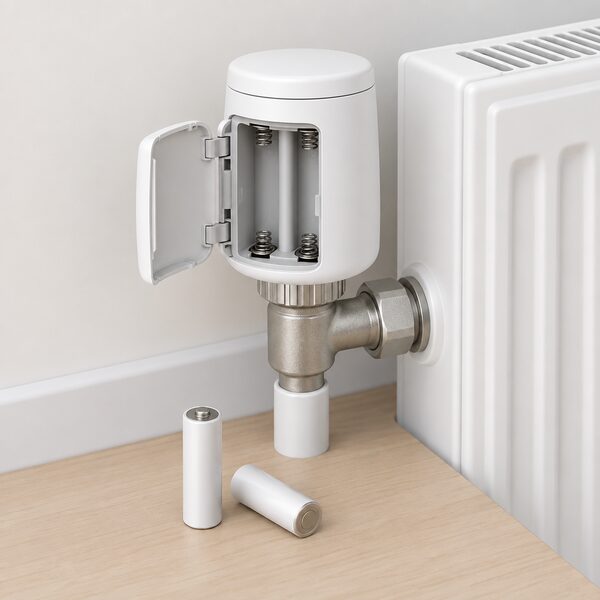
Batteries dominate the ownership experience, because a flat cell in a bedroom head means that room stops being controlled. Drayton states more than two years of battery life for the Wiser Radiator Thermostat (2nd Generation) using the included alkaline batteries under its standard operating conditions, on 2 x 1.5 V IEC LR6 (AA) alkaline or rechargeable 1.2 V IEC HR6 NiMH cells9. SONOFF states up to six months under normal use for the TRV Gen2 on two 2,000 mAh AA alkaline cells34, and typically six months or more for the TRVZB on three AA alkaline batteries, not included35. The spread reflects motor duty, radio and firmware rather than any single specification.
| Specification | Wiser Radiator Thermostat (2nd Generation) | Salus TRV3RF | SONOFF TRVZB |
|---|---|---|---|
| Radio | Zigbee certified9 | Quick installation connection36 | Zigbee35 |
| Battery | 2 x AA alkaline or NiMH rechargeable9 | not stated | 3 x AA alkaline, not included35 |
| Battery life | more than 2 years9 | not stated | typically 6+ months35 |
| Temperature range | 5°C to 30°C adjustable9 | operating 0°C to 40°C36 | not stated |
| Control mode | multiple sensors for accurate temperatures9 | Advanced PI control36 | not stated |
| Noise | quieter operation than previous generation9 | less than 25 dBA36 | not stated |
| Ingress protection | IP309 | not stated | not stated |
| Dimensions | 79.5 mm high, 52 mm diameter9 | not stated | not stated |
| Warranty | 3 year extended warranty when bought direct from the Wiser Online Store9 | not stated | not stated |
Noise is not a trivial specification. A motorised head sits on a radiator in a bedroom and drives several times a day; Salus quotes less than 25 dBA operating noise for the TRV3RF36 and Drayton describes quieter operation for its second generation head9. Control mode matters too: advanced PI control, as on the TRV3RF36, modulates the valve position rather than snapping between open and shut, which is gentler on both comfort and the heat source.
Drayton states its UK technical team is available Monday to Friday, 8am to 6pm, online and by phone, and the Wiser Radiator Thermostat (2nd Generation) carries a customer rating of 4.30 from 314 verified reviews9. Support arrangements and product lifetimes are worth weighing alongside the hardware: see smart heating controls, security, data and product support.
Temperature settings, condensation and the summer months
Smart TRVs are frequently used to hold unoccupied rooms at a floor temperature rather than switching them off entirely, which is a damp question as much as a fuel one. Home Energy Scotland advises keeping a home heated to at least 15 degrees Celsius, particularly during colder months37, while the National Energy Action leaflet on condensation and mould advises keeping temperatures in all rooms in use above 18 degrees Celsius to reduce condensation forming38. The two figures answer different questions: a minimum for an unused room, and a target for an occupied one. Smart Energy GB separately suggests turning TRVs in non-living rooms such as bathrooms, bedrooms and hallways down to the midway point [10 is not the source here; see below].
Over the summer, the valve pin is the concern. Manufacturer guidance is to check the instructions for the specific model, because some models may require battery removal or a specific standby mode to keep them in good working order39. Removing batteries from a head that expects to exercise its pin periodically is not always the right move, which is why the model-specific instruction matters.
Room-by-room targets are set out in more detail on what temperature each room should be and heating schedules, setback and leaving the heating on.
What a smart TRV does for energy independence
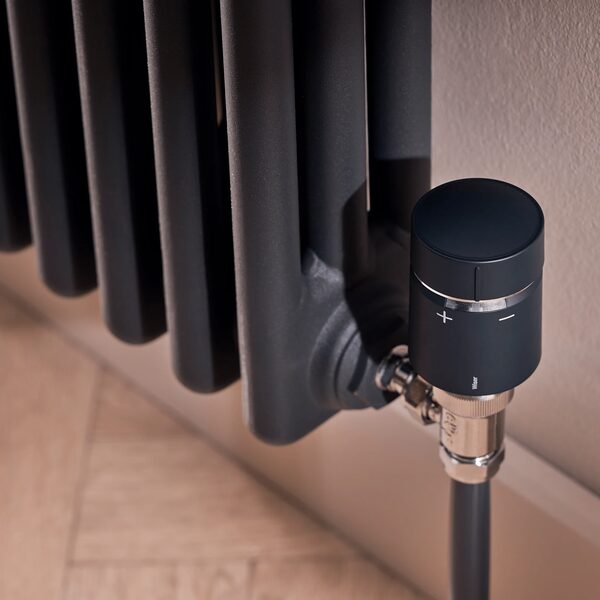
It shrinks demand without touching supply. A household with smart TRVs heats fewer rooms to full temperature for fewer hours, which reduces the gas or electricity drawn, and it gains visibility, since usage data arrives in the app per room17. In a home with one room thermostat, it is the cheapest route to zoning, because it needs no pipework, no zone valves and no wiring: heads clip onto existing valve bodies in minutes with no access to the boiler23.
What it does not do is remove dependence. The heat source, its fuel and its supplier are unchanged. The hub and app belong to a manufacturer, and heads from one brand generally will not talk to another brand's thermostat8. Cloud services underpin remote access and learning. And the head itself depends on batteries that the household must replace, somewhere between six months and two years apart depending on the model35. The gain is control and a modest reduction in consumption, not autonomy.
Sources39 cited
- Understanding smart TRVs, Drayton Wiser, 2024-12-01
- How to turn your radiators off, WarmZilla, 2025-11-04
- Thermostatic tap comfort guide, Netatmo, 2026-09-20
- Radiator thermostat guide, tado°, 2026-07-07
- Thermostatic radiator valve guide, Fuse Energy, 2026-06-30
- UK energy prices rise: what it means for you, Drayton Wiser, 2025-04-01
- Take control of your heating at home, Energy Saving Trust, 2026-09-11
- Best smart radiator valves, Which?, 2026-09
- Wiser Radiator Thermostat (2nd Generation), Drayton Wiser, 2026-09-20
- 3 Channel temperature sensor and radiator thermostat kit, Drayton Wiser, 2026-09-20
- Summary of BEAMA air source heat pump TRV Salford Energy House test, BEAMA, 2026-04
- Smart radiator thermostat multipack, Drayton Wiser, 2021-06-27
- Bosch EasyControl, Worcester Bosch, 2026-09-17
- Radiator valves explained, Viessmann, 2022-05-31
- Building regulations and energy efficiency, Planning Portal, 2026
- Integrating smart TRVs with a UK smart home ecosystem, Drayton Wiser, 2024-12-07
- How radiators work, Drayton Wiser, 2023-11-23
- Make your home more energy efficient, Construction Plant-hire Association, 2023-12-01
- Wiser and heat pumps, Drayton Wiser, 2026-09-20
- Balancing investment in clean heat and energy efficiency in Scottish housing retrofit, ClimateXchange, 2026-06-03
- Hive Thermostat Stand, Hive, 2026-09-17
- Wiser integrations, Drayton Wiser, 2026-09-20
- tado° vs Hive, tado°, 2026-07-09
- Boilers and underfloor heating, tado°, 2026
- Smart thermostats, tado°, 2026
- Aqara Radiator Thermostat W600, Aqara, 2026-02-26
- Wiser radiator thermostat exchange, Drayton Wiser, 2026-09-20
- Seven tips to cut heating costs and carbon, Drayton Wiser, 2026-01-21
- tado° vs Hive: which smart thermostat is best, energyhelpline, 2026-09-20
- Thermostats and heating controls, Energy Saving Trust, 2026-02-10
- tado° compatibility, tado°, 2026
- RA-ADAPT adaptor, Salus Controls, 2026-09-20
- Konekt Wireless, Warmup, 2026-09-20
- SONOFF TRV Gen2 Zigbee thermostatic radiator valve, SONOFF, 2026-09-20
- Zigbee TRVs for Home Assistant, SONOFF, 2026-06-07
- TRV3RF Smart Thermostatic Radiator Valve, Salus Controls, 2026-09-20
- Make your home warmer, Home Energy Scotland, 2026-09-20
- Dealing with condensation and mould, National Energy Action, 2026-07-13
- Prepare your ZEB for spring and the warmer weather ahead, tepeo, 2026-07-16
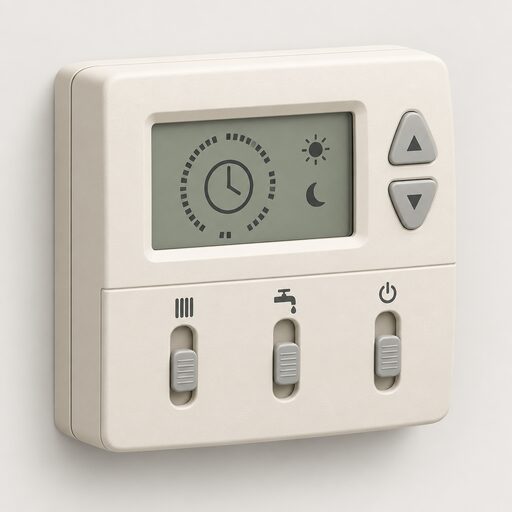 Controls, Thermostats and TRVsWhich heating controls actually cut your bills, and what does each one do?
 The Full Heating Controls GuideA room thermostat, a programmer and valves on your radiators are the basics.
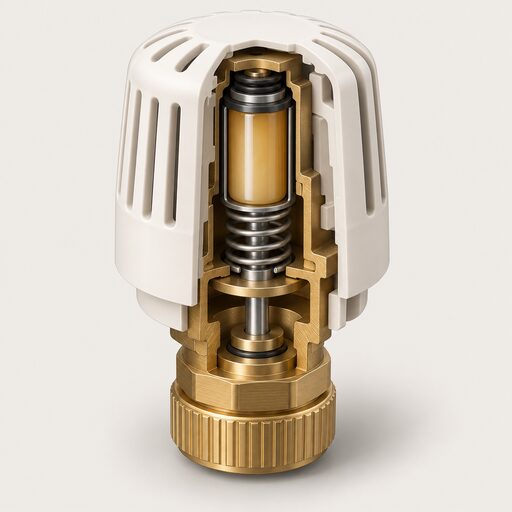 Thermostatic Radiator ValvesHow a thermostatic radiator valve senses room air temperature and throttles flow to a single radiator, what the numbered settings mean, where TRVs should and should not be fitted, and what the Building Regulations require across the UK.
 Smart Thermostats ExplainedWhat does a smart thermostat actually do, and is it worth it?
 Heating Controls CostA smart thermostat usually costs between about a hundred and two hundred and fifty pounds, but fitting can push that higher.
 Smart Thermostat SubscriptionsDo you have to pay a monthly fee to use your smart thermostat, and what do you actually get for it?