In this guide
For a household with a boiler, the answer to whether it is cheaper to leave the heating on low all day is no. Keeping the heating on all the time uses more energy and costs more money, and it is more energy efficient to have the boiler or heating come on when it is needed1. The reason is physical rather than commercial: heat loss from a building rises with the difference between the temperature inside and the temperature outside, so a house held warm through an empty afternoon loses more heat than one allowed to drift down and reheated later.
The exception is a heat pump. Because a heat pump runs more efficiently at lower flow temperatures, leaving it on for longer periods does not increase overall running costs, and the guidance for these systems is to keep them on and let a setback temperature hold the home lower when it is empty or the occupants are asleep2. Storage heaters follow a third logic again, charging overnight on a cheap-rate tariff and releasing heat through the day3.
What follows sets out the schedule settings that match each system, the setback temperatures that public health and control guidance point to, what smart thermostats do and cost, and where their limits lie.
Why setback beats constant low
The case for setback rests on the relationship between heat loss and temperature difference. A building loses heat faster the warmer it is inside relative to outside, so every hour a home is held at full temperature while nobody is in it is an hour of avoidable loss. Independent guidance is direct on the comparison: leaving heating on 24/7 typically uses more fuel, and the most energy-efficient approach is to programme the heating system so that it comes on when it is needed most8.
The saving available from turning the temperature down is documented. Turning a thermostat down from 22°C to 21°C can save £120 a year in Great Britain and £80 in Northern Ireland on energy bills5. A separate figure puts the saving from lowering heating from 22°C to 21°C at around £90 a year in Great Britain9. The two figures come from different sources and are not reconciled; both describe the same one-degree adjustment, and the difference reflects the assumptions behind each estimate. Official guidance goes further, stating that reducing the thermostat by 1°C could save up to 25% of heating bills and associated carbon10.
Setback is not the same as switching off. A programmable room thermostat can hold a lower setback temperature, described as a minimum temperature the home should not drop below, for example not below 16°C overnight or when out7. Public health guidance sets the occupied floor higher: heat the home to a temperature of at least 18°C6. Most people find 18°C to 21°C comfortable in living spaces9. The practical shape is a schedule that holds the home at a comfortable temperature when occupied and a lower floor when not, rather than a flat low setting around the clock.
There is one qualification worth stating. Guidance on damp notes that a constant low heat may be better for damp, and for air temperature, than frequently swinging between hot and cold11. That is a fabric and moisture consideration, not an argument that constant low heat is cheaper.
What a heating schedule should look like
A schedule that matches occupancy is the default recommendation for boiler homes. The most energy-efficient approach is to programme the heating so that it comes on when it is needed most8. For a household out during the day, that means a morning period and an evening period rather than continuous operation.
The scale of the difference is visible in the timer modes built into modern storage heaters, which give named patterns rather than abstract hours. An out all day mode provides 7.5 hours of heating per day in two periods, morning and evening, while a home all day mode provides 13 hours of heating per day for people who need heat throughout the day12. Those two modes describe the same choice a programmer makes on a gas or heat pump system: how many hours of heat the household actually wants, and when.
A household can test the question on its own meter rather than relying on general advice. One suggested method is to leave the heating on constantly for a week, then run a week programmed to come on twice a day, taking meter readings at the start and end of each week, in a well-insulated home8. That produces a comparison specific to the building, its insulation and its occupancy.
Adjustments around occupancy are worth building into the schedule. Turning the heating down by one or two degrees when people are over saves money on energy bills13. The same logic applies to any period of higher occupancy: more people means more incidental heat, so the setpoint can come down without a loss of comfort.
For a heat pump household the schedule looks different. A well-designed heat pump system should provide a consistent temperature around the home throughout the year, even during the coldest days14. One rural off-gas case study describes the winter pattern in practice: the system is left on 24 hours a day, with a thermostat in each room reducing the temperature overnight, while hot water is set for an hour or so at each end of the day15. That is setback applied to a heat pump rather than a schedule of on and off periods.
Smart thermostats: what they do and what they cost
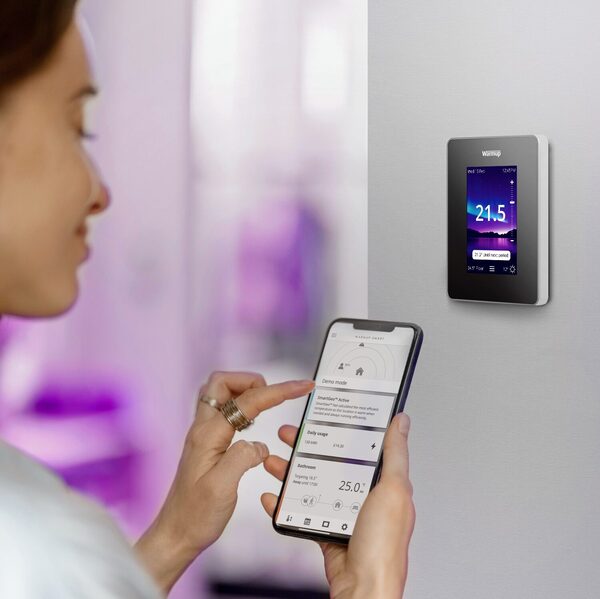
A smart thermostat is a heating control with app control, internet connectivity and automation added to the basic switching and temperature functions. Most smart thermostats cost between £100 and £200, though some have add-ons such as installation which push the total higher4. Prices are as read at the date of that guidance and are not a quotation for any particular home.
What they add to a schedule is remote control and automation. Smart heating controls let a household turn the system on or off and change the temperature using a smartphone when not at home7. Smart heating controls also automatically optimise heating settings to save money and energy16. That optimisation is the mechanism behind the schedule advice: rather than a fixed timetable, the control adjusts to what the household is actually doing.
The savings case is real but conditional. A smart thermostat could save money, but savings are not guaranteed, and any cost benefit comes from reducing wasted heating rather than from the thermostat itself, so results vary from home to home17. The energy-saving benefit may be limited if heating is already well controlled, the home is poorly insulated, the thermostat is not set up correctly, features are unused, or heating habits stay the same17. Where a household already runs a tight schedule with good controls, there is less waste for a smart thermostat to remove.
Two distinctions matter when reading product claims. A wireless thermostat is not always smart; smart thermostats usually add app control, internet connectivity, automation or other connected features17. And a smart thermostat will not be a barrier to switching energy deal, because it controls how much energy is used rather than which tariff supplies it4.
For the wider picture of what these devices do across the market, smart thermostats covers the categories and features, and do heating controls save money examines the evidence on savings claims.
Routines, learning and away modes
The automation in a smart control is what turns a static schedule into something closer to a routine. Smart heating controls automatically optimise heating settings to save money and energy16, and the more capable storage heaters do the same on the electric side: high heat retention models estimate the next day's heating demand based on user heating habits and climatic conditions, so input settings need no adjustment3. The principle is the same in both cases, which is that the control learns the pattern and adjusts the charge or the schedule to match.
Away modes handle the case the routine cannot predict. On the Ideal Halo thermostat, selecting holiday in settings and entering departure and return dates switches the boiler off during that period, with frost protection remaining active, and regular heating resumes when the holiday is over18. Frost protection is the reason the boiler is not simply isolated. Maker guidance advises leaving the boiler on with the thermostat set at a very low temperature to prevent freezing, especially important for system and heat-only boilers, which have large amounts of water stored in a cylinder that can be hard to reheat from low temperatures18.
The distinction between a holiday mode and a setback temperature is worth holding on to. Setback is a floor the home is held at while occupied but inactive, such as overnight or during a working day. A holiday mode suspends normal heating entirely for a longer absence, leaving only frost protection active.
What smart thermostats cannot do
The limits are as important as the features, because they determine whether a smart thermostat can deliver what a household expects of it.
- They track heating only. A smart thermostat cannot keep an eye on electricity and gas usage; it is a heating control, not a whole-home monitor19.
- They are not smart meters. Smart meters are different to smart heating controls, and one can be used without the other16.
- They need a compatibility check. Before buying, check that the thermostat is compatible with the boiler and heating system, usually in the product description or on the manufacturer's website17.
- They do not guarantee savings. Savings depend on the home, heating habits, existing controls, energy prices and how the thermostat's features are used17.
- They cannot fix a poor control system. A poor control system can force even the best heat pump to underperform20.
The compatibility point deserves emphasis because it is the most common practical failure. A smart thermostat that is not compatible with the boiler and heating system will not deliver the schedule control it promises, and the check is a documentation exercise rather than a guess. Smart thermostat boiler compatibility covers the checks in more detail.
The tracking limitation is the one most often misunderstood. A household wanting to see gas and electricity consumption needs a smart meter, not a smart thermostat, and the two are separate purchases with separate functions16. For the meter side, guide to smart meters sets out how consumption data and time-of-use tariffs interact with heating controls.
Storage heaters: a different schedule logic
Storage heaters invert the schedule question. They work by storing heat generated by cheaper night-time electricity and releasing it during the day3. They charge during off-peak hours, usually overnight21, and most will only charge up at night, so the input setting can be left without danger of using expensive day-rate electricity3. The schedule is therefore set the night before, and a change made in the afternoon takes effect the following day.
The tariff is part of the system, not an optional extra. Storage heaters use Economy 7 or Economy 10 tariffs for cheaper energy at night22, and they store heat generated from cheaper nighttime rates acquired on those tariffs23. Economy 7 is an electricity tariff where night-time electricity is much cheaper, typically about half the price, but day-time electricity is more expensive3. Economy 7 and Economy 10 are older types of time-of-use tariff that offer cheaper overnight rates, typically used with electric storage heaters24.
Controls on the heater itself matter as much as the tariff. Modern storage heaters have timer modes like out all day or home all day for convenience21, and some have a setback temperature, which is the temperature the heater will try to keep the room at while it is set to heating off21. The output control should be set to low unless extra heat is needed22. The boost setting uses expensive daytime electricity rather than cheap-rate stored heat and should only be used if stored heat has run out3.
The running cost position is conditional. Storage heaters are cheaper to operate than standard electric heaters for homes without access to gas mains, though electricity is much more expensive per kWh than gas23. They are a cheap form of electric heating if the controls are understood, settings are updated regularly and the household is on the Economy 7 tariff25. Where those conditions are not met, the advantage narrows.
For the controls themselves, storage heater controls covers input, output and smart charging in detail.
Heat pumps and boilers: why the schedule advice differs
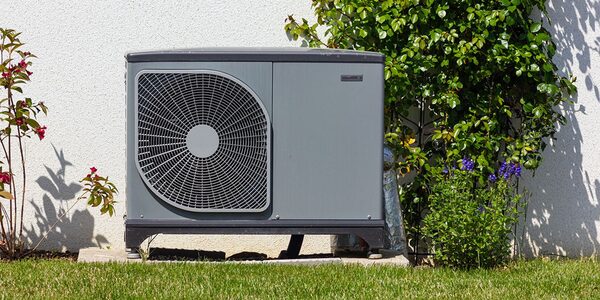
The two system types are not given the same advice, and the reason is efficiency at flow temperature rather than any difference in the physics of heat loss.
For a boiler, the guidance is unambiguous: keeping the heating on all the time uses more energy and costs more money, and it is more energy efficient to have the boiler or heating come on when it is needed1. A boiler running at a high flow temperature reaches the setpoint quickly, so a schedule of on and off periods works with its characteristics rather than against them.
For a heat pump, the guidance reverses. Lowering the heat pump's flow temperature reduces the reaction time of the heating system and has a big impact on running costs, so it is best to keep the heat pump on all the time and let the setback maintain a lower temperature when the home is empty or the occupants are asleep2. Leaving the heat pump on for longer periods does not increase overall running costs because it can run more efficiently, offsetting the longer running time2. Heat pumps usually work best if turned on at a lower temperature for a longer period of time27, and they operate efficiently at lower temperatures, with higher flow temperatures meaning increased energy consumption and lower efficiency20.
The practical consequence is that a heat pump household should think in terms of setback rather than off periods. A well-designed heat pump system should provide a consistent temperature around the home throughout the year, even during the coldest days14. The rural off-gas case study shows the pattern: heating left on 24 hours a day in winter with per-room thermostats reducing the temperature overnight, and hot water set for an hour or so at each end of the day15.
Underfloor heating follows the heat pump logic rather than the boiler logic. It is best left on a low temperature for a longer period and is generally more suited to homes where people are in most of the day; if it is only used morning and evening it alone may not provide sufficient warmth28. For the controls that make this work, underfloor heating controls covers manifolds and wiring centres.
| System | Schedule logic | Setback role |
|---|---|---|
| Boiler | Timed periods matching occupancy1 | Lower floor when out or asleep7 |
| Heat pump | On for longer periods at lower flow temperature2 | Maintains lower temperature when out or asleep2 |
| Underfloor heating | Low temperature for longer periods28 | Suited to homes occupied most of the day28 |
| Storage heater | Charged overnight, released through the day3 | Setback temperature while set to heating off21 |
Setting your system correctly
A schedule only performs as well as the system it controls. Independent guidance recommends getting a boiler or heat pump serviced every year to make sure it is running properly5, and heat pumps should be serviced once a year, preferably before winter14. A boiler has a typical lifespan of around 15 years29, which is the horizon over which servicing and control decisions play out.
The controls themselves need to be understood, not just installed. A poor control system can force even the best heat pump to underperform20. On the storage heater side, the output control should be set to low unless extra heat is needed22, and the running cost advantage depends on updating settings regularly to match the amount of heat needed25.
Knowing which tariff and meter the household is on is part of setting the system correctly. Households on Economy 7, Economy 10 or Total Heat Total Control may be on a radio teleswitch meter26, and the switch-off of that service affects when off-peak charging happens. For the wider context of how controls, tariffs and independence interact, heating controls and energy independence sets out where local control ends and supplier or cloud dependence begins.
Sources29 cited
- The best way to run your central heating to save money, ivie, 2026-09-20
- How to ensure a heat pump runs efficiently, Energy Saving Trust, 2026-05-19
- Night storage heaters, Centre for Sustainable Energy, 2025-10
- What are smart thermostats?, Uswitch, 2026-02-05
- Take control of your heating at home, Energy Saving Trust, 2026-09-11
- Keeping your home warm in winter, Met Office, 2026-09-20
- Thermostats and heating controls, Energy Saving Trust, 2026-02-10
- Heat the whole house or one room, Uswitch, 2026-08-20
- Maintaining the ideal home temperature, Smart Energy GB, 2026-08-17
- Home and business grants, schemes and advice, East Herts Council, 2026-09-17
- How to stop condensation, Which?, 2026-05-26
- Dimplex Quantum night storage heaters, Centre for Sustainable Energy, 2026-06
- Tips to save energy this Christmas, Centre for Sustainable Energy, 2025-12-16
- Heat pump fact check, Energy Saving Trust, 2026-07-01
- Air source heat pump for rural off-gas home, Energy Saving Trust, 2026-01-05
- Guide to smart meters, Energy Saving Trust, 2026-07-15
- What is a smart thermostat?, Smart Energy GB, 2026-08-19
- Will turning my water off affect my boiler, Ideal Heating, 2026-09-17
- Ultimate energy saving tips guide, Smart Energy GB, 2026-04-24
- Avoiding costly mistakes: why heat pump installations must be done right, Flexi-Orb, 2025-02-11
- A guide to using electric storage heater controls, Energy Saving Trust, 2026-05-21
- Getting the most from Economy 7, National Energy Action, 2026-09-10
- Electric heaters vs storage heaters, Energy Helpline, 2026-09-20
- The best heating for your home, Which?, 2025-09-22
- Energy saving myths, Centre for Sustainable Energy, 2026-07
- Radio teleswitch service switch-off, National Energy Action, 2026-07-29
- Heat pumps, nidirect, 2025-02-24
- Underfloor heating, Centre for Sustainable Energy, 2025-11
- Heating and hot water, Planning Portal, 2026
 Heat Pump Running CostsWhat does a heat pump cost to run each year, and is it cheaper than a gas boiler?
 Storage Heaters GuideHow night storage heaters charge on off-peak electricity and release heat through the day, and how high heat retention models with fans and controls differ from older bricks.
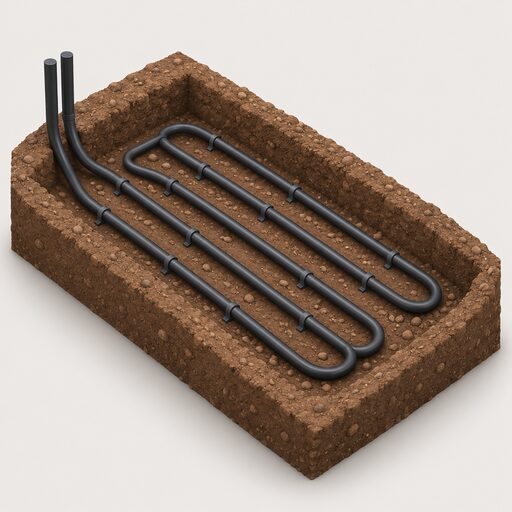 Heat Pumps vs BoilersWill a heat pump actually cost less to run than my boiler, and does it heat the house as well?
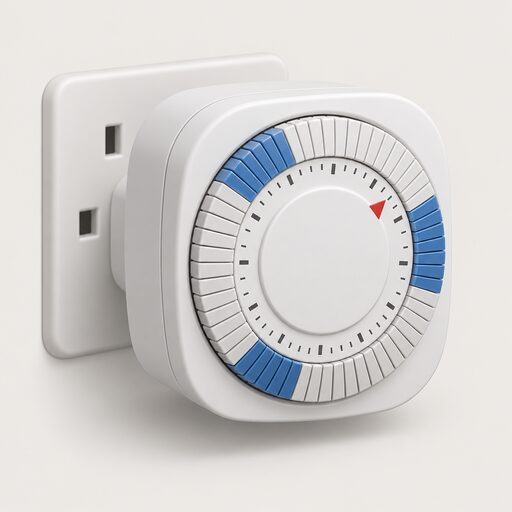 Controls and Time-of-Use TariffsCheaper electricity at night only saves money if your heating actually uses it then.
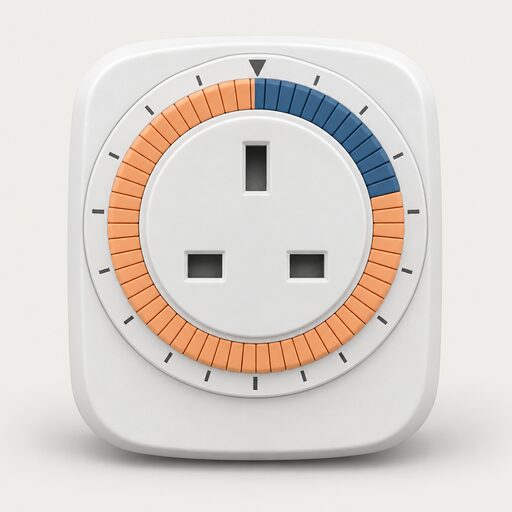 Heat Pump Electricity TariffsA heat pump tariff gives you cheaper electricity for part of the day, so running your heating costs less than on a standard rate.
 Energy IndependenceA heat pump runs your heating on electricity instead of gas or oil, so how much does that really cut what you pay and how exposed you are when fuel prices jump?