
In this answer
Short answer
For most homes with a boiler, the answer is no. The Energy Saving Trust states that keeping your heating on all the time if you have a boiler will use more energy and cost you more money, and that it is more energy efficient to have your boiler or heating come on when you need it1. Independent guidance on heating the whole house or one room reaches the same conclusion: leaving heating on 24 hours a day typically uses more fuel, and the most energy-efficient approach is to programme the heating to come on when it is needed most2.
The picture changes with the heat source. Guidance notes that if you have a heat pump you can save money by leaving the heating on all day, as heat pumps function differently to boilers and rely on good insulation to work efficiently1. Underfloor heating behaves in a similar way: it is best left on a low temperature for a longer period and is generally more suited to homes where people are in most of the day3. So the honest answer is that the question has no single answer, and the deciding factors are the emitter, the insulation and the controls.
What follows sets out what constant low-level heating does in a well-insulated home, where it falls short, the controls that make either approach work, what Building Regulations require at boiler replacement, and how a household can test the two approaches against its own meter.
Constant low heating versus timed heating: what the debate is about
The debate is really about two different control philosophies. On a programmer, the '24hrs' or 'On' setting means the heating will stay on all the time1. That is a deliberate choice to hold the building at a steady temperature rather than let it fall and recover. The alternative is a timed schedule, where the boiler is available only for the periods the household is at home.
The case for constant low running rests on the idea that a building, once warm, holds its temperature with less input than it takes to warm it from cold. The case against rests on the measurement that heat loss is continuous. A dwelling loses heat through its fabric every hour regardless of the schedule, and the longer the heating is available, the more hours of loss it is paying to replace.
The evidence available points firmly one way for boilers. The Energy Saving Trust's position is that constant running uses more energy and costs more, and that running when needed is more efficient1. Guidance on heating the whole house or one room states that leaving heating on 24 hours a day typically uses more fuel2. There is no equivalent body of evidence in the other direction for gas or oil boilers.
Where constant running does have support is with heat pumps and with underfloor heating, both of which run at lower flow temperatures and suit longer, gentler run times1. A rural off-gas home with an air source heat pump illustrates the pattern in practice: in the winter months the system is left on 24 hours a day, with a thermostat in each room reducing the temperature overnight7. That is a heat pump installation with room-by-room control, not a boiler left running.
The distinction matters for energy independence as well as cost. A household that runs its heating only when needed is drawing less from the grid or the gas network over the year, and is less exposed to a price rise on every unit. A household that runs constantly is buying more units, whatever the tariff.
What constant low-level heating does in a well-insulated home
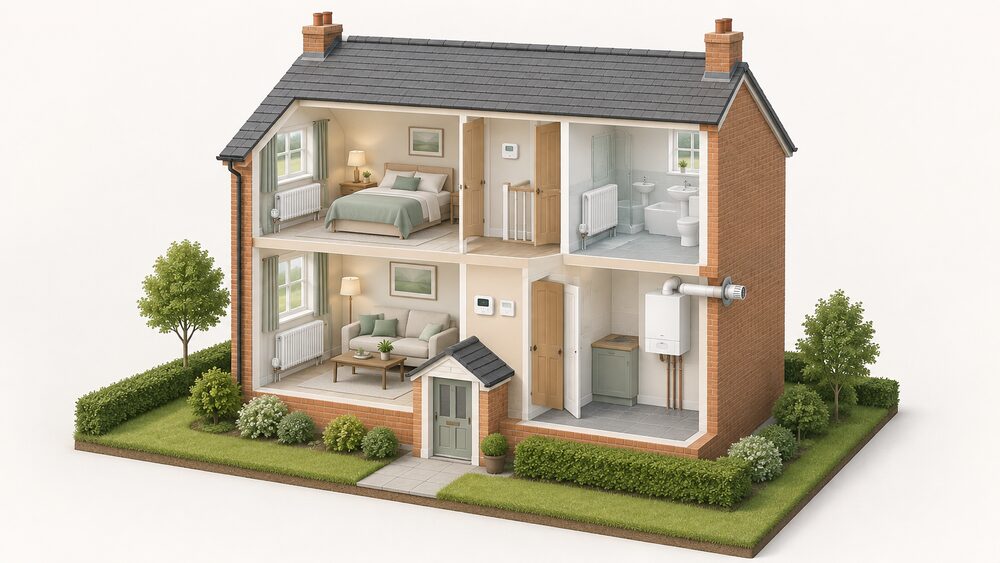
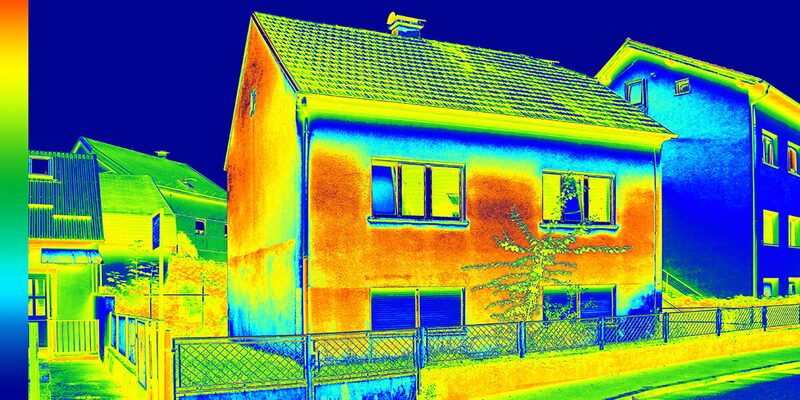
In a well-insulated home, a constant low setting mostly holds a temperature that the fabric is already capable of holding. The reason is that heat loss is dominated by the building's surfaces, and insulation reduces the rate at which those surfaces lose heat. A typical uninsulated home loses 25% of its heat through the roof, 33% through its walls and 10 to 20% through the floor8. Insulation attacks those figures directly, which is why the same schedule produces different bills in different houses.
Design temperatures reflect the same logic. Newer well-insulated buildings will always use a design temperature of 21 °C throughout, except for bathrooms10. A home designed to hold 21 °C throughout is a home where a steady low setting is achievable without the boiler working hard, because the heat loss it has to replace is small.
Insulation is not a guarantee, though. In extreme cases, some well insulated buildings lose 30% of their total heat through cold bridges11. Cold bridges are the junctions where insulation is interrupted, and they bypass the insulation that surrounds them. A home with significant cold bridging can be well insulated on paper and still lose heat faster than its walls and roof figures suggest.
There is also a seasonal asymmetry in how insulation is installed. Cold loft insulation leaves the loft space itself uninsulated, which means it can get very cold in winter and hot in summer12. That is a consequence of insulating at ceiling level rather than at roof level, and it affects the loft, not the rooms below.
For a household, the practical reading is this: in a well-insulated home, a constant low setting is unlikely to be catastrophic, but it is also unlikely to be cheaper than a timed schedule on a boiler. The insulation reduces the size of the penalty, it does not reverse it. The independence argument is the same as the cost argument, because the units not bought are the units not exposed to a price change.
Where constant low heating falls short: heat loss, cost and condensation risk

The first limit is straightforward: heat loss is continuous, so a heating system that is available continuously is replacing loss continuously. That is the mechanism behind the Energy Saving Trust's position that constant running uses more energy and costs more in a boiler home1, and behind the finding that leaving heating on 24 hours a day typically uses more fuel2.
The second limit is specific to combustion appliances run at low output. If a fire is too low a temperature, it is likely that incomplete combustion will occur, causing a number of issues such as reduced heat and increased emissions13. The same principle applies to appliances used at low output for extended periods: the temperature of the chimney reduces and there is a tendency for the products of combustion to also be lower in temperature, which will lead to an increased likelihood of condensation forming in the chimney14. These are solid-fuel findings, but they show that "low and constant" is not a neutral setting for every heat source.
The third limit is pressure and efficiency on a sealed system. Low pressure is not dangerous but it can be problematic, because it will mean your boiler is not working as efficiently as it should, costing more on heating bills, and possible damage to the heating system if the underlying cause is not resolved15. A boiler held on a long low schedule is still a boiler that needs its pressure checked.
Condensation is the counter-argument, and it deserves a fair hearing. Guidance on condensation states that having your heating on a constant low heat may be better for damp, and for your air temperature, than frequently swinging between hot and cold16. That is a genuine benefit in a home with a damp problem. It is not, however, a reason to run a boiler constantly in a dry, well-insulated house, where the same guidance would not apply.
Controls that make either approach work: thermostats, TRVs and timers
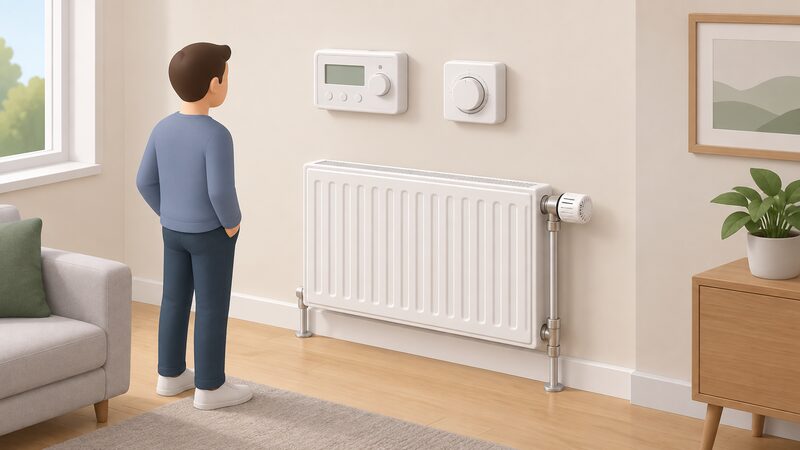
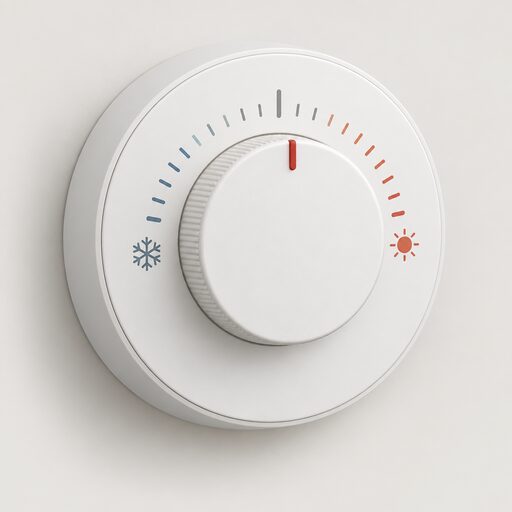
Whichever schedule a household chooses, the controls determine whether it delivers what was intended. The minimum core controls for a central heating system such as a boiler are a programmer (time control), at least one room thermostat, and thermostatic radiator valves (TRVs)5. A fuller specification adds a cylinder thermostat if the system has a hot water cylinder17.
The reason TRVs matter to this debate is that they let a constant schedule behave like a zoned one. Thermostatic radiator valves control the temperature of each room by opening and closing automatically to control the flow of hot water through the radiator they are fitted to18. On a constant schedule, a room that reaches its set point stops drawing heat even though the boiler is still available. That is how a 24-hour schedule can avoid overheating bedrooms and spare rooms.
Room thermostats and heating controls allow you to set and maintain the temperature in your home and make sure it is warm for the times of day that you are at home and switched off to save electricity when you are not19. That is the timed approach described in one sentence, and it is the reason a programmer plus a room thermostat is the baseline rather than an optional extra.
Smart controls add monitoring rather than physics. They allow you to monitor your heating from a smartphone and help to reduce temperature swings20. For a household testing a constant low schedule, that visibility is useful: it shows what the temperature actually did overnight, rather than what the schedule intended.
There is one regulatory constraint worth knowing on the hot water side. Where a low-temperature domestic heating system's heat generator provides hot water, controls must be installed that ensure it does not supply hot water services and space heating service simultaneously21. That prevents a constant heating schedule from competing with cylinder reheating.
Balancing is the other half of making controls work. The published procedure for a balance test is to turn all thermostats to 2, starting from the radiator furthest from the boiler if you have a combi boiler, or furthest from the cylinder22. A system that is out of balance will not deliver an even temperature on any schedule.
What Building Regulations require when you replace a boiler
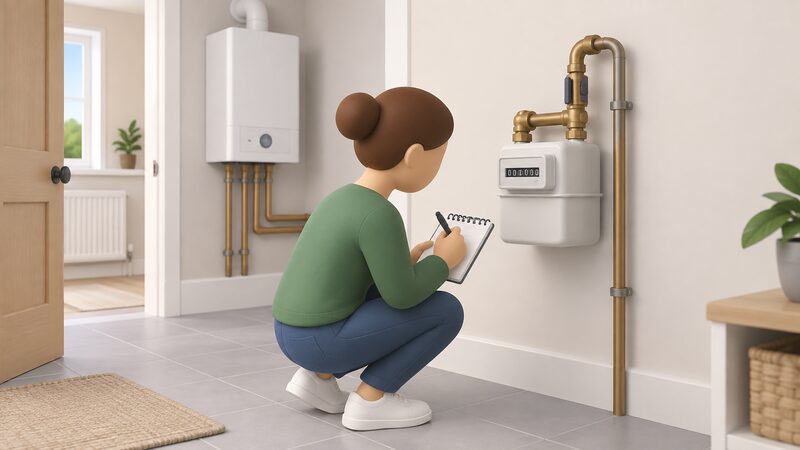
Building Regulations approval is required for work to install a new boiler, or a cooker that also supplies central heating, because of the safety issues and the need for energy efficiency23. The same requirement is stated for Wales24. The approval regime also covers the installation or replacement of a heating system25 and the installation or replacement of a hot water cylinder26.
Efficiency is written into the rules. Building regulations specify that if you are replacing an old boiler the new one must be A-rated for energy efficiency27. That is a floor on the appliance, not a statement about how it should be run, but it means a replacement boiler is already the most efficient option available at the point of installation.
Pipework is covered too. Any pipes exposed as part of the work, or otherwise accessible, should be insulated and then labelled in line with the requirements of the Domestic Heating Compliance Guide, with a lesser standard acceptable where practical constraints exist28. Insulated pipework reduces the standing losses that a constant schedule would otherwise pay for around the clock.
The controls requirement is the part that bears most directly on this question. The requirement that each room should be provided with thermostatic room controls when a boiler is replaced in an existing dwelling has applied in England from June 202229. In practice that means a replacement boiler comes with the room-by-room control that makes a constant schedule behave sensibly, whether or not the household intends to use one.
Approval routes differ across the UK. Building Regulations approval is handled through the gov.uk approval system in England25, through the Welsh building regulations for boilers and heating24, and through separate arrangements in Scotland and Northern Ireland. A household replacing a boiler should expect the installer to handle notification, and should expect the controls to be part of the job rather than an extra.
How to test which approach suits your home
The only way to know which approach suits a particular house is to measure it. A published method is to leave your heating on constantly for a week, followed by a week of programming your heating to come on twice a day, taking meter readings at the start and end of each week2. The comparison is like for like only if the weather is similar across the two weeks, which is the main weakness of a short test.
For the constant week, one published experiment suggests setting the thermostat to 18 °C and leaving the heating on constantly for the same period30. That setting sits at the health floor. Official seasonal advice is to heat your home to a temperature of at least 18 °C, and this is particularly important if you have reduced mobility, are 65 or over, or have a health condition such as heart or lung disease4. Independent guidance repeats the 18 °C figure for the same groups31.
Flow temperature is a separate lever from schedule, and it is being tested at scale. A randomised controlled trial with 61,000 users of an energy advice app is investigating how advice on flow temperature changes behaviour, using three intervention emails: 60 °C in January, 55 °C at the end of February, and 50 °C at the end of March32. The 60 °C condition was chosen because this is the temperature that the government currently advises32. The trial is about boiler flow temperature, not about whether to run the heating constantly, but it shows that the two questions are often confused.
Two other checks are worth making before drawing conclusions from a test. First, whether the home is actually heated throughout: the SAP methodology treats a dwelling as having 25% or less of its habitable rooms actually heated as a distinct case6. A house where only two rooms are heated will not behave like a house where all of them are. Second, whether the home overheats in summer, which is a separate risk from winter heat loss and one the Climate Change Committee has flagged as needing further research, including ongoing monitoring of temperatures in the housing stock33.
For households in Northern Ireland, the fitness standard for private rented housing states that a gas or oil central heating system is the most effective way to heat the whole house34. That is a statement about the heating system, not the schedule, but it sets the expectation against which a constant low approach would be judged.
Finally, the choice interacts with the wider question of where the heat comes from. A home that runs its heating only when needed buys fewer units from a supplier or the grid, and holds more of its running cost under its own control. A home that runs constantly buys more, and takes on more exposure to whatever the unit price does next. That is the energy independence dimension of what looks like a comfort question.
Sources34 cited
- How to use your heating controls, Age UK, 2026-03-23
- Heat the whole house or one room, Uswitch, 2026-08-20
- Underfloor heating, Centre for Sustainable Energy, 2025-11
- Keeping your home warm in winter, Met Office, 2026-09-20
- Thermostats and heating controls, Energy Saving Trust, 2026-02-10
- SAP 10.3 full specification, BRE Group, 2026-01-13
- Air source heat pump for a rural off-gas home, Energy Saving Trust, 2026-01-05
- Reducing home heat loss, Energy Saving Trust, 2026-05-20
- Insulation, Uswitch, 2026-09-16
- Design conditions, MCS Certified, 2026-09-17
- Home energy efficiency, Centre for Sustainable Energy, 2025-11
- Installing blanket insulation, Which?, 2026-05-26
- How to avoid overfiring your wood burner, HETAS, 2026
- Slumbering your stove, HETAS, 2026
- What should your boiler pressure be, Which?, 2025-09-16
- How to stop condensation, Which?, 2026-05-26
- Thermostats and heating controls, Home Energy Scotland, 2026-09-20
- ECO4 new measures and products guidance, Ofgem, 2026-03-26
- Make winter feel like summer, Home Energy Scotland, 2026-09-20
- 10 ways to go green with electricity, Electrical Safety First, 2026-09-19
- Low temperature heating, NCM PCDB, 2026-09-17
- How to balance your radiators, Which?, 2025-09-16
- Building regulations for boilers and heating, Planning Portal, 2026
- Building regulations: boilers and heating, Welsh Government, 2026-09-17
- Building regulations approval, GOV.UK, 2026-09-17
- Boilers and heating, Planning Portal, 2026
- Upgrading and replacing your boiler, Centre for Sustainable Energy, 2026-06
- HVAC legislation, MIMA, 2026-09-20
- TRV factsheet for householders, BEAMA, 2022-06
- Energy saving tips for the home, Confused.com, 2025-10-14
- Spread the warmth, Electricity North West, 2026-09-20
- Testing boiler efficiency advice with households, Nesta, 2026-09-17
- Risks to health, wellbeing and productivity from overheating in buildings, Climate Change Committee, 2026-09-19
- Checking your home is fit to live in, nidirect, 2026-09-17
 Heating Schedules and SetbackIs it cheaper to leave the heating on low all day, or set it to come on only when you need it?
 The Full Boilers and Heating GuideWhich boiler suits your home, and when is it worth swapping the old one?
 Controls and Time-of-Use TariffsCheaper electricity at night only saves money if your heating actually uses it then.
 Which Homes Suit a Heat PumpMost UK homes can have a heat pump fitted, so the real question is whether yours makes it easy or expensive.
 Heat Pumps vs BoilersWill a heat pump actually cost less to run than my boiler, and does it heat the house as well?
 Controls and Smart OperationWhy does a heat pump need different controls from a boiler, and what does weather compensation actually do?