
In this guide
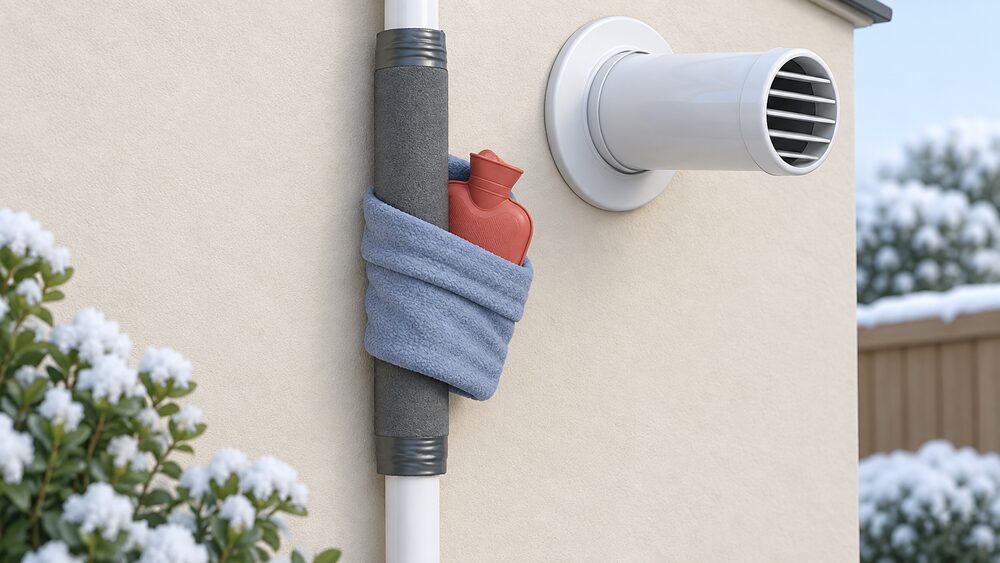
Frozen pipes are a winter problem with a short, specific set of answers. If a pipe has already frozen, the priority is to stop drawing water, find the frozen section and thaw it slowly with a hot water bottle, a warm cloth or hot, not boiling, water, starting at the end nearest the tap1. If a pipe has burst, the water supply goes off at the stop-valve immediately, and electrics affected by water are switched off at the fuse box or consumer unit rather than touched2.
The most common frozen pipe in a modern home is not a supply pipe at all. It is the condensate pipe on a condensing boiler, the plastic pipe that carries acidic water away from the boiler. In cold weather the water inside it can freeze, blocking the pipe and causing the boiler to switch itself off3. A boiler that has stopped working in the cold is likely to have frozen condensate pipes4. The fix is usually a household one, and the prevention is insulation.
Prevention is mostly about three things: lagging the pipes that sit in cold places, keeping some warmth in the building, and closing the gaps that let cold air reach pipework. The savings from draught-proofing are modest but real, and the guidance on what must never be blocked is firm.
The frozen condensate pipe: why boilers stop in cold snaps
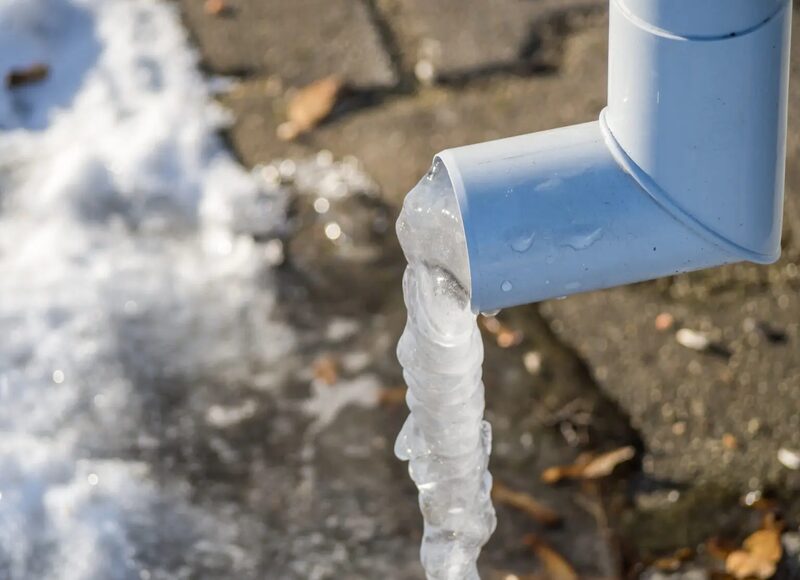
A condensing boiler produces acidic water as a by-product of burning gas, and that water leaves the property through a condensate pipe. In cold weather, the water that passes through these pipes can become frozen, blocking the pipe and allowing condensate to back up, which causes the boiler to switch itself off3. The freezing risk arises when the temperature outside drops below freezing, at which point the boiler stops working or displays an error2. The pipe is usually on an outside wall near the boiler, or underneath the boiler itself4.
The shutdown is deliberate. If the pipe gets blocked with ice, or anything else, the boiler automatically shuts down as a safety measure5. That is why a frozen condensate pipe can stop a boiler working and potentially leave a household without heating, hot water and the ability to cook9. It is not a fault in the boiler, and it is not fixed by resetting repeatedly.
The signs are specific enough to distinguish from a genuine breakdown. If water is not coming out, ice is visible or the pipe feels very cold, it is probably frozen10. Gurgling noises from the heating system followed by a shutdown during freezing temperatures point the same way1. Home Energy Scotland states the position plainly: if that pipe gets blocked with a build-up of ice, the boiler will stop working11.
Thawing follows a fixed method. Starting from the top of the pipe and working downwards, apply hot, not boiling, water over the pipe, or wrap a hot water bottle or heat pack around it, until the ice within has melted5. The same guidance appears across suppliers and consumer bodies: hold a hot water bottle or heat wrap around the affected pipe, or pour hot, but not boiling, water over the frozen end4. Once thawed, the boiler is reset, and if the pipe has frozen repeatedly the remedy is a permanent one.
Preventing pipes from freezing: insulation, heating and the stopcock
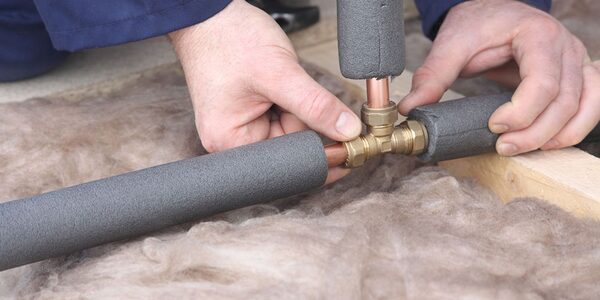
Pipe insulation exists to do two jobs: help stop pipes freezing and reduce heat loss from pipes carrying hot water12. The pipes that matter most are those in uninsulated areas such as a loft, basement or garage, along with outdoor pipes and the condensate waste pipe12. Pipework and tanks in the loft should also be insulated correctly13. CIPHE's advice is to ensure that any storage systems and exposed pipes are properly insulated, particularly in the roof space or attic1.
Lagging works only if it is fitted properly. To make sure the insulation is effective at protecting the pipes from freezing temperatures, each end of the insulation should be secured and sealed with tape12. Lagging that is loose, split or missing at the joints leaves the pipe exposed at exactly the point where cold air reaches it. As well as improving energy efficiency, lagging pipes can prevent damage caused by freezing during cold weather14.
For the condensate pipe specifically, prevention is a short list. An external condensate pipe should be properly insulated with foam15. Insulation can be bought from any DIY store, or a plumber can install a heat wrap8. Where freezing recurs, the remedies are to move the pipe inside, replace it with a wider diameter pipe, fit foam pipe insulation, or retrofit manufacturer antifreeze2. CIPHE's standing advice for condensing boilers is to make sure that the condensate pipework is protected against freezing1.
The stopcock matters as much as the lagging. Before leaving a home unoccupied for a prolonged period, the recommended steps are to turn off the water supply via the stop-valve, open the taps and run off the remaining water, drain the pipes, and repair any dripping taps1. A dripping tap is not a cosmetic issue in a cold snap: it keeps water moving through a pipe that may already be near freezing. After cold weather has passed, visible pipes, taps, hoses and under-sink areas should be inspected for leaks or corrosion, because pipes can contract and crack16. Garden taps are worth the same check, since low water pressure or dripping there can indicate frost damage or a burst pipe16.
Keeping the cold out: draught-proofing the gaps that let pipes freeze
Draught-proofing and pipe lagging are usually discussed as comfort measures. For freezing risk they are a single measure: cold air reaching a pipe is what freezes it, and the gaps around doors, windows, floors and pipework are how that air gets in. Simple steps such as placing weatherproofing tape over gaps or putting down a draught excluder guard against heat loss17. The same principle applies to the pipework itself: check any existing pipe insulation, where visible, to make sure it is in good condition and still protecting external pipes and taps from freezing18.
The materials that qualify as energy-saving for VAT purposes show how broad the category is: insulation for walls, floors, ceilings, roofs or lofts, or for water tanks, pipes or other plumbing fittings19. That is the official definition, and it confirms that pipe insulation sits alongside loft and wall insulation as recognised fabric work rather than a DIY extra.
Where draught-proofing is done professionally, the work covers windows, doors, floors and skirting boards together, because a single sealed gap rarely solves the problem on its own. The savings figures below reflect that whole-house approach rather than one tube of sealant.
Where to seal: doors, windows, floors, chimneys and pipework
The list of places to seal is longer than most households expect, and the guidance is specific about each. Windows and doors are the obvious ones, but floors and skirting boards matter too, and so does the point where pipework passes through an external wall. The official VAT definition of qualifying insulation covers walls, floors, ceilings, roofs or lofts, water tanks, pipes and other plumbing fittings19. That is a useful checklist in itself.
There is one clear exception. Kitchen and bathroom windows should not be sealed, because the gaps let out steam and reduce the risk of damp; the inner doors to those rooms are the right place to seal instead17. Sealing a bathroom window to keep the cold out traps moisture indoors, which creates a different and more expensive problem.
Window and door hardware needs attention as well as the gaps. Periodically lubricating the seals of windows and doors prevents drying, cracking and freezing, using a product such as WD40 or a specialist silicon spray21. A seal that has dried and cracked stops doing its job in exactly the conditions that matter most.
For pipework, the sealing requirement is at the ends. Each end of the pipe insulation should be secured and sealed with tape so the insulation is effective at protecting the pipes from freezing temperatures12. Where a pipe runs through a wall, the gap around it is both a draught route and a point of direct cold contact.
Building regulations take the same line on new work. Care should be taken not to block any ventilation23. Roof construction requirements include having adequate drainage24, which matters for the water that leaves a property rather than the air that enters it, but the principle is the same: a building needs its designed routes for air and water to keep working.
What draught-proofing saves: around £80 a year for under £50
The savings figures vary by source, by nation and by whether the work is DIY or professional, and the differences are worth setting out rather than averaging.
| Measure | Annual saving | Where | Source |
|---|---|---|---|
| DIY draught-proofing | around £35 to £50 | UK | 6 |
| DIY installation | £25 to £50 | UK | 17 |
| Windows and doors only | up to £35 | UK | 17 |
| Professional, whole house | £55 | Great Britain | 7 |
| Professional, whole house | £80 | Northern Ireland | 7 |
| Professional windows and doors | around £80 | Northern Ireland | 22 |
| Simple draught proofing, three-bed semi | £25 | Scotland | 25 |
| Doors and windows | up to £85 | Great Britain | 26 |
| Doors and windows | £95 | Northern Ireland | 26 |
The spread reflects different scopes of work, different housing stock and different fuel prices at the time each figure was published. The Northern Ireland figures are consistently higher than the Great Britain equivalents, which the sources attribute to the same measures saving more there. One source puts the saving at £100 or so off bills22, which sits above the rest and is best treated as the top of the range rather than the expected outcome.
Cost is the other half of the comparison. Professional draught proofing can cost around £55, while DIY draught proofing can be much cheaper22. That is the basis for describing draught-proofing as the cheapest and easiest DIY fix6. The payback is short either way, and the work is reversible, which matters for anyone in rented housing.
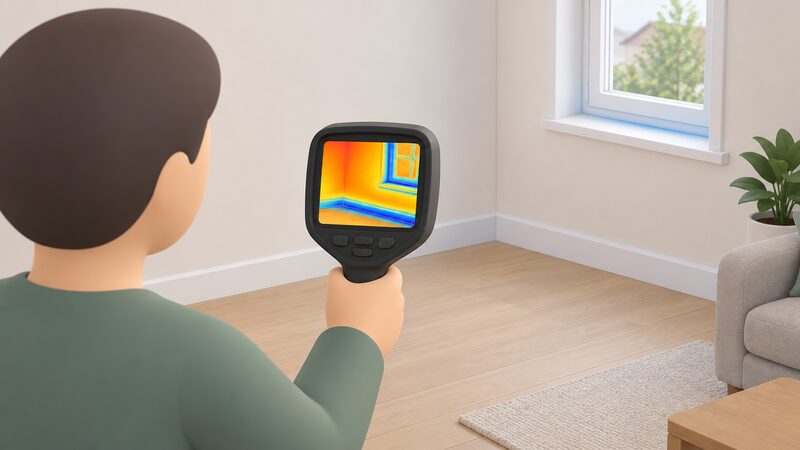
Ventilation and safety: what never to block
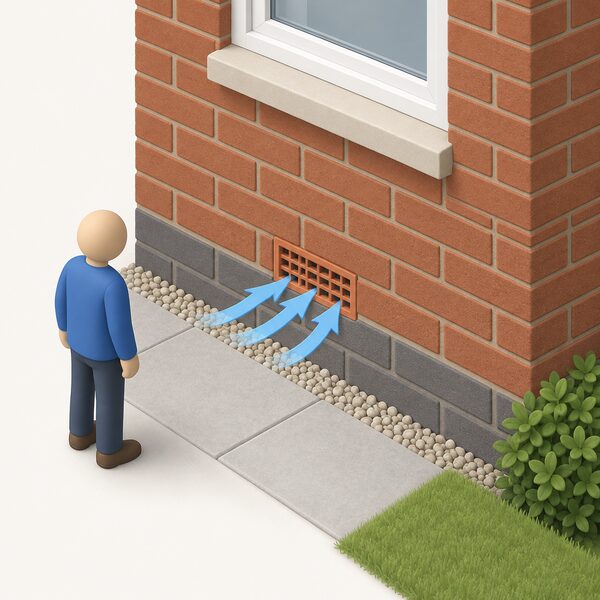
Draught-proofing has a hard boundary, and crossing it creates risks that cost more than the heat saved. Boiler flues, air bricks and window trickle vents must never be blocked, and windows in kitchens and bathrooms should not be over draught-proofed because moist air needs to escape22. A blocked flue is a carbon monoxide risk, not a comfort trade-off. Air bricks and trickle vents are part of how a building manages moisture and combustion air.
The same warning appears in official guidance for insulation work: care should be taken not to block any ventilation23. That applies to loft insulation laid over eaves vents as much as to sealant around a window frame. Where loft insulation is installed, pipework and tanks in the loft should also be insulated correctly13, which means the insulation goes around the pipe rather than over the vent.
For anyone in rented housing, the responsibility question has a clear answer in one part of the UK. In a property rented to tenants, official guidance says the landlord should make sure roof spaces are insulated, replace draughty, ill fitting windows and doors, draught proof external doors and windows (but not rooms containing an open-flue gas appliance), insulate exposed water pipes, and fit the hot water tank with a good quality insulation jacket27. The exclusion for open-flue appliances is the same safety principle in another form.
Elsewhere, responsibility turns on the tenancy agreement and on implied terms. A landlord will probably be responsible for dealing with condensation damp if the tenancy agreement says so or says they will keep the home fit to live in, if the damp was caused by the landlord not making certain repairs such as heating or ventilation, or if the damp has caused damage the landlord has to repair, such as rotting window frames or damaged plasterwork28. Where a problem with an existing damp-proof course is causing damp, the landlord is likely to be responsible for repairing it28. In many cases the landlord is responsible for penetrating damp and rising damp because a term implied into the tenancy agreement requires the exterior and structure of the home, and installations such as basins, sinks, baths, toilets and their pipework, to be kept in repair28.
In Northern Ireland, the Warm Healthy Homes Fund consultation proposes that the installation of loft and cavity wall insulation, draught proofing, and ventilation will be mandatory for all properties unless existing insulation and ventilation meet acceptable standards29. That is a consultation rather than a settled requirement, and it is worth reading as a direction of travel rather than a rule in force.
When to call a Gas Safe engineer instead
Thawing a condensate pipe is a household task. Anything involving the gas appliance itself is not. If the boiler still will not run after the condensate pipe has been thawed, or if the problem is not the condensate pipe, the next step is to contact a Gas Safe registered engineer to check the boiler10. Work on gas appliances is restricted to registered engineers, and the register exists so that householders can verify who is qualified before anyone touches the boiler.
Checking an engineer is straightforward. The Gas Safe Register can be reached on 0800 408 5500, or its website can be used to see whether an engineer is registered30. In Northern Ireland, the register can be searched by postcode to find Gas Safe-registered engineers in the area, or an advisor can be reached on the freephone number31. The register is the same one across the UK, and the check takes a minute.
The wider point for a household's energy independence is that frozen pipes are one of the few winter failures that can be prevented almost entirely from inside the home. Lagging, draught-proofing and a background temperature reduce the risk without touching the gas supply. What remains outside a household's control is the weather, the age of the pipework, and the fact that a condensing boiler depends on a pipe running through outdoor air to work at all. A household that has lagged the condensate pipe, insulated the loft pipework and sealed the obvious gaps has removed most of the avoidable risk. The rest is a phone call to a registered engineer when the boiler will not restart.
Sources31 cited
- Frozen pipes, CIPHE, 2022-12-12
- My boiler isn't working, SGN, 2026
- My boiler isn't working, Northern Gas Networks, 2026-07-24
- Winter safety, WW Utilities, 2026-09-20
- How to thaw a frozen boiler condensate pipe, Which?, 2025-09-16
- How to use a thermal camera to cut energy bills, Which?, 2026-01-21
- Top energy saving ideas for your home improvement project, Energy Saving Trust, 2026-08-03
- Protect pipes in winter, Home Energy Scotland, 2025-12
- Staying safe and warm this winter, Northern Gas Networks, 2025-11-03
- Boiler maintenance guide, Uswitch, 2026-09-03
- Don't be frozen out, CIPHE, 2024-01-11
- Insulating tanks and radiators, Energy Saving Trust, 2025-11-03
- Installing blanket insulation, Which?, 2026-05-26
- Cheap and easy ways to insulate your home over a weekend, Which?, 2025-10-06
- Common boiler problems and repair costs, Which?, 2025-09-17
- Spring into home care, APHC, 2025-05-07
- Draught-proofing, Which?, 2026-05-05
- Winter advice, Cadent Gas, 2026-09-20
- VAT energy saving materials: VENSAV3040, HM Revenue & Customs, 2026-09-17
- VAT energy saving materials: VENSAV3010, HM Revenue & Customs, 2019-09-30
- Understanding double glazing, The CPA, 2025-02-05
- Quick tips to save energy, Energy Saving Trust, 2026-08-21
- Building regulations: energy efficiency, Planning Portal, 2026
- Building regulations: roof, Welsh Government, 2026-09-17
- How to prepare your home for winter, Home Energy Scotland, 2026-07
- Energy saving statistics, Uswitch, 2025-07-16
- Checking your home is fit to live in, nidirect, 2026-09-17
- Who's responsible for repairs: repairs and damp, Citizens Advice, 2026-09-20
- Warm Healthy Homes Fund consultation, Department for Communities, 2026-05
- Gas safety in the home: FAQ for owner occupiers, Health and Safety Executive, 2026
- Gas Safe Register, nidirect, 2025-10-29
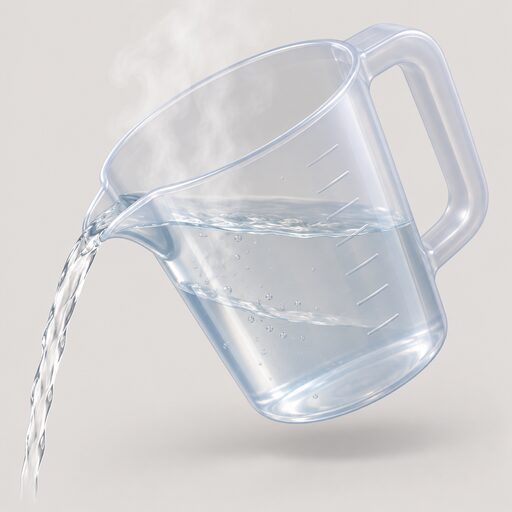 Thaw a Frozen Condensate PipeHow to identify a frozen condensate as the cause of a boiler lockout, the safe way to thaw the external pipe and how to restart the boiler afterwards.
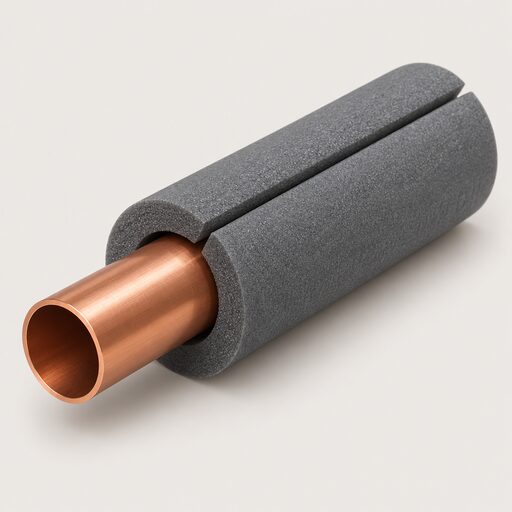 Insulating Pipes and CylindersInsulating pipes and hot water cylinders is cheap and quick, but what does it actually save, and is it worth the bother?
 Prepare Energy for StormsWhat to do before and during a storm or flood warning to protect meters, the consumer unit, heating equipment and fuel tanks.
 Air Conditioning SafetyA safety guide to home cooling appliances: plug and circuit loading, flammable refrigerants in portable units, condensate and water damage, venting, window sealing and product recalls, with the markings to look for.
 Prepare a Home for WinterA seasonal checklist covering heating and hot water checks, controls and timers, alarms, draughts, outside pipework and stocking up on off-grid fuel.
 The Full Insulation and Glazing GuideWhere is your home losing the most heat, and what can you do about it?