
In this answer
Short answer
Draught-proofing is one of the cheapest measures a household can take, and the savings are modest but real. Independent guidance puts DIY draught-proofing at £25 to £50 a year, and professional whole house installation in the same range1. Energy Saving Trust figures for professional draught-proofing of windows, doors, floors and skirting boards are £55 a year in Great Britain and £80 a year in Northern Ireland2. One consumer guide reports around £35 to £50 a year from what it calls the cheapest and easiest DIY fix3.
The higher end of the range comes from combining measures. Draught-proofing an open chimney that is not in use is reported to save an additional £60 to £65 a year4, and one guide puts the combined effect of draught-proofing at approximately £85 a year, plus £60 if the chimney is also draught-proofed5. That is the shape of the answer: a few tens of pounds from sealing windows and doors, and a further substantial sum where an open chimney is closed off.
What draught-proofing does for a household's energy independence is limited but genuine. It reduces the heat a home loses to the outside, so less energy is bought to replace it, and it does so without a supplier, an app or a subscription. What remains is the same dependence as before: the home is still on the grid, still buying gas or electricity, and still exposed to whatever those cost. Draught-proofing lowers the bill; it does not remove the supply.
What draught-proofing can save: £25 to £60 a year in practice
The headline range across the independent sources is £25 to £60 a year for sealing windows and doors, with the upper figures coming from whole house work or from adding a chimney. Which? gives DIY installation at £25 to £50 a year, depending on what is draught-proofed, and professional whole house installation in the same band1. Its separate figure for windows and doors alone is up to £35 a year1. Energy Saving Trust puts professional draught-proofing of windows, doors, floors and skirting boards at £55 a year in Great Britain and £80 a year in Northern Ireland2.
Home Energy Scotland gives a narrower, house-specific figure: simple draught proofing around windows and doors could save £25 per year in a three-bed, semi-detached, gas-heated house6. That is the lowest figure in the set and it is tied to one house type, which is why it sits below the general ranges. A consumer guide reports approximately £85 a year from draught-proofing, plus £60 if the chimney is draught-proofed5, and a statistics round-up cites Energy Saving Trust advice of up to £85 a year from draught-proofing doors and windows in Great Britain7.
The spread is not a contradiction. It reflects what is sealed, how leaky the home was to begin with, and whether the work is DIY or professional. A household in a draughty Victorian terrace with an open chimney is at the top of the range; a modern flat with sealed windows and no chimney is at the bottom.
Why the figures differ: house type, what you seal and who fits it
Three things move the number. The first is the starting condition of the home. A house that is already fairly well draught proofed has little left to gain, and adding more draught proofing may increase the risk of poor air quality8. The second is what is sealed: windows and doors alone sit at the lower end, while adding floors, skirting boards and a chimney moves the figure up2. The third is who does the work, since professional installation costs more up front but is reported to reach payback in only three and a half years7.
House type matters as much as any of these. Home Energy Scotland's £25 figure is explicitly for a three-bed semi6, and a Victorian house guide treats chimney draught-proofing as a separate, larger saving on top of window and door work4. The age and construction of the home set the ceiling on what sealing can achieve.
There is also a measurement point. Official statistics on the National Energy Efficiency Data Framework found that savings from loft insulation and new boilers are around a tenth lower in the fifth year after installation than in the first year, for installations in England and Wales between 2011 and 20159. That is a finding about insulation and boilers rather than draught-proofing, but it is the closest official evidence on how first-year savings hold up, and it suggests any quoted annual figure is best read as an early-years number.
Adoption is uneven, which affects how much a given household has already done. Among homeowners, 48% have draught-proofing; two thirds of homeowners aged 65 and over have it (64%), while only 27% of 18 to 34 year olds report having it10. A home without any draught-proofing has more to gain than one that already has it.
Cost effectiveness: one of the cheapest ways to cut bills
Draught-proofing is repeatedly described in the strongest terms available to independent advisers. Home Energy Scotland calls it one of the most cost-effective ways to keep energy bills low11. The Centre for Sustainable Energy calls it one of the cheapest and most effective ways to improve comfort12, and Home Energy Scotland's own guidance uses the same phrase for saving energy and money at home13. Age UK reports that a household will shave at least £25 off its energy bill when it draught-proofs14.
The cost side is what makes the ratio work. Hiring a professional installer to draught-proof a home could cost around £200, and professional whole house installation around £2501. Professional draught proofing itself can cost around £55, while DIY draught proofing can be much cheaper8. Against annual savings of £25 to £60, the DIY route pays back within a year or two, and the professional route is reported to reach payback in only three and a half years7.
For context on scale, draught proofing and ventilation retrofit as a combined category spans a typical cost of £100 to £7,000, from basic measures through to mechanical ventilation with heat recovery15. Draught-proofing sits at the very bottom of that range, which is why it is treated as a first measure rather than a project.
Where the savings stack up: combining with insulation and chimney draught-proofing
Draught-proofing is not a substitute for insulation, and the independent guidance is explicit that fully insulating a home is a more effective way of keeping it warm than draught proofing17. The two work on different losses: insulation slows heat escaping through the fabric, while draught-proofing stops air carrying heat out through gaps. Cutting draughts helps reduce heat loss, making a home more comfortable and lowering heating demand17, but it does not address the walls, roof or floor.
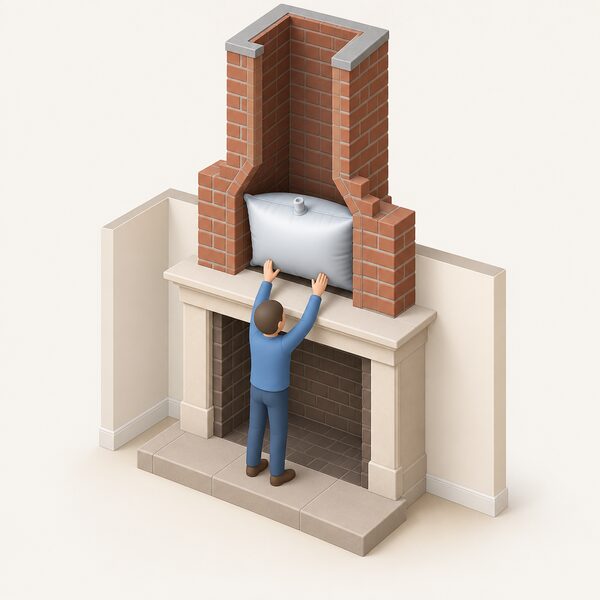
The chimney is the clearest example of stacking. Draught-proofing an open chimney when it is not in use is reported to save an additional £60 to £65 a year4, on top of the window and door figure. One guide puts the combined total at approximately £85 a year, plus £60 if the chimney is draught-proofed5. An inflatable chimney pillow is the usual method for an open chimney18.
Modelling from Nesta on Scottish homes shows how the measures interact. In a pre-1914 mid-floor flat case study, external wall insulation combined with draught proofing provides around a 37% saving on energy use and carbon emissions, while draught proofing and upgrading windows and external door alone give about 10% and 16.5% reductions respectively19. Draught-proofing is the smaller number on its own, and the larger number when it is part of a package.
For a household planning the order of work, draught-proofing belongs with the low-cost measures that come before bigger spending. It is a natural companion to insulation and to heating controls, and it fits the sequence set out in what order should retrofit measures be done in.
Draught-proofing for renters, including renters in Scotland
Surface-level draught proofing is open to tenants as well as homeowners20. That is the key distinction: measures that do not alter the building fabric are within a tenant's reach, while anything requiring permanent change is a matter for the landlord. Energy Saving Trust advises renters to speak to their landlord about bigger improvements, naming professional draught proofing and installing home insulation as examples21. A retrofit guide makes the same point, suggesting renters talk to their landlord about grants or efficiency upgrades and use simple steps like draught-proofing or a portable dehumidifier22.
In Northern Ireland the position is set out in official guidance on checking whether a home is fit to live in. In a property rented to tenants, the landlord should make sure roof spaces are insulated; replace draughty, ill fitting windows and doors; draught proof external doors and windows, but not in rooms containing an open-flue gas appliance; insulate exposed water pipes; and fit the hot water tank with a good quality insulation jacket23. The exclusion for rooms with an open-flue gas appliance is a safety rule, not a comfort one, and it applies to that room specifically.
In Scotland, Home Energy Scotland offers a Private Rented Sector Landlord Loan alongside its grant and loan scheme for homeowners installing clean heating systems24. Energy Saving Trust Scotland has also highlighted the need to enable groups of owners to access financial support and ensure funding mechanisms are designed to support shared retrofit projects, including provisions for collective applications25. That matters for flats, where a single owner cannot seal a shared stair or close a communal chimney alone.
For a wider view of what is available to tenants, see where to start if you rent your home and free home energy advice in Scotland.
What to seal: doors, windows and floors
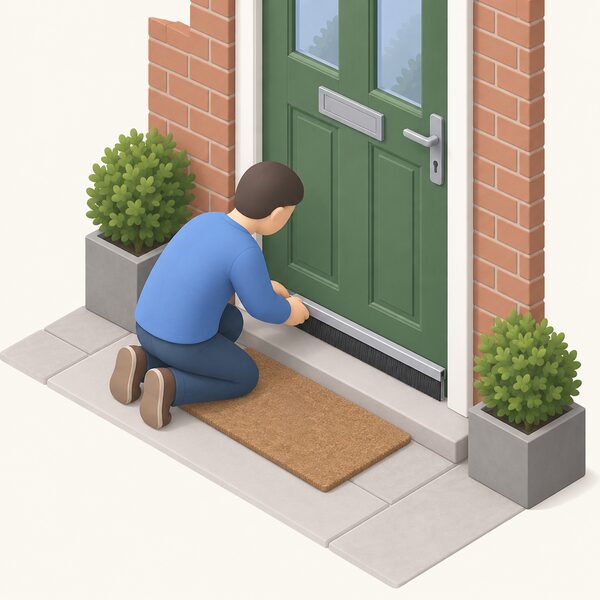
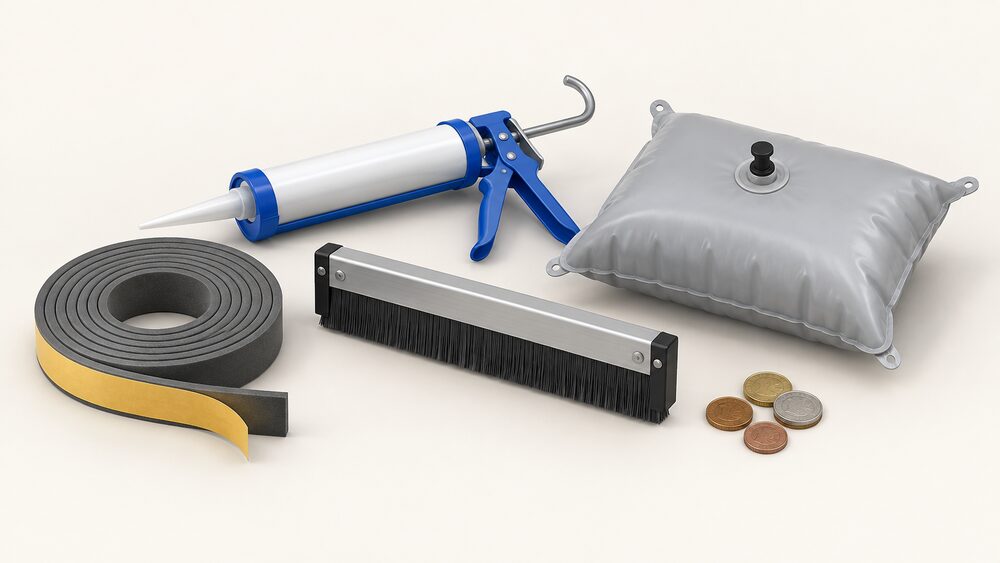
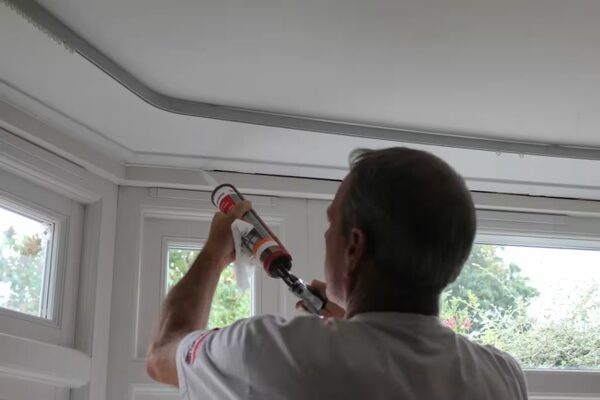
The common places to find draughts are around external windows and doors, open chimneys, loft hatches, and gaps around floorboards and skirting boards18. Each has a standard method. Windows take draught-proofing strips around the frame; door bottoms take brush or hinged-flap draught excluders; open chimneys take an inflatable chimney pillow; floorboards take flexible silicone-based filler; and loft hatches take foam strips18. Gaps found around windows and doors can be sealed with weatherstripping or foam strips, or with caulk26. The sides of doors, particularly the front door, can be insulated with simple strip insulation and draught sealers, widely available at DIY shops27.
Draught stripping for windows and doors is named in legislation as an energy-saving material28, and draught sealing is listed as a measure that reduces infiltration29.
Where a home already has double glazing, the windows are partly dealt with: installing double glazing can cut heat loss through windows by half30. Draughts then concentrate at doors, loft hatches, floorboards and skirting boards, and at any open chimney. For older or traditional windows, slim profile double glazing can significantly improve the overall thermal performance of the original window while retaining the existing joinery31, which is relevant where the frames themselves are sound but the glazing is not.
In Northern Ireland, draught proofing doors and windows is listed as a Priority 1 measure under the Affordable Warmth Scheme, alongside loft insulation, roof and eaves ventilation, a hot water cylinder jacket, cavity wall insulation and the removal and replacement of ineffective cavity wall insulation32. That places draught-proofing in the same tier as insulation for households eligible for that scheme.
For the wider picture of where heat leaves a home, see where a UK home loses heat, and for the cheapest measures generally, no-cost and low-cost ways to cut energy use first.
Sources32 cited
- Draught-proofing, Which?, 2026-05-05
- Top energy saving ideas for your home improvement project, Energy Saving Trust, 2026-08-03
- How to use a thermal camera to cut energy bills, Which?, 2026-01-21
- How to make a Victorian house more energy efficient, Uswitch, 2025-09-25
- Free energy saving tips, Uswitch, 2025-10-14
- How to prepare your home for winter, Home Energy Scotland, 2026-07
- Energy saving statistics, Uswitch, 2025-07-16
- Quick tips to save energy, Energy Saving Trust, 2026-08-21
- National Energy Efficiency Data Framework: summary of analysis 2026, GOV.UK, 2026-06-11
- Which? annual sustainability report series 2024: home insulation and heating, Which?, 2024-06
- Make your home warmer, Home Energy Scotland, 2026-09-20
- DIY draught proofing, Centre for Sustainable Energy, 2026-07
- Knit your own draught excluders, Home Energy Scotland, 2025-03
- 8 tips to tackle the climate emergency, Age UK, 2021-10-27
- Watt a Save, Home Builders Federation, 2026-02
- Tax on shopping: energy-saving products, GOV.UK, 2026-09-17
- Draught-proofing, Energy Saving Trust, 2026-05-20
- Make your home more energy efficient in one weekend, Which?, 2026-08-28
- How heat Scotland's homes, Nesta, 2021-09-09
- One thing to do this weekend to boost your insulation, Which?, 2025-11-19
- How to save energy and money if you rent your home, Energy Saving Trust, 2025-11-14
- Your home retrofit guide, Low Carbon Hub, 2025-10-30
- Checking your home is fit to live in, nidirect, 2026-09-17
- Air source heat pump, MCS Certified, 2026-07-24
- Response to Scotland's draft climate change plan 2026-2040, Energy Saving Trust, 2026-01
- Cheap and easy ways to insulate your home over a weekend, Which?, 2025-10-06
- Draught proofing your home guide, Smart Energy GB, 2026-03-16
- Energy Act 1994, Schedule 8, Part II, legislation.gov.uk, 2026-09-17
- Overheating guidance, BRE Group, 2026-09-17
- Glazing, Planning Portal, 2026
- Guide to the conversion of traditional buildings, Scottish Government, 2026-08-10
- Affordable Warmth Scheme, Northern Ireland Housing Executive, 2026-09-17
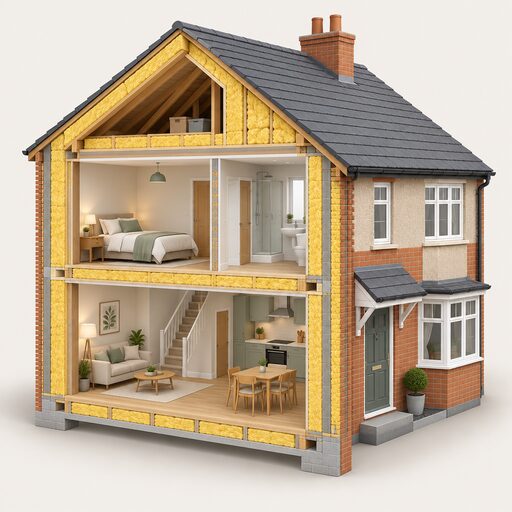 Whole-House Retrofit CostsA whole-house retrofit can cost anywhere from a few thousand pounds to over fifty thousand, so what you actually pay depends on how much work your home needs.
 Do Smart Controls Save Money?Do smart heating controls really cut your bills, and by how much?
 Changing Habits SavingsWhat the evidence says behavioural change saves: around £90 to £120 a year for one degree off the thermostat, £100 to £110 a year for using a full set of heating controls, and £304 to £351 a year for a bundle of small changes.
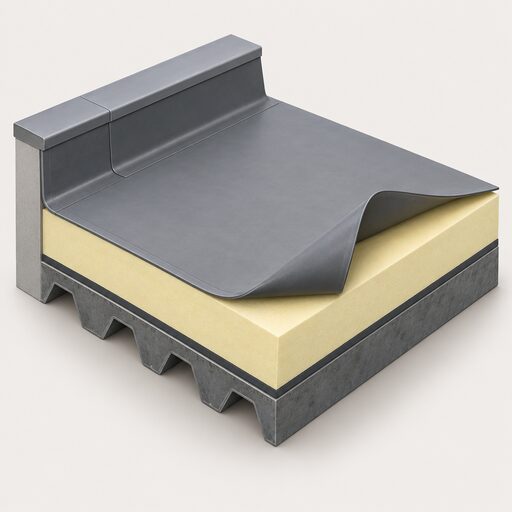 Roof InsulationHow much heat escapes through your roof, how thick the insulation should be, what it costs and what it saves?
 Insulation Savings and PaybackHow much can you really save by adding insulation, and does it depend on your home, your heating and how you use it?
 Cost of Energy IndependenceA heat pump and better insulation are the usual starting point, but what does the whole job really cost, and what help is there with the bill?