
In this answer
Short answer
Heating controls are the cheapest lever a household has over its own bills, and the figures are modest and specific. Installing and using a full set of heating controls could save £110 a year where a system previously had none1. The Energy Saving Trust puts the same measure at £100 a year in Great Britain and £110 in Northern Ireland2. A smart thermostat and controls package is quoted at up to £110 a year3.
The important qualifier is the starting point. Those headline figures describe a home that had no controls at all, not a home with a thermostat that is simply being used badly. Where controls already exist, the saving comes from the setting rather than the hardware: turning the thermostat down by one degree Celsius is put at as much as 10 per cent off heating bills4, and turning down radiators in unused rooms at around £50 a year5.
What follows is what the published figures cover, where they come from, what a full set actually consists of, and how far controls take a household towards energy independence, which is to say not very far on their own.
£110 a year: the headline figure and what it assumes
The £110 figure comes from Cadent Gas and applies to installing and using a full set of heating controls where the system previously had no controls1. That condition does most of the work. A household with a programmer, a room thermostat and thermostatic radiator valves is not starting from the position the figure describes, and cannot expect to bank £110 by adding a smart display to what is already there.
The Energy Saving Trust gives the same measure as £100 a year in Great Britain and £110 in Northern Ireland2. Its separate guidance on EPC ratings states that using heating controls will help the average semi-detached house save £100 each year in GB and £110 in NI, which ties the figure to a house type as well as a nation7. The Northern Ireland figure is higher, and the difference is not explained in the published material; it is simply the number given for that jurisdiction.
Confused.com quotes a smart thermostat and controls package at up to £110 a year3, which lands on the same number by a different route. These are estimates for typical homes, not guarantees, and they assume the controls are actually used rather than installed and left on a default schedule.
Savings as a percentage: up to 20%, and the 40% claim examined
Percentage claims for controls are where the numbers get loose, and it is worth separating what each one measures.
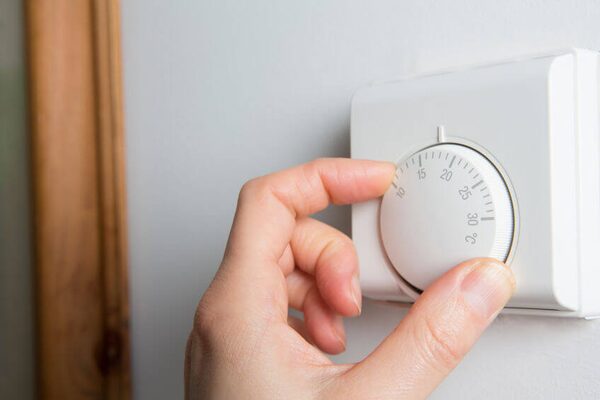
Turning the thermostat down by one degree Celsius is put at as much as 10 per cent off heating bills by NI Direct4, and at up to 10 per cent by its companion energy efficiency page8. East Herts Council gives a higher figure for the same action, stating that reducing the thermostat by 1 degree could save up to 25 per cent of heating bills and associated carbon9. The two figures disagree and are not reconciled: the 10 per cent figure appears in two separate official sources, the 25 per cent in one.
A 40 per cent reduction from controls alone is not supported by any figure here. The largest percentage in the material belongs to a different measure entirely: heat pumps, where fuel bills can be reduced by a massive 50 per cent10. That is a change of heat source, not a control upgrade, and it is not comparable.
Ofgem's load control consumer protection guidance gives worked examples for electric heating in a large house on high usage, around £300 a month, showing a 2 per cent heating bill saving and £6 a month at low control, 4 per cent and £12 at medium, and 6 per cent and £18 at high11. Those are smaller than the thermostat figures because they describe load control rather than temperature reduction, and they show how much the answer depends on what is being controlled and what fuel is being used.
What a full set of controls means, and why the starting point matters
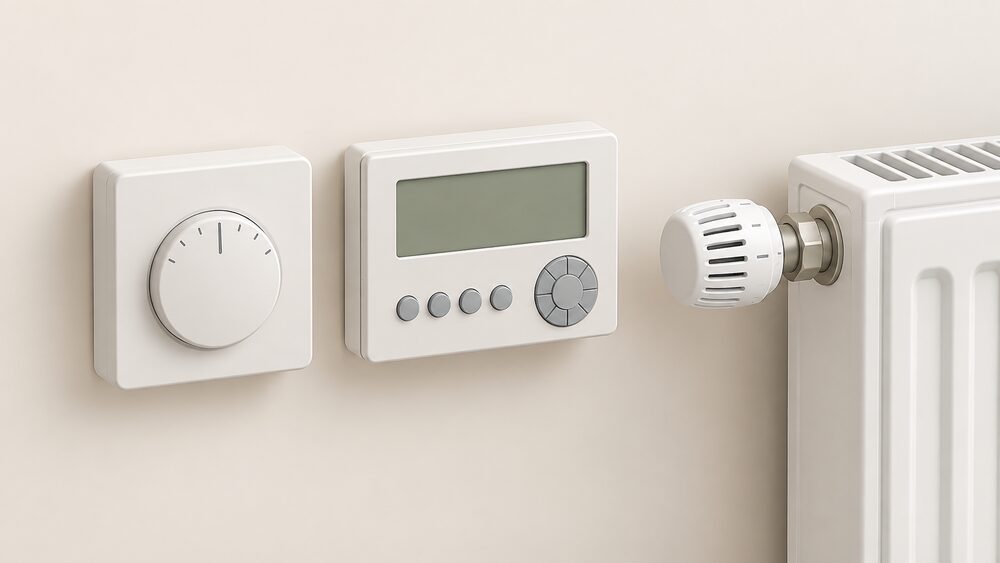
A full set is not one device. It is a programmer or timer, a room thermostat, thermostatic radiator valves on the radiators, and increasingly zoning that allows different areas to run to different schedules. Ofgem's ECO4 guidance describes time and temperature zone controls as enabling independent programming of temperature and heating times in at least two different areas or zones of a premises12. That is the formal definition of what most people mean by zoning.
The starting point matters because each element adds a different kind of saving. A timer stops the heating running when nobody is home. A room thermostat caps the temperature. Thermostatic radiator valves stop individual rooms overheating. Zoning does the same at the level of a floor or wing. Age UK's guidance explains that an all day or once setting means the heating will switch on at the first On setting programmed and then stay on until the last Off setting of the day, which is the behaviour a better schedule is meant to avoid13.
The Energy Saving Trust makes a sequencing point that bears on this page directly: it is important to get heating controls right before trying to change the flow temperature14. Controls are the prerequisite for the other settings, not an alternative to them.
Smart controls and the £75 figure: how the estimates differ
Smart thermostat savings are quoted across a wide band, and the differences are worth setting out plainly.
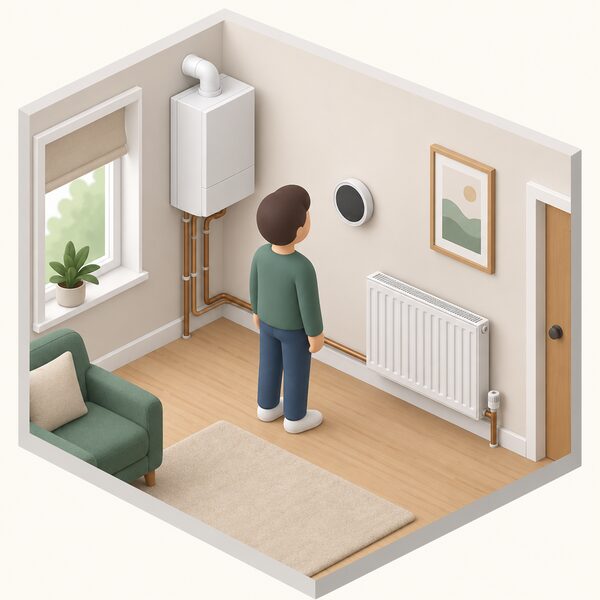
The Energy Saving Trust estimate cited by the CPA is around £75 per year with a smart thermostat17. Confused.com quotes up to £110 a year for a smart thermostat and controls package3. Nesta puts a customer's outlay for a smart thermostat at as little as £10018. Which? gives around £100 to £250 for a smart thermostat6, and Uswitch gives £100 to £200 for most smart thermostats, noting that add-ons such as installation push the total higher19.
The gap between £75 and £110 is not explained by the sources, and both are estimates for typical use. Smart Energy GB is direct about the limits: a smart thermostat could save money, but savings aren't guaranteed20. It lists the variables as the home, heating habits, existing controls, energy prices and how the thermostat's features are used20.
There is also a maker claim in circulation. Uswitch reports that tado° thermostats, according to the manufacturer, can help users save up to 31 per cent on energy bills19. That is a manufacturer's figure for its own product, not an independent measurement, and it sits well above the £75 to £110 cash estimates.
Where the savings actually come from
The cash comes from three places: less time running, lower temperature, and fewer rooms heated.
Less time running is the timer and the schedule. Lower temperature is the thermostat setting, and the one degree reduction is the single most repeated figure in the material, at as much as 10 per cent4 or up to 25 per cent9 depending on the source. Fewer rooms heated is the radiator valve and the zone, at around £50 a year for turning down radiators in rooms not in use5.
BEAMA's work on control upgrades sets out the technical basis. Its savings estimates for thermostatic radiator valves, load compensation and weather compensation are based on tests, with details published on the BEAMA website21, and it references the temperature control classes I, IV, V and VI described there21. Its fuel bill savings work draws gas prices from Ofgem22. That matters because it means the savings figures move with the price of gas, not only with the hardware.
For comparison, mechanical ventilation with heat recovery is put at reducing household heating costs by 10 to 30 per cent23, and solar assisted heat pump savings depend on how much hot water is used and what system currently heats it24. Both are larger measures with larger costs, and both show that controls sit at the small, cheap end of the range.
Controls as part of household energy independence
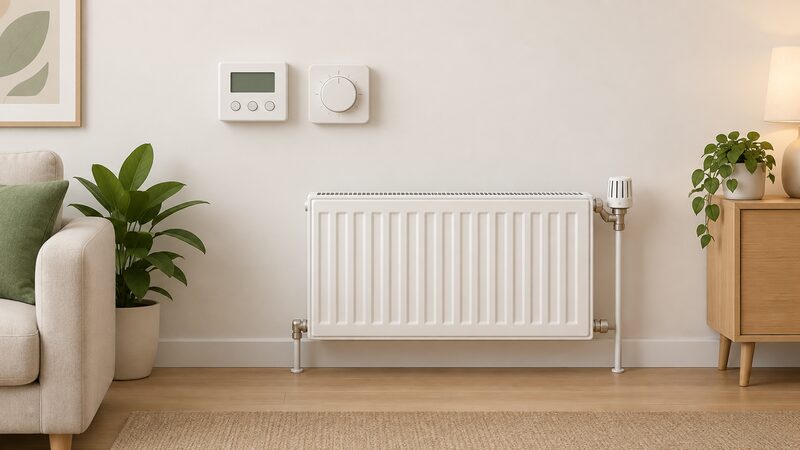
Controls give a household command over when heat is produced and how warm each room gets. Home Energy Scotland states that heating controls help control when the heating system operates and the temperature in each room25. The Energy Saving Trust advises learning how to control the heating in the house26, and notes that smart heating controls automatically optimise heating settings to save money and energy27. Planning guidance for self-build homes goes further, recommending smart systems that control lighting, heating and cooling based on occupancy and time of day28.
What that buys is real but bounded. A household with good controls decides its own schedule and its own temperatures, and can cut the waste that comes from heating an empty house or an unused room. It cannot decide the price of the gas, the carbon intensity of the electricity, or whether the boiler itself is efficient. The £100 to £110 figures are savings against a bill set by others.
The dependence that remains is the fuel and the grid. A hybrid heating system still uses a smart controller like a thermostat to set the temperature29, and a heat pump installation still draws on the same controls logic. Controls are the layer that makes every other measure work properly, which is why the Energy Saving Trust puts them before flow temperature changes14, and why they belong early in a plan rather than at the end. For the wider sequence, see where to start energy improvements and payback periods compared.
Compatibility, meters and what to check before buying
Controls are made for particular systems. Ideal Heating states that it provides thermostats, timers and accessories for the full range of Ideal boilers and heat pumps30, which is a maker's compatibility claim for its own products and says nothing about other makes. For any other boiler, whether it accepts weather compensation or load compensation, and how zoning is wired, are installer questions.
A smart meter is not required. The Energy Saving Trust states that smart meters are different to smart heating controls and that one can be used without the other27. The Welsh Government adds that while the two are independent, combining them can enhance the ability to manage a home's heating and energy use remotely31. A smart meter measures and reports consumption; a smart thermostat schedules and sets temperature. They are separate purchases that happen to work well together.
On funding, the picture differs by nation. Home Energy Scotland lists heating controls at £150 as a loan and £450 as a grant as a secondary improvement15. Cornwall Council's eligible works for home improvement loans include cylinder thermostats, heating controls for wet central heating or warm air systems, and zoning controls32. Legislation lists hot water system controls among energy-saving materials33. For the general route into grants, see finding grants before you start.
Sources33 cited
- Energy efficiency advice, Cadent Gas
- Thermostats and heating controls, Energy Saving Trust, 2026-02-10
- Energy saving tips for the home, Confused.com, 2025-10-14
- Energy efficiency: heating, NI Direct, 2026-09-02
- Energy saving tips, Scope, 2026-09-01
- Boiler prices: how much does a new boiler cost, Which?, 2025-09-17
- Tips to improve the EPC rating of your home, Energy Saving Trust, 2026-08-03
- Energy efficiency tips, NI Direct, 2026-09-17
- Home and business grants, schemes and advice, East Herts Council, 2026-09-17
- Heat pumps, Electricity North West, 2026-09-19
- Load control consumer protection guidance, Annex D, Ofgem, 2026-08-07
- ECO4 new measures and products guidance v3.0, Ofgem, 2026-03-26
- How to use your heating controls, Age UK, 2026-03-23
- Should I turn my boiler's flow temperature down?, Energy Saving Trust, 2026-05-20
- Grants and loans, Home Energy Scotland, 2026-09-17
- Retrofit explained, Energy Saving Trust, 2026-02-06
- Make your home more energy efficient, CPA, 2023-12-01
- HeatFlex: the untapped potential of automated heat pump flexibility, Nesta, 2024-11-19
- What are smart thermostats?, Uswitch, 2026-02-05
- What is a smart thermostat?, Smart Energy GB, 2026-08-19
- Estimated savings on fuel bills from heating control upgrades, BEAMA, 2023
- Estimated fuel bill savings from heating control upgrades, BEAMA, 2022-11-15
- Mechanical ventilation with heat recovery, Centre for Sustainable Energy, 2026-07
- Solar assisted heat pumps, Energy Saving Trust, 2025-06-13
- Thermostats and heating controls, Home Energy Scotland, 2026-09-20
- Energy saving house viewing tips, Energy Saving Trust, 2026-05-20
- Guide to smart meters, Energy Saving Trust, 2026-07-15
- Self-build homes: sustainability, Planning Portal, 2026
- Hybrid heating, Cadent Gas, 2026-09-20
- Heating controls, Ideal Heating, 2026-09-17
- Smart meters, Welsh Government, 2026
- Eligible and non-eligible works, Cornwall Council, 2025-10-01
- Home Energy Conservation Act 1995, Schedule 8, legislation.gov.uk, 2026-09-17
 Do Smart Controls Save Money?Do smart heating controls really cut your bills, and by how much?
 Changing Habits SavingsWhat the evidence says behavioural change saves: around £90 to £120 a year for one degree off the thermostat, £100 to £110 a year for using a full set of heating controls, and £304 to £351 a year for a bundle of small changes.
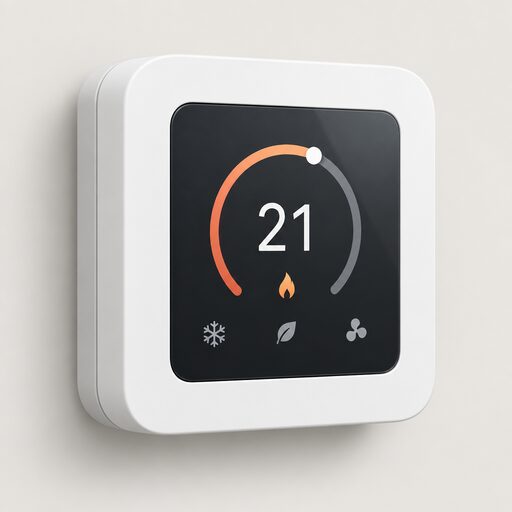 Heating Controls CostA smart thermostat usually costs between about a hundred and two hundred and fifty pounds, but fitting can push that higher.
 Smart Thermostats ExplainedWhat does a smart thermostat actually do, and is it worth it?
 The Full Heating Controls GuideA room thermostat, a programmer and valves on your radiators are the basics.
 Controls and Time-of-Use TariffsCheaper electricity at night only saves money if your heating actually uses it then.